Back Hurts After Sleeping: Causes, Relief, and Mattress Tips

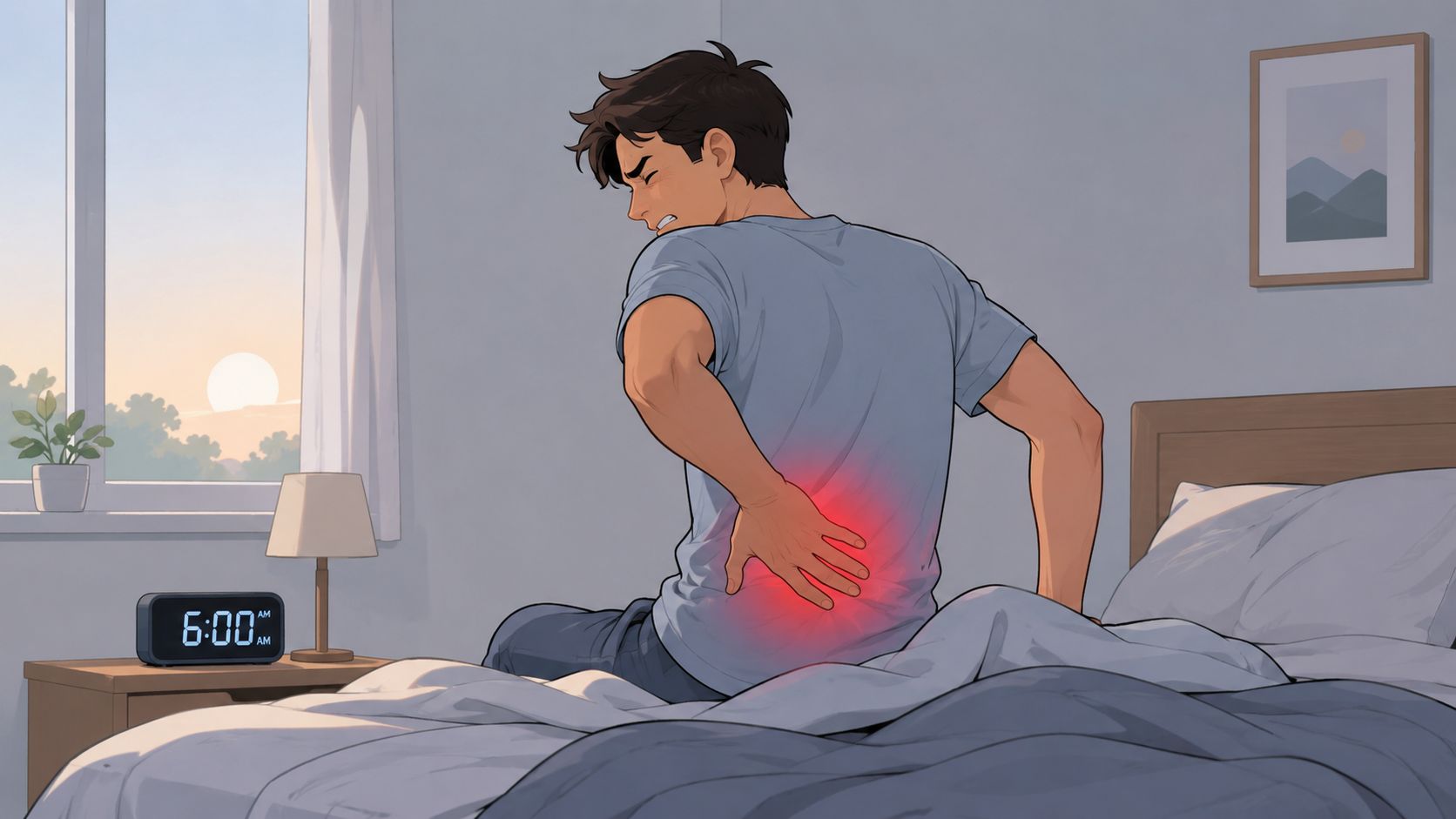
You know the feeling. The alarm has already gone off twice, the pillow is half off the bed, and the first step onto the cold floor makes the lower back complain before the coffee even starts. When back hurts after sleeping, that morning jolt can feel small in the moment and annoying for the whole day.
Most of the time, that kind of pain is mechanical, not mysterious. Sleep posture, mattress support, and the way the body settles overnight usually explain a lot of it, and the good news is that those pieces can be changed. A 2024 study of people with low back pain found that 77% said sleep was disturbed by back pain and 92% had trouble either sleeping or rising in the morning, which is exactly why the bed deserves a closer look (PubMed study).
For a neighbor walking into the Greenfield showroom and saying, “My back's sore every morning,” the conversation usually comes down to four things. First, the sleep position. Second, whether the mattress is sagging or too firm. Third, whether the pain has any warning signs attached to it. Fourth, what to do before that first cup of coffee so the day starts looser, not tighter. The rest of this guide stays focused on those four levers, because that's what changes mornings.
When Your Morning Starts With a Stiff Back
You roll out of bed in a Milwaukee bungalow, take one step, and pause while your lower back catches up. The pillow has bunched sideways, the mattress dip has been ignored, and your body needs a minute before it wants to move. When your back hurts after sleeping, that morning jolt can feel small in the moment but grating all day.
Morning soreness that eases after you get up often points to the sleep setup. Hours in one position can expose pressure, twisting, or weak support right when you wake. That clue deserves attention before you blame age, exercise, or a random bad night.
A 2024 study of 375 people with low back pain found that 87% usually slept on their side, 47% slept on their back, and 22% slept on their stomach. It also reported that 77% said sleep was disturbed by low back pain, 87% had difficulty getting up because of it, and 92% had trouble sleeping or rising in the morning (PubMed study). Those findings connect nighttime comfort with morning mobility.
Practical rule: if your back feels worse after sleep and improves once you move, inspect the mattress, pillow setup, and sleep position first. Our tips for springing out of bed in the morning can help you change that first movement without forcing a stiff back.
At the Greenfield showroom, we look beyond a simple “firm or soft” answer. A mattress with zoned support can give the middle of your body steadier support, while a medium-firm feel often provides a practical balance of cushioning and stability. Flip-ability also matters when one side develops a dip, since turning the mattress can extend useful support. We fit the mattress to your body and sleeping position instead of handing you a generic firmness rule.
Research reviews connect prone sleeping with higher low back pain risk, while supine sleeping supports spinal alignment and lower prevalence of back pain (systematic review and meta-analysis). If the mattress has a visible dip, start there. That small defect may explain why your mornings keep beginning tight.
Why Your Back Hurts After Sleeping
Sleep posture loads the spine overnight
Waking up sore often starts with the position your body holds for hours. If your spine is not supported in a neutral line, the lower back keeps working instead of settling. A review of six studies linked supine sleeping with better spinal alignment and a lower prevalence of low back pain, while prone sleeping places more strain on the lumbar area (Wiley review).
Side sleeping can also work well when the head, shoulders, hips, and knees stay aligned. A pillow that is too low, a shoulder that sinks too far, or a mattress that lets the trunk twist can leave one side of the waist tight. Soreness that eases after a short walk usually points to positioning and support rather than a mattress label alone.
At BILTRITE's Greenfield showroom, we check how your body settles instead of handing you a generic firmness rule. Zoned support can steady the middle of the body, while a medium-firm feel can balance cushioning with stability. We also check whether flip-ability could help maintain support if one side starts developing a dip.
Sagging support changes the night's alignment
A mattress may be causing trouble before it looks completely worn out. If the pelvis sinks lower than the ribs, the spine spends the night correcting that angle. The result can be a dull low-back ache or stiffness that takes time to loosen after getting up.
A randomized trial involving 313 adults with chronic, non-specific low back pain found that a medium-firm mattress improved pain and disability more than a firm mattress after 90 days. The improvements included pain in bed and pain on rising, which supports choosing a surface that cushions the hips and shoulders while keeping the spine supported (PubMed trial).
Daytime strain carries into sleep
Long desk hours, rounded screen posture, tight hip flexors, and tired stabilizer muscles can load the back before bedtime. Morning pain may therefore reflect both daytime strain and nighttime support. At the Greenfield fitting, we ask about your sleeping position and how you feel on waking, then test the mattress features that match your body instead of relying on firmness by itself.
Red Flags Worth Paying Attention To
Morning stiffness often comes from the way your body was supported overnight. If it eases after gentle movement and stays focused in the back, the pattern usually points to sleep-related soreness rather than an urgent problem. That is useful information, but persistent pain still deserves attention.
Know the difference between soreness and a warning sign
Mechanical soreness is commonly dull, local, and strongest when you first get out of bed. It should gradually settle as you move. It usually does not involve leg weakness, numbness, changes in bladder or bowel control, fever, or unexplained weight loss.
A stable, predictable pattern gives you room to review your sleep setup. At BILTRITE's Greenfield showroom, we look beyond a generic firmness label. We check whether zonal support keeps your middle from sinking, whether a medium-firm feel cushions pressure points without letting you sag, and whether flip-ability could help preserve an even surface over time.
Pain that eases with movement often points to a support problem worth fixing, not a reason to ignore the symptom.
Know when to call a clinician
Stop treating the issue as ordinary morning stiffness if you have loss of bladder or bowel control, groin numbness, sudden leg weakness, fever, or unexplained weight loss. Seek prompt medical attention for those symptoms. You can also review these back pain after sleeping warning signs.
Contact a clinician if pain repeatedly wakes you, travels down a leg, or comes with numbness or tingling. Pain with an inflammatory pattern may also behave differently from ordinary mattress-related soreness. It can remain prominent after rest and may change with movement instead of loosening through the morning.
If those warning signs are absent, track the pattern for a few mornings. Note your sleep position, where the pain starts, and how quickly it improves after getting up. Bring those details to the Greenfield fitting, where we can compare zoned support, a medium-firm feel, and flip-ability against the way your body settles. Mattress changes make sense when the symptoms consistently match poor overnight support, not as a substitute for medical care.

Quick Relief for a Sore Morning Back
The first goal is simple, calm the back down without shocking it. A stiff spine does not like sudden bending, so the first minute should stay gentle and low effort. Small moves can change the tone of the whole morning.
Start in bed before standing up
Keep it boring. That is the point.
- Pelvic tilts: Flatten the low back gently into the mattress, then release.
- Knees to chest: Bring one knee up at a time, just enough to ease stiffness.
- Supported twist: Let both knees tip side to side with the shoulders relaxed, keeping the motion easy.
After that, use the log-roll technique to get out of bed. Roll to the side as one unit, lower the legs, and push up with the arms instead of curling straight forward. That keeps a stiff lumbar spine from doing the first big job of the day.
Use movement, heat, and time wisely
A short walk soon after waking helps the back settle in. Gentle movement warms tight tissue, and it usually works better than waiting for the stiffness to fade on its own. A warm shower or brief heat can also help when the issue is tightness rather than a fresh injury.
Hydration and timing matter too. Breakfast, water, and a few easy minutes of motion can keep the back from seizing up again once the day starts.
If the mattress feels like the core problem, a topper may help bridge the gap for a while, and our guide to what a mattress topper does explains when that stopgap makes sense. When the bed itself is the issue, we look at the parts that change how your body rests overnight, zoned support, a medium-firm feel, and flip-ability. That is why the Greenfield fitting matters. You can lie on the beds, feel where your hips sink, and compare how each mattress treats a sore lower back instead of guessing from a label.
Over-the-counter relief can be reasonable for some people, but it should never replace the bigger fix. Morning relief is the bridge, not the destination.
Best Sleep Positions to Wake Up Looser
Wake up with a stiff back, and the first thing to check is whether your sleep position is twisting the spine or leaving it unsupported. The goal is simple, keep the body neutral so the lower back does not do extra work all night. That depends on the pillow setup as much as the posture itself, because the head, knees, and hips all need the right support.
| Sleep Position Comparison | Share of Sleepers | Main Risk | Pillow Setup |
|---|---|---|---|
| Side | 87% in the cited low back pain study | Shoulder drop, trunk rotation, waist gap | Firm pillow between the knees, head pillow matched to shoulder width |
| Back | 47% in the cited low back pain study | Too much lumbar arch if unsupported | Small towel roll or thin pillow under the knees |
| Stomach | 22% in the cited low back pain study | Lumbar strain and neck twist | Best avoided, if used, keep a thin pillow under the pelvis |
Side sleeping can work if the spine stays stacked
Side sleeping works well when the shoulders, ribs, and hips stay lined up. A firm pillow between the knees keeps the top leg from pulling the pelvis forward, and a head pillow that matches shoulder width helps the neck stay level. If the waist still hangs in space, the mattress is probably too soft in the middle.
Back sleeping gives the lower back a break
Back sleeping often gives the lower spine the cleanest rest. A small towel roll or thin pillow under the knees reduces the arch in the low back and helps the body settle flatter through the night. If that position still feels strained, the mattress may be missing the kind of support that matters most, especially zoned support in the lumbar area or a medium-firm feel that keeps the middle from sinking. That is exactly why we have people test beds in Greenfield instead of guessing from a tag.
Stomach sleeping is the hardest to keep neutral
Stomach sleeping puts the lower back in a tougher spot because the lumbar spine tends to arch and the neck has to stay turned. Some people can manage it for a while with a thin pillow under the pelvis, but it is still the least forgiving position for morning back pain.
If you want a more detailed guide before you try beds in person, BILTRITE's sleep-position guide for lower back comfort is a good place to start. It helps you match the position to the support your body needs.
How the Right Mattress Changes Your Mornings
A mattress changes the morning before the alarm does. If it keeps the body level, eases pressure at the hips and shoulders, and prevents the middle from sagging, the back usually feels calmer at 7 a.m. If it does the opposite, you wake up tight, irritated, and already behind.
The best starting point for low back pain is still medium-firm. That was the takeaway from a randomized trial in adults with chronic low back pain, where medium-firm support outperformed firm support over time, as noted earlier. A mattress in that range helps keep the lower back and pelvis lined up without letting the body sink too far.
Support features matter more than a label
A comfort label tells you less than the build does. Zonal support can hold the lumbar area up while letting the shoulders settle enough to stay comfortable. That helps side sleepers who wake with shoulder pressure and back sleepers who feel a dip in the low back.
A two-sided, flip-able mattress deserves a look too. It spreads wear across both sides and slows the uneven softening that can make a bed feel worse over time. That is the kind of thing we point out during a fitting in Greenfield, because a bed should be judged by how it holds your body, not just by how soft it feels for thirty seconds.
If you want a more direct guide, BILTRITE's best mattress for back pain advice is a solid place to start before you come in.
Bottom line: if mornings are getting worse, the problem may be the way the mattress supports the body over time.
The right mattress keeps the spine steady, reduces pressure points, and still feels comfortable enough to sleep on every night. That combination matters more than any buzzword on a tag.
A Simple Game Plan for Mattress Shopping
Mattress shopping gets easier when it becomes a fitting process instead of a guess. A sore back needs the bed checked the same way a good pair of shoes gets checked, by how it feels under real load, not by marketing language. That's why an in-store test matters so much.
Use a plain checklist
Measure the current setup.
Note mattress height, any visible dip, and whether a partner's weight or sleep position changes how the bed feels.Start with medium-firm.
That's the research-backed starting point for many people with morning back pain, then adjust based on body size and shoulder width.Lie down long enough to matter.
Ten minutes beats ten seconds. The body needs time to settle before the pressure points show up.Check the lumbar area.
Slide a hand under the lower back and pay attention to gaps, sag, or a feeling that the pelvis is dropping too far.Ask about flip-able construction.
If a mattress can be used on both sides, it often gives a steadier feel over time.Ask about service terms.
Trial and exchange details matter, because the right support sometimes reveals itself only after a few nights.
If a shopper wants a wider in-person selection, the BILTRITE Mattress Center has over 60 models and staff who watch alignment during the fitting. That matters for shoppers with arthritis, limited mobility, or a partner who sleeps very differently.
Keep the visit low pressure
A good fitting should feel like a conversation, not a rushed sale. Bring notes, ask questions, and test more than one feel before deciding. The goal is to leave with a bed that helps mornings, not a receipt that creates more regret.
For a practical walkthrough of what to pay attention to during testing, this mattress-testing guide is worth a look before the showroom visit.
Come See Us in Greenfield Soon
Morning back pain usually comes down to a few plain things, how the spine was positioned, how the mattress held the body, and whether the bed still has enough support left in it. A medium-firm feel, smart zonal support, and a flip-able design can all help, but the ultimate test is how the mattress feels when a real person lies down on it.
That's why an in-store fitting still matters. At our Greenfield showroom, shoppers can try over 60 mattress models, talk with a specialist, and compare options without buying sight unseen. The store is at 5430 West Layton Avenue in Greenfield, and it's closed on Sundays and Mondays so our family can keep family time family time.
If the back has been sore every morning, there's no reason to guess alone. Bring the questions, bring the notes, and let the bed tell the truth. We'd love to see you in Greenfield and help you sort out what supports your back.
BILTRITE Furniture-Leather-Mattresses has a huge in-stock mattress center, helpful sleep guidance, and a relaxed showroom experience for anyone dealing with morning back pain. Visit BILTRITE Furniture-Leather-Mattresses to learn more, then come on down to our Greenfield store and try the beds for yourself.