Heavy Duty Mattress Frame: BILTRITE’s 2026 Guide


A lot of Milwaukee shoppers end up in the same spot. The mattress still feels good, but the bed underneath it starts talking back. A little squeak when someone rolls over. A dip in the middle that seems to get worse every month. Maybe the rails look fine at a glance, yet the whole setup feels a bit tired.
That's usually when the actual issue shows up. The mattress often gets the blame, but the frame is doing the heavy lifting every single night. If that support system is too light, too flexible, or poorly built for the load, the whole bed can start to feel worn out before its time.
At BILTRITE, that conversation comes up often in the Greenfield showroom. As a fourth-generation, family-owned Milwaukee business serving local homes since 1928, the focus has always been on helping neighbors buy better quality furniture that fits how they live. A heavy duty mattress frame isn't just for extra-large bedrooms or commercial spaces. For many households, it's the quiet fix that makes a bed feel stable, supportive, and built to last.
Table of Contents
- Tired of Squeaks and Sags? Let's Talk Frames
- What Exactly Makes a Mattress Frame Heavy Duty
- Key Features for a Rock-Solid Foundation
- Matching Your Frame to Your New Mattress
- Common Pitfalls When Frame Shopping
- The BILTRITE Difference Why Buying Local Matters
- Your Heavy Duty Frame Questions Answered
Tired of Squeaks and Sags? Let's Talk Frames
One common showroom story goes like this. A family buys a new mattress, brings it home, and expects the whole bed to feel fresh again. For a short while, it does. Then the noises come back. The center starts to soften. Getting in and out of bed makes the frame shift just enough to notice.
That's frustrating, especially when the mattress itself isn't the weak link.
A bed works as a system. Mattress, frame, slats, center support, and hardware all have to do their part. When one piece falls short, the rest of the setup feels it. Many shoppers don't realize that the frame under the mattress can be the reason the bed feels unstable, even if the mattress is still in good shape.
A stronger foundation often solves comfort complaints that people first blame on the mattress.
That's why shoppers looking into a strong bed frame for lasting support usually end up asking better questions. Not just “Does it fit?” but “Will it stay quiet?” “Will it support the middle?” and “Will it hold up to daily use year after year?”
Why this matters in real homes
A heavy duty mattress frame makes sense for more households than people think. It can be the right move for couples, families with kids who pile onto the bed on Saturday morning, guest rooms that get steady use, or anyone pairing a new mattress with an older frame that was never built for modern weight and density.
In a local showroom, those issues are easier to spot. A shopper can press on the center of a display, look underneath, and see whether the support reaches the floor. That's hard to judge from a photo alone.
The goal is simple
Shoppers aren't shopping for a frame because they want something flashy. They want a bed that feels solid. They want fewer creaks, less motion, and support that doesn't quit early.
That's exactly where a heavy duty mattress frame earns its keep.
What Exactly Makes a Mattress Frame Heavy Duty
The phrase gets used loosely, and that's where shoppers get confused. Some frames look substantial because they're tall, dark, or bulky. That doesn't automatically make them heavy duty. In this category, the key difference is structural capacity.
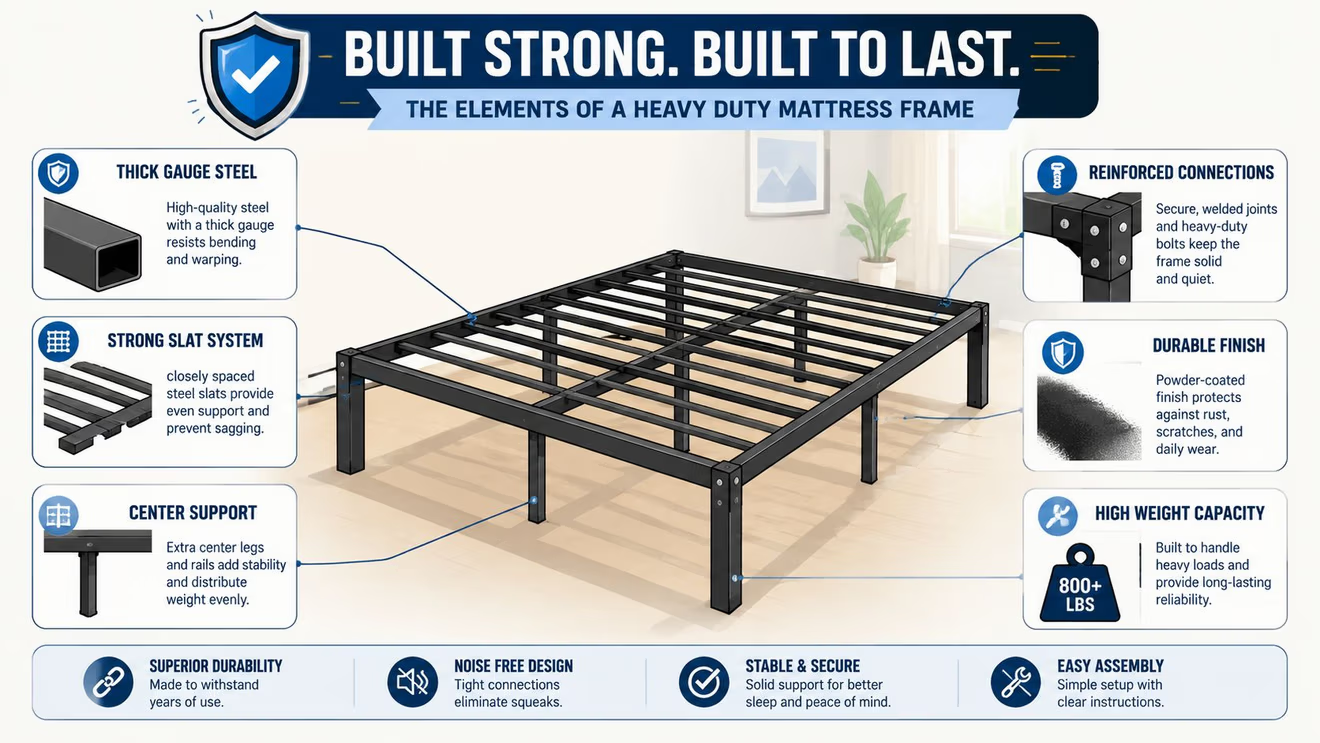
One industry guide says the category often starts around 500 lb for a couple, with recommended ratings rising to 600+ lb for combined sleeper weight in the 350–500 lb range and 800+ lb when combined weight exceeds 500 lb. The same guidance recommends a 20%–30% safety margin above actual body weight, and says single sleepers over 300 lb should look for a frame rated at 500+ lb with center support and at least one floor leg, according to this heavy-duty frame guide.
Weight rating is the starting point
A frame's rating tells shoppers whether the structure was built for light use or for serious daily support. That matters because bed loads aren't static. People don't sleep like statues. They sit on the edge, climb in, shift positions, and sometimes drop onto the mattress after a long day.
That's why the safety margin matters. The frame has to handle not just body weight, but movement.
A quick way to think about it is this:
| Situation | What to focus on |
|---|---|
| Single sleeper | Rated capacity, center support, and floor contact |
| Couple | Combined sleeper weight, mattress weight, and extra margin |
| Heavier mattress setup | Capacity plus slat strength and centerline stiffness |
Heavy duty means engineered, not oversized
Many people assume a king frame must be stronger than a smaller one. Not always. A large frame without center support can still flex badly. A true heavy duty mattress frame uses design to spread weight well, especially through the center of the bed where sagging usually starts.
That's why learning the parts of a bed and how they work together helps so much. Side rails, center rails, slats, support legs, and connection points all matter. If one of those is weak, the frame can feel noisy or unstable long before it breaks.
Practical rule: A heavy duty mattress frame should be judged by load rating and support design first, then by style.
Why the label alone isn't enough
“Heavy duty” should mean more than thicker-looking metal or a bold product name. The useful questions are simple. What load is it built for? Does the frame support the center properly? Is there enough structure underneath to keep the mattress level over time?
Those answers separate a frame that lasts from one that only looks sturdy on day one.
Key Features for a Rock-Solid Foundation
Shoppers can learn a lot by crouching down and looking under the bed. That's often where quality lives. The strongest frame in the room usually doesn't win because it looks flashy. It wins because the support system underneath is doing the job the right way.

From an engineering standpoint, the most important failure-prevention features are center support beams, full-width slats, and center or side support legs. One U.S.-made heavy-duty design highlights 2-inch-tall side rails plus triple-leg center support to increase stiffness and weight capacity, as noted in this engineering-focused heavy-duty frame overview.
Start with the center of the bed
Most bed problems begin in the middle. That's where weight gathers, where mattresses tend to settle, and where weak frames start to bow. A center support beam helps carry that load from head to foot. Support legs under that beam transfer weight to the floor instead of forcing the side rails to do all the work.
When a frame skips that feature, the middle becomes the trouble spot.
Then check the slats
Slats do more than hold up the mattress. They spread weight across the width of the bed and help keep the sleep surface level. Full-width slats are a good sign because they support more of the mattress and reduce the unsupported gaps that can lead to soft spots or uneven wear.
For shoppers comparing options, a slatted bed frame guide can make those differences easier to spot in person.
Small construction details matter more than shoppers expect
A frame can fail slowly without ever snapping. It starts with flex. Then movement loosens joints. Then the bed gets noisy. Over time, the mattress can follow that shape and start to feel uneven.
Here are the parts worth checking closely:
- Center beam presence: A heavy duty mattress frame should support the middle, not leave it hanging.
- Floor legs under the center: These reduce strain on the outer rails and help the frame stay level.
- Full-width slats: Better coverage usually means better weight distribution.
- Stiffer side rails: Taller or reinforced rails help resist side-to-side flex.
- Connection hardware: Tight, well-made joints help prevent shifting and squeaking.
Material also changes the feel
Steel and solid hardwood remain the two materials many shoppers trust most in this category. Steel often gives a cleaner, more industrial support structure. Solid hardwood can offer a warmer look with serious durability when the joinery and center support are done well.
Shoppers don't need to become engineers. They just need to know where the frame carries weight and where it gives it away.
What to do in the showroom
A quick in-store inspection works well:
- Look underneath first. The support system provides crucial information.
- Press at the center. A frame that feels springy in the middle may not be built for long-term load.
- Check floor contact. Legs that bear weight matter.
- Ask how the mattress is supported across its full width. That answer should be clear and direct.
Those habits help shoppers separate a decorative frame from a real heavy duty mattress frame.
Matching Your Frame to Your New Mattress
A newer mattress can be a lot heavier than the one it replaced. That catches people off guard all the time. They swap in a dense hybrid, latex, or foam mattress, keep the older frame underneath, and then wonder why the bed suddenly feels unstable.

Independent guidance says heavy mattresses are often defined as roughly 80+ lb for a queen and 100+ lb for a king. That same guidance says the best frames use steel or solid hardwood, slats spaced at 3 inches or less, and reinforced center support. It also advises choosing a frame rated 20% to 30% above the combined load of mattress, sleepers, topper, and storage, according to this guide to bed frames for heavy mattresses.
When a heavy duty frame makes the most sense
The need usually becomes clearer when the whole load is considered, not just body weight. A mattress can be heavy on its own. Add two sleepers, bedding, maybe a topper, and sometimes under-bed use or edge sitting. Suddenly the frame has a much bigger job.
A heavy duty mattress frame is often the smart choice when:
- The mattress is dense: Many hybrid, latex, and thicker foam models place more constant load on the base.
- The bed size is larger: Queen and king sizes need stronger center support because the span is wider.
- The household uses the bed hard: Families sit, lounge, read, fold laundry, and gather on the bed.
- The old frame was built for a lighter mattress: A good mattress can expose an aging support system fast.
When a standard frame may still be enough
Not every bed needs the heaviest frame in the building. A lighter mattress paired with a well-built standard frame may work just fine if the support design is solid and the load is modest. The point isn't to oversell. The point is to match the foundation to the actual use.
That's where the question of whether a mattress needs a box spring or another support layer also matters. Some mattress setups work best directly on a supportive platform. Others call for a different base. The frame has to match the mattress design, not just the room style.
A mattress upgrade without a frame check is one of the easiest ways to shorten the life of the whole bed setup.
A simple way to decide
A shopper doesn't need a calculator full of formulas. A practical checklist works:
| If this sounds like the setup | The safer frame choice |
|---|---|
| Dense queen or king mattress | Reinforced frame with close slats and center support |
| Older frame under a new mattress | Inspect carefully, then upgrade if support is light |
| Light mattress and modest daily use | Quality standard support may be enough |
The frame should fit the mattress, the sleepers, and the way the room gets used. That combination matters more than a label on a box.
Common Pitfalls When Frame Shopping
A bed frame can look sharp in a photo and still be the wrong choice. That's where people get tripped up. They shop with their eyes first, skip the support details, and end up replacing the frame much sooner than expected.
One of the biggest mistakes is assuming “platform” and “heavy duty” mean the same thing. They don't. A true heavy-duty mattress frame typically combines an all-steel or reinforced-rail structure with a continuous center support system. Commercial product specs commonly cite load ratings of 1,200 lb for heavy-duty all-steel platform frames and up to 2,500 lb for reinforced specialty frames, as shown in these heavy-duty platform frame specifications.
Mistakes that cost shoppers later
Some problems don't show up on day one. They build over time.
- Buying for looks alone: A tall headboard or trendy finish doesn't tell anyone what's happening underneath.
- Ignoring the centerline: If the middle of the bed isn't properly supported, sagging often follows.
- Forgetting the mattress weight: Many shoppers think only about body weight and leave out the mattress itself.
- Skipping fit and compatibility questions: Not every mattress works the same way on every support system.
A helpful place to slow down and review the basics is this guide on how to choose a bed frame. It helps shoppers compare structure, size, and support instead of shopping by appearance alone.
What shoppers should ask before buying
A few plain questions can save a lot of trouble:
- Where does the center of the bed get support?
- What material carries the load?
- How does the frame distribute weight across the mattress?
- Will this frame suit the mattress that's going on it?
If those answers are fuzzy, that's a warning sign.
The frame doesn't need fancy language. It needs clear support where the bed works hardest.
The strongest buying habit is simple. Look below the mattress line before falling for the style above it.
The BILTRITE Difference Why Buying Local Matters
A heavy duty mattress frame is one of those products that makes more sense in person. Photos can show the finish. They don't always show the thickness of the rails, how the joints are made, or whether the center support really looks built for the job. That's why local showroom shopping still has a real advantage.

In the broader bedding market, heavy-duty bed frames can vary wildly. One expert review notes that some products support up to 5,000 lb, while others may hold no more than 300 lb. That same review says a true heavy-duty frame uses thicker materials, stronger joints, and better load distribution than standard models, according to this overview of heavy-duty bed frame capacity ranges.
Why in-store shopping changes the decision
For Milwaukee-area shoppers, the biggest benefit is clarity. In-store, they can push on the rail, look at the support legs, and ask direct questions about how a frame handles a dense mattress or heavier daily use. They can compare wood and steel side by side instead of guessing from a screen.
That matters even more when the store specializes in better-quality construction, including USA-made, Amish-made, and solid-wood furniture.
What local guidance adds
A heavy-duty frame isn't a one-size-fits-all purchase. One household may need a reinforced steel platform. Another may want a solid wood setup that suits a specific headboard and mattress combination. A local showroom team can help sort that out based on real use.
BILTRITE Furniture-Leather-Mattresses offers heavy-duty furniture and mattress options in its Greenfield showroom, along with a large mattress department and in-person guidance for shoppers comparing support systems.
Here's where local buying tends to help most:
- Hands-on inspection: Shoppers can see the support structure before making a decision.
- Better fit advice: Mattress type, room setup, and household use all get considered together.
- Delivery support: Heavy-duty pieces aren't fun to wrestle through stairways and tight corners.
- Family-owned accountability: A local business serving Milwaukee since 1928 has to stand behind what it sells.
Why that matters over time
A heavy duty mattress frame isn't exciting in the same way a new sofa color or bedroom style can be. But it affects sleep, mattress performance, and day-to-day comfort in a very real way. Getting that choice right at the start is often cheaper and easier than trying to fix squeaks, dips, or weak support later.
BILTRITE's family-owned approach fits that kind of purchase well. The showroom serves Greenfield and Metro Milwaukee with experienced staff, a strong focus on better-quality goods, and an in-person shopping experience that helps people judge construction for themselves. The store is closed on Sundays and Mondays for family time, which says a lot about how it does business.
Local furniture shopping still matters when the thing being bought needs to be touched, tested, and understood underneath, not just admired from the front.
Your Heavy Duty Frame Questions Answered
Does a heavy-duty frame need a box spring
Not always. Many heavy-duty platform frames are built to support the mattress directly. The slat system or platform surface does the support work that a box spring used to handle in older setups. The right answer depends on the mattress design and the frame style.
Can an existing headboard still work
Often, yes. Many heavy-duty frames are designed with attachment options for a headboard or footboard. Shoppers should still confirm compatibility before bringing a new frame home, especially if the existing bedroom pieces are older or use a different mounting pattern.
How can shoppers tell if the current frame is failing
The signs are usually pretty plain once someone knows what to look for.
- New noise: Creaks, squeaks, or groans that weren't there before.
- Visible sagging: A dip at the center or rails that don't look level.
- Mattress drift or softness in one spot: The support below may no longer be even.
- Movement at the joints: The bed shifts more than it used to when someone sits down.
Is a heavy-duty frame only for heavier sleepers
No. It can also be the right choice for dense mattresses, larger bed sizes, and households that use the bed for more than sleeping. People who want a quieter, sturdier feel often choose one because they're tired of flex and motion.
Heavy-duty support isn't about marketing language. It's about matching the frame to the job.
Milwaukee-area shoppers who want to compare support systems in person can visit BILTRITE Furniture-Leather-Mattresses in Greenfield. The showroom has been family-owned since 1928, focuses on affordable, better-quality furniture and mattresses, and gives shoppers the chance to inspect heavy-duty options up close with help from an experienced team.