Your Guide to a Pressure Relief Mattress in Milwaukee


A lot of people start looking for a pressure relief mattress after the same kind of morning. They wake up stiff. One shoulder feels pinched. A hip aches. Maybe a spouse says they tossed around half the night. Maybe a family member is spending more time in bed and comfort has become a daily concern instead of an occasional one.
Around Metro Milwaukee, those conversations happen in real homes every day. They also happen in local showrooms, where shoppers want straight answers, not fancy language. A pressure relief mattress can sound like a highly medical product, but for many households it means a mattress designed to spread out body weight more evenly and ease sore spots.
Since 1928, BILTRITE has helped local families sort through these questions with a practical, neighborly approach. The store is family-owned, rooted in Greenfield, and known for taking time with people who want support for back pain, side-sleeping pressure, senior comfort, heavy-duty needs, or adjustable-base compatibility. Readers who are already dealing with aches may also appreciate this guide on how the right mattress can help with back pain.
Table of Contents
- Tired of Waking Up Sore? Let's Talk
- What Exactly Is a Pressure Relief Mattress
- The Real Benefits of Better Support
- Is a Pressure Relief Mattress Right for You
- Comparing Pressure Relief Mattress Types
- Your BILTRITE In-Store Buying Checklist
- FAQs From Our Milwaukee Neighbors
Tired of Waking Up Sore? Let's Talk
A familiar story goes like this. Someone goes to bed tired enough to fall asleep fast, then wakes up feeling like they spent the night wrestling the mattress. The lower back is cranky. The shoulder on one side feels jammed. By breakfast, the question isn't luxury. It's relief.
That problem shows up in a few different ways. A side sleeper feels pressure at the hip and shoulder. An older adult wants support that feels easier on joints. A caregiver notices a loved one shifts less at night and needs a sleep surface that feels gentler and more supportive. In each case, the mattress isn't just background furniture anymore. It's part of daily health and comfort.
Why soreness points to support
The body has heavier and sharper contact areas. Hips, shoulders, and the lower back tend to carry more of the load depending on sleep position. If a mattress pushes back too hard in those spots, the sleeper feels pressure. If it lets the body sink too far without support, alignment can suffer.
A mattress doesn't need to feel hard to be supportive, and it doesn't need to feel soft to relieve pressure. Good support and pressure relief work together.
That balance is why the phrase pressure relief mattress matters. It points to a mattress built to cushion common pressure points while still holding the body in a healthier position.
Local help matters
Milwaukee-area shoppers often want to try a mattress in person because pressure relief is personal. Two people of the same height can react very differently to the same bed. Body shape, mobility, health needs, and sleep habits all change the feel.
That hands-on approach has been part of how local family businesses have served this area for generations. Since 1928, BILTRITE has worked with shoppers who want honest guidance, durable quality, and a chance to feel the difference before taking anything home.
What Exactly Is a Pressure Relief Mattress
A pressure relief mattress is built to reduce concentrated force on the parts of your body that press hardest into the bed. Instead of letting the shoulders, hips, or lower back bear too much of the load, it spreads weight more evenly across the sleep surface.
That sounds simple, but the feel is very personal.
One sleeper may need more cushioning at the shoulders. Another may need steadier support under the waist and hips. That is why pressure relief is not a single mattress feature you can spot from a label alone. It is the result of how the comfort layers, support core, and overall fit work together under your body.

If you want a wider look at mattress construction before narrowing your options, our guide to different types of mattresses can help.
What the mattress is trying to do
A well-designed pressure relief mattress usually handles three jobs at once.
- Cushion heavier areas: It lets the shoulders and hips settle in enough to reduce sharp pushback.
- Support posture: It helps keep the spine in a healthier, more neutral position.
- Spread out contact: It reduces the harsh feel of force collecting in one small area.
A lot of Milwaukee shoppers get tripped up here, and I understand why. Softness and pressure relief are related, but they are not the same thing. A mattress can feel plush for the first few minutes and still let the body sag too far. Another can feel more stable at first touch and do a better job easing pressure through the night.
How pressure relief actually feels
The easiest way to notice pressure relief is not by asking, “Is this soft?” A better question is, “Do my shoulders and hips feel cradled without my back feeling unsupported?”
That is the balance we help people test every day in our showroom. After more than 90 years serving Milwaukee families, we have seen how often the right fit surprises people. Someone comes in convinced they need an extra-soft bed, then finds that a better-built medium comfort mattress gives them more relief because it holds them level while still cushioning the sore spots.
Different mattress materials get there in different ways. Foam often molds more closely to the body. Hybrid designs can pair contouring comfort with a steadier support feel underneath. Some shoppers also prefer USA-made models because they want to know more about the materials, craftsmanship, and long-term durability. That is one reason in-store fitting matters. You can lie down in your usual sleep position, stay there for a few minutes, and feel whether the mattress is relieving pressure or just feeling soft at first touch.
Simple rule: the right pressure relief mattress is the one that matches your body, sleep position, and support needs, not the one with the flashiest description.
The Real Benefits of Better Support
The first benefit people notice is usually simple. They stop chasing comfort all night.
When a mattress reduces pressure at the shoulders, hips, or lower back, the sleeper often changes position less out of discomfort. That can lead to a calmer night and a less beat-up feeling in the morning. The mattress isn't curing every ache in life, but it can stop adding to them.
Less pressure often means less tossing
A pressure point acts like a nagging alarm. The body keeps reacting to it. That's why a mattress that feels fine for five minutes in a store can feel irritating after several hours in one position. Better pressure relief can reduce that “need to move because something hurts” feeling.
That matters for more than comfort. People who sleep in longer stretches often say the night feels more restful, and caregivers may notice less strain from constant repositioning concerns.
This technology has real clinical roots
Pressure-relieving sleep surfaces didn't become common by accident. They were developed and refined in clinical settings where reducing pressure on vulnerable skin and tissue was a serious goal. One study found that a multi-foam pressure relief mattress was associated with a much lower pressure-injury incidence than an alternating air mattress overlay, 6.7% versus 25.0%, with an adjusted odds ratio of 0.123, which works out to about 87.7% lower odds in that study, according to this published study summary.
That doesn't mean every shopper is buying a medical mattress or needs a clinical setup. It does show that the science behind pressure redistribution is meaningful. People shopping for comfort at home are benefiting from design ideas that were tested where support really mattered.
Some of the most helpful comfort features in home mattresses came from serious work on pressure management, not from marketing language.
For shoppers pairing a mattress with motion features, this can also connect well with the health benefits of using an adjustable base bed. Raising the head or legs can change how pressure is distributed and help certain sleepers settle in more comfortably.
Better support can help daily life feel easier
A good pressure relief mattress can be especially helpful for:
- Side sleepers who feel jammed at the shoulder or hip
- Back sleepers who want support under the lower back without a hard feel
- Seniors who need a gentler surface for joints and easier nightly comfort
- People spending more time in bed because support becomes a bigger part of daily well-being
The gain isn't only about sleep. It's about waking up ready to move instead of feeling like the mattress won the argument.
Is a Pressure Relief Mattress Right for You
A lot of Milwaukee shoppers come in after the same kind of night. They fell asleep tired, woke up on one shoulder, switched sides three times, then got out of bed feeling older than they should. That usually means the mattress is pushing back in the wrong places instead of cushioning the body evenly.
A pressure relief mattress can be a smart choice for home use, especially if your body gives you clear signals that your current bed feels too hard, too flat, or too unforgiving.
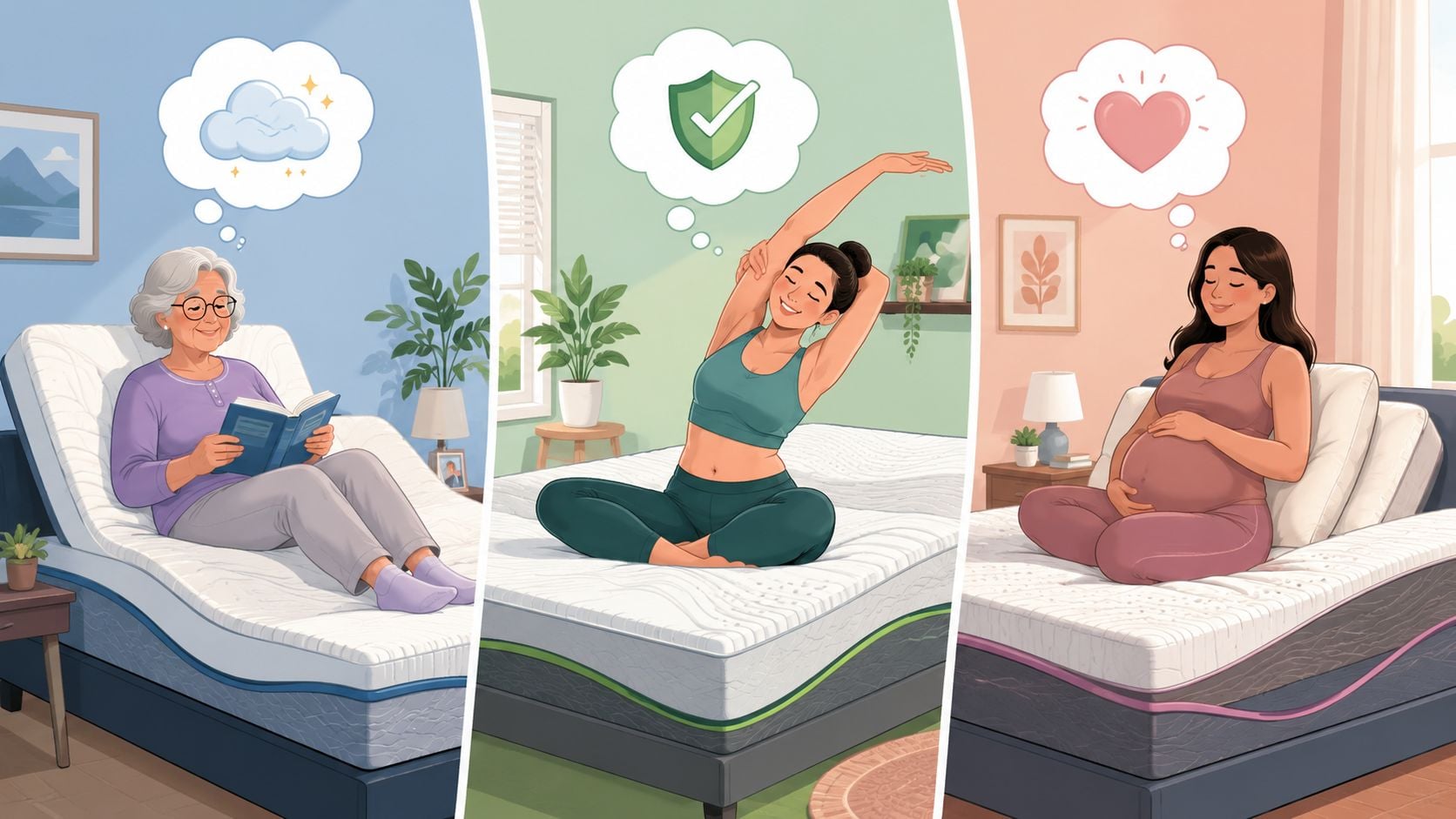
The side sleeper with a sore shoulder
Side sleepers usually carry more force through the shoulder and hip. If the comfort layers are too firm, those spots take the brunt of it. If the mattress is too soft, the waist can dip and pull the spine out of line.
The right pressure relief mattress does both jobs at once. It cushions the sharper pressure points and still supports the middle of the body.
This is also where material choice matters. If you're deciding between a cooler, springier feel and a slower, closer contour, our guide to gel mattress vs memory foam can help you sort out which comfort style fits your sleep habits.
The older adult who wants gentler support
Many older adults are not asking for a pillow-soft bed. They usually want a mattress that feels kinder on the hips, knees, shoulders, and lower back, while still feeling steady when they sit down or stand up.
That balance matters.
In our showroom, we often help shoppers compare what feels good for five minutes versus what feels supportive for a full night. A mattress can feel pleasantly soft at first touch and still be the wrong fit if it lets the body sag too much. A better pressure-relieving design spreads weight more evenly, which often feels easier on sensitive joints.
The caregiver helping a loved one at home
Families caring for someone at home tend to ask practical questions, and they should. Will the mattress stay supportive if someone spends long stretches in bed? Will it feel stable? Will it hold its shape under regular use?
Those concerns point to construction, fit, and intended use.
Some specialty mattresses are built for higher support needs and longer periods of bed rest. The key is matching the mattress to the person, not grabbing the softest model and hoping for the best. That is one reason a professional fitting in our Milwaukee showroom can be so helpful. We can look at sleep position, mobility, body type, bed height, and whether an adjustable base is part of the setup.
The heavier sleeper who needs real support
Heavier sleepers often describe the same problem in plain language. “I can feel myself sinking through it.” That feeling usually means the comfort materials are compressing too much before the support core can do its job.
A pressure relief mattress can still be an excellent fit here, but it needs enough structure to keep the body lifted while cushioning the shoulders, hips, and back. Good pressure relief should feel supported, not swampy.
Trying mattresses in person really helps. In our family business, we have spent more than 90 years helping Milwaukee neighbors test how a mattress performs under their actual body weight and sleep position, not just how it feels with a quick hand press in the store. We can also point you toward USA-made options for shoppers who want quality materials and domestic craftsmanship.
If these examples sound familiar, a pressure relief mattress is worth serious consideration. The best way to know is to get fitted properly, lie in your usual sleep position, and pay attention to whether the mattress cushions your pressure points while keeping the rest of you comfortably supported.
Comparing Pressure Relief Mattress Types
A pressure relief mattress can feel wonderful for one sleeper and completely wrong for another. That is not a contradiction. It is how mattress materials work.
In our Milwaukee showroom, we see this every week. One neighbor lies down on a memory foam model and says, “That finally takes the pressure off my hip.” The next person tries the same bed and says, “I feel stuck.” Both reactions are honest. The mattress did not change. The body on top of it did.
What different constructions feel like
Each mattress type relieves pressure in its own way, much like different shoe soles can all feel comfortable but support the foot differently.
Memory foam usually gives the deepest contouring feel. It molds more closely around the shoulders, hips, and curves of the body, which can be appealing for sleepers who want a cushioned, cradled surface.
Latex-style comfort designs feel more buoyant and responsive. The surface has more lift, so the sleeper often feels supported on top of the mattress rather than nestled down into it.
Hybrid mattresses pair comfort layers with an innerspring support core. For many shoppers, that creates a middle-ground feel. There is pressure relief near the surface, but also a steadier pushback underneath that feels more familiar and easier to move on.
Specialty air-cell or advanced pressure-management mattresses serve a narrower purpose. These are often chosen for home care needs, limited mobility, or situations where pressure management is part of a bigger health and caregiving picture.
Pressure relief is not one feeling
People often hear “pressure relief” and picture a very soft mattress. Softness can be part of it, but pressure relief is really about spreading body weight more evenly so one area is not carrying too much load.
Foam designs usually do that by redistributing weight across a broader surface. Alternating-pressure systems address it differently by changing pressure patterns over time. As noted earlier, clinical guidance treats those as different solutions for different needs, especially in care settings. For everyday mattress shoppers, the practical lesson is simple. The right choice depends on the person using it, how they sleep, and whether the goal is nightly comfort, easier movement, or more specialized support.
For shoppers sorting out foam feels, our guide to gel mattress vs memory foam can help clarify what changes from one comfort material to another.
The right mattress should cushion pressure points, keep the body in good alignment, and feel comfortable enough to use night after night.
Pressure Relief Mattress Comparison
| Mattress Type | Feel | Best For | BILTRITE Note |
|---|---|---|---|
| Memory Foam | Close contouring, cushioned, more of a hug | Side sleepers, pressure-point relief, sleepers who like a deeper cradle | Give it a few minutes. The feel often changes as body heat and weight settle into the surface |
| Latex Style | Buoyant, responsive, more of a floating feel | Sleepers who want pressure relief without a stuck-in-the-bed sensation | A smart option for shoppers who want easier movement across the mattress |
| Hybrid | Balanced, supportive, familiar, with some contouring | Couples, combination sleepers, shoppers who want pressure relief plus stronger support feel | A frequent showroom favorite because it blends cushioning with a sturdy support core |
| Specialty Air-Cell | Variable feel depending on design, often more clinical in purpose | Home care, limited mobility, advanced support needs, some heavy-duty uses | Fit, height, and intended use matter more here than a quick first impression |
Why trying them in person matters
A chart helps organize the choices. Your body gives the true answer.
That is one reason our family has spent more than 90 years helping Milwaukee shoppers test mattresses in person. BILTRITE Furniture-Leather-Mattresses carries a mattress department with over 60 models, including USA-made options, so you can compare these feels side by side, ask questions, and get fitted by people who do this every day.
Your BILTRITE In-Store Buying Checklist
Online mattress descriptions can only go so far. Pressure relief is one of those things that has to be felt with the body in its usual sleep position. That is why an in-store fitting can be so helpful, especially for people with back pain, joint sensitivity, caregiving concerns, or heavy-duty support needs.
This screenshot gives a feel for the local showroom experience.

What to do when testing a mattress
- Lie down long enough to notice pressure points: A quick sit on the edge won't tell much. Spend real time on the mattress in a normal sleep position. This guide on how to test a mattress gives a useful starting point.
- Try the position used at home: Side sleepers should test on the side. Back sleepers should spend time flat on the back. Combination sleepers should move naturally.
- Notice shoulders, hips, and lower back first: Those areas usually reveal whether the mattress is relieving pressure or creating it.
Questions worth asking in the showroom
Pressure relief shoppers often get better results when they ask practical questions instead of broad ones.
- How does this model handle heavier body types? Support and durability matter as much as comfort.
- Will it work with an adjustable base? Flexibility and construction can affect performance.
- Is it two-sided or flippable? Some shoppers want designs that help with even wear over time.
- What delivery help is available? White-glove service can make setup much easier, especially for seniors and caregivers.
Showroom advice: if a mattress feels good for two minutes but starts pushing at the shoulder by minute eight, that's useful information. Pressure relief often reveals itself with time.
Why local fitting still matters
A pressure relief mattress isn't a one-size-fits-all purchase. Two sleepers can describe the same mattress in completely different ways. That's why experienced guidance helps. The BILTRITE team brings more than 400 years of combined experience, and the store's Greenfield location gives Milwaukee-area shoppers a chance to compare feel, support, and fit in person.
There is also value in seeing related solutions at the same time. Adjustable bases, heavy-duty frames, and senior-friendly setups can all change how the final sleep system performs in daily use.
FAQs From Our Milwaukee Neighbors
Can a topper do the same job as a pressure relief mattress
Sometimes a topper helps, but it usually can't fix a mattress that has already lost support. If the mattress underneath sags, feels uneven, or lets the body sink too far, adding a topper may only soften the problem instead of solving it.
For mild comfort tuning, a topper can make sense. For ongoing pressure-point pain or support issues, a new mattress is often the better long-term move.
How should a pressure relief mattress be cared for
Most of the basics are simple.
- Use a protector: It helps keep the sleep surface cleaner.
- Follow the maker's rotation guidance: Some mattresses benefit from regular rotation.
- Keep the foundation appropriate: A mattress performs better when it's supported properly.
- Avoid bending or folding a non-flex design: That can affect comfort layers and structure.
If the mattress is a specialty or medical-style model, the care instructions may be more specific. Those details are worth reviewing before delivery.
How long does a quality mattress last
There isn't one exact lifespan for every mattress type, sleeper, or use pattern. Materials, body weight, frequency of use, and foundation quality all matter. A better question is whether the mattress is still supporting the body well and relieving pressure the way it should.
Common signs it may be time to replace it include visible sagging, a loss of comfort, waking up sore more often, or a clear body impression that doesn't recover.
Is a pressure relief mattress only for people with medical needs
Not at all. Many people buy one because they want a more comfortable sleep surface, especially if they sleep on their side, have sensitive joints, or wake up sore too often. Some models are everyday residential mattresses with pressure-relieving comfort. Others are more specialized for home care.
The key is matching the mattress to the person, not to a label.
For Milwaukee-area shoppers who want hands-on help, BILTRITE Furniture-Leather-Mattresses offers an in-store mattress shopping experience in Greenfield with knowledgeable guidance, USA-made options, heavy-duty choices, adjustable-base solutions, and the chance to lie down and compare what feels right. Since the showroom is local and family-run, visitors can take their time, ask real questions, and find a pressure relief mattress that fits their comfort, support needs, and home.