3 DAY MATTRESS SALE! THURSDAY - FRIDAY - SATURDAY!
LABOR DAY SALE HELD OVER ENDS SATURDAY, SEPTEMBER 19 AT 5PM!
NO CREDIT CARD FEES!
1000's of Items IN-STOCK + 500 Mattresses!
Largest selection of USA Made Furniture & Mattresses + Amish Made!
FREE In-Store Design Services!
BUY LOCAL & LOVE YOUR HOME!
3 DAY MATTRESS SALE! THURSDAY - FRIDAY - SATURDAY!
LABOR DAY SALE HELD OVER ENDS SATURDAY, SEPTEMBER 19 AT 5PM!
NO CREDIT CARD FEES!
1000's of Items IN-STOCK + 500 Mattresses!
Largest selection of USA Made Furniture & Mattresses + Amish Made!
FREE In-Store Design Services!
BUY LOCAL & LOVE YOUR HOME!
OPEN LABOR DAY | Tuesday-Thursday 10am to 6pm | Friday 10am to 7pm | Saturday 10am to 5pm | Sunday Closed To Be With Family & Friends | Monday Showroom Closed
5430 West Layton Ave, Greenfield - Metro Milwaukee
You're staring at a gorgeous marble counter height table online, and the whole room in your head looks finished. Then the practical questions hit. Will it fit the space? Will the stools clear the apron? Will the thing feel solid every day, or just look good in photos?
That hesitation is smart. A marble counter height table is not just a prettier dining table. It's a taller surface, usually built around 36 inches high, and that changes how people sit, how much legroom they get, and how the base has to carry the load. In a Milwaukee home, where dining areas can double as homework zones, morning coffee spots, and overflow prep space, those details matter more than the finish.
Why Marble Counter Height Tables Deserve a Closer Look
A marble counter height table catches attention fast. The stone has movement and depth that make a room feel finished without adding clutter, and the taller profile can keep the piece from looking heavy in a smaller dining area.
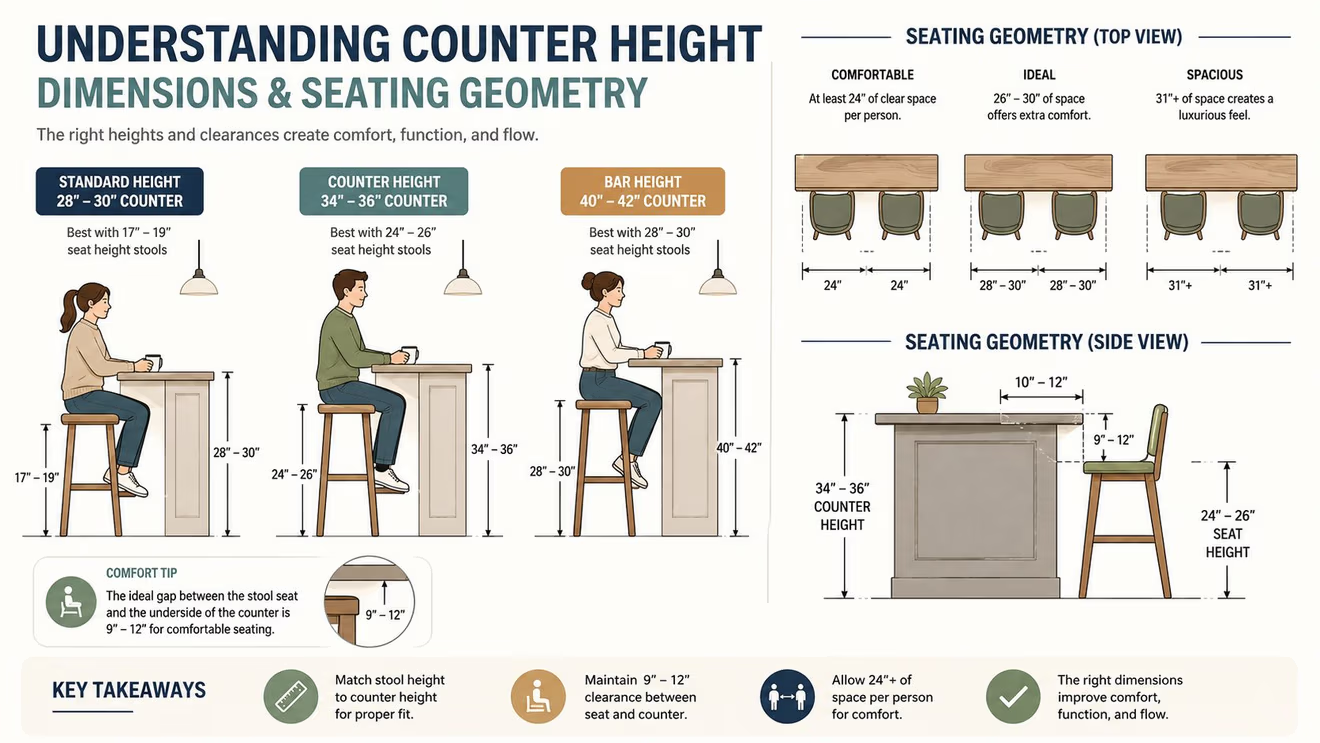
The real test starts after the first look. A table that seems graceful in a showroom can feel clumsy at home if the seat height is wrong, the base is too light, or the top sits higher than your family wants to use every day. A counter height table usually sits around 34 to 36 inches tall, which puts it about 6 inches higher than a standard dining table at roughly 28 to 30 inches. That shift changes posture, knee room, and how easily people move around the table. Lucas Furniture Store's marble counter height table example
What makes marble different
Marble brings weight, visual presence, and a sense of permanence. It also asks more of the frame below it than a typical wood or laminate top does. That is why smart buyers stop at style only after they have checked the geometry, the support, and the way the table will hold up to daily use.
A good marble table should feel settled, not just pretty. If the base looks undersized, the piece will wear you out long before the marble wears out.
For Milwaukee families, that matters in apartments, condos, and smaller dining rooms where one wrong purchase can block a walkway or make the room feel squeezed. A counter-height table can make a compact space feel lighter, but only if the scale and construction are right. If those two parts miss, the table becomes a visual mistake and a practical one.
That is also why local shoppers should look at sturdy USA-made and Amish-built options before settling for a piece that only looks good online. A well-built table handles the weight of marble better, resists wobble, and fits a tighter room with more confidence. If you want a useful comparison point while you shop, start with BILTRITE Furniture's counter height dining table selection.
Understanding Counter Height Dimensions and Seating Geometry
A marble counter height table only works well if the measurements line up with real seating, real knees, and real room flow. The number to remember is 36 inches. That is the practical benchmark for counter-height furniture because it matches the standard countertop height found in many homes. Standard references also describe the usual kitchen build as 34.5 inches of cabinet height plus about 1.5 inches of countertop thickness, which is why counters and counter-height tables often land on the same target. Standard countertop height reference
Measure the full seating stack
The table height is only one piece of the setup. Counter stools usually pair best with a 24 to 26 inch seat height, and many counter-height marble tables work well with stools around 24 to 27 inches so knees and forearms stay in a comfortable range. A Lucas Furniture counter height marble table product page gives a useful reference point for that fit, and the Homelegance Decatur counter height dining table specifications show how those numbers translate to a real product. a Lucas Furniture counter height marble table product page Homelegance Decatur counter height dining table specifications
That range matters because the body needs room under the apron. One marble counter table lists an apron-to-floor height of 30.5 inches, and that kind of detail decides whether daily use feels easy or cramped, especially if the stools have arms or a thick seat deck.
Check these numbers before buying
Table top height: Stay in the standard counter-height zone, not ordinary dining height.
Stool seat height: Match the seat to the table, usually in the 24 to 26 inch range.
Apron clearance: Make sure the stool slides in without the arms or seat frame hitting the table.
Legroom comfort: Sit upright and check whether forearms rest naturally near tabletop level.
Practical rule: if the stool seat feels too high, people lean back. If it feels too low, they hunch. Either way, the table stops getting used the way it should.
For shoppers comparing options in the store, the cleanest next move is to look at a dedicated counter height dining table selection and compare the actual measurements, not just the photos. That is the difference between a table that looks right and one that works right.
Marble Versus Alternative Table Top Materials
Marble wins on presence. It looks calm, substantial, and timeless in a way that most manufactured surfaces can't fake. But marble also asks for more care, and that trade-off should be understood before anybody commits to it for a busy family space.
Here's the simple truth. If the household wants a statement piece and is willing to treat the table with respect, marble makes sense. If the table will see rough homework sessions, constant spill risk, or heavy everyday wear, another material may be easier to live with. For readers who want a deeper look at what solid wood brings to the table, the solid wood versus engineered wood guide is a useful side-by-side reference point.
Counter Height Table Material Comparison
Material
Durability
Maintenance Level
Weight
Best For
Marble
Strong presence, but sensitive to wear and surface reaction
Higher care
Heavy
Formal casual dining, visual centerpiece spaces
Solid wood
Durable with routine care
Moderate
Moderate to heavy
Family rooms, flexible everyday use
Quartz
Consistent and low-fuss
Lower care
Heavy
Busy kitchens and low-maintenance households
Laminate
Practical for light-duty use
Low care
Light
Budget-conscious spaces and casual use
Glass
Visually light, but shows marks easily
Moderate
Varies
Small rooms that need a lighter look
Marble feels more luxurious than the other options, and that's not a small thing in a home where the dining table sits in plain view all day. Still, the surface can be less forgiving than wood or laminate for spills and daily wear. Quartz usually appeals to shoppers who want a stone look with less fuss. Solid wood often fits families who want warmth and easier repair options over a highly polished surface.
The right choice depends on how the room is used. A quieter household can enjoy marble's look and accept the upkeep. A home with toddlers, backpacks, and constant snacks may be happier with a material that shrugs off daily abuse. That's not a style downgrade. It's just an honest match between material and lifestyle.
Structural Considerations That Make or Break Your Table
A marble counter-height table has to carry itself differently than a wood table. Marble is heavy and more brittle than wood-based furniture parts, so the base underneath matters just as much as the top. Product specifications for a comparable model show top thicknesses in the 32 mm to 1.25 inch range, finished table weights such as 128 lb and 169.49 lb, and a 300 lb hold capacity on a similar piece. Coaster Toby transitional rectangular marble top counter height table specs
Why the base matters more than people think
A light base under a heavy stone top invites trouble. The base footprint has to resist tipping when someone leans on one side or sets a heavy item near the edge. That pressure matters even more on larger tops like 54 x 54 inches or 60 x 36 inches, where the frame takes more stress and the table can feel less planted. The same product specs above show why size and weight need to be judged together, not separately.
The strongest designs use thick wood, MDF, or mixed-material bases under the stone. That is a smart way to balance mass, support, and cost while keeping the piece steady for daily use. A table that flexes or rocks is more than annoying. Over time, that movement makes the whole setup feel cheap, even when the marble itself looks excellent.
What to inspect in the showroom
Base footprint: Wider and heavier usually means better resistance to side load.
Joint quality: Tight, clean connections matter more under stone than under lighter tops.
Apron and support layout: The frame should support the top without crowding the knees.
Edge behavior: Lean gently on the corner and see whether the table feels planted.
Weight balance: The piece should feel intentional, not top-heavy.
If you care how furniture is put together, the mortise and tenon joint explanation gives a clear look at why solid joinery matters in heavier dining furniture. Marble does not forgive sloppy construction. It exposes it.
If the table wobbles in the store, it won't get better at home.
That is the blunt version, and it is true. A marble counter-height table should feel stable the moment someone sits down, not after a week of adjusting screws and hoping for the best.
Styling and Placement Strategies for Smaller Milwaukee Homes
In a smaller Milwaukee home, a marble counter-height table can be a smart move because it reads lighter than a bulky traditional set. The taller profile pulls the eye upward, which helps a room feel a little more open. That visual lift is useful in condos, bungalows, and narrow breakfast nooks where low, heavy furniture can make everything feel compressed.
Place it where the room already wants activity
The easiest spot is near the kitchen, especially when the table can act as both dining surface and spillover prep zone. That setup makes sense for everyday meals, schoolwork, and casual hosting. A counter-height table also works well when it bridges the kitchen and living area without blocking the path between them.
Shape matters in tight rooms.
Round tables soften traffic flow and help in smaller footprints.
Rectangular tables usually fit better along walls or in narrow layouts.
Square tables can work when the room is balanced and the seating count stays modest.
The right form depends on circulation, not just style. If people have to turn sideways every time they walk by, the table is too big. If the room has an awkward corner or a shallow nook, a smaller round profile can solve the problem fast.
Make the table earn its footprint
Milwaukee homes often have character, which means not every room is square and not every wall is easy to furnish. That's where a counter-height table can do double duty. It can serve as a breakfast spot in the morning and a work surface later in the day, which keeps the room active without forcing it to hold too many separate pieces.
For shoppers looking at small-space solutions, the best furniture for small spaces guide is a practical starting point. At BILTRITE, we also carry small-scale furniture that fits apartments, condos, and compact dining areas without making the room feel crowded.
A marble top in a smaller room works best when the rest of the setup stays visually clean. Skip oversized chairs, avoid cluttered centerpieces, and give the table breathing room around the edges. That lets the stone do its job without overwhelming the room.
Maintenance and Cleaning Routines That Preserve Your Investment
Marble stays beautiful when people treat it like marble, not like a plastic work surface. The biggest mistake is using harsh cleaners out of habit. Acidic substances can react with marble's calcium carbonate, which is why marks and rings show up so easily on the surface. Marble is also porous, so stains and etching are part of the risk profile. Cleaning marble kitchen counters reference
Keep the daily routine simple
A soft cloth and a pH-neutral cleaner are the safest starting point. Wipe spills quickly, especially from coffee, wine, and citrus, because those are the kinds of messes that can leave a visible mark if they sit. Abrasive scrubbers and harsh chemicals are a bad idea on marble surfaces.
A clean routine does not need to be complicated.
Wipe after meals: Clear crumbs and moisture before they settle.
Dry the surface: Standing water invites trouble.
Use gentle products only: Keep anything acidic or abrasive away from the stone.
Treat spills fast: The sooner the wipe-down, the less chance of a mark.
Know when the finish matters
Polished marble and honed marble do not behave exactly the same way. Polished surfaces tend to show a glossy look, while honed surfaces usually feel softer and less reflective. Both can be beautiful, but each finish changes how obvious marks may appear and how careful the cleaning routine needs to be. That's why the finish should match the household's tolerance for upkeep.
Sealing matters too. If a table starts absorbing water too quickly or leaves dark spots after spills, that's a sign to check the seal. Some care routines involve light resealing, but the exact timing depends on use and the specific piece.
Clean marble like you're protecting a finish, not scrubbing a stain out of tile.
That mindset keeps people from overworking the surface. If a scratch or etched spot appears, the instinct should be to stop and assess rather than reach for something aggressive. Marble rewards patience. It punishes panic.
Budget Considerations and Local Buying Options in Milwaukee
Price is only one part of the decision. A marble counter-height table can vary based on the stone itself, the base materials, the size, and the quality of the joinery underneath. A lighter, less solid build may look appealing on the tag, but it can cost more in frustration later if the table wobbles or wears poorly.
Shoppers in Milwaukee should look past the sticker and ask about the full package. Can the finish be customized? Are there choices in edge profile or base color? Is the frame built from solid wood, mixed materials, or something less substantial? Those details matter more than a small visual difference on the floor model.
A local showroom is the best place to answer those questions. Family-owned furniture stores near me is a useful starting point for shoppers who want to compare options in person, feel the weight, and talk through the measurements with a real person. At BILTRITE Furniture-Leather-Mattresses in Greenfield, shoppers can also look at USA-made and Amish-made furniture, which is a strong option for anyone who prefers solid wood construction and customization choices without guessing from a screen.
That hands-on visit matters because a marble counter-height table is as much a geometry purchase as a design purchase. If the height, base, and seating are right, the table becomes part of daily life. If they're wrong, it becomes an expensive reminder to measure first and fall in love second.
BILTRITE Furniture-Leather-Mattresses carries dining tables, solid wood options, and locally crafted pieces that help Milwaukee families choose furniture by feel, fit, and build quality. If a marble counter height table is on the list, visit BILTRITE Furniture-Leather-Mattresses in Greenfield and let the team help compare sizes, bases, and seating in person.