3 DAY MATTRESS SALE! THURSDAY - FRIDAY - SATURDAY!
98TH ANNIVERSARY SALE-A-BRATION ENDS SATURDAY, NOVEMBER 7TH AT 5PM!
NO CREDIT CARD FEES!
1000's of Items IN-STOCK + 500 Mattresses!
Largest selection of USA Made Furniture & Mattresses + Amish Made!
FREE In-Store Design Services!
BUY LOCAL & LOVE YOUR HOME!
Tuesday-Thursday 10am to 6pm | Friday 10am to 7pm | Saturday 10am to 5pm | Sunday Closed To Be With Family & Friends | Monday Showroom Closed
5430 West Layton Ave, Greenfield - Metro Milwaukee
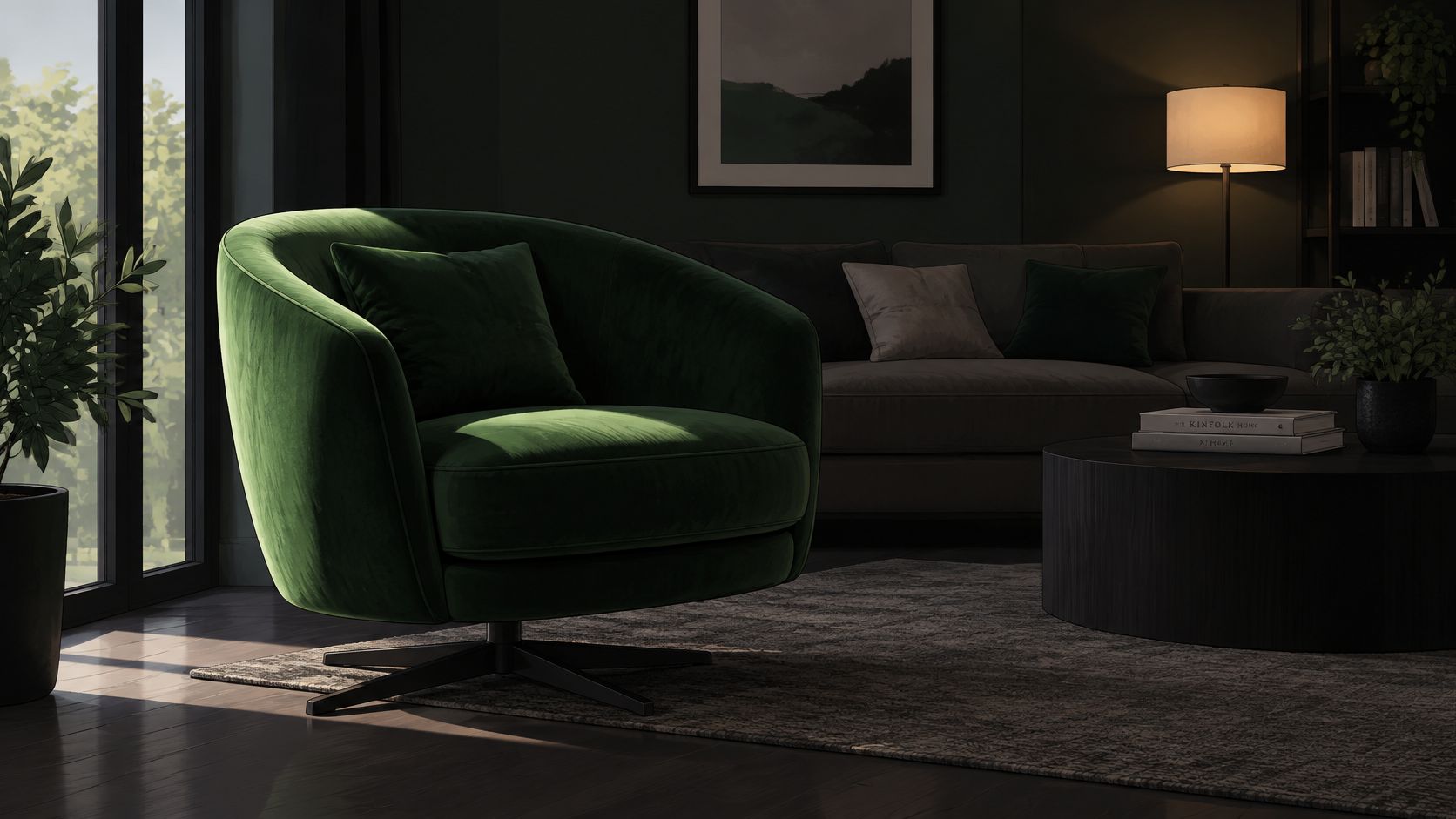
Does a green swivel chair still look inviting when the showroom lights are replaced by a living room's evening lamps? That's the question worth asking before falling for a color. A chair needs to suit the room's light, fit the person sitting in it, and turn without bumping the furniture beside it.
The best choice isn't necessarily the deepest green or the plushest seat. It's the chair that makes everyday life easier, whether that means reading beside a window, joining family conversations, or working at a desk.
Choose the job before choosing the shape. A chair intended for occasional conversation has a different assignment from one used throughout a workday. Green upholstery can make either look appealing, but it can't turn a lounge chair into supportive task seating.
Swivel seating itself isn't a passing trend. The history of the swivel chair includes an illustrated rotating, height-adjustable seat concept from 1505, long before today's upholstery choices. The useful distinction remains the same: rotation describes a mechanism, not a complete comfort specification.
Match the chair to the household
An all-day home office calls for adjustable task features, dependable back support, and a stable base. A low, enveloping accent chair might look wonderful beside a desk, yet leave its occupant reaching upward toward the keyboard. For daily computer work, the body-to-desk relationship takes priority over the silhouette.
For reading or conversation, a deeper lounge seat can make sense, especially for someone who likes settling back rather than sitting upright. The back still needs to support the reader comfortably. A plush seat that leaves a shorter person perched forward isn't a good match.
A guest bedroom benefits from a compact chair that provides somewhere to read or put on shoes without crowding the bed. Slim arms can preserve usable seating space within a smaller overall footprint. The accent-chair placement guide offers ideas for giving that chair a practical role rather than treating it as decoration.
For seniors and caregivers, getting into and out of the chair deserves as much attention as sitting. Look for an appropriate seat height, steady arms, and controlled rotation. A chair that moves unexpectedly during a transfer needs closer evaluation, regardless of how comfortable it feels afterward.
Give everyday habits a vote
Small apartments usually benefit from a compact outline and a back that looks finished from the room's entrance. In an open layout, the chair may face the sofa during conversation and turn toward a window later. Its appearance from behind matters.
Families with heavier daily use should prioritize documented construction, cleanable upholstery, and a stated capacity that matches the household. Oversized doesn't automatically mean heavy-duty. Generous cushions describe space, not structural strength.
Practical rule: Start with who sits there, how long they stay, and what the chair needs to help them do.
BILTRITE Furniture-Leather-Mattresses offers a wide selection of living room chairs for side-by-side comparison, alongside small-scale and heavy-duty furniture, USA-made and Amish-made solid wood pieces, and a mattress department with over 60 models. The useful showroom exercise is narrowing the chair category first, then comparing comfort within it.
Sizes and Measurements to Check First
Will the chair fit the room once it turns? Measure the space you can spare, then use painter's tape to mark the chair's footprint on the floor. Leave the usual walking route clear and check how far the upholstered back and arms extend as the chair rotates.
A round base can sit well inside the chair's turning area. The upholstery may swing closer to a wall, curtain, or side table.
Size classes and what to measure
Size Class
Example Dimensions
Best Spaces
Measure First
Compact accent
Use the chair's listed overall width, depth, and height.
Apartments, bedrooms, corners
Full turning area
Oversized lounge
Check the listed overall width, depth, and height, plus the chair's weight if provided.
Family rooms, lounges, TV areas
Doorways and hallway turns
Standard task
Match seat height to the user and work surface.
Home offices, desks, studies
Desk height and knee clearance
Heavy-duty
Check the stated weight capacity.
Daily use, larger adults, caregiving
Rated capacity, not appearance
Measure the route as well as the destination
Check doorways with the door open to its usual position. Account for handles, narrow landings, stair rails, and hallway corners. A chair may fit the room and still be difficult to bring through the route leading there.
Record overall width and usable seat width separately. Thick arms can take up room without adding seating space. The chair-width guide explains which dimensions affect room planning and which affect sitting comfort.
For desk seating, measure beneath the desktop. Drawers, aprons, and keyboard trays can reduce knee clearance or block armrests.
Before shortlisting a chair, record:
Floor footprint: Space available without blocking daily movement.
Turning clearance: Room for the chair's back and arms to rotate.
Delivery route: Doorways, stairs, and hallway turns.
Desk clearance: Space for knees, thighs, and armrests.
User requirements: Body fit and the stated weight capacity.
What Green Swivel Chairs Cost in 2026
What should you expect to pay for a green swivel chair? Prices vary with the chair's size, upholstery, construction, and swivel mechanism, so compare the features behind the price rather than relying on a single figure.
For each chair, ask what a higher price pays for: frame joints, fabric grade, mechanism, customization, or service. Then decide which of those features matters for how your household will use the chair.
Compare what the household will actually use
For a busy family room, practical upholstery care and a stable base may matter more than a dramatic fabric. For occasional bedroom seating, a smaller footprint may be more useful than extra cushioning.
Use the same questions for every candidate:
Construction: What materials form the frame, and how are the joints reinforced?
Upholstery: Is the fabric's care routine realistic for the household?
Mechanism: Does the swivel feel controlled, quiet, and consistent?
Documentation: Are capacity, warranty coverage, and care instructions available?
A sensible shortlist includes options that suit your body, your care preferences, and the demands of daily use. At BILTRITE, we focus on affordable, better-quality furniture and can explain the differences between chairs without making price the only deciding factor.
Greens, Light and How the Room Changes Them
Green isn't automatically a safe neutral. A deep emerald or forest chair can look rich under bright showroom lighting, then appear almost gray beside a dark floor at home. The workspace color guidance highlights the importance of evaluating green alongside lighting and surrounding materials, rather than choosing it as an isolated swatch.
Sage and softer greens offer a lighter starting point. Pale oak, maple, cream, and white surfaces can also help separate a darker chair from its surroundings. That doesn't make dark green a poor choice, but it makes placement more important.
Run the same lighting test on every finalist
First, examine the upholstery in daylight near a window, without relying solely on a phone photograph. Look for whether the green reads blue, yellow, gray, or brown beside the materials already in the room. A photograph is useful for remembering the arrangement, but it isn't a dependable substitute for the actual fabric.
Next, inspect the sample in the evening under the lamps used for reading and relaxing. A household that spends most of its living-room time after sunset should give that setting considerable weight.
Finally, place the fabric against the floor, wall color, sofa upholstery, and wood finishes. Keep those materials together while comparing options. A green that looks appealing against a white sample board may behave quite differently beside warm flooring.
Check the views created by rotation
Turn the chair and examine it from the doorway, sofa, and window. Textured upholstery can look different across the curved back and arms, especially when the fabric has a directional pile. A swivel chair deserves attention from more than its front-facing showroom position.
For coordinated seating, the green sofa and loveseat guide provides another way to consider green within a larger room palette.
Judge the green against the room's largest surfaces, not the smallest accessory.
In a compact condo or senior living apartment, a broad dark back can occupy a large part of the view. Consider a lighter shade or slimmer outline before adding more decorative accents.
Near a sunny window, request lightfastness information and plan for light control. Bring an existing fabric sample to the showroom, then compare an available upholstery sample at home before committing to the shade.
Upholstery and Frame Materials That Last
Which materials will still suit your household after the green shade has settled into the room? Choose upholstery by its care instructions and feel, then check how the frame and swivel base are built.
Green swivel chair fabrics and frames compared
Material
Strengths
Care
Best For
Performance polyester or blend
May offer stain or fade resistance, depending on the fabric specification
Follow the approved cleaning method
Homes with kids and pets
Velvet
Rich green depth and a soft feel
Vacuum gently; brush only when approved; address spills promptly
Living rooms and accent use
Linen-look or cotton blend
Relaxed appearance; some options feel breathable
Follow the fabric's spot-cleaning instructions
Light, casual rooms
Top-grain or faux leather
Wipeable surface; durability depends on construction
Use approved cleaners; condition genuine leather only as directed
High-traffic family spaces
Solid wood frame
A well-constructed frame can suit daily use
Dust regularly; avoid excessive heat and dryness
Daily use and long-term ownership
Choose a care routine the family can maintain
Ask for the approved cleaning method for the exact fabric. Stain resistance alone does not cover every spill. Confirm whether the fabric allows water-based cleaner, solvent cleaner, or professional cleaning, and keep the instructions where the household can find them.
Velvet rewards a hands-on check. Run your hand across the pile and see whether temporary shading or pressure marks would bother you. Its depth can bring out a green's richness, so consider how that changing surface looks in your room.
The fabric selection guide can help you compare texture, use, and care. Removable upholstery is convenient only when the instructions permit removal and cleaning. A zipper does not mean a cover is machine-washable.
Inspect structure and request material documentation
A well-built solid wood frame can be a sensible choice for daily use. Look closely at the joints, the reinforcement around the swivel mounting point, and the connection between the seat and base. Wood species alone does not tell you how sturdy the chair will feel.
For engineered wood, ask which pressed-wood components are used and whether they meet applicable emissions requirements. After delivery, ventilate the room if new-furniture odors are present.
Before choosing, get a clear answer to one care question: Which cleaner, method, and maintenance routine are approved for this exact upholstery? Specific instructions are more useful than a broad promise of easy care.
How to Test Fit, Swivel and Stability in Person
A photograph can establish style, but it can't establish body fit. For desk seating, the OSHA chair guidance recommends a sturdy five-legged base, 360-degree swivel, and seat-height adjustment of approximately 15–22 inches; it also specifies that users above 275 pounds need a chair designed for the additional load.
Those are task-chair considerations, not a claim that every upholstered accent chair needs office controls. The essential distinction is whether the intended use requires adjustable work support or occasional lounge comfort.
Follow a deliberate fit check
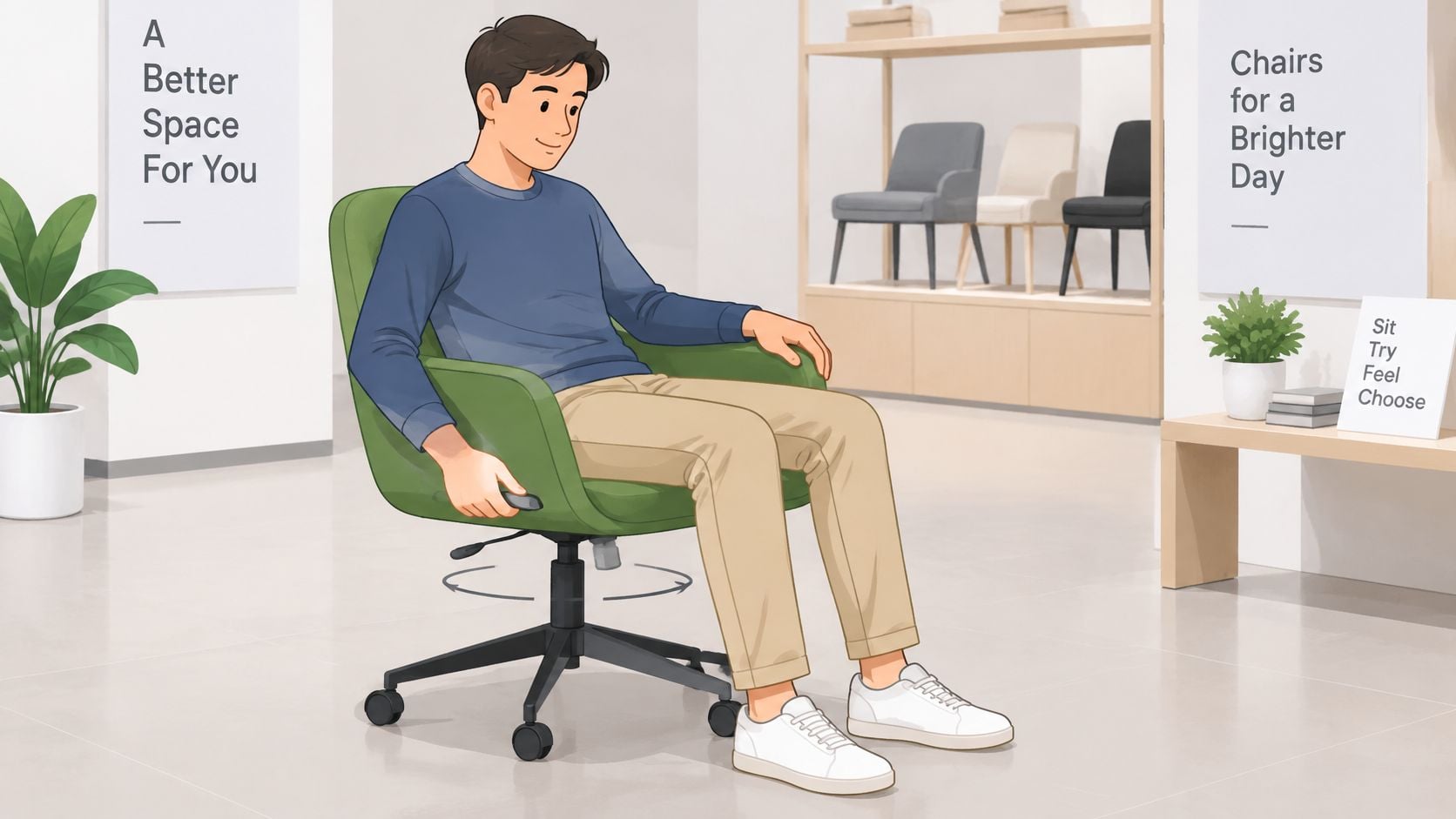
Sit fully back. Feet should rest comfortably on the floor while the back remains supported. If reaching the backrest lifts the feet, the chair may be too deep or too high for that person.
Check behind the knees. Leave slight clearance between the seat edge and the backs of the knees. A cushion that presses there can make an otherwise plush chair uncomfortable.
Locate the lumbar support. The contour should meet the small of the back rather than push against the pelvis or upper back. For a task chair, adjust the support and seat depth before deciding whether the fit works.
Try the available recline controls. On adjustable seating, test the lock and tension rather than assuming they suit the user. A fixed-back accent chair should be judged in its actual sitting position, not as though recline can be added later.
Turn through the available range. Rotation should feel smooth and controlled, without catching or wobbling. Test return-to-center behavior only if that mechanism is specified, and evaluate casters only on chairs equipped with them.
Stay seated and shift naturally. Read, reach toward an imagined side table, and change position. Notice whether the base feels dependable and whether standing causes unexpected movement.
Test everyday access, not just seated comfort
A family member can observe the chair from the side while the intended user sits and stands. That makes it easier to notice a raised shoulder, an awkward reach to the arms, or a seat that compresses excessively during standing.
For someone who needs steady transfer support, effortless rotation isn't automatically desirable. The chair needs to remain manageable during entry and exit. A separate power lift recliner serves a different purpose and shouldn't be confused with swivel seating.
For combined motion, the swivel-rocker accent-chair guide helps distinguish turning from rocking. Each movement should be evaluated separately.
For commercial or demanding high-use seating, request applicable ANSI/BIFMA test evidence and a documented capacity. Comfort, stability, and structural suitability are separate checks, and a chair needs to pass all of them for its intended job.
Test Your Pick in Our Greenfield Showroom
What will make a green swivel chair work in your room: its shade, its feel, or how it fits the space? Bring room measurements, fabric or paint samples, and photos of your flooring and wood finishes. A few details about who will use the chair, how they'll use it, and any mobility needs can also help focus the visit.
BILTRITE Furniture-Leather-Mattresses is a fourth-generation, family-owned business serving Greenfield and Metro Milwaukee since 1928. We offer free in-store design services, and our consultants can help you coordinate a chair with one piece or a whole room. All customers purchase brand-new furniture and mattresses.
Bring the room into the decision
Use your visit to compare how green upholstery looks alongside your samples and room photos. Ask about cleaning, weight capacity, mechanism operation, and warranty coverage. Those details help you judge whether a chair suits your household as well as your décor.
Compare chairs in person
Check the upholstery closely, sit in each chair, and operate its swivel mechanism. A showroom visit lets you assess the color and feel directly, then ask questions as you compare.
Our showroom is closed Sundays and Mondays. Visit on an open day for time to make your comparisons and talk through your options.
Bring your measurements and samples to BILTRITE Furniture-Leather-Mattresses in Greenfield to explore green swivel chairs and get free in-store design help.