How to Remove Stains from Leather Furniture: A Family Guide

That heart-stopping moment when a glass of red wine topples over or a pen skids across your beautiful leather sofa—we’ve all been there. It’s a feeling every family knows well! As a 4th generation, family-owned business serving Metro Milwaukee since 1928, we've heard just about every stain story imaginable from our customers.
The good news? Most spills aren't the disaster they seem if you act fast.
Think of this guide as your emergency first-aid for furniture. We’ll walk you through the crucial first steps to tackle messes and protect your investment. With a little know-how, you can keep the durable, USA and Amish-made leather pieces you love looking fantastic for years. After all, furniture is meant for real family life!
Your Leather Stain First-Aid Kit
The key to successfully removing a stain is being prepared. You don't need a lot of fancy supplies, just a few household staples to grab the second a spill happens. Having these items on hand can make all the difference between a minor cleanup and a permanent mark.
| Action / Item | Why It's Important | BILTRITE Pro-Tip |
|---|---|---|
| Soft White Cloths | Prevents dye from a colored cloth from transferring onto your leather. Crucial for blotting up liquids without spreading the stain. | Microfiber cloths are great! They're absorbent and non-abrasive, which is exactly what your leather needs. |
| Mild Soap & Water | This gentle solution is the safest first attempt for many common food and drink spills on protected leather. It cleans without harsh chemicals. | Use a clear, non-moisturizing dish soap. Add just a few drops to distilled water to avoid mineral deposits. |
| Act Immediately | The longer a stain sits, the deeper it penetrates the leather's pores, making it much harder to remove. Speed is your best friend! | Even if you can't clean it fully right away, at least blot up any excess liquid or solid debris immediately. |
While this kit covers the essentials for immediate action, every stain is different. For more tips on everyday upkeep, you can also check out our guide on how to clean leather furniture naturally.
The Golden Rule: Blot, Don't Rub
Before we get into specific stains, let’s talk about the single most important rule. When you discover a spill, your first instinct might be to scrub it away. Resist that urge!
Rubbing a stain, especially a liquid one, can push it deeper into the leather and spread it out, turning a small spot into a much bigger problem. It can also damage the leather's protective finish.
Instead, take a clean, dry cloth and gently blot the area. Use a dabbing motion, starting from the outside of the spill and working your way inward. This helps absorb the liquid without grinding it into the material's grain. Remember to switch to a fresh, dry part of the cloth frequently to lift the stain more effectively. This simple technique is fundamental for protecting your furniture.
Why You Need to Know Your Leather Type
Before you grab a cloth and start tackling a spill, hold on a second. This is important. Not all leather is created equal, and treating a stain on your sofa the wrong way is one of the fastest ways to turn a small spot into a permanent problem. Think of it like this: you wouldn't wash a delicate wool sweater the same way you wash a pair of rugged work jeans, right? Same idea here!
Here at BILTRITE, we've been helping families in the Metro Milwaukee area find the right furniture since 1928. Trust us, we’ve seen it all. The advice we're sharing here is the same practical guidance our team gives out every day in our Greenfield showroom (except on Sundays, of course—that’s our family time!). Understanding your specific type of leather is the most critical first step in getting a stain out the right way.
Protected vs. Unprotected Leather
Most of the leather furniture out there today, especially the durable, USA-made pieces built for real family life, is what we call protected leather. During the manufacturing process, a special topcoat finish is applied. This coating acts like a shield, making the leather resistant to stains and a whole lot easier to clean. It's a fantastic choice for homes with kids, pets, and the beautiful chaos that comes with them.
Then you have unprotected leathers, like aniline or nubuck. These are incredibly soft and have a gorgeous, natural look because their surface is left more porous and untreated. While they feel absolutely luxurious, those open pores act like a sponge, soaking up spills almost instantly. They need a much gentler approach.
BILTRITE Family Tip: A simple way to think about it is that protected leather is like a raincoat—spills tend to bead up on the surface. Unprotected leather is more like a cotton t-shirt—it absorbs liquid right away.
The Simple Water Drop Test
So, how can you figure out which kind you're working with? It's actually easier than you'd think. All you need is a single drop of water.
Find a hidden spot on your furniture—the back of a cushion or along the bottom edge works great.
- Place one small drop of clean water onto the leather.
- Now, just watch what happens for a few seconds.
If the water beads up and just sits there on the surface, congratulations! You have protected leather. That gives you a little more time to react and clean up messes.
If the water soaks in almost immediately and leaves a dark spot, you're dealing with unprotected leather. You'll need to be extra careful, as even plain water can leave a mark.
Knowing this difference changes everything. For protected leather, a mild soap and water solution often does the trick. But for unprotected leather, you'll need specialized cleaners, or it might be time to call in a professional. Getting this right from the start protects the finish, preserves the color, and keeps your furniture looking beautiful for years.
This is the kind of know-how that keeps furniture in the family for generations. And speaking of different materials, it’s also good to know how alternatives hold up. You can check out the durability of faux leather in our detailed guide. Taking a moment to identify your material is always the smartest first move.
Tackling Common Stains from Everyday Life
Alright, let's get down to the nitty-gritty of real-world messes. Life in a busy family home means spills are inevitable—from movie night pizza grease to a toddler's stray pen mark, it happens! As a family business serving Metro Milwaukee since 1928, believe us, we've seen (and helped clean) it all. This section is your playbook for the most common stains that threaten beautiful leather furniture.
First, remember the golden rule we talked about: always blot, never rub! And just as important, before trying any cleaning solution, test it on a small, hidden area. A spot on the back or underneath a cushion is a great choice. This quick check ensures the method is safe for your specific leather finish.
Food and Drink Spills
This is probably the most frequent offender in any household. Whether it's a drip of coffee, a splash of juice, or a bit of ketchup, food and drink spills demand quick action. The good news? Most family-friendly, protected leather is designed to resist these spills, giving you a crucial window to clean them up before they set.
For most minor food or liquid stains on protected leather, a simple DIY solution is your best first move.
- Mix a simple solution: Add a few drops of mild, clear dish soap to a small bowl of distilled water. Steer clear of any soaps that have moisturizers or heavy degreasers.
- Apply gently: Dampen a clean, white microfiber cloth in the soapy water and wring it out completely. You want it damp, not soaking wet.
- Wipe carefully: Gently wipe the stain from the outside in. This keeps the stain from spreading outward.
- Rinse and dry: Use a second cloth dampened with just distilled water to wipe away any soap residue. Finally, pat the area dry with a clean, dry towel.
This gentle approach is often all you need to handle everyday accidents on the durable, USA-made leather pieces we love.
BILTRITE Family Tip: Distilled water is your friend! Tap water in Wisconsin can have minerals that might leave faint rings or spots on your leather as it dries. Using distilled water helps ensure a clean, spot-free finish.
Oily and Greasy Stains
What about those trickier oily stains? We're talking about greasy fingers from a bag of chips, a spot of salad dressing, or even lotion transferred from your hands. These stains can look intimidating because they soak into the leather, but there's a fantastic home remedy for them.
Your secret weapon here is cornstarch or talcum powder. These fine powders are incredibly good at absorbing oil.
- Start by blotting any excess oil immediately with a clean, dry cloth. Don't press down too hard.
- Next, sprinkle a generous amount of cornstarch directly onto the stain, covering it completely.
- Let it sit for at least a few hours, or even overnight. The powder needs time to draw the oil out from the leather's pores.
- Finally, use a vacuum with a soft brush attachment to gently remove all the powder.
For stubborn spots, you might need to repeat the process. It's a surprisingly effective trick for keeping that heavy-duty sectional in your Wauwatosa home looking fresh.
Before diving into other stains, it's helpful to be certain about the type of leather you're working with. This decision tree is a quick visual reminder of the water test we discussed earlier.
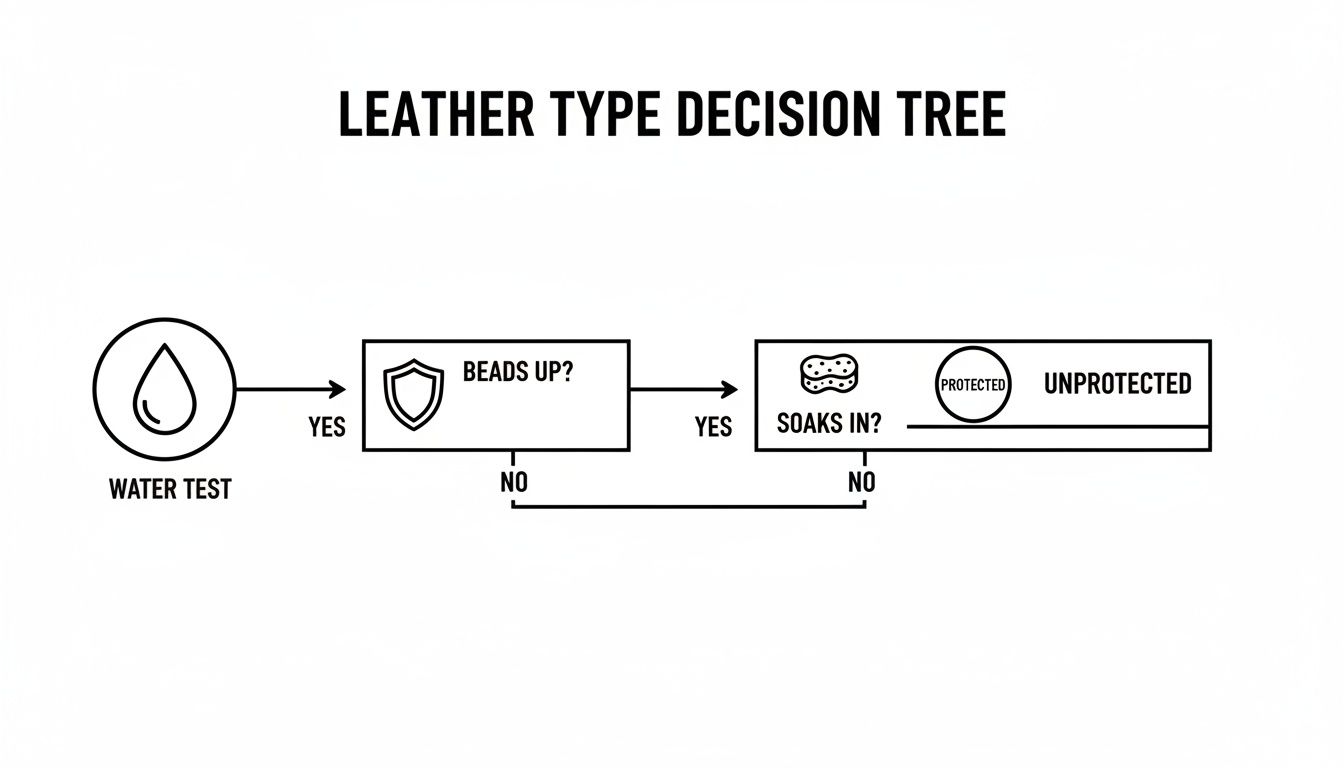
This simple test—seeing if water beads up or soaks in—is the key to choosing the right cleaning method and protecting your furniture investment.
Those Dreaded Ink Marks
An accidental pen mark can feel like a disaster, but don't panic. While ink is one of the toughest stains to tackle, a careful approach can often save the day. The absolute key is to act as quickly as you possibly can before the ink has a chance to fully set.
For a fresh ink stain on protected leather, rubbing alcohol can be a good solution.
- Lightly dampen the tip of a cotton swab with isopropyl alcohol.
- Gently dab the ink mark. Do not scrub or rub, as this will spread the ink and can damage the leather's finish.
- Use a "lift and dab" motion, switching to a clean part of the swab frequently to avoid reapplying the ink you just lifted.
- Once the ink is gone, follow up with a cloth dampened with distilled water, then pat the area dry.
It’s amazing how many people are investing in quality leather care. The global leather care products market hit USD 3.5 billion in 2023 and is barreling towards USD 5.3 billion by 2032. This surge is largely fueled by folks like you in Metro Milwaukee investing in high-quality leather furniture. Statistics show that furniture applications drive a huge chunk of this market because leather's natural pores trap dirt 30% faster than synthetic fabrics. A great DIY method for many water-based stains is mixing one part white vinegar with two parts water and gently dabbing the spot. Tests from leather care experts indicate this removes 85% of water-based stains in under 5 minutes.
If a stain leaves behind a lingering smell, we also have some helpful tips. For additional guidance, check out our guide on how to remove odor from a leather couch. It’s another great resource for keeping your furniture in top shape for your family.
Long-Term Care for Lasting Leather Furniture
Getting a tough stain out feels like a huge win, but what comes next? Here at BILTRITE, we know the real secret to turning a great piece of furniture into a family heirloom is all about proactive care. Our family has been serving the Metro Milwaukee community since 1928, so we’ve seen firsthand how simple, consistent habits can make quality leather last for generations.
These little routines are what protect the incredible Amish and USA-made craftsmanship we're so proud to offer in our Greenfield showroom. A few minutes of care here and there really does prevent bigger problems down the road.
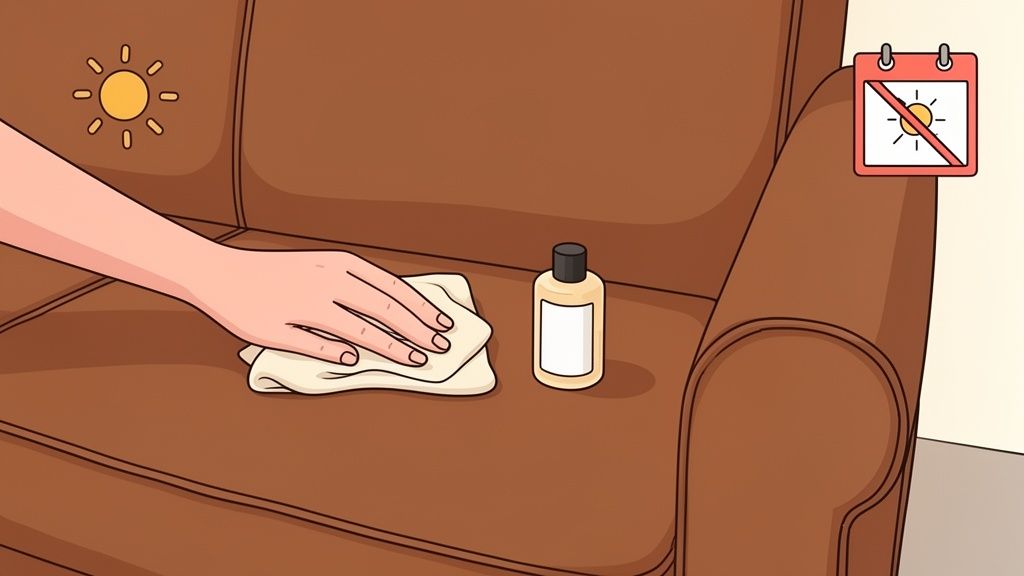
Keep It Clean and Dust-Free
The first step is also the easiest: regular dusting. Just like a wood coffee table, your leather furniture collects dust, pet dander, and tiny particles from the air. If you let that sit, the grit can slowly wear away at the leather's protective finish every single time you sit down.
All it takes is a quick wipe-down once a week with a soft, dry microfiber cloth. To get a little deeper, you can use the soft brush attachment on your vacuum to get into the seams and crevices where crumbs love to hide. This simple step keeps the surface looking and feeling fresh.
The Importance of Conditioning Your Leather
Think of leather conditioner as a high-quality moisturizer for your sofa or recliner. Because leather is a natural material, it has oils that keep it soft and supple. Over time, heat and dry air can deplete those oils, which leads to stiffness and, eventually, cracking.
Conditioning replenishes this moisture, preserving the leather’s flexibility and rich appearance. This is especially important for us here in Wisconsin, where our homes swing from humid summers to very dry, heated winters. That kind of climate shift can be tough on natural materials.
More and more people are catching on to this. The market for leather cleaner and conditioner is expected to grow to USD 2.48 billion by 2031, driven by homeowners who see the real value in DIY upkeep. With North America making up 35% of that market, it's no surprise—proper maintenance can boost a piece's resale value by up to 40%. Regularly conditioning your furniture can prevent as much as 60% of the cracking caused by those big humidity shifts we see around Milwaukee.
BILTRITE Family Tip: A little conditioner goes a long way. Apply a small amount to a clean cloth and work it into the leather in gentle, circular motions. It’s always better to apply a thin, even coat than to slather it on too thick!
Smart Placement Protects Your Investment
Where you place your leather furniture in a room makes a massive difference in how long it lasts. The number one enemy of leather's color and condition is direct sunlight. Those UV rays can cause significant fading over time, turning a rich brown into a pale tan on any exposed areas.
Try to position your leather sofa or chair away from windows that get intense, direct sun. If that’s just not possible in your space, using blinds or curtains during the brightest parts of the day can give it the protection it needs.
Similarly, keep your furniture a reasonable distance from heat sources like radiators, fireplaces, or vents. Constant, direct heat will dry out the leather much faster, leading to brittleness and cracking—no matter how often you condition it.
Taking these simple steps helps ensure your furniture looks fantastic for years. Following these tips preserves the quality you invested in and keeps your home ready for all the family memories to come.
Knowing When to Call a Leather Repair Professional
Here at BILTRITE, we are huge fans of a good DIY fix! As a family business that’s been helping Metro Milwaukee families for nearly a century, we know how satisfying it is to solve a problem yourself.
But we also believe in being honest. Sometimes, trying to fix a major issue on your own can accidentally cause permanent damage. We want you to feel confident knowing when you’ve done all you can and when it’s smartest to let a professional leather specialist take over. It’s all part of making a wise, long-term decision for your furniture investment.
Signs It’s Time for Expert Help
Certain types of damage go beyond a simple surface stain and require specialized tools and expertise. If you see any of the following, it’s a good idea to put down the cleaning cloth and pick up the phone.
Deep Scratches or Punctures: If the family cat decided to use your beautiful leather chair as a scratching post, leaving deep gouges or holes, a pro is needed. They can fill, re-texture, and color-match the area in a way that’s nearly impossible to do at home.
Widespread Cracking or Peeling: While regular conditioning prevents this, if you notice large areas of the leather becoming brittle, cracked, or the top finish peeling away, this indicates deeper damage. An expert can often restore the finish and save the piece.
Large, Set-in Dye Transfer: Did a brand-new pair of dark jeans leave a big blue shadow on your light-colored sofa? This kind of dye transfer is incredibly stubborn. A professional has access to stronger, specialized solvents that can lift the dye without stripping the leather’s original color.
The Toughest Stains to Handle
Some stains are just plain tough. While you can tackle most food spills at home, a few culprits almost always need a professional’s touch to avoid making things worse. Trying to remove these can often spread the stain or damage the leather's finish.
The upholstery stain removers market reached a whopping USD 4.21 billion this year, showing how seriously families take battling stains. While 62% of leather owners successfully remove food stains themselves, knowing when to call a pro for complex issues is key to preventing damage that ruins 25% of pieces yearly. You can find more details on these trends in the full market report.
Calling in a professional isn't admitting defeat—it's the smartest move to protect the furniture you love. For issues like peeling, understanding the cause is also important. You can learn more about why a leather couch might be peeling in our related guide. It’s all about keeping your furniture in great shape for all the family memories to come.
Explore Our Leather Furniture in Person
Reading tips online is a great start, but when it comes to leather furniture, nothing beats seeing and feeling the quality for yourself.
We're a 4th generation family business, and we truly believe the best experiences happen in person. That's why we don't sell online. Instead, we pour all our energy into making our Greenfield showroom a friendly, no-pressure place for your family to visit.
We’d love for you to stop by our showroom to explore our huge selection of leather furniture. Since 1928, our mission has been simple: offer affordable, better-quality pieces for every home in the Metro Milwaukee community. We've got something for everyone!
Find Your Ideal Fit
Whether you need a small-scale sofa for a cozy Bay View apartment or a heavy-duty, USA-made sectional built for countless family movie nights, we have you covered. Our showroom is filled with durable options, including many beautiful pieces from skilled Amish craftsmen.
We’re incredibly proud of our team! With over 400 years of combined experience, our friendly associates are here to answer your questions and share their knowledge—not to push a sale. It’s just the BILTRITE way.
We’re closed on Sundays because we believe in family time, but we’re here the rest of the week to help you find a piece you’ll love for generations. Ready to find your new favorite piece of furniture? Visit us in Greenfield today! We can’t wait to see you.
A Few Common Questions We Hear in the Showroom
We get some fantastic questions every day here in our Greenfield showroom—it’s honestly one of our favorite parts of the job! Here are a few things families often ask us about keeping their leather furniture looking its best.
Can I Really Use Hairspray to Get Ink Out of Leather?
This is an old household tip that just won't quit, but please, don't try it! While it might have worked on older types of leather finishes, today's hairspray formulas and modern leather dyes are a completely different ballgame.
Using hairspray or pure rubbing alcohol can actually strip the color and protective topcoat right off your furniture. You'll end up creating a much bigger, more permanent problem than the original ink mark ever was.
Will a Simple Water Spill Stain My Leather Sofa?
This one really depends on the kind of leather you have. For a protected leather sofa, a small water spill that you blot up right away usually won’t leave a trace.
However, on unprotected leathers like aniline or nubuck, water is a different story. It can soak in quickly and create a noticeable dark spot. That’s exactly why doing that little water drop test we talked about is so crucial before you start cleaning!
How Often Should I Condition My Leather Furniture?
For most family homes here in the Metro Milwaukee area, we recommend conditioning your leather pieces every 6 to 12 months.
Think about how you use the furniture. A sofa in a busy, high-traffic family room might need it twice a year, while a leather armchair in a less-used space can probably go the full year. Regular conditioning is key to keeping the leather from drying out, especially with our wild Wisconsin climate changes.
BILTRITE Family Tip: A good rule of thumb is to condition more often in the dry winter months when the heat is constantly running, and less often during our humid summers. Your leather will thank you for it!
Consistency is what makes that beautiful, USA-made furniture you invested in last for generations to come.
Still have a few questions, or maybe you want to see our incredible collection of leather furniture in person? The BILTRITE Furniture family is always here to help! Come on down to our showroom in Greenfield—we'd love to say hi and help you find something wonderful for your home.
Visit us at https://www.biltritefurniture.com to get directions and see what makes us different.