Solid Wood Table with Drawers: A BILTRITE Buyer’s Guide


A lot of shoppers start in the same place. They need one table that can handle daily life without looking like a storage bin. It might need to hold mail in the morning, homework in the afternoon, and dinner dishes at night. A drawer or two sounds simple, but that small detail changes how a table works, how it wears, and how happy a family is with it a few years later.
That's why a solid wood table with drawers deserves a closer look. For Metro Milwaukee families, especially in homes where every piece has to earn its keep, the difference between “looks nice today” and “still works beautifully down the road” often comes down to construction details most product tags never explain.
Table of Contents
- Finding a Table That Does It All
- What Real Solid Wood Truly Means
- Choosing Your Wood Species and Finish
- Decoding Drawer Construction and Hardware
- The Enduring Value of USA and Amish Made
- Simple Care for a Lifetime of Beauty
- Come Say Hi and See for Yourself
- Frequently Asked Questions
Finding a Table That Does It All
A family might start with a simple goal. They want a dining table, sofa table, or work table that looks warm and inviting. Then real life enters the picture. Keys need a home. Chargers need a home. Placemats, pens, stamps, school papers, and that one pair of scissors everyone uses all need a home too.
That's where a solid wood table with drawers starts to make sense. It gives a room the clean look of a table, but it also adds tucked-away storage right where people use it. Instead of adding another small cabinet or basket, the storage is built into the furniture itself.
For many households, this matters most in busy zones:
- Entry areas: a drawer keeps wallets, sunglasses, and unopened mail off the top.
- Dining spaces: placemats, napkins, and serving tools stay close without crowding a hutch.
- Living rooms: remotes, chargers, and notebooks disappear fast when company comes over.
A table like this isn't new or trendy. It's part of a long furniture tradition, and there's a reason it keeps showing up in homes generation after generation. It solves a common problem without asking for more floor space.
A good table with drawers doesn't just add storage. It puts storage exactly where daily habits happen.
Shoppers who are still deciding on shape, size, or room placement can also browse different types of tables for the home before narrowing in on drawer options. That step often clears up whether the room needs a dining table, console, writing table, or accent piece first.
What Real Solid Wood Truly Means
“Solid wood” gets tossed around a lot, and that can make shopping confusing. Some pieces use the phrase loosely. Others earn it. For buyers looking at a solid wood table with drawers, the material matters because the drawer action, long-term durability, and repair potential all start with what the piece is made from.
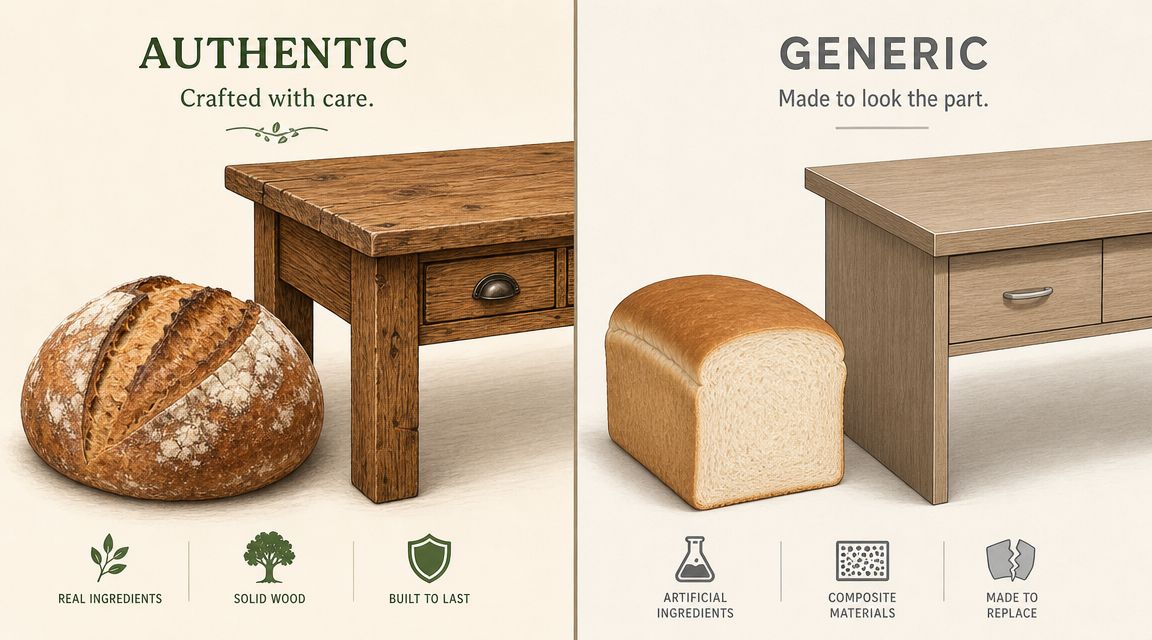
A simple way to think about it is this. Real solid wood is like a loaf of bakery bread. It has substance all the way through. A lookalike product may still look nice from the outside, but its core construction is different.
What solid wood changes in daily use
A real solid wood table usually feels different right away. It has more depth in the grain, more visual variation, and more substance when a person touches the top, edge, or legs. It also tends to age with character instead of just wearing out.
That matters in a family home because life happens. A table may get bumped by a backpack, scraped by a serving bowl, or marked up during a school project. Solid wood can often be refreshed in ways lower-grade materials can't.
Shoppers who want help spotting the difference can review how to tell if furniture is real wood. It's one of those topics that becomes much easier once a buyer sees examples side by side.
Why wood movement is normal
Here's the part many mass-market product pages skip. Solid wood moves. It expands and contracts with changes in humidity, and that movement can affect drawer fit over time if the piece isn't built correctly. Independent woodworking guidance notes that this is normal and needs to be designed for, especially in climates with seasonal shifts like Milwaukee, as explained in this wood movement discussion.
That point confuses shoppers all the time because “movement” sounds like a flaw. It isn't. Poor planning is the flaw. Good builders account for seasonal changes in the way the top is attached, how the drawer is fitted, and how the whole frame is assembled.
Practical rule: If a table has drawers, buyers shouldn't ask only what wood species it uses. They should also ask how the maker handles seasonal movement.
The detail that surprises people
Architectural woodwork standards also make an important distinction in construction. Solid wood drawer boxes are expected to meet Custom Grade requirements, while other cabinet parts often rely on engineered panels for stability in specific applications, according to the Architectural Woodwork Institute material requirements. In plain English, that means drawers are one of the places where solid wood still has a respected, practical role because strength, wear life, and fastening performance matter.
Choosing Your Wood Species and Finish
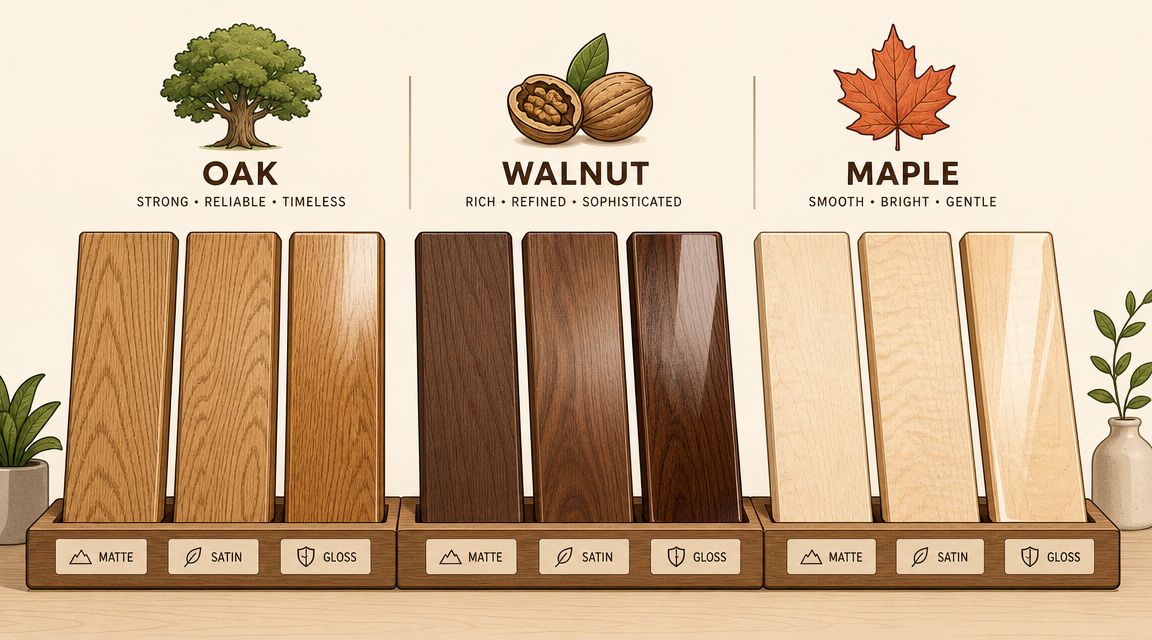
Wood species change the personality of a table faster than many shoppers expect. Two tables can have the same shape and the same drawer layout, yet feel completely different once the wood and finish change. Grain pattern, color shift, and overall mood all come from that choice.
Three familiar looks
Here's a simple side-by-side view of common choices shoppers often compare:
| Wood species | What it looks like | Where it fits well |
|---|---|---|
| Oak | Bold, visible grain with a classic furniture look | Busy family homes, traditional rooms, everyday dining |
| Maple | Smoother, quieter grain with a cleaner appearance | Transitional spaces, casual modern rooms, lighter finishes |
| Cherry | Warm, rich tone with a dressier feel | Formal dining, elegant accent pieces, classic interiors |
Oak usually appeals to people who want to see the wood speak clearly. Maple works well when the goal is a cleaner, less busy surface. Cherry often draws shoppers who want warmth and a more refined look.
Finish changes the mood
Finish choice can push the same table in different directions. A lighter finish often keeps the room feeling open and relaxed. A medium stain can bring out grain and warmth. A darker tone creates more contrast and a more formal presence.
Some buyers focus on the color first and forget to think about the room's daily use. That's worth slowing down for. A dining table in a home with kids may need a finish that hides fingerprints and everyday wear more gracefully than a very dark or very glossy look.
A helpful next step is to compare species in person or start with a guide to the best wood for furniture in different styles and uses. Seeing grain and finish samples together often makes the decision much easier than trying to judge from memory.
If a shopper loves the shape of a table but not the exact color on the floor, the wood and finish options may matter just as much as the design itself.
Decoding Drawer Construction and Hardware
Drawers are the working parts of the piece. A table top gets the attention, but the drawers tell a buyer how the furniture is likely to behave after years of opening, closing, loading, and living in a real home.
That's why drawer construction deserves more than a quick glance. A solid wood table with drawers should be judged with the drawers open, not closed.
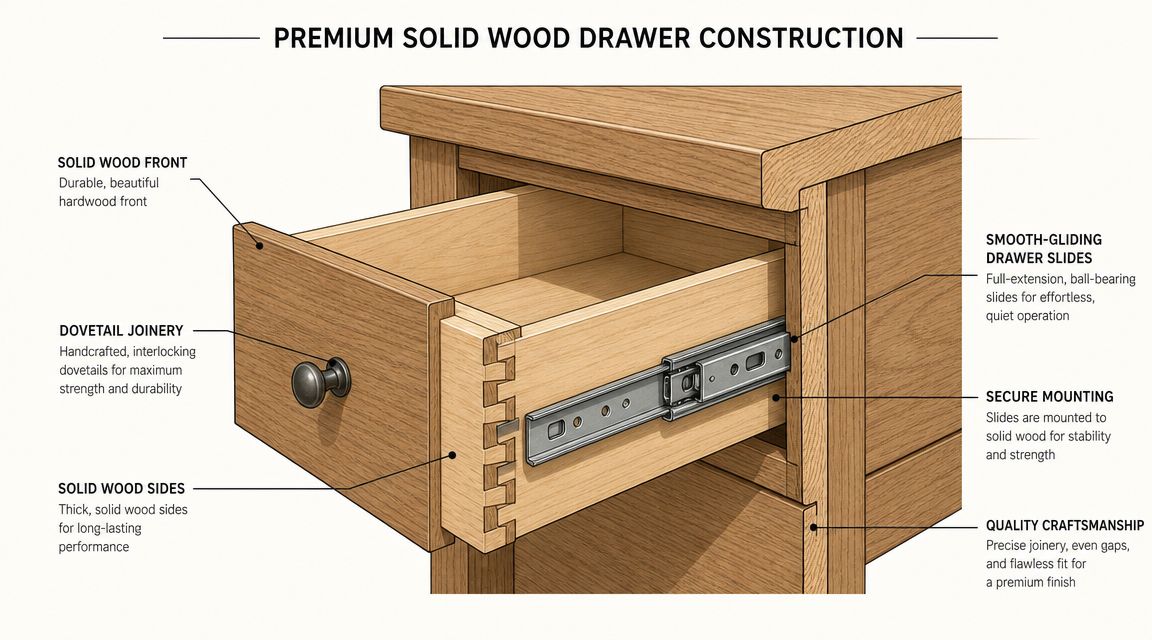
What to inspect first
A buyer standing in front of a table can learn a lot in less than a minute.
- Check the corners: Interlocking joinery, such as dovetail construction, helps a drawer resist pulling apart under repeated use.
- Pull it all the way out: Full-extension hardware lets the entire drawer body come forward to the cabinet face, which means the back of the drawer is usable.
- Notice the feel: A drawer shouldn't rack, scrape harshly, or feel flimsy when opened from one side.
For shoppers curious about frame strength in the piece around the drawer, this guide to mortise and tenon joints in furniture gives useful context on one of the classic signs of better construction.
What slide ratings actually mean
Many people assume drawer failure comes from one heavy item. More often, failure shows up as fatigue. Slides wear. The box loosens. The drawer starts to sag or rub because it's been opened and closed over and over.
Architectural Woodwork Standards define full-extension drawers as extending the entire drawer body to the face of the cabinet, and they set dynamic load capacities by use level: 30 lb for 35,000 cycles, 50 lb for 50,000 cycles, and 75 lb for 100,000 cycles in heavy-duty use, as listed in the Architectural Woodwork Standards PDF. That's useful because it shifts the question from “Can this hold a lot once?” to “Was this engineered for the way this household will use it?”
Matching the drawer to the job
A shallow drawer in a sofa table has a different job than a deeper drawer in a work or dining table. Buyers can think about it this way:
| Use | What the drawer may hold | What matters most |
|---|---|---|
| Entry table | Keys, mail, small accessories | Smooth action, organization, easy access |
| Dining table | Linens, utensils, serving tools | Stable box construction, useful extension |
| Work or writing table | Pens, paper, chargers, office items | Frequent cycles, consistent alignment |
The smartest question isn't “Does this table have drawers?” It's “Were these drawers built for what the household will put in them every day?”
The Enduring Value of USA and Amish Made
A table can look traditional without being carefully made. It can also be made with skill, patience, and a builder's pride. That difference is often what shoppers are responding to when they say a piece has “substance” or “character,” even if they don't yet have the words for it.
That's one reason USA-made and Amish-made furniture keeps earning attention from families who want something steadier than throwaway furniture. The work tends to reflect a slower, more deliberate way of building. A drawer isn't just added for marketing appeal. It's integrated into the design in a way that respects how the wood, frame, and storage all work together.
History gives this category real perspective. The table has a very long documented history. Encyclopaedia Britannica notes use in the Western world since at least the 7th century BCE, and the same entry explains that by the 17th century, dining-room furniture could already include a table with three or four drawers in storage-integrated designs, as described in Britannica's history of tables. So the idea behind a solid wood table with drawers isn't a recent upgrade. It's part of a long tradition.
Why that matters to today's buyer
A shopper choosing a USA-made or Amish-made table is often choosing more than a style.
- Craftsmanship matters: The builder is more likely to think through joinery, fit, and finish instead of just chasing volume.
- Customization helps: A family may need a different width, stain, hardware choice, or scale to suit the room.
- Long-term ownership improves: Repairs, refinishing, and day-to-day use tend to make more sense when the original piece was built carefully.
That's especially meaningful in homes where furniture needs to last through moves, kids, holidays, and layout changes. A well-made table often adapts better because it wasn't built like a temporary item in the first place.
Simple Care for a Lifetime of Beauty
A solid wood table with drawers doesn't need fussy treatment. It just needs steady habits. The goal isn't to keep it looking untouched forever. The goal is to help it age well while the family enjoys using it.
A few everyday steps go a long way:
- Use placemats and coasters: Heat and moisture are tough on finishes, especially in dining and multipurpose spaces.
- Dust with a soft cloth: Dry dusting handles most routine care without adding residue.
- Clean spills quickly: A slightly damp cloth followed by a dry one is usually enough for normal messes.
What to avoid
Many shoppers assume more polish means better care. Often it means buildup. Heavy oils, waxes, or random spray products can leave residue that changes the feel and look of the finish over time.
It also helps to treat drawers gently. Overpacking, slamming, or forcing a sticky drawer usually creates more wear than the original problem. If a drawer starts acting differently during a seasonal change, that's a good moment to ask questions before trying home remedies.
For a simple maintenance routine, this guide on how to clean wood furniture covers the basics in plain language.
A well-made wood table should be lived with, not tiptoed around.
Come Say Hi and See for Yourself
Reading about construction helps. Touching the table helps more. A buyer can learn a lot by running a hand across the top, opening the drawer fully, checking the fit at the corners, and seeing how the finish looks under real showroom lighting.
That's why many shoppers still prefer an in-person furniture experience when they're considering something like a solid wood table with drawers. Material, grain, and drawer action are physical details. They don't translate fully through a screen.

In Greenfield, BILTRITE Furniture-Leather-Mattresses gives local shoppers a place to compare solid wood, Amish-made, USA-made, small-scale, and heavier-duty furniture in person. The store has served Metro Milwaukee since 1928, and its showroom-first approach fits this category well because buyers can inspect the details that matter instead of guessing.
What shoppers should do in person
When visiting a showroom, it helps to do more than admire the finish.
- Open every drawer: See whether the action feels steady and useful.
- Look underneath: The underside often reveals how seriously the piece was built.
- Bring room measurements: A smart table should fit both the wall and the walkway around it.
- Ask about customization: Size, wood species, finish, and hardware can all affect the final result.
A local visit also gives shoppers a chance to compare smaller apartment-friendly pieces with larger family-scale tables without relying on guesswork.
Frequently Asked Questions
Can a solid wood table with drawers be customized
Often, yes. Many USA-made and Amish-made programs allow buyers to choose wood species, stain, hardware, and sometimes dimensions. That matters when a room needs a narrow entry table, a different height, or a finish that works with existing chairs.
Customization is especially helpful when the household likes the design but needs the proportions adjusted. A drawer can be useful only if the whole piece fits the room well.
Are tables with drawers good for small apartments
They can be a very smart choice. The main question isn't just whether a drawer adds storage. It's whether the table adds usable storage without creating bulk that hurts circulation or legroom.
That's an important distinction because a drawer sounds helpful on paper, but actual efficiency depends on drawer depth, under-table clearance, and how the piece sits in the room. Recent small-space and organization trends have made that question more important, as discussed in this furniture layout and storage perspective. In a compact home, a well-proportioned drawer table can replace the need for a separate storage piece. A bulky one can just crowd the room.
Does older furniture history matter when buying a new one
It can. Historical forms often show which ideas stayed useful over time. Antique furniture history points to examples like the 18th- and 19th-century English drum table, a round table with a deep apron fitted with drawers, and notes that table heights and widths became more standardized over time, including early heights around 86.5 cm (34 in) before 1600 and about 76 cm (30 in) in the Stuart period, while withdrawing tables with drawer leaves were often 86 to 89 cm (34 to 35 in) wide, according to this guide to antique tables. Those details show that table makers have been refining storage, proportion, and usability for centuries.
Is solid wood worth the higher upfront cost
For many households, yes. The value usually shows up over time. Better materials, better joinery, and more repair potential can make the piece more satisfying to own long after the purchase day is over.
That doesn't mean every shopper needs the same table. It means they should compare long-term use, not just the opening price tag.
A solid wood table with drawers can be a hardworking piece, a warm design choice, and a long-term investment all at once. Shoppers who want to compare wood species, test drawer construction, and talk through size or customization options can visit BILTRITE Furniture-Leather-Mattresses in Greenfield and see the details for themselves.