Zero Gravity Reclining Sofa: A BILTRITE Comfort Guide


Some evenings, your back is talking, your feet are tired, and the couch that used to feel fine just doesn't cut it anymore. Maybe you've got a long commute, a job that keeps you standing, or a living room that has to work hard for movie nights, naps, and everyday life.
That's where a zero gravity reclining sofa starts to sound less like a fancy feature and more like a smart comfort upgrade.
In our family, we've been helping Metro Milwaukee get comfortable since 1928, and we still get a kick out of furniture that solves real problems. Zero gravity seating is one of those categories that gets people curious fast. The name sounds high-tech. The feel is even better. But what matters most is how it works for actual homes, actual bodies, and actual families.
Ever Dream of Floating on a Cloud in Your Living Room?
You know that moment when you finally sit down, lean back, and think, “I wish this chair did a little more for me”? That's usually where the zero gravity conversation begins.
For some folks, it starts with sore hips after work. For others, it's swollen feet, an achy lower back, or the simple realization that “comfortable enough” isn't the same as supportive. A regular sofa might give you a place to sit. A zero gravity reclining sofa is built to help your whole body settle down.

Why people notice the difference fast
The feeling surprises people. You recline, your legs rise, your body stops fighting gravity so much, and the pressure seems to spread out instead of piling up in one spot.
That's why these sofas appeal to such a wide mix of households:
- Busy families: Parents want a seat that feels good after long days and still holds up to everyday use.
- Seniors and caregivers: Support, easier positioning, and less strain matter more than flashy features.
- Small-space homeowners: Many shoppers assume motion furniture won't fit. That's often not true.
- Anyone with back tension: The right recline can feel much gentler than perching upright on a standard sofa.
A good reclining sofa shouldn't just move. It should help your body relax in a way that makes sense the minute you sit down.
Around our showroom, we see the same pattern again and again. Someone comes in curious, maybe a little skeptical, tries a zero gravity model, and their expression changes. They stop asking what it's called and start asking how soon they can get one into their living room.
So What Exactly is a Zero Gravity Reclining Sofa?
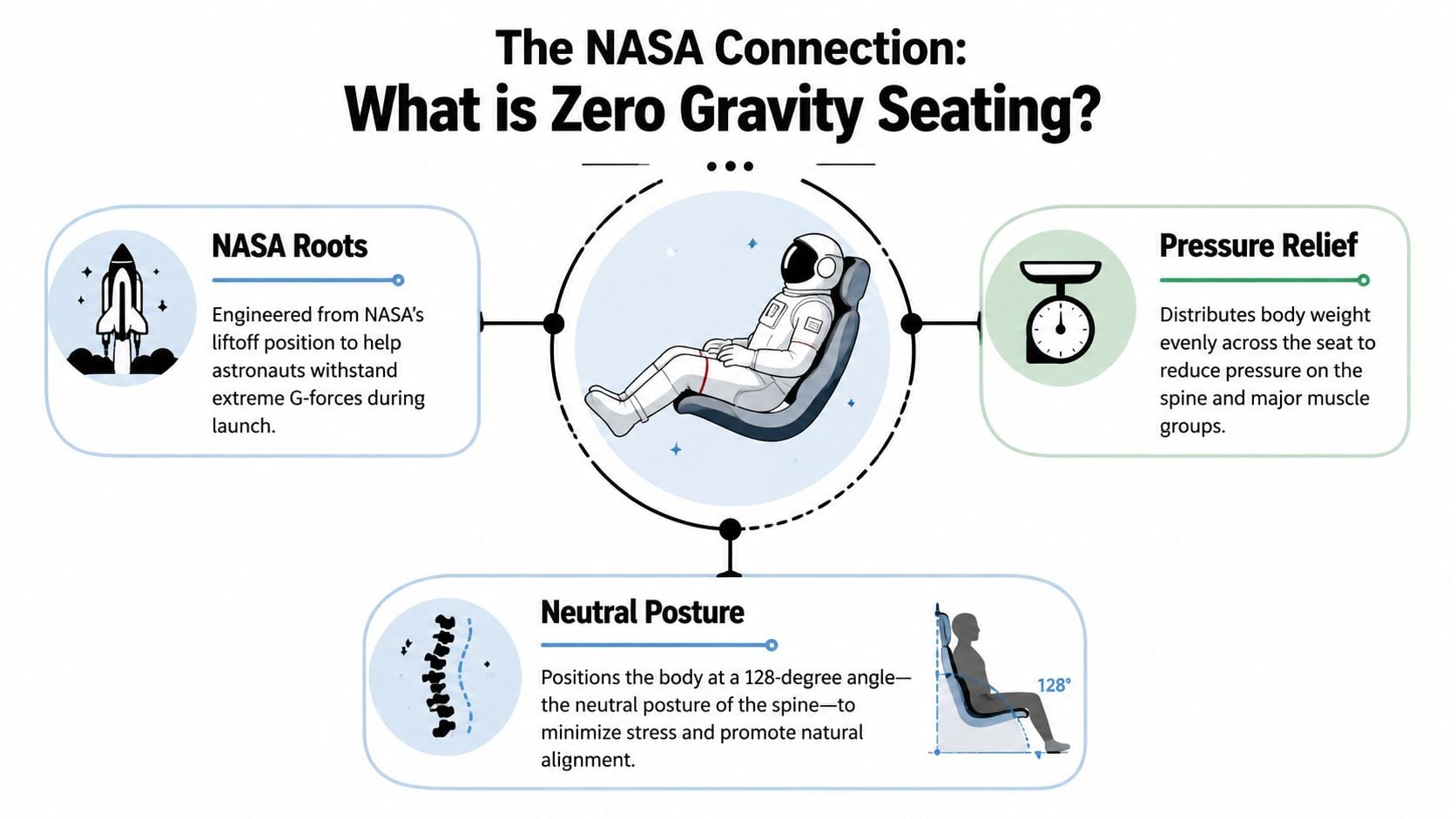
The name comes from space research, but the idea is pretty simple once you strip away the buzzwords. A zero gravity reclining sofa is designed to place your body in a posture that feels more balanced and less compressed than normal sitting.
NASA developed what's called neutral body posture in the 1970s to protect astronauts from intense gravitational forces. As noted in this overview of zero gravity seating and its NASA roots, the posture observed aboard Skylab involved reclining at about 120 to 130 degrees with the legs raised above heart level, which helped distribute body weight more evenly and reduce spinal compression, a description also summarized by Picket&Rail's write-up on zero gravity sofas.
What that means in plain English
A standard sofa asks your spine, hips, and legs to do a lot of work. A zero gravity reclining sofa changes that relationship.
Instead of sitting with your knees bent sharply and your weight pressing downward, the sofa tilts you back and raises your legs into a more neutral position. That helps your body feel supported from head to toe.
Here's the easiest way to picture it:
- Your back reclines so you're not stacked straight up.
- Your legs rise so they're not hanging down and pulling on your lower body.
- Your weight spreads out across more of the seat and back instead of concentrating in a few pressure points.
Why the term confuses people
A lot of shoppers think “zero gravity” means the sofa somehow floats. It doesn't, of course. The phrase refers to the posture, not a gimmick.
What you're feeling is a setup that tries to mimic the body position astronauts used because it reduced strain. Furniture makers later adapted that idea into recliners and sofas for everyday homes.
Practical rule: If a recliner simply leans back, that doesn't automatically make it zero gravity. The position has to support a more neutral body posture, not just tip you backward.
That's an important distinction, especially if you're comparing models in person. Two sofas can both recline, but they won't necessarily feel the same once you're in them for half an hour.
More Than Just Comfort The Health Benefits of Zero Gravity
Comfort gets people interested. Relief is what makes many people stick with it.
The biggest draw for a lot of shoppers is that a zero gravity reclining sofa can help the body feel less compressed. That matters if you deal with back pain, stiffness after work, or the heavy-leg feeling that shows up after long hours on your feet.
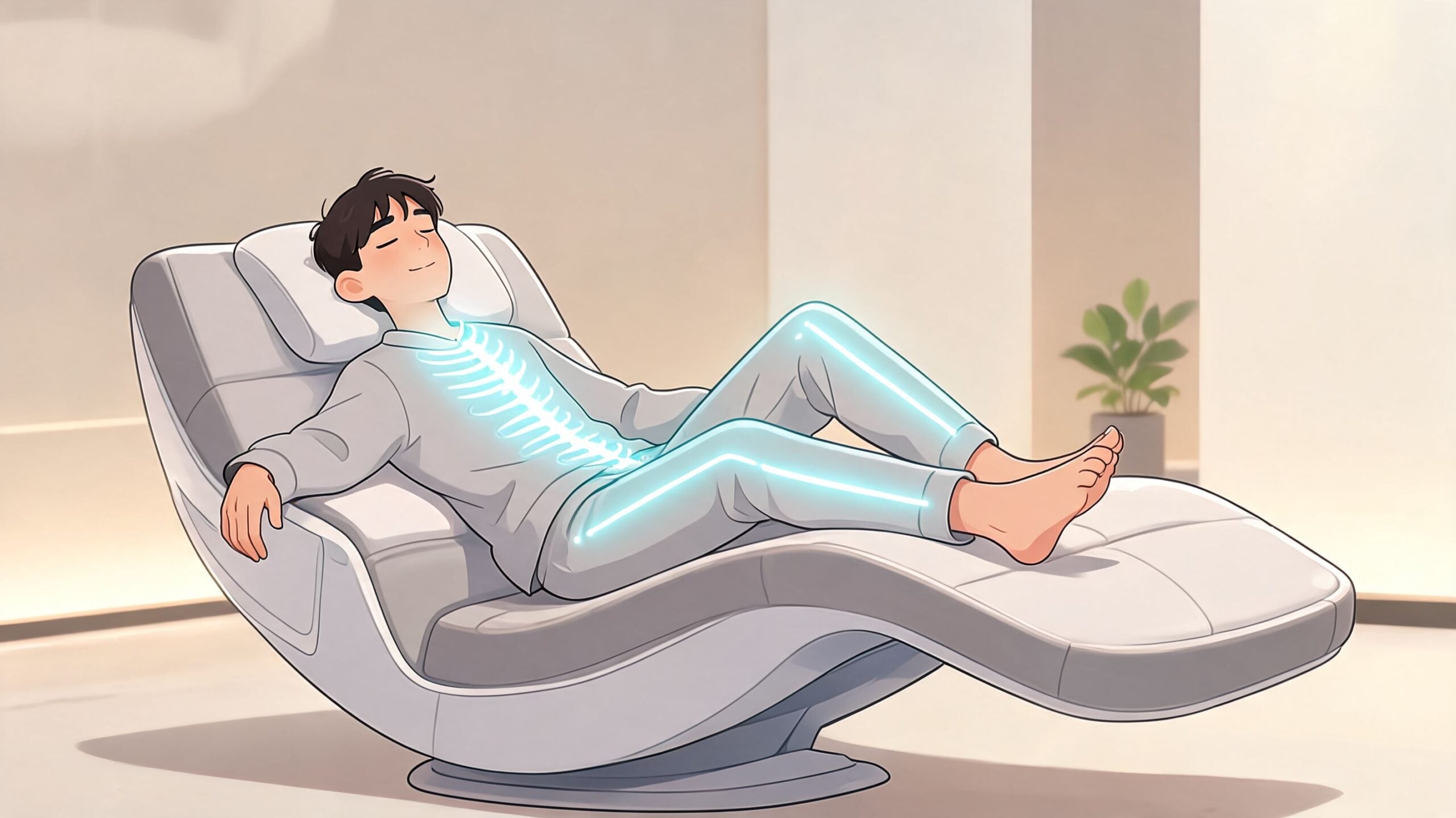
According to the product explanation on Chita Living's Skyline zero gravity reclining sofa, the zero gravity position can minimize spinal compression by up to 70% compared to upright sitting and can boost lower limb blood flow by 10 to 15% per session when the legs are raised into neutral body posture. That pairing of pressure relief and circulation support is a big reason this category gets so much attention.
What people tend to feel
The benefits usually show up in everyday ways, not dramatic ones. You sit down and notice less pressure in your lower back. Your legs don't feel as heavy. Your shoulders stop bracing.
For many households, the appeal comes down to these practical gains:
- Back relief: A more supported position can feel gentler than sitting bolt upright.
- Leg elevation: Raising the legs can help if your feet and calves feel tired by evening.
- Whole-body relaxation: When pressure points ease up, people often fidget less.
- Senior-friendly comfort: Power motion can make changing positions easier than using a manual recliner.
It's not only about recliners
If you've already looked into sleep products, some of this may sound familiar. Adjustable sleep setups often use the same idea of elevating the body to improve comfort, which is one reason this guide to how adjustable bases can help alleviate health concerns feels so relatable to living room seating too.
If your body feels better with your legs up and your back supported in bed, it makes sense that a living room seat built on similar principles can feel better too.
A zero gravity reclining sofa isn't medical treatment, and it's not a cure-all. But for plenty of people, it becomes the seat they reach for first because their body prefers it.
How Zero Gravity Compares to Other Recliners
A regular recliner and a zero gravity reclining sofa may look similar from across the room. Once you sit in both, the differences usually become obvious.
A standard recliner is great for casual lounging. It leans back, lifts your feet, and gives you a softer landing than a fixed sofa. Zero gravity goes further by aiming for a posture that feels more balanced and supportive. That's the part many shoppers don't realize until they try both side by side.
The biggest differences
Some differences are about body support. Others are about day-to-day practicality in the room itself.
One of the most useful comparisons involves space. As noted in this Southern Motion sectional overview discussing wall-hugger and durability considerations, many wall-hugger zero gravity sofas need only 6 to 12 inches of clearance, while traditional recliners may need 15 to 18 inches. The same source also notes that USA-made solid-wood frames can last 15 to 20+ years, while imported particleboard frames may fail in 5 to 7 years. For Milwaukee condos, bungalows, apartments, and senior living spaces, those details matter.
If you'd like a broader primer on motion furniture styles, this guide to types of power reclining seating is a helpful companion when you're sorting through all the terminology.
Zero Gravity vs. Standard Recliner At a Glance
| Feature | Zero Gravity Reclining Sofa | Standard Recliner |
|---|---|---|
| Body position | Designed for a more neutral, elevated posture | Usually focused on basic lean-back comfort |
| Leg support | Legs lift higher to reduce that “dangling” feeling | Footrest rises, but posture may be less balanced |
| Space needs | Many wall-huggers need 6 to 12 inches of clearance | Often needs 15 to 18 inches of clearance |
| Small-room fit | Often a smart option for condos and apartments | Can work, but may take more room behind it |
| Frame focus | Often paired with heavier-duty build options | Varies widely by model and construction |
| Long-term value | Strong pick when support and durability are priorities | Fine for casual use, depending on build quality |
When each one makes sense
Choose zero gravity if your top goals are support, leg elevation, and comfort you can fine-tune. It's especially useful when your body notices the difference between “reclined” and “properly supported.”
A standard recliner can still be a good fit if you want a simpler mechanism and don't need that more specific posture. The key is not assuming they're interchangeable.
What to Look For When You Shop for Your Sofa
A zero gravity reclining sofa can look impressive on a sales floor. The actual question is what it feels like on a Tuesday night, after work, when your legs are tired and you want support without fiddling with confusing controls.
That is why it helps to shop from the inside out. Start with how the sofa supports your body, then work outward to construction, size, and delivery.

Focus on the features that affect daily use
The easiest way to sort good features from fancy extras is to ask, “Will I use this every day?”
- Independent controls: Separate headrest and lumbar adjustment can make a big difference if one person likes to read, another watches TV, and someone else wants to nap. A sofa that adapts to all three is usually more useful than one that only reclines backward.
- Simple button placement: Controls should be easy to find by touch and easy to understand without a manual. This matters even more for seniors or anyone with hand stiffness.
- Seat support: The right seat feels steady when you sit down and supportive after you have been there a while. Cushions that feel soft for one minute can feel flat after twenty.
- Everyday durability: Look past the upholstery color for a moment and ask about the frame, the reclining mechanism, and how the sofa is built for repeated use in a real family room.
- Fit for your room: Measure wall space, traffic paths, and door openings before you commit. That step saves a lot of heartbreak.
One helpful way to judge a sofa is to treat it like a pair of shoes. If it only feels good for a moment, it is probably not the right long-term fit.
Don't ignore the frame and delivery questions
This is often where shoppers in Milwaukee run into real-life issues.
Older homes, condos, bungalows, and apartments do not always have generous stairwells or wide turns. A beautiful sofa still has to make it through the front door and into the room where you plan to use it. Ask whether the sofa comes apart for delivery, whether it is available in smaller-scale sizes, and whether there are heavier-duty models if your household needs a stronger build.
American-made construction is also worth asking about, especially if you care about long-term use and replace-furniture-less-often value. Better craftsmanship does not just show up in the showroom. It shows up years later in how the mechanism works, how the seat holds its shape, and how the frame handles daily life.
If you want a clearer checklist before you shop, this recliner buying guide covering comfort, scale, and construction questions is a practical place to start.
Try the sofa in the positions you'll actually use. Recline fully, adjust the headrest, rest your feet, and stay there long enough to notice what your neck, back, and legs are doing.
BILTRITE Furniture-Leather-Mattresses is one local store where Milwaukee-area shoppers can compare zero gravity seating with small-scale, heavy-duty, USA-made, and come-apart furniture options in person. That combination matters when comfort on paper and comfort in your own home are not always the same thing.
The BILTRITE Difference Why Shopping Local Matters
Furniture like this makes more sense when you can try it. That's one reason we've always believed in the showroom experience.
You can read descriptions all day, but a zero gravity reclining sofa is something your body responds to right away. The seat height, arm height, headrest position, fabric feel, and recline motion all matter. Those details are hard to judge from a product tile or a guess.
What people learn in the showroom
A lot, honestly.
Some shoppers come in convinced they need the biggest sofa in the room and leave realizing a smaller-scale model fits their home better. Others think all power recliners feel the same until they compare seat depths, back support, and ease of operation. Seniors often notice details younger shoppers overlook, like how easy the controls are to use or how the seat helps with standing back up.
Here's what local shopping helps with most:
- Real fit checks: You can test whether the sofa suits your height, posture, and comfort habits.
- Material decisions: Fabric and leather look different under showroom lighting than they do on a phone.
- Delivery planning: Tight stairways, condos, and narrow doorways need smarter solutions.
- Build comparisons: It's easier to spot the difference between a lighter build and a heavier-duty one when you're standing in front of both.
Why our approach is a little different
We're a fourth-generation family business, and we're proud of that. We've served Metro Milwaukee since 1928, we don't sell online, and we're closed on Sundays and Mondays so our families can have family time too.
That local mindset shapes how we help people. Our team isn't there to rush anyone through a decision. We'd rather have you sit, compare, ask questions, walk away if you need to think, and come back when you're ready. That's also a big part of why buying locally can make a difference on major home purchases resonates with so many of our customers.
The right sofa isn't the one with the most features on paper. It's the one that feels right in your body and fits your home without creating new headaches.
For Milwaukee families, that's often the value of shopping local. You get furniture guidance tied to real homes, real room sizes, and real delivery situations.
Your Zero Gravity Questions Answered
We hear some of the same questions all the time, and they're good ones.
Can I sleep all night in one?
A zero gravity reclining sofa can be excellent for resting, napping, or spending part of the evening in a more supported position. But it's usually not meant to replace a mattress for full-time sleep.
If someone needs to sleep in a more raised position for short periods, a reclining sofa may help them feel more comfortable. For regular overnight sleep, a proper mattress setup is still the better long-term choice.
Are zero gravity sofas good for seniors?
In many cases, yes. Seniors often appreciate the easier positioning, leg elevation, and reduced need to push or yank a manual lever.
Caregivers also tend to like them because they can be more predictable to operate. The main thing is matching the seat height, firmness, and control style to the person using it.
Will one work in a small room?
Sometimes very well. The answer depends less on the category and more on the model, the wall clearance it needs, and how the room is laid out.
If you live in an apartment, condo, bungalow, or senior living space, measure carefully and bring those numbers with you when you shop. Also measure doorways and tight turns.
Are they hard to maintain?
Usually not. Most homeowners just need to stay on top of regular vacuuming, follow the cleaning code for the upholstery, and avoid letting crumbs or small objects collect around moving parts.
With power furniture, it also helps to keep cords tidy and leave enough space for the mechanism to move freely. Beyond that, maintenance is typically straightforward.
How do I know if a model is right for me?
Use your real habits as the test. Do you read in the living room? Watch long movies? Need neck support? Want firmer seating? Share the sofa with someone taller or shorter?
Ask yourself:
- How long do I sit at a time? Longer sessions usually make support differences more obvious.
- Do I need easier motion? Power controls can help if manual recline feels awkward.
- Is durability a priority? Families, pet owners, and daily users should pay close attention to build quality.
- Will it fit my home path? Room fit and delivery fit are two different things.
If you're curious about how a zero gravity reclining sofa feels in real life, we'd love to see you at our showroom in Greenfield. Stop by BILTRITE Furniture-Leather-Mattresses and say hi. You can test different styles, compare support levels, and talk with our experienced team about what works for your space, your comfort needs, and your budget.