Best Small Couches for Living Room: 2026 Style Guide


You move into a smaller place, or finally decide to fix the living room you've been grumbling about for two years. Then the old sofa becomes the problem. It's too deep, too bulky, too hard to walk around, and maybe it barely made it through the door the first time.
We've helped Milwaukee-area families sort out that exact headache for generations. Our family has been in the furniture business since 1928, and small rooms have always needed smart choices, not just smaller versions of oversized furniture. A couch can fit on paper and still make a room feel cramped. It can look sleek online and start wearing out fast once it becomes the main seat for movies, naps, guests, and everyday life.
That's why this guide is direct. Small couches for living room spaces need to do four jobs well. They need to fit, feel right in the room, hold up under daily use, and get into the house without a wrestling match. If you shop with only the first point in mind, you'll miss the couch you need.
Welcome to the Family! Let's Find Your New Favorite Couch
A lot of people start with the same sentence: “We just need something smaller.”
Sometimes that's true. Often, it's incomplete. What you usually need is a couch that's smaller and better proportioned, and sturdy enough to be the main seat in the home, and practical enough for your doorway, stairs, or condo hallway.
We see this all the time around Metro Milwaukee. A young couple moves from a bigger rental into a first home with a tighter front room. A retiree downsizes and wants seating that doesn't swallow the space. A family turns a formal sitting room into the everyday TV room and suddenly every inch matters. The room changes, but the mistake is the same. They focus on width first and forget everything else.
Small-space shopping gets easier the minute you stop asking, “What's the tiniest couch?” and start asking, “What scale and construction make sense for how we live?”
That shift matters. A compact couch isn't just a decorating move. It's a daily-use decision. In a small living room, that sofa usually becomes the main landing spot for everyone.
Why local advice still matters
We're a fourth-generation family business, and we've always believed furniture shopping should feel like a real conversation. That's one reason we don't sell online. Another is simple. You can't judge seat depth, arm bulk, cushion support, or fabric character from a screen the way you can in person.
We're also closed on Sundays and Mondays so our people can be with their families. We're proud of that. It keeps us grounded in the same values a lot of our customers care about too.
What we tell neighbors first
Before you think about color, throw pillows, or whether you want a modern look or something more classic, ask these three questions:
- How hard will this couch work? If it's the main seat every day, durability matters more than trendiness.
- What's the actual restriction? In many homes, depth and delivery path cause more trouble than overall width.
- Do you want visual lightness or maximum seating? Those are related, but they're not always the same thing.
Get those answers right, and the rest of the decision gets a whole lot easier.
Measure Twice so You Only Have to Buy Once
Most returns, delivery problems, and room-layout regrets start with bad measuring. Not bad taste. Not bad luck. Just bad measuring.
For small couches for living room spaces, a practical baseline is 60 to 75 inches wide and 30 to 32 inches deep, and it helps to leave at least 18 inches around the couch for movement and 30 to 36 inches for main walkways, according to small living room couch size guidance from BLVDHome. Those numbers are useful because they keep you honest. They tell you whether a piece fits the room you have, not the room you wish you had.
Start with the room, not the sofa
Measure the wall where the couch will sit. Then measure the usable room around it. Windows, radiators, floor vents, side tables, recliner clearance, and walking paths all count.
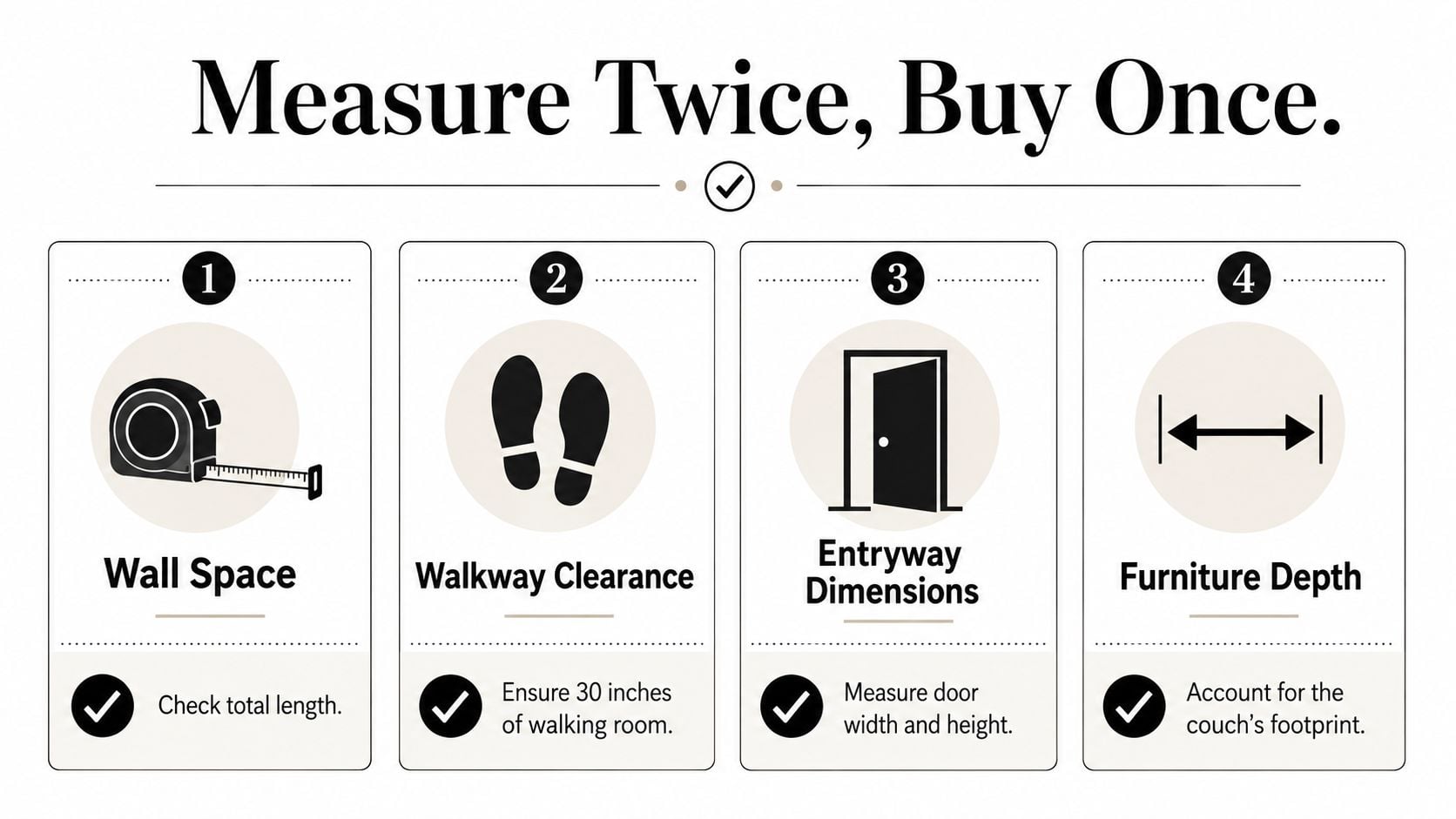
A simple way to stay organized is to write down these dimensions before you shop:
- Wall length where the couch will go
- Maximum depth the room can handle without crowding traffic flow
- Walkway space in front of or beside the seating area
- Nearby obstacles like trim, heating units, or door swing
If you want a fuller checklist, our furniture measuring guide walks through the process in a practical way.
Measure the path into the home
People often run into trouble here. They measure the living room and forget the front door. Or they measure the front door and forget the hallway turn. Or they forget the stairwell ceiling drops lower than they thought.
Use a notebook and check the whole route:
- Entry door size. Measure width and height.
- Inside hallway pinch points. Trim, light fixtures, and narrow turns matter.
- Stairways and landings. A couch may fit in a straight line but fail at the corner.
- Elevator or condo entry area. Shared buildings often create the toughest delivery angles.
Practical rule: The couch has to fit your room, but it also has to fit your life. Delivery path comes first if the route is tight.
Don't skip the couch measurements themselves
Look beyond overall width. Ask for total depth, back height, arm width, and whether the legs remove. If the style comes apart for delivery, that can open up options that would otherwise be off the table.
Here is a quick way to look at the options:
| What to measure | Why it matters |
|---|---|
| Overall width | Keeps the sofa from swallowing the wall |
| Total depth | Protects walking space and visual openness |
| Back height | Affects sightlines, especially near windows |
| Arm width | Slim arms can save valuable inches |
| Delivery dimensions | Prevents ugly surprises on delivery day |
My opinion? Measure three times. Once with optimism, once with realism, and once like the delivery team has to get it through a bad corner in February.
Choose a Style That Makes Your Room Feel Bigger
A couch can fit physically and still make the room feel boxed in. That's why style matters just as much as dimensions.
Small living rooms usually do better with apartment-sized seating under 75 inches wide, and many small couches fall in the 60 to 72 inch range, while medium sofas run 84 to 88 inches and large sofas go above 96 inches, according to this sofa size guide for compact rooms. That size gap changes the whole feel of the room. A smaller-scale sofa leaves breathing room. A larger one can dominate the space before you even add tables or lamps.

Features that lighten the room
Some designs behave better in a tight living room. If you want the room to feel more open, I'd steer you toward these details:
- Raised legs help the floor stay visible, which makes the room feel less crowded.
- Slim arms give you more seat in less total width.
- Low-profile backs keep the couch from blocking windows and sightlines.
- Tighter silhouettes read cleaner than overstuffed shapes in compact spaces.
A bulky roll arm and thick base can eat up more room than people expect. The sofa may measure “small,” but it still looks heavy. In a compact room, visual weight matters.
What to avoid in a small room
Not every popular style belongs in every room. Deep lounge shapes, oversized cushions, and wide track arms can work beautifully in a larger space. In a smaller room, they often turn into traffic obstacles.
Here's a useful comparison:
| Better for compact rooms | Harder to use in compact rooms |
|---|---|
| Narrow arms | Chunky arms |
| Visible legs | Skirted or heavy bases |
| Lower back profile | Tall, bulky backs |
| Cleaner lines | Puffy, oversized forms |
If your room already feels crowded, don't try to decorate your way out of a scale problem. Fix the scale first.
A couch should anchor the room, not sit in it like a parked truck.
Think in terms of shape, not just size
Sometimes a small loveseat is the right call. Sometimes a compact sofa with slim arms gives you more useful seating. Sometimes two small-scale chairs and one petite sofa outperform a bigger three-seater.
If you want more ideas on visual scale, our guide on how to make a small room feel big is a helpful companion. The big takeaway is simple. Choose a couch that leaves air around it. That's what makes a room feel comfortable.
Look for Quality That Lasts in a Hardworking Couch
Here's the part too many shoppers skip. In a small home, the couch usually works harder, not less.
It's the movie-night seat, the afternoon nap spot, the place kids climb on, the seat guests use, and sometimes the backup bed. So no, I don't think a small couch should be chosen on looks alone. That's backward. In a hardworking room, construction comes first.

Aesthetic guides often get all the attention, but durability matters because these pieces see heavy daily use. Key construction details include a solid wood frame, a quality spring system, and high-density cushions, and those factors do more for lifespan and long-term value than a slim silhouette by itself, as noted in this small-space couch durability discussion.
What's under the fabric matters most
You can't spot long-term quality from a lifestyle photo. You have to ask what's inside.
I'd pay attention to these details first:
Frame material
A solid wood frame gives you a stronger foundation than cheap, disposable construction. For daily-use seating, that matters.Spring support
A good spring system helps the couch hold its shape and support over time. If the support is weak, the seat won't stay comfortable.Cushion density
High-density cushions usually keep their feel better than softer, lower-quality fills that flatten quickly.Removable or replaceable parts
This is underrated. If cushions, backs, or other components can be serviced or replaced, the sofa becomes much more practical long term.
Small doesn't mean disposable
Experience counts in these situations. We've spent decades helping people compare a flashy compact sofa to a better-built one, and the difference usually shows up after the honeymoon period. The cheaper piece starts to sag, squeak, lean, or lose support. Then the “deal” doesn't look like much of a deal.
That's one reason some shoppers look for USA-made or Amish-made construction, especially when the couch is going to be the main seat in the house. Better materials and sturdier build quality often make more sense than chasing the skinniest profile on the floor.
The smartest small couch is the one you still like after years of sitting on it every day.
My advice from the showroom floor
If you're comparing two similar-sized sofas, choose the one with better bones. Every time.
Use this quick test when you shop:
| Ask this question | Why it matters |
|---|---|
| What is the frame made of? | The frame determines stability and lifespan |
| How is the seat supported? | Better support helps prevent sagging |
| What's in the cushions? | Cushion quality affects comfort and shape retention |
| Can parts be serviced or replaced? | Practical maintenance extends usable life |
If you want a deeper look at what separates solid furniture from throwaway furniture, our quality furniture buying guide lays it out clearly.
Smart Solutions for Narrow Doors and Tricky Corners
Some rooms aren't hard to furnish. They're hard to reach.
That's common in older Milwaukee homes, upper apartments, condos, split-level entries, and houses with stubborn hallway turns. People assume their options are limited to tiny pieces or flat-pack furniture. That's not always true.
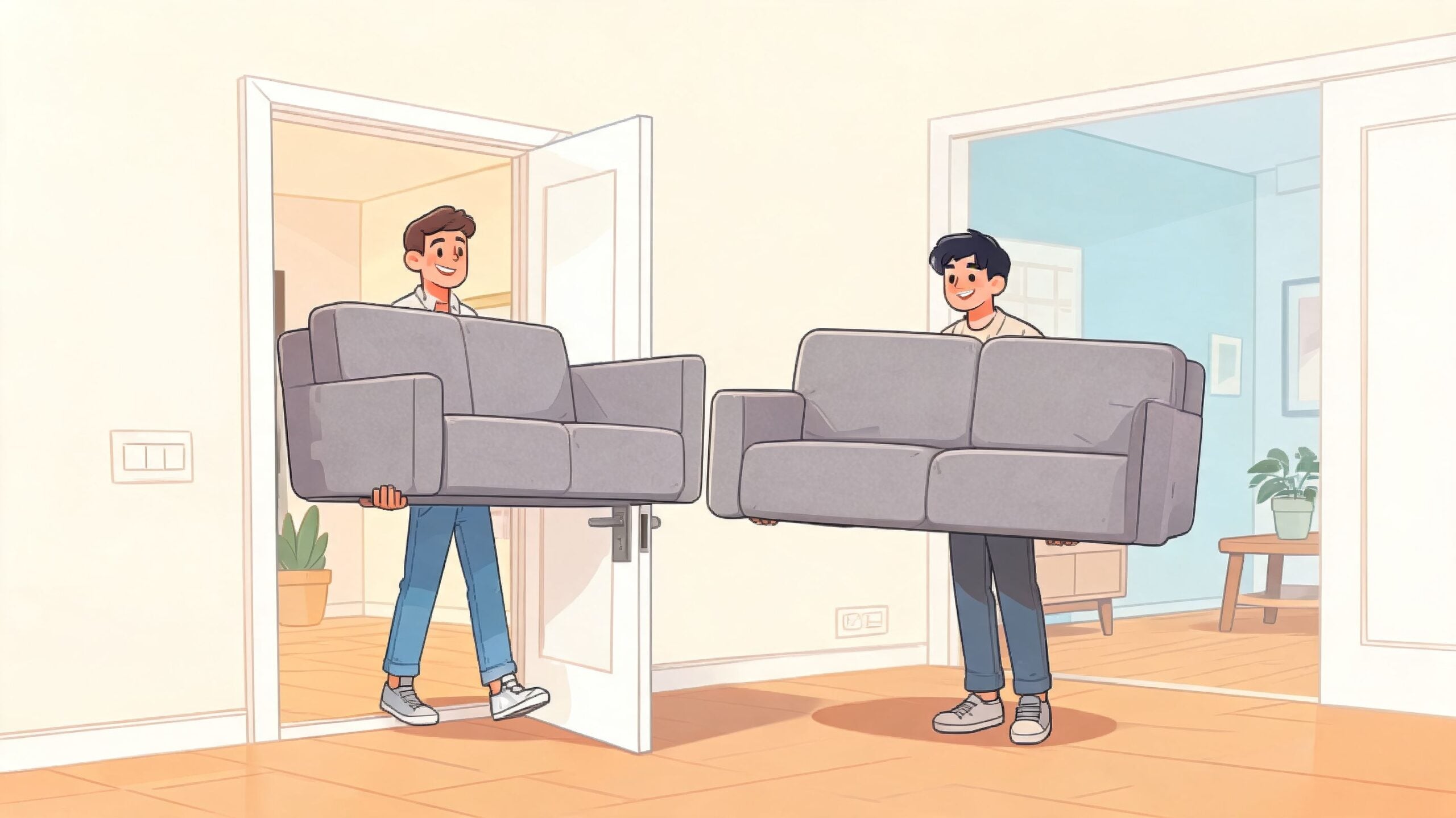
Sofa depth is often the bigger engineering issue in a small room. Guidance for compact spaces places ideal total depth around 30 to 34 inches, while standard sofas often run 34 to 38 inches deep, and saving those few inches can noticeably improve flow and keep the couch from taking over the room, according to this sofa depth guide for small rooms.
Why depth changes everything
People obsess over width because it's easy to picture against a wall. But depth is what pushes into the room. It affects traffic, coffee table spacing, visual openness, and how easy it is to move around the furniture every single day.
If a room feels pinched, depth is often the culprit.
A shallower couch also tends to support a more upright sit, which many people prefer in multipurpose rooms. If the couch is for TV, reading, visiting, and everyday use, that balance can be a smart tradeoff.
Come-apart furniture is a real solution
This is one of those insider tips that saves a lot of headaches. Some sofas, loveseats, recliners, and sectionals are built to come apart for delivery and then go back together securely inside the home. That can be the difference between “no way” and “that fits.”
For shoppers dealing with a brutal entry path, furniture designed for narrow doorways is worth seeking out early in the process. BILTRITE Furniture-Leather-Mattresses also carries come-apart seating options in this category, which is practical for apartments, older homes, and tight stair access.
A simple decision guide
If your delivery path is difficult, use this checklist before you fall in love with a sofa:
- Shallow profile. A less bulky depth often solves both room-flow and delivery issues.
- Detachable parts. Removable backs or legs can help.
- Come-apart construction. This opens up options that standard one-piece frames can't.
- Tighter silhouette. Less overhang often makes corners and turns easier to manage.
If your doorway is the problem, don't shop like it isn't.
A smart small couch doesn't just fit the living room after delivery. It survives the trip getting there.
Find Your Small Space Solution at BILTRITE
Small doesn't have to mean limited. That's the biggest myth in this category.
You can still have comfort, style, solid construction, and even custom choices in a smaller-scale sofa. You just need to shop with better priorities. Measure carefully. Choose a shape that lightens the room. Focus on construction before trendy details. And if your home has tight access, ask about delivery-friendly designs before you get attached to the wrong piece.
Why showroom shopping wins here
This is one category where in-person shopping really helps. You can sit on a shallower frame and immediately tell whether it feels supportive or stiff. You can compare narrow arms to bulky ones without guessing from photos. You can touch fabrics, study cushion shape, and see whether a low-profile sofa feels right for your room and your routine.
That's especially useful when you want more than a stock answer. Many shoppers want a smaller couch without giving up fabric choices, leather options, wood finishes, or a sturdier build. That's a much easier conversation in person than online.
What many Milwaukee shoppers want now
We see a few common requests from local families and homeowners:
- Apartment-sized seating that doesn't look skimpy
- Better-built frames for everyday use
- Small-scale options for condos, senior living, and older homes
- Custom looks without jumping into disposable furniture
Our team helps with those questions every day. Between our sales staff, there are over 400 years of combined experience, and that matters when your room has awkward dimensions or your priorities don't fit a cookie-cutter answer.
Come in with your measurements
Bring your room dimensions, a few photos, and your delivery path notes. That's enough to turn a confusing shopping trip into a productive one.
You'll get much better results when you can compare real pieces side by side and talk through options with someone who's solved these layout problems before. If you want to browse ideas ahead of time, our small space furniture solutions page is a useful starting point.
We'd love to help you sort through it in person at our showroom in Greenfield at 5430 West Layton Avenue. Since 1928, our family has been helping Milwaukee-area neighbors find furniture that fits their homes and holds up to real life. That part hasn't changed, and we're proud of it.
If you're ready to shop small couches for living room spaces with real guidance, visit BILTRITE Furniture-Leather-Mattresses in Greenfield. Bring your measurements, bring your questions, and come see the difference that better-built, USA-made and Amish-made options can make. We'd love to say hello and help you find a couch that fits your room and your everyday life.