10 Chair Dining Table: A Milwaukee Buyer’s Guide

You're probably here because your current table has stopped working.
Maybe holidays mean kids at the kitchen island, adults balancing plates in the living room, and somebody always saying, “We should really get a bigger table.” Maybe you've got the room for a proper gathering spot, but you're not sure what size seats ten without turning dinner into an elbow match. That's a common Milwaukee problem, especially in homes that weren't built with giant open-concept dining rooms in mind.
Our family has been helping local families sort this out since 1928. We're a fourth-generation furniture store, and I'll tell you straight. A 10 chair dining table can be one of the smartest pieces you buy for your home, but only if you buy the right one. Size, shape, construction, delivery path, chair style, room clearance, and long-term durability all matter. Get those right, and you've got a table that hosts birthdays, holidays, homework, card games, and ordinary Tuesday dinners for years.
Your Guide to Hosting Big Family Dinners
Big family dinners sound wonderful until you're dragging in folding chairs and asking two people to “scoot in a little.”
A 10 chair dining table fixes that problem, but it also changes how your home works. It becomes the spot where people naturally land. That matters more than most folks realize. A big table isn't just furniture. It's where your family gathers without feeling cramped, rushed, or split into separate rooms.

We've seen this over and over in Metro Milwaukee homes. A family starts by shopping for “something bigger,” then realizes they need answers to better questions:
- How many people do we seat every week versus only on holidays?
- Will the room still feel open once chairs are pulled out?
- Can the table get through the front door, stair turn, or hallway?
- Are we buying a piece for a few years or for the next generation?
Start with how you live
If you host often, buy for comfort, not technical capacity. A table that “can fit” ten and a table that seats ten comfortably are not the same thing.
Practical rule: Buy the table that lets people relax through dessert, not the one that barely works for twenty minutes.
That's especially true if your guests linger. In our part of Wisconsin, they usually do. Coffee comes out, a game starts, somebody tells the same story again, and nobody's in a hurry. Your table needs to support that kind of living.
Think like a homeowner, not a catalog
Catalog photos make everything look roomy. Real homes have heat vents, buffets, radiators, chandeliers, and traffic paths to the kitchen. Older Milwaukee homes add their own fun with tight entries and rooms that are charming but not always generous.
So yes, a 10 chair dining table is a terrific choice for the right household. But the smart move is to treat it like a room-planning decision first and a style decision second. That's how you end up with a table that works on paper and in real life.
Getting the Size Right for Your Whole Crew
The first rule is simple. Give each person enough room to eat without bumping shoulders.
The standard guideline is 24 inches of linear space per guest. That's the number I want you to remember, because it explains why some tables feel easy and comfortable while others feel crowded before the food even hits the table.
The dimensions that actually work
For a rectangular 10 chair dining table, standard dimensions typically run 96 to 110 inches long and 40 to 46 inches wide, and for a round table, 84 inches in diameter is preferred for dedicated seating for ten, according to this dining table size guide.
Here's the quick version:
| Table Shape | Recommended Length/Diameter | Typical Width |
|---|---|---|
| Rectangular | 96 to 110 inches | 40 to 46 inches |
| Round | 84 inches diameter | N/A |
That size range works because it gives everyone the elbow room they need. It also helps chairs sit properly without feeling jammed together.
If you want more help comparing standard sizes, our own dining table size guide is a useful place to keep your measurements organized before you head into a showroom.
Rectangular is usually the practical winner
For most families, I recommend rectangular first.
Why? Because it's the easiest shape to place in a dining room, the easiest to pair with buffets or hutches, and the easiest to understand when you're planning seating. It also handles a mix of daily use and larger gatherings very well. In plain English, it's the shape that causes the fewest regrets.
A rectangular setup usually gives you seating along both long sides plus one chair at each end. That arrangement feels natural, looks balanced, and keeps serving dishes easy to reach.
Buy the size that feels a little generous. Nobody has ever complained that they had too much elbow room at Thanksgiving.
Round tables need commitment
Round tables are lovely for conversation. Everyone can see each other, and the room feels softer. But if you want a round table to seat ten comfortably, you need a big one. An 84-inch round is no small piece of furniture.
That means you need a room that can handle the diameter, the chairs, and the walking space around it. If the room is tight, a round table can start to eat up space fast.
Don't shop by chair count alone
“Seats 10” on a tag doesn't tell you enough. Chair width, base style, and how you host all affect comfort. Armless chairs usually give you more flexibility than bulky chairs. End chairs with arms can look handsome, but they also take up more room.
My advice is simple. Start with the dimensions. Then pick chairs that support those dimensions instead of fighting them.
Why Solid Wood and Amish Made is a Smarter Choice
A 10 chair dining table gets used hard.
People lean on it. Kids do homework on it. Somebody slides a casserole dish across it. Somebody else sets down a wet glass without a coaster. That's normal life. So this is not the place to get cute with flimsy materials.
What I recommend and why
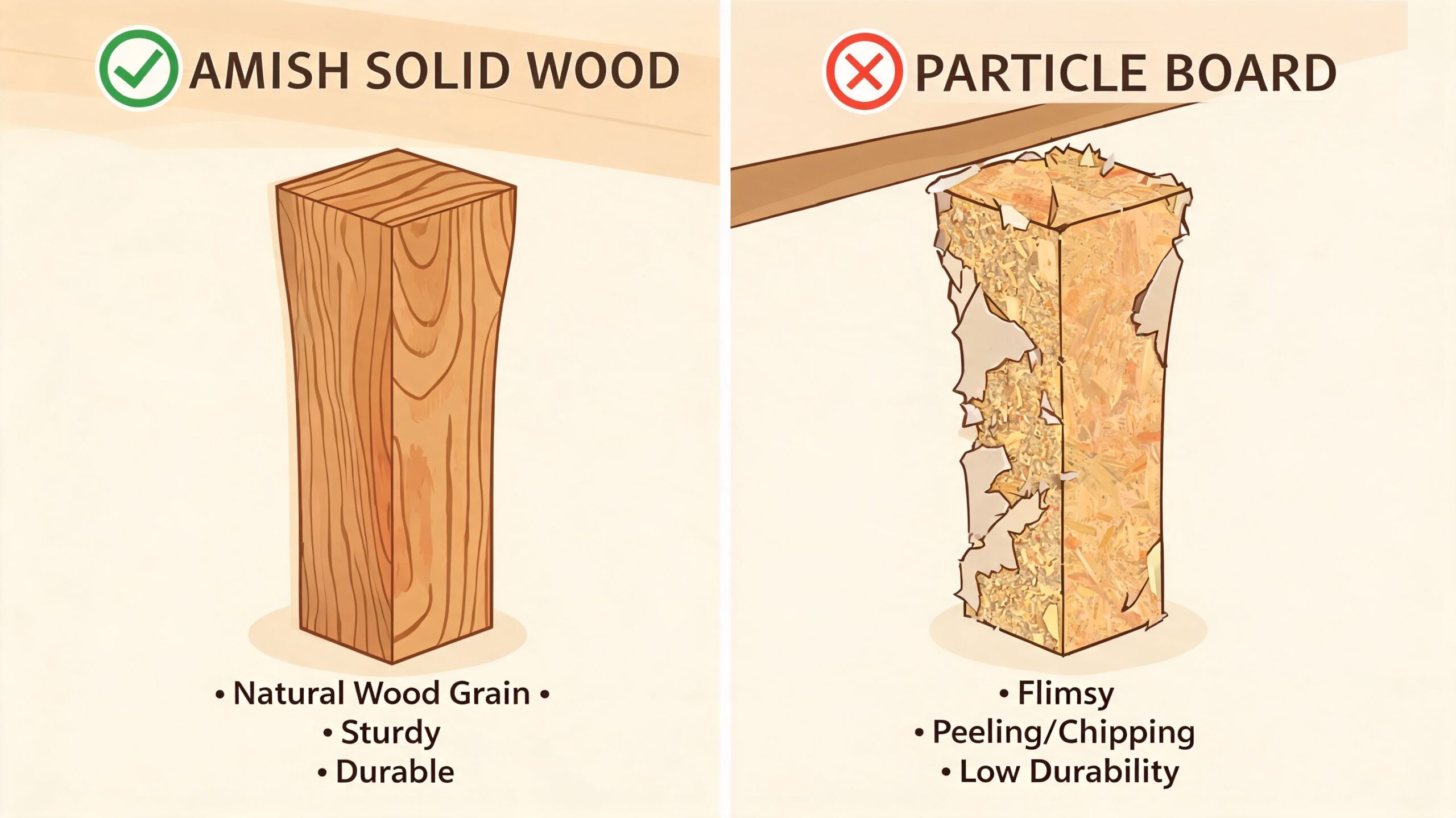
I'm opinionated on this one. If you're buying a large dining table, buy solid wood if your budget allows it. Better yet, look hard at Amish-made construction.
The reason isn't just pride in American craftsmanship, though we've got plenty of that. The primary reason is ownership. A large table is too important, too visible, and too heavily used to treat like a disposable piece.
Mass-produced tables made with particle board and thin veneers can look nice at first glance. Then real life starts. Edges chip. Surfaces wear poorly. Joints loosen. Finish damage becomes harder to ignore because the table is the center of the room.
Look at the long-term value
A furniture longevity study indicated that solid-wood Amish-built tables can retain 60 to 70% of their resale value after 10 years, compared to 20 to 30% for mass-produced particle-board alternatives, as noted in this furniture value comparison.
That matters.
Even if you never plan to sell the table, resale value tells you something important about durability and desirability. Furniture keeps value when people still want it years later. Solid wood earns that. Particle board usually doesn't.
If you want a plain-English breakdown of construction quality and what sets handcrafted pieces apart, this page on the advantages of Amish furniture is worth reading before you buy.
The table should age with your family
A good solid-wood table doesn't need a pampered life. It needs basic care and sensible use. In return, it develops character instead of just damage.
A dining table should look better after years of family use, not ready for the curb.
That's the difference. Scratches on solid wood often read like life happened there. Damage on cheap composite furniture just looks tired.
I'm not telling every family to buy the fanciest table in the room. I am telling you to respect the job this table has to do. If it's going to host ten people, carry real weight, and stand up to years of regular use, construction matters more than trendy styling every single time.
Table Shapes and Seating Benches vs Chairs
Once the size and material are settled, you can have some fun with layout.
Families usually start thinking about personality here. Do you want formal seating? Casual seating? Better conversation? Easier cleanup after grandkids visit? All of that ties back to shape and to whether you use all chairs or mix in a bench.
Comparing the main table shapes
Here's how I look at it in real homes:
- Rectangular tables work well when you want clear structure. They define the dining area, line up nicely in longer rooms, and usually make the most sense for ten people.
- Round tables feel more social. They soften a room and keep everyone visually connected.
- Oval tables split the difference. You get some of the length of a rectangle with corners that are easier to move around.
None of these is automatically right. The room decides a lot.
If you're trying to match shape with room flow, seating count, and everyday use, our guide to maximizing your dining space with table shapes and seating arrangements can help narrow the field quickly.
Chairs only or a bench mix
I like chairs for structure and predictability. Everybody gets the same seat. The room looks finished. Pull-out space is easy to plan.
Benches bring flexibility. They're handy for families with kids, and they can slide under the table when not in use. They also create a more relaxed look, especially in farmhouse and transitional spaces.
A mixed setup often works best:
- Chairs at the ends give the table a grounded, finished look.
- A bench on one side can help in tighter layouts.
- Standard side chairs opposite the bench keep access easy.
If your dining room does double duty, a bench can make a big table feel less bulky on ordinary days.
The catch is comfort. Benches are great for short, lively meals and families with younger kids. For long holiday dinners, many adults still prefer a chair with a back and defined personal space. That's why I usually suggest a bench as part of the plan, not the whole plan.
Making Sure It Fits Your Milwaukee Home
Many buyers find themselves surprised at this stage.
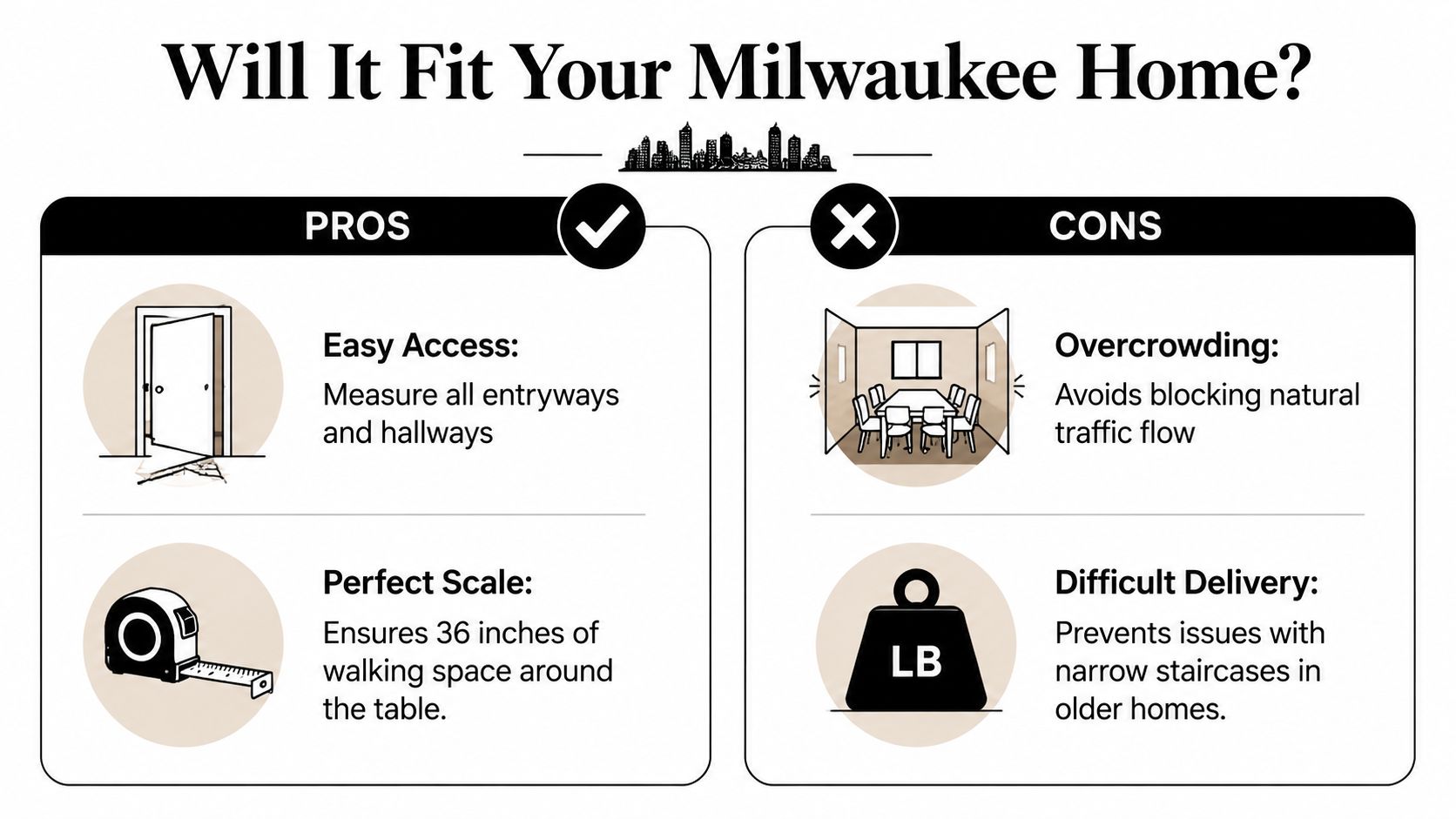
They measure the dining room. Good start. Then the table arrives, and nobody measured the front door, the stair landing, the turn from the foyer, or the space needed to walk around the thing once it's in place.
The room needs to work when chairs are occupied
Industry data suggests the average 10-seater table requires a 12×16 foot room for proper clearance, and fewer than 15% of online furniture retailers provide that guidance, according to this space-planning reference for dining tables.
That tracks with what we see every week.
You also want about 36 inches of clearance from the table edge to walls or other furniture so chairs can pull out and people can move around comfortably. If you skip that step, the room may technically hold the table but still feel awkward every day.
Measure these spots before you shop
Don't stop at the dining room itself. Measure the path.
- Entry doors and storm doors because older homes can have tighter openings than you expect
- Hallways and turns because length on paper doesn't tell you if the top can pivot
- Staircases and railings if the dining room isn't on the main level
- Ceiling fixtures so the scale of the room stays balanced
- Traffic paths to kitchens and patios because dinner guests don't teleport
For local homeowners, especially in older Milwaukee-area homes, these practical details matter as much as style.
If you want a simple checklist before shopping, our how to measure furniture guide covers the measurement points that people most often miss.
Tight spaces need smart solutions
Local experience proves valuable. Some tables come apart more easily than others. Some chair styles are simpler to maneuver through narrow openings. Some bases are easier to assemble in the room than one-piece pedestal designs.
BILTRITE Furniture-Leather-Mattresses carries furniture options designed for tricky access, including pieces built to come apart for delivery into tighter spaces. For Milwaukee buyers dealing with older homes, condos, or awkward entries, that kind of construction can solve a problem before it starts.
That's a real-world issue, not a small one. A table that fits your room but can't get into your room is the wrong table.
Custom Touches and Getting It Home Safely
One of the pleasures of buying a better dining table is that you don't have to settle for whatever happens to be sitting in a warehouse box.
A lot of USA-made and Amish-made tables offer choices that let you shape the piece to your home. That's where buying local becomes a lot more enjoyable than scrolling product grids and guessing from tiny color swatches.
The choices that matter most
For most families, the most useful custom decisions are these:
Wood species
This affects the look, grain pattern, and overall character of the table. Some woods feel more formal. Others feel warm and casual.Finish color
With finish color, you decide whether the table blends with existing pieces or becomes the anchor of the room.Base or leg style
This changes both the appearance and the daily function. Some bases make chair placement easier. Others create a more traditional look.
Those details aren't fluff. They determine whether the table feels at home in your space or always looks like a compromise.
Delivery should reduce stress, not add to it
The other half of the purchase is getting the table home safely and set up correctly.
A large dining table isn't something one wants left in cartons at the curb. Delivery and in-room setup make a big difference, especially with heavy solid wood. You want the top protected, the base assembled correctly, and the table placed exactly where it belongs the first time.
Good delivery service matters most with the biggest, heaviest pieces in your home.
If you've never used it before, this overview of white glove delivery service explains why setup, placement, and handling are worth paying attention to with a large table.
When the job is done right, you're not wrestling parts across the floor or hoping the finish survives the process. You're walking into a room where the table is ready for life.
Questions Answered and Your Invitation
A 10 chair dining table is a big decision, so let's clear up a few questions we hear all the time.
Can a round table really seat ten comfortably
Yes, but only if you buy the right size.
An 84-inch round table is the size to target for dedicated seating for ten, as covered earlier. Anything smaller starts asking people to give up comfort, and that's a bad trade if you host often. Round tables can be wonderful for conversation, but they need a room that can support their footprint.
Is a large solid-wood table worth the money
In my view, yes, if you plan to use it for years.
A big dining table takes abuse that smaller accent pieces never see. It has to stay stable, look good, and keep working through family life. That's why I push buyers to think beyond the opening price tag. A strong, well-built table usually costs more up front, but it tends to reward you with longer use, better repair potential, and stronger long-term satisfaction.
Should I buy the table first or the chairs first
Buy the table first, then choose chairs that support the scale of the table and the amount of space you have. Too many people fall in love with oversized chairs that eat up valuable room.
Keep the full setup in mind:
- Chair width affects capacity
- Chair arms affect flexibility
- Chair shape affects how crowded the room feels
- Chair weight affects how easy the room is to use every day
The wrong chairs can make a good table feel like a bad purchase.
What if my house has a narrow doorway or awkward layout
That's common in this area. Older homes have character, and character often comes with quirks.
The answer is planning. Measure everything. Ask how the table is built. Ask whether the base comes apart. Ask how delivery is handled. Buyers who do this early usually avoid the headaches that come from falling in love with something impossible to maneuver.
Why shop in person for a table like this
Because this is a hands-on purchase.
You need to see the finish in real light. You need to feel the chair, test the spacing, and understand the scale. Photos don't tell you enough, especially with wood tone, seat comfort, and overall presence. A large table changes a room. You want confidence before it comes home.
We've been part of the Metro Milwaukee community since 1928, and we still believe furniture buying should feel personal. We don't sell online, and we're proud of that. We'd rather help you compare wood species, check measurements, and talk through delivery than send you guessing from a screen.
If you're serious about buying a 10 chair dining table, come into the showroom with measurements, a few room photos, and a rough idea of your style. We'll help you sort out what fits, what lasts, and what makes sense for your home.
If you're ready to see solid wood, compare sizes in person, and get honest advice from people who've been helping Milwaukee-area families furnish their homes for generations, visit BILTRITE Furniture-Leather-Mattresses in Greenfield. We'd love to help you find a dining table that fits your home, your family, and the way you live.