Find Your Perfect 84 Dining Table


Somebody always ends up on the corner.
You know the dinner. One person is half-sharing a placemat, somebody else is balancing a serving bowl a little too close to their elbow, and the host keeps saying, “We can make it work.” Sometimes you can. But when family dinner, game night, holiday brunch, and homework all happen at the same table, a too-small table starts feeling too small every single day.
That's where an 84 dining table starts making a lot of sense.
In our family, we've been helping Metro Milwaukee homes find furniture that fits real life since 1928. Around our showroom, we've seen the same pattern for decades. Families don't usually ask for “84 inches” first. They ask for room. Room for one more guest. Room for the casserole dish. Room for grandkids doing puzzles while dinner is in the oven. Room to sit without bumping knees.
An 84 dining table often lands right in that sweet spot. It feels generous without jumping into banquet-table territory. In many homes around Milwaukee, that matters. You want enough seating for everyday life and the occasional crowd, but you still need to walk around the room, open the patio door, or pass through to the kitchen without doing a sideways shuffle.
We're a fourth-generation family business, and we still believe the dining table is one of the hardest-working pieces in the house. It isn't just where you eat. It's where people gather, talk, linger, celebrate, and spread out.
Welcome to the Table Big Enough for Everyone
A lot of people start shopping for a new dining table after one of two moments. The first is a holiday meal where the room feels packed and the table feels undersized. The second is much less dramatic. It's an ordinary Tuesday when you realize your table is doing five jobs and handling none of them well.

We hear that all the time in Greenfield. A family comes in and says they're tired of squeezing around a smaller table, or they've moved into a new place and want something that finally feels like it matches the way they live. An 84 dining table usually enters the conversation because it gives people breathing room without taking over the whole home.
Why this size feels so usable
At this size, a table starts to feel welcoming in a different way. You can set it for a regular dinner and still have space for serving dishes, a centerpiece, or a laptop that hasn't been put away yet. It also gives you flexibility. On a quiet night, it doesn't feel oversized. When company shows up, it feels ready.
Practical rule: The right dining table should handle your busiest day and still feel comfortable on your most ordinary one.
That's why this size has stayed popular for so long. It serves family life well. It gives structure to a room. And when it's built in solid wood, it has the kind of presence that makes a dining room feel grounded instead of temporary.
What we've learned over the years
After decades in the furniture business, we've learned that people rarely regret having enough table. They regret buying a table that looked good in a photo but didn't work in their actual room, with their actual chairs, and their actual family habits.
A good 84 dining table can become the place where birthdays happen, where kids do school projects, where neighbors stay for coffee longer than they planned. That's the heart of it. You aren't just choosing a measurement. You're choosing how your home gathers people.
Is an 84-Inch Table Right for Your Family
If you're trying to decide whether this size is too big, too small, or just right, start with one question. How do you use your dining table most weeks?
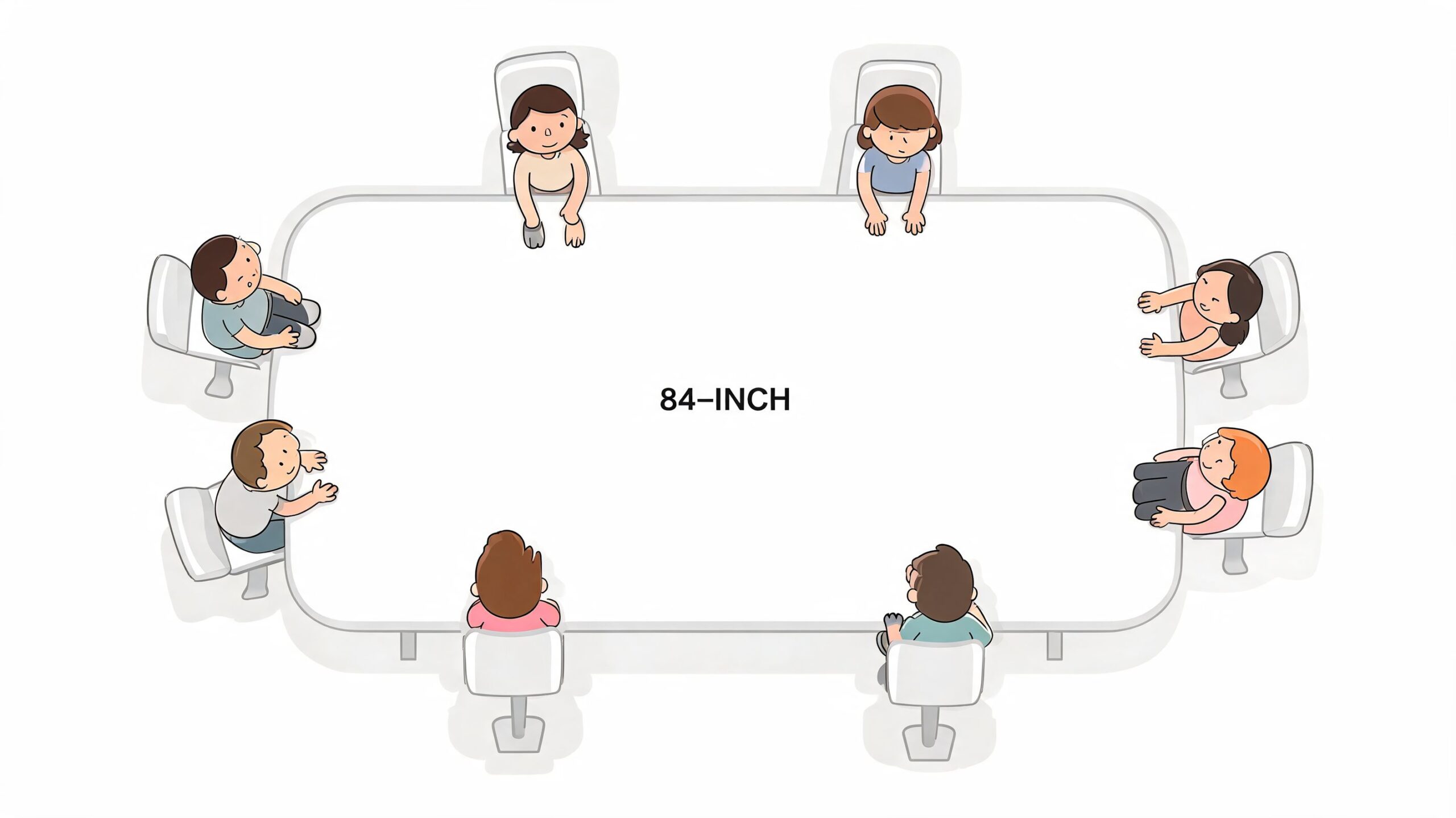
An 84-inch rectangular dining table is a standard size for comfortably seating 8 people, with typical dimensions of 84 inches long by 40 to 42 inches wide, which gives about 24 inches of space per person and can handle up to 10 on occasion according to HOULTE's dining table size guide.
That one fact clears up a lot of confusion. Many shoppers assume 84 inches means they've crossed into “formal dining room only” territory. Usually, that's not the case. This size is often a practical choice for families who host regularly, have several children, or want elbow room.
It's a good fit for these households
Some homes are natural matches for an 84 dining table.
- Frequent hosts love that eight people can sit comfortably without the meal feeling cramped.
- Larger families appreciate that daily use still feels easy, not crowded.
- Multi-use households enjoy the extra surface area for projects, puzzles, paperwork, and buffet-style meals.
If that sounds like your week, this size is worth serious consideration.
When it may feel too large
There are also times when an 84 dining table may not be the right call.
If your room is narrow, if your chairs are especially wide, or if the dining area doubles as a high-traffic walkway, a table this size can feel heavier in the room than you expected. The table itself might fit, but the room may not function well around it. That difference matters.
A dining table doesn't live alone. Chairs, traffic flow, and nearby furniture decide whether the room feels easy or frustrating.
A simple way to judge your needs
Ask yourself these three questions:
Do you seat six or more people often?
If yes, 84 inches gives you valuable flexibility.Do meals usually include serving dishes on the table?
Family-style dining takes space. This size helps.Do you want one table for daily life and gatherings?
If you don't want a small everyday table and a second solution for guests, this size can bridge both needs.
For a broader look at how size affects seating and comfort, our dining table size guide can help you compare common options in a straightforward way.
Don't forget shape
Most shoppers asking about an 84 dining table mean a rectangular one, but shape changes the feel of the room. A long rectangle tends to suit classic dining rooms and open layouts. A large round table creates a different kind of gathering feel and can be a smart choice when conversation is the priority.
The right answer isn't just “How many can it seat?” It's “How do you want people to feel sitting there?” For many families, 84 inches gives that comfortable middle ground. Spacious, useful, and still manageable.
Planning Your Space A Room and Clearance Guide
The biggest mistake people make with a dining table isn't buying one that's ugly. It's buying one that technically fits but makes the room miserable to use.
That's why room planning matters just as much as table size.
For Metro Milwaukee condos and apartments with a median size of 1,200 sq ft, an 84-inch table is well-suited for a 10×12 ft dining area, but a 2025 Houzz survey found 62% of Midwest buyers regret oversized table purchases because of poor traffic flow, as noted in this space-planning discussion. That's a strong reminder to measure the room, not just admire the table.
Measure the room the easy way
You don't need fancy tools. A tape measure, a notepad, and a little floor space honesty will do the trick.
Start with the room itself. Measure the full length and width. Then subtract the space you need for movement around the table. If you're keeping a buffet, china cabinet, radiator clearance, or a major walkway in the same zone, account for that now, not later.
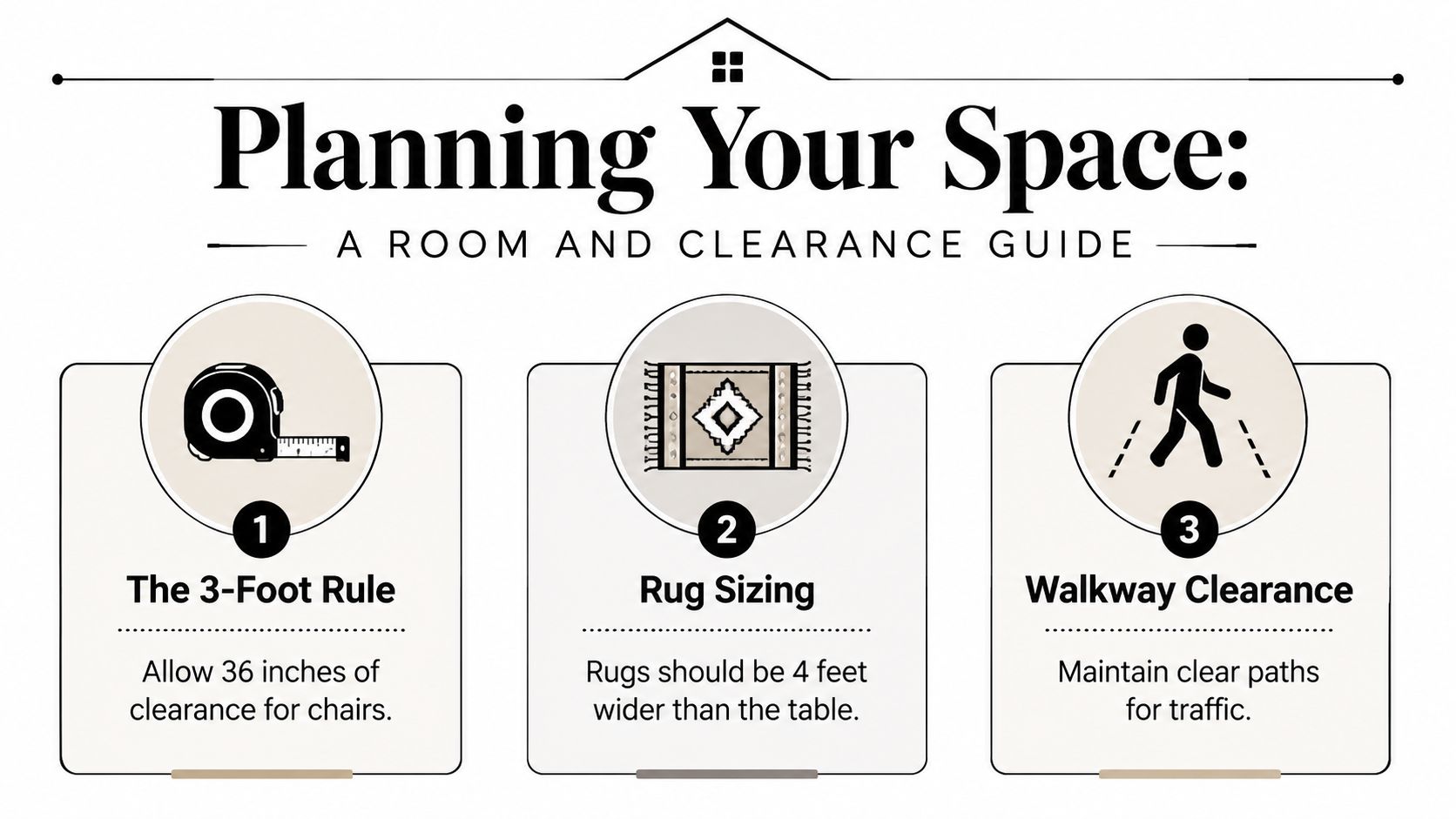
The common rule is simple. Leave 36 inches of clearance around the table so chairs can pull out and people can move through the room without bumping into walls or each other.
If your table fits only when all the chairs are pushed in, it doesn't really fit.
Room Size Guide for Your 84-Inch Table
| Clearance Type | Required Space Around Table | Minimum Room Width (for 42" wide table) | Minimum Room Length (for 84" long table) |
|---|---|---|---|
| Chair clearance | 36 inches | 114 inches | 156 inches |
| More comfortable flow | more than 36 inches | more than 114 inches | more than 156 inches |
| Shared walkway room | keep paths clear beyond chair space | depends on layout | depends on layout |
A quick Milwaukee reality check
Older Milwaukee homes can be charming and tricky at the same time. Bay View bungalows, East Side flats, and some condos have dining areas that look roomy until you factor in chair backs, heat vents, nearby islands, and the path to the kitchen.
A table can work beautifully in one 10×12 room and feel awkward in another if doors swing into the space or if one side is also your main traffic lane. That's why a floor plan beats guesswork every time.
For more help comparing layouts, shapes, and seating patterns, our guide to maximizing your dining space with table shapes and seating arrangements is a useful next step.
Three things people often forget
- Chair depth matters. A table footprint is only part of the story. Once chairs are occupied and pulled back, the room needs to keep working.
- Rugs need breathing room. If you're using a rug, make sure chairs still stay on it when people slide back from the table.
- Walkways count double in open plans. In a combined kitchen and dining area, movement beside the table matters as much as movement at the chairs.
When people tell us, “I wish we had measured better,” it's almost always about flow. Not the tabletop. Not the finish. The flow.
Choosing Your Style Materials and Craftsmanship
A dining table can look good on day one and still disappoint you a few years later. That usually comes down to what it's made of and how it was built.
For families in Wisconsin, materials matter even more because our homes don't stay at one humidity level all year.
For the Midwest's climate with 40 to 70% humidity swings, our tables use kiln-dried hardwoods at 6 to 8% moisture content and 1.5 to 2-inch thick tops. That helps prevent seasonal cracking, supports over 200 lbs per point, and can double the lifespan compared to veneer alternatives, according to Dimensions.com's dining table reference.
Why solid wood earns its reputation
Solid wood has a feel that's hard to fake. It has depth, warmth, and weight. For longevity, it can be repaired, refinished, and lived with. That's one reason so many Milwaukee families choose Amish-made and USA-made dining furniture when they want something for the long haul.
Thicker tops also change the experience of ownership. The table feels grounded. It handles everyday bumps better. And when kids lean on the edge, or somebody sets down a heavy serving piece, the table feels stable instead of delicate.
A table used every day shouldn't feel fragile. It should invite people to sit down, serve dinner, and get on with life.
Rectangular or round
Shape is part style and part function. An 84-inch rectangular table tends to be the practical favorite for many homes because it lines up neatly with room walls and usually works well in longer dining spaces.
An 84-inch round table creates a softer social feel. It can seat 10 to 12 people comfortably according to iQ Linens' planner guide for 84-inch round tables. That's a different solution than a rectangle, and it's often better suited to spacious or more square dining areas.
What “heavy-duty” should mean
Heavy-duty isn't just a buzzword in a showroom. It should mean the table is built for daily use, real weight, and long-term stability. Look for signs of substance:
- Real wood construction rather than a thin decorative surface over lesser material
- Thicker table tops that feel substantial when you touch them
- Well-built bases that don't wobble or crowd everyone's legs
- Joinery and hardware that feel solid when the table is moved or used hard
That's especially important if your dining table is the family headquarters for meals, homework, projects, and holidays.
Finish matters too
Wood species and finish color shape the mood of the room. Oak often gives a classic, grounded look. Maple feels cleaner and a bit lighter. Cherry brings warmth and richness. None of those is automatically right for every home. The better choice is the one that works with your flooring, cabinet tones, and how formal or relaxed you want the room to feel.
If you're comparing stain choices, our guide to the best wood finish for a dining table can help you think through color, upkeep, and everyday wear.
Customizing Your Table at BILTRITE
This is the part many shoppers enjoy most. Once you know the size works, you get to make the table feel like it belongs in your home.
Because we don't sell online, the process happens in person, where you can touch wood samples, compare finish colors, sit in the chairs, and see how one base style feels different from another. That matters more than people expect. A photo can't tell you how a table edge feels on your forearm or whether a pedestal base gives your family better legroom.
What customization usually looks like
Some shoppers walk in knowing they want oak. Others only know they want “not too dark” and “nothing fussy.” Both are completely normal.
A typical customization conversation might include:
- Wood species such as oak, maple, or cherry, depending on the look and feel you want
- Finish selection from lighter, natural looks to deeper, richer tones
- Table base style including leg, trestle, or pedestal options
- Chair pairing so the whole set feels balanced, comfortable, and practical
One option people explore for this process is custom furniture made simple, which shows how choices like wood, finish, and style come together in a manageable way.
Why in-store choices are easier than guessing
A dining table is one of those pieces that benefits from side-by-side comparison. You can look at two stains that sound similar on paper and immediately see which one works better with your room. You can sit at one chair and know in seconds that the seat back is right, or wrong, for long dinners.
Our team takes a conversational approach to that process. We've got a lot of experience in the building, but the goal isn't to overwhelm anyone with furniture terms. It's to help you narrow things down in a way that feels comfortable and useful.
Small details change the final result
Sometimes the biggest difference comes from the smallest choice. A softened edge can make a table feel more casual. A thicker top can make it feel more rooted. A slightly warmer stain can connect the table to older wood floors in a way a cooler tone never will.
That's why customization is worth slowing down for. If you're choosing an 84 dining table because you want it to serve your home for years, it makes sense to choose the details with care.
Delivery and Setup Made Easy for Milwaukee Homes
A large table can be the right choice for your room and still cause anxiety on delivery day. We understand that. Milwaukee homes have character, and character often means tighter doorways, sharper turns, older staircases, and awkward entries.
That's where planning matters just as much as product selection.
Why delivery details matter
Some larger dining pieces are easier to bring in than people expect because parts can be handled separately and assembled inside the home. That can be a big help in condos, apartments, duplexes, and older houses where a one-piece item would be much harder to manage.
For families dealing with narrow entries or tight corners, it's smart to ask about table bases, detachable components, and in-home assembly before making a final decision. Those details can turn a stressful delivery into a routine one.
The value of setup help
A dining table isn't what one typically wants to wrestle with after work on a Thursday night. White-glove service can make a major difference because it shifts the heavy lifting, placement, and setup to people who do it every day. If you'd like a better sense of what that includes, this overview of white-glove delivery service explains the process clearly.
In older homes, the challenge usually isn't the room where the table will live. It's the path the table has to travel to get there.
That's why we always tell people to measure not only the dining area, but also entry doors, hallways, stair landings, and any tight turns. A little prep saves a lot of headache.
Your 84-Inch Dining Table Questions Answered
A few questions tend to pop up after people settle on table size. Here are straightforward answers to the ones we hear most often.
Frequently Asked Questions
| Question | Answer |
|---|---|
| How many chairs should I buy for an 84 dining table? | For most rectangular 84-inch tables, eight chairs is the comfortable everyday setup. If you plan on occasional larger gatherings, talk through the chair style first because width and arms can change how many seats work well. |
| Should I use armchairs at the ends? | Often, yes. End chairs can frame the table nicely and add comfort. Just make sure the arm height works with the apron or table edge. |
| What chair style works best? | That depends on your room and how formal you want it to feel. In tighter spaces, slimmer chairs usually keep the room lighter and easier to move through. |
| How do I care for a solid wood dining table? | Wipe spills promptly, use pads or trivets for hot dishes, and clean with gentle products recommended for wood furniture. Solid wood rewards consistent, simple care more than complicated treatments. |
| Can an 84 dining table work in an open-concept room? | Yes, if you treat it like an anchor piece. Leave clear paths around it, keep nearby furniture scaled appropriately, and use lighting or a rug to define the dining zone without crowding it. |
One last thought
The right dining table should support your life, not ask you to reorganize your whole house around it. If an 84 dining table gives your family room to gather, room to host, and room to breathe, it's doing its job well.
If you'd like help sorting through sizes, wood finishes, or delivery questions, we'd love to see you at BILTRITE Furniture-Leather-Mattresses in Greenfield. Bring your room measurements, a few photos, and your questions. Our family has been helping Metro Milwaukee families furnish their homes since 1928, and we're always happy to help you find a table that feels right for the way you live.