Best Furniture for Pet Owners: Durable & Stylish Picks


The dog has claimed one corner of the sofa. The cat has claimed the back cushions. There's fur in the seams, a mystery spot on the arm, and you're standing in your living room wondering if nice furniture and pets can even live in the same house.
They can.
We've spent generations helping Milwaukee-area families furnish real homes, not museum rooms. Homes with kids, guests, football Sundays, and yes, plenty of dogs and cats. The best furniture for pet owners isn't just about picking a tougher fabric. It's about choosing furniture built for the way pets live. They jump, stretch, shed, drool, nap, and occasionally leave you a mess to clean up.
That's why I'm opinionated about this topic. If you shop by color first and construction second, you'll regret it. If you shop by frame, cushion design, cleanability, and then upholstery, you'll make a much smarter choice.
Your Pets and Your Furniture Can Be Friends
A lot of people walk into our store feeling defeated. They'll say, “We had a nice sofa once,” and then tell us about the puppy stage, the scratching cat, or the old dog who now needs a little extra help getting up and down. I get it. Pets are family, but they're hard on furniture.
The good news is that you do not have to choose between a stylish home and a pet-friendly one. You just need furniture made for real life. That means thinking beyond whatever looks soft and trendy on a showroom floor. It means asking better questions. Can this fabric be cleaned easily? Will this frame stay solid after years of jumping and shifting? Can the piece be moved, repaired, or cleaned underneath without a wrestling match?
Pets don't ruin good furniture. Weak construction and bad material choices do.
We've been part of the Metro Milwaukee community since 1928, and one thing hasn't changed. Families want furniture that feels welcoming and holds up. Today, that often means performance-minded choices, especially in homes with furry family members. If you want a helpful starting point, our guide on how to choose kid-friendly and pet-friendly furniture lays out the basics clearly.
What pet owners usually get wrong
Most shoppers focus on the surface first. That's understandable because fabric is what you see and touch. But pets don't only affect the surface.
They stress the whole piece. Dogs launch themselves onto cushions. Cats push against arms and backs. Hair and dust collect underneath. Accidents seep deeper than people expect. A pretty sofa with flimsy bones won't stay pretty for long.
So yes, your pets and your furniture can absolutely be friends. But the friendship starts with smart construction, not wishful thinking.
Start With a Strong Foundation
If you remember one thing from this whole article, remember this. The frame matters first. Before fabric, before color, before the shape of the arm. If the foundation is weak, nothing you put on top of it will save it.
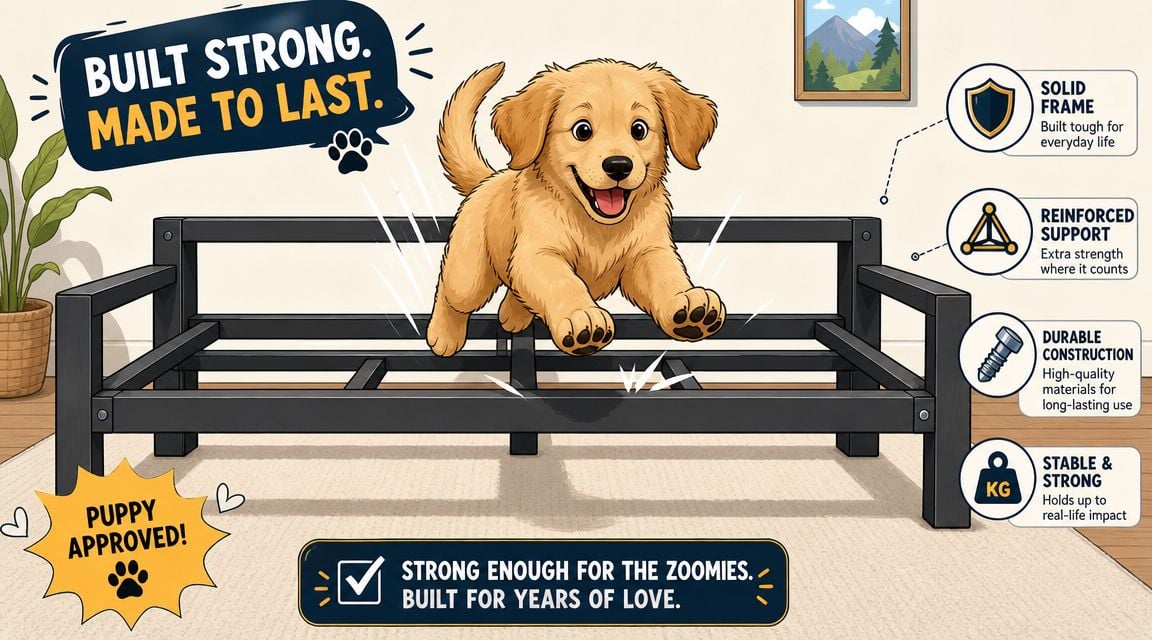
Pet owners need furniture that can take repeated impact and still feel solid. A big dog hopping onto the same cushion every evening puts stress on the joints, deck, and support system. Even smaller pets create wear over time because they tend to use the same landing spots again and again. That's why I steer people toward solid wood frames, heavy-duty builds, and better-made seat systems whenever possible.
What strong construction looks like
You don't need fancy jargon. You need furniture that feels sturdy when you sit down and stays that way.
Look for these signs:
- Solid support underneath: The seat shouldn't sag, sway, or creak when weight shifts.
- Stable arms and back: If the arm wiggles in the showroom, it won't improve at home.
- Quality materials: Solid wood and well-built heavy-duty pieces generally hold up better than lightweight construction in busy homes.
- Practical serviceability: A piece that's built well is more likely to handle years of use, cleaning, and cushion rotation.
For pet households, I also like furniture that has some substance to it. Lightweight pieces can slide, rack, or loosen more easily when dogs push off them or circle before lying down.
Fabric still matters, but not before the bones
Durability isn't only about wood and joinery. Upholstery takes a beating too. One practical benchmark is rub count. According to The Sofa Review's guide to pet-friendly fabrics, pet owners should look for fabrics with a rub count of at least 45,000 for heavy daily use.
That's a useful filter, not a magic trick. A strong rub count helps the surface handle repeated friction from claws, movement, fur, and cleaning. But it works best when it's paired with a strong frame and sensible cushion construction.
Practical rule: Buy the strongest frame you can afford, then choose the upholstery that fits your pet's habits.
If you want to see the kind of features we mean, our guide to heavy-duty living room furniture built to last is worth a look. It's the same advice we give in person. Start with the structure. The rest comes after that.
Choosing the Right Upholstery for Paws and Claws
Now we can talk fabric. With fabric, pet owners either make life easy on themselves or sign up for years of lint rollers, stain panic, and frustration.
The short version is this. Choose tight weaves and easy-clean surfaces. Skip delicate, snag-prone textiles. That's the safest path for most homes with dogs or cats.
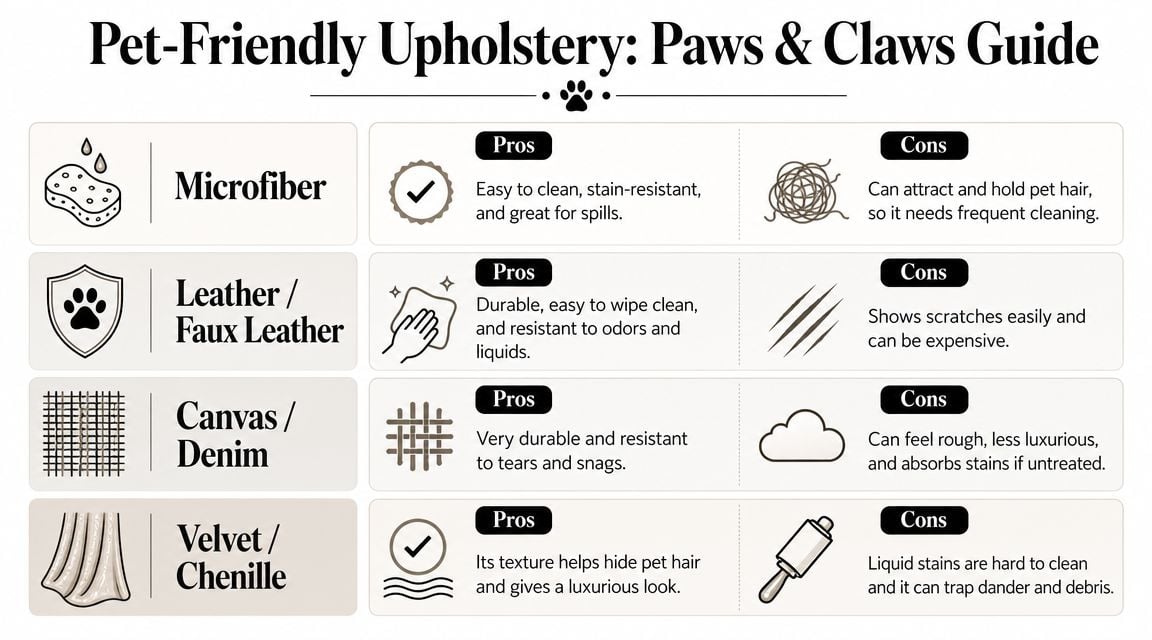
Industry guidance consistently points in the same direction. Mathis Home's pet-sofa guide recommends protected leather, performance microfiber, and branded performance fabrics, and advises avoiding velvet, linen, silk, and looped boucle because they trap fur or snag easily.
My honest take on the main contenders
Here's how I'd size them up for a pet household.
| Material | Why I like it | Watch out for |
|---|---|---|
| Protected leather | Wipes clean easily, doesn't trap fur the way many fabrics do, and suits homes that want simpler cleanup | Claws can still mark it, especially if pets launch off the same spot |
| Performance microfiber | Soft, practical, and generally a smart choice for active homes | Hair can still collect, so color and routine upkeep matter |
| Performance fabrics | Built with cleanability and daily life in mind. Great for people who want fabric comfort without babying the sofa | Not all performance fabrics feel the same, so sit on them first |
| Canvas, denim, tight-weave twill | Stronger weave structure, fewer places for claws to catch | Some people find them less cozy than softer, plush fabrics |
| Velvet, silk, linen, boucle | Attractive in the right room | Bad match for most pets because of snagging, trapping fur, or higher maintenance |
Match the material to the pet
A shedding dog and a scratch-happy cat create different problems. So do a puppy and a senior pet.
- For heavy shedders: Smooth surfaces and tight weaves are easier to keep clean.
- For cats with claws: Avoid looped textures and loose weaves that invite snagging.
- For messy pets: Performance fabrics and protected leather are usually easier to live with.
- For multi-pet homes: Prioritize cleanability over trend-driven texture.
One useful way to narrow it down is to think about the mess you deal with most. Is it fur? Muddy paws? Drool? Occasional accidents? Your answer should shape the upholstery choice more than whatever is popular this season.
If you want a deeper dive into this category, our article on the benefits of performance fabrics explains why so many families gravitate toward them.
Soft and delicate may win the first five minutes in a showroom. Tight-woven and easy-clean wins the next several years at home.
Smart Furniture Designs for Pet-Friendly Homes
Good pet-friendly furniture doesn't stop at strong frames and sensible upholstery. Design details can save you a lot of aggravation every single week.
That matters more than many buying guides admit. Some pet owners live in houses with wide open rooms. Others live in condos, apartments, bungalows, or older Milwaukee-area homes with tighter entries and less breathing room. In those homes, furniture has to do more than survive pets. It has to fit the space and be practical to live around.
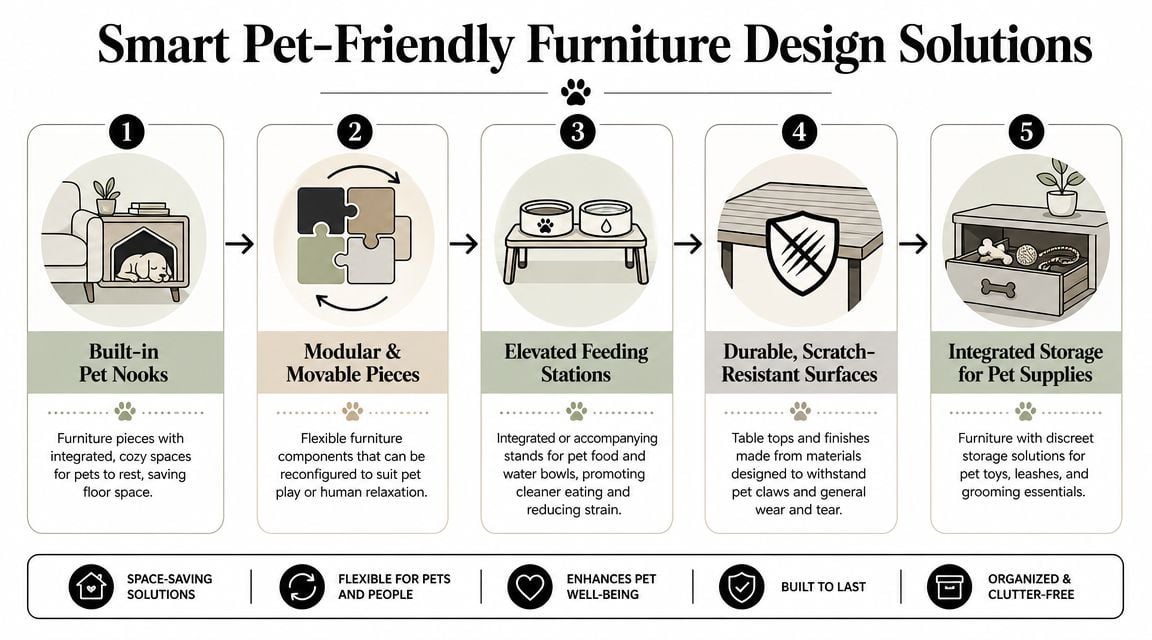
As noted in Johnston Casuals' guide to furniture for pet owners, many pet owners live in apartments or condos where scale, delivery, and ergonomics are critical, and overlooked solutions like small-scale furniture, come-apart sofas for tight doorways, and supportive senior living pieces can make a big difference.
Design features worth chasing
I'd put these near the top of the list.
Raised legs
Furniture with visible clearance underneath is easier to vacuum and sweep under. That sounds minor until you've chased pet hair, toys, and dust bunnies under a low sofa for a year.
Come-apart construction
This is a practical feature that doesn't get enough attention. If a sofa or sectional can be delivered in pieces, it's easier to get through narrow doorways and hallways. It also helps with cleaning access later. You can separate sections, clean more thoroughly, and avoid the gross buildup that happens under one giant immovable unit.
Smaller-scale seating
Big furniture in a small room creates traffic jams. Add a crate, pet bed, feeding area, or just a dog that likes to sprawl out, and the room gets crowded fast. Smaller-scale sofas, loveseats, and sectionals often make a pet-friendly room feel calmer and more usable.
Think beyond the sofa itself
Pet-friendly design also includes how the furniture works with the room around it.
- Modular seating: Helpful if you want flexibility in how the room functions day to day.
- Storage pieces: Useful for keeping leashes, toys, throws, and grooming supplies out of sight.
- Multi-use furniture: Practical in smaller homes where every piece needs to earn its keep.
A good example is the shift toward integrated design choices like modular seating and pieces that do double duty. If you're considering that kind of layout, a sectional couch with storage can solve more than one household problem at once.
A pet-friendly room should be easy to move through, easy to clean, and easy to live in. If the furniture blocks all three, it's the wrong furniture.
Keeping Your Furniture Looking Great
Buying the right piece is half the job. Living with it well is the other half.
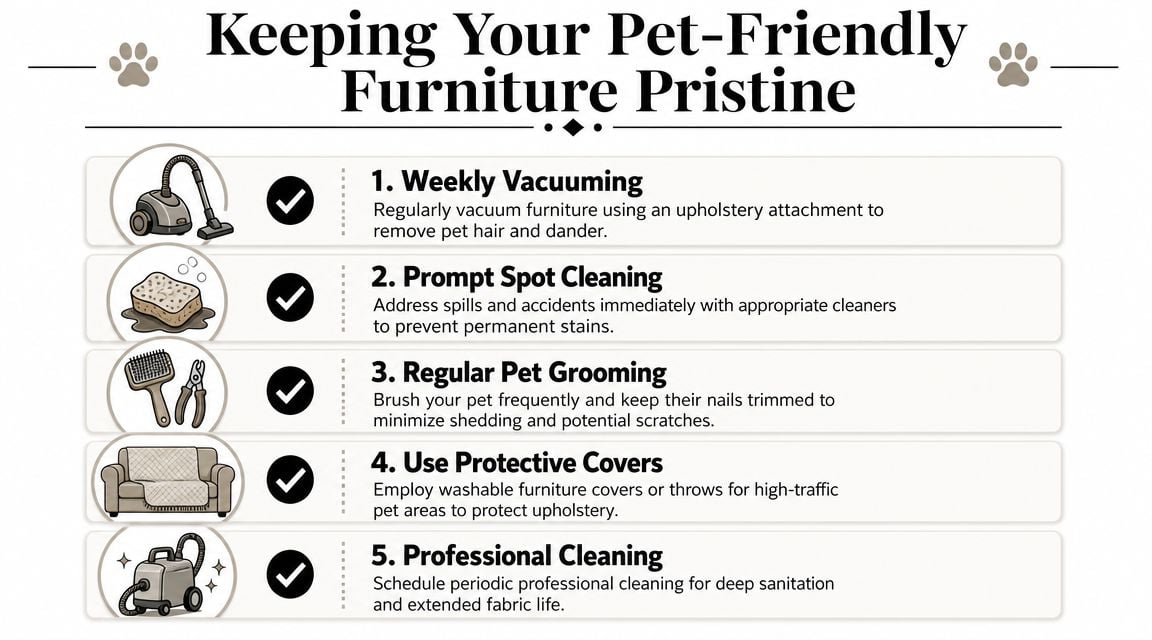
Pet owners don't need a fussy maintenance routine. You need a realistic one. A little steady care beats occasional panic-cleaning every time, especially when fur, dander, paw prints, and accidents are part of normal life.
One point I wish more guides emphasized is sanitation. A lot of pet-furniture advice stops at scratch resistance. That's not enough. As discussed in this video on pet-friendly furniture sanitation and cleanability, the bigger challenge for many homes is what happens after repeated accidents, and furniture with removable and washable covers is much more practical for managing odors and hygiene over time.
The routine that actually works
Here's the maintenance approach I recommend most often.
Vacuum weekly
Use an upholstery attachment and get into seams, under cushions, and along the base. Hair and grit wear fabric faster when they sit there.Blot spills right away
Don't scrub. Blot first, then follow the care instructions for the upholstery. Rubbing usually spreads the mess and pushes it deeper.Rotate and fluff cushions
Pets often favorite one seat or one corner. Rotating cushions helps spread out wear.Keep nails trimmed
You don't need a manicured show pet. You just want to reduce accidental snags and surface marks.Use washable throws where your pet always lands
This is one of the easiest ways to protect a favorite spot without covering the whole piece.
Why removable covers matter so much
Construction and maintenance meet. If the cover comes off and can be washed, deep cleaning gets much simpler. If you can access cushions, seams, and the spaces where odors linger, you have a much better chance of keeping the furniture fresh over time.
That matters a lot with puppies, senior pets, and any household where accidents are not a rare event. Surface cleaning only goes so far. Deep cleanability is what keeps a sofa from becoming something you tolerate instead of enjoy.
Here's a quick way to understand it:
| Feature | Why it helps pet owners |
|---|---|
| Removable covers | Easier deep cleaning and better odor control |
| Washable components | More practical after accidents or repeated messes |
| Tight seams and simpler shapes | Fewer places for fur and debris to hide |
| Raised bases or legs | Faster cleaning underneath |
| Durable upholstery | Handles routine care with less visible wear |
Leather needs a little different care
If you choose leather, routine upkeep is simpler in some ways because fur and surface messes don't sink in the same way many fabrics allow. But leather still benefits from regular wiping and sensible pet habits. Repeated claw pressure on the same cushion or arm can leave marks, so it helps to redirect where pets settle and to keep those favorite zones protected when possible.
If leather is on your list, our advice on how to protect your leather couch from cats covers practical prevention without turning your living room into a fortress.
Don't ignore the underside
A lot of smells and buildup in pet homes come from places people rarely clean. Under the sofa. Between sectional pieces. Behind back cushions. Around the base of recliners.
That's another reason smart design matters so much. The easier a piece is to access and maintain, the better it will hold up in a home with animals.
Find Your Forever Fur-niture at BILTRITE
Pet-friendly furniture should make your life easier, not turn you into a full-time furniture babysitter. That's why my advice is straightforward. Buy for construction first, cleanability second, and style right alongside both. Don't settle for a flimsy frame with a fashionable fabric and hope for the best.
The furniture market has moved in a practical direction, and that's a good thing. As noted in this pet-friendly furniture buying guide, the category now includes modular sofas where a single damaged section can be replaced and multi-use pieces like ottomans that double as pet beds. That shift makes sense because real households need furniture that adapts, cleans up well, and keeps working.
What I'd recommend to most pet owners
If you came into our showroom and asked me where to start, I'd tell you this:
- Choose a solid, substantial frame
- Look for tight-weave or easy-clean upholstery
- Favor removable covers when sanitation is a concern
- Consider modular or come-apart designs if access and cleaning matter
- Pay attention to room scale, especially in smaller homes
- Skip delicate fabrics unless the room is mostly off-limits to pets
That combination gives you a far better shot at long-term satisfaction than chasing whatever looks good under bright showroom lights.
Why local shopping helps on this category
Pet furniture is one of those categories where sitting on it, touching it, and seeing the build in person matters. A fabric can sound good on paper and feel wrong in real life. A sofa can look roomy online and overwhelm a smaller room. A sectional can seem manageable until you remember your stair turn or narrow doorway.
That's one reason a showroom still matters. You can test seat height, cushion feel, arm shape, fabric texture, and overall scale before bringing it home. You can also have an honest conversation about how your dog sleeps, whether your cat scratches, and how much cleaning you're realistically willing to do.
One local option for that kind of in-person comparison is BILTRITE Furniture-Leather-Mattresses, a Greenfield showroom serving Metro Milwaukee with USA-made, Amish-made, solid-wood, small-scale, heavy-duty, and come-apart furniture options that fit many of the priorities covered here.
A family-store perspective
We're a fourth-generation family business, and we're proud of that. We've been helping Milwaukee-area families since 1928, and we still believe the right furniture should serve your home for years, not just survive a trend cycle. We also know that homes with pets need thoughtful solutions, not fancy talk.
Our team brings a lot of experience to the floor, and we enjoy helping people sort through the details. Not pressure. Not gimmicks. Just solid advice, honest materials, and furniture built for daily living. We're also proud to carry plenty of American-made and Amish-made pieces because they line up with what many pet owners want most. Better quality. Better durability. Better long-term value.
If you've been putting off replacing a worn-out sofa because you think pets automatically mean settling for less, don't. You can have a beautiful, comfortable home that stands up to claws, fur, naps, and muddy paws. You just need to shop smarter.
Come see us in Greenfield and let's find furniture that fits your family, your pets, and your home. At BILTRITE Furniture-Leather-Mattresses, we've been helping Metro Milwaukee families since 1928 with better-quality furniture, solid wood craftsmanship, USA-made and Amish-made options, and friendly guidance you can trust. We'd love to say hi, show you the differences in person, and help you choose pieces built for real life.