Why Your Leather Couch Is Peeling (And What to Do About It!)

It’s a sinking feeling, isn't it? You spot those first frustrating flakes on your favorite couch, and your heart just drops. When you see a "leather" couch peeling, it's almost always a tell-tale sign that the material isn't genuine top-grain or full-grain leather. Instead, you're likely dealing with bonded leather or another synthetic that's starting to break down.
This happens because the synthetic top layer eventually gives up and separates from the fabric backing it was glued to.
The Real Reason Your Leather Couch Is Peeling
That peeling you're seeing isn't a sign that you did something wrong—it's often just the nature of the material itself. Here at BILTRITE, we've been a family-owned furniture store in the Metro Milwaukee area since 1928, and trust us, we've seen it all! We believe in helping our neighbors understand what they're buying, so let's get to the bottom of this peeling problem.
The issue almost always comes down to one thing: bonded leather. It sounds fancy, but it's a world away from the durable, high-quality leather you might be picturing.
What Is Bonded Leather Anyway?
Think of bonded leather like a puzzle made from leftover pieces. It’s created by shredding leather scraps and fibers, mixing them with a polyurethane adhesive, and then pressing that mixture onto a fabric backing. To finish it off, a synthetic top layer is applied and embossed with a leather-like texture. It’s an affordable alternative, but that affordability comes at a cost to its lifespan.
The peeling starts when that synthetic top layer begins to separate—or delaminate—from the fabric underneath. It's not the "leather" itself that's peeling, but the plastic coating on top. Industry reports show that furniture made from bonded leather often begins showing these peeling flaws within just 2 to 5 years of regular use. Things like heat, humidity, and even just the friction from sitting on it day after day can speed up this breakdown.
As a 4th generation, family-owned business, we feel it's so important to be honest about furniture quality. Real, genuine leather develops a beautiful patina over time—it doesn't peel. Understanding the material your couch is made from is the first step in knowing how to care for it, or when it might be time to invest in something that will truly last your family for years to come.
This peeling is a problem almost exclusively with bonded leather because its layered construction simply isn't as tough as a single, solid hide. Unlike genuine leather, which is a natural hide through and through, bonded leather's surface is a synthetic coating that just can't stand up to years of family movie nights and daily life. You can learn more about how different upholstery materials hold up over time.
Real Leather vs. Bonded Leather At A Glance
Use this quick comparison to identify your couch material and see why one type peels while the other lasts for generations.
| Characteristic | Real Leather | Bonded or Faux Leather |
|---|---|---|
| Composition | A single, solid piece of animal hide | Shredded leather scraps mixed with adhesive and pressed onto fabric |
| Surface | Natural grain with unique imperfections | A uniform, often plastic-feeling, embossed texture |
| Durability | Extremely durable; lasts for decades | Prone to peeling, cracking, and flaking in a few years |
| Aging Process | Develops a rich, soft patina over time | Breaks down, delaminates, and peels away from its backing |
| Smell | A distinct, rich, natural leather scent | Often smells like plastic or chemicals |
| Cost | Higher initial investment | Lower upfront cost |
Seeing it laid out like this really highlights the difference. That beautiful patina real leather gets is a sign of quality and character, while the peeling of bonded leather is unfortunately a sign of its inevitable decline.
Your Practical Guide To Repairing A Peeling Couch
So, you’ve spotted the peeling. Don’t panic—this doesn't automatically mean your couch is destined for the curb! With a bit of elbow grease, you can often patch things up and squeeze a lot more life out of your furniture. As a family business that’s been around since 1928, we've picked up more than a few tricks for tackling these exact kinds of repairs.
Let’s roll up our sleeves. We'll walk through how you can fix that peeling couch, step-by-step. It’s far less intimidating than it seems, and doing it the right way can make all the difference.
The peeling process itself is usually pretty straightforward, and it almost always starts with the material itself.
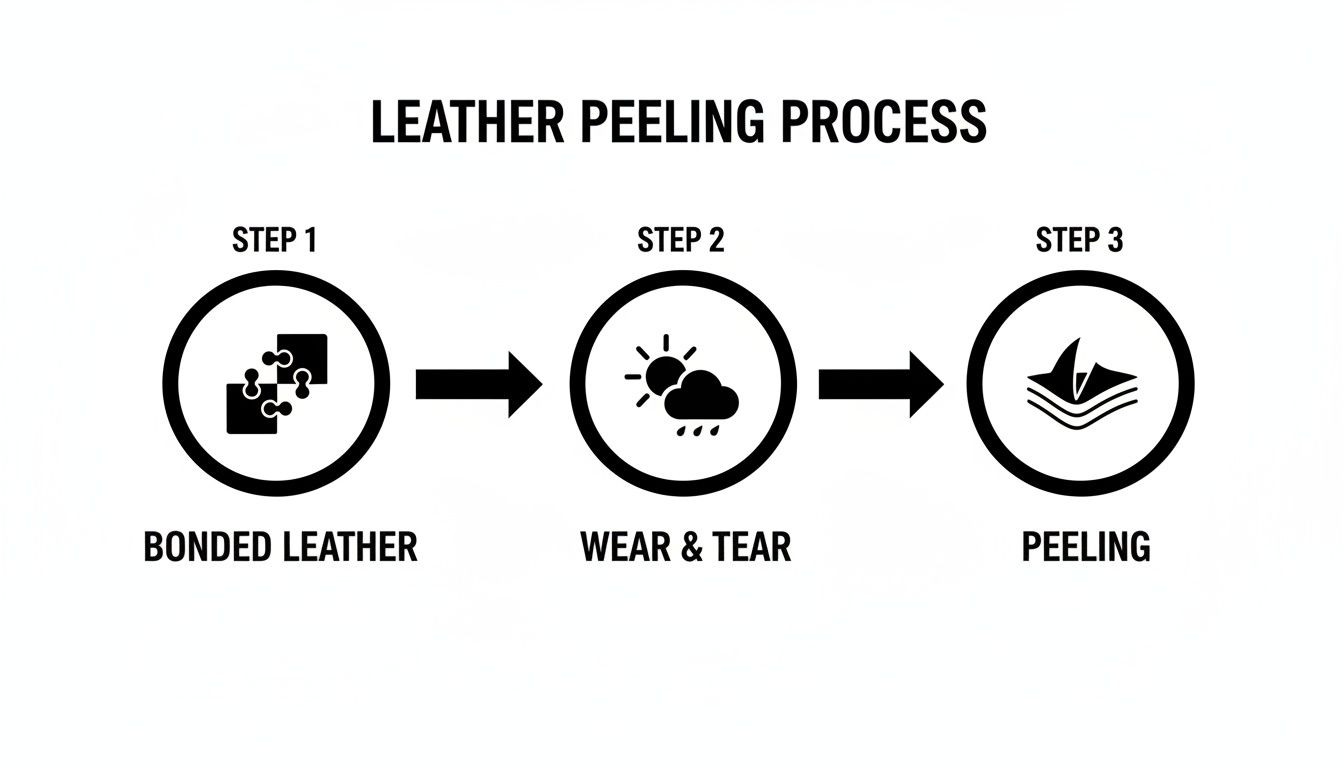
As you can see, the journey to a peeling surface often begins with bonded leather. When you combine that with everyday wear and tear, the top layer eventually starts to flake away.
Prepping The Damaged Area
Before you can fix anything, you have to do a little prep work. Think of it like painting a room—you wouldn't just throw paint on a dirty, dusty wall, would you? The same principle applies here.
First things first, gently clean the peeling area. Grab a soft microfiber cloth and dampen it slightly with a mix of mild soap and water. You just want to remove any dust, body oils, or grime that could stop the repair materials from adhering properly. Be gentle! The last thing you want to do is cause more of the surface to lift off.
After it's clean, take a small pair of scissors and carefully snip away any loose, flaking bits. You need a smooth, stable edge to work with. Once everything is trimmed, give the area one last wipe with a dry cloth and let it air dry completely.
Using A Leather Repair Kit
For smaller scuffs and minor peeling, a good leather repair kit is your absolute best friend. These kits are fantastic and typically come with everything you'll need: a filler compound, a colorant you can mix to match your couch, a small applicator, and a finisher.
Here’s our family’s tried-and-true method for getting a great look:
- Mix Your Color First: Start by mixing the colorant on a spare piece of paper or cardboard. Getting the shade just right often takes a bit of trial and error. Test it on a hidden spot—like under a cushion—to make sure it’s a good match before you put it on the damaged area.
- Apply the Filler: Using the little spatula from the kit, apply a thin layer of the filler compound over the prepped spot. The trick is to build it up in thin layers instead of globbing it all on at once. Let each layer dry according to the kit's instructions.
- Sand It Smooth: Once the filler is completely dry, you may need to lightly sand it with some very fine-grit sandpaper. The goal is to make it flush with the surrounding surface.
- Apply the Colorant: Now you're ready for the color. Use the applicator to dab the colorant onto the repaired patch. Feather the edges to blend it into the original material. Again, thin coats are much better than one thick one.
- Seal the Deal: After the color has fully dried, apply the finisher or sealant that came with the kit. This adds a protective layer and gives it a sheen that matches the rest of the couch.
A little patience goes a long, long way here. Taking your time to match the color and apply thin, even layers is the secret to a repair that’s nearly invisible. It's a craft we've appreciated for generations!
For larger areas where the peeling is more widespread, a patch might be your best bet. You can buy sub-patch material that slides underneath the original surface. You’d then use a flexible adhesive to bond the patch, then use the filler and colorant on top to blend it all together. It's definitely more involved, but it can be a real lifesaver for a couch that's seen a lot of love.
And remember, if you have genuine leather that isn't peeling but just needs some care, check out our tips on how to condition a leather sofa to keep it healthy and supple.
How To Keep Your Furniture Looking Great For Years
Whether you've just repaired a peeling spot on your couch or you have a brand-new piece you want to protect, a little preventative care goes a long way. As a 4th generation, family-owned business, we’ve learned that the secret to long-lasting furniture isn't some complicated formula—it's all about building simple, consistent habits. These are our family's most trusted tips for keeping your furniture looking great for years to come.
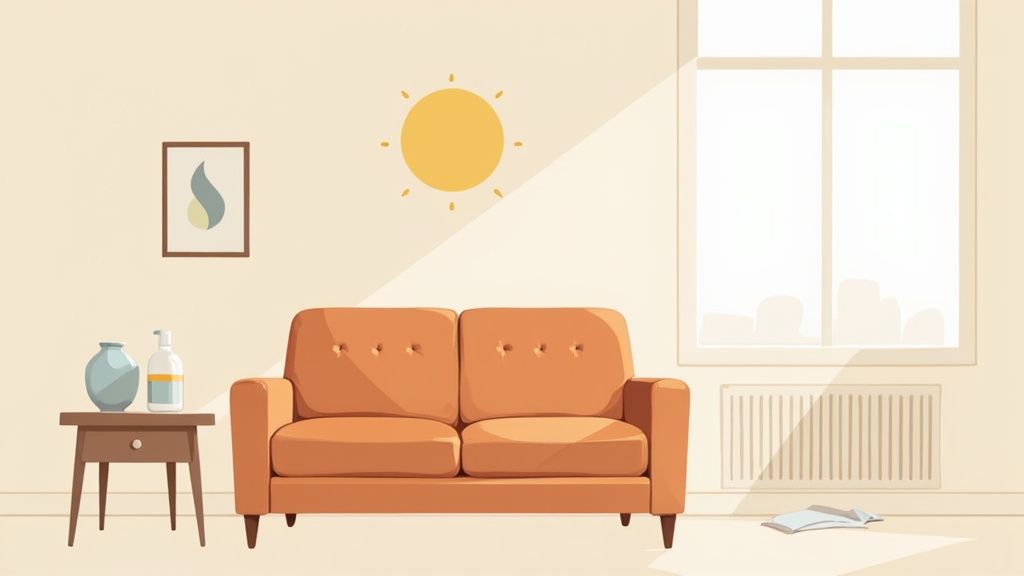
It all starts with a simple, regular cleaning routine. A quick wipe-down with a soft, dry cloth once a week removes the dust and tiny debris that can become abrasive over time. Think of it like dusting your coffee table—it’s a small task that prevents bigger headaches down the road.
Finding The Right Spot In Your Room
Believe it or not, where you place your couch can have a huge impact on its lifespan. Sunlight and heat are two of the biggest enemies of upholstery, especially synthetic materials.
Here’s what you need to watch out for:
- Direct Sunlight: Those beautiful sunbeams streaming through the window contain UV rays that will absolutely fade colors. More importantly, they break down the synthetic top layer on bonded leather, causing it to become brittle and eventually peel.
- Heat Vents & Radiators: Placing your couch right next to a direct heat source will dry out the material—whether it's real or faux leather—making it far more likely to crack and show damage.
Just positioning your furniture a foot or two away from these trouble spots can dramatically extend its life.
Maintenance Makes All The Difference
The rise of materials like bonded leather has been a huge factor in the peeling phenomenon we see so often. While these options are certainly affordable, their layered construction is inherently less durable than a solid piece of high-quality upholstery. In fact, the global market for bonded leather is projected to grow to USD 94.2 million by 2032, so understanding its limitations is more important than ever.
Our family has always believed that a little bit of care now saves a lot of headaches later. It’s not about being fussy; it’s about protecting the furniture that your family gathers on every single day. A few simple steps can truly make your investment last.
Spills are just a part of life, especially in a busy, happy home! The key is to act fast. Blot any spills immediately with a clean, dry cloth. Whatever you do, avoid rubbing, which can just push the liquid deeper into the material and spread the stain.
For a more comprehensive guide to keeping your furniture in top shape season after season, check out our Fall Furniture Maintenance Checklist. These small habits will make a huge difference in the long run.
When To Repair And When To Replace Your Couch
We’ve talked about how to patch up those frustrating peeling spots, but sometimes a simple repair isn't the whole answer. And you know what? That's perfectly okay.
As a family business that’s been helping Metro Milwaukee folks since 1928, we believe in making smart, long-term decisions for your home. This means being honest about when it’s time to say goodbye to an old couch and hello to a new one.
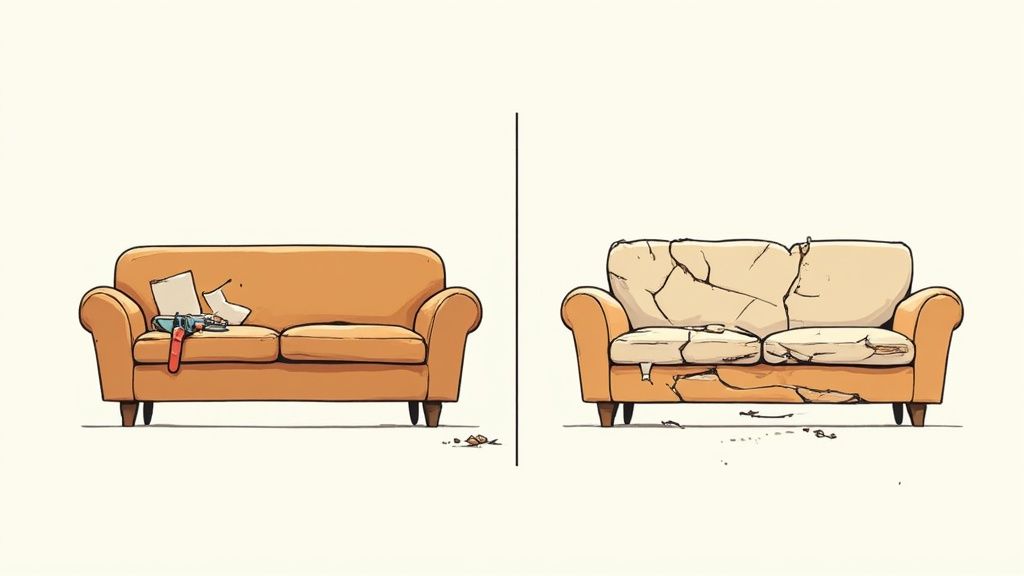
Sometimes, the peeling is just a symptom of bigger problems. If your couch’s issues go more than skin-deep, a repair kit just won't cut it. It’s time to consider an upgrade.
Telltale Signs It's Time For An Upgrade
Take a step back and give your couch a good, honest look. If you’re nodding along to more than one of these, it might be time to start thinking about a replacement.
- Widespread Peeling: Are you dealing with more peeling spots than intact ones? If the damage covers large areas, especially in high-contact zones like the seats and armrests, you’ll be fighting a losing battle with repairs.
- A Creaky, Unstable Frame: Go ahead, give it a wiggle! If the frame groans, creaks, or wobbles, that's a serious red flag. A weak frame means the couch's structural integrity is compromised, and no amount of surface repair can fix that.
- Cushions That Offer Zero Support: Do you sink right down to the frame when you sit? If the cushions are flattened, lumpy, or offer no support, your couch is no longer providing the comfort your family deserves.
The Cost Of Reupholstering vs. Buying New
Another path you could take is professional reupholstering. This can be a great option if your couch has a high-quality, solid wood frame and "good bones." However, for many couches made with bonded leather, the frame quality often doesn't justify the expense.
Here’s a little secret from our family to yours: professional reupholstering can often cost nearly as much as a brand new, better-quality couch. It’s so important to weigh that cost against the value you’d get from a fresh start.
Think about the long-term investment. Putting hundreds of dollars into reupholstering a couch with a particleboard frame might not be the wisest choice. The global demand for leather furniture is huge, with couches making up about 38.5% of a market expected to hit $16.16 billion by 2032. This means there are tons of quality options out there.
Investing in a new piece with a sturdy frame and durable upholstery, like our USA-made leather furniture, ensures you're getting something that will stand the test of time. We believe in furniture that becomes part of your family's story, not something that causes headaches.
If you think it’s time for an upgrade, we’d love for you to come see us!
So, you've just navigated the tricky world of peeling leather. It can feel like a lot to take in, and we get it. Figuring out whether to save a beloved couch or bring in something new is a major decision.
That’s where we come in. Since 1928, our family has been helping folks right here in the Metro Milwaukee area find furniture they’ll love for a lifetime. We believe some things are just better done in person.
Come See The Difference For Yourself
You won't find us selling furniture online. Instead, we put all our energy into making our showroom experience genuinely helpful. There's just no substitute for touching the grain of real leather, feeling the heft of a USA-made frame, and, of course, taking a seat to see how it feels.
Our team is the heart of what we do. With over 400 years of combined experience, our sales associates have seen every type of furniture question you can imagine. They're here to offer honest advice with absolutely no pressure. Our goal isn't just to make a sale; it's to help you find the right fit for your home and family.
As a 4th generation, family-owned business, our greatest joy comes from helping families find pieces that will become heirlooms. We're proud to be a local business, and we're closed on Sundays so our team can be with their families—just like you.
Something For Every Home
Whether you’re on the hunt for a rock-solid, Amish-made piece that can handle anything life throws at it, or maybe something with a smaller footprint for a cozy apartment, we've got you covered. We've always focused on affordable, better-quality furniture that’s actually built to last.
When you're ready, we invite you to stop by our showroom in Greenfield. Let us show you what makes BILTRITE different. We'd love to say hello and help you find your family's next favorite piece of furniture. Ready to find your new favorite piece of furniture? Visit us in Greenfield today!
Common Questions About Peeling Leather Couches
Over the years, we've heard just about every question on leather care. When your beautiful leather couch starts peeling, it can be frustrating and confusing! As a 4th generation family business serving the Metro Milwaukee community, we've gathered the most common questions to give you some quick, honest answers.
We believe in helping our neighbors make informed choices for their homes. Let's dive into some of the things our customers ask us most often right here in our showroom.
Can I Completely Stop My Bonded Leather Couch From Peeling?
Honestly, once bonded leather starts to peel, it's nearly impossible to stop the process for good. Peeling is a sure sign that the material itself is breaking down. While our repair tips can definitely help mask the damage and make your couch look a whole lot better, the underlying material will likely continue to degrade, especially in high-traffic spots.
The best you can do is good preventative care from day one to slow down the process as much as possible.
Will A Leather Conditioner Fix The Peeling?
That’s a great question we hear all the time! Leather conditioner is a lifesaver for real, genuine leather, but it's not the right tool for the job on peeling bonded or faux materials. The problem is that the thin, synthetic top layer is separating from the fabric backing, and a conditioner simply can't re-glue it.
In fact, applying heavy oils or creams to a peeling area might even make it worse by causing the edges to lift more. For this kind of issue, your best bet is always a dedicated leather repair kit designed for these types of fixes. If you're curious about how these materials differ in toughness, you can read our thoughts on if faux leather is durable.
At BILTRITE, we want you to have furniture that lasts. Understanding the material is key—what works for one type of upholstery might not work for another. We're always here to share what we've learned over the last 90+ years!
Is It Worthwhile To Get A Peeling Couch Reupholstered?
This one really comes down to the couch's frame and the overall cost. If you have a solid wood, well-built frame—what we call "good bones"—then reupholstering could be a wonderful choice to preserve a piece you truly love.
However, for many couches made with bonded leather, the frame quality might not justify the expense of reupholstery. It can sometimes cost as much as buying a brand new, better-quality couch. We’re always happy to talk through all the options with you when you visit us in Greenfield!
At BILTRITE Furniture-Leather-Mattresses, we believe in helping you find furniture that stands the test of time. Come visit our showroom and let our family help yours. Find your next favorite piece at https://www.biltritefurniture.com.