




How to Clean Leather Furniture Naturally: A Simple, Practical Guide

That beautiful leather sofa really is the heart of your living room, isn't it? When it comes to keeping it clean, the simplest and safest approach is often the best. All you really need for routine upkeep is a soft, damp cloth and a gentle solution of a few drops of pH-neutral soap in some distilled water. It works wonders without needing any harsh chemicals!
Your Guide to Natural Leather Care
Here at BILTRITE, we know a leather sofa is so much more than just a piece of furniture. It’s where family movie nights happen, where you share stories, and where countless memories are made. As a 4th generation, family-owned business serving Metro Milwaukee since 1928, we firmly believe that keeping that furniture looking its best shouldn’t be complicated or require a cabinet full of aggressive chemicals.
Think of this guide as us sharing the simple, natural cleaning methods we've seen work time and time again. We'll walk you through gentle, effective techniques using ingredients you probably already have in your kitchen right now!
Our goal is to help you care for your furniture in a way that’s safe for your family and protects your investment. It’s less of a chore and more about preserving a treasured part of your home for years to come.
We’re all about making your home a comfortable, beautiful, and safe place to be. But before you start mixing up solutions, it’s a smart idea to know exactly what kind of leather you're working with. Getting a handle on the different upholstery materials out there helps you care for it the right way from day one.
Let's break down everything you need to know, making sure your handsome leather pieces stay beautiful for many more family gatherings to come.
Understanding Your Leather Before You Clean
Before you even think about grabbing a cloth and mixing up a cleaning solution, we need to talk about the single most important step: figuring out exactly what kind of leather is on that favorite sofa or recliner.
It might seem like a small detail, but different types of leather need completely different kinds of care—just like you wouldn't wash a silk shirt the same way you wash denim jeans! Getting this part right from the start is the best way to protect your furniture for years to come.
Think of it this way: some leather is like a rugged, well-loved bomber jacket, ready for anything life throws at it. Other types are more like a pair of soft, delicate gloves that need a much lighter touch. Here at BILTRITE, we've been helping families choose the right furniture since 1928, and we’ve learned that a little bit of know-how now prevents a huge headache later. This simple chart shows why choosing natural, gentle methods is always the best path for your home.
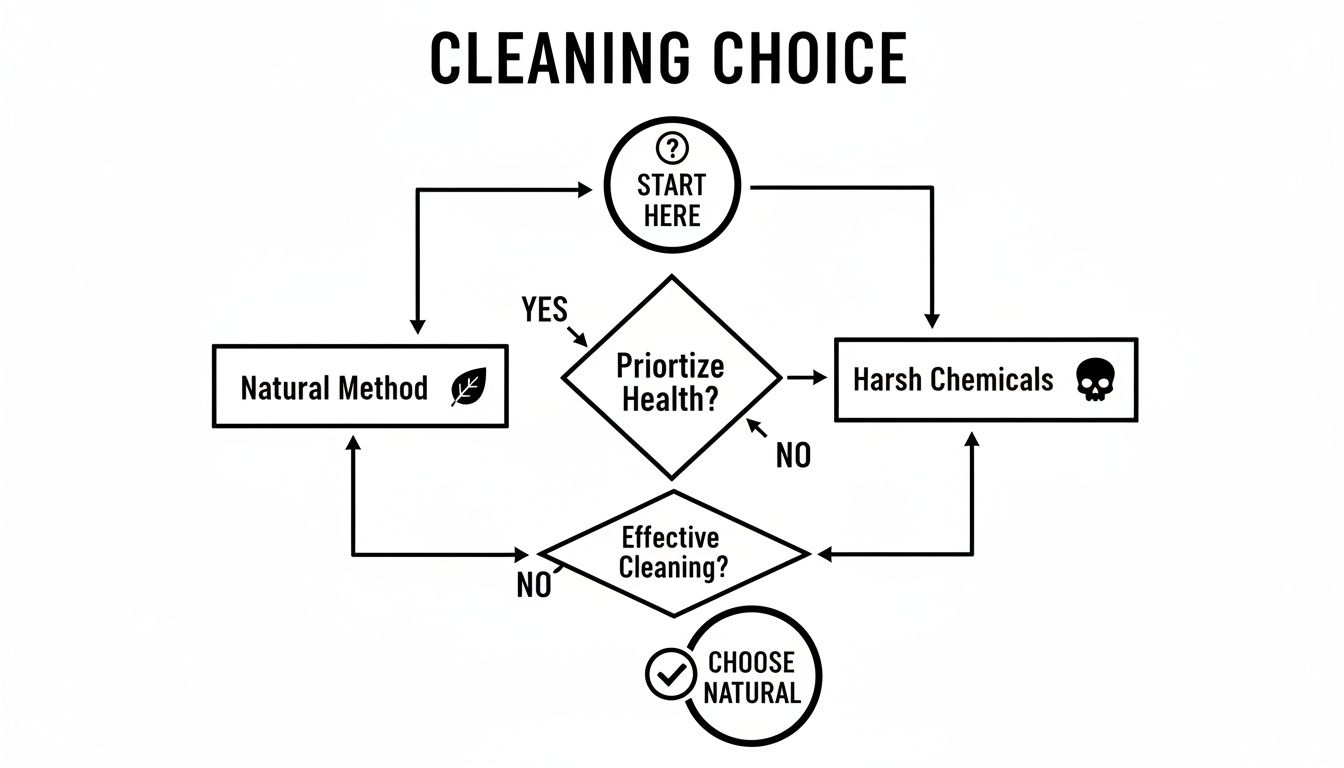
As you can see, gentle, natural cleaners are the clear winner for keeping your furniture looking great without risking damage or bringing harsh chemicals into your home.
The Foolproof Spot Test
So, how do you figure out what you’re working with? The best way is a simple spot test. It takes less than a minute and could save you from accidentally ruining a beautiful piece of furniture. Just find a hidden spot, like the underside of a cushion or a small area on the back near the floor.
Here’s all you have to do:
- The Water Drop Test: Put a single drop of room-temperature water on that hidden area.
- Watch What Happens: If the water beads up and sits right on the surface, you’re most likely dealing with protected or finished leather. This type has a protective topcoat, which makes it much more resistant to stains and spills. It's a fantastic, durable choice for busy households!
- See It Soak In: If the water absorbs almost immediately and darkens the spot, you probably have aniline or unfinished leather. This type is prized for its incredibly soft, natural feel, but it’s also more porous and needs an especially gentle touch.
That quick test tells you almost everything you need to know to clean your specific piece safely and effectively. It's also worth noting the difference between real leather and its alternatives. For a deeper dive, check out our guide on how durable faux leather is to understand the differences in care.
Knowing your material is half the battle won!
Simple DIY Recipes for a Gentle Clean
Ready to get hands-on? Let's mix up some wonderfully effective, natural cleaning solutions with ingredients you probably already have in your pantry. As a family-owned business serving the Metro Milwaukee community since 1928, we’ve seen these simple recipes work time and time again.
They give you complete peace of mind, knowing you aren't using harsh or unknown chemicals on the furniture your family gathers on every day. You don't need fancy, expensive products to get a great result—just a little know-how.
The Gentle All-Purpose Soap Solution
This is our go-to for routine cleaning. It's fantastic for wiping away the dust, fingerprints, and light surface grime that comes with everyday family life. We recommend this for most protected or finished leathers because it’s incredibly gentle and easy to make.
All you need is:
- A small bowl of warm, distilled water. This is a great little trick we always share—distilled water doesn't have the minerals found in tap water, which can sometimes leave faint streaks behind.
- Just a few drops of a mild, pH-neutral liquid soap. A gentle, clear dish soap or Castile soap works great. The key here is less is more; you’re aiming for a very light solution, not a sudsy bubble bath!
Simply mix the soap into the water until it's just slightly bubbly. That’s it! This mix is fantastic for a regular wipe-down to keep your leather looking fresh and clean without overwhelming the material.
The Diluted White Vinegar Deodorizer
Sometimes furniture just needs a little refresh, especially if it's near the kitchen or has absorbed some household odors over time. For this, a simple white vinegar solution works wonders as a natural deodorizer and light cleaner.
Here’s what to do:
- Mix equal parts white vinegar and distilled water in a clean spray bottle.
- Shake it gently to combine.
This mixture is excellent for cutting through mild odors and giving the surface a quick, refreshing clean. And don't worry about the vinegar smell! It disappears completely as it dries, leaving your furniture smelling neutral and fresh. It's one of the most frequently recommended natural recipes in the furniture world, a fact you can confirm by checking what industry experts say about common household leather cleaning methods.
Remember, the secret to natural leather care isn’t about scrubbing hard. It’s about using the right gentle solution consistently. A little bit of care goes a long way in keeping your furniture beautiful for years of family memories.
Before you start, always remember the golden rule we shared earlier—always spot test first! Dab a tiny amount of your solution on a hidden area to make sure it reacts well with your specific type of leather. Once you’ve confirmed it’s safe, you’re ready for the actual cleaning technique, which we’ll cover next.
The Right Way to Clean and Condition
Alright, you've picked your natural cleaning recipe and successfully patch-tested it. Awesome! Now for the actual cleaning, where the right technique is everything. At BILTRITE, we always tell folks that the secret isn't scrubbing harder; it's about a gentle, patient approach. You've made an investment in a beautiful piece of leather, and this is how you'll keep it that way.
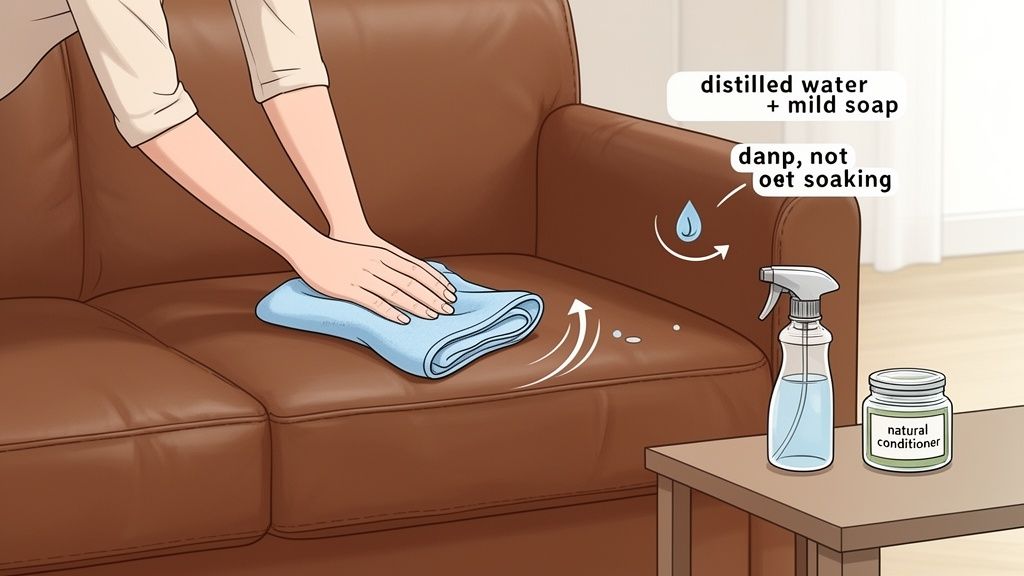
Grab your softest microfiber cloth and your cleaning solution. Our golden rule here is simple: damp, not soaking. Seriously, wring that cloth out until it’s just barely moist. Too much water is leather’s biggest foe, so don't skip this.
Instead of trying to tackle the whole sofa at once, work in small, manageable sections. Start from the top and move down, using gentle, circular motions. This method ensures you get even coverage and helps prevent any annoying streaks.
As soon as you finish cleaning a section, switch to a separate, clean dry microfiber cloth and immediately buff the area. This little step whisks away any leftover moisture and brings back that lovely, subtle sheen. Let the entire piece air-dry on its own time—never, ever use a hairdryer or stick it next to a heat vent to speed things up. That’s a fast track to dry, cracked leather.
Why Conditioning Is Not Optional
Cleaning your leather is only half the battle. Think of it like washing your hands; you'd probably use some lotion afterward to keep them from getting dry. Leather is a natural skin, and it needs the exact same kind of care to stay soft, supple, and resilient. That's where conditioner comes in!
Conditioning replenishes the natural oils within the leather, keeping it moisturized and flexible. Without it, leather slowly becomes brittle, which eventually leads to cracks and fading. It’s truly the single best thing you can do to protect your investment for years to come.
This isn’t just our opinion—it's an industry standard. Professional leather dealers consistently recommend a routine of gentle cleaning followed by conditioning every 6 to 12 months. This simple habit is the number one way to prevent the drying and cracking that causes most leather wear and tear.
Applying Your Natural Conditioner
Putting on a natural conditioner is just as straightforward as the cleaning process. A very light application of olive oil or a specialized natural leather conditioner will do the trick.
Here’s our simple method:
- Squeeze a small, dime-sized amount of conditioner onto a clean, dry microfiber cloth.
- Gently rub it into the leather using a circular motion, working in small sections just like you did when cleaning.
- The key is a thin, even coat. You don’t need to slather it on; a little really does go a long way.
- Let the conditioner sit and soak in for about an hour.
- Finally, grab another clean cloth and lightly buff the entire surface. This removes any excess conditioner and leaves a beautiful, healthy glow.
This simple routine will keep your leather feeling as good as it looks. For a more detailed walkthrough, you might find our guide on how to properly condition a leather sofa helpful, as it breaks things down even further. Now, let's get ready to handle those little "oops" moments life throws at us.
How to Tackle Common Stains Naturally
Life happens. In a busy, happy home, so do occasional spills and marks. When your little one’s homework session leaves behind a pen mark or a slice of Friday night pizza leaves a greasy spot, there’s no need to panic! Think of these little mishaps as just part of your furniture’s story.
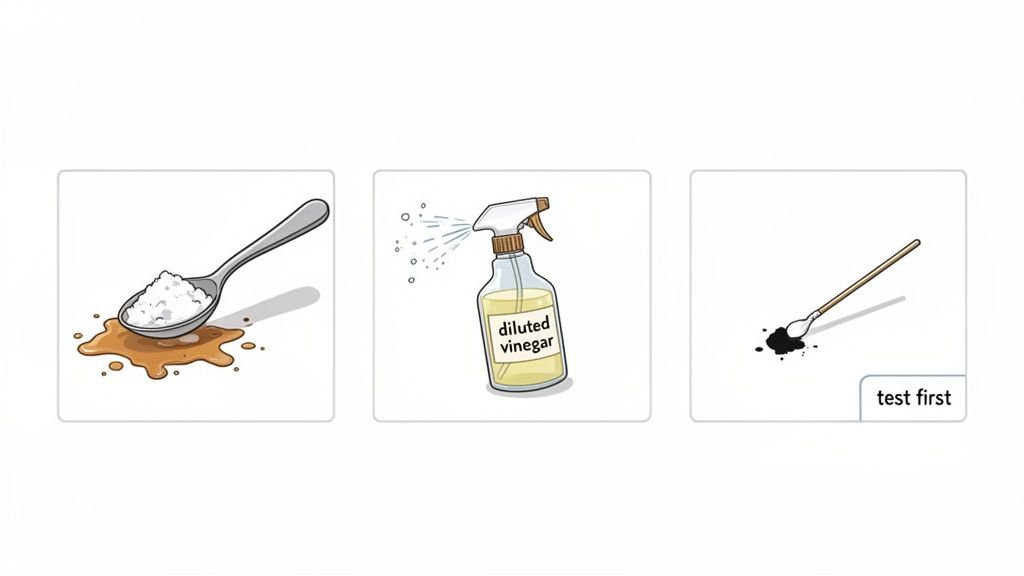
The trick is always to act quickly but gently. For many common household stains, a simple, natural remedy from your pantry is all you need. It’s about working with the leather, not against it.
Simple Fixes for Everyday Spills
Got a specific spot you’re worried about? Here are a few of our family’s tried-and-true tricks for tackling the usual suspects. Just remember to always blot, never rub, and spot-test in a hidden area first!
- For Greasy Spots (like oil or butter): Whatever you do, don't reach for water! Instead, sprinkle a generous amount of baking soda or cornstarch directly onto the stain. Let it sit for a few hours to absorb the oil, then gently brush it off with a soft cloth. You might need to repeat this, but it’s amazing how well it can lift grease out.
- For Ink Stains: This one requires a delicate touch. Dab a small amount of isopropyl (rubbing) alcohol onto a cotton swab and gently blot the ink mark. Use a fresh part of the swab for each dab to avoid spreading the ink. Once it’s gone, let the spot air dry completely and follow up with a touch of leather conditioner.
- For Water Rings: If a sweaty glass leaves a mark, you can often fix it by gently wiping the area with a cloth dampened in distilled water, blending the spot outward. The key is to let it air dry naturally.
What to Absolutely Avoid
Sometimes, what you don't do is just as important as what you do. Using the wrong product can turn a small, fixable spot into a big, permanent problem.
Stay far away from harsh chemicals like bleach or ammonia-based cleaners. These will strip the color right out and dry your leather, causing it to crack and age prematurely.
In fact, professional leather cleaners report that a huge chunk—nearly a third—of their repair calls come from well-intentioned DIY cleaning attempts gone wrong. The biggest culprits are bleach, aggressive scrubbing, and using too much water. It's why they now emphasize safe, natural protocols just like the ones we’re sharing!
Using these harsh methods can sometimes even lead to peeling. If you’re seeing issues like that, it's a good idea to understand why a leather couch might be peeling to know what your next steps should be. A gentle touch with the right ingredients is always the best way forward.
Come See Our Beautiful Leather Furniture In Person!
We genuinely hope these natural cleaning tips help you feel confident caring for your leather furniture! There's a special kind of pride that comes with owning quality pieces built to last, whether it's a sturdy Amish-made recliner or a buttery-soft sofa that's the heart of your living room.
If you're in the market for a new piece or just want some more friendly, real-world advice, we'd love for you to stop by. We made a conscious decision not to sell online because we firmly believe you need to see and feel the quality for yourself. It’s a hands-on experience that a screen just can’t replicate.
Here at BILTRITE, we're a fourth-generation family business, and we love sharing what we've learned over the years. Helping you find a great piece for your home isn't just our job—it's what we do best!
Our showroom in Greenfield is where you can see it all come together. You'll find our awesome team, who have a combined 400 years of experience, ready to help without any of that high-pressure sales nonsense. Want to get a sneak peek before you visit? You can browse our selection of quality leather furniture online to see what catches your eye.
So, come on down when you're ready. We'd love to see you in our store! Come say hi and let us help you find an amazing new piece for your home.
Some Questions We Hear All The Time
We get a lot of great questions from families about keeping their leather looking its best. Here at BILTRITE, we've been helping folks in Metro Milwaukee find and care for their furniture since 1928, so we're always happy to share what we've learned over the years!
If you have more questions, please don't hesitate to stop by our Greenfield showroom. Our team is always ready to chat.
How Often Should I Clean My Leather Sofa?
This is probably the most common question we get! For general upkeep, just a quick dusting with a dry microfiber cloth once a week is a fantastic habit to get into. It keeps dust from settling into the grain.
As for a deeper clean with a natural solution, we recommend doing that every 3-6 months. The exact timing really depends on how much love the piece gets from your family—a sofa in the main family room will need more attention than an armchair in a quiet corner. To keep the leather supple and prevent it from drying out, conditioning every 6-12 months is absolutely key.
Can I Use Coconut Oil as a Leather Conditioner?
We'd suggest being very cautious with heavy, food-grade oils like coconut oil. While it might seem like a good natural option, it can often leave a greasy residue that attracts more dust, or even darken the leather in ways you didn't expect.
A much better natural choice is a very light application of olive oil or a conditioner that’s made with beeswax. But no matter what you use, please—always test it in a hidden spot first! Under a cushion or on the back near the floor is a great place.
Are These Natural Methods Safe for Antique Leather?
When you're dealing with older or antique leather, it's best to be extra careful. The finishes on these pieces can be far more delicate than on modern furniture.
For anything that's a high-value heirloom or has deep sentimental value, we strongly recommend consulting a professional leather restorer. It's just not worth the risk of causing accidental damage.

