Fabric Selection Guide: How to Choose the Right Upholstery


You're standing in a showroom, one kid is already tugging on a swatch, the dog is stretched out on a sofa, and a second family member keeps pointing at the gorgeous fabric that looks like it would never survive real life. That's the moment fabric selection stops being a small design choice and starts becoming the decision that decides whether a sofa still looks good five years from now.
A smart fabric selection guide cuts through the noise. The right upholstery isn't just about color or style, it's about how the fabric handles rubbing, spills, sunlight, pets, and daily use. At BILTRITE, we like to keep this simple, practical, and honest. If a fabric is going to live in a busy home, it has to earn its place.

Why Fabric Choice Matters More Than You Think
A sofa can look beautiful on day one and still be the wrong choice for a real household. The family that falls in love with a linen-look cover, then brings it home to two toddlers and a golden retriever, usually learns that lesson the hard way. The finish may be elegant, but if it pills, stains, or wears thin too quickly, the room starts feeling tired long before the frame should.
That's why fabric choice matters more than many expect. Color can be changed with pillows and paint, but the upholstery itself has to live with daily life. A better fabric doesn't just look nicer, it helps a sofa stay usable, cleanable, and comfortable for years instead of months. The right pick can turn a high-use family piece into something that still feels fresh long after the first spill.
The real job of upholstery
Fabric has to do several jobs at once. It needs to look good, feel good, handle friction, and fit the way a room is used. A formal sitting room and a family den should not wear the same fabric expectations, and a busy home needs a different answer than a quiet apartment.
Practical rule: if a piece gets sat on every day, assume it will be tested every day.
That's why this topic deserves a clear process. Fiber content, weave construction, performance ratings, cleaning requirements, and household lifestyle all matter. The goal is to choose one fabric that can handle everyday use, not just the showroom floor.
Understanding Fabric Fibers and Constructions
The easiest way to shop smart is to split upholstery into two questions. First, what is the fiber made of. Second, how is it woven or constructed. That combination tells a better story than style names alone.
Natural fibers like cotton and linen feel familiar because they breathe well and often have a softer, more relaxed look. They can be lovely in low-use rooms, but they tend to ask more from the homeowner in terms of care. Synthetic fibers like polyester and olefin are closer to athletic wear than dress clothes, they're made to take a beating, clean up more easily, and hold their shape better in active homes.
Fiber choice first, weave choice second
Blends often make the most sense for families because they try to balance comfort and toughness. A blended fabric can borrow the softness of a natural fiber and the resilience of a synthetic one, which is exactly why so many practical shoppers end up there. The weave still matters, though. A tight flat weave usually wears better than a loose basketweave, especially where hands, pets, and kids touch the fabric all day.
| Fiber or construction | What it tends to do well | What it struggles with |
|---|---|---|
| Cotton and linen | Soft feel, breathable comfort | Wrinkling, staining, and looser wear in busy rooms |
| Polyester and olefin | Toughness, easier cleaning, everyday durability | Can feel less relaxed than natural fibers |
| Tight flat weaves | Better structure, less snagging, better for active spaces | Less plush hand-feel |
| Pile weaves and chenille | Softer touch, richer texture | Can crush or show wear sooner |
| Knits | Stretch and comfort | Less common, sometimes less structured |
A tight flat-weave polyester usually beats a loose linen basketweave in a playroom because the tighter structure resists snagging and visible wear. Chenille is still a favorite for living rooms because it feels inviting, but it asks for a little more respect than a rugged everyday weave. That's the trade-off families need to see clearly before they buy.
Learn more about upholstery material basics from BILTRITE's guide
Performance Metrics That Matter
A sofa in a busy home faces months of sitting, sliding, pet contact, and cleaning. The useful fabric numbers are the ones that help predict that daily wear. Abrasion, pilling, and stain handling deserve the closest attention, while lightfastness and seam stability can decide whether upholstery keeps its shape and color.
What the test numbers mean in real life
The Martindale approach provides a practical abrasion reference. Industry guidance commonly places fabrics below 10,000 rubs in the light decorative category, 10,000 to 15,000 rubs for light-to-medium residential use, 15,000 to 25,000 rubs for general residential upholstery, 25,000 to 30,000 rubs for heavy residential or light commercial use, and 30,000 plus for commercial or hospitality-grade use. The Association for Contract Textiles reports abrasion through Wyzenbeek double rubs or Martindale cycles. Its guidance roughly pairs 15,000 double rubs Wyzenbeek with 20,000 Martindale cycles, and 30,000 double rubs Wyzenbeek with 40,000 Martindale cycles. ACT abrasion guidance
| Metric | Test Standard | Light Use | Everyday Family Use | Heavy / Commercial Use |
|---|---|---|---|---|
| Abrasion resistance | Wyzenbeek or Martindale | Below 10,000 rubs or cycles | 15,000 to 30,000 range | 30,000 plus |
| Pilling resistance | 1 to 5 scale | 3 or lower | 4 recommended | 5 preferred |
| Stain resistance | Inherent or treated | Basic spill control | Better cleanup tolerance | Stronger resistance preferred |
| Lightfastness | Exposure to sunlight | Low sun exposure only | Occasional daylight | Bright rooms and stronger exposure |
| Seam stability | Construction dependent | Light use only | Everyday seating | Tailored pieces under stress |
Pilling shows up as small fuzzy balls created by repeated friction. For home upholstery, a score of at least 3 is a reasonable starting point, while 4 or 5 is the better choice for homes with pets, children, seniors, or seats used throughout the day. Pilling guidance and performance scale
Stain resistance also needs a clear explanation. Some fibers naturally slow spills, while topical finishes can improve early cleanup and lose effectiveness as the fabric ages. Ask what protection comes from the fiber itself and what depends on a treatment.
Sunlight creates a separate concern. A fabric can look perfect under showroom lighting yet fade sooner beside a bright window, so check its lightfastness before choosing upholstery for a sunny room. Seam stability matters when people sit down heavily, shift often, or use the same cushion every day.
If a swatch has no performance information, treat it like a gamble, not a sure thing.
For a closer look at these ratings, see our fabric durability ratings guide. Bring your questions to a family-owned showroom and test the swatches by hand. The right fabric should suit the household, not just look impressive on a chart.
Choosing Fabric by Room and Lifestyle
The right fabric changes with the room, not just the house. A front living room, a breakfast nook, and a bedroom all ask different things from upholstery. That's why a single “best fabric” doesn't exist.
Match the room to the wear pattern
In a high-traffic living room, a performance fabric is usually the sensible move. Families with children should look for tighter construction, stronger abrasion resistance, and colors or patterns that soften the look of everyday wear. In a dining room, wipe-down ability matters more because food and drink are part of the scene.
| Room or lifestyle | Recommended fabrics | Key features | Avoid |
|---|---|---|---|
| Family room | Performance synthetics, tight blends | Easy cleaning, stronger wear, daily durability | Loose weaves that snag |
| Dining room | Tightly woven synthetics, treated blends | Spill resistance, quicker wipe-downs | Fabrics that soak up mess |
| Kids' spaces | Durable, patterned, darker fabrics | Hides wear and little accidents better | Pale, delicate upholstery |
| Pet homes | Microfiber, tight construction, leather alternatives | Better hair cleanup, less snagging | Loops and loose texture |
| Senior living | Softer, forgiving fabrics with decent structure | Comfort against skin, easy sitting | Rough hand-feel |
| Home office | Comfortable, polished fabrics | Looks good, supports long sitting | Fragile decorative textiles |
| Bedroom seating | Softer fabrics, relaxed textures | Comfort, quieter visual feel | Overbuilt commercial looks |
Pet owners should pay attention to texture before anything else. Claws and snagging are real, and hair shows up differently on different surfaces. A tight fabric is easier to live with than a looser decorative weave, especially when the animal thinks every cushion is part of the family.
Senior seating deserves a different eye. A fabric can be durable without feeling stiff, and comfort should not get pushed aside by specs alone. For a quieter room or less aggressive use, a softer hand can matter more than an extreme rating.
BILTRITE keeps that kind of practical mix in mind with small-scale pieces, heavy-duty options, and custom fabric choices in the showroom. The point is simple, the room should lead the fabric decision, not the other way around.
See more ideas for pet-friendly furniture choices
Cleaning Codes and Everyday Maintenance
Cleaning codes tell the truth faster than a sales label does. They're the difference between a fabric that can take a simple spot clean and one that needs a professional touch every time something spills. Anyone shopping upholstery should ask for the code before falling in love with the color.
Read the tag before the stain happens
The main codes are straightforward. W means water-based cleaners are okay. S means solvent-based cleaners only. WS means either water-based or solvent-based cleaners can be used. X means vacuuming or brushing only, so moisture is off the table.
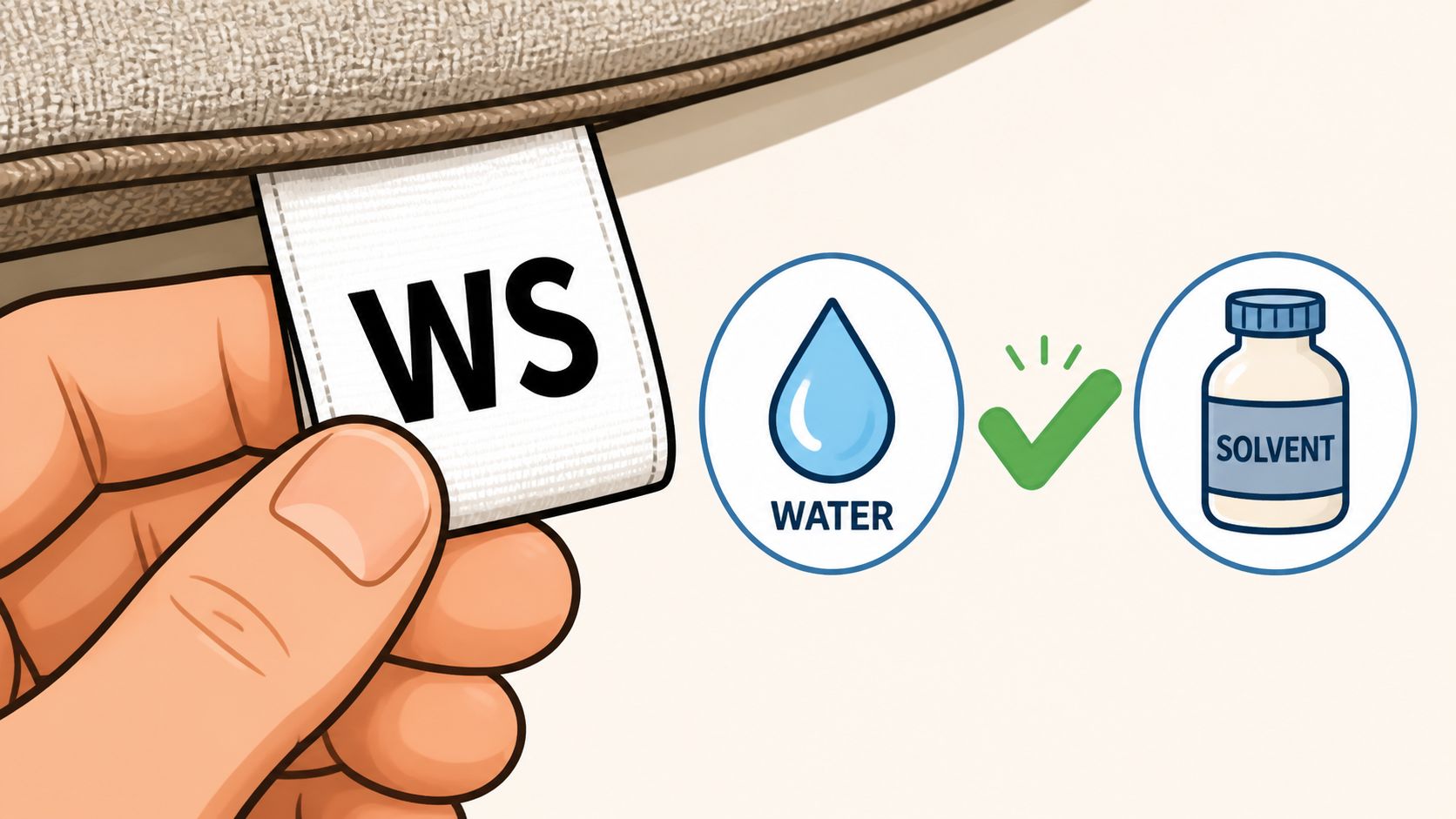
A wrong cleaner can damage the finish and sometimes the warranty too. That's why spot testing in a hidden area is not optional. Coffee, wine, grease, and pet accidents all need blotting, not rubbing, because rubbing pushes the mess deeper and can rough up the face of the fabric.
Blot first, always. The towel should lift the spill, not grind it into the weave.
Regular care makes a bigger difference than many might expect. Vacuuming with an upholstery attachment keeps grit from working into the threads, rotating cushions spreads out the wear, and keeping furniture out of direct sunlight helps slow fading. If the fabric has a protector treatment, that treatment may need reapplication over time, especially in homes where spills are part of daily life. Upholstery cleaning tips
Professional cleaning makes sense when a stain has set, a piece has a special finish, or the care tag is restrictive. Home maintenance covers the day-to-day messes, but deep issues are better left to someone who knows how the fabric was built. That's the cleanest way to protect both the look and the life of the piece.
Pattern, Scale, and Color Guidance
Fabric pattern changes the whole feel of a room, but it also changes how honest the upholstery looks after living with it. A solid neutral can look elegant on day one, then show every mark. A good pattern can hide a lot of the small realities that come with family life.
Use size and texture with intention
Large-scale patterns work best on bigger pieces because they have room to breathe. On a small chair, the same print can feel busy and awkward. Tiny patterns can disappear on a sectional, so the visual effect gets lost before the fabric does.
Pattern and texture are practical tools, not just decorative ones. They help soften the look of wear, disguise stray pet hair, and reduce the visual impact of little spills. That's why many busy households end up happier with a subtle weave, a small-scale motif, or a fabric with enough texture to stay interesting without screaming for attention.
Color deserves the same honest treatment. Darker shades hide stains better, but they show lint and pet hair more easily. Lighter colors brighten a room, though they ask for more regular care. The smartest choice usually depends on what shows up in the room every day, sunlight, dust, muddy paws, or a mix of all three.
The showroom lighting and home lighting will never match exactly, so swatches need to come home. A fabric that looks warm under retail lights can read cooler next to a gray wall or a big south-facing window. Coordinating with wood tones, rugs, and wall color is easier when the swatch sits in the actual room for a day or two.
See practical advice on balancing patterns in upholstery
Cost, Warranty, and Local Shopping Tips
Fabric price usually reflects more than color. Better fibers, stronger construction, and performance finishes tend to cost more, and the reason is simple, those materials are built to survive more use. A cheaper fabric can still be the right call in a quiet room, but busy families usually get more value from paying for the harder-working option once instead of replacing a worn piece later.
Warranty language deserves a close read. Some coverage is useful, some of it is mostly fine print, and the only number that matters is how the warranty lines up with the fabric's real performance. A fabric with a higher wear rating and a cleaner care code usually makes more sense for households that don't want to baby the furniture.
Shopping locally solves a problem online photos can't fix. Swatches look different under showroom lights, under home lighting, and beside real wood finishes, and the hand-feel is impossible to judge on a screen. In a showroom, a shopper can compare textures on actual frames and ask what happens when that fabric meets real use.
BILTRITE Furniture-Leather-Mattresses carries custom upholstery options, including USA-made and Amish-made pieces that pair well with the right fabric choice. That matters because strong construction and repairable furniture give the fabric a better long-term home. For families, the question isn't just what costs less today. It's what still makes sense after years of spills, sitting, and everyday living.
Visit BILTRITE to See Fabrics in Person
A fabric that looks right online can feel wrong in the room, and a swatch that seems plain in the showroom can come alive beside a rug or wall color. That's why fabric shopping works best when people can touch the materials, compare them side by side, and see how they read in real light. Families who bring paint samples, throw pillows, or a rug piece usually make better choices faster.
Our team at BILTRITE helps neighbors sort through those choices without pressure. With a wide fabric library and the ability to order custom samples, the showroom makes it easier to line up style, durability, and daily life. Come in, ask questions, and take home the swatches that feel right.
BILTRITE Furniture-Leather-Mattresses offers a wide in-store selection of upholstery, custom fabric options, and practical guidance for families choosing furniture that has to work in real homes. Visit BILTRITE Furniture-Leather-Mattresses in Greenfield, bring your swatches, and let the team help you narrow down the fabric that fits your room, your routine, and your people.