Bed Bug Waterproof Mattress Protector: A Smart Buyer’s Guide


A late-night drink spill can turn a peaceful bedtime into a frantic hunt for towels. Add a neighbor's warning about bed bugs, and a simple mattress-protection purchase suddenly raises bigger questions: Does waterproof mean bed bug proof? Can one cover handle both problems? And will it feel hot, noisy, or awkward under the sheets?
A bed bug waterproof mattress protector can address moisture and insect concerns, but only when it's built for both jobs. BILTRITE Furniture has helped Metro Milwaukee families choose comfortable sleep products since 1928, and the most useful advice is straightforward: understand the difference between a regular fitted protector and a fully sealed encasement before spending extra.
A fitted cover may be enough for everyday spills. A true encasement is the stronger choice when bed bugs are a genuine concern. The details that matter include the zipper, seams, fabric, waterproof membrane, mattress depth, and care routine. A little preparation can also help protect the mattress from stains, including the cleanup challenges covered in this guide to cleaning urine from a mattress.
When a Spill or a Bite Changes Your Bedtime Plans
A Milwaukee family might discover the problem in one of two ways. A child knocks over a cup during a movie, and liquid starts spreading across the bed. Or a family member notices bites after returning from a trip, and everyone begins checking mattress seams, bed frames, and nearby furniture.
Those situations feel similar because both involve the mattress, but the protection needs aren't identical. Waterproofing keeps liquid away from the mattress materials. Bed bug protection blocks insects from entering or escaping the mattress. One feature doesn't automatically deliver the other.
A regular waterproof cover can act like a fitted sheet with a moisture barrier. It may protect the sleeping surface and the sides, yet leave the bottom and underside open. That design can work well for spills, sweat, and everyday messes, but it doesn't isolate the mattress from bed bugs.
The neighborly rule: If bed bugs are part of the concern, shop for a product specifically designed as a full encasement, not merely one labeled waterproof.
A shopper looking for both protections should ask four practical questions:
- Does it cover every side? A true encasement surrounds the mattress, including the underside.
- How does it close? The zipper and its end-stop must seal tightly.
- What blocks liquid? A waterproof membrane should be integrated into the construction.
- Will it fit? Mattress depth matters as much as length and width.
The right choice doesn't need to be complicated or frightening. A careful look at construction can separate a simple spill protector from a sealed barrier designed for pest containment. The next step is understanding what each layer does.
What a Bed Bug Waterproof Mattress Protector Actually Does
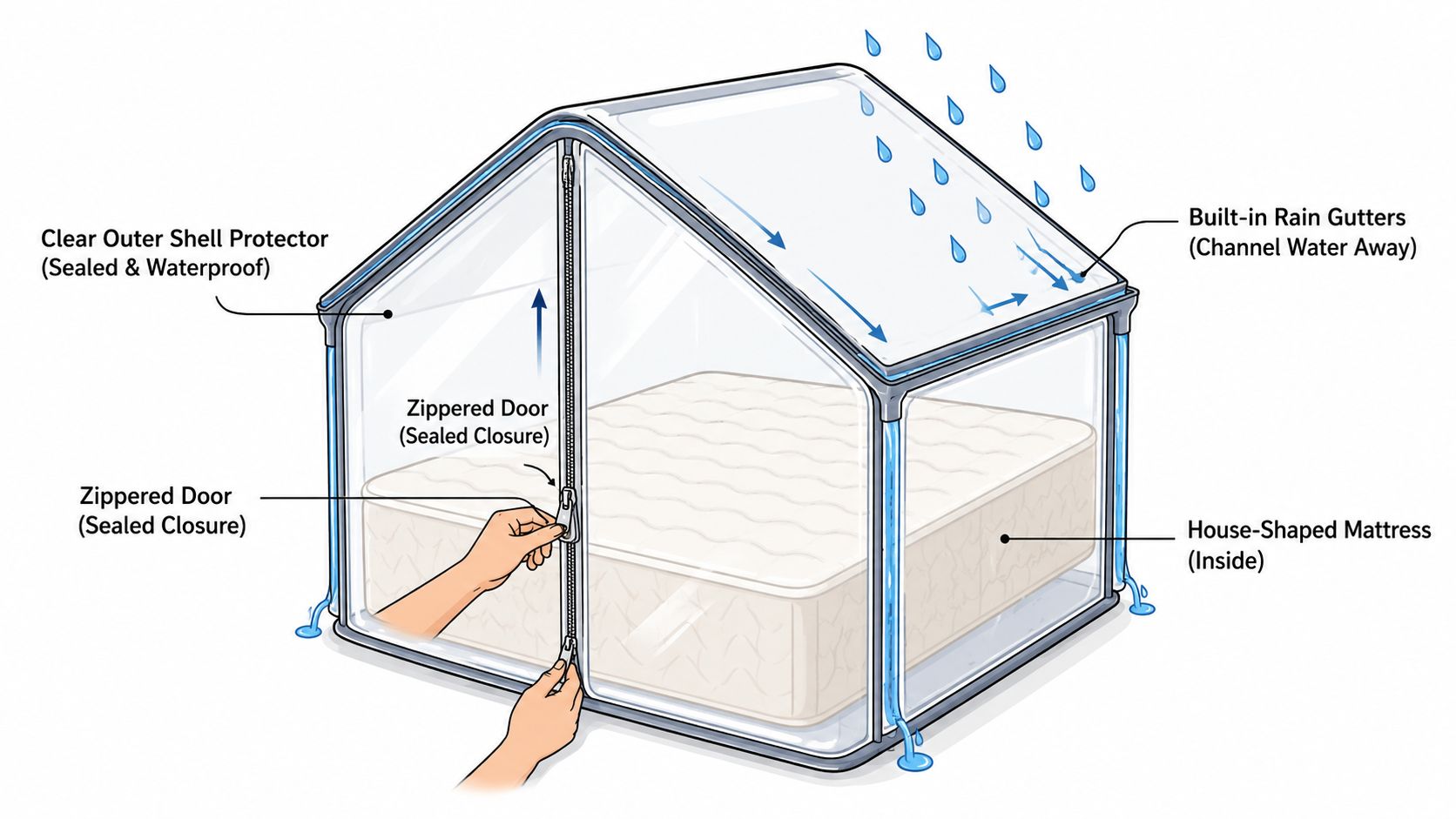
Think of the mattress as a small house. A fitted protector is like a roof and partial siding, useful against rain from above but open underneath. A full encasement is more like a sealed outer shell with a secure door, surrounding the mattress on all six sides.
The zipper is that door. When it closes tightly and the end is secured, the encasement can keep bed bugs from entering the mattress and contain insects already inside. Trapped insects can eventually die because they can't reach a host, but an encasement isn't a complete treatment for an infestation elsewhere in the room. Mattress, box spring, bed frame, headboard, and surrounding furniture may all require inspection and professional attention.
Two barriers, two jobs
The waterproof layer works differently from the insect barrier. A thin urethane or similar membrane helps stop liquid from reaching foam, fibers, or springs. The outer fabric can provide a softer sleeping surface, while the membrane acts like built-in rain gutters, directing moisture away from the mattress interior.
The bed bug barrier depends on coverage and seal integrity, not waterproofing alone. Public health guidance explains that an effective encasement must fully enclose the mattress or box spring, use a tightly sealed zipper, and maintain intact seams. The zipper end-stop matters because even a tiny opening can permit entry or escape, as described in professional bed bug encasement guidance.
Reading performance language
“Lab-tested” can refer to a specific test under stated conditions. It doesn't mean every product performs identically in every bedroom. Shoppers should look for clear information about penetration testing, zipper construction, seam integrity, waterproof testing, and the product's intended use.
A 2025 evaluation reported that microporous fabrics with weave apertures under 0.5 millimeters prevented penetration in more than 150 observed attempts, with zero successful laboratory breaches. The report also described 95% mortality over 60 days for insects trapped inside encasements and a reduction of more than 90% within 60 days in Toronto homes when encasements were paired with professional treatment. Those findings support the value of a properly engineered, six-sided product, while also showing why an encasement shouldn't replace broader pest management. Read the independent physical-barrier evaluation for the testing context.
For moisture concerns alone, readers can learn more about the practical benefits of a mattress protector in BILTRITE's guide to mattress protector benefits.
Encasement vs Fitted Protector and Why It Matters
The choice becomes clearer when the two products sit side by side. A fitted protector rests over the top and usually wraps around the sides. A full encasement closes around the entire mattress, including the underside.
| Feature | Encasement | Fitted Protector |
|---|---|---|
| Bed bug containment | Designed to block entry and escape when fully sealed | Not sufficient because the underside remains exposed |
| Liquid protection | Available with an integrated waterproof membrane | Commonly designed for spills and moisture |
| Installation | Requires lifting or partially standing the mattress | Installs much like a fitted sheet |
| Comfort | Depends on fabric, membrane, and construction | Usually familiar and easy to layer |
| Breathability | Modern fabrics can allow moisture vapor to pass through | Varies by membrane and surface fabric |
| Noise | Older plastic styles may feel crinkly | Fabric-based versions are often quieter |
| Value | Pays for full coverage and pest-focused construction | Avoids extra cost when only spill protection is needed |
| Best use | Bed bug concern, previous infestation, or isolation needs | Everyday spills, sweat, and general mattress care |
Why the underside changes everything
A fitted cover can stop liquid from reaching the top of the mattress, but bed bugs can travel across exposed areas below it. The product may look substantial and still leave a route into seams, corners, or the bottom panel.
A true encasement closes that route. Its value comes from the complete perimeter seal, not from a thicker top surface. The Dri-Tec mattress cover information can help shoppers understand how a fitted protector handles spills and moisture, while a bed bug concern calls for a different category and construction.
Comfort has improved
Some shoppers remember old plastic covers that felt warm, stiff, or noisy. Newer membrane-backed fabrics can feel softer and quieter, especially when paired with a fitted sheet and breathable bedding. Still, comfort varies, so hot sleepers should feel the surface and ask about vapor transmission rather than assuming every waterproof layer behaves the same way.
The decision rule is simple. Choose a full encasement when bed bugs are a current concern or a past issue. Choose a fitted protector when the goal is spill and everyday moisture protection without pest isolation.
The Features That Actually Make a Difference
A product can look like a bed bug waterproof mattress protector on a package and still fall short of the protection a household needs. The important clues are found in the construction.
Start with the closure
The zipper deserves the closest inspection. It should close smoothly, resist separation, and end with a secure closure that doesn't leave a gap. Some designs use a self-locking zipper with a fold-over tape closure at the zipper end, a detail described in zippered encasement construction information.
A fine-mesh flap over the zipper can provide another layer of coverage, but the shopper should still examine how the end-stop closes. A decorative flap isn't the same as a sealed termination.
Before paying extra, confirm: full zipper coverage, a secure end-stop, and a closure that remains shut during normal movement.
Examine the waterproof layer
Water resistance and bed bug exclusion are separate engineering targets. A membrane may stop liquid while the overall shape still leaves openings for insects. Conversely, a tightly woven shell may help with exclusion without being waterproof.
A urethane membrane bonded to the fabric can provide liquid protection while allowing some breathability. Technical testing has measured water resistance with hydrostatic-head methods and water-vapor transmission with ASTM E96, showing that manufacturers can evaluate these functions separately. The technical mattress-encasement manual also discusses impermeable covers and continuous barrier construction.
Before paying extra, confirm: the product states both waterproof performance and bed bug use, rather than assuming one feature guarantees the other.
Look at seams and fabric
Every stitched area deserves attention because seams can become weak points. Bound or carefully finished seams can support barrier integrity, while loose stitching, exposed openings, or thin areas deserve caution.
Stretch-knit polyester and soft plant-based textile surfaces can improve the feel under bedding. Breathability matters, too. A protector that blocks moisture but traps too much heat may protect the mattress while making sleep less comfortable.
Before paying extra, confirm: intact seam finishing, a comfortable surface, and a clear explanation of breathability.
Treat certifications as specific information
A certification or test claim should identify what was evaluated. Fabric safety, waterproof resistance, vapor transmission, and bed bug penetration are different questions. A label that addresses one doesn't automatically answer the others.
Shopping shortcut: Match every claim to the problem it solves. “Waterproof” answers the spill question. “Bed bug tested” addresses a different question about entry and escape.
Before purchasing, shoppers should also check the care label and the exact mattress-depth range. A product description may list a range such as 9 to 12 inches, and that measurement can determine whether the zipper and seams sit under proper tension.
Sizing and Mattress Compatibility Without the Guesswork
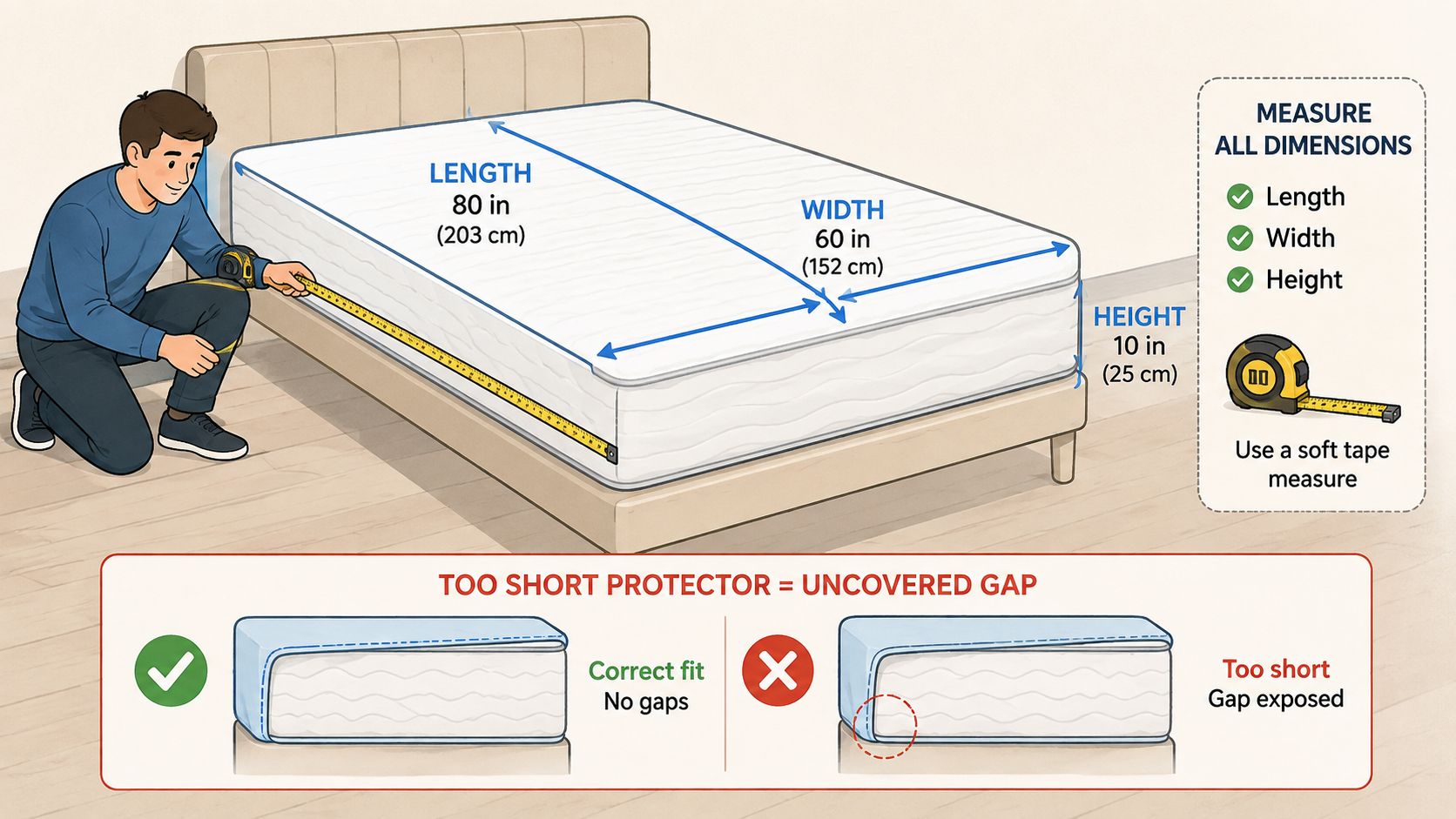
A well-made encasement can't protect a mattress if it doesn't fit. A cover that's too shallow may leave a gap or strain the zipper, while an oversized product can bunch, shift, and wear at the seams.
Measure the mattress itself
Remove thick bedding, then measure the mattress length, width, and depth. Depth deserves special attention because pillow tops, hybrids, foam layers, and older mattresses can change the profile from what the size label suggests.
Use a straightedge across the top if the mattress has a rounded edge. Measure from the floor of the side panel to the highest sleeping surface, without compressing the material. Record the dimensions before shopping, rather than relying only on “queen” or “king.”
Match the listed range
A protector's product page should state its compatible dimensions or depth range. For example, the listed range may be 9 to 12 inches, as shown in mattress encasement sizing information. That range isn't decorative wording. It tells the shopper whether the material can wrap securely without pulling the zipper out of alignment.
An overly deep fitted protector may gather beneath the sheets. An overly shallow encasement may place stress on the zipper and corners. Either problem can affect comfort and barrier reliability.
Account for special mattress setups
Adjustable bases and split mattresses may need separate encasements or a design that accommodates movement. A single rigid cover can make installation awkward when the sleeping surfaces operate independently.
Memory foam and latex can compress during installation, so the goal is snug coverage without forcing the zipper. Shoppers should also check whether a box spring requires its own encasement, since protecting only the mattress leaves another part of the bed exposed.
A local specialist can help compare measurements with available products. BILTRITE's mattress size chart gives shoppers a useful starting point, but the actual mattress depth should still be measured at home.
Measure first, purchase second. The correct fit protects comfort, zipper alignment, and the product's intended barrier function.
Caring for Your Protector So It Lasts
A waterproof protector works through its membrane, seams, and closure. Rough laundering can damage any of those parts, so care deserves the same attention as selection.
A practical household routine starts with the care label. Many waterproof protectors should be washed gently in cold water or at no more than about 30 to 40°C, then dried on low heat or air dried, according to waterproof protector laundering guidance. Bleach and fabric softener can damage the membrane or reduce breathability.
A simple maintenance rhythm
For a household with children, pets, or allergies, the top layer may need more frequent washing. Other homes can follow a less frequent routine based on spills, sweat, and the manufacturer's instructions.
- Spot clean quickly: Blot fresh liquid instead of rubbing it deeper into the fabric.
- Wash gently: Use mild detergent and avoid bleach, chlorine, and fabric softener.
- Dry carefully: Choose low heat or air drying, especially when the care label warns against heat.
- Inspect before reinstalling: Check the zipper, corners, seams, and surface for tears or separation.
- Close smoothly: Move the zipper slowly and keep fabric out of its teeth.
High heat can weaken elastic components or separate a laminated waterproof layer. Air drying flat may be the safer option when the protector feels delicate or the label restricts dryer use.
Check the barrier during ordinary chores
A laundry day gives the family a natural inspection point. Look closely at zipper teeth, the zipper end, seam joins, and corners where the mattress presses against the fabric. A small opening can become a leak point or an insect entry route.
A protector should stay fully sealed after installation. Unnecessary removal creates more opportunities to snag the zipper or expose the mattress. If bed bugs are involved, public health guidance recommends keeping the encasement in place for at least 12 months after an infestation is confirmed, as explained in mattress encasement timing guidance.
Know when replacement makes sense
No cover lasts forever. Replacement becomes sensible when the membrane no longer repels liquid, seams separate, the zipper fails, or the fabric develops a hole. Families should judge condition rather than rely on a calendar alone, because washing frequency and household use vary.
For additional mattress-care ideas, BILTRITE offers mattress maintenance and cleaning tips. A gentle routine helps preserve the protection that made the purchase worthwhile.
Finding the Right Match at BILTRITE's Mattress Center
A visit to BILTRITE's Mattress Center starts with questions, not pressure. A sleep specialist can ask about the mattress size, depth, current cover, children or pets in the home, hot-sleeping concerns, and whether bed bugs are an active or historical worry.
That conversation narrows the choice between a fitted protector and a full encasement. A family focused on spills may not need every pest-isolation feature. A household with a bed bug concern should understand why a complete zipper seal matters before comparing softness or price.
What shoppers can inspect in person
Samples make construction easier to understand. Shoppers can feel the difference between a thin fitted surface and a fully enclosed design, handle the zipper, examine the end closure, and look at the seam finish. They can also compare breathable fabric surfaces with heavier waterproof materials.
Comfort matters, especially for hot sleepers and children who notice texture quickly. A protector sits beneath the sheet, but its hand feel, flexibility, and noise can still affect how the bed feels at night.
BILTRITE offers a broad mattress department with over 60 models and more than 500 mattresses in stock, giving shoppers a place to discuss mattress compatibility alongside protection needs. The store carries options intended for mattress sizes from twin through California king, while staff can help verify depth before a purchase.
Bring measurements and practical questions
A shopper can make the visit more productive by bringing:
- Mattress dimensions: Length, width, and depth measured at home.
- Current cover details: Whether the existing protector is fitted or fully zippered.
- Care questions: Washing temperature, drying method, and inspection routine.
- Comfort priorities: Heat sensitivity, softness, stretch, and noise.
- Pest concerns: Whether the goal is prevention, containment, or general education.
BILTRITE is a fourth-generation, family-owned business serving Greenfield and Metro Milwaukee since 1928. The showroom focuses on affordable, better-quality furniture, USA-made and Amish-made pieces, solid wood construction, small-scale and heavy-duty options, and a large mattress selection. Sales associates bring more than 400 years of combined experience, and their role is to help families compare choices clearly.
A visit also lets shoppers connect mattress protection with the rest of the sleep setup, including mattress fit, bed frames, delivery needs, and comfort layers. The goal isn't to pay for every feature on a package. It's to choose the construction that matches the household's actual concerns.
BILTRITE Furniture-Leather-Mattresses offers mattress specialists, a large in-store mattress selection, and protector guidance for families comparing spill protection with full bed bug encasement. Visit BILTRITE Furniture-Leather-Mattresses in Greenfield with the mattress measurements, and the team can help sort through fit, comfort, zipper construction, and care needs in person.