Furniture Upholstery: Your Complete 2026 Guide


A Milwaukee family often reaches the same point with a sofa or chair. The frame still feels familiar, the seat is part of daily life, but the fabric looks tired, the cushions feel different, and the room no longer feels pulled together. That's usually when the big question shows up. Is this piece worth saving, or is it time to move on?
Furniture upholstery sits right in the middle of that decision. It affects comfort, durability, cleanup, and style all at once. For families trying to balance budget, everyday wear, and a strong buy local mindset, understanding upholstery can make the difference between a short-term fix and a piece that keeps serving the household for years.
Table of Contents
- Your Furniture's Story and Ours
- Decoding Fabrics and Leathers for Family Life
- What's Inside Counts Construction and Fillings
- Should You Reupholster or Replace Your Furniture
- Smart Upholstery Choices for Every Family
- Come Say Hi We'd Love to Help You in Person
Your Furniture's Story and Ours
A family sofa tells on everybody. It holds movie nights, sick days, snacks that should've stayed in the kitchen, and the one seat everyone secretly claims first. After enough years, the signs start to show. The fabric fades. The arms soften. The cushions don't bounce back like they used to.
That doesn't mean the story is over.

Furniture upholstery is the layer people notice first, but it's also the part that brings a piece back to life. New upholstery can make an older chair feel current again, help a room look calmer, and turn a worn piece back into a place where the whole family wants to land after a long day.
For Milwaukee households, that idea has deep roots. BILTRITE Furniture began in 1928 when Irwin Kerns founded it as a custom upholstery shop in Milwaukee. He was an upholsterer and furniture builder, and the shop sold handcrafted sofas for $1,000, a premium price that reflected the quality of the work even then, as noted in this history of BILTRITE's early years.
That origin matters because it explains why upholstery isn't just a fabric choice. It's a craft choice. A frame can be solid or flimsy. A cushion can support a body or swallow it. A fabric can age gracefully or give up too soon.
Good furniture upholstery doesn't just change how a piece looks. It changes how long a family can live with it happily.
That long view is part of the local furniture tradition in Milwaukee. Families here tend to think practically. They want a room to look good, but they also want to know whether the seat will still feel right after school backpacks, weekend guests, and another Wisconsin winter spent indoors.
That's why learning the basics helps so much. Once a shopper understands fabric, leather, frame quality, and cushion construction, the decision gets clearer. A piece stops being “just a couch” and starts being what it really is: part of the household routine, and part of the home's story.
Readers who enjoy family history can find more background on that legacy at BILTRITE's story page.
Decoding Fabrics and Leathers for Family Life
The fabric decision trips up a lot of shoppers because everything can look good under showroom lighting. The true test happens at home, when a child spills juice, a dog claims the corner cushion, or somebody comes in from a wet Milwaukee afternoon and drops onto the seat without thinking twice.
Why the outer material matters every day
Furniture upholstery works like a coat. Some materials dress up nicely but need gentler treatment. Others are built for daily mess, heavy use, and quick cleanup. Neither category is wrong. The right choice depends on how the piece will be used.
Fabric usually feels softer and warmer right away. It offers more pattern and color variety, and it can make a room feel casual, cozy, or refined depending on the weave. Leather has a different personality. It tends to look cleaner and more structured, and many families like how easy it is to wipe off surface spills. At the same time, leather shows its own kind of wear, and some people love that lived-in look more than others.
Natural fibers and synthetic fibers each bring tradeoffs.
- Cotton and linen: These often feel breathable and relaxed. They can be a strong fit in lower-stress rooms, but they may need more care in very busy households.
- Polyester blends: These are often chosen because they're practical and family-friendly. They can hold color well and usually ask less from the person cleaning them.
- Performance fabrics: These are built for homes that need more forgiveness from their furniture.
One important durability benchmark does exist. High-performance residential upholstery fabrics should reach at least 15,000+ double rubs on the Martindale test to support a 10 to 15 year service life under daily use, and some performance options are engineered to repel stains, moisture, and odors in high-use settings, according to this guide to upholstery materials and performance standards.
Practical rule: If a sofa will host kids, pets, snacks, naps, and daily sitting, the fabric should be chosen for cleanup first and color second.
Families who want a closer look at practical stain-resistant options can also browse performance fabric benefits.
A simple way to compare common upholstery choices
The material doesn't need to be mysterious. A simple side-by-side view often clears things up fast.
Upholstery Fabric Comparison for Milwaukee Homes
| Material | Best For | Durability | Cleaning Ease |
|---|---|---|---|
| Cotton | Casual rooms with lighter daily wear | Moderate | Moderate |
| Linen | Airy, tailored spaces with gentler use | Moderate | Moderate to lower |
| Polyester blend | Busy family rooms | Good | Good |
| Performance fabric | Kids, pets, heavy everyday use | Very good | Very good |
| Leather | Easy surface wipe-down and classic styling | Good to very good | Good |
This table won't replace sitting on the furniture and touching the cover in person, but it does help narrow the field.
How Milwaukee families can narrow it down fast
A household can usually make a strong choice by answering three questions.
Who uses this seat the most
A formal living room and the family TV room usually need different upholstery. A grandparent's reading chair, a dog-friendly sectional, and a condo loveseat won't all benefit from the same cover.What kind of mess happens here
Crumbs, pet hair, muddy paws, and drink spills each point toward more forgiving materials. Households that don't want to fuss with the furniture should lean toward surfaces that clean up easily.How should the room feel
Some fabrics soften a room. Some sharpen it. Texture changes the mood almost as much as color does.
A common mistake is choosing the most delicate-looking fabric for the most heavily used seat in the house. Another is assuming every durable fabric will feel stiff or boring. Today's better upholstery choices often balance softness, toughness, and style much more gracefully than people expect.
What's Inside Counts Construction and Fillings
Many upholstery decisions get made by eye, but the longer-lasting decision gets made by what sits underneath the fabric. A sofa can look attractive on day one and still disappoint quickly if the frame is weak or the support system gives out.
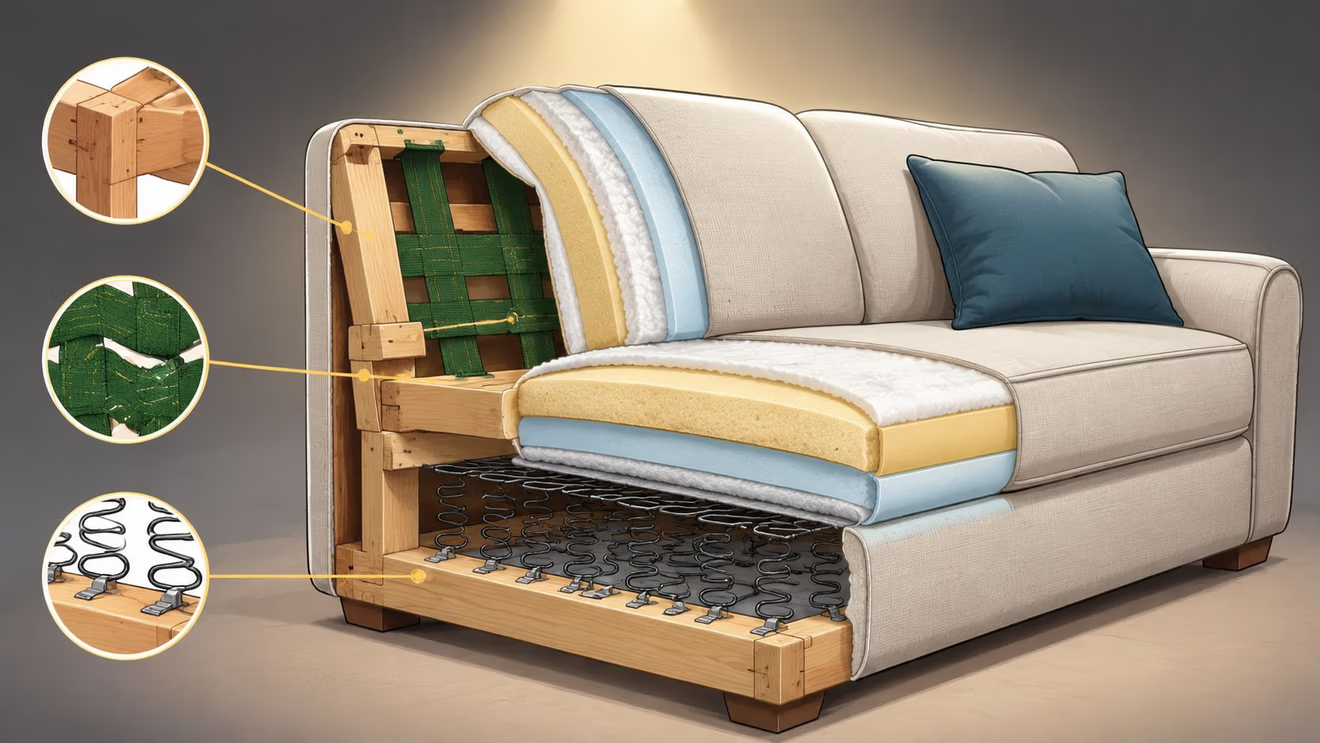
Start with the frame
The frame is the furniture's backbone. If that structure is solid, the piece has a chance to stay useful for a long time. If it isn't, no fabric upgrade will rescue it for very long.
That's one reason quality domestic construction still matters. Upholstery makes up 17% of total world furniture production, and the largest producing nations are China followed by the United States, which helps explain why well-made domestic upholstered furniture remains widely available, as reported in this overview of the global upholstered furniture market.
For a family shopper, the practical takeaway is simple. A strong frame is worth paying attention to because it affects nearly every year that follows. Solid wood construction often gives a piece a better shot at lasting through moves, children, rearranged rooms, and plain old daily living.
Look at support before testing softness
People usually sit down and focus on the cushion first. That's understandable, but support should be checked before softness. Under the cushion sits the system that carries weight every day. If that layer isn't doing its job, the seat will start feeling uneven or tired no matter how attractive the fabric still looks.
A quick inspection helps:
- Check for stability: The sofa or chair should feel steady, not loose or shaky.
- Notice the sit: A seat can feel welcoming without collapsing. Too much sink may feel nice for one minute and frustrating after an hour.
- Listen: Creaks, squeaks, and shifting sounds can point to trouble below the cushion.
- Ask about repairs: If support has already weakened, it helps to understand what spring repair can involve. This guide on how couch springs can be repaired gives a helpful overview.
A sofa that feels soft at first touch isn't always comfortable over time. Support carries comfort longer than fluff does.
Choose cushion feel with open eyes
Cushions create the daily comfort experience, but every cushion type involves a trade. Firmer fills tend to hold shape better. Plush fills can feel inviting but may ask for more smoothing and maintenance. Some families want a seat they can sink into. Others need easier standing, better posture, or a cleaner, more structured look.
A useful way to think about cushion feel is this:
- Supportive feel: Better for people who don't want to struggle getting up.
- Plush feel: Better for lounging, reading, and curling up.
- Balanced feel: Often the safest middle ground for mixed-use family seating.
Construction and upholstery should work together. A tough fabric on a weak frame won't solve much. A beautiful frame under the wrong cushion won't satisfy for long either. The best upholstered furniture earns its value from both what the family sees and what the family never sees.
Should You Reupholster or Replace Your Furniture
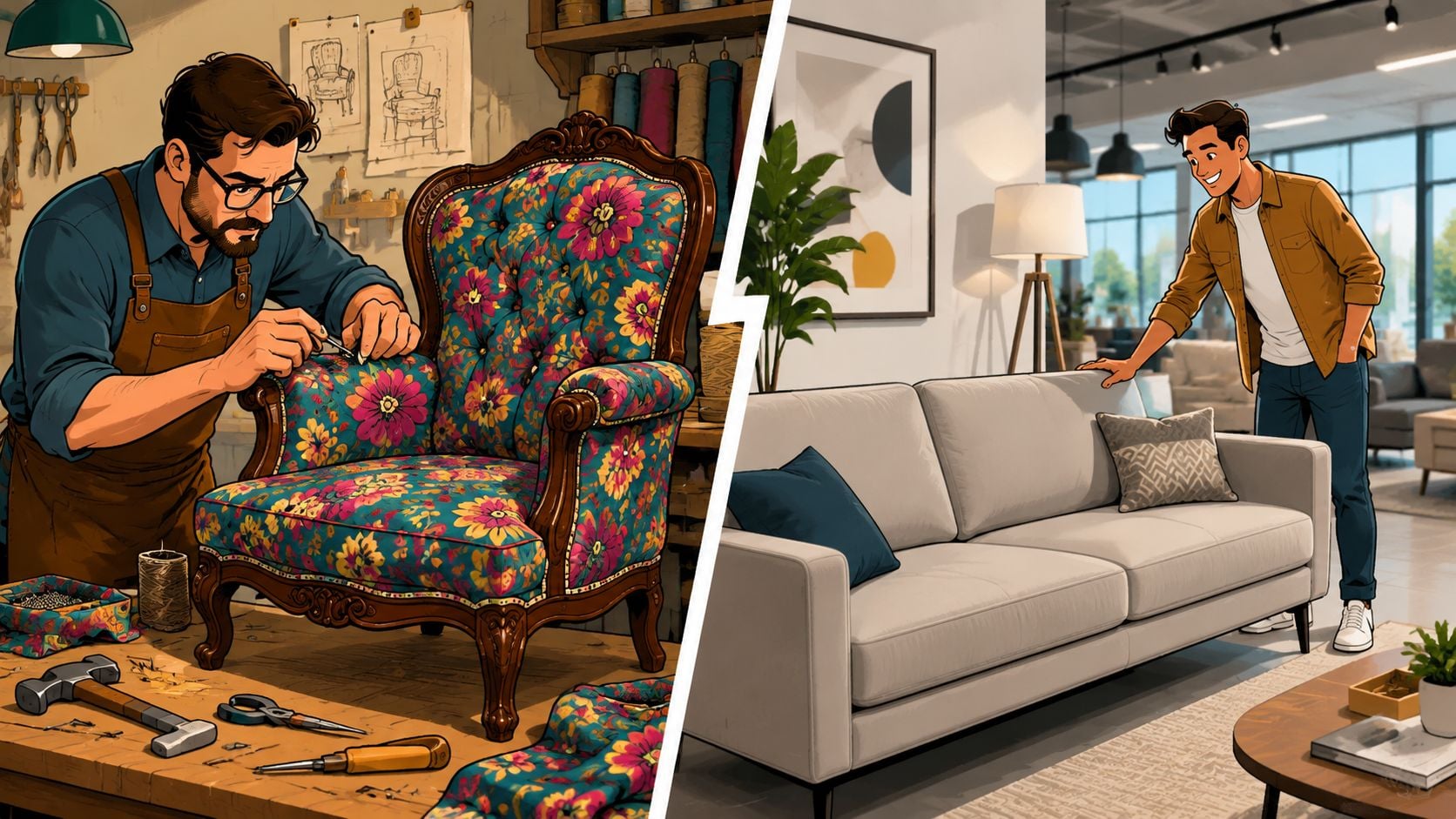
Practical thinking matters most. Many families don't need a lecture on upholstery. They need help deciding whether the old chair in the den is worth saving, or whether that money belongs in a new piece instead.
When reupholstery makes strong sense
Reupholstery has a lot going for it when the bones of the furniture are still good. Industry data on furniture repair and reupholstery shows that reupholstering heritage or quality USA-made or Amish-made frames can be more cost-effective over time than buying new, while also preserving craftsmanship and reducing waste, according to this industry analysis of furniture repair and reupholstery.
That's a smart fit for several kinds of pieces:
A solid older chair with worn fabric
If the frame is sturdy and the scale fits the room, fresh upholstery can give it a whole new life.A family piece with sentimental value
A well-built rocker, wing chair, or sofa from a parent or grandparent often carries more meaning than something bought quickly off a floor.Quality American-made or Amish-built seating
Good craftsmanship deserves a second look before it gets replaced.
If the frame is worth keeping, upholstery often becomes a value decision instead of a nostalgia decision.
Households weighing lifespan should also look at how long furniture should last.
When replacement is the better call
Reupholstery isn't always the wise path. Sometimes the piece isn't built for another round.
Replacement usually makes more sense when:
- The frame is failing: Wobbling arms, major cracking, or structural movement can make repair less appealing.
- The seat support is spent: If the whole interior is breaking down, the project may become bigger than expected.
- The size no longer works: A sectional that overwhelms a room won't become a better fit just because it gets new fabric.
- The comfort was never right: Upholstery won't magically turn a poorly designed seat into one the household enjoys using.
There's also the DIY question. Simple dining chair seats can be approachable for handy homeowners. Full sofas, tufted backs, complex curves, and patterned matching are another story entirely. A rushed home project can waste fabric fast and still leave the family with a result that doesn't wear well.
The strongest decision usually comes from honesty. Save the piece if the frame, fit, and meaning are still there. Replace it if the furniture was never built to go the distance.
Smart Upholstery Choices for Every Family
Good upholstery choices aren't one-size-fits-all because homes aren't one-size-fits-all. The right answer for a family with two dogs and a teenager won't be the same answer for a condo owner, a retired couple, or a caregiver furnishing a loved one's room.
BILTRITE has served Metro Milwaukee for 98 years as a fourth-generation family-owned business focused on high-quality, affordable furniture, local craftsmanship, and American-made, Amish-built solid wood pieces, as described on BILTRITE's company profile.
Homes with kids and pets
These households usually benefit from furniture upholstery that forgives real life. Tighter weaves, easier-clean surfaces, and fabrics designed for active use help take the stress out of everyday mess.
A few practical priorities help:
- Choose medium tones or textured patterns: They tend to hide daily life better than very light solids or very dark flat surfaces.
- Favor easier cleanup over formality: If the piece will be used constantly, convenience should win.
- Think about pet hair: Some surfaces release hair more easily than others.
Families can get more specific guidance from this article on kid-friendly and pet-friendly furniture choices.
Smaller spaces and senior-friendly seating
Apartment living and smaller homes ask furniture to do more with less room. Upholstery can help by making a piece feel lighter or calmer. Cleaner lines, less bulky arms, and fabrics that don't visually overwhelm a room can make seating feel easier to live with.
For senior-friendly seating, comfort isn't just softness. It's also access. A seat that's too deep or too low may be hard to enter and exit. Supportive cushions and stable arms often matter more than plushness alone.
Families that need furniture to work hard
Some homes put furniture through a lot. There may be frequent guests, daily naps, larger family gatherings, or nonstop use in one main room. In those homes, upholstery should support the long game.
A practical checklist helps:
- Match the fabric to the busiest user
- Check how the seat height feels when standing up
- Pick a color that won't create cleaning anxiety
- Give extra credit to solid frames over flashy details
That last point matters because durable upholstery only shines when the furniture under it is worth the effort. Style still matters, of course. It just works better when the piece can keep up with the people who live on it.
Come Say Hi We'd Love to Help You in Person
Reading about furniture upholstery helps, but fabric is one of those things people understand much faster with their hands than with a screen. Texture, cushion feel, seat height, and support are easier to judge when a shopper can sit down, lean back, and compare one piece with another in real life.

That in-person approach is part of what makes local furniture shopping valuable. BILTRITE operates only as a physical showroom, does not sell online, and closes on Sundays and Mondays to put family time first, as shared on BILTRITE's history page. That choice says a lot about the kind of experience shoppers can expect. It's built around people, conversation, and seeing the furniture for what it really is.
The showroom matters because upholstery choices are full of little questions that are hard to answer from a product description alone. Does this fabric feel scratchy or soft? Is this seat too deep for everyday use? Will this chair support a bad back well enough? Does this style fit a smaller Milwaukee bungalow, condo, or apartment?
Some furniture decisions should be touched, tested, and talked through in person.
A good showroom visit lets shoppers compare those details side by side. It also makes it easier to see American-made quality up close, look closely at solid wood construction, and narrow down what fits the household instead of chasing whatever looks good in a photo.
For families trying to balance cost, durability, and style, that kind of local guidance still matters. So does dealing with people who understand the neighborhoods, homes, and practical concerns that come with furnishing a house in and around Milwaukee.
Ready to find a new favorite piece for the home? BILTRITE Furniture-Leather-Mattresses welcomes shoppers to visit the Greenfield showroom, explore upholstery options in person, and talk with a friendly team about durable, affordable, better-quality furniture built for real family life.