Duvet Cover What Is: Expert Bedding Guide


You’re standing in the bedding aisle, holding a package that says “duvet cover,” and you’re thinking, “Wait. Is this the blanket, the insert, or the thing that goes over the blanket?”
You are not alone.
We’ve spent generations helping Milwaukee families make sense of home products that sound fancier than they really are. Bedding is one of those categories where simple things get dressed up with confusing names. A duvet cover is easy to understand once someone explains it in plain English.
That matters because bedding is not some tiny niche purchase. The global duvet covers market was valued at USD 5.23 billion in 2024 and is projected to reach USD 8.10 billion by 2032, which tells you plenty of households are using them and liking the flexibility they offer.
If you want your bedroom to feel calmer, cozier, and easier to care for, a duvet cover can play a big role. It helps with cleaning, it changes the look of the bed fast, and it can make a nice duvet insert easier to live with day to day. For more bedroom comfort ideas, this guide on creating a sleep sanctuary with lighting, temperature, mattress, and bedding working together is a helpful next read.
Your Guide to Cozy Bedroom Comfort
A lot of people start with the same mix-up.
They buy a duvet cover thinking it is the whole blanket. Then they get home, open the package, and realize it is more like an outer layer. Others already have a comforter and wonder if they need a duvet cover at all. Both questions are common.
A duvet cover is mostly about two things. Protection and style.
It protects the inner duvet insert from everyday dirt, body oils, and wear. It also lets you change the look of your bed without replacing the whole insert. That is one reason so many households use them.
Why people get confused
The bedding world loves overlapping words.
You’ll hear duvet, duvet insert, comforter, quilt, coverlet, and cover used almost like they mean the same thing. They do not. A duvet cover is just one part of the setup.
Here’s the plain version:
- Duvet insert is the filled piece that provides warmth.
- Duvet cover is the removable fabric shell that goes around that insert.
- Comforter is usually a single finished piece with filling already sewn inside.
- Quilt is often lighter and more decorative, with stitched layers.
If you remember only one thing, remember this. A duvet cover is the part you remove and wash more often.
Why this matters in real homes
For Milwaukee families, that simple difference can make life easier.
If you have kids, pets, allergies, or just a busy routine, being able to take off the outer layer and wash it is a big practical win. If you like changing your bedroom with the seasons, a fresh cover can give the whole room a new feel without replacing your entire bedding setup.
What Exactly Is a Duvet Cover
The easiest way to understand it is this.
A duvet cover is like a giant pillowcase for your duvet insert. You slide the insert inside, then close the opening with buttons, a zipper, or ties. That outer shell becomes the visible fabric on your bed.

That simple idea has been around a long time. Duvet covers originated in 19th-century Europe, especially in Scandinavia and Germany, as a practical way to keep bulky down-filled bedding clean. In other words, people wanted warmth without the hassle of constantly cleaning a heavy insert.
What it does
A duvet cover acts as a removable fabric envelope around the insert.
It usually includes:
- A closure such as buttons or a zipper
- Corner ties or inner fasteners in some designs to help hold the insert in place
- Washable fabric that is easier to clean than the insert itself
If you want a bigger bedding overview, this complete guide to bedding, mattress protectors, and comforters can help sort out the broader category.
Duvet cover versus comforter
Many shoppers pause at this point.
A comforter is generally one finished piece. The filling and the outer fabric are attached. You use it as-is.
A duvet setup is separate. You have the insert, then the cover that goes over it.
That means a duvet cover setup gives you more flexibility. You can swap the outer look while keeping the same insert. A comforter is simpler to grab and use right away, but it does not offer the same easy style changes.
Duvet cover versus quilt
A quilt is usually thinner and flatter.
It can be great for layering, warmer months, or a more neat bed look. A duvet cover setup often creates a fuller, loftier appearance because the insert inside adds volume.
If your bed goal is soft, fluffy, and hotel-like, a duvet cover and insert usually get you closer than a quilt alone.
Choosing Your Duvet Cover Material
Fabric changes everything.
Two duvet covers can look similar in the package and feel completely different at home. The weave, texture, and weight all affect how cool, warm, crisp, or relaxed the bed feels at night.
The big material takeaway comes from Naturepedic’s explanation that cotton percale is more breathable while cotton sateen feels silkier and warmer. That is a useful starting point when you are choosing between common options.
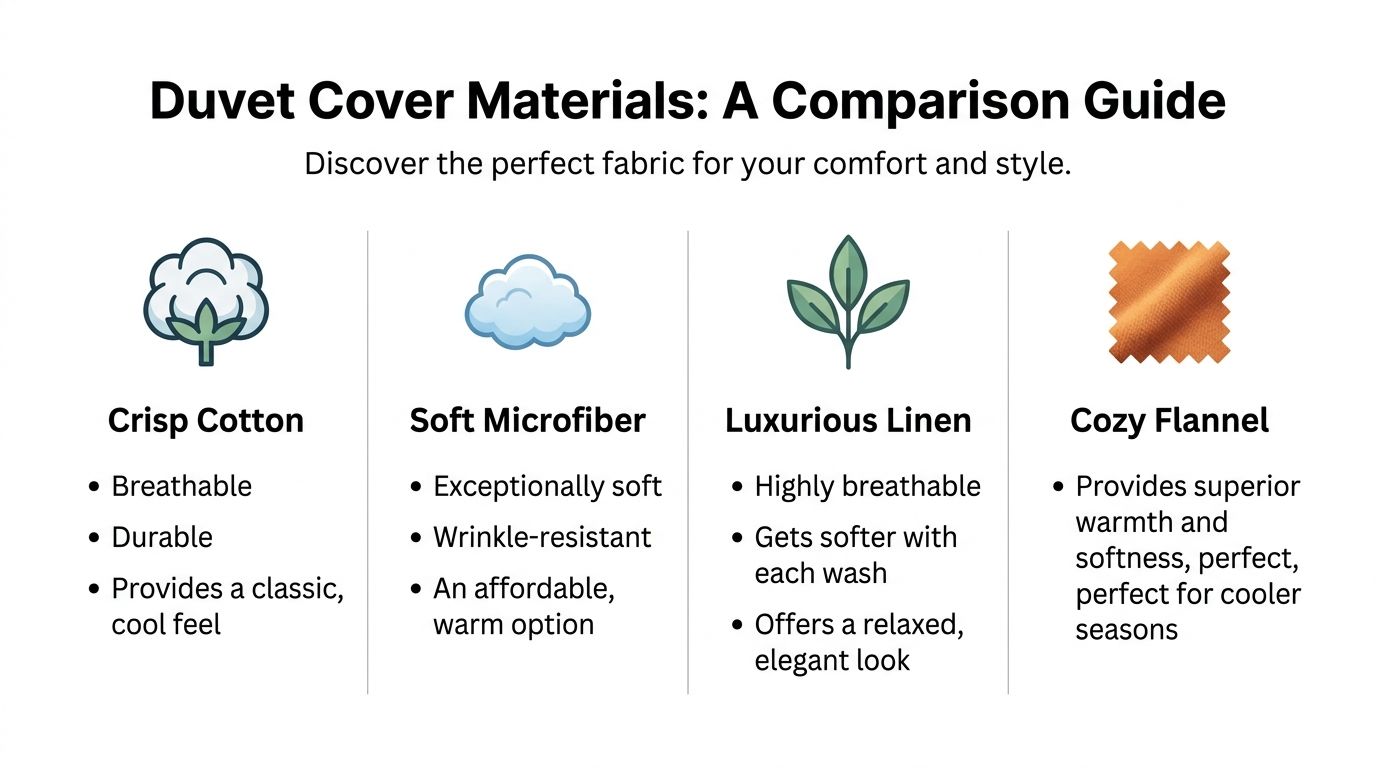
Four common choices
Some fabrics feel better right away to certain sleepers.
Others grow on you after a few washes. If you are also comparing upholstery and family-friendly textiles for the rest of your home, this article on the benefits of performance fabrics is worth a look.
Cotton percale
Percale feels crisp, cool, and clean.
If you tend to sleep warm, this is often a smart pick. Many people love that fresh-sheet feeling. It also works nicely in summer or in homes where bedrooms run warm.
Cotton sateen
Sateen feels smoother and a bit warmer.
It has more sheen than percale and often looks a little dressier on the bed. If you like a softer drape and a cozier feel, sateen may be more your speed.
Flannel
Flannel is the snug one.
It brings softness and warmth, which makes it a favorite for cold nights. If your bedroom gets chilly in winter, flannel can make climbing into bed a lot more inviting.
Linen
Linen has a relaxed look.
It is loved for its casual texture and airy feel. Some people expect it to feel slick and polished, but that is not really linen’s personality. Linen usually looks laid-back and lived-in in the best way.
Duvet Cover Material Quick Guide
| Material | Feel | Best For | BILTRITE Tip |
|---|---|---|---|
| Cotton percale | Crisp and cool | Warm sleepers, summer use | Great if you want that fresh, hotel-sheet feel |
| Cotton sateen | Smooth and warmer | People who like a softer drape | Nice for a more polished bedroom look |
| Flannel | Soft and cozy | Cold sleepers, winter months | A strong seasonal choice for Wisconsin weather |
| Linen | Relaxed and airy | Casual style lovers | Looks especially good in natural, textured bedrooms |
A quick note on thread count
People ask about thread count all the time.
Yes, it matters. But it is not the whole story. The fiber quality and weave matter too. A well-made percale or sateen cover can feel better than a higher thread count fabric that is less thoughtfully made.
Don’t buy based on one number alone. Touch the fabric, think about how you sleep, and choose the feel you’ll enjoy night after night.
Getting the Right Size and Fit
A duvet cover can be beautiful and still disappoint you if the fit is off.
This is one of the biggest sources of frustration. The insert slides to one side, the bottom gets lumpy, or the bed looks flat and awkward even though everything is technically the right size.
The helpful detail many shoppers miss is this. For a fuller look, duvet covers are often made 2 to 8 inches smaller than the insert, creating a snug “baffle effect” that helps keep the insert lofted evenly and reduces shifting.
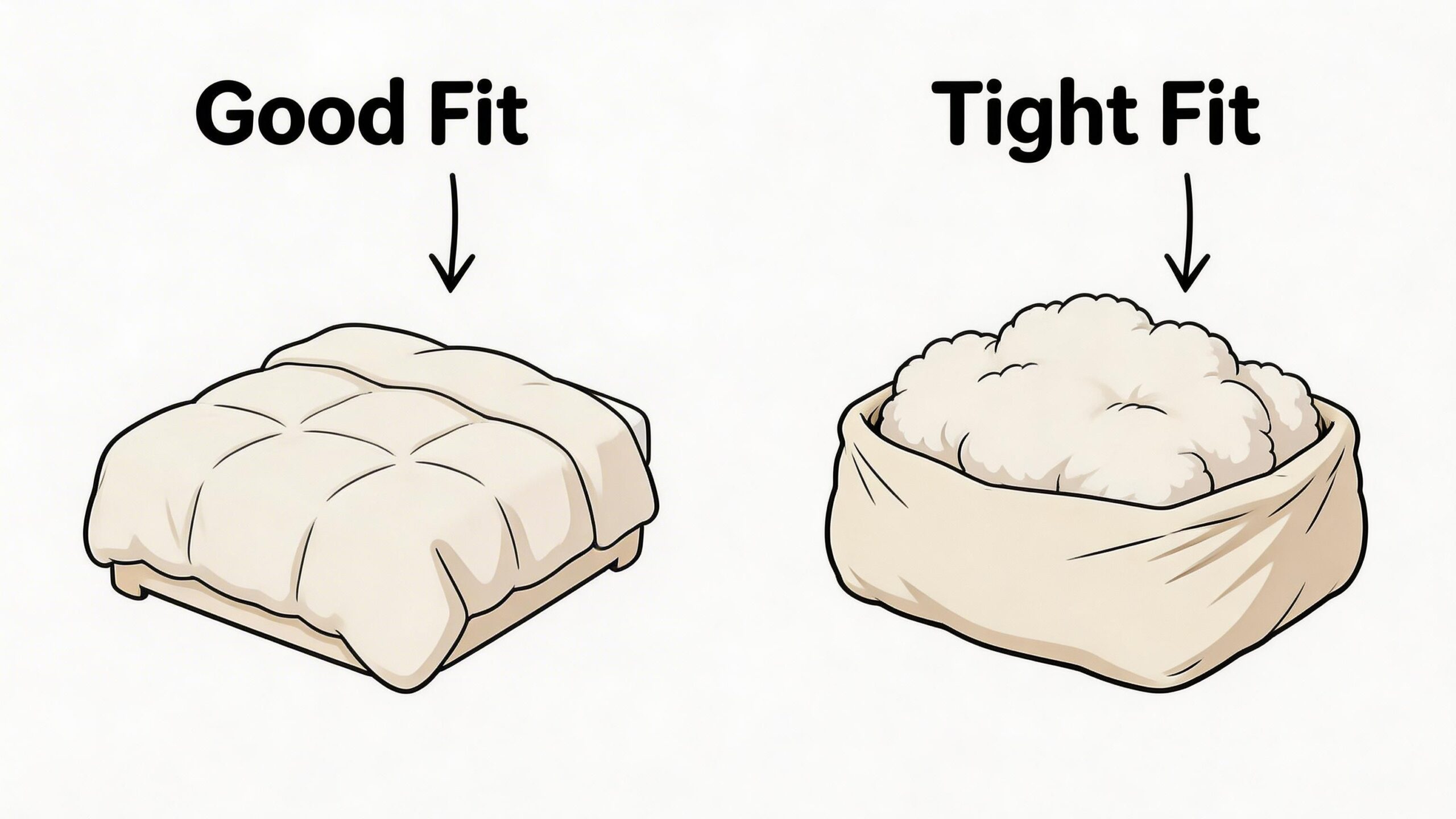
Why snug is often better
People often assume exact same-size matching is best.
In practice, a slightly smaller cover can help the insert stay puffier and more even. That snug fit helps prevent the dreaded bunching at the foot of the bed.
This does not mean forcing an insert into a cover that is clearly too small. It means understanding that a little tightness is often intentional.
What to measure
Before you shop, check more than the label.
Use your tape measure and note:
- Your mattress width and length
- Your mattress depth
- Any topper you use
- Whether you want extra drape on the sides
If your bed is thicker than average, that affects how the bedding falls. This is especially important for substantial mattresses. A mattress size chart can help you confirm the bed dimensions before you choose the cover and insert.
Common fit mistakes
A few issues show up again and again:
- Buying by name only. “Queen” can vary a bit by brand.
- Ignoring mattress depth. A lofty bed can make standard bedding look skimpy.
- Skipping the insert measurement. The insert and cover need to work together, not just match the mattress label.
- Forgetting your bed style. Some people want a cleaner, defined look. Others want generous overhang.
If you love that fluffy, styled bed look, focus on the cover-and-insert relationship, not just the mattress tag.
Care and Maintenance to Make It Last
A duvet cover earns its keep when you treat it like the washable layer it is.
Many bedding guides say to wash it regularly, and that is good advice. The bigger point is how you wash it. Casper notes that proper washing is key to longevity because the right techniques help prevent fabric degradation and help you get more from a quality purchase.
Simple habits that help
You do not need a complicated routine.
A few steady habits go a long way:
- Wash regularly so oils, sweat, and everyday dust do not build up
- Close zippers or fasten buttons before washing to reduce snagging
- Follow the care label because fabric types can behave differently
- Avoid overly harsh treatment that can wear fibers down faster
- Dry with care so the fabric keeps its shape and feel
Why this protects more than the cover
The cover is the part designed for easier cleaning.
That means regular care of the cover helps shield the insert from everyday messes. Since inserts are bulkier and more awkward to wash, keeping the cover in good shape makes the whole bedding setup easier to manage.
For busy households, that is a real value.
When to replace one
Shoppers often know when a cover is no longer doing its job.
Look for fabric that feels thin, closures that stop working well, fading that bothers you, or fit problems caused by wear. Sometimes replacement is about function. Sometimes it is about refreshing the room.
A duvet cover is one of the easiest bedroom updates you can make. If the bed feels tired, the cover is often the first place to look.
Style Your Bedroom and Find Yours at BILTRITE
A duvet cover is practical, but it is also one of the fastest ways to shift the mood of a bedroom.
Change the fabric, color, or texture, and the whole room can feel different. A crisp white cover can make the room feel clean and polished. A linen look can soften it. Flannel can warm it up visually before you even get into bed.

Match the cover to the way you live
Not every bedroom has the same needs.
That is especially true in family homes. Leesa points out that bedding is not one-size-fits-all and that shoppers should consider needs like easy closures for seniors or extra-durable, stain-resistant fabrics for homes with kids and pets.
That advice is easy to apply in real life.
For seniors or caregivers
Look for closures that are simpler to manage.
A zipper may be easier than small buttons. Softer, not-too-fussy fabrics can also make regular care less of a chore.
For families with kids and pets
Choose practicality first.
A washable fabric in a forgiving color or pattern can make everyday life easier. If the bed gets used for movie nights, snacks, homework, or pet naps, low-maintenance bedding tends to win.
For smaller bedrooms or apartments
Keep the look light.
A duvet cover can still make the bed feel full and inviting without requiring a lot of extra decorative layers. That is helpful when you want comfort without visual clutter.
Tie the bedding to the furniture
The bed does not live by itself.
A duvet cover should work with the headboard, nightstands, lamps, and the tone of the room. If you love solid wood furniture, natural textures often look at home there. If your room leans more formal, smooth cottons and cleaner lines may fit better.
For more inspiration, Bedroom 101 accessorizing the bed of your dreams offers helpful ideas for pulling the full look together.
A good duvet cover does not have to be complicated. It just has to match your sleep habits, your room, and your daily life.
If you’d like help choosing bedding, bedroom furniture, or a mattress that fits your space and comfort needs, visit BILTRITE Furniture-Leather-Mattresses in Greenfield. We’re a fourth-generation, family-owned showroom serving Metro Milwaukee since 1928, and we love helping neighbors find cozy, better-quality pieces that feel right at home. Come say hi and let our experienced team help you build a bedroom that looks beautiful and feels welcoming.