How Long Do Foam Mattresses Last and When to Replace

Most all-foam mattresses provide good support for about 6 to 7 years, though higher-density models can last 10 years or more with proper care. The answer to how long foam mattresses last depends less on the calendar and more on foam density, construction, daily use, and the condition of the sleep surface.
A familiar morning can reveal the truth before a warranty or calendar does. Someone wakes with a stiff lower back, shifts toward a cooler spot, and notices that the mattress that once felt like a cloud now holds a permanent impression where the body rests. The change happens gradually, so sleepers often adjust to declining support without realizing how much comfort they've lost.
That gap matters. Practical comfort guidance places standard all-foam mattresses at roughly 6 to 7 years, while an age study found that innerspring and all-foam mattresses averaged 13.2 years when they were studied, meaning many households keep their beds long after support has weakened. The difference between useful comfort life and actual ownership age is why density and construction deserve more attention than a simple “7 to 10 years” label.
As a fourth-generation, family-owned furniture business serving Metro Milwaukee since 1928, BILTRITE approaches mattress advice the same way a good neighbor would. The focus is straightforward: check the foam, inspect the foundation, pay attention to sleep quality, and decide whether maintenance can help or replacement makes more sense.
Why Your Foam Mattress Might Be Failing Sooner Than You Think
Foam rarely announces its decline all at once. A spring mattress may develop a noticeable broken spot, but foam usually softens little by little beneath the shoulders, hips, or lower back. That slow change can make a tired mattress feel normal because the sleeper has adapted to it.
The practical baseline is clear. Most all-foam mattresses remain supportive and comfortable for about 6 to 7 years, according to Sleep Foundation durability guidance summarized for mattress shoppers. The same guidance explains that all-foam beds, particularly those with memory foam comfort layers, can develop permanent body indentations that reduce comfort even when the mattress still looks intact from across the room.
The comfort-life gap
A mattress can remain physically usable after its best comfort years have passed. Foam doesn't need to tear or collapse completely before it begins losing rebound, pressure relief, and support. Nightly compression gradually changes the way the comfort layers respond, and the sleeper may notice the result as morning soreness, more tossing, or difficulty finding a comfortable position.
The ownership numbers tell a different story. Data from the International Sleep Products Association age study found an average age of 13.9 years for all units studied and 13.2 years for innerspring and all-foam mattresses. That doesn't mean an all-foam bed should be expected to feel supportive for 13 years. It shows that people often keep mattresses well beyond the point where comfort has declined, usually because replacement depends on budget, habit, and tolerance for wear.
Practical rule: A mattress can still be intact and still be the wrong mattress for the sleeper.
A simple inspection
A body impression that remains after the sleeper gets up deserves attention. Readers dealing with a mattress that has developed a dip can also review this guide to what causes a mattress to sink in the middle.
BILTRITE's family experience helps keep the decision practical rather than dramatic. Density, support layers, foundation quality, and the sleeper's daily habits all matter. If the bed still feels comfortable and shows no serious deterioration, careful maintenance may extend its useful service. If several warning signs appear together, shopping for a replacement is the sensible choice.
Expected Lifespan by Foam Type and Density
Foam mattresses don't all age at the same pace. A thin comfort layer over a strong support core behaves differently from a bed built mostly with softer, lower-density foam. Density gives shoppers a useful starting point, but construction and use still determine the final result.
Some industry guidance places low-density foam around 5 to 7 years, medium-density foam around 7 to 10 years, and high-density foam at 10 years or more, as outlined in this foam mattress lifespan guide by density. Those ranges should be treated as practical categories, not guarantees.
The comparison below uses the categories specified for this guide. The listed assumptions are a 250-pound sleeper, nightly use, and rotation every six months. Because the supplied source data doesn't verify every range or price tier in this table, the ranges are presented as shopping estimates rather than promises.
| Foam Type | Typical Density (lb/ft³) | Expected Lifespan (Years) | Common Price Tier |
|---|---|---|---|
| Standard polyfoam | 1.0 to 1.5 | 3 to 5 | Entry-level |
| Mid-density memory foam | 3 to 4 | 6 to 7 | Mid-range |
| High-density memory foam | 5+ | 8 to 10 | Premium |
| Latex-blended foam | Not standardized | 7 to 9 | Mid-range to premium |
| Hybrid foam over coils | Not standardized | 7 to 10 | Mid-range to premium |
How to use the table
A mattress with a 1.0 to 1.5 lb/ft³ polyfoam layer may provide an attractive initial feel but generally has less resistance to permanent compression. A memory foam mattress with 5+ lb/ft³ foam belongs to a more durable category, provided the rest of the construction supports that material.
A pillow-top or Euro-top can change the perceived lifespan. The upper comfort layers often compress before the support core, so the bed may feel worn out even though the deeper structure remains functional. That's why a shopper shouldn't judge durability by the mattress label alone.
The BILTRITE foam density ratings guide gives shoppers another way to think about the specifications before visiting a showroom. Density is useful, but the right choice also depends on sleeping position, body shape, preferred firmness, and whether the mattress will serve one sleeper, a couple, children, or guests.
How Foam Density Determines Longevity
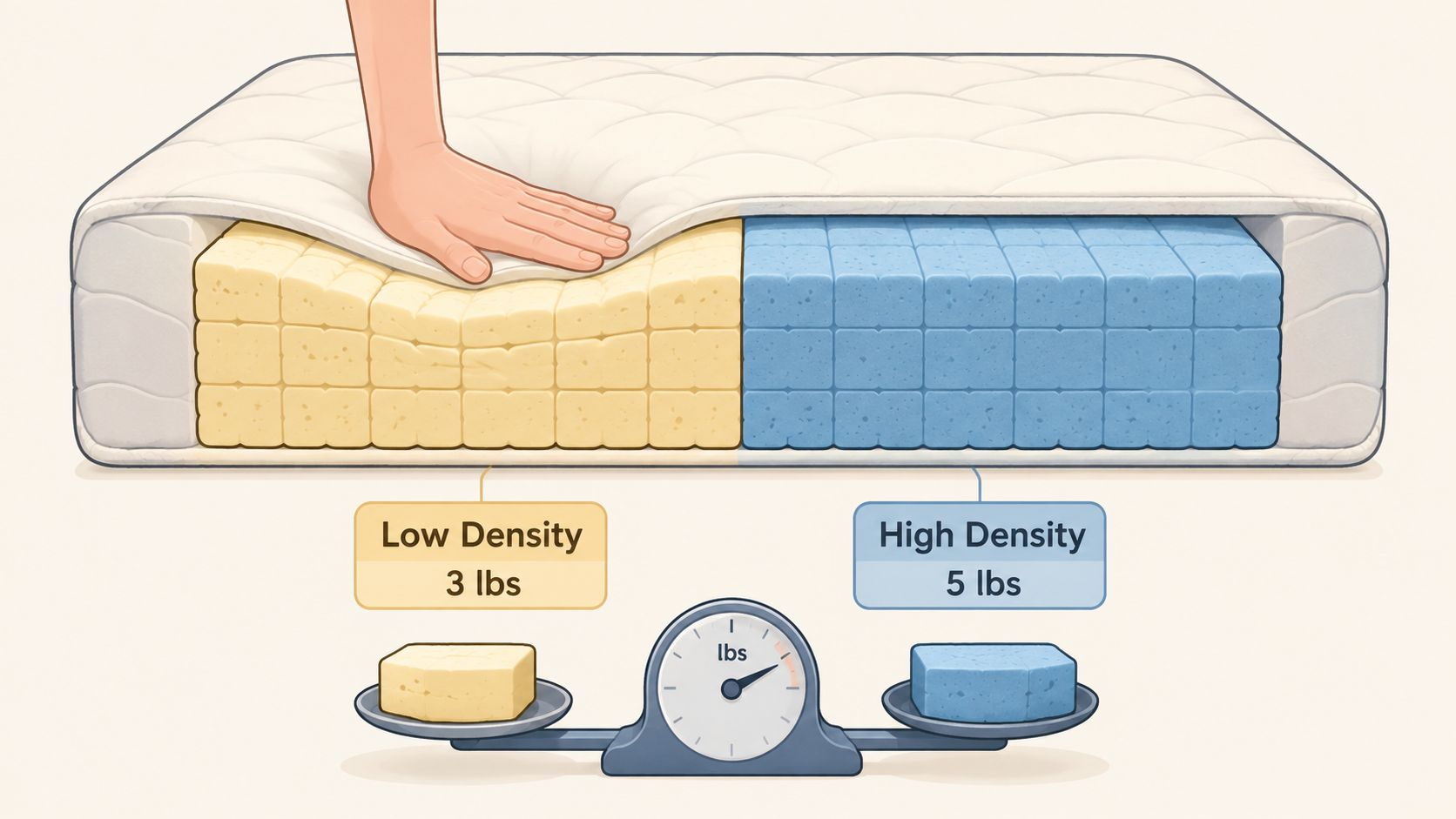
Foam density means the weight of one cubic foot of foam before it becomes a mattress layer. More material occupies that same volume in a denser foam, giving the structure more resistance to permanent deformation. Density isn't the same as firmness. A soft high-density foam and a firm lower-density foam can feel surprisingly similar at first while aging very differently.
Industry guidance commonly places memory foam around 3 to 5 lb/ft³, with 4 lb/ft³ or higher considered a solid range and 5 lb/ft³ or higher treated as a stronger durability tier, according to this foam density and mattress construction analysis. The same guidance associates higher-density construction with useful life closer to a decade or longer when the mattress is well made and cared for.
What repeated compression does
Each night, a sleeper loads the same regions of the mattress. Over time, lower-density cells can lose their ability to rebound, while denser foam generally resists body impressions more effectively. The experience is similar to comparing a sturdy kitchen sponge that stays springy through repeated use with a cheaper sponge that flattens quickly.
Compression testing makes the difference easier to understand. After 80,000 compressions, 1.5 lb/ft³ foam can lose over five times as much height as 2.2 lb/ft³ foam, according to this technical discussion of memory foam durability and compression cycling. That comparison explains why a stronger base layer can matter more than a showroom feel on the first night.
Choosing the layers
For polyfoam, shoppers often describe under 1.5 lb/ft³ as low density, 1.5 to 2.5 lb/ft³ as medium, and 2.5 lb/ft³ or higher as high. For memory foam, the useful comparison points are 3 lb/ft³, 4 lb/ft³, and 5+ lb/ft³. These figures help explain why two beds with the same firmness rating can have different durability expectations.
A high-density support core paired with a medium-density comfort layer often offers a sensible balance of longevity, pressure relief, and cost. For readers who want a plain-language explanation of the material itself, this guide covers what a memory foam mattress is.
Signs It Is Time to Replace Your Foam Mattress
A calendar reminder can help, but the mattress itself provides better evidence. A bed that causes discomfort, loses its shape, or no longer supports the sleeper deserves a closer inspection.
Measure the sag
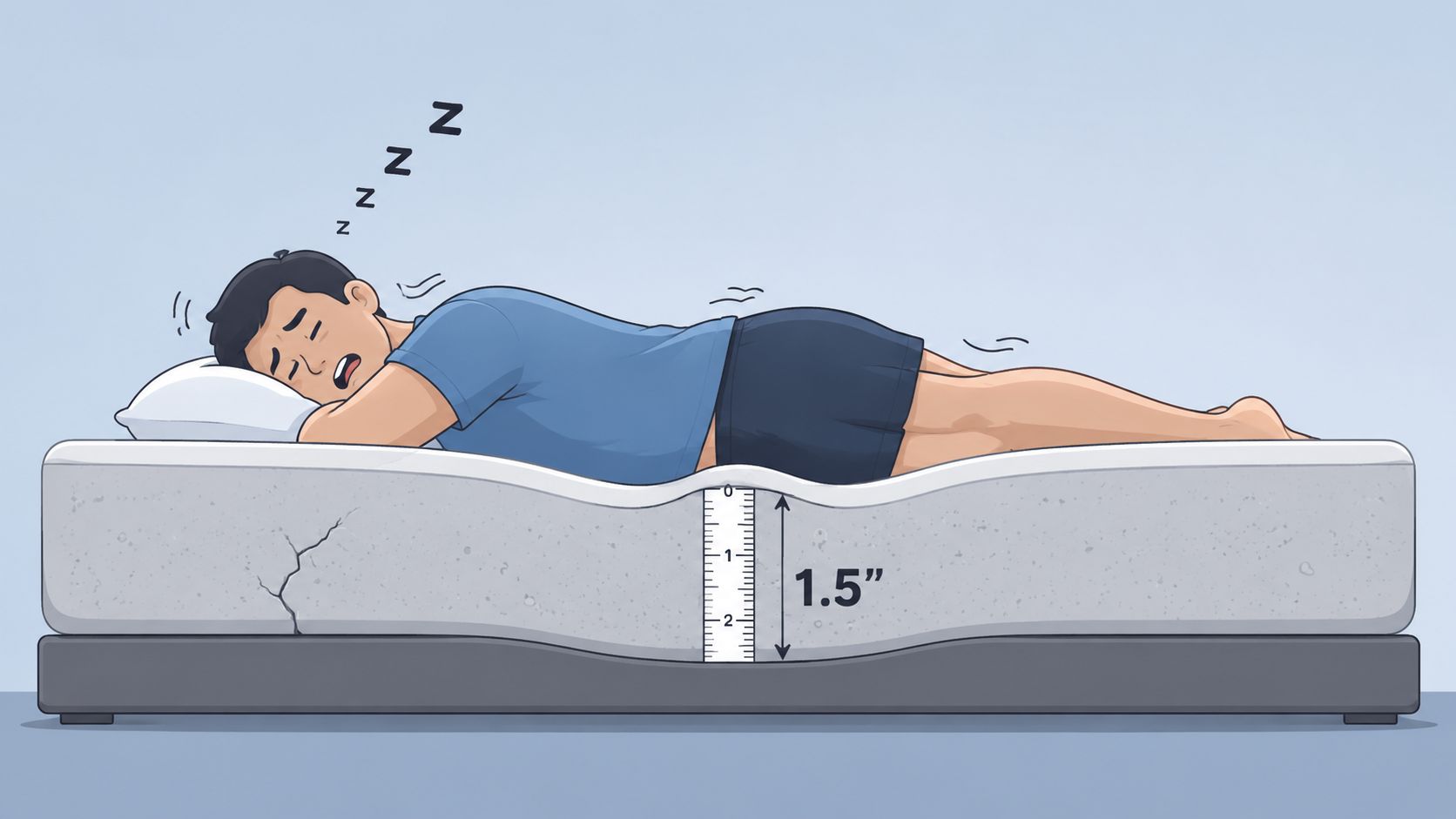
Start by removing all bedding and placing a straight edge across the deepest part of the depression. Measure from the straight edge down to the mattress surface with a ruler. A sag or body impression of about 1.5 inches is a commonly used replacement benchmark and may also be the point at which warranty coverage becomes actionable, according to this guide to mattress sagging and body impressions.
Warranty terms vary, so the measurement alone doesn't guarantee approval. The foundation, visible damage, stains, and the specific warranty language can all affect a claim. Still, a documented impression gives the owner a concrete starting point instead of relying only on a vague feeling that the bed is tired.
Watch the sleep-related signs
Permanent impressions are one warning, but they aren't the only one. The following combination usually deserves action:
- Morning stiffness: New or increasing soreness after a normal night can indicate that the mattress no longer distributes weight well.
- Loss of edge support: Sitting down or getting out of bed feels less stable because the perimeter has softened.
- Surface deterioration: Crumbling, flaking, or unusual yellowing suggests material aging rather than ordinary fabric wear.
- Reduced recovery: The foam stays compressed after the sleeper leaves the bed instead of returning to its original shape.
Many sleepers normalize poor rest because the change happens over years. They add pillows, shift positions, or blame their back without testing whether the mattress has become the problem. A useful check is to notice whether comfort improves after sleeping elsewhere for several nights.
Foam breakdown can accelerate once the cellular structure begins to collapse. When sagging, pain, and visible deterioration appear together, replacement is no longer a minor comfort upgrade. Readers can use this guide on when to replace a mattress to organize the decision and review the condition of the bed.
Maintenance Tips to Extend Your Mattress Life
Good care won't turn a modest mattress into a lifetime mattress, but it can help the foam wear more evenly. The goal is to prevent one part of the bed from carrying the same load night after night.
Build a simple care routine
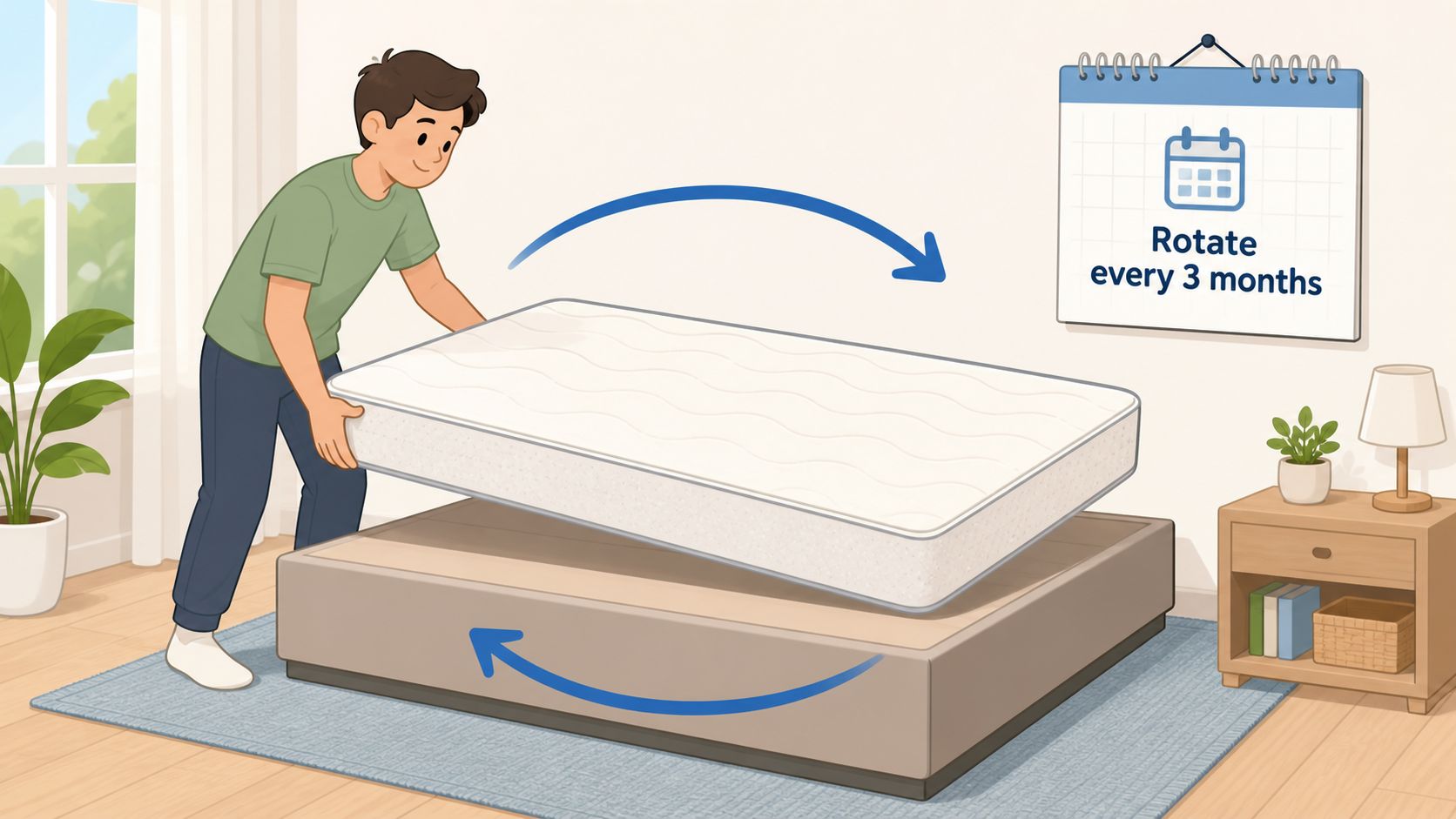
Rotate the mattress. Turn an all-foam mattress 180 degrees every three to six months. Rotation moves the head and foot zones, spreading compression across the surface. Flipping is appropriate only for a dual-sided model, because many one-sided mattresses are designed with a specific top and bottom.
Check the foundation. Slats should have gaps no wider than three inches. Wider spaces can let the foam flex unevenly, creating stress in the same areas and contributing to dips. A properly supported base keeps the mattress working as designed.
Use a breathable protector. A waterproof, breathable protector blocks moisture, spills, and body oils while allowing airflow around the surface. Moisture can affect comfort materials and make cleaning more difficult, so protection is a practical investment.
Reduce avoidable stress
Foam responds to room conditions. Excessive heat can soften it, while unstable humidity can make the sleep environment less comfortable and place extra strain on materials. Keeping the bedroom temperature and humidity reasonably stable is a small step that supports more consistent performance.
Edges also need care. Prolonged sitting in the same spot concentrates body weight on an area that isn't meant to serve as a chair. Pets and children should stay off the sleep surface when possible, since repeated jumping or concentrated loading can stress the foam.
A new compressed foam mattress should fully expand before regular use. The manufacturer's instructions take priority, but rushing the setup can prevent the layers from settling evenly.
For a broader cleaning and care routine, readers can follow these mattress maintenance and cleaning tips. Regular rotation, a sound base, and protection from moisture won't erase normal aging, but they can help preserve comfort across the mattress's useful years.
Find Your Next Long-Lasting Mattress at BILTRITE
Choosing a durable foam mattress is easier when shoppers can inspect the construction and test the feel in person. Product descriptions can explain density and materials, but they can't show how a mattress supports a particular sleeper's shoulders, hips, and lower back.
BILTRITE Furniture-Leather-Mattresses serves Greenfield and Metro Milwaukee as a fourth-generation, family-owned business operating since 1928. The showroom offers over 60 mattress models and 500+ mattresses in stock, giving shoppers room to compare foam, hybrid, heavy-duty, and two-sided options without guessing from a screen.
What to evaluate in the showroom
A knowledgeable associate can help match mattress construction to body type and sleep position. Side sleepers may need pressure relief at the shoulder and hip, while back or stomach sleepers often focus more on stable support. Couples also need to consider how each person's preferences affect the shared surface.
BILTRITE's sales associates bring over 400 years of combined experience. That experience matters most when shoppers ask specific questions: What foam layers are used? Is the mattress one-sided or flippable? How does the support core differ from the comfort layer? What does the warranty cover, and what foundation does the manufacturer require?
Flippable and two-sided mattresses deserve special attention. Turning the mattress allows the sleep surfaces to share the workload, which can help reduce uneven wear when the design permits flipping. It isn't a guarantee of a longer service life, but it gives the owner a practical way to manage compression.
Local help after the purchase
Buying locally also gives shoppers a place to return with questions about setup, foundations, comfort, and warranty paperwork. BILTRITE doesn't sell online, and the showroom experience lets families sit, lie down, compare firmness, and talk through the decision without pressure.
The store's broader selection includes affordable, better-quality furniture, USA-made and Amish-made pieces, solid wood furniture, small-scale options for apartments and condos, and heavy-duty furnishings for households that need extra support. The mattress department is the natural place to begin when the current foam bed has started to sag or no longer feels comfortable.
BILTRITE Furniture-Leather-Mattresses offers over 60 mattress models, including high-density foam, hybrid, flippable, and two-sided options for different sleepers and budgets. Visit BILTRITE Furniture-Leather-Mattresses in Greenfield to test the construction in person, ask the experienced team about density and support, and find a mattress built to provide dependable comfort for years to come.