


Supporting Local Businesses: A Practical Guide for Metro


Americans said they were willing to spend an extra $150 a month on average, or nearly $2,000 more over a year, to keep favorite local shops alive, according to a 2024 consumer survey about supporting small local businesses. That is not a feel-good footnote, it is a spending signal. Supporting local businesses is a real financial choice, and in Metro Milwaukee it can shape which storefronts stay open, which workers get paid, and which neighborhoods keep their character.
Why Supporting Local Businesses Is a Financial Power Move
A lot of people talk about shopping local like it is a nice gesture. It is bigger than that. If shoppers are already willing to pay more for nearby businesses they trust, the question is not whether supporting local businesses matters, it is how to do it in a way that strengthens the local economy.
One useful benchmark is that about $68 of every $100 spent at a local business stays in the local economy, according to a widely cited Institute for Local Self-Reliance estimate on local reinvestment. That money does not vanish into a slogan. It moves through wages, supplier purchases, service work, and the next round of neighborhood spending. For a family-owned showroom like BILTRITE Furniture-Leather-Mattresses, which has served Metro Milwaukee since 1928, that circulation matters because the purchase is not just about a sofa or mattress. It is about keeping local expertise, local jobs, and local service in the same community where customers live.
The money stays closer to home
That local circulation is the key reason buying from independent businesses hits differently. A household choosing a nearby store for a large purchase is helping support the people who sell, deliver, assemble, and stand behind the product. The purchase also supports the network around the store, from local services to the day-to-day spending that keeps commercial districts active.
Practical rule: If a purchase is important to the household, it should also be important enough to support a business that will answer the phone, remember the order, and stay in the neighborhood.
That is why supporting local businesses is not charity. It is strategy. It rewards service, expertise, and accountability, and it keeps more of the value in the same place where the customer lives. In a market with plenty of retail choices, those qualities matter as much as price.
The strongest local businesses usually earn loyalty by making the shopping experience feel human. They know their products, they know their customers, and they know that a purchase often starts with trust. That is especially true for furniture and mattresses, where quality, fit, and delivery all matter. For households that care about craftsmanship and local continuity, buying furniture made in the USA is one way to keep that value chain closer to home.
Set Measurable Buying Goals and Verify What You Purchase
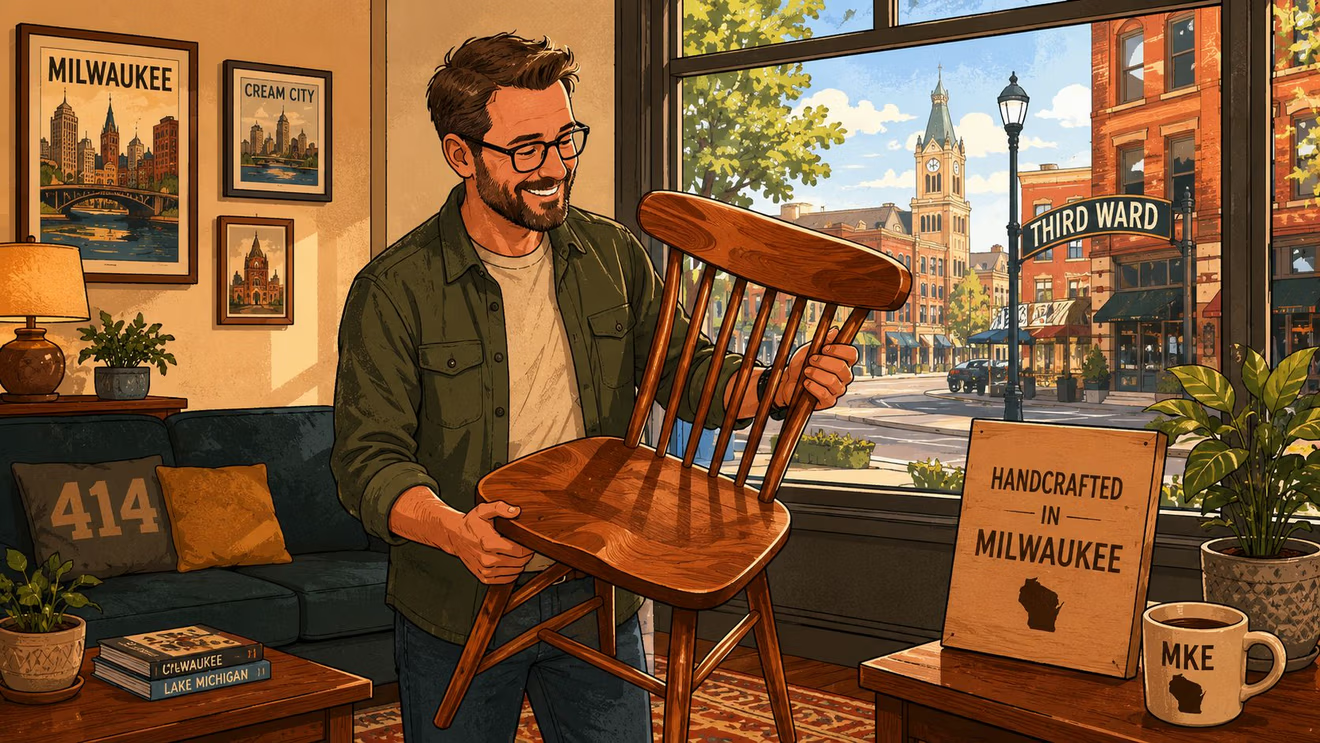
Good intentions fade fast when they stay vague. People say they want to support local businesses, then default to whatever is easiest that day. Set a clear target instead, then make local buying visible in the household budget.
A practical approach is to choose a buying goal such as a share of purchases, a simple cadence, or a monthly dollar amount. The point is not perfection. The point is to turn local buying into a habit with a number attached, so the household can track it and stick to it.
Make the goal specific enough to follow
A household can choose a few concrete rules and live by them:
- Set a purchase share: Decide that a defined portion of household purchases goes to local businesses.
- Use a rhythm: Make every few purchases local, so the habit is predictable instead of occasional.
- Assign a monthly amount: Put a fixed dollar target in the budget and treat it like any other planned expense.
People protect what they measure. A household that tracks local spending is more likely to follow through when it is time to buy furniture, mattresses, home accessories, or holiday gifts. It also makes tradeoffs clearer. If a big-ticket purchase is going to happen anyway, the local option becomes easier to justify.
Verify origin before buying
The next step is checking what is local, USA-made, Amish-made, or marketed that way. Canadian consumer guidance advises people to order directly from the business to avoid third-party fees, and to check product descriptions and origin labels instead of assuming that a symbol means local production in its local-business guidance. That same discipline helps shoppers here. Read the tag, ask where it was made, and confirm what the label means before assuming a claim is real.
For furniture buyers, that often means looking for clear showroom markers on USA-made, Amish-made, and solid wood pieces. Direct purchasing matters too, because it keeps more of the sale relationship with the business itself instead of handing value to layers in between. That matters even more for larger items that need delivery, setup, and service after the sale.
Ask for the origin story of the product, not just the sales pitch. If the answer is clear, the purchase is easier to trust.
Families who want a concrete starting point can use BILTRITE's local mattress buying guidance as a model for how to compare options in person, verify what they are getting, and buy with more confidence. The habit is simple. Set the goal, verify the claim, and keep the money moving toward businesses that can prove what they sell.
Smart Shopping Scenarios for Metro Milwaukee Homes
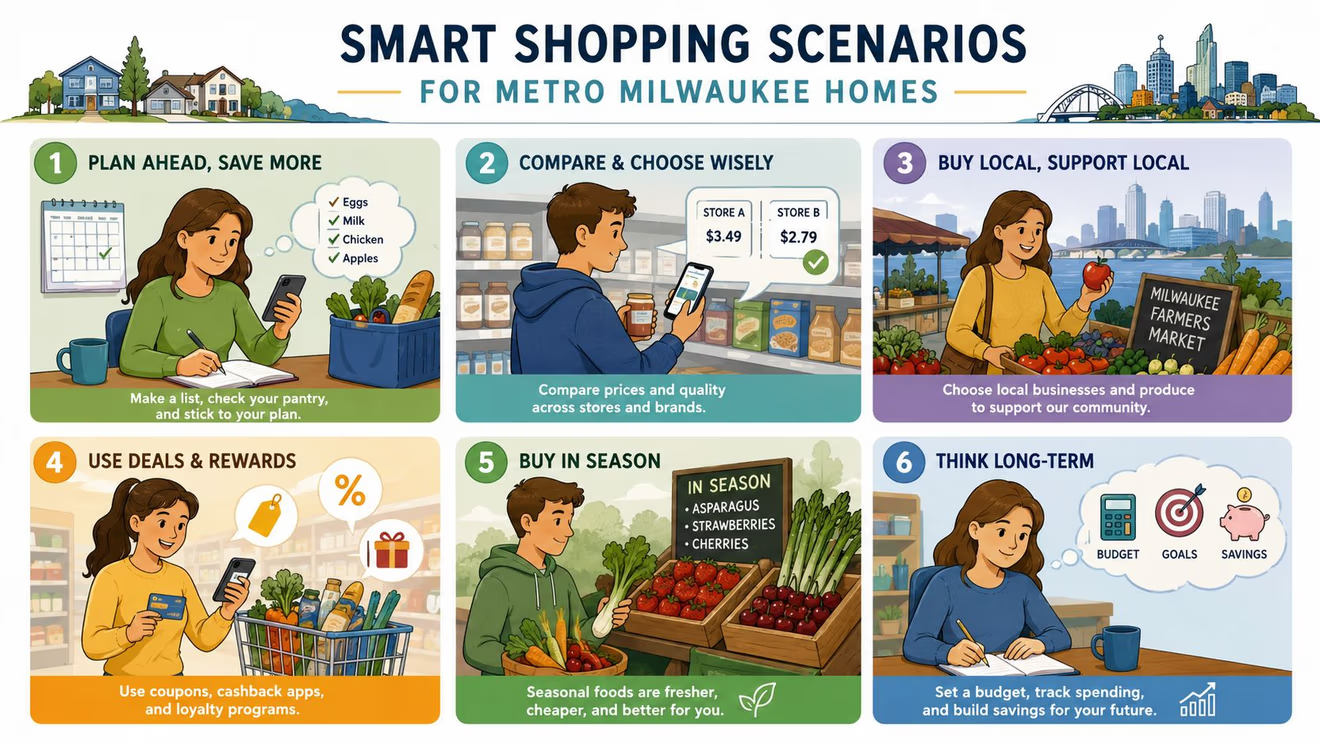
A Milwaukee household never buys furniture in the abstract. It buys around stairwells, pets, kids, aging parents, condo hallways, and the occasional narrow doorway. That makes supporting local businesses practical instead of symbolic, because the right store solves the problem in front of the customer instead of forcing the customer to guess online.
A small apartment needs small-scale pieces
A new condo or apartment usually needs furniture that fits the room, not furniture that overwhelms it. Small-scale seating, compact dining options, and flexible storage can make a tight space feel usable instead of crowded. A local showroom helps because customers can sit, measure, and compare scale before they decide.
That matters for city living and for senior living too. A piece that looks fine in a photo can feel oversized in a hallway or awkward in a smaller room. A good local team can point out those issues before the order is placed, which saves time and frustration later.
A mattress purchase deserves test time
Mattress shopping is one of the clearest examples of why in-person local retail still wins. A showroom with over 60 mattress models gives shoppers something screen shopping cannot, a chance to compare support, feel, and comfort directly. That is not a luxury. It is the most honest way to buy something people use every night.
A store that carries mattresses in stock can also help households move faster when sleep is becoming a problem. The right guidance matters just as much as the product itself, especially for couples who want different feels or families balancing budget with durability. For households that want more context on why local mattress shopping makes sense, the local mattress guide is worth a look.
Heavy use calls for heavy-duty choices
Active families need furniture that can take real life. That means a durable sofa, a solid dining set, or a chair that holds up under daily use. It can also mean come-apart sofas and sectionals that fit through tricky doorways, which saves a lot of headaches on delivery day.
BILTRITE's showroom format fits these kinds of purchases well because shoppers can work with a team that brings over 400 years of combined experience to the floor. That experience helps when the question is not just what looks nice, but what works in this house. Lift chairs, solid wood pieces, and senior living furniture all fit into that same practical mindset. The right store helps the household buy once, buy wisely, and avoid the cheap mistake that has to be replaced a year later.
How Your Dollars Multiply Through the Local Economy
A local purchase rarely stops at the cash register. It pays a worker, covers an order from a nearby supplier, and sends more spending back into the same community. That is the reason local buying matters. The money keeps moving after you leave the store.
Local ownership also keeps more of the value nearby. Research summarized by the Institute for Local Self-Reliance found that every $1 million spent at local bookstores generated $321,000 in additional economic activity in the area, including $119,000 in wages paid to local employees in its key studies roundup. That pattern shows up across many kinds of independent businesses. A local business does not just complete one sale, it sets off more purchases, more payroll, and more service work close to home.
Local money keeps working after the sale
That ripple effect is easy to see in Metro Milwaukee. A purchase at a neighborhood business helps fund paychecks, deliveries, repairs, and the vendors that keep the doors open. Those vendors spend money too. Workers buy groceries, fill gas tanks, pay rent, and shop at other local places, so the same dollar keeps circulating instead of leaving the area fast.
A family-owned retailer like BILTRITE fits that pattern well. Its story matters because a business rooted in the community does more than sell furniture, it keeps local relationships active. For a closer look at that kind of history, see BILTRITE's local legacy in Milwaukee.
| Spending Channel | Dollars Staying Local per $100 | Key Community Benefits |
|---|---|---|
| Local business | About $68 | Local wages, supplier spending, neighborhood circulation |
| Non-local spending | Lower local retention | Less community reinvestment, weaker local spillover |
That comparison is why local loyalty matters in practical terms. When a household chooses an independent retailer, the benefit is not limited to one receipt. The purchase supports jobs, local vendors, and the commercial block around it. It also helps keep Greenfield and the wider Milwaukee area from becoming a place where money arrives, disappears, and leaves nothing behind.
The spillover depends on where the spending happens
Place matters. A separate UK study found that local-business support did not raise employment overall in treated areas, but it did shift employment away from nearby untreated areas, with displacement equal to about 10% of local employment and a spillover radius of roughly 2 km in the LSE research PDF. That finding is useful because it shows local support has a geography. It can strengthen one district while pulling activity from a nearby one.
For shoppers, that means the goal is not symbolic support. The goal is to buy where the money will stay in motion close to home. In Metro Milwaukee, that usually means choosing an independent store with local staff, local service, and local ownership whenever the product and price make sense. That is how a single purchase turns into paychecks, supplier orders, and more spending across the community.
Advocate for Structural Support in Your Community
Most “shop local” talk stops at liking a post, leaving a review, or buying a gift card. Those gestures are fine, but they are not enough. Real support also means backing the conditions that let businesses survive, expand, and serve customers well.
The strongest local-business systems do a few things well. They improve access to capital, help with procurement readiness, and make the physical district easier to shop in. The National League of Cities also recommends intake surveys, business surveys, and outcome KPIs so public programs can tell which firms are turning support into revenue in its small-business support guide. That kind of discipline matters because public help should not vanish into paperwork and good intentions.
Support the street, not just the storefront
Consumers can push for better storefronts, clearer signage, better lighting, and cleaner public spaces. Those improvements help every nearby business by making the district easier to visit and more comfortable to stay in. A showroom visit does the same thing at the household level, because in-person shopping reinforces the idea that physical retail still matters.
Consumers can also show up for business-district meetings, neighborhood groups, and local events that focus on commercial vitality. That kind of participation tells city leaders that commercial corridors matter just as much as new development on the edge of town. Local businesses are easier to support when the environment around them is functional, safe, and inviting.
Push for practical market access
Support should also go where businesses need it. The National League of Cities highlights anchor-procurement strategies, pre-procurement programs, simplified applications, and diverse mentor or judge panels as ways to make contracts more accessible to small firms in the same guide. Those design choices matter because they reduce the friction that keeps smaller firms out of the room.
That logic fits furniture buying too. A local showroom like BILTRITE Furniture-Leather-Mattresses gives shoppers a direct, face-to-face experience that helps preserve a vibrant retail corridor instead of replacing it with anonymous transactions. Better districts make local businesses easier to trust, and trusted businesses make districts worth protecting.
Build a Simple Local-First Household Habit
A strong local-first habit does not need to be complicated. It needs to be repeatable. The households that stick with it usually make a few decisions in advance and stop renegotiating the basics every time they shop.
Start with a monthly local spending target. Add a rule for checking origin labels and buying directly when possible. Save the in-person showroom visit for big purchases where fit, comfort, and service matter most, especially furniture and mattresses. Leave honest reviews when a local business earns them, and speak up for better business-district conditions when there is a chance to do so.
Keep the habit small enough to maintain
A local-first household does not need to buy everything locally. That is unrealistic for most budgets. It does need to reserve local dollars for the purchases where expertise, delivery, and after-sale support matter most.
- Furniture and mattresses: High-impact purchases where in-person testing pays off.
- Gift buying: A natural place to redirect spending toward nearby businesses.
- Routine household needs: Good opportunities to compare direct purchase options.
- Community advocacy: A way to support the setting that helps businesses thrive.
That framework keeps the choice grounded. It also avoids the trap of performative support. The goal is not to talk about local business. The goal is to keep more household dollars in places that can prove value, answer questions, and stay open for the long haul.
For Milwaukee households looking for a starting point, family-owned furniture stores near me is a useful way to think about what local ownership means in practice. It usually means people who know the products, know the neighborhood, and will still be there when the next room needs furnishing.
BILTRITE Furniture-Leather-Mattresses offers family-owned service since 1928, a large showroom in Greenfield, and a focus on USA-made, Amish-made, solid wood, and mattress options that fit real Milwaukee homes. If supporting local businesses matters to your household, come see what that looks like in person and visit BILTRITE Furniture-Leather-Mattresses in Greenfield today.