Amish Furniture Chairs Guide to Solid Wood Style


A family gathers around the dining table, but one chair wobbles whenever someone leans back. Another looks lovely but feels hard after a long meal. A third is sturdy enough for everyday use, yet too wide for the room. Choosing Amish furniture chairs means looking beyond the finish. The wood, joinery, proportions, seat style, and intended use all shape how comfortably a chair serves a Milwaukee home.
At BILTRITE, a fourth-generation, family-owned furniture store serving Metro Milwaukee since 1928, the conversation starts with real life. Is the chair for a compact condo, a busy family dining room, a senior household, or a table that hosts everyone on holidays? The right answer may be a traditional solid-wood chair, an upholstered armchair, a rocker, or a glider with a more supportive seat.
Table of Contents
- Introduction to Amish Furniture Chairs and Why They Stand Out
- What Makes Amish Chairs Different
- Solid Wood Materials and Joinery That Lasts
- Popular Amish Chair Styles for Every Home
- Customization Options That Make It Yours
- Why Buying USA Made and Local Matters
- Caring for Your Amish Chairs for Years of Comfort
Introduction to Amish Furniture Chairs and Why They Stand Out
Amish furniture chairs stand out because they bring solid-wood construction, American craftsmanship, and practical customization together in one piece. They aren't just decorative dining seats. A well-built chair needs to handle repeated sitting, shifting, pulling away from a table, and the occasional child climbing up for a better view. It also needs to feel comfortable enough for coffee, homework, Sunday dinner, and long conversations.
The tradition behind these chairs is well established. The Smithsonian describes a strong furniture craft tradition in Indiana dating to the nineteenth century, along with bent-twig chairs made in large numbers by Amish communities in Pennsylvania, Ohio, and Indiana. By the 1920s, Amish furniture had gained wider recognition as early American folk art became more appreciated, while rustic rockers matched the period's back-to-nature taste. The Smithsonian's history of the rustic rocker helps explain why Amish chair buying reflects more than a recent decorating trend.
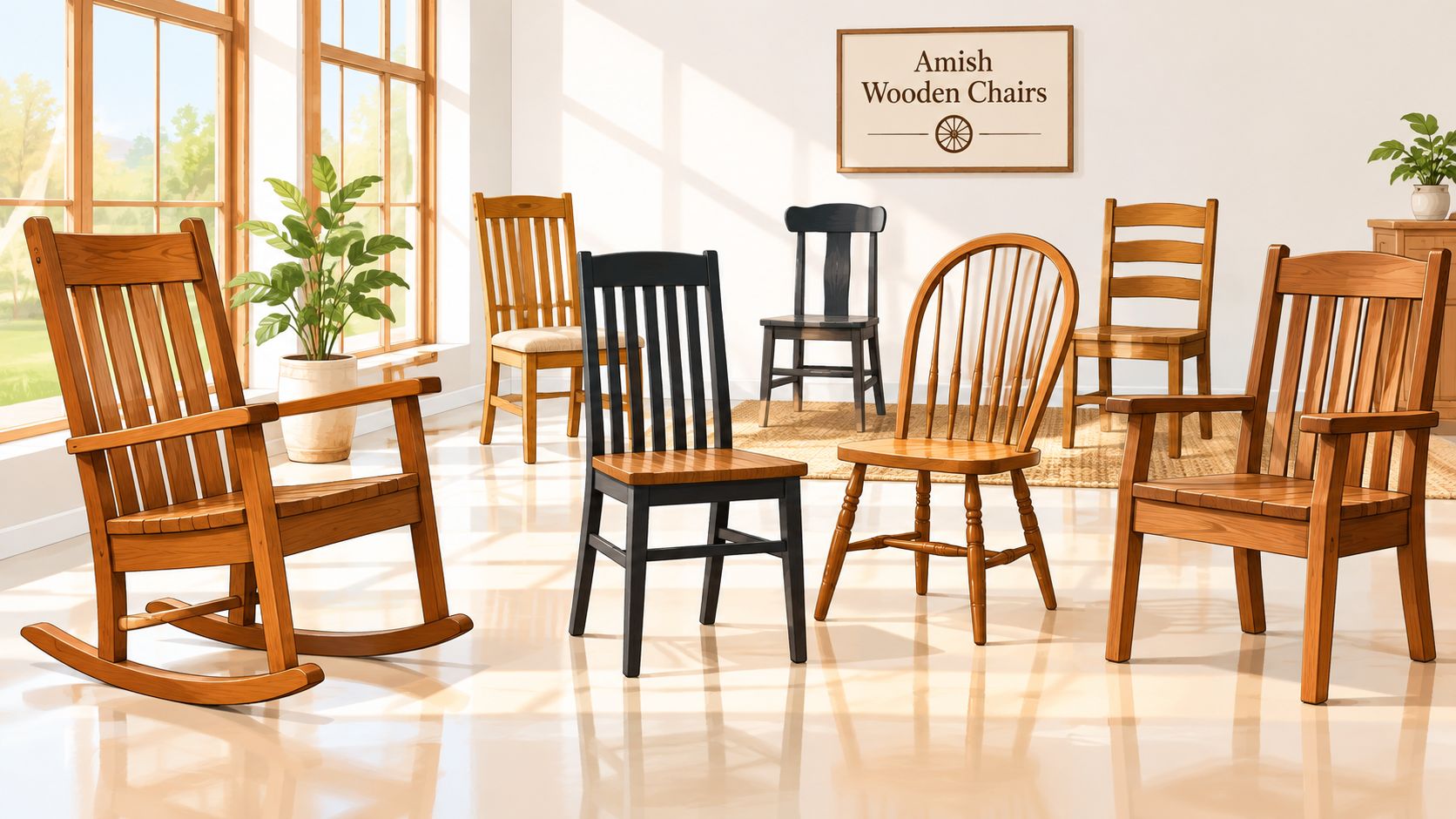
A chair should fit the household
A narrow ladder-back chair may make sense in an apartment dining nook, while an armchair can add welcome support at the head of a table. A senior may appreciate arms that make standing easier, and a family with young children may prefer a seat that wipes clean without special fuss. Those choices matter just as much as whether the chair has a Mission, Shaker, or country-inspired appearance.
Readers who want a simple explanation of the broader category can explore what Amish furniture means. The useful takeaway is straightforward: shoppers should judge a chair by how it is built and how it will be used, not by the word “Amish” alone.
This guide focuses on the questions that come up in a showroom. What makes a chair different? Which hardwood and joint details matter? Which styles suit smaller rooms or senior-friendly spaces? How can upholstery, finish, and dimensions be adapted without losing the character of solid wood? A visit to BILTRITE's Greenfield showroom gives families a chance to sit, measure, compare, and talk through those decisions without pressure.
What Makes Amish Chairs Different
The clearest difference is the attention given to the chair's materials and structure. Amish dining and kitchen chairs are commonly made from solid woods such as oak, maple, hickory, or elm, and sellers describe them as handmade by Amish woodworkers instead of mass-produced. Examples of solid-wood Amish dining chairs show why buyers should ask whether a chair uses real wood throughout its structural parts.
That distinction matters because particle board, laminates, and other composite materials behave differently from solid hardwood. A solid-wood chair can be sanded, refinished, and repaired in ways that aren't always practical with a thin decorative surface over a different core. Solid wood doesn't guarantee a durable chair by itself, but it gives the maker a strong foundation to work with.
Craft tradition becomes construction quality
A useful way to evaluate a chair is to move from the outside inward.
Look at the frame. Check whether the legs, rails, and seat support feel substantial and aligned. A chair shouldn't twist easily when a person shifts weight.
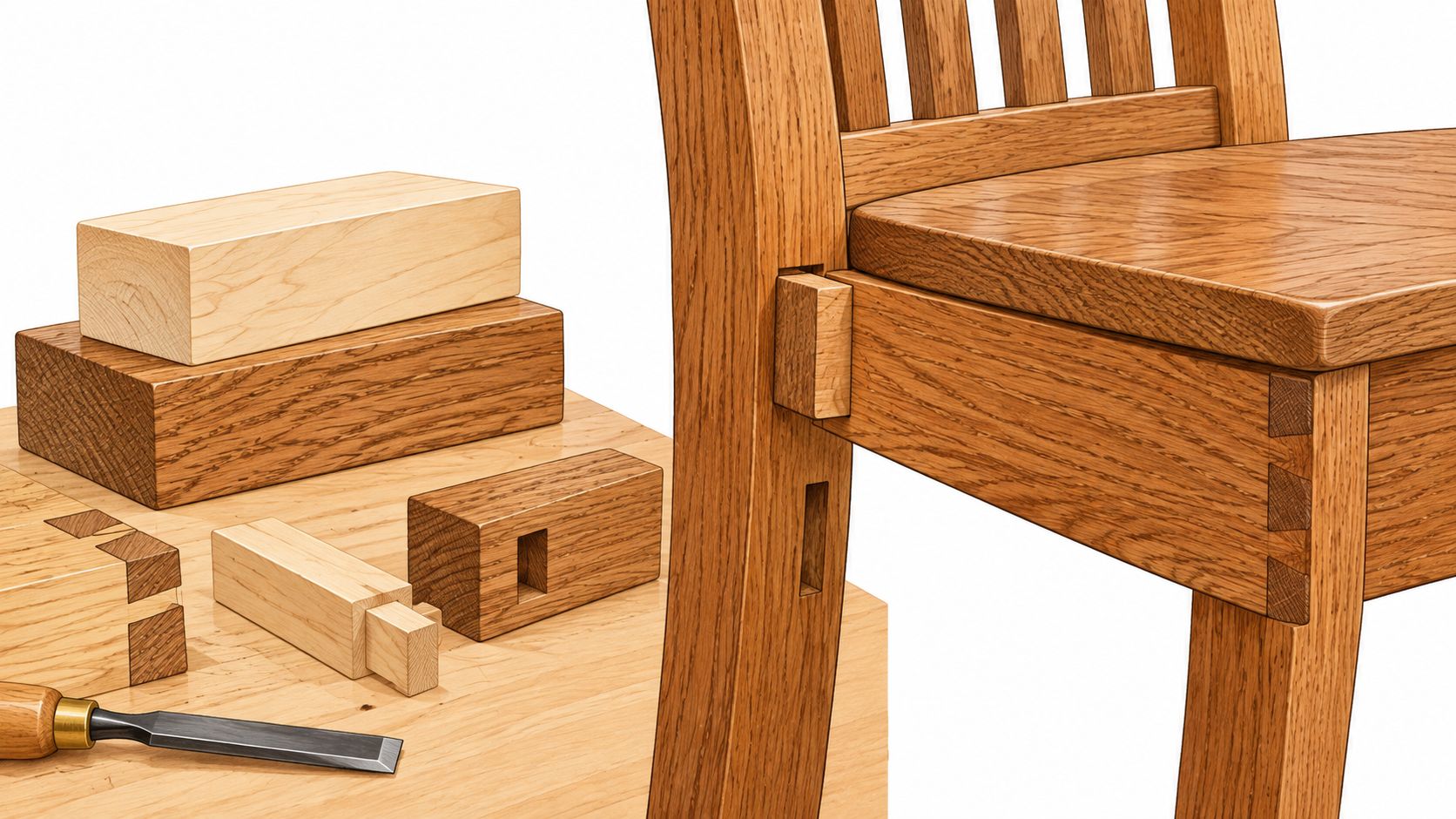
Study the joints. Load-bearing connections deserve more attention than decorative details. Mortise-and-tenon joints, corner braces, finger joints, and carefully fitted rails show that the builder has addressed the places where chairs experience stress.
Notice the finishing work. Even stain, smooth edges, and a carefully shaped seat point to hands-on attention. The finish should support the wood's appearance rather than hide rough construction.
Sources describing Amish dining chairs identify details such as mortise-and-tenon joinery, corner braces, triple-grooved finger joints, hand-shaped seats, hidden corbels, and trestles as construction features used to add strength. This overview of Amish dining chair construction gives shoppers useful terms to bring into a showroom conversation.
A practical rule: A chair's beauty catches attention, but its joints determine how it handles everyday life.
Authenticity isn't just a look
An Amish-style chair may copy a familiar silhouette without using the same materials or construction methods. Buyers should ask whether the piece is Amish-made, whether it uses solid hardwood, and which joints carry the load. BILTRITE marks qualifying pieces with Amish-made, USA Made, solid wood, and heavy-duty icons, giving shoppers a starting point for asking more detailed questions.
The BILTRITE guide to Amish furniture quality can help readers understand those distinctions before visiting. The goal isn't to memorize woodworking vocabulary. It's to recognize that authentic construction is a combination of material, craftsmanship, and purpose.
Solid Wood Materials and Joinery That Lasts
Solid hardwood gives a chair character, but joinery gives the frame its working strength. Oak, maple, hickory, and elm are commonly associated with Amish dining chairs, and each brings a distinct grain, color, and feel. The more important question for daily use is how the maker connects the parts and prepares the wood.
Kiln-drying helps reduce the risk of splitting, cracking, and warping before the chair reaches the home. Even properly prepared solid wood still responds to humidity because wood is hygroscopic. Seasonal moisture changes can alter fit and alignment, so a small change in a seam or a slightly different feel in a joint isn't automatically a defect. Guidance on solid-wood movement and furniture care explains why good construction allows the material to move without losing its overall integrity.
Read the chair's structural map
A mortise-and-tenon joint connects a projecting piece, the tenon, with a fitted opening, the mortise. Think of it as a wooden puzzle connection that creates long-grain glue surfaces and mechanical interlock. On a chair, that geometry is especially valuable at the legs, seat rails, and stretchers, where people repeatedly twist, lean, and rise.
Corner braces and corbels can reinforce the area beneath a seat. A hand-shaped seat can improve comfort while reducing the temptation to add a cushion to make a flat surface bearable. These details aren't decorations. They show where the maker has concentrated strength.
Independent technical comparisons report that well-made mortise-and-tenon chair joints in hardwoods such as white oak or hard maple can withstand roughly 800 to 1,200 lbf of racking force, while dowel joints generally show lower resistance under repeated stress. A comparison of furniture joinery methods provides that technical context. Because this is a construction comparison rather than a guarantee for every chair, shoppers should still inspect the actual frame and ask how it was built.
Solid wood isn't the whole answer
A chair can be made from solid wood and still be poorly suited to heavy daily use if its joints are weak, its proportions are unstable, or its load class doesn't match the household. Dining chairs face repeated racking as people slide in, shift sideways, and pull themselves up. A chair intended for occasional decorative use shouldn't be treated like heavy-duty family seating.
Look for tight shoulder fits, aligned legs, clean transitions, and firm connections. Hidden fasteners may have a place in furniture, but a chair that depends mainly on staples, screws, or brackets deserves closer questions at its load-bearing points. This technical discussion of joint design and chair safety reinforces the central lesson: construction details matter more than a “solid wood” label by itself.
For a plain-language explanation of the principal joint, readers can also review what a mortise-and-tenon joint is. At the showroom, a knowledgeable associate can point out the frame details instead of asking a shopper to judge them from a photograph.
Popular Amish Chair Styles for Every Home
Different chair styles solve different household problems. A compact dining space may need a slim side chair, while a family table may benefit from arms at the ends and upholstery on the seats. A senior-friendly room may call for a chair with supportive arms, a taller-feeling seat, or a glider that makes getting comfortable easier.
The following comparison keeps the decision practical.
Amish Chair Styles at a Glance
| Chair Style | Best For | Space and Comfort Notes |
|---|---|---|
| Dining side chair | Everyday meals and compact dining areas | Takes less visual and floor space than an armchair, making it useful in apartments, condos, and smaller dining rooms |
| Armchair | Table ends, senior-friendly seating, and longer meals | Arms can support sitting down and standing up, but the table and room need enough clearance |
| Ladder-back chair | Traditional, farmhouse, and relaxed interiors | The open back keeps the profile visually light, while a shaped or upholstered seat can add comfort |
| Mission chair | Clean-lined homes and mixed décor | Straight lines and visible grain suit modern interiors without losing a crafted appearance |
| Rocker | Reading corners, nurseries, and quiet living spaces | A wood rocker offers a familiar heirloom feel, while seat height and arm placement should be checked in person |
| Glider | Anyone seeking smoother movement and supportive comfort | Useful for senior households or soothing seating, with the mechanism and cushion feel worth testing |
| Upholstered chair | Family dining, long gatherings, and comfort-first rooms | Fabric or leather adds softness, while performance materials can simplify care in busy areas |
For additional ideas, BILTRITE's dining chair styles can help shoppers compare silhouettes before they visit.
Match the chair to the room
A smaller room doesn't automatically rule out Amish furniture chairs. Choosing a narrower side chair, keeping arms at the table ends, and selecting a lighter finish can prevent a dining area from feeling crowded. Measuring the table, wall clearance, doorway, and walking path matters more than choosing a style from a catalog image.
Modern buyers also have more options than a single traditional appearance. Current design conversations point toward minimalist silhouettes, lower-sheen finishes, mix-and-match seating, upholstered armchairs, and gliders. That shift lets a family pair solid-wood side chairs with softer end chairs or choose performance upholstery where meals tend to get messy.
Comfort deserves equal billing
A beautiful ladder-back chair won't serve a household well if nobody wants to sit in it. Test the seat depth, back angle, arm height, and ease of standing. A senior or caregiver should check whether the arms slide comfortably under the table and whether the seat supports an upright posture without forcing the user forward.
Families can also consider a mix rather than a matched group. Several wood side chairs may keep the room easy to clean, while upholstered armchairs provide extra comfort for the people who spend the longest time at the table. The most successful arrangement respects both the room's dimensions and the body's needs.
Customization Options That Make It Yours
Customization works best when it starts with the household's routine, not with a finish chart. A chair for a small condo may need a smaller scale and a visually open back. A busy family may prioritize an easy-care seat. A senior may need arms, a supportive cushion, or a height that makes standing less difficult.
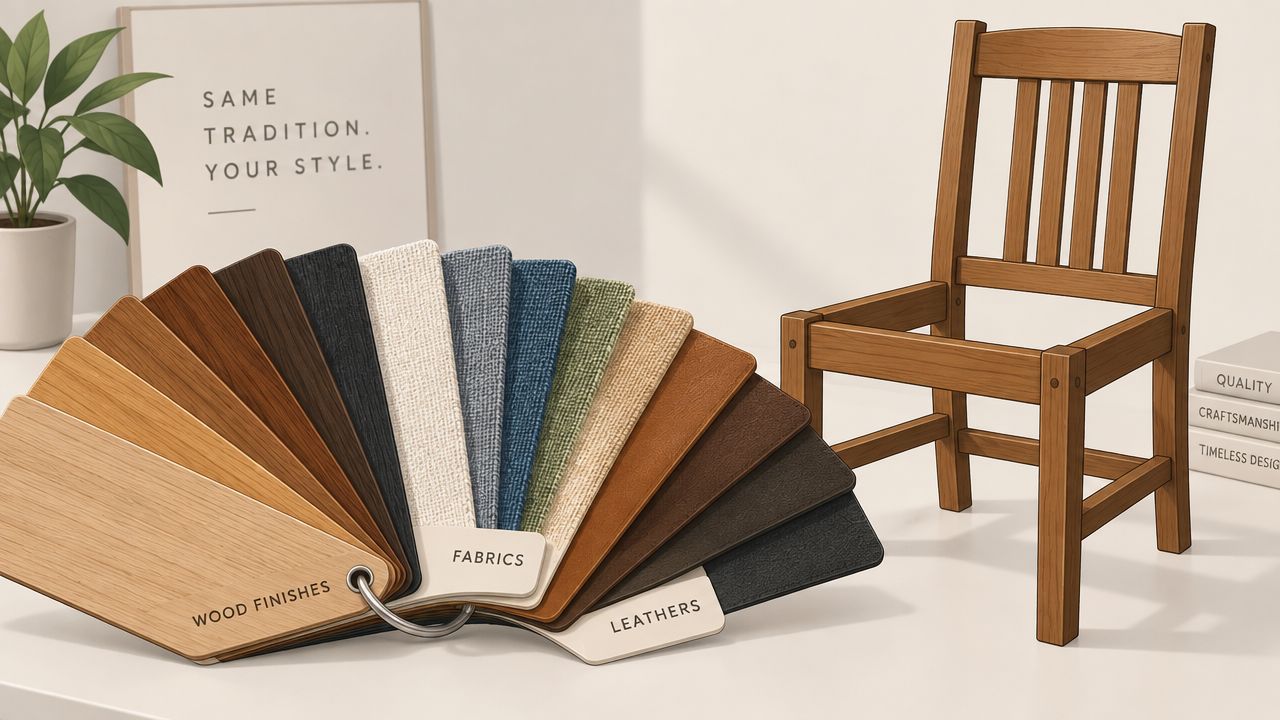
BILTRITE offers affordable custom options involving fabric, leather, wood, finish, and hardware, along with choices for furniture scale. The custom solid-wood furniture selection gives shoppers a useful starting point for thinking about those decisions.
Start with the use
Before choosing color, answer three questions:
- Who will sit there? Consider children, taller adults, older adults, and anyone who needs arm support or a softer seat.
- Where will it go? Measure the room, table, doorways, and walking paths. A chair that fits the table may still be awkward near a wall.
- What maintenance feels realistic? A wood seat may be simple to wipe, while upholstered seating offers softness and can be selected in a performance fabric or leather.
Then choose the visible details
Wood species changes the grain and overall mood. Oak can emphasize a familiar, pronounced pattern, while maple, hickory, or elm can create a different visual balance. Finish color influences whether the chair blends with an existing table or becomes a deliberate contrast.
Fabric and leather affect both touch and upkeep. Families with young children may want a resilient, easy-care surface, while a formal dining room may call for a richer texture. Hardware and small design details can help coordinate chairs with a table, buffet, hutch, or nearby living-room pieces.
Bring questions to the showroom
A conversation becomes more productive when shoppers bring measurements, photos of the room, and a clear description of daily use. BILTRITE's sales associates have over 400 years of combined experience, and their role is to help families compare options rather than pressure them into a decision.
Since BILTRITE doesn't sell online, the showroom provides an important part of the process. Sitting in the chair reveals details that a screen can't show, including seat firmness, arm placement, back support, finish sheen, and whether the scale feels comfortable beside the table.
Why Buying USA Made and Local Matters
Buying USA-made and Amish-made furniture connects a household purchase to the people who build, finish, deliver, and service the piece. BILTRITE specializes in affordable, better-quality furniture, with a strong focus on USA-made, Amish-made, and solid-wood pieces. The goal isn't to claim that every domestic chair suits every budget. It's to give shoppers a way to weigh construction, service, repairability, and long-term value together.
The Amish furniture industry also represents a measurable American manufacturing ecosystem. A USDA Forest Service study estimated that Ohio's Amish-based furniture cluster had 3,000 employees across 500 firms in 2005, and related research reported $148,606,000 in sales in 2007. After accounting for a 52.6% response rate, the study estimated total gross sales at $282.5 million. The USDA Forest Service study of Ohio's Amish furniture cluster places Amish furniture within a substantial regional production network, rather than treating it as a tiny craft category.
Local shopping adds useful confidence
A chair is a tactile purchase. Shoppers need to feel whether the seat is too firm, see how the finish looks under showroom lighting, and check whether an armchair fits beneath the table. They may also need advice about delivery paths, room scale, matching woods, or custom upholstery.
A local showroom makes those questions easier to answer before a purchase. BILTRITE's Greenfield location lets Milwaukee-area families compare small-scale furniture, heavy-duty options, dining pieces, living-room chairs, and supportive seating in person. The store also has a large mattress department with over 60 models, which can help households handle several furnishing needs during one visit.
Community values show up in the calendar
BILTRITE is family-owned and operated by the fourth generation, with roots in the Metro Milwaukee community reaching back to 1928. The store is closed on Sundays and Mondays to support family time, a choice that reflects its family-first and #BUYLOCAL values.
The USA Made icon and solid-wood icon in the showroom give shoppers quick visual cues, but a good purchase still comes from asking questions. Families can compare the chair's construction, comfort, intended use, and price, then decide whether the value fits their home.
Caring for Your Amish Chairs for Years of Comfort
Solid wood needs ordinary household care, not complicated treatment. The main goal is to protect the finish, avoid harsh moisture swings, and notice small changes before they become larger repairs. Good joinery helps a chair handle normal use, but every frame benefits from sensible maintenance.
A simple care routine
- Dust gently: Use a soft, dry cloth so grit doesn't rub against the finish.
- Clean carefully: Follow the maker's finish instructions and avoid soaking the wood. Wipe spills promptly.
- Protect the surface: Use table mats, coasters, and place settings where hot dishes, moisture, or grit could affect the finish.
- Keep the environment steady: Seasonal wood movement is normal, but large humidity swings can change the feel of seams and joints.
- Inspect the frame: Check legs, stretchers, rails, and arms for looseness. A chair that begins to rock should be taken out of heavy use until someone evaluates it.
- Treat upholstery according to its material: Blot spills instead of scrubbing, and follow the care instructions for fabric, leather, or performance upholstery.
A slightly different seam in one season doesn't necessarily mean the chair has failed. Solid wood responds to moisture in the air, and quality construction allows controlled movement. Persistent rocking, visible separation, or a joint that loosens repeatedly deserves professional attention rather than repeated tightening at home.
Maintenance habit: Wipe spills when they happen, keep the chair level, and address a new wobble early.
Use felt protection under chair legs when moving across a finished floor, and lift rather than drag the chair whenever possible. Avoid leaning back on two legs, even with a strong frame. That action puts stress in a direction the chair wasn't designed to handle.
At BILTRITE Furniture-Leather-Mattresses, shoppers can sit in Amish-made dining chairs, rockers, and gliders at 5430 West Layton Avenue in Greenfield, Wisconsin, then discuss scale, comfort, construction, and care with the showroom team. Seeing and feeling the chair in person makes it easier to choose a piece suited to a real Milwaukee home.
BILTRITE Furniture-Leather-Mattresses offers USA-made and Amish-made furniture, solid-wood chairs, custom fabric, leather, wood, finish, and hardware options, plus supportive furniture and mattresses for many household needs. Visit the Greenfield showroom to test Amish furniture chairs in person, talk with the experienced team, and find seating that fits the room and the way the family lives.