Plush Queen Mattress Guide to Soft Comfort and Support


A couple can spend half the evening debating the mattress. One person wants the gentle, cushioned feeling of sinking into bed, while the other worries that “soft” really means weak support. Meanwhile, a guest room needs a welcoming sleep surface, but the available space still has to accommodate a practical bed frame, bedding, and walking room.
A plush queen mattress can meet those needs, but only when shoppers separate feel, support, construction, and fit. Plush describes the comfort on top, while queen describes the size. The right choice also depends on body weight, sleep position, whether a partner shares the bed, and how the mattress manages heat and movement.
BILTRITE has helped Metro Milwaukee families make those decisions since 1928. As a fourth-generation, family-owned store, the team believes mattress shopping should feel like a useful conversation with a knowledgeable neighbor, not a guessing game. The guide below breaks down plush comfort with simple comparisons, practical testing advice, and the kind of honest questions shoppers can bring into a showroom.
Table of Contents
- Introduction to Plush Queen Comfort
- What Makes a Mattress Plush and How Queen Size Fits
- Plush Versus Firm Understanding Feel and Support
- Who Sleeps Best on a Plush Queen Mattress
- Construction Options for Plush Queen Mattresses
- How to Choose and Try Out Your Plush Queen Mattress
- Bringing Plush Queen Comfort Home With Confidence
Introduction to Plush Queen Comfort
A couple lies down after a long day. The side sleeper notices welcome cushioning under the shoulder and hip, while the back sleeper pays attention to whether the middle of the body feels supported. A mattress can feel wonderful for one person and unsettled for the other, even when both people use the same queen surface.
That's why “plush” shouldn't be treated as an automatic recommendation. A plush queen mattress offers a softer comfort experience, but the support core, edge construction, and the sleeper's position still determine whether the bed feels balanced. A surface can cushion pressure points without allowing the hips or midsection to sink too far.
Why the queen format remains practical
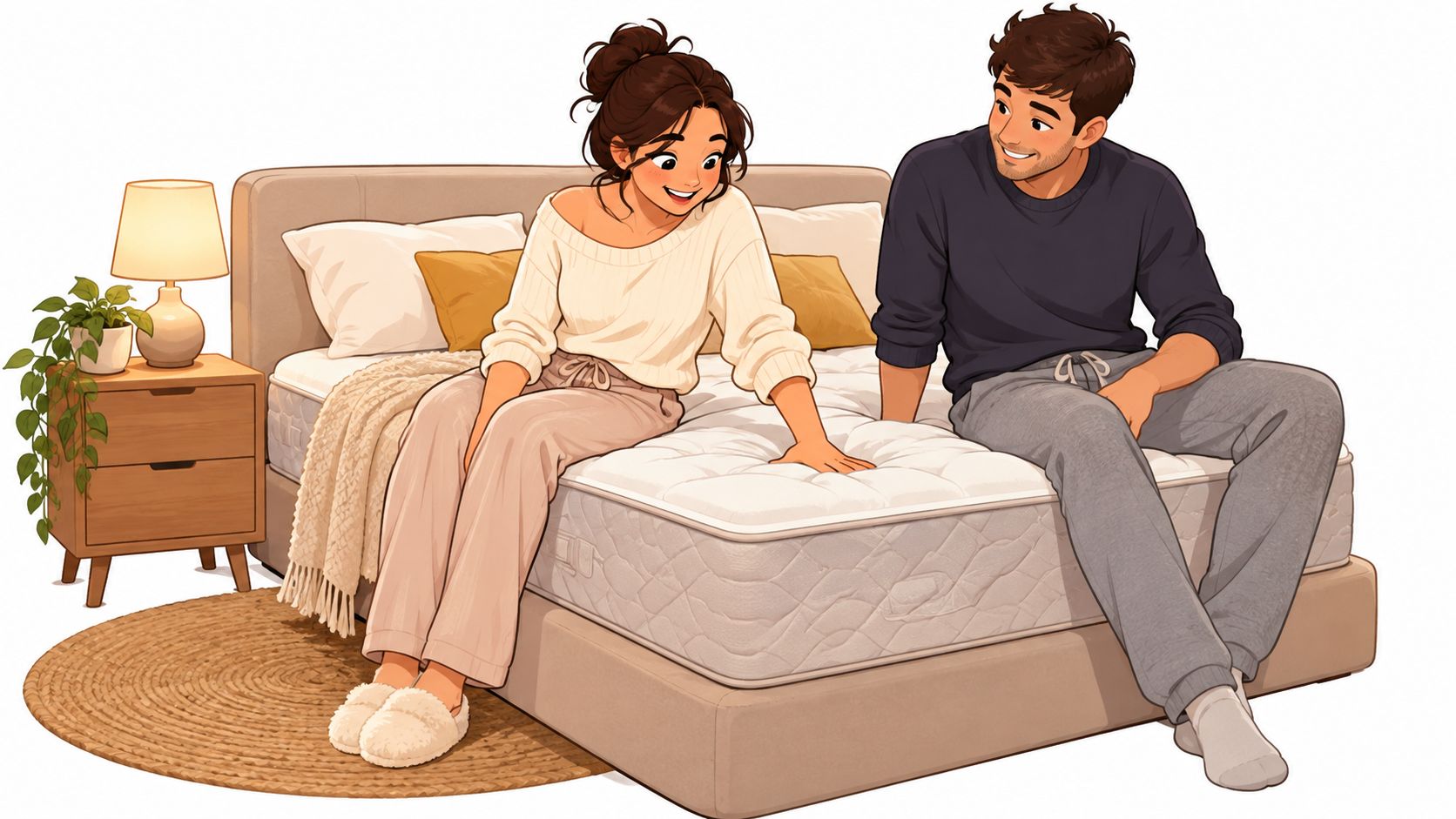
The queen format gives couples a familiar middle ground between compact sleeping space and a larger bedroom footprint. It also works well in guest rooms, where a household may want room for visitors without dedicating the space to an oversized bed.
The comfort label doesn't change the mattress dimensions. A plush queen, firm queen, and pillow-top queen all begin with the same standard queen footprint in major markets. That distinction matters when planning the bedroom, ordering sheets, choosing a frame, or measuring a staircase and doorway.
What shoppers should notice first
A useful showroom visit starts with the body, not the label. The sleeper should notice whether the shoulders and hips relax, whether the lower back feels unsupported, and whether turning over takes effort. Couples should also test the edge, since the usable sleep surface matters when two people share a queen.
BILTRITE's mattress department includes over 60 models, giving shoppers a chance to compare different comfort levels and constructions in person. The store doesn't sell online, so the visit centers on lying down, asking questions, and finding a feel that makes sense for the household rather than relying on a product description alone.
A plush label is an invitation to test the mattress, not a final answer.
What Makes a Mattress Plush and How Queen Size Fits
A couple may love the first soft welcome of a mattress, then discover that their hips sink too far or that both sleepers drift toward the center. Understanding a plush queen starts with separating two labels: Queen identifies the footprint. Plush identifies the feel. One describes floor space, while the other describes how the upper layers cushion the body.
Start with the queen dimensions
A standard queen mattress measures 60 inches wide by 80 inches long, or 152 cm by 203 cm, according to queen mattress size guidance. That equals 5 feet by 6 feet 8 inches, the reference point for queen bedding, frames, and room planning described in neutral queen-size measurement guidance.
Two people sharing that width have roughly 30 inches of personal width per sleeper, as explained in queen mattress size information. The space suits many couples, though a weak edge or overly yielding comfort layer can make the usable surface feel narrower.
Room layout matters too. Queen beds are commonly planned for rooms around 10 by 10 feet or larger, while 11 by 13 feet can allow a more comfortable arrangement, according to queen mattress size and room-fit guidance. Measure walking paths, door swings, dressers, and nightstands before delivery. For another explanation of the footprint, see what size a queen mattress is.
Then place plush on the firmness scale
Plush commonly sits in the soft to medium-soft range, often around 3.0 to 4.5 out of 10, with 10 representing the firmest end, according to plush mattress firmness guidance. Treat that range as a starting point. Body weight, sleep position, and the mattress construction can make the same model feel quite different.
A cushioned chair offers a useful comparison. Its upholstery creates the initial softness, but its frame prevents the sitter from dropping too low. A plush mattress works similarly. Foam or quilted comfort layers create the gentle surface, while coils or denser foam beneath provide resistance and help limit excessive sinkage.
For couples, softness also has practical tradeoffs. A plush surface may ease pressure at the shoulders and hips, but deeper contouring can make turning harder, retain more warmth, or transfer movement differently depending on its materials. Testing together shows whether each sleeper can settle without crowding the other.
Regional equivalents vary. Australia uses a queen size of about 153 by 203 cm, while Europe often uses 160 by 200 cm as the closest comparison, according to international queen-size comparisons. Measure an imported mattress and frame rather than assuming every “queen” label matches.
Plush changes the feel, not the queen size.
Plush Versus Firm Understanding Feel and Support
A plush mattress and a firm mattress can both provide support, but they deliver that support differently. Plush comfort layers allow more cushioning around shoulders and hips, especially for side sleepers. A firmer surface generally resists compression sooner and can feel more stable to sleepers who need stronger resistance beneath the body.
The important question isn't whether a mattress is soft or hard. The question is whether the surface cushions pressure while the support core keeps the spine in a comfortable position. If the top layers let the hips sink too far, the sleeper may feel twisted, strained, or reluctant to change position.
Independent sleep research has found that medium-firm surfaces can outperform very firm surfaces for some back-pain outcomes, while more recent clinical work identified a medium mattress measuring 64.6 HA on the durometer scale as supporting sleep architecture and reducing sleep onset latency, according to clinical mattress research. Those findings don't make every medium mattress right for every person, but they reinforce the need to look beyond the word “firm.”
A quick comparison
| Firmness Level | Feel and Pressure Relief | Support and Alignment | Best For |
|---|---|---|---|
| Plush | Softer cushioning with more contouring around pressure points | Needs a stable core to prevent excessive sinkage | Sleepers who prioritize cushioning, especially many side sleepers |
| Medium | Balanced give and resistance | Often offers a middle path between contouring and stability | Couples with different preferences and sleepers who change positions |
| Firm | Flatter, more resistant surface | Stronger immediate resistance under the body | Sleepers who prefer a stable feel or need less sinkage |
The table offers a starting point, not a verdict. A lighter sleeper may experience a plush mattress as gently supportive, while a heavier sleeper may compress the same comfort layers more. A combination sleeper may value enough responsiveness to turn easily, while someone who stays mostly on one side may prefer more contouring.
Comfort layers and support cores
Foam, fiber, pillow-top, or euro-top layers can create the plush sensation. Underneath, coils or denser foam help carry body weight and maintain structure. Edge reinforcement matters on a queen because each sleeper has limited personal width, and a soft, collapsing edge can make the usable surface feel smaller.
BILTRITE's guide to a firm versus plush mattress can help shoppers compare the surface sensation with the support they need. The most useful showroom test is to lie in the usual sleep position long enough to notice both pressure relief and alignment.
Who Sleeps Best on a Plush Queen Mattress
A couple may arrive at a showroom wanting the softest queen mattress, then discover that each person needs a different kind of comfort. Plush describes the surface feel, not a guarantee of support. Side sleepers usually notice the pressure-relief benefit first, because shoulders and hips press into the mattress at narrower contact points. Guidance for side sleepers places many people in a soft to medium-firm range of about 4 to 6.5 out of 10, according to side-sleeper mattress guidance.
Body weight changes how far those comfort layers compress. A lighter side sleeper may rest closer to the surface and enjoy gentle cushioning. A heavier back sleeper can sink farther into the same mattress, especially around the midsection, and may need more resistance to maintain a comfortable position. Plush feel and support work together, but they are not the same feature.
Sleep position changes the answer
Side sleepers should check whether the shoulder settles without being pushed upward and whether the hip feels cushioned rather than pressed. The mattress should also let the sleeper turn without a stuck, slow sensation. A deep cradle can feel pleasant during the first few minutes, then become harder to leave.
Back sleepers should notice the space beneath the lower back. A plush design may balance contouring with support, while too much sinkage can allow the middle of the body to settle lower than the chest and legs. Stomach sleepers often need firmer resistance because a soft surface may let the pelvis dip. Combination sleepers need enough response to change positions without fighting the mattress.
Use these checks during a tryout:
- Side position: The shoulder and hip should feel cushioned, not sharply pressured.
- Back position: The midsection should not feel far below the chest and legs.
- Stomach position: The pelvis should remain supported instead of dipping noticeably.
- Combination position: Turning should feel manageable, rather than slow or sticky.
Couples need a shared compromise
A queen gives each partner less room to move away from an uncomfortable area. One sleeper may want an enveloping surface, while the other prefers firmer resistance. A consumer survey found 65.1% of respondents preferred firm over plush, while broader consumer research also found meaningful interest in soft and very soft surfaces, as reported in the same side-sleeper mattress guidance. Preferences are divided, so one person's ideal plushness may not suit both sleepers.
Test the mattress together in a family-owned showroom. One person can lie on a side while the other changes position, sits near the edge, and gets in and out of bed. Notice heat, movement, and edge stability as well as immediate softness. For different sleep positions, use this mattress guidance by sleep position as a broader framework.
Construction Options for Plush Queen Mattresses
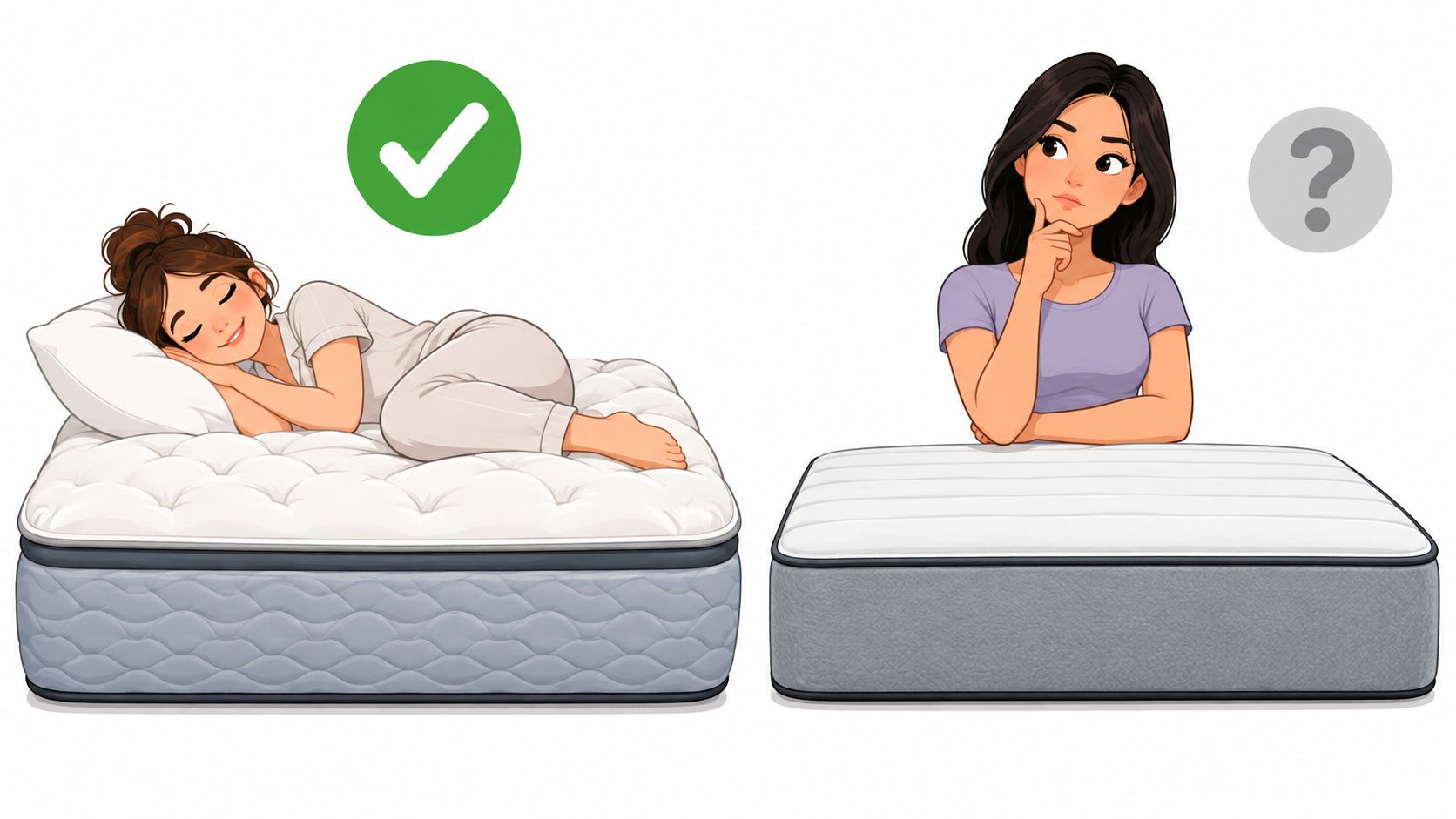
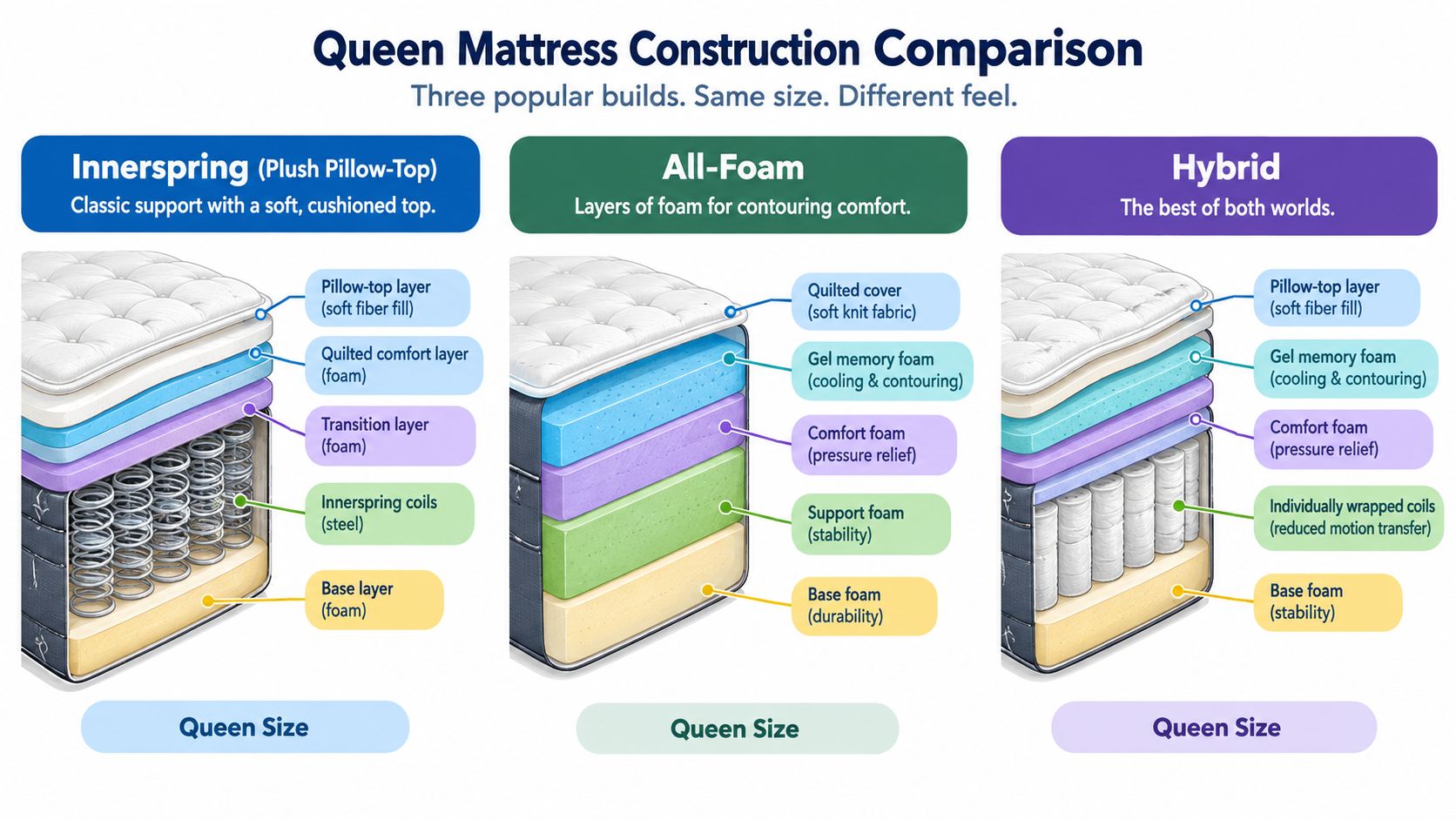
Two plush queen mattresses can feel completely different because the cushioning may come from different materials. A pillow-top over coils may feel buoyant, an all-foam model may allow deeper contouring, and a hybrid may combine foam cushioning with a more responsive support system.
Innerspring with a plush top
An innerspring design places a cushioned comfort layer over a coil support system. The result may feel more responsive and easier to move on than a contouring all-foam mattress. Coil spaces can also support airflow, although the amount of cooling depends on the complete design and the materials above the springs.
Edge support deserves attention here. Reinforced edges can help a sleeper use more of the queen's surface, especially when two people share the bed. A plush top still needs enough structure underneath to prevent sitting or sleeping near the edge from feeling unstable.
All-foam contouring
All-foam construction can create a close, body-hugging sensation. That contouring may reduce the feeling of a partner's movement traveling across the surface, which appeals to couples with different schedules or restless sleep patterns.
The tradeoff is responsiveness. Deeper foam can feel slower when a sleeper turns, and some foam surfaces may retain more warmth than a more open construction. Shoppers who tend to sleep hot should spend enough time on the mattress to notice whether the surface feels comfortably cushioned or overly enveloping.
Hybrid balance
A hybrid combines foam comfort layers with a coil support core. It can offer pressure relief without the same degree of sinkage as some all-foam designs, along with bounce and a more mobile surface. For couples, that balance can help one person settle into comfort while the other changes position.
Recent testing and expert reviews highlight the practical concerns behind plush design. Softer surfaces can improve pressure relief, yet they may also trap more heat and feel slower to move on. The market's growing use of cooling layers and hybrid support in plush-feel queen models reflects an effort to address heat and sinkage rather than just make the surface softer, as discussed in queen mattress construction and comfort guidance.
A useful comparison looks like this:
- Innerspring plush: More bounce and potential airflow, with edge support worth checking closely.
- All-foam plush: Strong contouring and motion isolation, with possible heat and movement tradeoffs.
- Hybrid plush: A middle path that combines cushioning, responsiveness, and support structure.
Shoppers interested in the difference between a plush upper layer and a more integrated top can review plush and pillow-top mattress information. Durability depends on the quality of the comfort materials, the support core, the sleeper's weight, and how evenly the mattress is used. Initial softness alone can't predict long-term performance.
How to Choose and Try Out Your Plush Queen Mattress
A showroom test works best when shoppers use the same positions and movements they use at home. Sitting for a moment can reveal edge stability, but lying down gives a much clearer picture of pressure relief and alignment.
Use a simple in-store test
Start on the side. Notice whether the shoulder and hip feel cushioned. Sharp pressure suggests the surface may be too firm, while a deep, trapped sensation suggests it may be too soft or slow for that sleeper.
Check the back position. Relax the legs and notice whether the lower back feels supported. The goal isn't a rigid surface. It's a balanced sensation without the middle of the body dropping noticeably.
Try the usual turning motion. Roll from side to back and back again. A plush mattress should let the sleeper settle without making every position change feel like climbing out of a soft chair.
Test the edge. Sit near the side, then lie close to the edge. A stable border can preserve more of the queen's practical sleeping area.
Bring the partner into the test. Have one person change positions while the other remains still. This helps reveal how much movement travels across the mattress.
BILTRITE's mattress testing guide offers additional direction for making the visit more useful. The store's sales associates have over 400 years of combined experience, and their role is to answer questions without pressure.
Confirm the bedroom details
Measure the room before choosing the mattress and frame. A queen mattress is 60 by 80 inches, so the surrounding layout needs space for walking, opening drawers, and positioning nightstands, as explained in queen room-layout guidance.
Shoppers should also ask about delivery access, foundation requirements, bedding fit, and the mattress's care instructions. Care guidance commonly recommends rotating a mattress head-to-foot every three months during the first year and every six months afterward, unless the manufacturer says otherwise, according to queen mattress care guidance. One-sided mattresses shouldn't be flipped. Only true two-sided designs should be turned over.
The Greenfield showroom gives couples a chance to compare over 60 mattress models under one roof. That hands-on process can clarify whether plush comfort feels supportive, too warm, too slow, or just right for the people who will use it.
Bringing Plush Queen Comfort Home With Confidence
The decision becomes clearer once the labels are separated. Queen stays 60 by 80 inches, while plush describes the softer feel created by the comfort layers. The right mattress still depends on sleeper position, body weight, preferred movement, edge stability, temperature comfort, and the construction beneath the surface.
A lighter side sleeper may appreciate deeper cushioning, while a heavier back sleeper or stomach sleeper may need more resistance. Couples should judge motion, edge support, and heat together rather than choosing a mattress by softness alone. Innerspring, all-foam, and hybrid designs can all create a plush feel, but they won't respond in the same way.
BILTRITE Furniture-Leather-Mattresses serves families looking for affordable, better-quality furniture and mattresses, including USA-made, Amish-made, and solid-wood furniture. The showroom carries options for small-scale apartments, larger family homes, and shoppers seeking heavy-duty furniture and mattress solutions, with a large in-stock selection for side-by-side comparison.
The store is located at 5430 West Layton Avenue in Greenfield, Wisconsin and is closed on Sundays and Mondays to support family time. A visit gives shoppers the chance to lie on different mattresses, discuss fit with experienced associates, and make a choice based on real comfort rather than guesswork.
BILTRITE Furniture-Leather-Mattresses offers a broad mattress selection, including plush queen options, plus USA-made, Amish-made, solid-wood, small-scale, and heavy-duty furniture for Metro Milwaukee homes. Visit BILTRITE Furniture-Leather-Mattresses in Greenfield to test plush comfort in person, compare support and construction, and chat with a helpful team that won't pressure shoppers.