Small Scale Leather Sofas: Guide for Compact Living Spaces


Small-scale leather sofas are typically 68 to 84 inches wide and 30 to 36 inches deep, making them well suited to apartments while still offering the comfort and durability expected from full-size leather seating. Loveseat-sized options can be narrower, often 56 to 72 inches wide, for rooms where every inch matters.
A Milwaukee homeowner may know exactly what the living room needs: a comfortable place for family movie nights, a welcoming seat for guests, and enough open floor space to move around without bumping into furniture. Yet many standard sofas look oversized in a condo, bungalow, studio, or renovated apartment. The challenge isn't finding a smaller sofa. It's finding one that fits the room, the daily routine, and the path from the front door to the final wall.
Small scale leather sofas solve part of that problem with a compact footprint and a durable upholstery surface. The harder questions involve seat depth, doorway clearance, delivery turns, removable arms, construction quality, and long-term care. Those details matter just as much as color or style, especially in Metro Milwaukee homes with narrow entries, older stairways, or limited elevator access.
BILTRITE Furniture has helped local families make those decisions since 1928, with a showroom in Greenfield and a focus on affordable, better-quality furniture. The guidance below covers what works, what can create trouble, and how shoppers can evaluate a compact leather sofa before bringing it home.
Why Small Scale Leather Sofas Are the Smart Choice for Your Home
A newly renovated Milwaukee condo can feel spacious until a full-size sofa arrives. Its arms narrow the walkway, the coffee table moves too close, and the room loses the openness that made the home attractive. A small scale leather sofa preserves useful circulation while providing a substantial seat for everyday use.
Compact proportions without a lightweight feel
Compact leather seating suits apartments, smaller homes, senior living spaces, and multifamily housing where floor area must work harder. The United Nations urbanization data reports that 56% of the global population lived in urban areas in 2021, with that share projected to reach 68% by 2050. As more households adjust to urban and compact living, furniture needs to fit tighter rooms without looking temporary or feeling flimsy.
The broader leather sofa category is mature and substantial. One leather sofa market estimate valued it at USD 13.2 billion in 2025 and projected USD 20.1 billion by 2034, with a 4.8% CAGR. These figures describe the overall category, not compact models alone. They still show that small-scale sofas belong to an established leather seating market rather than a short-lived trend.
A practical fit for family life
A compact sofa can support conversation, reading, relaxing, and daily family routines. The right model matches the room's scale while preserving the seat support and upholstery quality the household expects. A narrow sofa with weak cushioning can make a room feel smaller because people avoid using it.
Delivery planning belongs in the buying decision, too. Measure the entry door, hallway turns, stairwell, and elevator before choosing a frame. Ask whether the arms or back come off, and confirm the sofa's packaged dimensions. A piece that fits the living room can still stop at the doorway if it cannot be turned or separated for carrying.
Since 1928, BILTRITE Furniture has helped local families make these decisions from its Greenfield showroom, with a focus on affordable, better-quality furniture. In-person testing also reveals whether the arms feel intrusive, whether the seat supports an upright posture, and whether the back suits lounging or conversation. Shoppers can compare small-scale sofas and loveseats while considering both room fit and delivery access.
Practical rule: A smaller footprint should reduce wasted space, not reduce the quality of the sitting experience.
For a first home, downsized residence, or condo living room, the right small scale leather sofa makes the layout feel intentional. It leaves room for a table, lamp, chair, and clear path through the home, provided the route into the room has been checked first.
Finding the Right Size and Measurements for Your Space
A sofa can fit the room on paper and still stop at the front door. Plan two separate measurements: the space where the sofa will sit and the route it must travel from the delivery truck to that spot.
Measure the room in layers
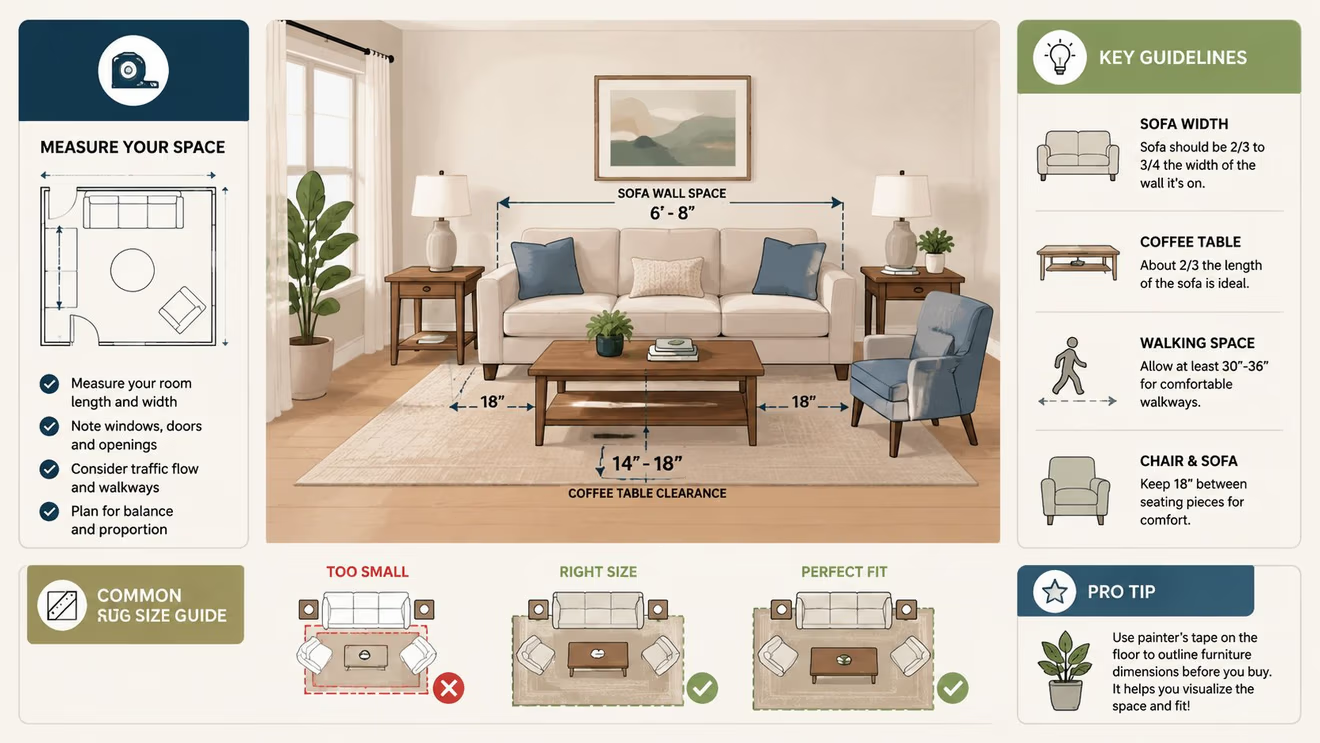
Record the wall length, floor area, windows, vents, door swings, and existing furniture. Apartment-size sofas commonly measure 72 to 84 inches wide and 34 to 38 inches deep, while loveseat-sized pieces often measure 56 to 72 inches wide (compact sofa sizing guidance). Other compact-sofa guidance places smaller models around 68 to 84 inches wide and 30 to 36 inches deep (small living room sofa dimensions).
The narrowest model is not always the best fit. Leave enough room for movement, a table, and daily use while giving the household adequate seating.
Protect the walking path
For a small apartment, guidance often recommends 70 to 78 inches for a compact two-seat or three-seat sofa, with 30 to 36 inches of clear walking space in front (small apartment sofa layout guidance). Another compact-room guide recommends 18 to 36 inches of walking clearance, so the floor plan should determine the final arrangement rather than a single rule.
Seat proportions shape comfort as much as the outer frame. A comfortable seat depth lets the feet rest flat while leaving a small gap behind the knees. Seat height should also support an easy sit-to-stand motion, so test both before ordering.
Measure the delivery route
Measure entry doors, hallway pinch points, stair landings, elevator openings, and sharp turns. Check diagonal clearance where the sofa may need to tilt, along with railings, light fixtures, and low ceilings. Ask whether the arms, back, or other sections come apart. A sectional or sofa with removable components may reach a tight room more safely than a fixed frame, even when both have similar room dimensions.
A sofa dimensions guide helps organize these measurements before visiting the showroom. BILTRITE's Milwaukee-area showroom experience, built over more than 90 years, adds a practical check: compare the packaged dimensions and delivery route, not only the finished sofa. The key question is whether the piece can reach the wall without damaging the home or furniture.
Understanding Leather Types and Durability Standards
A close-up photo can make three leather hides look nearly identical. The finish, frame, and delivery configuration underneath can tell a different story, especially when a compact sofa must pass through a narrow doorway or arrive in sections.
Leather labels describe differences in surface character, uniformity, price, and wear resistance. A small sofa receives concentrated daily use, so evaluate the upholstery and frame together instead of choosing from terminology alone.
Compare the leather surface
Full-grain leather retains the natural outer surface and usually develops more visible character over time. It suits buyers who want a sofa that gains patina rather than maintaining a perfectly uniform appearance.
Top-grain leather is lightly processed for a more consistent look while retaining a durable leather surface. It often fits households seeking a refined appearance and dependable everyday performance.
Corrected-grain leather receives additional surface treatment for a more even finish. It can suit shoppers who value consistency or need to manage the budget, though it will age differently from full-grain leather.
Bonded leather combines leather fibers with other materials. It may provide an accessible entry point, but it should not be assessed as equivalent to a full leather hide.
The difference between top-grain and full-grain leather is easier to assess by handling samples under showroom lighting and asking how each finish should be cleaned.
Evaluate concentrated wear
Small sofas often receive repeated contact along the front seat edge and arm tops. Look for leather tested for high abrasion resistance, then ask how the test applies to the specific covering. Abrasion performance helps, but it does not determine the sofa's entire service life.
Construction matters just as much. A well-supported frame, stable seat platform, and properly secured cushions help prevent compact proportions from feeling cramped or wearing unevenly. Ask about frame materials, suspension, cushion filling, seams, and the intended care routine.
Also ask whether the sofa comes apart for delivery. Removable backs, arms, or other sections can matter as much as leather grade when hallways, stair landings, or doorways are tight. A sofa that looks suitable in the showroom still needs a workable route into the room.
BILTRITE specializes in USA-made and Amish-made furniture, including solid-wood options across the showroom. With more than 90 years of Milwaukee-area showroom experience, its practical advantage is in-person comparison: inspect frame feel, sit on several cushions, review construction, and confirm whether the packaged pieces can reach the home safely.
Weighing the Pros and Cons of Leather in Small Spaces
In a compact home, the better material is the one that fits the household's routine and the room's access limits. Compare leather with performance fabric by looking at cleaning steps, expected wear, replacement difficulty, and whether the sofa can be delivered in manageable sections.
Use a decision path
Choose leather when spills are common, the sofa will receive daily use, and the household is comfortable following the manufacturer's care instructions. Its surface is generally straightforward to wipe, but maintenance still includes regular dusting, appropriate conditioning when recommended, and prompt attention to spills.
Performance fabric may suit a home that wants a softer textile feel or expects frequent contact from children and pets. Ask how the fabric should be cleaned, whether covers are removable, and how spot treatment affects the finish. A fabric that is easier to replace or clean may be the better practical choice, even when leather has a longer expected service life.
Compare the ownership timeline
Initial price alone does not settle the value question. Review the sofa's frame, suspension, cushion construction, covering, and warranty terms, then consider how long the household expects to keep it. A well-built compact sofa may justify its cost through longer use, while an inexpensive piece can become costly if it needs early replacement.
Maintenance also differs by schedule. Leather calls for routine surface care and attention to scratches or scuffs. Fabric may require more frequent vacuuming and spot treatment, especially in a tight room where contact with the sofa is concentrated. Neither material is maintenance-free, and the suitable choice depends on which routine the household will follow.
Check the hidden delivery cost
A sofa that fits the floor plan can still fail at the front door. Measure the entry door, hallway, stair turns, elevator, and the narrowest clearance along the route. Include packaging in the measurement, and confirm whether the sofa's back, arms, or other sections come apart.
This detail can change the decision between two otherwise suitable coverings. A compact sofa with removable components may be easier to install than a smaller model delivered as one rigid piece. Confirm the delivery plan before ordering, particularly in older homes or buildings with tight landings.
BILTRITE's more than 90 years of Milwaukee-area showroom experience supports this kind of practical comparison. In person, shoppers can test cushions, inspect construction, compare leather and performance fabric samples, and ask how the packaged sofa will reach the room.
The strongest decision balances appearance, touch, care requirements, climate, and daily use, then adds construction and delivery access to the evaluation. A sofa should work both after it arrives and years later, when its maintenance demands become part of everyday life.
Styling and Layout Tips for Maximum Impact
A small-scale leather sofa can anchor a compact room without crowding it. Start with the walking route, then arrange the surrounding pieces to preserve clear passage and visual breathing room. The goal is a useful seating zone, not furniture in every open spot.
Build the layout around openness
Float the sofa slightly away from the wall when the floor plan leaves a comfortable path behind it. In a narrow room, the longest practical wall may work better. Keep the route to the room's main entry open, and avoid positioning the sofa where it blocks a door, vent, or frequently used cabinet.
A coffee table with exposed legs keeps sightlines open beneath and around the sofa. Choose a table size that leaves room to walk around it. An ottoman can serve as a footrest or occasional seat, while a lighter accent chair adds capacity without making every piece look matched.
Use color to control visual weight
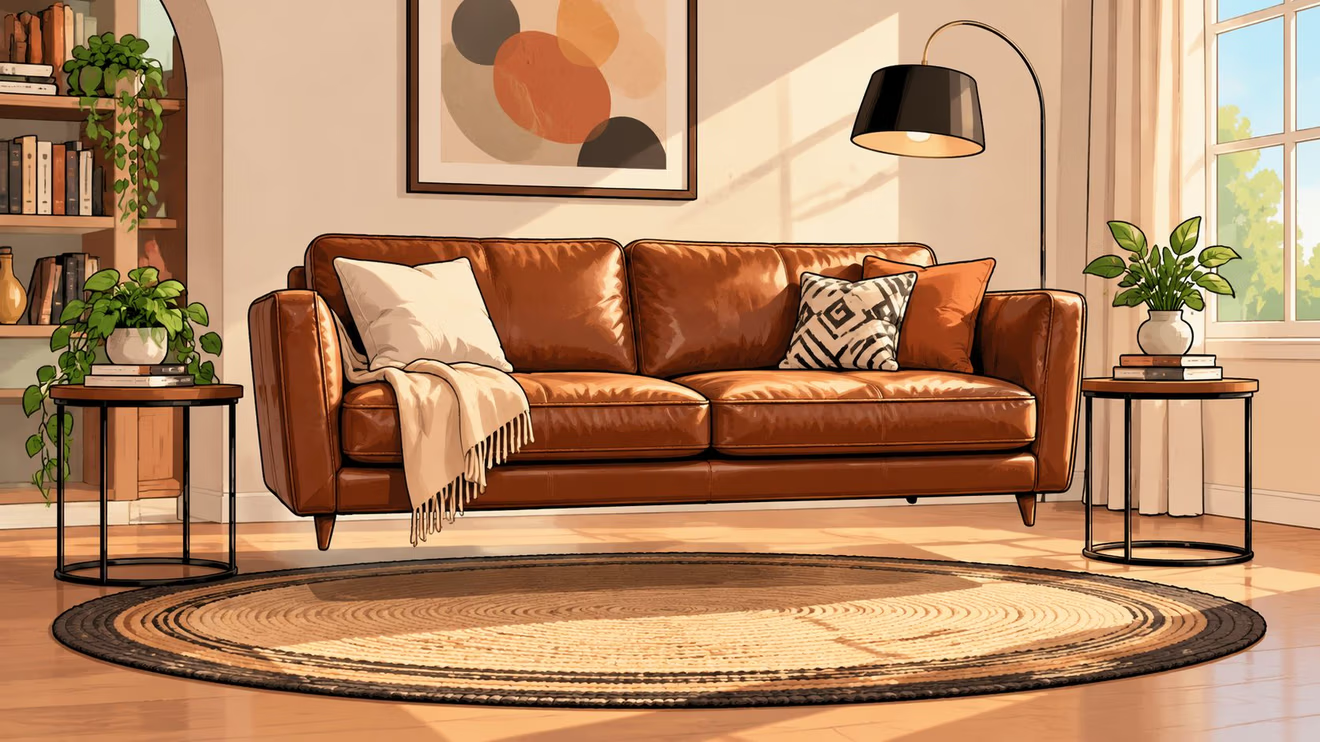
Warm leather tones such as cognac, chestnut, and tan add depth while keeping a compact room approachable. Black and dark brown leather create a stronger focal point, particularly with lighter walls, pale flooring, or warm wood.
Texture prevents the arrangement from feeling hard or overly formal. Woven pillows, cotton throws, textured rugs, wood tables, and soft window treatments give smooth upholstery a more relaxed setting.
- Warm leather: Pair it with natural wood, gentle neutrals, and woven accents.
- Dark leather: Add lighter surfaces or warm materials so the room does not feel visually dense.
- Neutral leather: Use pillows, art, or a rug for contrast instead of adding another bulky item.
Let lighting do practical work
An adjustable floor lamp provides reading light without using table space. A compact table lamp can warm one end of the sofa, while layered room lighting helps the leather retain dimension after dark. Place lighting where it supports actual activities, including reading, conversation, and moving safely through the room.
The guide to decorating with leather furniture explains how to use leather as an anchor without making it the room's entire personality. Wood, textiles, lighting, and artwork should soften and support the sofa.
At BILTRITE, shoppers can review scale, color, and companion pieces in one Milwaukee showroom conversation. With more than 90 years of local experience, the team can also help assess whether the chosen group will remain practical after delivery, including doorway clearance and come-apart construction.
Navigating Delivery and Installation for Tight Spaces
A compact sofa can fit the planned seating area and still fail before it reaches the room. Narrow entry doors, angled stair landings, low ceilings, and small elevators can change which frame will work.
Map the delivery route first
Measure every point where the sofa may turn, tilt, or stand upright:
- Entry doors: Record the clear opening with the door open, rather than measuring only the slab.
- Hallways: Check the narrowest stretch, including trim, radiators, and other obstructions.
- Corners and stairs: Note railing positions, ceiling height, and landing depth.
- Elevators: Measure both the opening and interior, then consider the angle required to load the sofa.
- Final placement: Confirm that the sofa can reach its intended wall without blocking a door, vent, or walking path.
A sofa fit guide for difficult doorways can help organize these measurements before ordering. The route matters as much as the room dimensions.
Check for come-apart construction
Sofas, loveseats, sectionals, and recliners with removable arms, backs, bases, or separable sections can pass through difficult access points more safely. Come-apart construction may solve a delivery problem that a smaller-looking fixed frame cannot.
Ask which components come off, who handles disassembly and reassembly, and whether the delivery crew needs access instructions. Clear photos of the entry, hallway, stairs, and elevator can help the showroom team identify concerns before delivery day.
BILTRITE marks come-apart options with a special icon in the showroom. The store also provides white-glove delivery services and offers old mattress removal in qualifying situations. Discuss those details before purchase, not when the sofa is already at the door.
With more than 90 years of local Milwaukee showroom experience, BILTRITE can review the sofa's route alongside its dimensions and construction. That conversation helps connect the selected piece to the actual installation conditions.
Why Shopping Local at BILTRITE Makes All the Difference
Buying a compact leather sofa locally gives shoppers access to something product photography can't provide: a chance to test the furniture against real questions. Does the seat support the hips? Are the arms too broad? Does the leather feel comfortable? Does the scale look compact without appearing undersized?
BILTRITE is a fourth-generation, family-owned business serving Metro Milwaukee since 1928. Its Greenfield showroom focuses on affordable, better-quality furniture, with USA-made, Amish-made, and solid-wood selections alongside small-scale and heavy-duty choices.
Guidance from people who know furniture
The sales associates bring over 400 years of combined experience, according to the company's published business information. That experience is useful when a shopper needs to weigh seat depth against circulation, a come-apart design against a fixed frame, or a leather finish against the household's maintenance habits.
The showroom also supports a broader home-furnishing decision. BILTRITE has a large mattress department with over 60 models, allowing shoppers to address bedroom needs during the same local visit. The store doesn't sell online, so the in-person experience remains central: sit, compare, measure, ask questions, and discuss delivery before choosing.
A family-first business model
BILTRITE is closed on Sundays to spend time with family. That choice reflects the store's family-owned identity and its long connection to the Metro Milwaukee community.
The showroom is located at 5430 West Layton Avenue in Greenfield, Wisconsin. Local shoppers can see leather textures, compare compact silhouettes, identify come-apart furniture, and discuss how a sofa will travel through the home rather than relying on dimensions alone.
BILTRITE Furniture-Leather-Mattresses offers small-scale leather seating, USA-made and Amish-made furniture, solid-wood pieces, mattresses, and delivery guidance for homes with tight layouts. Visit BILTRITE Furniture-Leather-Mattresses in Greenfield, bring the room and doorway measurements, and let the local team help find a compact sofa that fits both the home and the way the family lives.