How to Choose the Right Ottoman with Storage

The blanket pile has taken over the sofa, the children's toys have migrated under the coffee table, and a guest is due any minute. The living room needs a footrest, extra seating, and somewhere to hide the evidence, but there isn't room for three separate pieces. That's where an ottoman with storage earns its keep.
A well-chosen ottoman can handle three daily jobs at once: store the blankets, support tired feet, and give kids or guests a sturdy place to sit. The wrong one becomes a lid that slams, a frame that wobbles, or a bulky obstacle in the walking path. The difference comes down to construction, measurements, safety features, and whether the style matches the way the household lives.
Why a Storage Ottoman Earns Its Spot in Your Home
A family in a Milwaukee condo might use the same ottoman before breakfast, after school, and during movie night. In the morning, it holds a tray near the sofa. Later, it swallows throws and toys before visitors arrive. By evening, it becomes a footrest, then an extra seat when the sofa fills up.
That combination explains why storage ottomans appeal to apartment, condo, and smaller-home households. They provide seating, surface space, and concealed organization in one footprint. Furniture that performs several jobs deserves more attention than a purely decorative accent, especially when floor space is already tight. BILTRITE's guidance on space-saving furniture ideas reflects that same practical approach to furnishing compact rooms.
The category has also grown beyond a niche accent. One market report valued the global storage ottoman market at $4.2 billion in 2025, a sign that multifunctional pieces have become a meaningful part of home furnishings rather than an occasional styling choice (storage ottoman market valuation). The reason is straightforward. Households want rooms that feel comfortable and orderly without adding more furniture than the room can handle.
The hardest-working seat in the room
A storage ottoman often sits at the center of family life. Children perch on it, adults rest their feet on it, and everyone expects the lid to open easily. That daily use changes the buying decision. A piece selected only for color may not have the frame, hinge, or upholstery needed for regular seating.
The word itself carries a long history. “Ottoman” traces back to Osman I and the Ottoman Empire, which began around 1299 and lasted until 1922, creating more than six centuries of historical lineage before the empire ended and the modern Turkish Republic replaced it, as documented by Britannica's history of the Ottoman Empire. The furniture tradition associated with that world included low seating, cushions, and storage-rich living spaces, not just the modern footrest sold beside a sofa.
Practical rule: If the ottoman must hide clutter and support people, shop for it as working furniture, not as a finishing touch.
The best choice starts with the household's real routine. A family with children needs easy-clean upholstery and controlled lid movement. A senior household may need a firmer, supportive top and a stable frame. A small apartment may need a compact shape that can move aside without interrupting the room. Style matters, but function decides whether the ottoman stays useful.
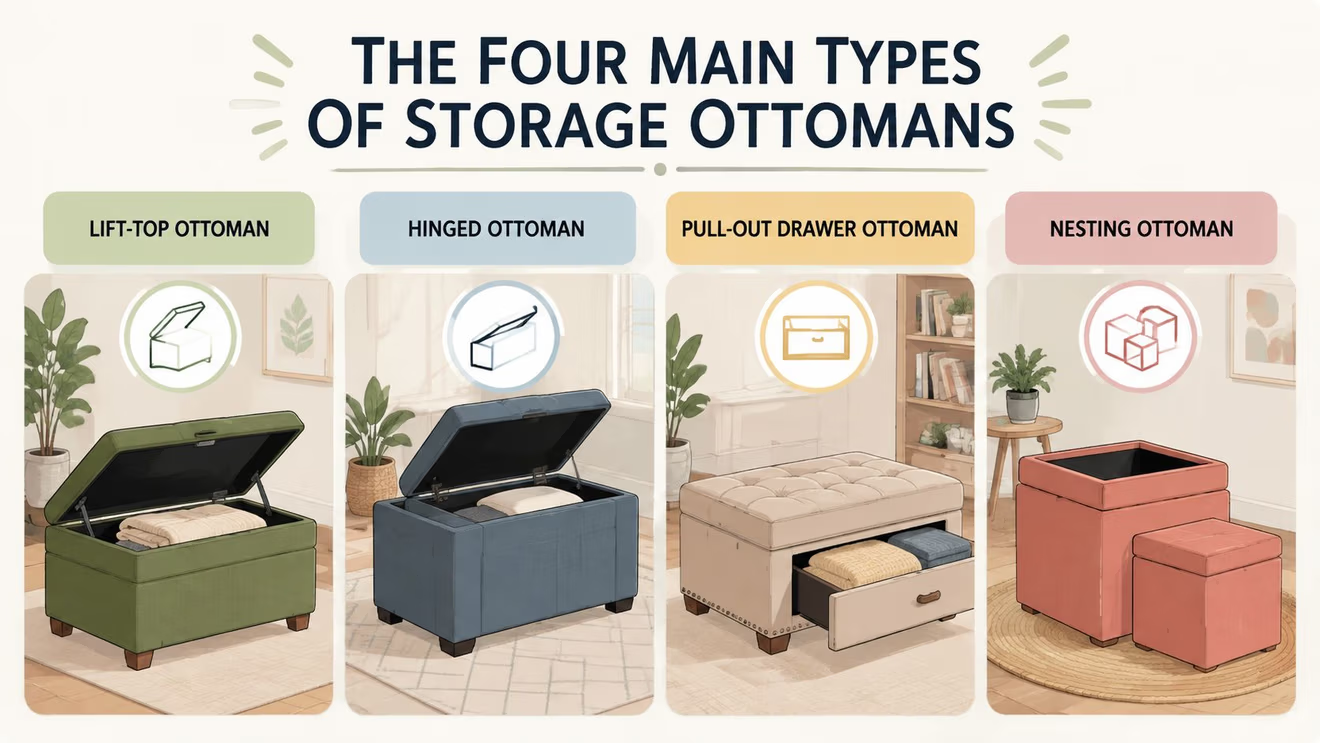
The Four Main Types of Storage Ottomans
If the ottoman must hide the blanket pile, survive the kids, and still look right in the living room, choose its opening style before choosing the fabric. Each design handles daily access, seating, and room layout differently.
Hinged ottomans
A traditional hinged ottoman gives quick access to blankets, pillows, toys, and other items used throughout the day. The top opens from one side, so placement matters. Leave room for the lid to move without hitting the sofa, wall, or nearby table.
Choose this style when the ottoman will stay in front of a sofa and the household needs frequent access. A supported hinge makes opening easier to control, especially when children are reaching inside. It also helps the ottoman serve as a dependable seat rather than a loose-lidded storage box.
Lift-top ottomans
A lift-top design usually offers a broad opening and, in some styles, raises a surface for a tray or casual work area. It suits compact living rooms where one piece must serve as a footrest, storage box, and temporary table.
Choose a lift-top when the top needs to do more than open and close. The raised surface brings drinks, books, or a laptop closer without adding another table, while the concealed compartment handles the blanket pile after family use.
Ottoman benches
An ottoman bench runs along the foot of a bed, beneath a window, or beside an entryway. Its longer shape provides seating for more than one person and stores bedding, spare pillows, or seasonal items.
This style belongs in a room with a clear wall or bed-end location. It is harder to move through a crowded living room, so measure the route and final position before buying. A bench can look settled and intentional, but only when it does not block the walkway.
Cube ottomans
A cube ottoman is compact, easy to shift, and useful beside a coffee table or sectional. It offers a quick guest seat and can move wherever the household needs an extra footrest.
Choose a cube when flexibility matters more than maximum storage. It can tuck beside a sofa, move into a conversation area, or give children a nearby seat without taking over a smaller room. BILTRITE's storage cocktail ottoman selection gives shoppers a way to compare storage-focused shapes in person.
| Style | Best For | Typical Lid |
|---|---|---|
| Hinged ottoman | Everyday blankets and toy storage | Hinged lift-up top |
| Lift-top ottoman | Small rooms needing flexible surface space | Supported lift-top |
| Ottoman bench | Bedroom, entryway, or longer seating area | Hinged or lift-up top |
| Cube ottoman | Compact rooms and movable extra seating | Removable or lift-up top |
Let the room decide. A beautiful bench that blocks a walkway fails the household, while a small cube frustrates a family storing bulky throws. Choose the style that matches the clutter, seating, and movement the room handles every day.
What Real Quality Looks Like Inside the Frame
The blanket pile, children climbing up, and daily foot traffic expose weak construction quickly. Upholstery gives an ottoman its presence, but the frame decides whether it stays solid after repeated sitting, lid opening, and shifting. A firm showroom feel should remain firm when someone sits near the center or reaches inside.
Solid wood and reinforced MDF can both work when the design supports the intended use. Material labels alone do not settle the question. Inspect the bracing, joints, corners, and hardware, then match them to the household's plan for storing blankets, handling children, and using the piece as seating.
Compare the construction, not just the silhouette
A long bench must resist flexing across its span. A cube needs stable corners because someone may sit from any direction. A lift-top needs a lid that stays aligned through repeated opening. Each shape carries stress differently.
Check these details before buying:
- Frame strength: Ask whether the structure uses solid wood, reinforced MDF, or a lighter build meant only for footrest use.
- Corner support: Look for firm corners and bracing that keep the storage box square instead of letting it twist.
- Lid alignment: Open and close the top several times. It should not scrape, shift sideways, or need a hard shove.
- Upholstery finish: Examine seams, stitching, piping, and fabric tension. Loose threads and uneven seams point to rushed finishing.
- Joinery: For solid-wood furniture, review BILTRITE's explanation of mortise-and-tenon joints to understand why joint design matters.
Load capacity makes the frame easier to judge. Reinforced MDF or solid-wood frames with metal corner guards are commonly rated around 300 kilograms, or 660 pounds, of static load capacity, while lighter compact builds are often specified closer to 150 kilograms, according to storage ottoman load guidance. Use those figures to distinguish a footrest from an ottoman built for regular seating, then follow the manufacturer's rating for the specific piece. A family storing throws and allowing children to climb nearby needs more structure than a household using the ottoman only as a leg rest.
Hinge quality changes the daily experience
Basic friction hardware can hold a lid in place, yet opening may feel awkward and closing may become unpredictable. Gas-lift or hydraulic soft-close hinges control the lid, reduce sudden drops, and make access easier for children, guests, and older adults.
Weak frames may flex more than 3 millimeters under center load, a warning sign for inadequate bracing and possible wobble, creaking, or seam failure, according to ottoman storage box construction guidance. Test the top gently. Sit only if the ottoman is designed for seating, and listen for movement.
A lid should feel controlled, the frame should feel planted, and the top should not announce every shift with a creak.
Measuring Your Space the Right Way
The ottoman has to hide the blanket pile, survive the kids, and still look at home beside the sofa. Measure before visiting the showroom. A piece that fits the catalog dimensions can still block the room once the lid opens and people begin moving around it.
Start with the sofa, chairs, recliner, and main walking routes. Record the available width and depth, then mark the proposed footprint with painter's tape or folded newspaper. Walk around the outline, check the lid's opening path, and sit in the nearby furniture. That quick test shows whether the household can reach the storage without crowding the seating area.
Use clearance rules that protect the layout
Leave 16 to 18 inches between the sofa and ottoman for comfortable leg room, and preserve a 30 to 36 inch walking path around the arrangement, as outlined in this storage ottoman furniture planning guide. These clearances matter even more in apartments, condos, and senior living spaces, where a few misplaced inches can disrupt the whole room.
Storage capacity must match the job. If the ottoman will also serve as seating, choose at least 2.5 cubic feet of interior storage, with many quality pieces offering 2.5 to 4 cubic feet. A family packing away thick blankets needs a wide, usable opening. Remotes, books, and small toys can work in a more compact compartment.
Match measurements to the household
In a family room, compare the ottoman's height and depth with the sofa seat. A top that sits too high makes a poor footrest. One that is too low or overly soft can feel unreliable when a child climbs up or a guest perches for a moment. If the ottoman will replace a coffee table, use a tray, but confirm that the tray sits securely without crowding the usable surface.
Senior households should check seat height, firmness, and placement. A supportive top at a comfortable height can make sitting down and standing up easier than a low, soft cushion. Keep the route around the seating group open, especially where a walker or cane passes. Place no lid edge or corner in that path.
Bring these details to the showroom:
- Room dimensions: Width, depth, and ceiling-height concerns if the ottoman will sit near shelving.
- Furniture measurements: Sofa seat height, chair position, and distance to nearby tables.
- Stored items: Bring a blanket, pillow, toy basket, or similar item to judge the compartment.
- Traffic needs: Note where children, pets, guests, or mobility aids move through the room.
A measurement sheet makes comparisons practical. It also keeps a modest-looking ottoman from overwhelming a smaller living room, while giving a busy household enough room to open it, use it, and keep the room looking orderly.
Safety, Soft-Close, and Sitting on It Every Day

The blanket pile needs a hiding place, the children will test every edge, and the living room still has to look pulled together. An ottoman serving all three jobs must work like real seating. Kids climb, guests perch, and older adults need steady support. A decorative lid and soft cushion cannot make up for a frame that shifts or a top that drops.
Check the load rating first
Buying guidance commonly recommends a seating rating around 250 pounds or higher for an ottoman used for everyday sitting, along with stable support across the top. Treat that rating as a suitability check. Follow the manufacturer's instructions, and do not use the piece beyond its stated capacity.
Ask one direct question: Will this piece be a footrest, occasional perch, or regular seat? If children, guests, or daily seating are part of the answer, inspect the frame, hinges, and lid support as closely as you would on a chair. That standard protects the room's appearance and the household using it.
Look for controlled lid movement
Gas-lift and hydraulic soft-close mechanisms help stop the lid from dropping suddenly. A reliable hold-open position lets you reach the blanket compartment with both hands free. Low opening force also helps older adults and anyone with limited grip strength.
Test the mechanism in the showroom. Lift the lid slowly, release it as directed, and check whether it stays open. Close it without slamming. The movement should remain controlled from the first inch to the final latch.
A frame that flexes more than 3 millimeters under center load may lack sufficient bracing, leading to wobble, creaking, or stress on the upholstery over time. The technical construction guide explains this construction check. It belongs in the same inspection as the lid and seating rating.
Choose materials for the room's mess level
Family rooms need upholstery that handles spills, snacks, pet hair, and muddy hands without making every accident a major project. Washable covers, breathable fabrics, and easy-clean surfaces support daily use while keeping the ottoman presentable.
Senior living spaces may call for a firm seat, clear edges, simple lid operation, and fabric that accepts straightforward spot cleaning. Choose the finish for the way the room operates, not for a few quiet minutes in a photograph. A storage ottoman earns its place when it hides the blanket pile, stands up to children, and still looks at home beside the sofa.
Caring for Your Ottoman So It Lasts for Years
Good care doesn't need to become another household chore. A short routine keeps the storage compartment clean, protects the upholstery, and helps the lid mechanism continue working smoothly.
Start with the inside. Vacuum dust, crumbs, and pet hair before they settle into corners or transfer to stored blankets. A soft brush attachment can remove debris from fabric without pulling at seams. The lid should receive the same attention as the seat because it collects dust in the hinge area.
Build care into ordinary routines
Rotate loose cushions when the design allows it, and vary where household members sit instead of always using the same center spot. A tray can protect the top from drinks and snacks when the ottoman doubles as a table. Spills should be blotted promptly with a clean cloth, and the care label should guide any cleaning solution.
BILTRITE's upholstery cleaning tips offer a useful starting point for matching cleaning methods to fabric and leather. Leather needs appropriate conditioning so it remains supple, while textured fabrics benefit from gentle vacuuming and careful spot treatment.
Make the finish fit the family
Households with children and pets should favor durable, tighter-weave fabrics or easy-wipe surfaces over delicate finishes that show every mark. Leather can be practical in high-traffic rooms when cared for properly, while washable or removable covers make recurring messes easier to manage.
The storage compartment also needs discipline. Overpacking can stress the lid and hardware, especially when blankets are forced into a space that wasn't designed for them. Store soft, lightweight items inside and avoid treating the compartment as a place for heavy objects.
A heavy-duty furniture option can make sense when the ottoman will face serious daily use. Look for the heavy-duty designation in a showroom, then confirm the seating rating and lid mechanism rather than relying on the label alone.
The most useful routine is simple:
- Vacuum regularly: Remove crumbs, dust, and pet hair from the top and interior.
- Blot quickly: Address spills before they spread into the upholstery.
- Protect the surface: Use a tray for drinks, snacks, and decorative objects.
- Inspect the hardware: Watch for new looseness, scraping, or unusual lid movement.
- Respect the capacity: Keep stored items within the compartment's practical limits.
A little attention protects the three jobs that made the ottoman worthwhile in the first place.
Finding the Right Piece at BILTRITE in Greenfield
A Milwaukee household shopping for an ottoman may need a compact piece for an apartment, a sturdy bench for the end of a bed, or a family-room option that can take daily sitting. Seeing those choices in person makes the differences easier to judge. Shoppers can test the lid, feel the firmness, inspect the seams, and compare scale beside other furniture.
BILTRITE has been family-owned and operated since 1928, serving the Greenfield and Metro Milwaukee community across four generations. The sales team offers over 400 years of combined furniture experience, and the showroom is closed on Sundays and Mondays to support family time, according to BILTRITE's store information.

A local showroom makes the practical checks easier
BILTRITE offers affordable, better-quality furniture, including USA-made and Amish-made options, solid-wood pieces, small-scale furniture, and heavy-duty choices. Customers can compare in-stock furniture with custom options involving fabric, leather, wood, finish, and hardware. The store also has a mattress department with over 60 models, useful for households furnishing a bedroom and considering an ottoman bench at the same time.
The sales associates are there to help shoppers match the piece to the room, the stored items, and the people who will use it. They can discuss clearance, seating support, upholstery care, and whether a particular style makes sense for an apartment, family room, or senior living space. Store details and directions are available through BILTRITE's Greenfield and area locations.
The showroom experience suits a purchase where touch and movement matter. A storage ottoman should open smoothly, sit firmly, and look at home beside the existing sofa. Those qualities are easier to judge in person than from a product image.
BILTRITE Furniture-Leather-Mattresses offers affordable, better-quality USA-made, Amish-made, and solid-wood furniture, along with storage ottomans suited to compact rooms, busy families, and daily seating. Visit BILTRITE Furniture-Leather-Mattresses in Greenfield, test the options with the experienced team, and find the piece that can hide the blanket pile, survive the kids, and belong in the living room.