Who Makes Flippable Mattresses and Why They Matter


Specialty manufacturers such as The Original Mattress Factory, Shifman, Englander, Symbol, Verlo, and Corsicana still make true flippable mattresses, while most mainstream brands stopped offering them in the early 2000s. The short answer to who makes flippable mattresses is therefore not “every major mattress company,” but a smaller group of specialty and value-focused makers that still build beds with usable sleep surfaces on both sides.
That challenges the most popular advice about mattresses today. Many shoppers hear that flippable beds disappeared because modern mattresses are better, but the story is more practical. One-sided construction became easier and cheaper to produce, while two-sided mattresses remained relevant for people who value even wear, maintenance, and a longer usable life. The important question isn't only who still makes them. It's whether the extra weight, cost, and flipping routine make sense for a particular household.
The Makers Keeping Flippable Mattresses Alive
The assumption that one-sided mattresses are the only option is understandable, but it isn't accurate. A relatively small group of specialty manufacturers still produces true two-sided beds, including The Original Mattress Factory, Shifman, Englander, Symbol, Verlo, Corsicana, Campbell Mattress, Fox Mattress, National Mattress, and DLX. These names appear in industry and retailer listings of companies that continue to support mirrored mattress construction, rather than relying exclusively on one-sided designs. (See the manufacturer list from BILTRITE Furniture)
Why the mainstream market moved away
Flippable mattresses were once the industry norm. One major manufacturer explains that when it opened in 1990, nearly all mattress manufacturers still made two-sided, flippable models, but most later stopped offering them. A separate industry history account identifies 2000, when Simmons introduced a one-sided design, as an important point in the shift. By 2007, federal mattress flammability requirements under 16 CFR Part 1633 had increased compliance costs through third-party testing and documentation, making one-sided construction easier and cheaper to produce. (Original Mattress Factory explains the history of two-sided mattresses)
The transition also had a straightforward manufacturing reason. Industry commentary says single-sided, lower-material designs could reduce production costs by roughly 20% to 30%. (Bedding Industries of America market history) That change favored lighter, simpler mattresses and helped establish the one-sided format that dominates many showrooms today.
Why specialty makers stayed with the design
Specialty manufacturers kept building flippable mattresses because the design still solves a real problem. A two-sided bed gives the owner another finished sleeping surface, allowing wear to move from one side to the other instead of remaining concentrated on a single top panel. That approach appeals to households that would rather maintain a substantial mattress than treat it as a disposable product.
The category remains a meaningful niche, not a mainstream category. Bedding Industries of America estimated that about 70% of its showroom assortment was double-sided in 2023, showing that established manufacturers can still maintain a strong two-sided lineup when durability-focused shoppers are part of the audience. (Trade coverage of double-sided mattress demand) For shoppers looking for American-made options, a guide to American-made mattress brands can help frame the search around construction and manufacturing, not just brand recognition.
How Flippable Mattress Construction Actually Works
A true flippable mattress has a usable sleep surface on both sides. The support core sits in the middle, with comfort materials arranged above and below it. That sandwich-style structure is what allows the mattress to be turned over safely. A mattress that can only be rotated from head to foot isn't flippable, even if its label uses words such as reversible or two-sided loosely.
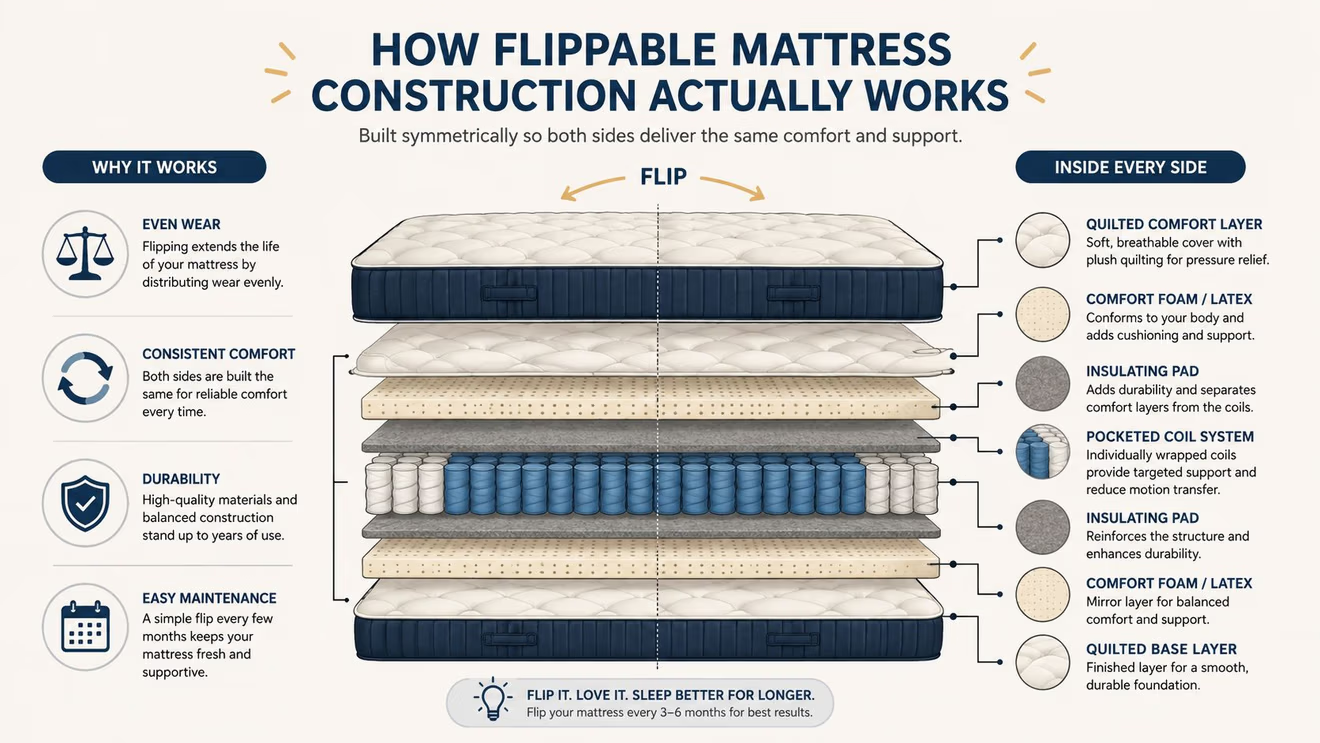
The central core carries the support load
The middle of the mattress usually contains a coil system or a dense foam support core. Around that center, the manufacturer builds comfort layers that make each face suitable for sleeping. The two sides may be closely matched, or they may provide intentionally different feels, but both sides must be finished as part of the design.
The most common true two-sided builds remain innerspring and high-density foam models, because those materials are easier to engineer symmetrically around a central core. Shoppers comparing coil systems can learn more about the support side of the equation through this guide to pocket coil mattresses. The core concept stays simple even when the materials become technical: both faces are built to receive pressure, and the center supports either orientation.
Wear spreads across two surfaces
A one-sided mattress concentrates nightly pressure on one comfort stack. A flippable mattress gives that pressure another route. The technical explanation is that the support core is sandwiched between usable comfort layers on both faces, so load is distributed across twice the sleep surface and each side compresses at roughly half the rate of a one-sided bed. Independent and retailer guidance connects this arrangement with slower body impressions and sagging, with some sources reporting an additional 2 to 3 years of usable life compared with comparable single-sided mattresses. (National Mattress explains flippable construction and longevity)
That benefit depends on proper care and a suitable build. Flipping doesn't transform an unsuitable mattress into a durable one. It gives a well-constructed mattress another way to manage wear.
Practical rule: Rotation turns the mattress end to end. Flipping turns the sleeping surface over. A true two-sided mattress is designed for both movements.
The Real Trade-Offs of Choosing a Two-Sided Bed
A flippable mattress isn't automatically better value for every sleeper. Its value depends on whether the household will use the design as intended and whether longer service matters more than lighter handling and a wider selection of one-sided models.
What buyers gain
The strongest advantage is wear distribution. Flipping and rotating move pressure away from the same areas, which can help preserve comfort and support. Independent mattress guidance describes even wear as a central reason two-sided mattresses are often expected to last longer than one-sided alternatives. (Gardner Mattress explains the wear benefit)
A second benefit is repairable thinking, even when no repair is involved. The owner has a maintenance option that a one-sided bed doesn't provide. If one side begins to feel softer, the other side can take over part of the workload, provided both surfaces are appropriate for sleeping.
What buyers give up
Two-sided construction generally requires more material and a more substantial structure. That often makes the mattress heavier, so flipping may require two adults, careful planning, or assistance from a delivery team. A person living alone, recovering from an injury, or caring for an older family member should treat handling as a serious practical consideration rather than a minor inconvenience.
The selection can also be narrower because fewer manufacturers still build the format. Buyers may need to choose among specialty innerspring, foam, or hybrid designs instead of browsing the full range of mainstream bed styles. The upfront price can also be higher because the mattress contains finished comfort materials on both faces, though the long-term value question depends on construction quality, care, comfort retention, and how long the household keeps the bed.
A simple value test
A flippable mattress may make sense when the buyer:
- Values longevity: The household prefers a bed designed for ongoing maintenance.
- Can manage the weight: There's a safe plan for flipping and rotating.
- Cares about construction: The buyer wants to understand the support core and comfort layers.
- Plans to keep the mattress: A longer ownership period makes durability more meaningful.
A one-sided mattress may suit someone who prioritizes convenience, lighter movement, or a broader range of available models. The comparison isn't about declaring one design universally superior. It's about matching the construction to the household's habits, abilities, and expectations. A detailed guide to two-sided mattresses versus one-sided mattresses can help shoppers weigh those factors before visiting a showroom.
Types of Flippable Mattresses and Who They Suit Best
Flippability is only the starting point. The materials beneath the cover determine whether the bed feels springy, cushioned, quiet, stable, or supportive at the edges. Specialty makers still build these mattresses because two usable sleep surfaces can extend a bed's useful life, but the trade-off is a more deliberate choice. You are selecting a construction, not just a feature.
Flippable Mattress Types Comparison
| Mattress Type | Best For | Key Characteristics |
|---|---|---|
| Innerspring | Sleepers who like responsive support and easier movement | A central coil system supports comfort layers on both sides, creating a traditional, buoyant feel |
| High-density foam | Sleepers who prefer steadier pressure relief and less spring response | Mirrored foam layers surround a supportive center, with the feel shaped by foam density and firmness |
| Hybrid | Shoppers seeking a blend of coil support and foam or latex comfort | Combines a spring-based core with cushioning materials on both usable faces |
| Natural latex or premium-material builds | Durability-focused buyers who want a distinct material feel | May use latex, organic cotton, recycled materials, or other specialty components in a two-sided design |
| Dual-firmness concepts | Couples or sleepers who want different sensations from each side | Some newer designs use different firmness levels on opposite faces, although the options remain specialized |
Matching the build to sleep preferences
Innerspring models suit sleepers who want a responsive surface, easier repositioning, and a familiar buoyant feel. High-density foam works better for people who prefer quieter movement and steadier cushioning around pressure-sensitive areas. Latex can provide a distinct, resilient feel, while premium-material designs may appeal to buyers who place greater importance on material choices and long-term construction.
The firmness label cannot make the decision by itself. Body shape, sleeping position, preferred surface feel, and sensitivity to pressure all change how the same mattress performs. A side sleeper may need more cushioning than a back sleeper, while someone who changes positions often may value easier movement over a slower, enveloping feel.
Hybrid construction brings coils and cushioning together on both usable faces. That arrangement can offer a middle path for sleepers who want spring support without giving up foam or latex comfort. It also creates a hidden question: will both sides provide a comfortable sleep surface, or is one side noticeably better? Test each face when possible. A mattress designed for longer service is only useful if you are willing to sleep on both sides.
Couples should assess motion transfer and firmness together. One partner's ideal surface may feel too firm or too yielding to the other, even when the underlying construction sounds promising. Dual-firmness designs can broaden the choice, but they remain specialized and may offer fewer alternatives.
A mattress earns its place through the combination of support, comfort, and usable maintenance, not through reversibility alone.
For a practical overview of how two-sided designs differ from one-sided beds, see Sleep Foundation's flippable mattress guidance.
Your Flipping and Rotating Schedule for Maximum Lifespan
A flippable mattress earns its longer service life only when you redistribute nightly pressure. A practical care plan pairs rotating every 3 months with flipping every 6 months, a schedule intended to limit sagging and body impressions. For a fuller guide, see BILTRITE's mattress flipping schedule.
A manageable care routine
Put the dates on your calendar so the mattress does not develop a permanent low spot.
- Rotate every 3 months. Turn the mattress so the head becomes the foot. Pressure then reaches different areas along the bed's length.
- Flip every 6 months. Turn it over so the opposite finished sleep surface faces upward.
- Use two people. Remove the bedding, clear nearby furniture, and move slowly. Wrestling a heavy mattress alone can strain your back or damage the bed.
- Check both surfaces. Look for uneven compression, loose fabric, unusual noises, or a change in support.
- Record the date. A calendar reminder keeps the routine from depending on memory.
Rotation and flipping solve different wear patterns. Rotation shifts pressure from the head and hip areas toward the foot and other sections. Flipping moves that pressure to the second finished surface. Together, the two movements help both sides and the full length of the mattress wear more evenly.
Signs the routine needs attention
A visible body impression, a clear comfort difference between the two sides, or new morning discomfort suggests that maintenance needs a closer look. These signs do not automatically mean the mattress has failed. Check whether the bed frame provides suitable support, then confirm that you are turning the mattress in the way its construction allows.
The work itself is part of the ownership trade-off. Flipping may be difficult for seniors, caregivers, or anyone who lacks help at home. A lighter one-sided mattress can make more sense when regular handling is unsafe or unlikely. A two-sided design offers greater use of its materials, but that advantage depends on a routine you can realistically maintain.
Why Testing Flippable Mattresses in Person Matters
A flippable mattress can sound appealing on paper and still feel wrong on the body. Firmness descriptions don't fully reveal how the comfort layers respond, how easily a sleeper can change position, or whether the mattress feels supportive at the edges. Lying down in a showroom gives shoppers information that a product page can't provide.
Construction is easier to understand in a showroom
In-person testing lets shoppers compare an innerspring surface with a foam or hybrid surface during the same visit. The buyer can notice whether the bed feels springy, stable, cushioned, or difficult to move across. It also creates an opportunity to ask whether both sides are designed for sleeping, rather than assuming that a marketing term means the mattress can safely be turned over.
BILTRITE maintains a mattress department with over 60 models, giving local shoppers a broad set of in-store comfort and construction choices. The store also emphasizes USA-made and Amish-made furniture, along with affordable, better-quality pieces for households that care about craftsmanship and practical value. (Learn how to test a mattress in person)
Personal guidance helps with the hidden costs
The sales associates at BILTRITE have over 400 years of combined experience, and their role is to help shoppers compare options without pressure. That guidance matters for a heavy two-sided mattress because the discussion should include not only comfort, but also delivery access, frame compatibility, flipping ability, and the sleeper's maintenance plan.
BILTRITE Furniture-Leather-Mattresses offers a dedicated selection of flip-able and two-sided mattresses, including options from specialty manufacturers. The family-owned business has served the Metro Milwaukee community since 1928, and its Greenfield showroom lets households test mattresses instead of choosing sight-unseen. Families can also explore small-scale furniture for tighter spaces, heavy-duty options, USA-made pieces, and Amish-made solid wood furniture during the same visit.
Come visit BILTRITE Furniture-Leather-Mattresses in Greenfield to try two-sided mattresses, compare their construction, and talk with a knowledgeable team about safe flipping and long-term comfort. The showroom is a practical place for Metro Milwaukee families to find a mattress that fits both their sleep preferences and their daily routine.