Storage Trunk Table Buying and Styling Guide


A living room can feel crowded even when it doesn't contain much furniture. Blankets collect on the sofa, board games slide under chairs, and seasonal decorations occupy a closet that's already full. At the same time, the room still needs a dependable surface for coffee, books, snacks, and a lamp. A storage trunk table handles both jobs in one practical piece.
The right choice depends less on its vintage appearance than on daily habits. A trunk table suits households that need deep, concealed storage and don't mind lifting a lid. A drawer table works better for quick access, while a lift-top design earns its place when someone regularly eats, works, or uses a laptop from the sofa. The following guide helps shoppers choose based on how the table will be used.
What Makes a Storage Trunk Table So Versatile
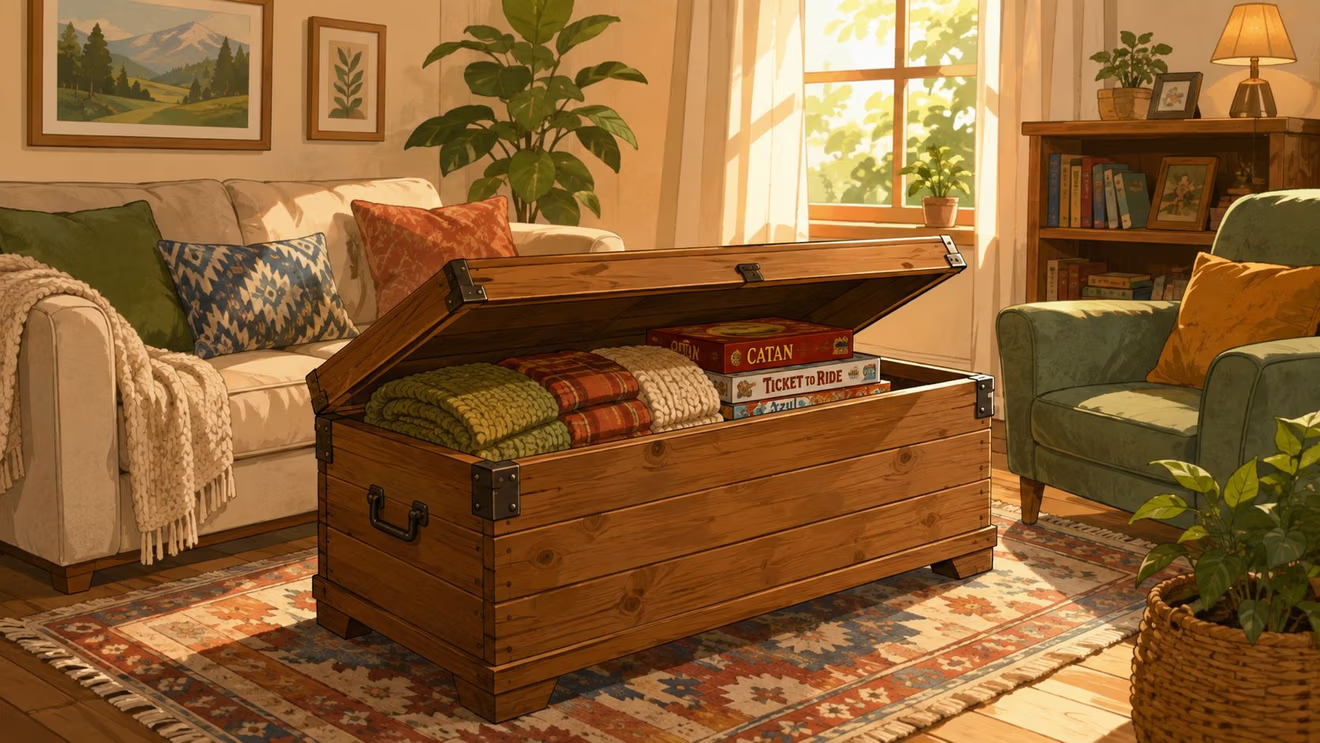
A storage trunk table combines a flat tabletop with a deep interior compartment. Its lid may be hinged or removable, and the body often includes a reinforced frame, handles, corner hardware, latches, or decorative metalwork. Unlike a standard coffee table with a shelf, the trunk hides a larger volume of belongings behind one solid exterior.
A family might use one in a living room for extra throws and children's games. Another household might place it at the foot of a bed for spare linens, or near an entryway for seasonal accessories. The surface remains available for everyday use, while the interior keeps visually distracting items out of sight.
A design with deep historical roots
Storage trunks have a long documented history. Furniture history sources describe Egyptians making wooden chests and storage boxes about 3,000 years ago, using joinery, carving, metalwork, and decorative finishes. In medieval and early Renaissance European homes, low chests also served as benches and side tables, so multifunctional storage furniture existed long before the modern trunk table.
The first American trunks appeared by the late 17th century and were largely wooden. During the 18th century, makers added more ornamentation, including brass tacks, handles, and locks. Later round trunks were lined with printed paper or newspapers, while the flat-top steamer trunk became especially popular in the 1800s and early 1900s because its shape stacked efficiently on ships and trains. These historical details are documented in the furniture history reference on storage trunks.
That flat top created the essential trunk-table formula. The piece could store belongings while serving as a table, seat, or display surface. When low-table traditions developed further, the transition felt natural. Furniture histories associate the first tables specifically designed and named as coffee tables with late Victorian Britain, while other histories connect low tables to earlier tea and coffee-serving customs. A history of the coffee table shows how the category developed alongside changing living-room routines.
Practical rule: A trunk table is most useful when the stored items are bulky, used occasionally, and worth keeping close at hand.
Why the hybrid still works
The strongest designs balance three elements:
- Storage volume: The interior can accommodate soft goods, toys, games, or decorative items that won't fit comfortably in a shallow drawer.
- Surface strength: The lid needs to function as a table, not merely as a cover.
- Visual character: Hardware, texture, finish, and proportions give the piece a presence that ordinary storage bins lack.
The trade-off is access. A deep compartment can hold more, but items placed at the bottom require more searching and rearranging. That makes a trunk table excellent for seasonal or occasional belongings, but less convenient for objects needed several times each day.
Choosing the Right Materials and Construction
Material choice decides whether a trunk table feels like a lasting furnishing or a temporary storage container. The exterior may attract attention, but the frame, lid support, hinges, interior lining, and joinery determine how well the table handles ordinary life.
Solid wood and Amish construction
Solid wood is the strongest choice for shoppers who value repairability, visual warmth, and long service. A durability guide estimates that solid wood furniture typically lasts 20 to 50 or more years with basic care, while high-quality hardwood pieces can last 100 years or more (solid wood furniture lifespan guidance). That doesn't mean every wooden trunk table reaches those ages. Finish quality, moisture exposure, hardware, and construction still matter.
Amish-made furniture deserves close attention because traditional craftsmanship often emphasizes hand-built joinery, including dovetail joints, and avoids nails and screws. Amish furniture craftsmanship has roots in the 1600s, with many Amish communities later settling in Pennsylvania, as explained in this history of Amish furniture. For a trunk table, good joinery matters around the corners, lid frame, and stress points.
BILTRITE Furniture's guide to choosing hardwood for longevity and style offers useful background for shoppers comparing species, grain, and finish. Solid wood generally brings more weight and cost, but it also gives a piece a substantial feel and more options for future touch-ups.
Metal, leather, and engineered combinations
Leather-wrapped trunks bring softness, texture, and a travel-inspired appearance. They suit traditional or collected rooms, but leather needs conditioning and protection from direct sunlight. Metal frames create a more industrial look and can reinforce the lid against sagging, although exposed metal requires attention in damp environments.
Engineered wood with steel reinforcement can offer a lighter, more affordable construction. One listed steel-frame and particleboard trunk table carries a 30 kg static top-load rating, while another heavy-duty metal-frame model using E1-grade particleboard also lists a 30 kg capacity. Those figures matter more than marketing language such as “sturdy.”
Load rating matters: If the table will hold a heavy lamp, large books, or occasional seating, shoppers should look for an explicit kilogram rating rather than relying on a general durability claim.
For humid climates, a sealed surface and protected hardware deserve priority. For homes with children, pets, or frequent gatherings, a reinforced frame and finish that tolerates cleaning are more important than delicate decorative details. Reclaimed wood can add character, but its condition, sealing, and structural integrity need inspection. Sustainable materials are meaningful only when the piece also handles the household's real demands.
Trunk Storage Versus Lift-Top and Drawer Alternatives
Hidden storage furniture doesn't all behave the same way. The best mechanism depends on what gets stored, how often it gets retrieved, and whether the tabletop must remain usable during access.
A trunk table offers deep, open capacity. Its lid can expose the full compartment, making it useful for blankets, toys, pillows, or seasonal items. The drawback is simple: belongings at the bottom come out last, so daily access can become a small chore.
A lift-top table usually raises part of the surface toward the user. That arrangement works well for a laptop, meal, writing materials, or a remote-work setup because the user gains a closer work surface while storage remains available underneath. Its mechanism adds moving parts, and the raised top can change how people move around the table.
Drawer-based storage gives the quickest access to small essentials. Remotes, chargers, coasters, and reading glasses stay organized without clearing the tabletop. Drawers usually offer less room for bulky items, but they make everyday routines much smoother.
Storage Coffee Table Comparison
| Storage Type | Access Ease | Capacity | Best For |
|---|---|---|---|
| Trunk compartment | Moderate, full-lid access but deeper items may be buried | Deep and flexible | Blankets, toys, games, pillows, seasonal décor |
| Lift-top compartment | Convenient while seated, with a raised work surface | Moderate and organized around the lift mechanism | Laptop use, meals, paperwork, compact living spaces |
| Drawers | Easiest for frequent small-item access | Limited for bulky belongings | Remotes, chargers, books, coasters, everyday essentials |
A small apartment often benefits from a lift-top design if the table must double as a work or dining surface. A family room with toys and blankets usually gains more from a trunk's open capacity. A formal sitting room may favor a trunk for its appearance, especially when the interior is used only occasionally.
The simplest test is this: if the stored item is needed every day, choose the easiest access mechanism. If it's bulky and used occasionally, deep trunk storage earns its space.
Sizing and Placement for Your Space
A trunk table should support the seating arrangement without blocking it. Oversized furniture makes circulation uncomfortable, while a table that's too small looks disconnected from the sofa and leaves little usable surface.
Start by measuring the room, the sofa, nearby chairs, doorways, and the route used to walk through the space. BILTRITE's furniture measuring guide can help households record those dimensions before visiting a showroom.
Match the scale to the room
For a small apartment or condo, a compact trunk table can provide storage without overwhelming the seating area. A narrower profile works especially well in front of a loveseat or apartment-sized sofa. Choosing one with a visually lighter base, restrained hardware, or a finish close to the surrounding furniture keeps the room from feeling crowded.
In a standard living room, the table should relate to the sofa's length and the number of seats. The tabletop needs enough room for common items, but it shouldn't extend so far that people must reach around corners to sit down. The trunk's visual weight also matters. A dark, solid body can dominate a room even when its footprint seems reasonable.
Large open-concept rooms can handle a broader trunk table with stronger hardware or a more substantial base. In that setting, the piece can define the seating zone and create a visual center between sofas and chairs.
Plan for movement and access
Placement should leave a comfortable walking path around the table and enough room to open the lid fully. A wall, sofa, or ottoman that blocks the lid turns deep storage into frustrating storage.
Other useful locations include:
- Entryways: A trunk can store seasonal accessories while providing a stable surface for keys or décor.
- Bedrooms: At the foot of a bed, it can hold extra linens, provided the lid and walking path remain accessible.
- Senior living spaces: Stable construction, manageable height, and clear circulation are more important than ornate hardware.
- Multi-generational rooms: A sturdy trunk can serve several age groups, but its lid should open smoothly and safely.
Height deserves attention if the table may serve as occasional seating. The manufacturer's stated load rating and construction should support that use. A decorative trunk isn't automatically a safe bench, so shoppers should never treat appearance as a substitute for engineering information.
Styling Ideas That Make Trunk Tables Shine
A trunk table can anchor a room's personality, but the surrounding pieces need to acknowledge its shape and texture. A reclaimed-looking wooden trunk paired with delicate glass accessories may feel mismatched, while the same trunk can look right beside woven baskets, cotton textiles, and relaxed upholstery.

Four room directions
A rustic farmhouse arrangement works with weathered wood, woven throws, ceramic accessories, and a shallow tray. The tray gives small items a home without covering the entire lid.
An industrial modern room benefits from a metal-frame trunk, clean-lined seating, and a restrained tabletop arrangement. One substantial object, such as a low bowl or sculptural piece, often looks better than a cluster of small decorations.
For traditional elegance, a leather-wrapped trunk can sit beside classic upholstery, warm wood tones, and carefully chosen books. Brass or aged hardware can echo nearby lighting or cabinet details without making the room feel themed.
An eclectic bohemian setting welcomes a vintage-inspired trunk layered with plants, colorful textiles, and collected books. The key is proportion. A busy trunk needs a calmer arrangement on top so the textures don't compete.
Keep the tabletop useful
A functional arrangement usually starts with a tray, then adds a few objects at different heights. Books can create a low stack, while a plant or lamp supplies vertical interest. Coasters should remain easy to reach, and the lid should still open without dismantling the display.
Seasonal rotation keeps the trunk from becoming visual clutter. Winter throws can move inside during warmer months, while a small arrangement of decorative objects changes with the room's needs. For additional guidance on proportion and grouping, BILTRITE's coffee table styling guide offers practical arrangement ideas.
A trunk also works outside the living room. In an entryway, it can act as a statement piece with concealed storage. At the foot of a bed, it adds structure and holds linens. In a family room, it can keep toys close without leaving them scattered across the floor.
Maintenance Tips for Long-Lasting Beauty
A trunk table doesn't need complicated care, but it does need care suited to its materials. Routine cleaning prevents grit from scratching finishes, while quick spill response keeps moisture from reaching seams and interior surfaces.
For solid wood, dust with a soft cloth and use a finish-appropriate cleaner sparingly. Harsh chemicals can dull or damage the finish. Coasters help prevent rings, and decorative objects should be moved occasionally when sunlight reaches the tabletop.
Leather needs gentle dusting and periodic conditioning made for leather furniture. Excess moisture can stain it, and direct sunlight can fade or dry the surface. Fabric-covered trunks should be vacuumed with a suitable upholstery attachment, while spills should be blotted rather than rubbed.
A simple care routine
- Everyday care: Remove crumbs, dust the lid, and wipe spills as soon as they happen.
- Seasonal care: Check hinges, latches, handles, and corner hardware for looseness.
- Interior care: Empty the compartment occasionally, allow it to air out, and investigate musty odors before storing textiles again.
- Surface protection: Use coasters, avoid dragging objects, and keep sharp accessories away from delicate finishes.
- Minor repairs: Tighten loose hardware carefully, lubricate a sticky hinge with an appropriate product, and use a matching touch-up product for small wood scratches.
Metal frames should stay dry and receive prompt attention when scratches expose unfinished areas. In a humid room, ventilation helps protect both metal and stored contents. A trunk table that develops major structural damage, unstable legs, or a lid that no longer supports itself should receive professional evaluation rather than a quick improvised repair.
BILTRITE's wood furniture maintenance guide provides further care direction for wood surfaces and finishes. Professional refinishing makes sense when the structure remains sound but the finish has widespread damage. Cosmetic wear is often manageable, but damaged joints and weakened supports affect safety and function.
Visit Our Greenfield Showroom to See Trunk Tables in Person
Photos can't show how a lid feels, how much force a hinge needs, or whether the table's height works beside a particular sofa. Those details become clear when shoppers open the compartment, inspect the hardware, test the stability, and compare the finish under showroom lighting.
BILTRITE Furniture is a fourth-generation, family-owned business serving Metro Milwaukee since 1928. The Greenfield showroom carries affordable, better-quality furniture with an emphasis on USA-made, Amish-made, and solid-wood pieces. Shoppers can ask about in-stock choices or discuss custom options involving wood, finish, fabric, leather, and hardware.
The sales associates bring over 400 years of combined experience, and their role is to help match furniture to the room and household rather than pressure a purchase. The store also has a large mattress department with over 60 models, so a visit can cover more than living-room furniture.
The showroom is located at 5430 West Layton Avenue in Greenfield, Wisconsin. Store hours and location details are available through the BILTRITE showroom information page. BILTRITE is closed on Sundays and Mondays to make room for family time, a choice that reflects its local, family-first values. White-glove delivery may be available on qualifying purchases.
A showroom visit gives shoppers the clearest answer to the main question: does the trunk table fit the household's actual routines? If frequent access matters most, another storage mechanism may serve better. If deep capacity, strong presence, and concealed organization matter more, a trunk table may be the right direction.
BILTRITE Furniture-Leather-Mattresses offers USA-made, Amish-made, solid-wood furniture, small-scale and heavy-duty options, custom choices, and a mattress department with over 60 models. Visit BILTRITE Furniture-Leather-Mattresses in Greenfield to open, test, and compare storage trunk tables with guidance from a local furniture team.