3 DAY MATTRESS SALE! TUESDAY - WEDNESDAY - THURSDAY!
LABOR DAY SALE EXTENDED ENDS SATURDAY, OCTOBER 3RD AT 5PM!
NO CREDIT CARD FEES!
1000's of Items IN-STOCK + 500 Mattresses!
Largest selection of USA Made Furniture & Mattresses + Amish Made!
FREE In-Store Design Services!
BUY LOCAL & LOVE YOUR HOME!
3 DAY MATTRESS SALE! TUESDAY - WEDNESDAY - THURSDAY!
LABOR DAY SALE EXTENDED ENDS SATURDAY, OCTOBER 3RD AT 5PM!
NO CREDIT CARD FEES!
1000's of Items IN-STOCK + 500 Mattresses!
Largest selection of USA Made Furniture & Mattresses + Amish Made!
FREE In-Store Design Services!
BUY LOCAL & LOVE YOUR HOME!
OPEN LABOR DAY | Tuesday-Thursday 10am to 6pm | Friday 10am to 7pm | Saturday 10am to 5pm | Sunday Closed To Be With Family & Friends | Monday Showroom Closed
5430 West Layton Ave, Greenfield - Metro Milwaukee
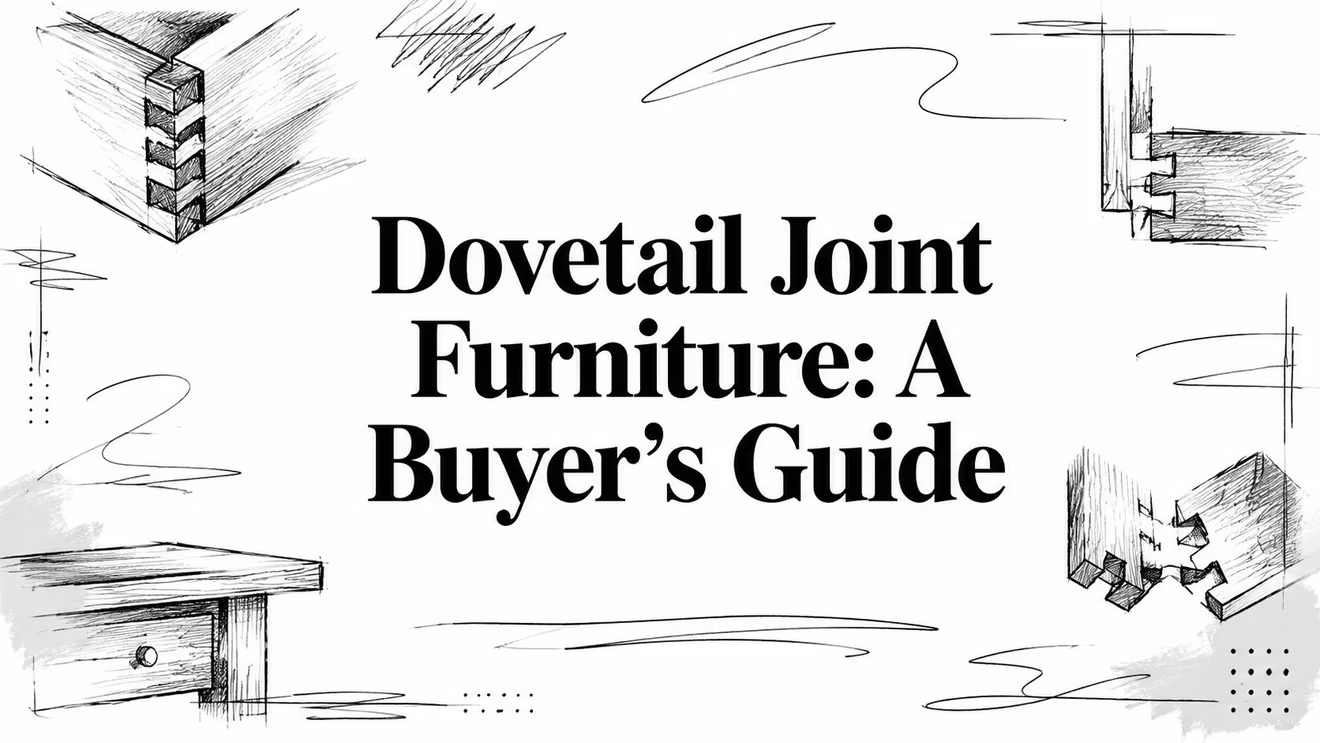
You've got a drawer in your hand that feels solid before it even reaches the stop. The front sits tight, the corner pattern lines up cleanly, and the joint doesn't wobble when you give it a little tug. That's the kind of detail shoppers should notice right away, because dovetail joint furniture often tells the truth about how a piece was built, how long it may hold up, and whether the maker cared about the part nobody sees until a drawer is open.
For families furnishing a home, that matters. A pretty finish can hide a lot, but a well-made drawer corner usually shows careful construction at the exact point where furniture gets stressed every day. At BILTRITE, where we've spent generations helping Milwaukee-area shoppers look past the surface, that's one of the first places we point to in a showroom. A drawer side that locks together cleanly can be a quiet sign that the whole piece was made to do more than look good on day one.
Why Dovetail Joints Matter in Quality Furniture
Pull open a dresser drawer and look at the corner. If the sides meet in a clean, wedge-shaped pattern, you are seeing a joinery method that has carried furniture through centuries of use, from ancient Egyptian pieces to refined cabinetmaking in Europe and beyond. Documented examples of dovetails appear in ancient Egyptian furniture from the First Dynasty, around 3000 BCE to 3100 BCE, and the joint stayed a hallmark of fine furniture work for a very long time (historical furniture joinery record).
That long history still matters to buyers today. In furniture, a dovetail corner often signals that the maker paid attention where repeated pulling, slamming, and loading would otherwise wear a piece down. Restorers and appraisers still use the joint as a clue when they are trying to date older furniture, because hand-cut dovetails usually point toward pre-industrial work while machine-cut versions point to later production.
Why shoppers should care
A buyer does not need to be a woodworker to use that clue well. When a drawer box uses dovetails, the corner itself is doing part of the holding work, alongside the glue. That helps explain why the construction feels dependable when a family plans to use the same dresser, nightstand, or cabinet day after day.
Practical rule: if the corner looks carefully fitted and the drawer feels steady in the hand, that is a better sign than a glossy finish alone.
For shoppers comparing solid-wood pieces, dovetails are one of the fastest clues that a manufacturer expected the furniture to stay in service for years, not just look good in a staged room. If that broader solid-wood picture matters too, this guide to the benefits of solid wood furniture pairs well with what the drawer corner is already telling you.
Understanding How Dovetail Joints Work
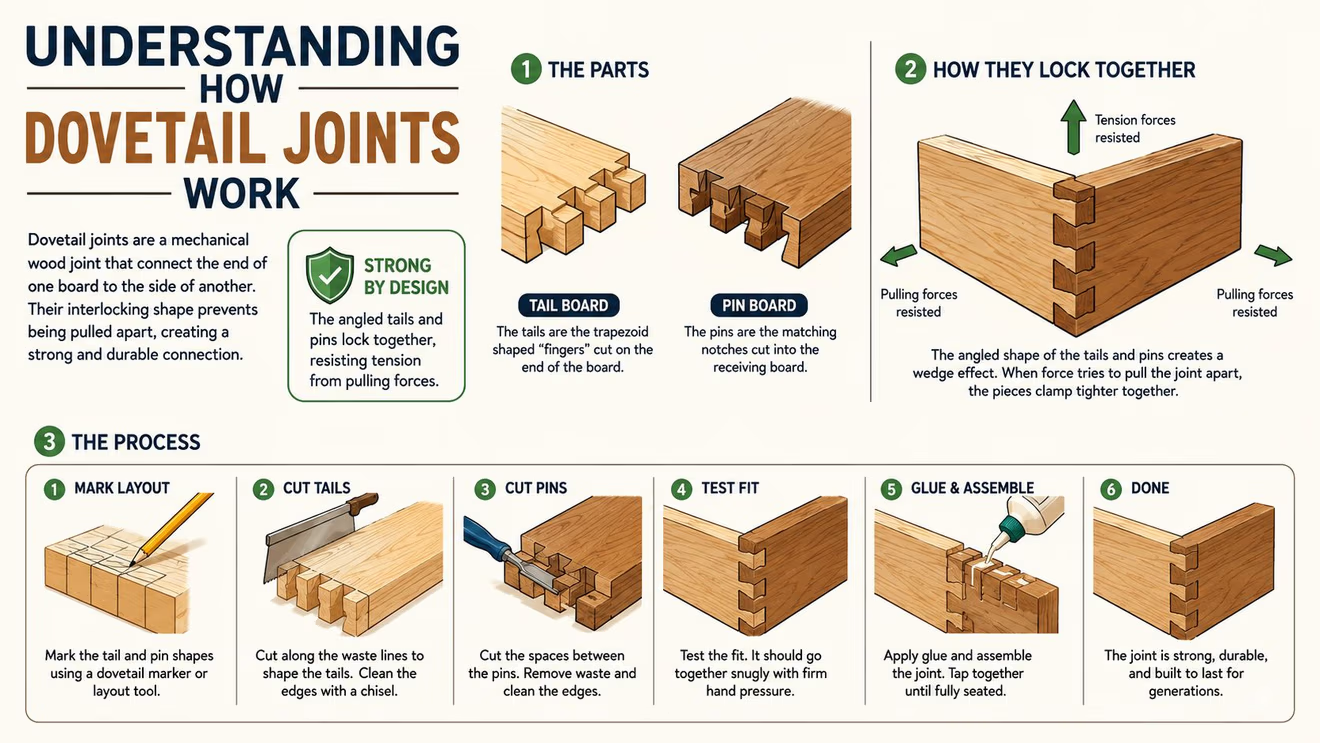
A dovetail joint works like a set of interlocking fingers. One board carries the pins, the other carries the tails, and the angled faces slide together so the parts resist being pulled apart once they're seated. The lock comes from shape, not just glue, which is why the joint has earned its reputation in drawers and casework.
The important part is how the angled faces behave under stress. Pulling force gets turned into compression across the wood fibers, so the joint resists separation by pushing the mating surfaces together rather than depending on a fastener alone. In a furniture-engineering study of a double-dovetail T-joint, the design used a 9.5° inclination angle and a fit clearance of -0.1 to 0.1 mm, which shows how tightly the parts need to meet for the lock to do its job (furniture-engineering study).
What that means in a showroom
The joint's performance depends on contact. If there are gaps, the angled cheeks don't share the load as well, and the drawer can lose that tight, confident feel when it's opened over time. That's why quality construction is about more than visible patterning, it's about consistent cutter geometry, careful fitting, and wood that matches the design.
The same logic explains why dovetails show up so often in drawers. Repeated opening puts the box under pull-out stress, and the joint turns that stress into wood-on-wood resistance instead of asking glue to do all the work. In a showroom, that's the difference between a drawer that feels like a fitted part of the cabinet and one that feels loosely assembled.
For a broader look at how drawer systems are built, the BILTRITE overview of dowel construction is a useful companion reference. It helps shoppers compare how different joinery methods support a piece, even when the outside finish looks similar.
Common Types of Dovetail Joints in Furniture
Not every dovetail looks the same, and that's a good thing. Furniture builders choose the style that fits the job, the visibility they want, and the structural demands of the piece. A drawer front that needs a clean face, a shelf that needs to lock into a cabinet side, and a box that's meant to show its joinery can all use dovetails, but they won't look alike.
Visible, hidden, and sliding forms
Through dovetails are the easiest to spot because the pattern shows on both sides of the joint. They're the classic choice when the maker wants the joinery to be part of the look, and they're often the first style buyers notice in casework and boxes.
Half-blind dovetails hide the joint from the front face, which makes them common in drawer fronts. The corner still has the same interlocking idea, but the visible side stays cleaner, which matters when the drawer face needs a smoother presentation.
Sliding dovetails work differently. Instead of a corner box connection, they lock a board, shelf, or divider into a matching groove. That makes them useful in shelving and cabinet interiors where one piece needs to resist movement in a straight path.
There are also full-blind, secret mitered, and lapped forms, each used for a slightly different balance of visibility, strength, and appearance. A furniture-history paper that focuses on through, lapped, or blind dovetails makes clear that the joint is a family of related solutions, not a single look (furniture-history paper).
The style tells a story, but the fit tells the truth.
What each type suggests to a buyer
A through dovetail usually says the maker didn't mind showing the work. A half-blind joint usually says the front mattered more visually. A sliding dovetail often signals careful interior planning, especially when shelves or dividers need to stay put.
At BILTRITE, that kind of detail comes up often when shoppers compare solid wood bedroom pieces or casegoods in person. One drawer may show visible joinery, another may hide it, but both should still feel tight, steady, and purposeful when opened.
Hand-Cut vs Machine-Cut Dovetails
A drawer can tell you a lot before you ever read the tag. Hand-cut dovetails and machine-cut dovetails can both hold up well, but they usually leave different fingerprints, and those clues help a buyer judge where the piece came from and how it was made.
What the eye can pick up
Hand-cut dovetails often show slight differences in spacing, pin shape, and symmetry. Those small irregularities are not automatically flaws. In older furniture, they often reflect a craftsperson working by hand, and long-standing cabinetmaking traditions show that this kind of joinery stayed common for refined work for many years before factory production took over.
Machine-cut dovetails tend to look more uniform. The pins and tails are usually consistent from one corner to the next, which comes from industrial repeatability. In the United States, hand-carved dovetails were the norm prior to 1870, machine cutting began to appear after 1870, and machine-cut dovetails dominated furniture making after 1890 (historical joinery transition note). That same historical note also points to a machined-dovetail patent filed in England in 1851, which fits the broader shift toward factory methods (historical joinery transition note).
How buyers should read the difference
Uniform does not mean weak, and hand-cut does not automatically mean better. The better question is whether the joinery matches the rest of the piece and the way it was built. A factory-built dresser with consistent machine-cut dovetails can still be a sensible choice, while a hand-finished Amish piece may show the small irregularities that come from careful manual work.
Buyer's cue: look for fit first, then look for style. A tidy, well-seated joint matters more than a romantic label.
It also helps to confirm the wood itself. A drawer corner can look traditional while the rest of the structure tells a different story, so this guide to spotting real wood furniture is a smart companion when the finish and grain need a closer check.
Your Showroom Inspection Checklist
A showroom visit gives buyers the clearest advantage, because dovetails are easiest to judge when a drawer is open, lifted, and handled. Start with the feel of the piece, then move to the details that reveal how carefully it was built. The goal is simple. A drawer should move smoothly, sit square, and look like its corners were made to stay together.
What to test with your hands
Open the drawer fully and close it again. The motion should feel steady, not sticky or loose, and the box should keep its shape as it moves. Then look at the corner joints from close range and check whether the tails and pins meet cleanly with no obvious gaps.
A useful fitting rule from woodworking guidance is that the test fit should go together with hand pressure, feel solid, and have no slop. That same guidance also notes that glue belongs on the angled faces, not the baseline shoulders, because trapped pressure can keep the joint from seating properly (joinery fitting guide).
Shoppers should trust the fit they feel, not just the label on the tag.
Solid wood matters too. A dovetail joint performs best when the boards are properly matched to the species and thickness, because the layout needs to suit the material rather than a generic template. That is one reason BILTRITE marks real wood and Amish-made pieces in the showroom, so buyers can compare construction details alongside the overall look.
If a piece carries a BILTRITE Amish made symbol or a USA Made icon, use that as a prompt to ask about the drawer boxes, the species, and the build method. The label by itself is not the whole story, but it can lead you to the right conversation.
Dovetail Inspection Quick Guide
What to Check
What to Look For
Why It Matters
Drawer motion
Smooth opening and closing, no wobble
A tight box usually signals careful build quality
Corner fit
Clean meeting lines, no visible slop
Gaps can weaken the mechanical lock
Joint style
Through, half-blind, or sliding, depending on the piece
The type should match the furniture's purpose
Wood identification
Real solid wood and consistent grain behavior
The joint works best when the material is appropriate
Showroom markings
USA Made, Amish made, and solid wood icons
These help buyers ask better construction questions
Good dovetail construction makes a piece durable, but it still benefits from respectful care. Solid wood moves with the seasons, so a drawer that fit tightly in one month may feel a little different when humidity changes. That's normal, and it's one reason quality furniture needs maintenance that matches the material instead of fighting it.
Keep the joint working the way it should
Dust the drawer box, rails, and corner joints so grit doesn't build up and create drag. If a drawer begins to bind, check whether the issue is dirt, seasonal swelling, or a small alignment change before assuming the joint has failed. Dovetails are repair-friendly compared with more fragile fastening methods, which is one reason they remain valued in long-lasting furniture.
Avoid harsh cleaners that can dry out wood or leave a residue on the mating surfaces. Gentle care is usually enough for a solid-wood piece, especially when the joints are already doing the heavy lifting. If a joint ever loosens, a careful repair can often restore function without replacing the whole drawer box.
What to remember over time
A dovetail corner is strongest when the fit stays clean and the wood is treated with basic respect. Don't overload drawers beyond what the construction was intended to handle, and keep an eye on small changes in fit so a minor issue doesn't become a bigger repair later.
The maintenance advice in BILTRITE's wood furniture care guide pairs well with that approach, especially for buyers who want a dresser or chest to stay useful for years. The main idea is simple, the joint was built to work with wood, so care should work with wood too.
Experience Quality Craftsmanship at BILTRITE
A dovetail corner tells a lot in a few inches of wood. It shows whether a maker cared about fit, whether the piece was built for daily use, and whether the construction supports long-term ownership instead of short-term convenience. That's why we like walking shoppers through the drawer box in person, where they can see the difference between a detail that's merely decorative and one that's built to hold.
BILTRITE Furniture-Leather-Mattresses has been family-owned since 1928, serving Greenfield and Metro Milwaukee with USA-made, Amish-made, and solid-wood furniture built for real homes. Our team is here to help you compare the details, ask the right questions, and choose pieces that fit your space and your life, without pressure.
Ready to compare drawer construction, wood quality, and everyday durability in person? Visit BILTRITE Furniture-Leather-Mattresses and see how dovetail joinery looks and feels on real furniture. Come on down to our Greenfield showroom, and let us help you find furniture that's built to stay in the home for the long haul.