Who Makes Flippable Mattresses and Why They Matter


A small group of specialty and regional manufacturers, including The Original Mattress Factory, Shifman, Englander, Symbol, Verlo, Corsicana, Campbell Mattress, Fox Mattress, National Mattress, and DLX, are the primary makers of true flippable mattresses today. These manufacturers keep two-sided construction alive while most mainstream mattress brands focus on one-sided designs.
The popular advice says modern mattresses don't need flipping, so the feature must be outdated. That conclusion misses the full story. Flippable mattresses largely disappeared because manufacturers changed how they built and priced beds, not because two usable sleep surfaces stopped making practical sense.
For a shopper who values durability, traditional support, and long-term value, knowing who makes flippable mattresses matters more than recognizing a famous label. The right model may come from a factory-direct, legacy, or regional maker that still builds a mattress for years of maintenance rather than quick replacement.
The Makers Behind Today's Flippable Mattresses
The largest mattress names aren't the place to start. True flippable mattresses are now concentrated among specialty and regional manufacturers that have kept two-sided construction in their product lines.
The current U.S. maker group includes The Original Mattress Factory, Shifman, Englander, Symbol, Verlo, Corsicana, Campbell Mattress, Fox Mattress, National Mattress, and DLX. Industry listings identify these companies as manufacturers that still produce genuine two-sided beds, rather than mattresses that can only be rotated from head to foot. Biltrite's overview of flippable mattress makers provides a useful starting point for understanding this concentrated category.
Legacy and regional production
These manufacturers don't all build the same type of mattress. Some emphasize traditional innerspring construction, while others offer pocket-coil, foam, pillow-top, tight-top, or specialty models. The common thread is that both faces are designed for sleeping, with comfort and support materials arranged around a central structure.
That difference is important. A standard one-sided mattress usually has a firm base on the bottom and comfort materials on top. A true flippable mattress must be engineered so either side can face upward without placing the sleeper directly on an unfinished support layer.
Shoppers should also distinguish between a manufacturer and a retail label. A store may sell a mattress under a private name, while the actual production comes from a regional factory. Asking who builds the mattress, whether both sides are sleep surfaces, and what materials sit beneath each cover can reveal more than the logo on the showroom tag.
Practical rule: If a salesperson says a mattress can be flipped, ask whether the underside is finished for regular sleeping. “Rotatable” and “flippable” aren't interchangeable.
BILTRITE shoppers can also explore the store's selection of American-made mattress brands while comparing construction in person. The key recommendation is straightforward: look for a maker with a clear two-sided design, a useful warranty, and a construction that matches the sleeper's preferred feel.
How Flippable Mattresses Became a Specialty Category
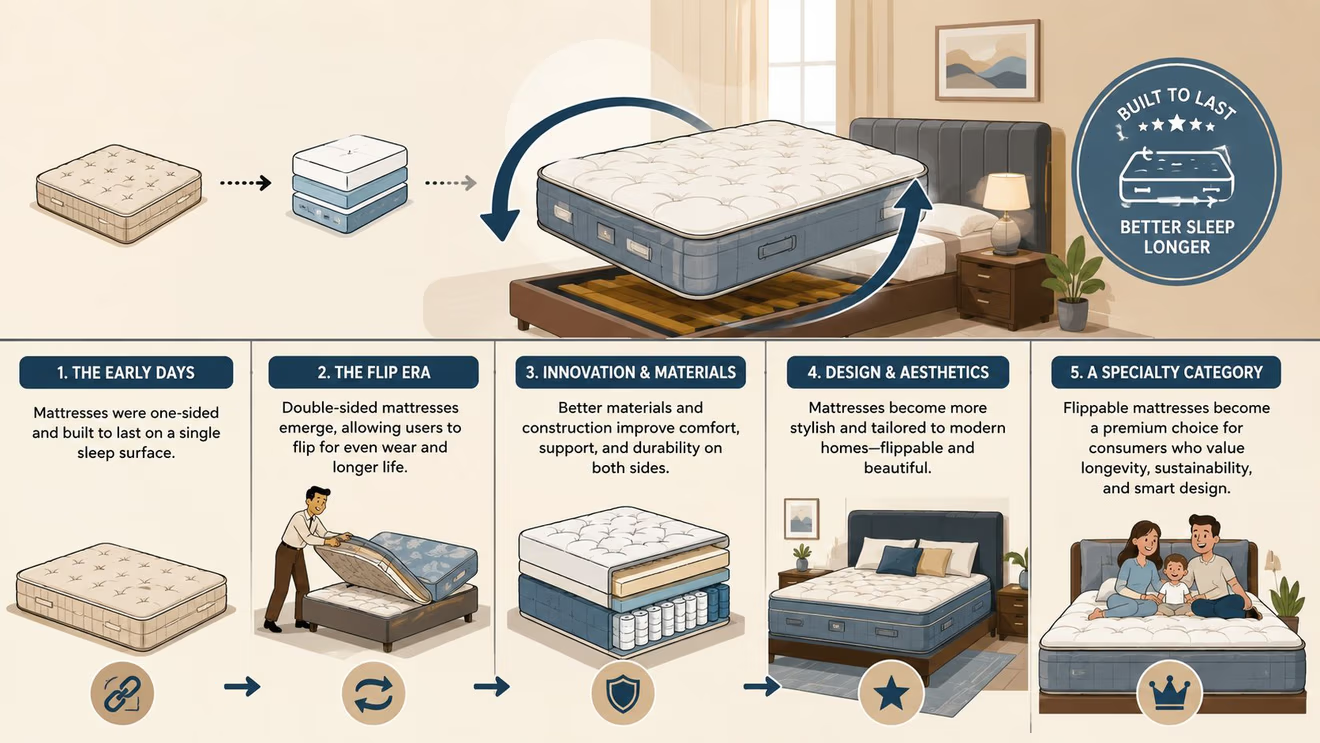
Flippable mattresses weren't always difficult to find. From the first innerspring mattress through about the 1970s, most mattresses were built with springs and cotton on both sides, according to the historical account from Beloit Mattress. Two-sided construction was the ordinary way to build a bed, and regular flipping was part of household maintenance.
The market changed as thicker comfort layers became popular. Foam, pillow-top designs, and more substantial mattress profiles encouraged manufacturers to place the support system at the bottom and build the comfort package above it. By the early 2000s, one-sided mattresses had become the dominant design.
Why manufacturers changed direction
The shift had a practical business explanation. Major manufacturers increasingly moved away from two-sided builds because one-sided mattresses were cheaper to produce and matched consumer demand for higher-profile comfort layers. A one-sided design also gives the manufacturer more freedom to place specialized foam, quilting, zoning, and other features in a single orientation.
That doesn't make one-sided mattresses poor products. It does explain why true flippable beds became concentrated among specialty makers instead of remaining an industry default. Manufacturers that continued producing them generally had a reason to emphasize durability, traditional craftsmanship, or a particular regional and hospitality market.
The wider market shows how unusual that position has become. The International Sleep Products Association reported that U.S. mattress and stationary foundation shipments, including imports, totaled $9.8 billion in 2023, down 6.8% from 2022. The association's 2023 market release places flippable mattresses inside a very large industry, but the category itself remains a specialized offering.
A Canadian retailer's current assortment illustrates the limited supply, listing ten flippable models from two manufacturers. That doesn't mean shoppers have no choices. It means the choices are more likely to come from specialty retailers, factory-direct channels, regional producers, and makers with a long history of two-sided construction.
Construction Types and Core Architectures
A flippable mattress earns its name from its architecture, not from a marketing phrase. The mattress needs usable comfort surfaces on both sides, with a support structure capable of working in either orientation.
Technical listings show several common approaches, including double-tempered Bonnell coil systems, pocket-coil platforms, high-density foam builds, and two-sided pillow-top or tight-top constructions. National Mattress's flippable collection demonstrates how makers separate product families by core design, comfort level, and durability specifications.
| Construction Type | Key Features | Best For |
|---|---|---|
| Double-tempered Bonnell coils | Traditional interconnected coil support with comfort materials on both sides | Sleepers who like a familiar innerspring feel and stable support |
| Pocket-coil platforms | Individually contained coils paired with finished comfort layers on each face | Shoppers seeking targeted responsiveness and reduced motion transfer |
| High-density foam builds | Foam support and comfort layers arranged for use from either side | People who prefer a more uniform, cushioning feel |
| Two-sided pillow-top designs | Added cushioning on both sleep surfaces | Sleepers who want a softer, more cushioned surface |
| Two-sided tight-top designs | Streamlined comfort layers without a thick, raised top | People who prefer a flatter profile and firmer presentation |
The core does the heavy lifting
A two-sided mattress may use identical comfort layers on both sides, or it may provide different feels around a central support core. The first design keeps the feel consistent as the mattress is flipped. The second gives the sleeper a choice, such as a firm side and a medium side.
Pocket coils deserve careful attention because the term describes the support method, not the entire mattress. A pocket-coil mattress guide from BILTRITE can help shoppers understand how individually contained coils differ from interconnected systems.
The construction affects both feel and value. A two-sided pillow-top may offer more cushioning, but it can also add weight and height. A tight-top innerspring may feel more direct and easier to maintain. A dense foam model may appeal to sleepers who don't want spring bounce, while a coil-based design can offer more airflow and responsiveness.
National Mattress listings connect some two-sided builds with specifications such as 25-year warranties, 884 full-perimeter pocket coils, and separate firm, medium, and plush variants. Those details shouldn't be treated as universal standards. They show how specialty makers differentiate models through core architecture and documented construction rather than relying only on surface fabric or marketing language.
Real Benefits and Honest Trade-Offs
A flippable mattress earns its keep by sharing wear between two sleep surfaces. That simple design can spread compression across more of the bed and reduce the risk that one sleeping position creates lasting impressions.
The durability history is compelling, though it is not a promise. One industry source reports that older two-sided mattresses averaged 15 years or more, while modern one-sided mattresses are often cited at 5 to 7 years. The Original Mattress Factory's discussion of two-sided mattresses offers that comparison. Actual service life still depends on materials, construction, sleeper weight, foundation quality, and regular care.
Where the design earns its keep
Choose a flippable mattress for practical reasons:
- Wear distribution: Alternating surfaces can reduce localized compression and body impressions.
- Long-term comfort: Using both sides may help the mattress preserve its original support character.
- Firmness flexibility: Some models provide different comfort levels on opposite sides, giving you another feel without replacing the bed.
- Warranty potential: Some flippable models include longer coverage, such as 10- or 20-year warranties and, in some cases, lifetime warranties, depending on the manufacturer.
Specialty makers often publish specifications such as coil counts, warranty lengths, and firmness variants to distinguish their models. Those details help shoppers compare construction, but they are not universal standards.
The trade-offs deserve equal attention. Two-sided construction puts usable materials on both faces, which usually makes the mattress heavier and harder for one person to move. The design can also limit highly contoured surfaces, elaborate zoning, or a very specific top-layer feel.
A flippable mattress rewards a household that will maintain it. It isn't a shortcut around care.
A one-sided mattress suits someone who prioritizes convenience, has limited help with lifting, or wants the widest selection of modern comfort designs. Choose a flippable model if you value traditional construction, expect to keep the bed for many years, and can handle its maintenance safely.
The benefits of a two-sided mattress come down to that exchange. Durability and serviceability improve when the mattress is built well, while the buyer accepts added weight and an ongoing care routine. At a local Milwaukee showroom, that trade-off is easier to judge in person by lifting an edge, comparing both feels, and asking how the construction is meant to be maintained.
Proper Care and Maintenance Schedule
Flipping isn't optional maintenance for a two-sided mattress. A commonly recommended schedule is to rotate and flip the mattress every 6 months, which spreads pressure across both surfaces. Amerisleep's maintenance guidance also explains that flipping and rotating can extend usable life by several years compared with leaving the mattress in one position.
A safe routine
- Prepare the room. Remove bedding, pillows, and nearby objects that could catch on the mattress.
- Check the edges. Locate the handles if the mattress has them, and make sure the path around the bed is clear.
- Rotate first. Turn the mattress so the head becomes the foot. This changes the pressure pattern before the flip.
- Flip with help. Tip the mattress onto its side, then lower it so the opposite sleep surface faces upward. Two adults should handle heavier models rather than forcing the job alone.
- Recheck the foundation. Confirm that the mattress rests on the support system specified by the manufacturer.
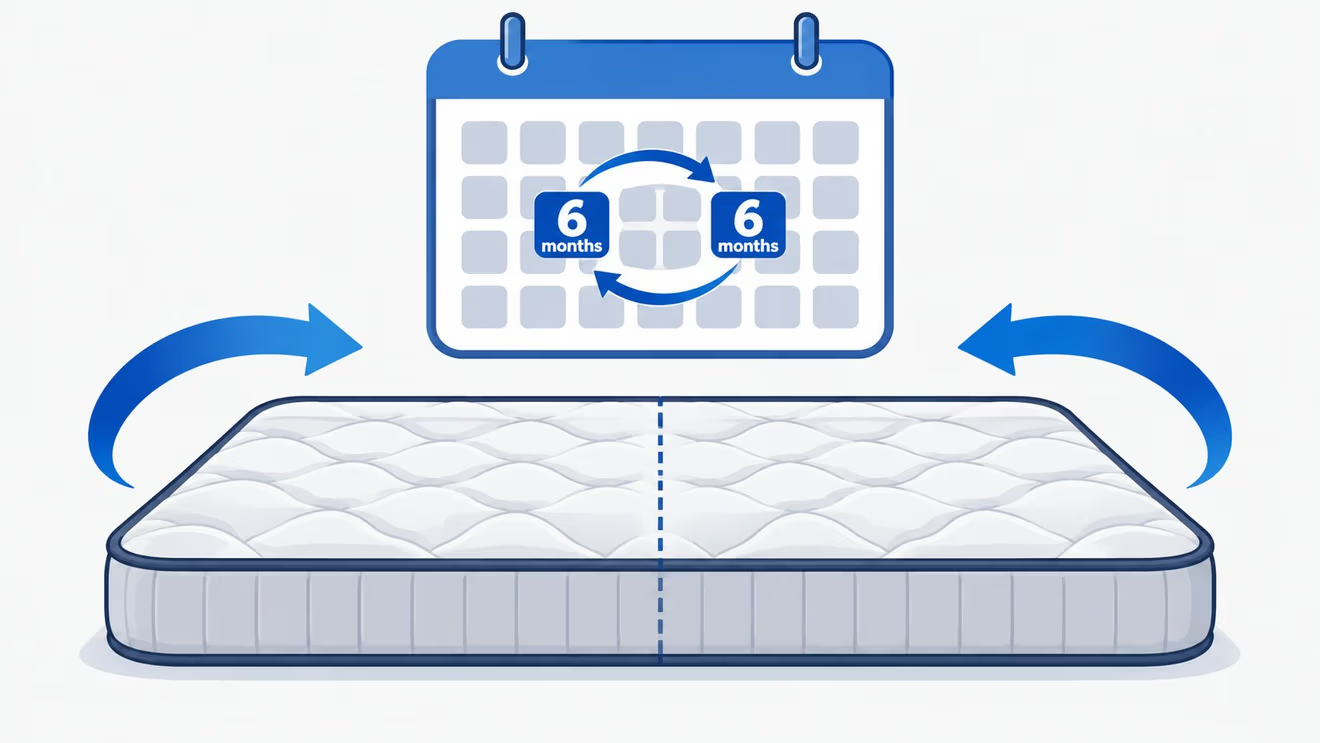
A calendar reminder tied to seasonal changes can make the habit easier. The surface also provides feedback. New impressions, uneven comfort, or a change in support can signal that the mattress has stayed in one position too long.
The foundation matters just as much as the mattress. A worn base or an unsuitable frame can undermine support and may create warranty problems. A washable mattress protector can help protect the cover from stains, while the manufacturer's care instructions should control any cleaning and support decisions. Additional guidance on how often to flip a mattress can help households establish a routine before the first signs of wear appear.
Finding Your Flippable Mattress at BILTRITE
A flippable mattress is difficult to judge from a product name alone. The shopper needs to feel the surface, compare firmness, inspect the edge support, and ask whether both sides are finished for sleeping. That's why a local showroom remains valuable for this category.
BILTRITE's Greenfield mattress department has over 60 models and more than 500 mattresses in stock, giving Metro Milwaukee shoppers room to compare traditional, specialty, and two-sided options in person. The store also lists a dedicated Flip-able and 2-Sided Mattress selection, so shoppers can focus on models designed for this type of maintenance.
What local guidance adds
BILTRITE is a fourth-generation, family-owned business serving the Metro Milwaukee community since 1928. The store emphasizes affordable, better-quality furniture, including USA-made, Amish-made, and solid-wood pieces, while its mattress department focuses on practical comfort and long-term value.
Sales associates bring over 400 years of combined experience. Their role is to help shoppers compare construction and comfort without pressure, which matters when two people describe “firm” or “plush” very differently.
An in-store visit also lets families discuss practical details that online listings can't settle. A shopper can ask about:
- Flipping help: Whether the household can safely manage the mattress.
- Foundation compatibility: Which base supports the chosen construction.
- Delivery logistics: How the mattress will move through doorways and stairs.
- Service extras: Whether qualifying purchases include white-glove delivery or old mattress removal in donatable condition.
BILTRITE doesn't sell online, and the showroom is closed on Sundays and Mondays so the family can protect time together. That local, family-first approach fits a product category built around care, durability, and honest construction. Shoppers from Greenfield, Milwaukee, New Berlin, Franklin, Oak Creek, Wauwatosa, Brookfield, and surrounding communities can visit the showroom at 5430 West Layton Avenue in Greenfield, Wisconsin to test the options and speak with the team.
Choosing a flippable mattress isn't about chasing an outdated trend. It's about deciding whether two-sided construction, regular maintenance, and specialty manufacturing fit the household's priorities.
BILTRITE Furniture-Leather-Mattresses offers a dedicated mattress department with flippable and two-sided options, plus guidance from experienced local associates who can explain construction and comfort in person. Visit BILTRITE Furniture-Leather-Mattresses in Greenfield to compare mattresses, discuss delivery and setup, and find a durable sleep option that fits the home and the family's routine.