Assembled TV Stand Guide: Smart Buying Tips for Your Home


The television is finally out of the box, the sofa is in place, and then the familiar question appears: where should the screen go, and what will hold everything beneath it? A rushed stand purchase can leave a large television overhanging the furniture, electronics crowded together, or a beautiful room feeling visually unbalanced. An assembled TV stand makes setup easier, but “assembled” alone doesn't tell anyone whether the piece fits the room, supports the equipment, or will hold up to family life.
For Milwaukee-area homeowners, the smartest approach is to treat the stand as furniture first and entertainment equipment support second. Screen width, total weight, viewing height, storage, material, delivery access, and anchoring all matter. The right piece should work for movie nights, game days, visiting grandchildren, and the next television upgrade, not just the afternoon it arrives.
What an Assembled TV Stand Really Is
An assembled TV stand arrives at the home already built, or substantially built, rather than packed as separate panels that the buyer must turn into furniture. That distinction matters when the stand is heavy, when the room has narrow doorways, or when the buyer would rather spend Saturday watching a movie than sorting hardware.
The word assembled describes the delivery condition, not the quality level. A ready-to-place console might use particle board, engineered panels, metal, veneer, or solid wood. It might have open shelves, drawers, cabinets, cord openings, or a combination of storage spaces. The label says how much construction happens before delivery, but it doesn't answer the more important questions about dimensions, strength, finish, or repairability.
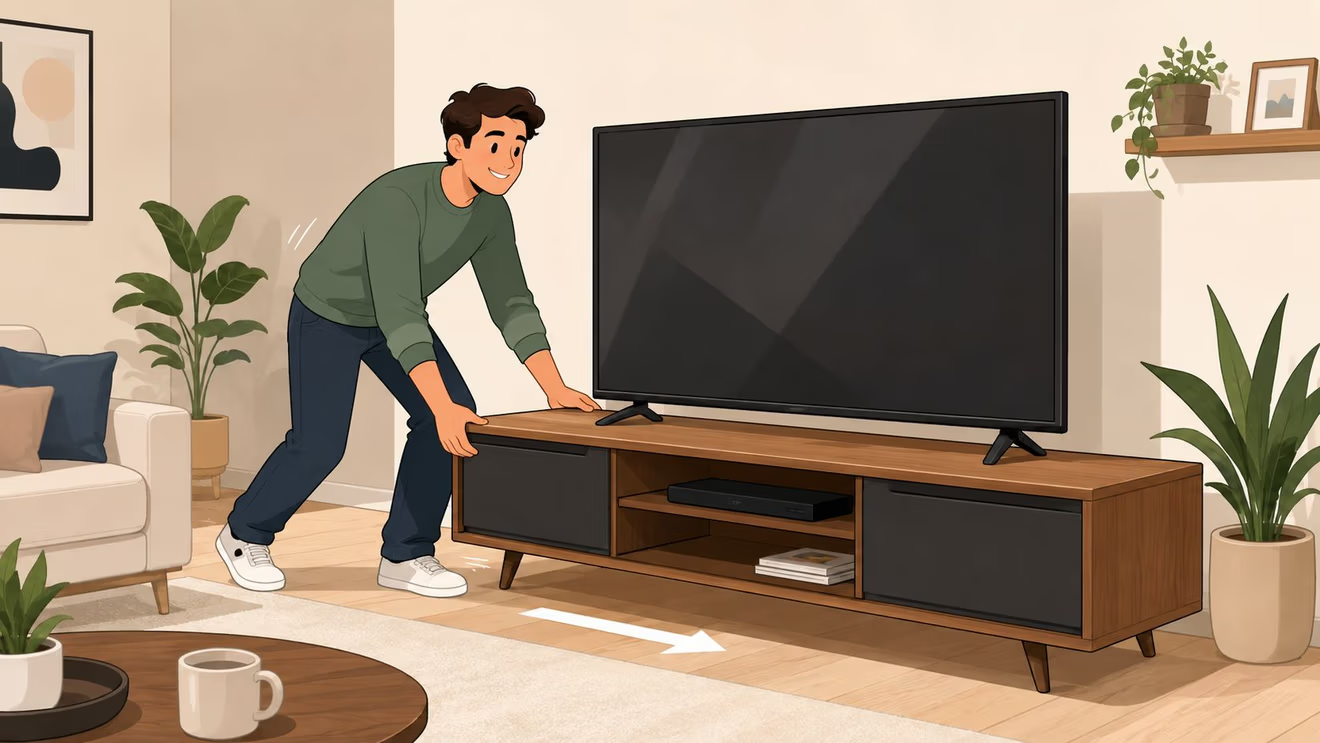
The word assembled covers several furniture types
A budget console may arrive ready to use but still rely on thin panels and basic hardware. A solid-wood media cabinet may also arrive assembled, yet feel substantially different in weight, construction, and long-term serviceability. That's why a showroom conversation should move quickly from “Does it come assembled?” to “How is it built, and what will it hold?”
The category has grown alongside larger televisions, streaming devices, sound systems, and the expectation that living rooms should support several kinds of entertainment. One market view places the global entertainment furniture market at USD 23.17 billion in 2023, with a projection of USD 35.09 billion by 2030, a 6.5% CAGR over that period. TV stands held the largest revenue share in that market, at 38.83% in 2023, while offline retail represented 58.3% of sales. Those figures come from Coherent Market Insights' television stand market overview.
That history helps explain why today's buyer sees everything from compact apartment pieces to broad, substantial entertainment centers. An assembled TV stand isn't merely a flat-pack accessory. It can be a practical starter piece, a storage hub, or a long-term furniture investment that anchors the room.
What shoppers should ask first
Before judging the style, a buyer should identify the stand's real job:
- Screen support: Will the television sit on the top, or will it use a stand-mounted bracket?
- Equipment storage: Are there consoles, speakers, receivers, remotes, or games that need open airflow or closed storage?
- Room scale: Does the piece suit a compact apartment, a family room, or a long wall?
- Future use: Could the stand remain useful if the television changes later?
A smaller room may need a shallow console, while a busy family room may benefit from sturdier shelves and enclosed storage. Buyers considering a compact television can also review BILTRITE's TV stand options for a 36-inch TV before measuring the wall and equipment.
Assembled Versus Flat-Pack TV Stands
The choice between an assembled and flat-pack TV stand usually comes down to convenience versus control. A flat-pack piece typically arrives in a smaller, lighter package and may cost less, but the buyer takes responsibility for sorting parts, following the directions, aligning panels, and tightening every joint correctly. An assembled piece usually costs more to transport and may weigh more, yet it removes much of the construction risk from the home setup.
Neither format automatically wins. The better option depends on the room, the buyer's patience, available tools, and expectations for daily use.
| Consideration | Assembled TV stand | Flat-pack TV stand |
|---|---|---|
| Setup time | Little or no furniture construction at home | Requires sorting, building, and alignment |
| Delivery shape | Larger and often heavier | Compact package, easier to carry through some spaces |
| Adjustment | Finished construction is already set | Buyer controls the assembly process |
| Quality range | Available from basic to heirloom-grade | Common across budget and midrange furniture |
| Best fit | Buyers who value convenience and immediate use | Buyers comfortable with tools and detailed instructions |
Where flat-pack can make sense
A flat-pack stand can work well for a renter, a student, a first apartment, or a household that needs a lower initial price. It can also be practical when a large assembled cabinet won't fit through a stair turn or narrow hallway. The smaller package may simplify the trip from the delivery truck to the living room.
The trade-off appears during construction. If one panel is installed backward, a screw is forced into the wrong hole, or a cam-lock joint isn't seated properly, the finished piece may rack or wobble. A stand can look complete while its joints remain unevenly loaded. Buyers who enjoy hands-on projects may have no problem with that process, but anyone who dislikes instruction sheets should factor the time and frustration into the purchase.
Why assembled furniture can feel different
A factory-assembled stand has already passed through a construction process before it reaches the home. That doesn't replace inspection, but it means the buyer isn't creating every structural connection on the living-room floor. Solid wood and Amish-made furniture also tend to be evaluated as furniture pieces rather than disposable room accessories, with attention paid to joinery, finish, hardware, and the possibility of future service.
Shop-floor advice: If the stand will support a large screen in a busy family room, convenience is only part of the value. Buyers should inspect the base, shelves, joints, and rating instead of choosing solely by package price.
The assembled format still has delivery considerations. A fully built cabinet may need a clear path, careful carrying, and enough doorway width. That's why a local showroom can be useful. Staff can discuss the actual piece, explain how it arrives, and help determine whether the furniture can reach its final room without an unpleasant surprise.
Measuring Your Space and Matching Your TV
The diagonal screen size printed on a television box isn't the measurement that determines whether a stand fits. A buyer needs the television's actual width, height with its base, and depth if the screen sits on a pedestal. The stand's width, depth, and height then need to work with those dimensions and with the room around them.
Start with a tape measure and record these details:
- Measure the TV from edge to edge. Include the outer frame, not only the visible screen.
- Measure the TV's total height. Include the feet or pedestal if it will sit on the stand.
- Measure depth and rear clearance. Account for plugs, cable bends, vents, and wall distance.
- Measure the wall and walking path. A stand can fit the wall but still block a doorway, walkway, window, or heat register.
- Measure the equipment. Soundbars, game systems, speakers, and media boxes need their own space.
Width is a visual and practical decision
A useful starting rule is to choose a stand at least as wide as the television, or somewhat wider when the room allows. Extra width creates breathing room and reduces the top-heavy look that can happen when a large screen dominates a narrow console. The stand shouldn't extend so far that it crowds windows, trim, or circulation paths, though.
Room scale matters just as much as screen size. A compact console may suit an apartment alcove, while a long wall and broad sofa may call for a wider cabinet. The television should look supported by the furniture beneath it, not perched on a piece that disappears visually.
Height and mounting details
Comfort depends on where the center of the screen lands relative to seated eye level. A low stand often works well with a sofa or recliner, but the correct height changes with the television's total height, the seating, and whether the screen is wall-mounted. A buyer should test the viewing position from the actual chair rather than relying on a showroom impression.
Wall-mounted televisions still benefit from a stand beneath them. The cabinet can hold equipment, route cables, and visually connect the screen to the seating area. For a mounted television or a stand-mounted bracket, VESA refers to the spacing pattern of the mounting holes on the back of the screen. The bracket, screw length, washers, and spacers must match that pattern and the television manufacturer's specifications. A universal stand manual specifically advises selecting hardware based on the TV's VESA layout and using the television manual to determine screw length, with a stated 80-pound capacity in that product's specifications. The relevant details appear in this universal TV stand manual.
For room-planning help, shoppers can also use BILTRITE's sofa and television placement guide. The practical habit is simple: measure the current screen, then leave enough flexibility for a future upgrade without making today's room feel cramped.
Materials and Weight Capacity That Last
A family room in Milwaukee may ask more of a TV stand than a quiet showroom display. Children may lean near the cabinet, a soundbar may sit below the screen, and books or game equipment may fill the shelves. Material choice affects how the assembled stand looks, feels, ages, and handles that routine.
Solid wood offers visible grain, repair potential, and a substantial presence. Veneered wood places a real wood surface over a stable core. Engineered panels can provide a consistent finish at a lower commitment, while metal frames suit a lighter, more open appearance. The right choice depends on the room, the load, and how long you expect to keep the furniture.
Read the rating as a complete-use limit
A weight rating may apply to the television, top surface, shelf, or a specific configuration. Those limits cannot be treated as interchangeable. One published modular TV stand guide lists a 25-pound maximum TV weight for a stacked configuration and a 60-pound maximum for a side-by-side configuration. Another lists a 100-pound maximum TV weight and top shelf limit, with the middle and bottom shelves limited to 50 pounds each. These examples appear in published TV stand load guidance.
Add the television, soundbar, consoles, speakers, books, and décor before judging capacity. Items stored high on the stand also raise its center of gravity. If the specifications separate TV, top, and shelf loads, check each limit independently.
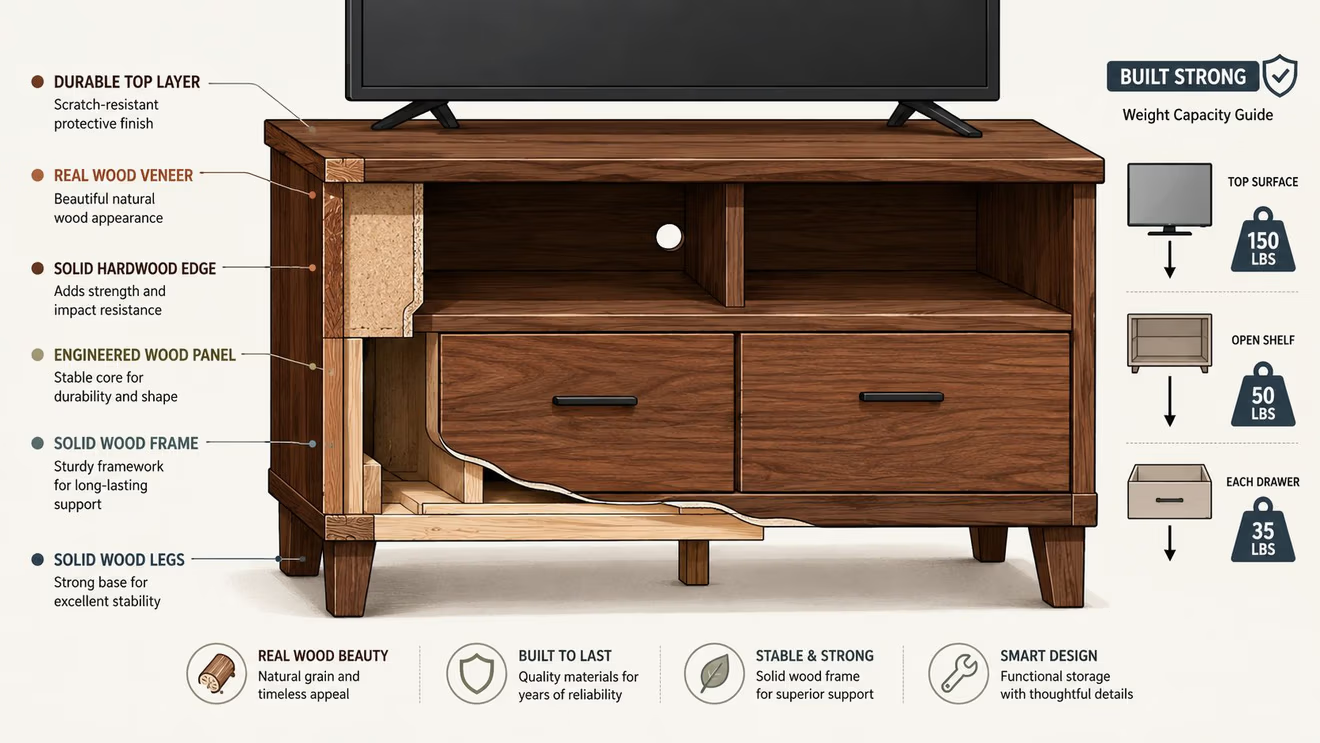
Match construction to the household
Particle board and engineered wood can suit a budget-conscious buyer who wants a clean finish. Metal works well in a modern room with visible legs or open shelving. Solid wood makes sense when the stand will face years of family use, frequent rearranging, heavy equipment, or changing décor.
The solid wood furniture guide explains why material affects long-term furniture value. At BILTRITE Furniture-Leather-Mattresses, the showroom includes USA-made and Amish-made pieces, along with compact options for apartments and heavier furniture for households needing added support.
Seeing grain, joinery, thickness, and finish in person can clarify differences that photographs hide. A showroom visit also lets you compare the stand's scale with your room and consider whether it feels like furniture you will keep, rather than a temporary accessory.
Assembly Setup and Delivery Options
Even a stand described as assembled needs a delivery plan. The cabinet may arrive ready to place, or it may require a small amount of final work, such as attaching feet, handles, brackets, or a top section. Before delivery day, the household should clear the route from the entry door to the final wall and check door widths, stair turns, elevator space, and tight corners.
A piece that fits the living-room wall may still fail at the front door. Measuring the path is less exciting than choosing a finish, but it prevents the kind of delivery problem that no amount of rearranging can solve.
Prepare the room before the furniture arrives
Choose the final location before the truck arrives. Remove fragile décor, roll up loose rugs, protect flooring where needed, and make sure outlets and cable routes are accessible. If the television is already in the room, decide whether it should be moved before the stand comes in.
For any remaining assembly, manufacturer guidance generally calls for a flat, soft work surface near the final location. Bolts should be inserted loosely first, the piece aligned, and the hardware fully tightened only after the panels sit square. Heavier units should be handled by two people. These steps reduce racking, uneven joint pressure, misalignment, and stress around cam-locks or screw joints, as described in this published TV stand assembly guidance.
Before the truck arrives: Clear the route, measure the turns, protect the floor, and decide where the power and cables will run.
Ask what delivery actually includes
“Delivery” can mean different things from one furniture seller to another. A buyer should ask whether the service includes carrying the stand inside, placing it in the room, removing packaging, completing final setup, and taking away an old piece. In-home or white-glove service can be especially helpful with a heavy solid-wood cabinet or a narrow stairway.
For Milwaukee-area households, BILTRITE provides information about white-glove delivery service, including free white-glove delivery on qualifying purchases. The store also carries come-apart furniture options for challenging doorways, though the exact delivery arrangement should be confirmed before purchase.
A delivery crew can place the furniture, but the household still needs to confirm that the stand sits level, doors open, ventilation remains clear, and the television and equipment stay within their stated limits.
Stability, Anchoring, and Everyday Care
A stand can be assembled correctly and still be unsafe if the floor slopes, the furniture is overloaded, or the screen sits too far forward. Stability depends on the base footprint, total weight, center of gravity, surface, and restraint. Larger screens and homes with children or pets deserve extra caution.
A useful safety benchmark comes from InterNACHI, which states that Underwriters Laboratories requires furniture units to remain upright on a 10-degree angle with 70 pounds on top, simulating television weight. The full explanation appears in furniture and television tip-over guidance. The benchmark illustrates why a wide, stable base matters, but it shouldn't replace the manufacturer's own rating.
Anchor the furniture whenever possible
Health Canada recommends attaching the television to both the stand and the wall when possible. A restraint such as a strap or cable can help limit forward movement, and guidance summarized by SGS also recommends anchoring TV stands or similar furniture to a wall or floor when possible. Those recommendations are explained in Health Canada's tip-over safety guidance.
The restraint must be installed according to its instructions and attached to a suitable structural point. Anchoring is especially important when a television is large, the cabinet is shallow, or children may pull on drawers and doors.
Simple care prevents small problems from becoming big ones
Solid wood usually benefits from gentle dusting with a soft cloth, protection from prolonged direct sunlight, and prompt cleanup of spills. Harsh cleaners can affect the finish, so the care instructions supplied with the furniture should take priority.
If wobble appears, check the floor first, then confirm that the hardware remains tight and the shelves are seated correctly. Stripped holes may require approved repair hardware or professional service rather than a larger screw forced into the opening. Misaligned doors or shelves often point to uneven leveling or joints that were tightened before the cabinet was square. A hardware check once a year gives the household a chance to catch movement before it becomes a safety concern.
Why Buying Local in Greenfield Pays Off
A family in Greenfield may have measured the wall correctly and still feel uncertain about the right assembled TV stand. In a showroom, a real person can compare the room's needs with the furniture itself. Width, depth, finish, storage, and material are easier to judge at full scale than on a screen. Solid wood also has a different weight and surface feel from an engineered panel, differences that become clear when shoppers can touch the finish and inspect the construction.
A TV stand is a long-term furniture purchase, not merely a place to set a television. BILTRITE Furniture-Leather-Mattresses is a fourth-generation, family-owned business serving Metro Milwaukee since 1928. Its sales associates bring over 400 years of combined experience, giving shoppers a knowledgeable sounding board without turning the visit into a sales contest. Buyers can discuss compact furniture for apartments, heavy-duty pieces for active households, and USA-made or Amish-made construction for long-term use.
Local help makes unusual rooms easier
A store visit brings practical questions into the conversation. Staff can compare a current television with a future screen, account for a soundbar and game equipment, check whether storage remains accessible, and consider a narrow doorway. Those details matter because a stand that fits the wall may still fail the daily-use test if doors cannot open fully or equipment has nowhere to sit.
In-stock furniture offers immediate possibilities. Custom orders can provide choices in fabric, leather, wood, finish, and hardware across the broader furniture selection. Seeing samples in person also helps shoppers understand how a finish may look under the room's lighting.
The television-stand category offers many choices across major markets, which makes hands-on guidance more useful. A showroom visit helps connect those choices to the household's actual screen, room traffic, storage needs, and plans for future equipment.
Families researching family-owned furniture stores near Milwaukee can visit the Greenfield showroom to see furniture at full scale and discuss delivery before deciding. BILTRITE is located at 5430 West Layton Avenue in Greenfield, Wisconsin, and the store is closed on Sundays and Mondays to support family time. That schedule reflects the store's local, family-first approach.
BILTRITE Furniture-Leather-Mattresses offers assembled entertainment furniture alongside USA-made, Amish-made, solid-wood, small-scale, and heavy-duty pieces for real family rooms. Visit BILTRITE Furniture-Leather-Mattresses in Greenfield with the television measurements and room dimensions. The local team can help match the stand to the home, the equipment, and the way the family lives.