3 DAY MATTRESS SALE! TUESDAY - WEDNESDAY - THURSDAY!
LABOR DAY SALE EXTENDED ENDS SATURDAY, OCTOBER 3RD AT 5PM!
NO CREDIT CARD FEES!
1000's of Items IN-STOCK + 500 Mattresses!
Largest selection of USA Made Furniture & Mattresses + Amish Made!
FREE In-Store Design Services!
BUY LOCAL & LOVE YOUR HOME!
3 DAY MATTRESS SALE! TUESDAY - WEDNESDAY - THURSDAY!
LABOR DAY SALE EXTENDED ENDS SATURDAY, OCTOBER 3RD AT 5PM!
NO CREDIT CARD FEES!
1000's of Items IN-STOCK + 500 Mattresses!
Largest selection of USA Made Furniture & Mattresses + Amish Made!
FREE In-Store Design Services!
BUY LOCAL & LOVE YOUR HOME!
OPEN LABOR DAY | Tuesday-Thursday 10am to 6pm | Friday 10am to 7pm | Saturday 10am to 5pm | Sunday Closed To Be With Family & Friends | Monday Showroom Closed
5430 West Layton Ave, Greenfield - Metro Milwaukee
A lot of living rooms already have the same little problem. The ottoman is comfortable, the sofa is comfortable, everybody wants to put their feet up, and then somebody tries to balance a coffee mug on a cushion. That's when the whole room starts acting like it needs a real surface.
A large wood tray for ottoman use fixes that fast. It turns a soft landing spot into a place for drinks, books, remotes, and the kind of everyday clutter that always seems to gather right where everybody sits. It also looks more finished, which matters in a room that gets used hard.
At BILTRITE, a fourth-generation family business serving Metro Milwaukee since 1928, homes get looked at through a practical lens first. A tray shouldn't just look nice in a photo. It should sit steady, work with the ottoman underneath it, and hold up to real family use.
The usual scene goes like this. The family room looks good, the ottoman is big and inviting, and then movie night starts. A snack bowl lands on one side, a remote disappears into the cushion, and somebody says, “There's nowhere to set this.”
That's why this category has taken off. The modern tray isn't just a serving piece anymore. It has moved into the home-accessory world, where oversized handcrafted models can sell for $145 and collect 1,441 reviews, while custom builds can stretch to 36-inch by 36-inch to cover a full ottoman top and create a broad, usable surface, as shown in this oversized wood ottoman tray listing.
A tray changes how the room works. It gives the ottoman a job beyond being a footrest. It becomes the place for coffee in the morning, board games after dinner, and a stack of books when the room needs a little order.
A good tray doesn't fight the ottoman. It gives that soft piece a firm purpose.
That's one reason families keep coming back to this idea. The ottoman still feels relaxed, but it starts doing some of the work a coffee table usually handles. In a busy home, that's a smart trade.
For rooms that need a little help pulling comfort and function together, BILTRITE's living room styling ideas can help tie the whole setup together without making it feel stiff or overdone.
Getting the Measurements and Shape Just Right
A tray can be gorgeous and still be wrong. If it's too small, it looks lost. If it's too big, it feels clumsy and leaves no room for the ottoman to do what it's supposed to do.
Start with the footprint
The easiest sizing rule is also the one that works most often. Choose a tray that's about two-thirds the width of the ottoman. That guideline keeps the setup balanced and leaves usable space around the tray. It also helps avoid the crowded look that happens when the tray consumes the whole top, as noted in this wooden ottoman tray sizing guide.
Three quick measuring checks make the decision easier:
Measure the top surface only. Ignore the widest part of rolled arms or overstuffed edges. The tray sits on the usable top.
Check the flattest area. Some ottomans crown in the middle. That matters more than the outside dimensions.
Leave breathing room. A little open space around the tray keeps the piece practical and easier to lift.
For households that aren't sure they're measuring furniture correctly, BILTRITE's guide on how to measure furniture is worth a look before buying anything substantial for the room.
Practical rule: If drinks or snacks will live on the tray, raised edges are not optional. They help contain small spills and stop items from sliding during normal use.
Match the shape to the ottoman
Shape changes the whole feel.
Ottoman shape
Tray shape that usually works
Why it works
Square
Square or large round
Keeps the center grounded
Rectangle
Rectangle
Follows the longer lines cleanly
Round
Round
Softens the room and feels natural
A square ottoman usually looks strongest with a square tray if the goal is a furniture-like, structured look. A round tray on a square ottoman softens things up and can feel less formal. Rectangular ottomans almost always want a rectangular tray unless the room already has a lot of hard lines and needs some curve.
The final check is family use. A home with kids, snacks, and regular lounging should lean toward a tray with raised sides and enough hand space to move it easily. A decorative tray with a very low rim may look nice, but it won't be much help once the mugs come out.
Selecting the Best Solid Wood for Your Home
A tray's appearance distinguishes low-quality options from those that enhance a well-furnished room. Material matters. A lot.
The tray market now covers a wide spread, from handcrafted acacia designs to decorative styles sold through major retailers, which shows how the ottoman tray has grown from a simple accessory into a broader lifestyle product, as reflected in this round wood ottoman tray retail listing. That variety is nice, but it also means buyers have to separate solid material choices from pieces that are mostly about surface appearance.
Why real wood changes the feel
A tray made from real solid wood has presence. It adds warmth, grain variation, and a furniture-quality look that works especially well when the room already includes wood end tables, entertainment pieces, or dining furniture nearby.
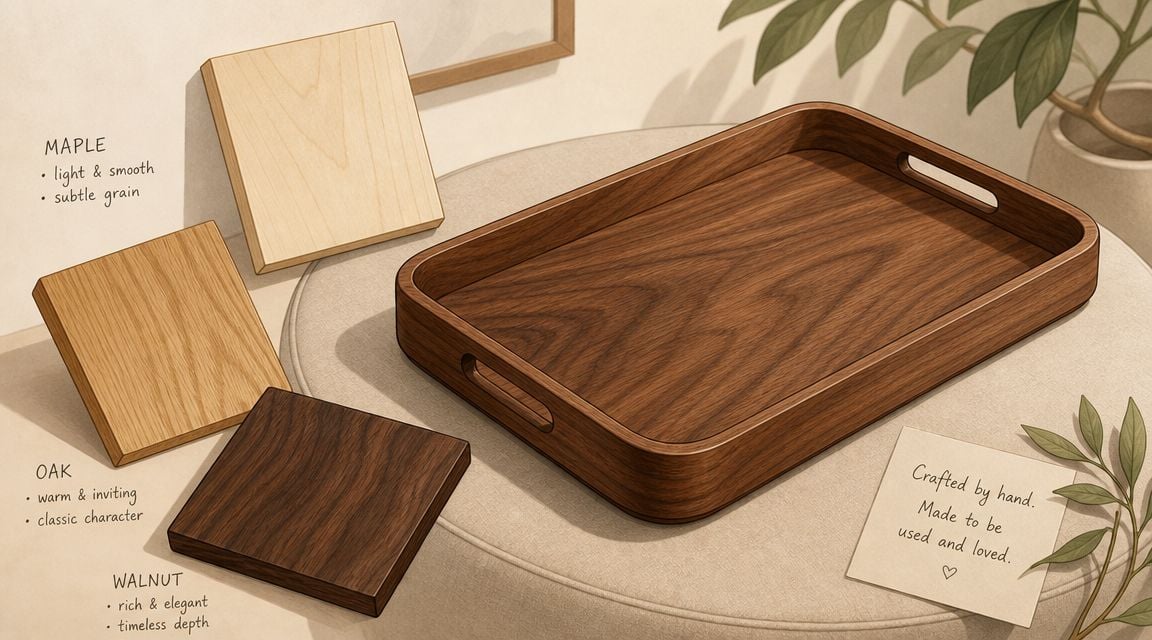
For homes that value American craftsmanship, Amish-made and USA-made wood pieces make a lot of sense. They tend to fit better with the kind of solid, lasting furniture people want to keep for years rather than replace after a season or two. BILTRITE's article on the best wood for furniture gives a helpful overview of how different woods behave in the home.
A few wood choices usually stand out:
Oak works well for busy family rooms because it has a classic, sturdy look.
Maple feels cleaner and smoother, which suits lighter, simpler spaces.
Cherry brings richer color and a more traditional furniture feel.
What to look for in the finish and build
A tray gets touched, lifted, wiped down, and bumped around. The finish needs to be ready for that.
Look for these signs of a better-built piece:
Smooth edges: Rough corners feel unfinished fast.
Consistent finish: The stain or clear coat should look even across the base and rim.
Sturdy side walls: Thin, flimsy edges don't inspire confidence on a cushioned ottoman.
Balanced weight: Solid wood should feel substantial, not awkwardly heavy on one side.
A tray should feel like a small piece of furniture, not party decor pretending to be furniture.
That's the standard worth aiming for. If the tray is going to live in the center of the room every day, it should earn that spot.
Keeping Your Tray Stable and Your Ottoman Safe
This is the part too many style articles skip. A tray can be handsome, well-sized, and still be a headache if it slides, rocks, or leaves marks on the ottoman.
A major gap in most shopping content is the practical question of whether a large wood tray is safe and practical on soft, modular, or lift-top ottomans. Most listings focus on dimensions and appearance, while buyers are left wondering about wobble, load-bearing, scratching, and long-term upholstery wear, as reflected in this search results page for ottoman trays.
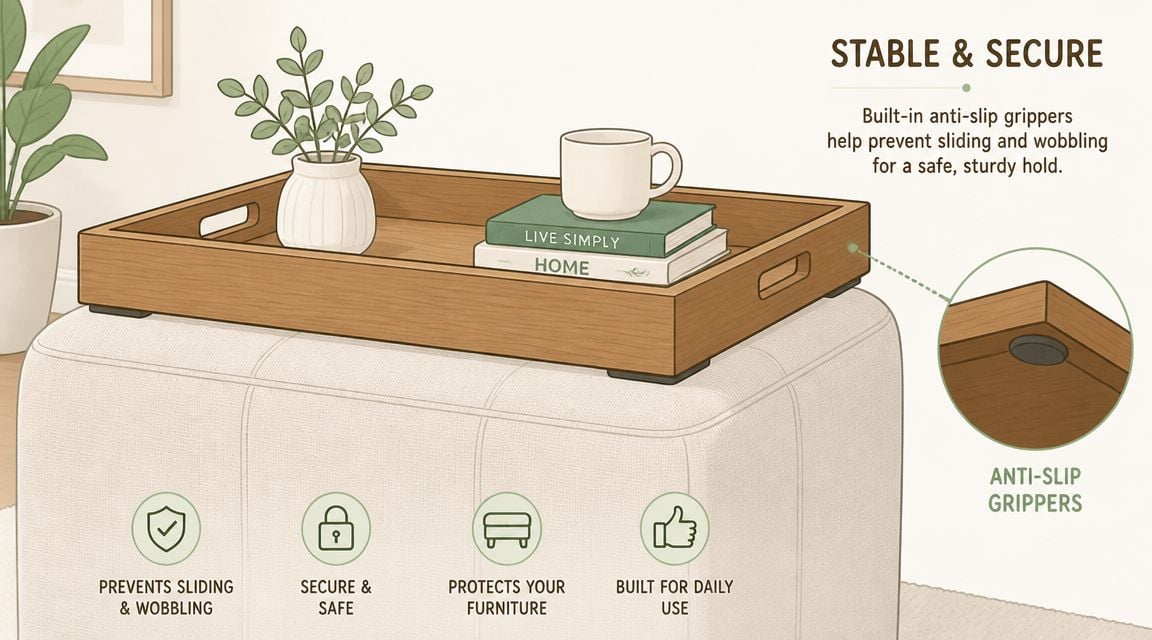
Soft fabric ottomans need grip
A plush fabric ottoman is comfortable because it gives a little. That same softness can make a tray unstable if the base isn't broad enough or if the cushion compresses unevenly.
The fix is usually simple:
Use non-slip pads under the tray. They help the tray stay put instead of skating across the fabric.
Keep heavier items centered. A mug near the corner of a tray on a soft cushion is asking for trouble.
Test the tray before regular use. Set it down, press lightly on different spots, and see if it rocks.
If the ottoman has tufting or deep buttons, stability becomes trickier. In that case, a tray with a wider, flatter base generally behaves better than one with narrow feet or a recessed underside.
Leather, modular, and lift-top ottomans need extra caution
Leather ottomans create a different problem. The surface is smoother, so the tray may slide more easily, especially if the leather has a slick finish. Soft modular ottomans can shift under weight, and lift-top styles add one more concern because the mechanism or lid may not feel secure with a substantial tray sitting on top.
A quick decision guide helps:
Ottoman type
Main concern
Smart move
Plush fabric
Wobble
Add grip pads and keep loads light
Leather
Sliding
Use protective grippers and avoid abrupt movement
Modular
Shift and separation
Use a lighter tray or custom-fit size
Lift-top
Stress on moving top
Keep weight modest and remove tray before opening
If an ottoman top moves, sinks deeply, or opens upward, a heavy tray shouldn't stay loaded while someone tries to reposition it.
That's the honest answer. Not every ottoman wants a heavy, solid tray every day. Some do much better with a lighter piece, a custom size, or a tray used only when needed. A good match is about stability first and looks second.
Styling Your Ottoman Tray Like a Pro
Once the tray fits and sits safely, the fun starts. A tray can organize the room without making it feel staged.
Use a simple grouping that stays functional
Most trays look better when they hold a few things with different heights instead of a bunch of little objects scattered around. The easiest approach is a loose grouping of three.
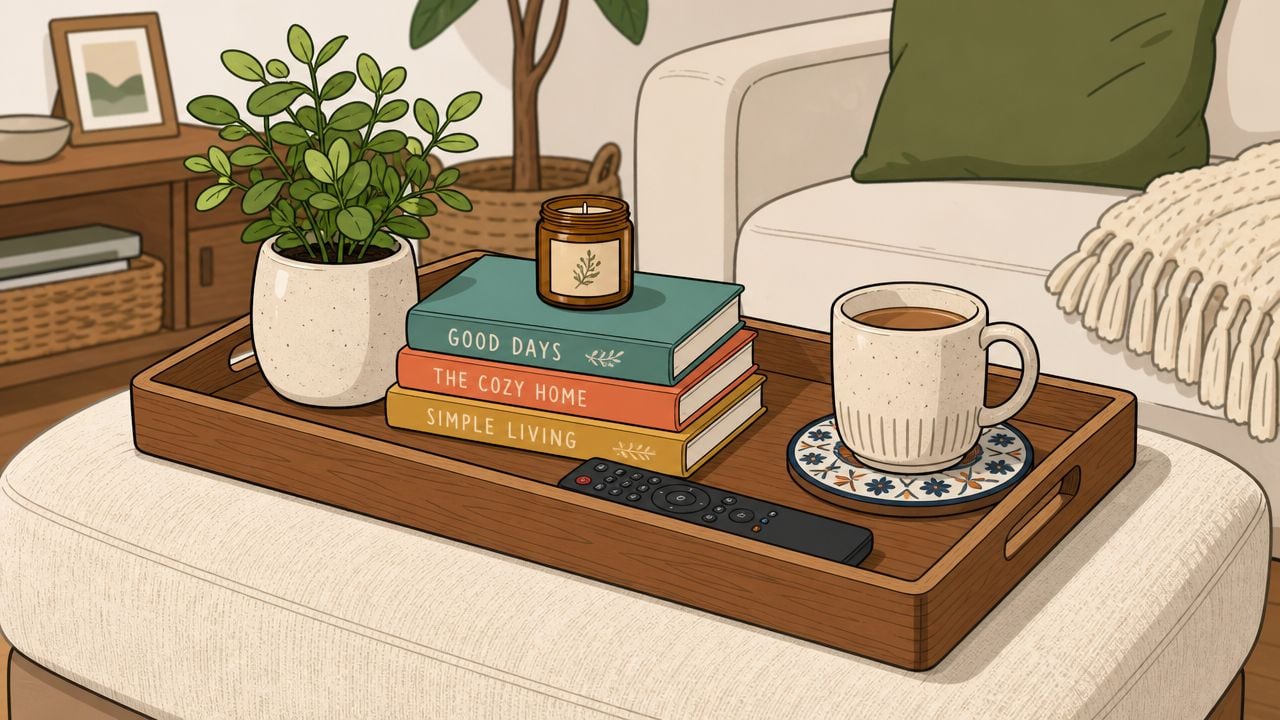
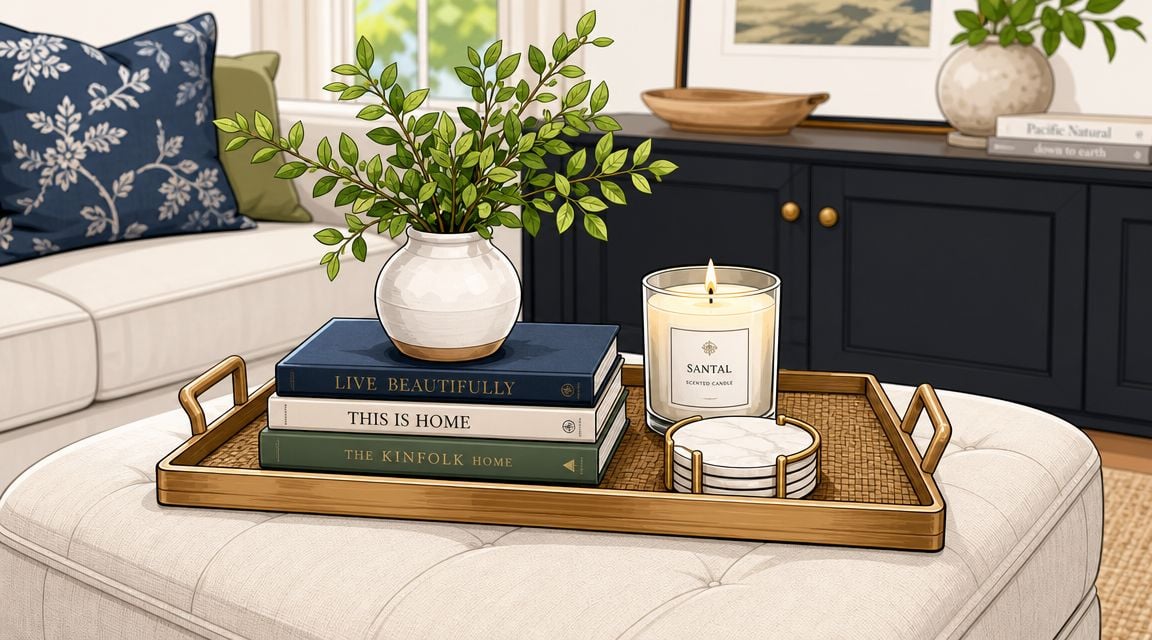
A practical trio often looks like this:
Something tall: a small plant or vase
Something flat: a couple of books or a box
Something useful: a candle, coaster set, or small bowl for remotes
That kind of arrangement gives the eye somewhere to land, but it still leaves room to set down a drink. That last part matters. A tray that's styled so tightly nobody can use it has missed the point.
For readers who want more inspiration for tabletop decorating, BILTRITE's guide on how to decorate a coffee table like a pro applies beautifully to ottoman trays too.
Style it for real life, not just for looks
A family room should still feel lived in. That means the tray setup has to work on a Tuesday night, not just when the house is cleaned up.
A few smart styling habits help keep it useful:
Corral the remotes. A small box or bowl keeps them from wandering.
Leave open space. Not every inch needs decor.
Watch the height. Tall arrangements can block sightlines across the room.
Change with the season. A tray is an easy place to swap in greenery, warmer tones, or a different candle.
The best tray styling looks natural because it serves the room before it decorates it.
That's the sweet spot. It should add charm, not chores.
Finding Your Tray at BILTRITE
A do-it-yourself tray can absolutely work. One solid-wood build uses 1×2 framing, 1×6 tongue-and-groove pine boards, 1-1/4 inch brad nails, wood glue, 120-grit sanding, and water-based polyurethane, and the project is presented as costing less than $20, according to this DIY ottoman tray plan. That's a useful benchmark because it shows where raw material cost ends and craftsmanship begins.
Why craftsmanship still matters
A professionally made tray earns its price in the details. Better joinery, cleaner sanding, balanced construction, and a more durable finish all matter once the tray starts living in the busiest room in the house.
That's especially true when the tray is expected to coordinate with solid wood furniture already in the home. A quick project may solve the surface problem, but it won't always deliver the same level of fit, finish, or long-term durability.
One option people can browse is the Ellwood tray set, especially if the goal is to see how tray styling can connect with other room accents in a furniture showroom setting.
Why seeing it in person helps
This is one of those home pieces that benefits from an in-store look. Grain, color tone, edge height, weight, and scale are easier to judge when the tray is right in front of the buyer and sitting near actual furniture.
BILTRITE Furniture-Leather-Mattresses has served Greenfield and Metro Milwaukee since 1928, with a strong focus on better-quality, USA-made, Amish-made, and solid-wood furniture. The showroom approach suits a product like this because customers can compare finishes, see how substantial a tray feels, and get practical guidance from a team with deep experience. Since the store doesn't sell online and stays closed on Sundays and Mondays for family time, the whole setup is built around a more personal visit and a less rushed decision.
For anyone in Metro Milwaukee who wants a large wood tray for ottoman use that looks right, sits safely, and works with real family life, BILTRITE Furniture-Leather-Mattresses is worth a visit in Greenfield. Come in, see the wood tones and finishes in person, and talk through what kind of ottoman you have. That hands-on help makes a big difference when the goal is a room that feels comfortable, useful, and built to last.