


Leaf Table Lamp Styling and Buying Guide


A homeowner may know the exact spot that needs help: a dim corner beside the sofa, a nightstand that feels unfinished, or a reading chair where the overhead light is far too harsh. A leaf table lamp can bring warmth and personality to that space, but its leafy shade still has to provide comfortable, useful light.
The best choice balances four things: the lamp's visual style, its size for the table, its bulb or LED performance, and its placement in the room. A beautiful fixture can create glare, hide too much of its light, or crowd a small surface if those details get overlooked.
Table of Contents
- Why a Leaf Table Lamp Is Worth a Closer Look
- Understanding Leaf Lamp Styles and Silhouettes
- Sizing a Leaf Lamp for Bedside and Accent Tables
- Picking the Right Bulb and Brightness
- Dimming, Glare, and Long-Term Serviceability
- Styling a Leaf Lamp in a Real Room
- Bringing It All Together and Visiting the Showroom
Why a Leaf Table Lamp Is Worth a Closer Look
A shopper standing in a lighting aisle often starts with appearance. One lamp may have bronze-colored leaves curling around its stem, while another may use colored glass to create a botanical shade. Both can look lovely in a showroom, but they won't behave the same way after sunset.
A leaf table lamp should earn its place by doing more than filling an empty corner. It can act as a decorative focal point, soften a room with nature-inspired shapes, provide ambient light near a sofa, or support reading when the shade and bulb are chosen carefully. The right fixture also needs to suit the table beneath it, leave enough room for everyday items, and keep the light source out of the viewer's direct line of sight.
A design with real history
Leaf motifs have a meaningful connection to the American Art Nouveau movement and Tiffany Studios, which operated from 1902 to 1932. Tiffany Studios produced botanical designs based on flowers, leaves, and other natural forms, and contemporary catalog research identifies more than 300 designs across its 1906 and 1913 catalogs, including Lotus Leaf, Peony, Poppy, Daffodil, Dragonfly, Magnolia, Pond Lily, and Poinsettia. The decorative-lighting market overview provides this historical context.
The Lotus Leaf model is especially interesting because its shade combined the form of a lotus leaf with the shape of a Japanese parasol. Leaded-glass construction made each example visually distinct, since artisans selected colored and textured glass pieces individually, even when using standardized patterns. Examples of the Lotus Leaf model are held by The Metropolitan Museum of Art, the Museum of Modern Art, Cornell University, and the Minneapolis Institute of Art.
That history helps explain why botanical lamps still feel more substantial than ordinary accent lighting. Their appeal comes from the meeting of sculptural form, natural symbolism, handcrafted detail, and practical illumination.
Practical rule: Treat the leaf motif as the beginning of the decision, not the whole decision. The shade must look good and deliver comfortable light where people actually sit, read, or work.
Understanding Leaf Lamp Styles and Silhouettes
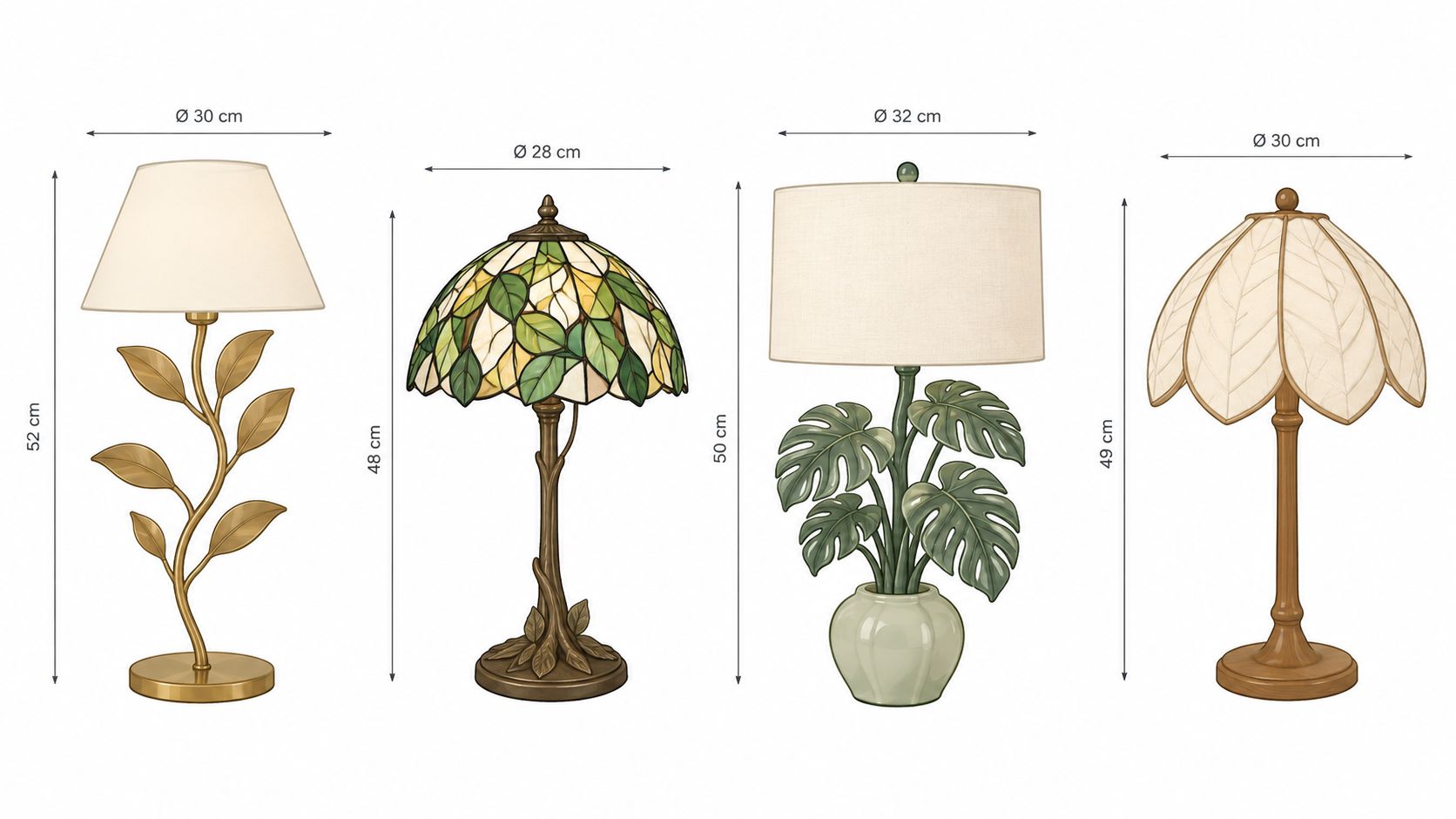
Leaf lamps come in several visual families. Knowing the difference makes showroom comparisons much easier.
Sculptural branches and open foliage
A metal branch lamp usually has leaves arranged along a stem or cluster. Open spaces between the leaves let light escape in several directions, while dense or overlapping foliage blocks and redirects part of the beam. That creates attractive shadows, but it can also produce bright points and darker areas on a nearby table.
This style suits rooms with natural wood, leather, woven baskets, or other organic textures. It often works best as an accent lamp where the goal is atmosphere rather than concentrated reading light.
Botanical glass shades
A stained-glass or leaded-glass shade offers a more enclosed silhouette. The glass controls the source more gently, but colored pieces can tint the light that reaches the room. That effect can be beautiful beside a neutral sofa or on a console, although readers should check whether the shade makes pages or upholstery appear too dark.
For shoppers drawn to reflective surfaces and decorative color, mercury glass table lamps offer another way to compare how glass changes a lamp's presence without relying only on a leafy shape.
Ceramic palms and broad leaves
Ceramic lamps shaped like palms, monstera leaves, or broad tropical foliage tend to have a stronger sculptural presence. Their shade or body may be partly opaque, so the light can feel focused and gentle rather than widely spread. These lamps pair naturally with relaxed, sunny interiors, white furniture, and pale woods.
A broad ceramic leaf can also take up more visual space than its measurements suggest. The base footprint matters as much as the total height.
Fabric leaves and soft botanical details
Some lamps use fabric or textile details on the shade rather than a fully sculptural stem. These designs usually soften the light and blend more easily with bedrooms, traditional rooms, and comfortable seating areas. The tradeoff is that a soft shade may send less light outward than an open metal design.
Before choosing, examine three terms:
- Total height: The distance from the table surface to the highest part of the fixture.
- Shade diameter: The widest part of the shade, which affects visual scale and light spread.
- Base footprint: The amount of table surface occupied by the lamp.
Those measurements turn a general style search into a practical comparison.
Sizing a Leaf Lamp for Bedside and Accent Tables
A lamp can be attractive and still feel wrong if it overwhelms the furniture beneath it. Start with the table, then consider the viewer's seated eye level and the task the lamp needs to support.
For a standard nightstand, a total lamp height of about 24 to 30 inches can provide a balanced starting range. The base should be narrower than the table depth, leaving room for a book, glasses, a phone, or a small alarm clock. A heavy or broad leaf base may need more clearance than a simple round base because its foliage can extend beyond the central stem.
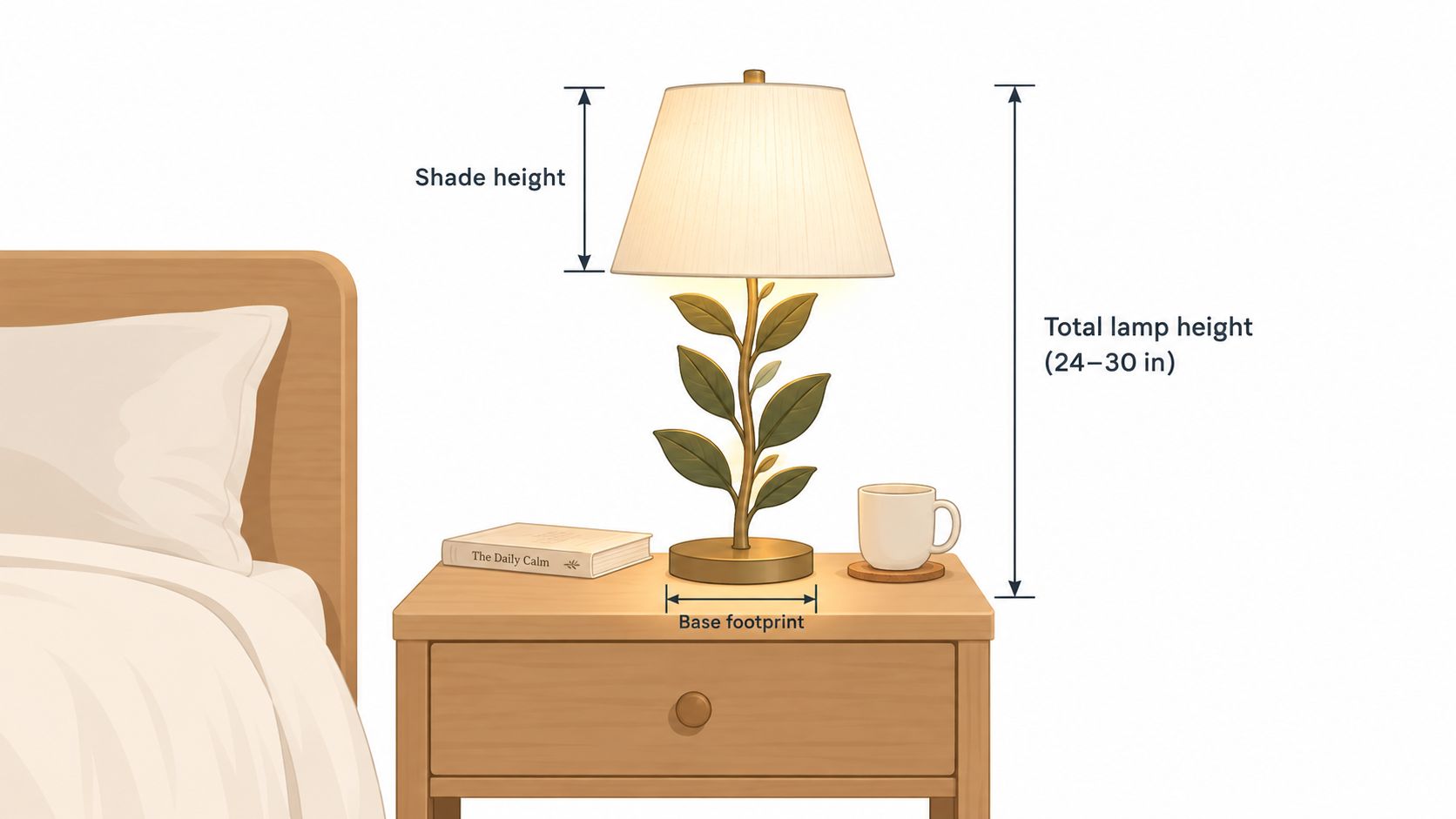
Match the shade to the user's eye line
For bedside reading, the bottom edge of the shade should sit at or just below the seated reader's eye level. That position helps hide the bulb and reduces the chance of looking directly into a bright source when turning toward the lamp.
A lower table or deep mattress changes the visual relationship. A lamp that looks appropriately sized on a tall nightstand may place the shade too low beside a shorter bed. The safest method is to sit in the actual reading position, look toward the lamp, and check whether the foliage or shade blocks the source.
Give each table room to breathe
Accent tables and sofa tables can accept a more sculptural lamp, but the lamp still needs visual breathing space. A wide shade beside a narrow armchair can make the whole corner feel crowded. On a console, a taller stem may work well if nearby artwork or décor remains quieter.
The coffee table and end table guide can help shoppers think about the relationship between lamp scale and surrounding furniture before bringing a fixture home.
| Placement | Total lamp height | Shade diameter | Base footprint | Notes |
|---|---|---|---|---|
| Bedside table | About 24 to 30 inches | Proportional to the nightstand | Narrower than table depth | Keep the shade at or just below seated eye level |
| Sofa-side accent table | Sized to the chair and arm height | Moderate or sculptural | Stable, with space for essentials | Check glare from the usual seating position |
| Console table | Can be taller if the setting allows | Broad botanical shade can work | Leave surrounding display space | Balance the lamp with artwork or décor |
| Desk | Sized around the work surface | Directed or diffused | Keep writing space clear | Test the light on paper, not only on the shade |
A stable base matters in every location, especially where children, pets, or busy household traffic are present. A lamp should feel planted when someone brushes past the table.
Picking the Right Bulb and Brightness
Wattage tells shoppers how much electricity a bulb uses. Lumens describe the light produced, so lumens are the more useful starting point when a leaf table lamp needs to illuminate a seating area or reading surface.
For general seating-area illumination, a replaceable LED bulb or integrated module with at least 800 to 1,000 initial lumens is a practical target. A shade made from dense leaves, colored glass, or opaque ceramic may block or redirect part of that output, so the number printed on the bulb package won't tell the whole story. ENERGY STAR's lamp testing material explains why efficacy, output, and color quality belong in the same conversation.
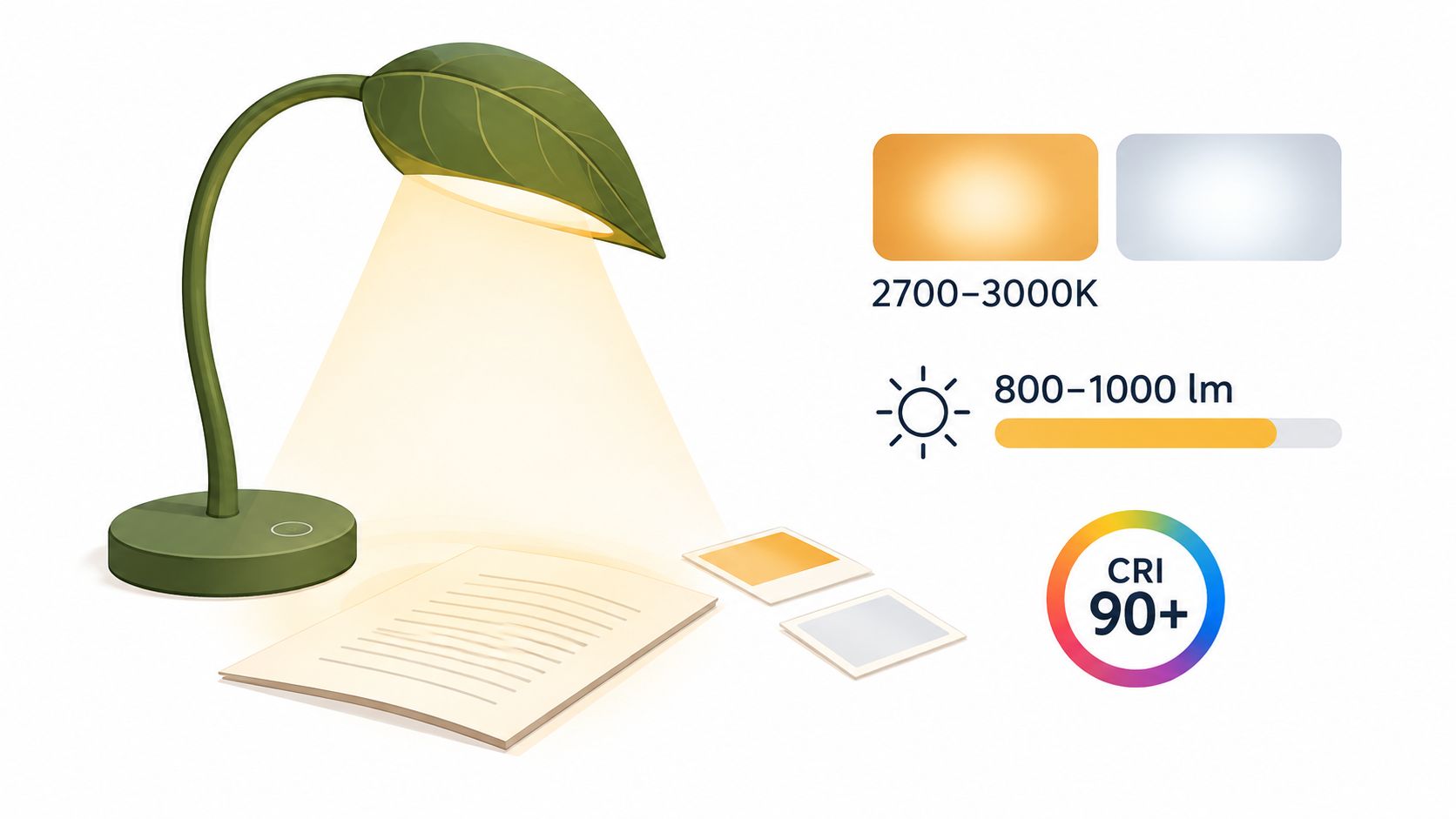
Choose warmth for the room
Warm white LEDs around 2,700 to 3,000 K generally support a comfortable residential atmosphere. That range works well in bedrooms, living rooms, and reading corners where the lamp should feel inviting rather than clinical.
Color temperature isn't the same as brightness. A warm bulb can be bright enough for a chair-side task, while a cooler bulb can still feel weak if the shade absorbs too much light. The shade, bulb output, and room lighting all work together.
Pay attention to CRI
The color-rendering index, or CRI, describes how naturally colors appear under the light. A CRI 90-plus lamp is preferable near wood finishes, leather, upholstery, or artwork because higher color fidelity helps reduce visible shifts in warm browns and muted textile colors.
A reader checking fabric samples needs different performance from someone using the lamp only to create a soft glow behind a sofa. For general use, a municipal lamp-safety notice recommends a color-rendering index above 82, and it recommends at least 90 for color-sensitive activities such as drawing or painting. The safety notice also emphasizes keeping the light source out of direct view.
Before choosing, a shopper can ask:
- How much light is delivered? Check initial lumens, not wattage alone.
- How natural will colors look? Look for CRI 90 or higher near furniture, artwork, or fabrics.
- Where does the light go? Examine the page, tabletop, and nearby upholstery.
- Can the lamp use the desired bulb? Confirm the base, maximum wattage, and bulb shape.
For more room-level guidance, this living-room lighting resource can help place one lamp within a broader lighting plan.
Dimming, Glare, and Long-Term Serviceability
A leaf lamp's most important comfort feature may be the one shoppers notice last: whether the source stays controlled from a seated position. Narrow openings, exposed LED points, and overlapping leaves can create glare even when the lamp looks gentle from across the room.
The distinction between a replaceable bulb and an integrated LED module affects ownership. A standard socket lets the owner replace the bulb when needed and change brightness or color temperature within the fixture's limits. An integrated module may reduce bulb changes, but the owner should ask whether replacement parts, repair support, and lumen-maintenance information are available if the module eventually stops working.
Test the dimmer before committing
LED systems need compatible dimmers. A mismatch can cause flicker, drop-out at lower settings, or audible driver noise. Those issues may not appear under bright showroom lighting, so the lamp should be tested at several brightness levels whenever possible.
Warm white LEDs around 2,700 to 3,000 K generally suit comfortable residential rooms. Residential ambient areas are commonly discussed around 100 to 300 lux, while reading and desk tasks require approximately 300 to 500 lux. This small-lamp lighting guide discusses those practical comfort ranges and dimming concerns.
Position the lamp for the task
For reading beside a sofa or bed, placing the lamp on the side opposite the user's writing hand can reduce hand shadows across the page. The shade should diffuse the source and prevent the reader from seeing the reflector or bright LED points directly.
A single lamp may not illuminate a complete reading area evenly. If the foliage creates dark zones, a second ambient source can support the room without forcing the leaf lamp to work beyond its strengths.
A useful showroom test: Sit down, open a book or look at a phone screen, and check the lamp from the position where it will actually be used. A fixture that looks comfortable while standing may feel glaring when viewed at eye level.
Ask these ownership questions
- Bulb and wattage: What base does the lamp use, and what maximum wattage is allowed?
- LED design: Is the light source replaceable, or is it a sealed module?
- Dimming: Which dimmers are compatible, and does the lamp remain stable at low brightness?
- Heat and shade: Does the foliage stay comfortably cool during ordinary use?
- Stability: Is the base weighted enough for the table and household traffic?
- Service: What warranty, replacement parts, or repair support are available?
- Cord placement: Is the cord long enough and positioned safely away from walkways?
Long-term value depends on more than the initial appearance. A furniture longevity guide offers a broader reminder that care, construction, and serviceability all shape ownership.
Styling a Leaf Lamp in a Real Room
A leaf table lamp can either support a room's story or compete with everything around it. The difference usually comes down to placement and visual restraint.
On a nightstand, the lamp should leave clear space for bedside essentials. A bronze-branch design can complement a warm wood nightstand when the bedding remains simple. A pale ceramic palm lamp may work well on a white console, especially when nearby décor uses quiet shapes instead of several competing botanical patterns.
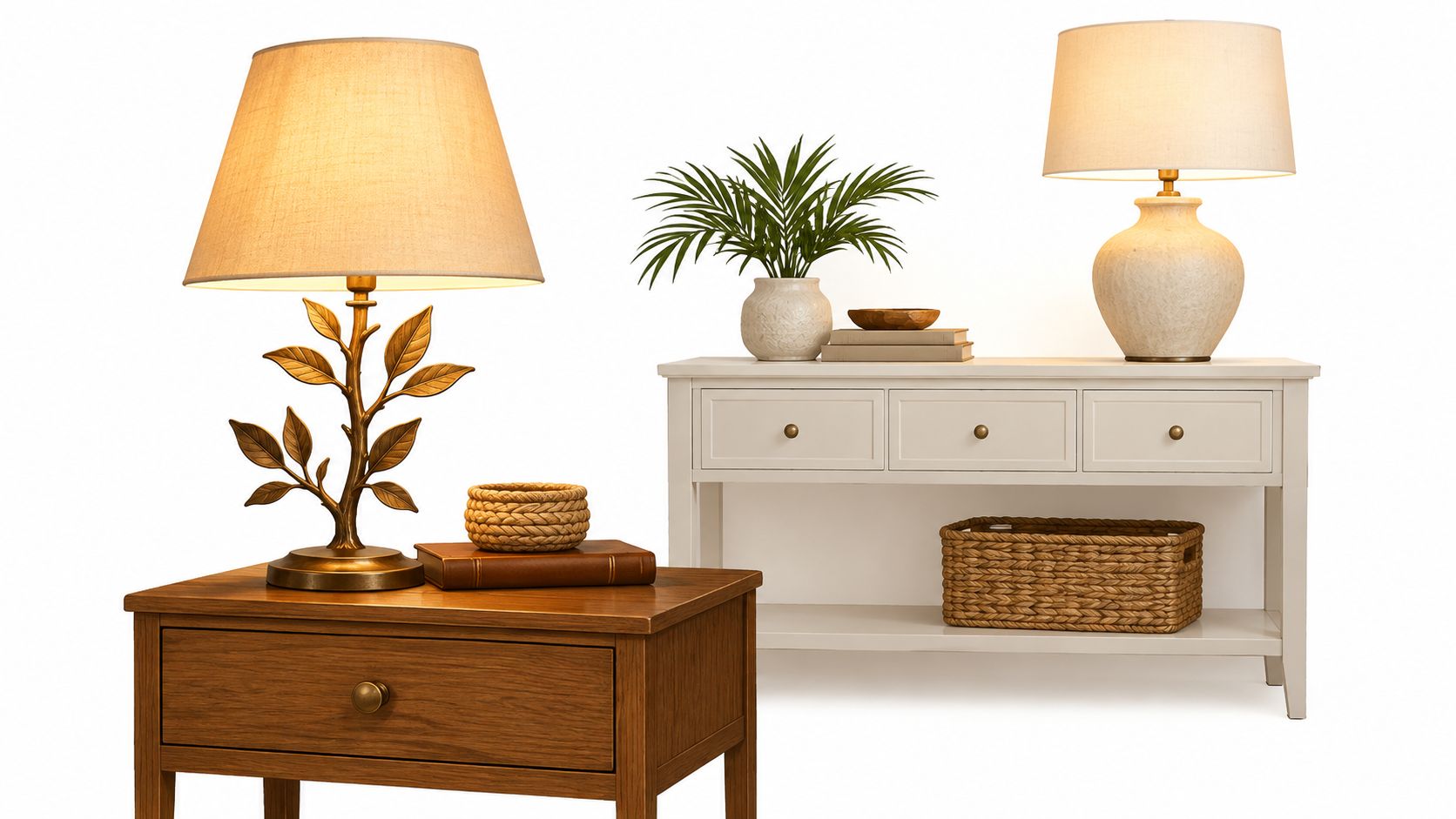
Build a balanced lighting layer
A lamp beside a sofa or chair often needs support from a ceiling fixture, floor lamp, or nearby source. The second light doesn't need to match the leaf lamp. It keeps the room from becoming a bright island surrounded by deep shadows.
A single sculptural lamp can serve as the focal point when the wall, table, and nearby accessories stay calm. Two lamps can frame a sofa when their shapes relate, but they don't need to be identical. Different heights can add movement, provided the overall arrangement doesn't block artwork or make the seating area feel busy.
Coordinate materials, not just colors
Leaf forms naturally connect with:
- Wood: Reinforces the botanical theme and adds warmth.
- Leather: Gives the organic motif a grounded, durable contrast.
- Woven baskets: Echoes the texture of branches and natural fibers.
- Ceramic: Creates a quieter, more sculptural interpretation of foliage.
- Colored glass: Adds reflected tones and a more artistic presence.
The lamp should also pass a nighttime test. A showroom's bright general lighting can hide shadows, glare, and color shifts. At home, the shade's opacity, bulb warmth, and reflection on a glossy table become much easier to judge.
For more ideas about coordinating furniture and accessories, this living-room styling guide offers a useful room-level perspective. The goal isn't to make every item botanical. One well-positioned leaf lamp can provide enough natural character for the entire corner.
Bringing It All Together and Visiting the Showroom
Choosing a leaf table lamp becomes simpler when the decision is separated into four questions. What silhouette fits the room? What size suits the table and the viewer's eye line? Does the bulb provide enough useful light with suitable color quality? Can the lamp be dimmed, maintained, and positioned without glare?
A shopper doesn't need the same answer in every room. A shaded glass design may suit a quiet console, while an open metal branch may add personality beside a chair. A compact fixture may be the better choice for a small apartment or senior-living space, while a heavier base may make sense in a busy family room.
The broader decorative-lighting market shows that table and floor lamps were forecast to expand at a 5.21% CAGR through 2031, while LED technology accounted for 58.1% of table-lamp market value in 2025. That market context helps explain why many current leaf-lamp designs combine botanical styling with modern, energy-efficient LED sources. The market estimate provides this decorative-lighting context.
Bring practical questions to the aisle
A hands-on visit lets shoppers compare shade opacity, feel the stability of the base, view the lamp from a seated position, and test dimming where available. It also gives them a chance to ask about bulb compatibility, integrated LED serviceability, cord placement, and the difference between decorative glow and useful task light.
The right leaf lamp is the one that fits the table, supports the room, and feels comfortable to the eyes. It doesn't need to follow a trend or imitate a historical design. It only needs to make the homeowner happy each time the switch turns on.
BILTRITE Furniture-Leather-Mattresses offers affordable, better-quality furniture, USA-made and Amish-made solid-wood pieces, small-scale and heavy-duty options, and a mattress department with over 60 models. Visit BILTRITE Furniture-Leather-Mattresses at 5430 West Layton Avenue in Greenfield for a no-pressure, hands-on visit where the team can help test comfort, compare lighting ideas, and answer questions in person.