Buffets and Servers for Your Dining Room: A Helpful Guide


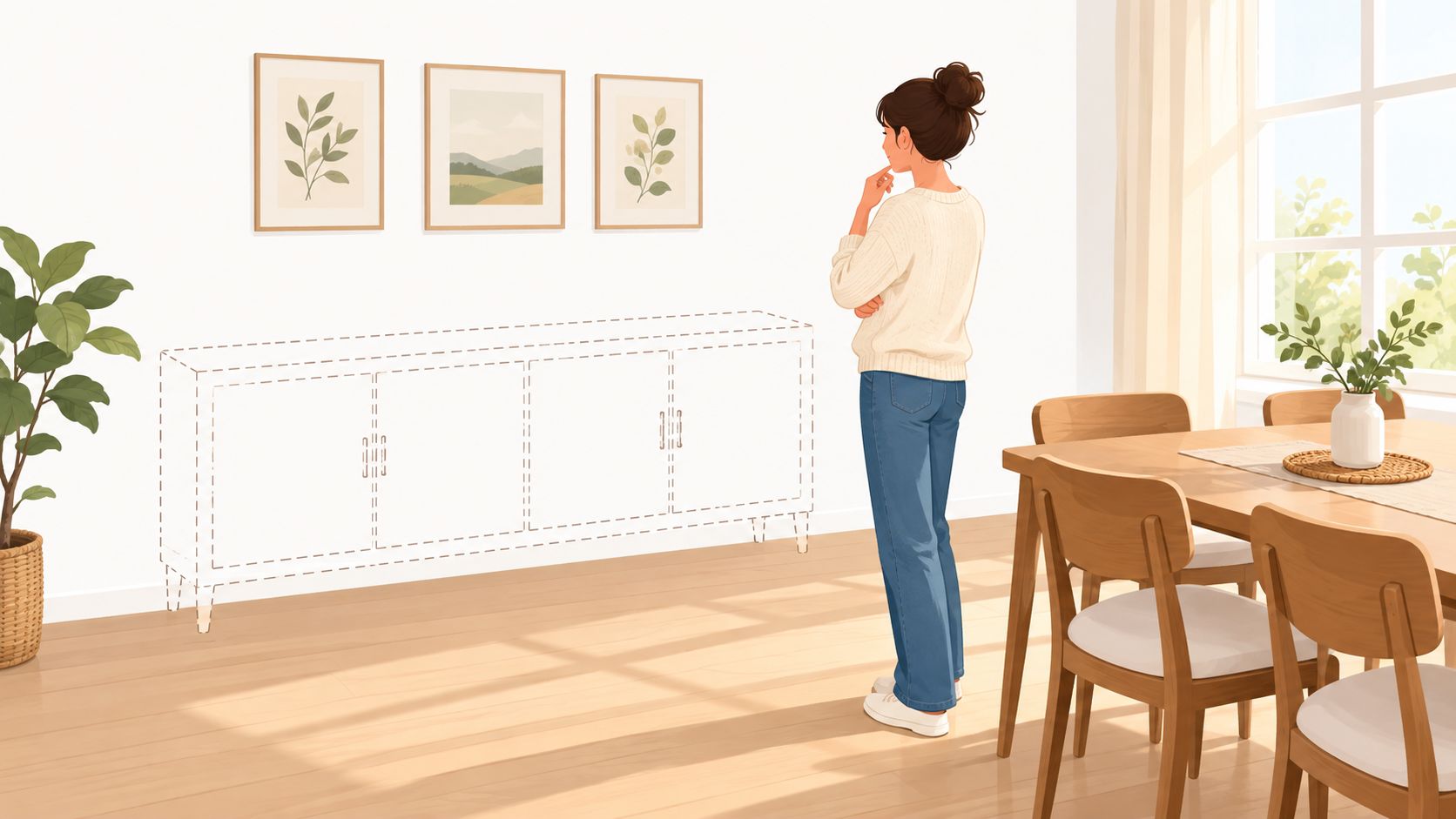
A dining room can look finished and still feel strangely incomplete. A homeowner may stand near the table, hold a serving platter against the wall, and wonder whether a new piece will hide clutter, improve holiday hosting, or make the room harder to walk through. That's exactly where buffets and servers earn their place.
These pieces combine storage, serving space, and visual balance in one useful form. The right choice depends less on a label or passing style trend and more on room proportions, daily routines, construction, and clearance. BILTRITE Furniture has helped Metro Milwaukee families make those decisions since 1928, with a showroom experience built around seeing, touching, measuring, and comparing furniture in person.
Table of Contents
- What Buffets and Servers Are and Why They Matter
- How a Buffet Differs from a Server
- Popular Styles, Materials, and Finishes
- How to Choose the Right Size and Configuration
- Styling Ideas and Smart Storage Uses
- Buying Considerations and USA Made Craftsmanship
- Finding the Right Piece at BILTRITE in Greenfield
What Buffets and Servers Are and Why They Matter
A buffet or server is a low, wide dining storage piece designed to support the work of a dining room. It can hold dishes, linens, serving bowls, flatware, and tabletop accessories while providing a convenient surface for plating food or displaying decor. The piece may sit against a wall most of the year, then become the busiest spot in the room when family and friends gather.
A homeowner might use the drawers for everyday utensils, the cabinets for oversized platters, and the top for a lamp, framed family photographs, or a seasonal centerpiece. During a holiday meal, that same surface can keep serving dishes off the dining table, leaving more room for plates and conversation. This is furniture that earns its footprint through repeated use, not just appearance.
More than dining room decoration
Buffets and servers have long supported entertaining because they separate preparation and presentation from the main table. That role still matters, even as homes become more open, dining spaces become smaller, and families use rooms in flexible ways.
A server can become a coffee station in the morning, a bar cabinet during an evening gathering, or a catch-all near an entry when the dining room needs to work harder. A buffet can provide the deeper storage a large household needs while giving the room a substantial visual anchor.
Showroom advice: The best piece solves a daily problem first. Its style should support the room, but its storage and placement should make life easier.
The distinction between a buffet and a server comes down to scale and function, not personal preference alone. A useful guide to selecting a dining storage piece can help shoppers think through storage needs, wall space, and the way the dining room operates before they fall in love with a finish.
How a Buffet Differs from a Server
The simplest way to separate the two is to think of a buffet as the more substantial option and a server as the lighter-footprint alternative. That description isn't a strict industry rule, because furniture labels can overlap, but it gives shoppers a practical starting point.
A buffet generally offers a broader cabinet body, more internal storage, and a larger surface for staging food. It may include drawers, adjustable shelves, wine storage, or compartments designed for serving pieces. A server usually takes up less wall space and feels easier to place in a compact dining room, apartment, condo, or narrow open-plan area.
Buffet vs. Server at a Glance
| Feature | Buffet | Server |
|---|---|---|
| Overall scale | Usually the more substantial piece | Usually narrower and shallower |
| Storage capacity | More room for dishes, linens, platters, and accessories | Practical storage for everyday dining needs |
| Surface area | Larger staging area for family meals and gatherings | Smaller serving or display surface |
| Visual weight | Stronger presence in a larger dining room | Lighter footprint for tighter spaces |
| Best fit | Rooms with generous wall space and greater storage needs | Smaller dining areas or limited wall sections |
| Configuration | Drawers, cabinets, adjustable shelves, and possible specialty storage | Drawers and cabinets in a simpler arrangement |
Measure the furniture, not the name
A shopper may find a piece called a server that has the capacity of a buffet, or a buffet that suits a modest room. That's why the product label shouldn't make the final decision. Width, depth, height, door swing, and clearance around the table matter more.
A larger buffet can be the right answer for a family that stores formal dishes, bulky platters, linens, and board games in the dining room. It can be the wrong answer for a household that has limited circulation and only needs a drawer for utensils and a cabinet for napkins.
A server works well when a wall needs useful storage without becoming the dominant object in the room. It can also be a smart choice for shoppers who want a serving surface but don't want to crowd the table or block a nearby passage.
Popular Styles, Materials, and Finishes
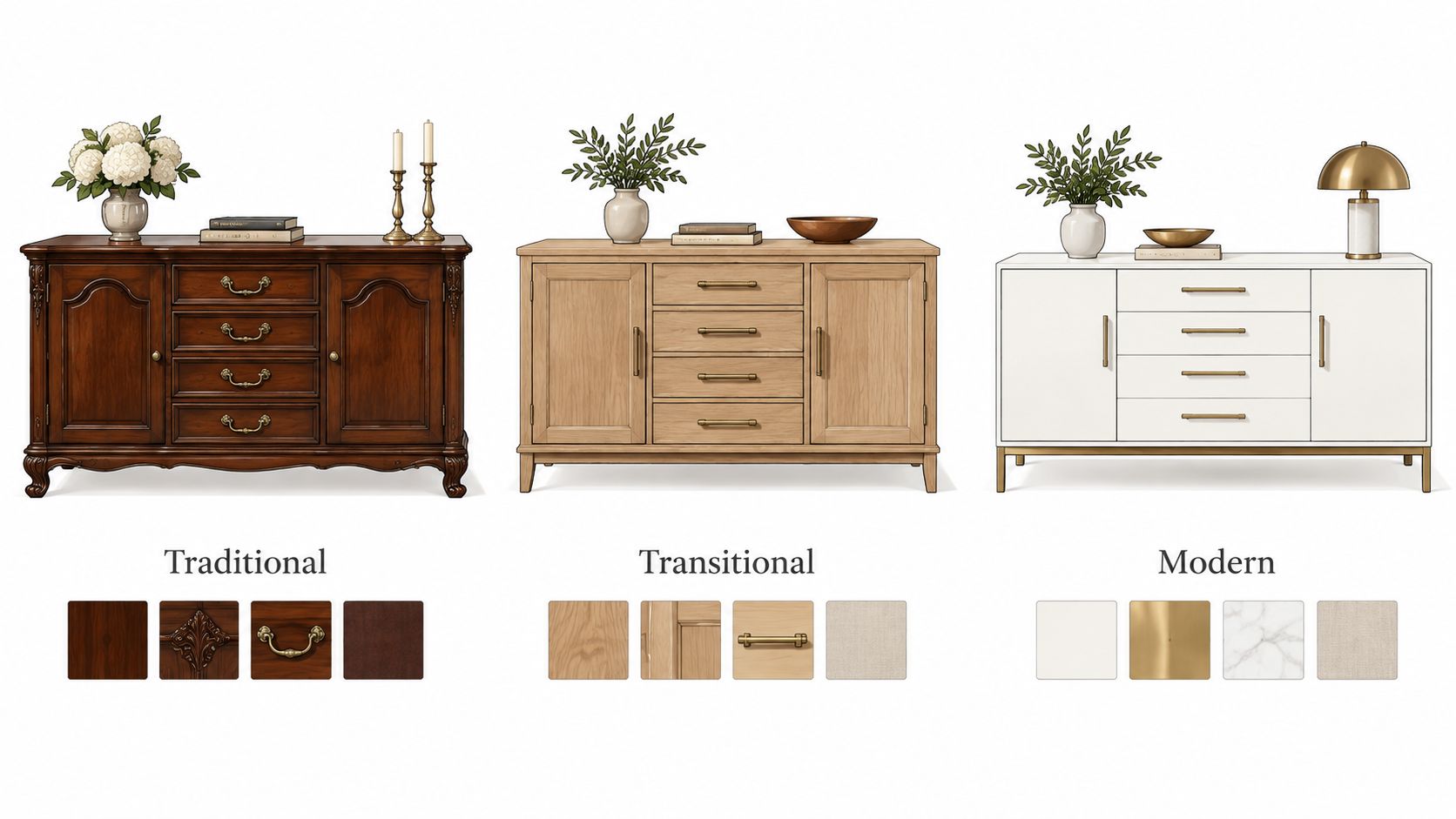
Style should connect the new piece to the furniture already in the home. A traditional buffet may feature shaped doors, decorative hardware, and a more formal silhouette. Transitional designs soften those details and blend comfortably with both classic and contemporary dining sets. Farmhouse furniture often uses simpler forms and visible character, while mission and shaker profiles rely on clean lines, straightforward doors, and restrained hardware.
Modern servers tend to reduce visual ornament and emphasize a smooth, uncluttered shape. The important question isn't which category sounds most appealing. It's whether the profile works with the table, chairs, flooring, lighting, and surrounding architecture.
Materials that change the ownership experience
Solid hardwood remains the strongest long-term choice for shoppers who want a piece to serve the household for years. Oak, maple, cherry, and quarter-sawn white oak bring different grain patterns, colors, and personalities, but each can provide a substantial feel when the construction is done well.
Veneered plywood can offer a stable surface and attractive appearance at a different price point. MDF can work for selected applications, especially painted furniture, but it doesn't provide the same repairability or tactile quality as solid wood. Reclaimed wood brings visible character, although knots, variation, and irregularities require a buyer who appreciates a less uniform result.
Construction matters as much as the species. A solid hardwood frame with carefully fitted components feels different from a thin case assembled for quick replacement. Drawers should glide smoothly, doors should sit evenly, and the cabinet should feel steady when opened and closed.
Finish and everyday maintenance
Painted and distressed finishes can add warmth or hide small signs of family life, but they may require a different touch-up approach than a stained surface. Natural stains show grain and work well in rooms where the table already provides strong wood character. Two-tone finishes can bridge different pieces, especially when the table and storage furniture don't come from one matching set.
Low-sheen finishes are often easier to live with visually because they don't spotlight every reflection. Still, every finish benefits from coasters, prompt cleanup, and protection from standing moisture.
A finish should support the way a household lives. Daily meals call for practical durability, while occasional entertaining may allow more delicate decorative choices.
How to Choose the Right Size and Configuration
The tape measure should come out before the showroom visit. A buffet or server can look appropriately scaled on a large floor and feel completely wrong once chairs, people, and open doors occupy the dining room.
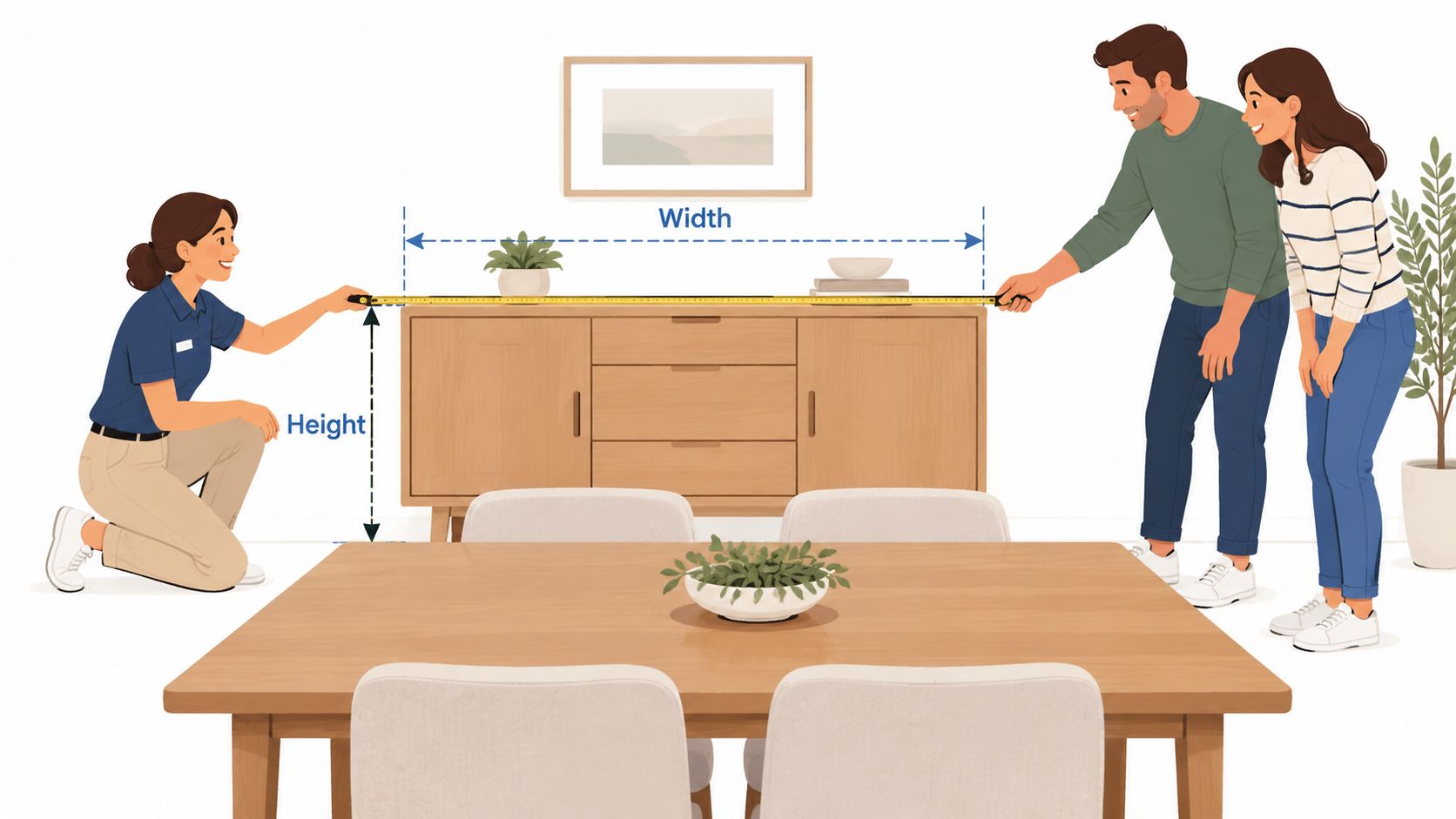
Start with the wall. Measure the usable width, then account for baseboards, trim, outlets, doorways, and nearby furniture. A piece doesn't need to match the dining table exactly. In fact, forcing an exact visual match can make a smaller room feel crowded.
Four measurements that matter
Width should respect the wall. A wide buffet may balance a long dining table, but it shouldn't consume every available inch. A smaller server can look more intentional when it leaves breathing room around artwork, windows, or architectural details.
Height should feel comfortable for serving. The top should be easy to reach while placing dishes or clearing plates. It should also relate visually to the table and chair backs instead of appearing unusually low or towering over the room.
Depth controls traffic. A deep cabinet can provide excellent storage, but it may interfere with chair movement, door swings, or a passage to the kitchen. Marking the furniture footprint on the floor with painter's tape gives a much clearer answer than imagining the dimensions.
Clearance protects circulation. One buying guide recommends leaving at least 36 inches between the dining buffet and the table so chairs can pull out and people can pass behind seated guests, as explained in this sideboard placement guide. That space is especially important in open-plan homes where the dining area also serves as a route between rooms.
Choose the interior around real habits
Drawers are useful for flatware, napkins, candles, and small table accessories. Cabinets handle platters, serving bowls, appliances, and less attractive necessities. Adjustable shelves help when storage needs change, while wine or stemware compartments make sense only when the household will use them regularly.
A piece that is slightly smaller but leaves comfortable walking space usually serves a home better than an oversized piece that matches the table visually. Circulation is part of the design, not leftover space.
For broader table proportions and seating guidance, shoppers can use this dining table size guide before finalizing a storage piece.
Styling Ideas and Smart Storage Uses
A buffet becomes useful long before the first dinner party. On an ordinary morning, its top may hold a coffee maker, mugs, and a small tray. By evening, the same surface can clear for a lamp, family photographs, or a vase. During the holidays, it becomes a landing place for pies, serving bowls, and extra plates.
One household may keep folded table linens in the upper drawers and reserve the cabinets for large platters. Another may use the piece for board games, candles, and seasonal decorations. The value comes from placing frequently used items near the room where they belong, while keeping the visual clutter behind doors.
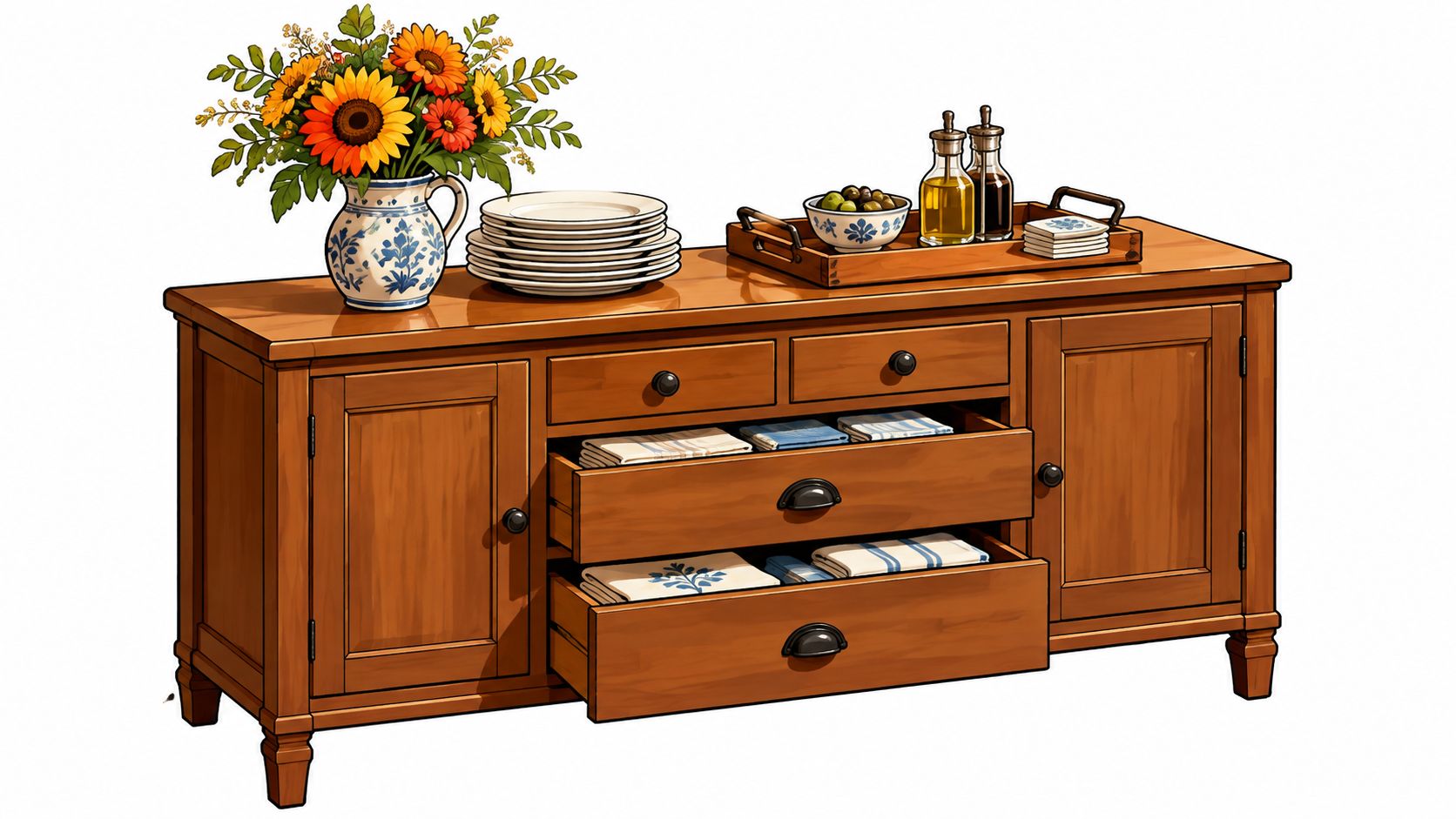
One piece, several routines
A narrower server can pull double duty as a bar station for cocktail nights. Glassware can sit in a cabinet, napkins can occupy a drawer, and a tray on top can keep bottles and accessories organized. For families who prefer a morning routine, the same arrangement can become a tea and coffee hub without taking over the kitchen counter.
A buffet near the entry can catch keys, mail, and bags, provided the location doesn't interfere with dining traffic. In an open-plan layout, that flexibility makes the piece work harder than a dedicated dining-only cabinet.
Style the top without losing its purpose
A simple arrangement usually works better than filling every inch. A lamp or artwork can create height, while a low bowl, framed photograph, or seasonal display adds interest without blocking the wall.
- Keep daily items accessible. Place napkins, utensils, and frequently used serving pieces in the easiest drawers to reach.
- Reserve deep storage for bulky goods. Platters, pitchers, table linens, and board games belong in cabinets or lower compartments.
- Leave working space open. A clear section of the top makes it useful when guests arrive and food needs a temporary landing place.
- Change small accents seasonally. A centerpiece, family photo, or simple arrangement can refresh the room without replacing the furniture.
The dining room styling guide offers more ideas for coordinating the storage piece with the table, lighting, and surrounding decor. The strongest arrangement is the one that looks inviting on a quiet Tuesday and performs during a full family gathering.
Buying Considerations and USA Made Craftsmanship
A buffet or server carries weight, opens repeatedly, and often supports dishes, appliances, and serving pieces. That makes the material and joinery more important than a short-lived style statement.
Solid wood, especially oak, maple, cherry, and other durable hardwoods, can bring a substantial feel and a repairable surface to the home. Well-built drawers with dovetail joints and dependable hardware are designed for repeated use, while staples and shortcuts may reveal their limits sooner. A carefully finished piece can also develop character over time rather than looking worn.
Look underneath the finish
Shoppers should inspect the details that catalogs often hide:
- Open and close every drawer. Movement should feel smooth, and the drawer should sit squarely in its opening.
- Check the doors and shelves. Hinges should operate cleanly, and shelves should feel capable of handling the household's serving pieces.
- Study the case. A stable, substantial cabinet tells more about long-term value than a fashionable color.
- Ask about the construction. The sales associate should be able to explain wood species, finish choices, customization, and delivery expectations.
USA- and Amish-made furniture appeals to buyers who value American craftsmanship, solid construction, and the possibility of keeping a piece in the family. A shopper should still examine every piece carefully, because origin alone doesn't replace good design or proper room planning. For unqualified claims such as “Made in USA,” the Federal Trade Commission standard requires that the product be “all or virtually all” made in the United States, including final assembly or processing and the relevant components.
In-stock or custom
In-stock furniture suits households that need a piece on a quicker timeline and want to see the actual finish before deciding. Custom work opens more choices, including dimensions, wood species, stain, and hardware, which can help when a dining room has an unusual wall or a very specific storage need.
BILTRITE Furniture-Leather-Mattresses offers both in-stock dining storage and custom options, including USA- and Amish-made pieces. Shoppers can learn more about American-made furniture while comparing construction in person. The right choice is the one that fits the room, budget, and expected years of use.
Finding the Right Piece at BILTRITE in Greenfield
A showroom visit turns an abstract furniture decision into a practical one. At BILTRITE's Greenfield location, shoppers can compare buffets and servers by scale, storage layout, finish, and construction instead of relying on a photograph or a guess about dimensions.
The showroom includes in-stock choices for households that want a quicker path, along with custom ordering for buyers who need different sizing, wood species, finish, or hardware. New Amish-made selections and value-focused lines can be viewed side by side, giving families a clearer sense of what changes as construction, materials, and customization change.
Bring the room with you
Before visiting, shoppers should write down the wall width, available depth, table dimensions, and the distance needed for chairs and traffic. A quick phone photograph of the dining room can also help the sales team understand nearby doors, windows, trim, and adjoining spaces.
BILTRITE's sales associates bring over 400 years of combined experience to the showroom. They walk customers through clearance, table pairing, storage needs, and styling decisions without pressure. The store is fourth-generation and family-owned, serving the Metro Milwaukee community since 1928, and its buy-local values are part of the everyday experience.
For store information and directions, visit the BILTRITE locations page. Phone and email questions are welcome for shoppers who can't visit right away, though seeing the piece in person remains the clearest way to judge scale, finish, and feel. The store is closed on Sundays and Mondays so the team can protect family time, a choice that reflects the community-first character behind the business.
BILTRITE Furniture-Leather-Mattresses offers dining storage, USA- and Amish-made furniture, custom options, and a broad selection for homes of different sizes and budgets. Visit BILTRITE Furniture-Leather-Mattresses in Greenfield with the room measurements in hand, and let the showroom team help find a buffet or server that looks right, works hard, and feels at home.