Modular Furniture for Small Spaces: A Practical Buying Guide

A narrow doorway, a tight stair turn, and a living room that serves as an office can make ordinary furniture feel like a bad decision. The sofa looks fine on the showroom floor, but at home it blocks the window. The dining table leaves no room to pull out a chair. The bed arrives, then becomes a permanent obstacle.
Modular furniture for small spaces gives households another way to think. Instead of forcing one large piece into a fixed layout, buyers can choose sections that come apart, change positions, add storage, or serve more than one purpose. That flexibility matters in apartments, condos, smaller homes, and senior living spaces where every pathway has a job.
The category has grown well beyond a design fad. Market estimates place global modular furniture between about USD 86.5 billion and USD 89 billion in 2025, with projections reaching roughly USD 127.9 billion by 2031 or USD 145.6 billion by 2035, depending on the forecast and category definition. Those projections, documented in the small-space furniture market analysis, connect the category with urban homes, tighter floor plans, and changing household needs.
When Standard Furniture Stops Working in a Tight Home
A studio apartment exposes standard furniture's weak spots quickly. A 90-inch sleeper sofa may fill the only comfortable wall and still block the doorway. A wide armoire crowds the window. A chunky dining table leaves barely enough room between the kitchen and living area. Each piece works on its own, yet together they make the room feel directed by obstacles.
The problem often arrives with a life change. You move into a first apartment, downsize after the children leave, buy a condo, enter senior living, or lose a roommate. Your furniture may remain serviceable, but it no longer suits the room, the entrances, or the way you live.
The room should not have to surrender
A modular sofa gives you control because its sections work independently. Keep a compact seat near the television, move a chaise toward the window, or separate pieces when a clear walkway matters more than a traditional sectional shape. The layout can follow the room instead of letting one oversized object dictate everything else.
Storage and tables benefit from the same approach. Stackable shelving grows upward rather than outward. A drop-leaf table stays narrow during the week and opens for family visits. A bed with drawers or a folding desk lets one room handle two jobs without bringing in another bulky object.
Come-apart construction also changes the buying decision. In an apartment, condo, or senior living space, a piece that arrives in manageable sections can pass through a narrow door, hallway, stair turn, or elevator. That convenience matters, but inspect the joints and hardware before buying. Frequent assembly, moves, and reconfiguration demand solid construction. Amish-built furniture can offer a durable choice when the frame, joinery, and finish are made for long use, though you still need to confirm how the piece separates for delivery.
Practical rule: Flexibility earns its floor space only when each component answers a daily need. A sofa that reconfigures beautifully but rarely changes position still occupies valuable room.
The market's scale reflects a practical response to tighter homes. Industry estimates report more than 63% of urban households prefer space-saving furniture formats, while another estimate places annual modular shipments at over 58 million units for residential and commercial use. The same report says more than 52% of apartments under 900 square feet in the United States use modular storage and convertible furniture solutions. These figures appear in the modular and flat-pack furniture market report.
Your best choice should survive more than one floor plan. Look for sections you can move, storage you will use, hardware you can trust, and delivery requirements that match your building. That combination gives a small room room to change without sacrificing durability.
Measuring Your Room Before You Fall in Love with Anything
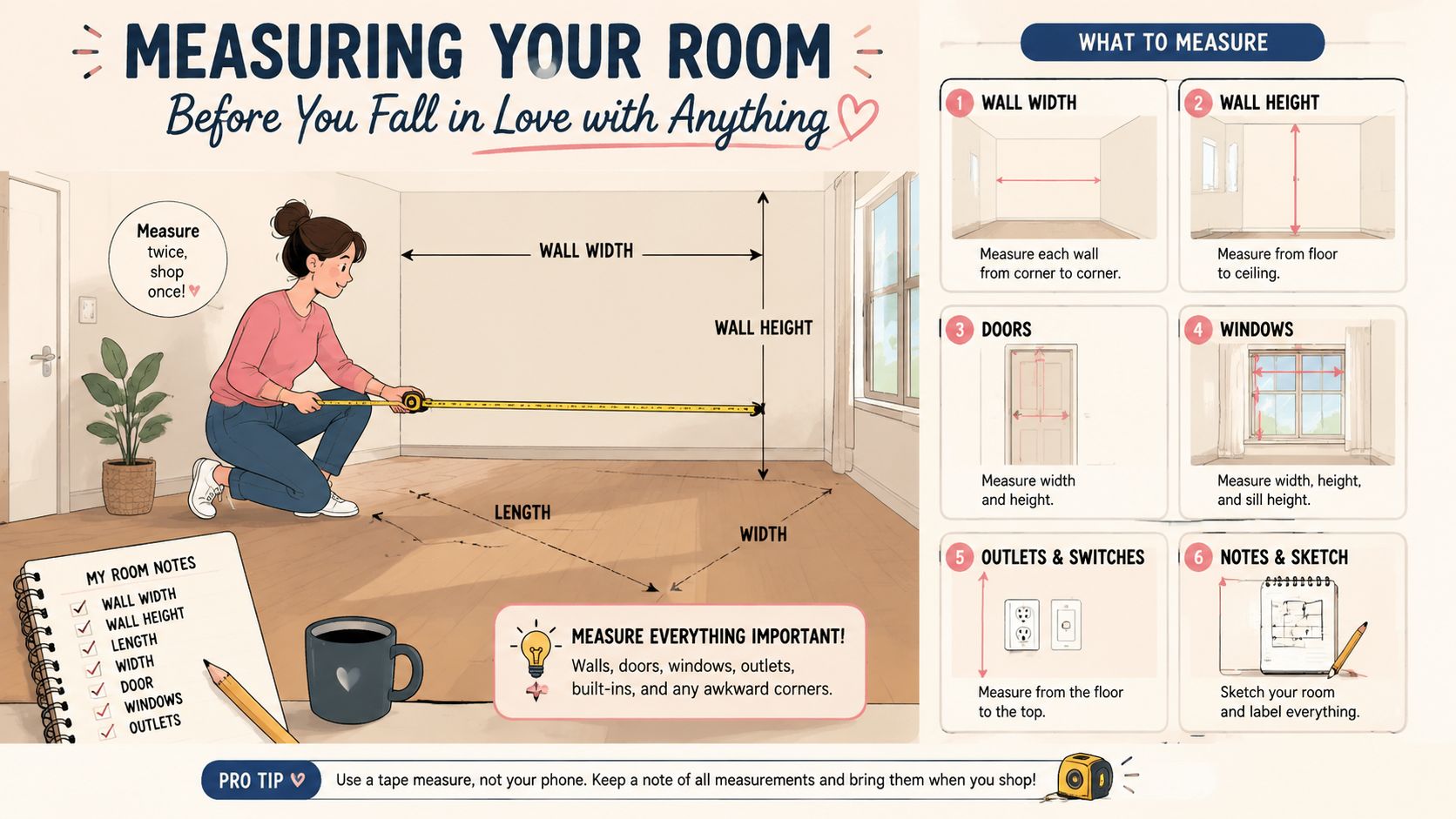
Before you browse modular furniture, measure the room and the route into it. A tape measure, grid paper, and patience can prevent a beautiful piece from becoming a delivery problem or a daily obstacle.
Build a floor plan
Sketch the room to scale, then record every feature that affects placement:
- Measure the room's length and width. Check unusual corners, alcoves, and changes in wall depth separately.
- Mark openings and obstacles. Include doors, windows, radiators, vents, built-in cabinets, and baseboard heaters.
- Locate outlets and switches. Place sofas away from the only outlet to keep cords out of walkways.
- Measure the delivery path. Record the front door, hallways, stair turns, elevator opening, and narrow passages. For apartments, condos, and senior living buildings, confirm these dimensions before ordering.
- Record furniture dimensions. Include full width, depth, and height, plus the extended size of sleepers, recliners, tables, and storage doors.
Your plan must show movement, not only furniture. Leave 60 to 75 cm of clear floor space on both sides of a fully extended modular sofa, and reserve roughly 800 to 900 mm for main walkways, as outlined in this small-space modular furniture sizing guide. These clearances give you room to pass without squeezing around the frame.
Allow about 70 cm in front of drawers so they can open fully. Give a dining chair at least 110 cm to pull back comfortably. A table may fit within the walls and still make meals, cleaning, or everyday movement difficult.
Use this furniture measuring guide to organize your measurements before visiting a showroom. Write down both the room dimensions and the largest piece that can enter through each part of the route.
Test the footprint before ordering
Painter's tape turns your plan into a real floor test. Mark the sofa, table, bed, or storage unit directly on the floor. Walk around the outline, open imaginary drawers, pull out dining chairs, and stand where the television or desk will go.
Sit inside the taped sofa footprint. Can someone reach the kitchen? Does every door swing freely? Is there still space to carry laundry, groceries, or a sleeping child through the room?
For come-apart modular pieces, tape each section separately and test the assembled footprint. This shows whether flexible delivery solves a real access problem without creating a circulation problem.
A smaller piece that preserves movement usually serves a tight household better than a larger one that blocks daily routines. Measure first, test the footprint, then choose construction and delivery details you can live with.
Modular Sofas, Storage, Beds, and Tables That Fit Small Spaces
When your studio doubles as a living room, guest room, and dining area, every piece must earn its footprint. Each modular category handles a different problem, so choose based on the job, not flexibility alone.
A modular sofa works well when one room must support lounging, conversation, and occasional guests. Start with a compact two-seater. Add a chaise or another section only after confirming the room still has comfortable circulation. A modular sofa planning guide places a two-seater around 160 to 180 cm wide, with 60 to 75 cm of open space on both sides when the arrangement is extended. Those figures give you a useful starting point, not permission to skip your own measurements.
Storage handles a different need. A bedroom without a built-in closet may suit a modular wardrobe, while a narrow entryway can use shallow cubes or stackable shelves. One compact storage system shows how standardized increments can work along a tight wall, with module widths of 30 cm, 40 cm, or 60 cm, a depth of 32 cm, and variable heights from 18 cm to 36 cm, as shown in this compact modular storage product specification. Check door swings, walkway clearance, and what you need to store before choosing a configuration.
Beds should do more than provide a place to sleep. Drawers beneath the frame can hold linens, shelving in a headboard can replace a separate cabinet, and a wall bed can change a guest room into an office during the day. Pick the feature that answers your room's main demand: hidden storage, a work surface, or sleeping space that clears when visitors leave.
Tables change shape with the schedule. An extending dining table keeps an eat-in kitchen compact between meals. Nesting coffee tables separate when company arrives and stack afterward. A drop-leaf console stays narrow in an entryway, then opens into a dining surface when needed.
| Category | Room Problem It Solves | Sample Modular Configuration |
|---|---|---|
| Seating | One room must support lounging, conversation, and occasional guests | Compact two-seater with a removable chaise |
| Storage | A bedroom or entry lacks built-in storage | Stackable shelves, cubes, or a modular wardrobe |
| Beds | A guest room must also function as an office | Wall bed, storage bed, or bed with integrated shelving |
| Tables | Dining or work space is needed only at certain times | Drop-leaf table, nesting tables, or extending dining table |
A useful overview of multipurpose furniture design reinforces the main buying rule. Seating is about comfort and reconfiguration, storage is about vertical use, beds are about hidden function, and tables are about a changing footprint. In an apartment, condo, or senior living room, favor pieces that come apart for delivery without sacrificing the construction quality you expect to live with every day.
Why Quality Construction Matters More in a Small Room
A small room gives furniture no quiet corner. Your sectional may get bumped each time the dishwasher opens, while a sleeper sofa may fold out every night in a studio. A coffee table can serve as a dining surface, homework station, and laptop desk, so weak construction shows up quickly.
Choose flexibility that can withstand daily work. Modular furniture loses its value when joints loosen, shelves sag, or upholstery wears out before your needs change. In a larger home, a worn chair can move elsewhere. In an apartment, condo, or senior living room, every piece remains visible and busy.
Look beneath the finish
Inspect the frame, joints, support system, and materials instead of judging only the fabric or layout. Solid joinery, kiln-dried hardwood, eight-way hand-tied springs, and real wood veneer over hardwood plywood are useful construction markers. They do not guarantee a perfect fit for every household, but they show that the maker invested in the parts carrying the daily load.
The supplied price comparison puts a typical flat-pack sofa at $899 and an Amish-built sofa with a kiln-dried hardwood frame at $1,899. The better question is not which price looks smaller today. Ask whether the less expensive frame will still feel solid after years of daily use and repeated moves.
A growing market shows interest in adaptable furniture, but demand does not prove durability. Forecasts place modular furniture at USD 86.5 billion in 2025 and about USD 127.9 billion by 2031. A narrower small-space segment is projected to rise from USD 6.681 billion in 2025 to USD 12.151 billion by 2035, according to this market outlook. Treat those figures as signs of demand, not promises about a product's lifespan.
Compare the sofa's bones
| Feature | Flat-Pack Modular Sofa | Amish/Solid-Built Modular Sofa |
|---|---|---|
| Frame | Often engineered for compact shipping and assembly | Often built around solid hardwood construction |
| Joinery | Basic connected sections may need periodic tightening | More substantial joinery can support repeated use |
| Spring system | Varies by model and construction | Eight-way hand-tied springs may provide a more traditional support system |
| Finish | May prioritize low shipping weight and quick assembly | May emphasize real wood details, durable upholstery, and repairable components |
| Buying question | Does the lower price match the expected use? | Does the construction justify the larger initial investment? |
Use this quality furniture buying guide to examine construction before you order. If you are considering USA-made or Amish-made furniture, do not pay more automatically. Pay for the parts that carry the daily burden, especially in a tight room where the sofa, bed, or table gets used constantly. A well-built piece that comes apart for delivery can protect both your walls and your investment.
Getting Modular Pieces Through Your Front Door
The hidden advantage of modular furniture is often logistical. A traditional three-seat sofa may not survive an apartment door, a narrow stairwell, or an elevator that limits diagonal movement. A come-apart design can separate into manageable sections that turn around corners and travel through tighter openings.
Before choosing a configuration, measure every pinch point. Record the front door's width and height, then measure the hallway, stair landing, stair turn, elevator opening, and the distance between the curb and the room. A piece can fit through the front door and still fail at the first sharp turn.
Make a delivery map
- Measure doors twice: Include the frame, trim, hinges, and the space available with the door fully open.
- Check the vertical route: Stair ceilings and low landings can matter as much as horizontal width.
- Photograph tight turns: Pictures help a showroom team understand obstacles that numbers may miss.
- Confirm every carton: Ask for the dimensions of each module or package, not only the assembled sofa.
- Discuss assembly: On-site setup can reduce the risk of scratched walls, missing hardware, or damaged banisters.
Come-apart furniture isn't a compromise when the home has difficult access. It's a practical design feature. A sectional that separates into multiple modules can be carried by adults, pivoted around a landing, and assembled inside the room instead of being forced through a doorway as one rigid object.
Delivery advice: Bring the measurements and photographs to the showroom before the delivery is scheduled. A good team should check the route before the truck arrives.
The furniture for narrow doorways resource is especially relevant for apartment, condo, and senior living deliveries.
A careful delivery plan protects more than the furniture. It protects the building, the walls, the stair railings, and the household's patience. Buyers should confirm whether assembly, packaging removal, and room placement are included before committing to a configuration.
Why Buying Modular Furniture Locally Changes the Experience
You can love a sectional online, then discover that its deep seat blocks the walkway or its arms crowd the doorway. A photograph cannot show how comfortable the back support feels, whether the modules connect firmly, or how the fabric handles everyday family use. In a small home, those details decide whether the room works.
A local showroom lets you test the actual furniture before you commit. Sit in the corner seat, stretch out on the chaise, separate the sections, compare fabrics, and open the table. Pay attention to depth, arm width, cushion support, and how each piece moves. A small difference can change the path between the sofa, kitchen, and front door.
Local advice solves local problems
Local guidance also helps you choose construction that suits the building. Come-apart sections make apartment, condo, and senior living deliveries more practical, while solid wood and Amish-built construction can provide the durability you want for furniture that sees constant use. Ask how the joints, frames, connectors, and finish will hold up before choosing a configuration.
Availability matters when a lease is ending, a move is scheduled, or a new condo needs furniture on a firm timeline. A nearby showroom can explain which pieces are available, what can be customized, and which arrival window is realistic. That conversation can prevent a finished room from waiting on one unavailable module.
A local team can also discuss the tradeoff between speed, customization, and long-term durability. A ready-to-deliver piece may solve an immediate need, while a carefully built modular arrangement may serve the room better for years. Choose based on how you live, not only on the earliest delivery date.
A floor plan is helpful. A floor plan plus a knowledgeable second opinion is better.
BILTRITE Furniture-Leather-Mattresses is a fourth-generation, family-owned showroom serving Greenfield and Metro Milwaukee since 1928. Its sales associates have over 400 years of combined furniture experience, offering practical guidance on room dimensions, seating layouts, USA-made furniture, Amish-made furniture, solid wood construction, and small-scale options. The store also has a mattress department with over 60 models, useful when a household is changing more than its sofa.
Local shopping gives you a chance to test comfort, inspect construction, ask direct delivery questions, and adjust the plan before purchase. The local business resource explains why keeping that relationship close to home can benefit the community.
Your Next Step Toward a Room That Finally Works
A small home can feel settled, not temporary, when every piece earns its place. The final decision should test more than size and style. Test what happens if the sofa module arrives damaged, the configuration changes, or the piece must leave through a narrow doorway later.
Ask the dealer three direct questions before you buy:
- What is the return policy for modular pieces? Confirm whether returns apply to the complete set or individual modules, who pays transportation, and whether customized or assembled pieces have different terms.
- How does the come-apart hardware work? Ask to see the connectors, bolts, brackets, and alignment points with the piece opened up. Hardware should feel solid, fit cleanly, and allow repeated assembly without damaging the frame.
- What happens after delivery? Get clear instructions for reassembly, replacement parts, and service if a connector loosens or a mechanism needs attention.
These answers matter more in apartments, condos, and senior living, where a move, renovation, or change in mobility can alter the room. Amish-built and other carefully constructed furniture can offer lasting strength, but craftsmanship does not remove the need to inspect access hardware. A durable frame is only useful if the modules can be handled safely and supported after installation.
BILTRITE Furniture-Leather-Mattresses offers small-scale furniture, come-apart sofas and sectionals, USA-made and Amish-made pieces, solid wood options, and a large mattress department for households making the most of limited space. Visit BILTRITE Furniture-Leather-Mattresses in Greenfield with your floor plan, door measurements, and delivery photos. Ask to see the same configuration disassembled before you commit.