Cocktail Ottoman Leather: A Complete Buying Guide


A homeowner in Greenfield stands in the living room, pointing to the empty rectangle of carpet between the sofa and television. The space needs something, but the questions come quickly. Will a leather cocktail ottoman handle children, pets, and daily feet? Can it serve as a coffee table without looking like a padded footstool? Will it coordinate with the sofa, fit through the doorway, and remain comfortable when an occasional guest needs a seat?
Those are the right questions. Cocktail ottoman leather pieces look attractive in a showroom photograph, but their real value comes from construction, proportions, finish, and how the household plans to use them. The following guide approaches the decision the way a fourth-generation furniture expert at BILTRITE would approach it on the showroom floor, one practical choice at a time.
Why a Leather Cocktail Ottoman Might Be Your Next Favorite Piece
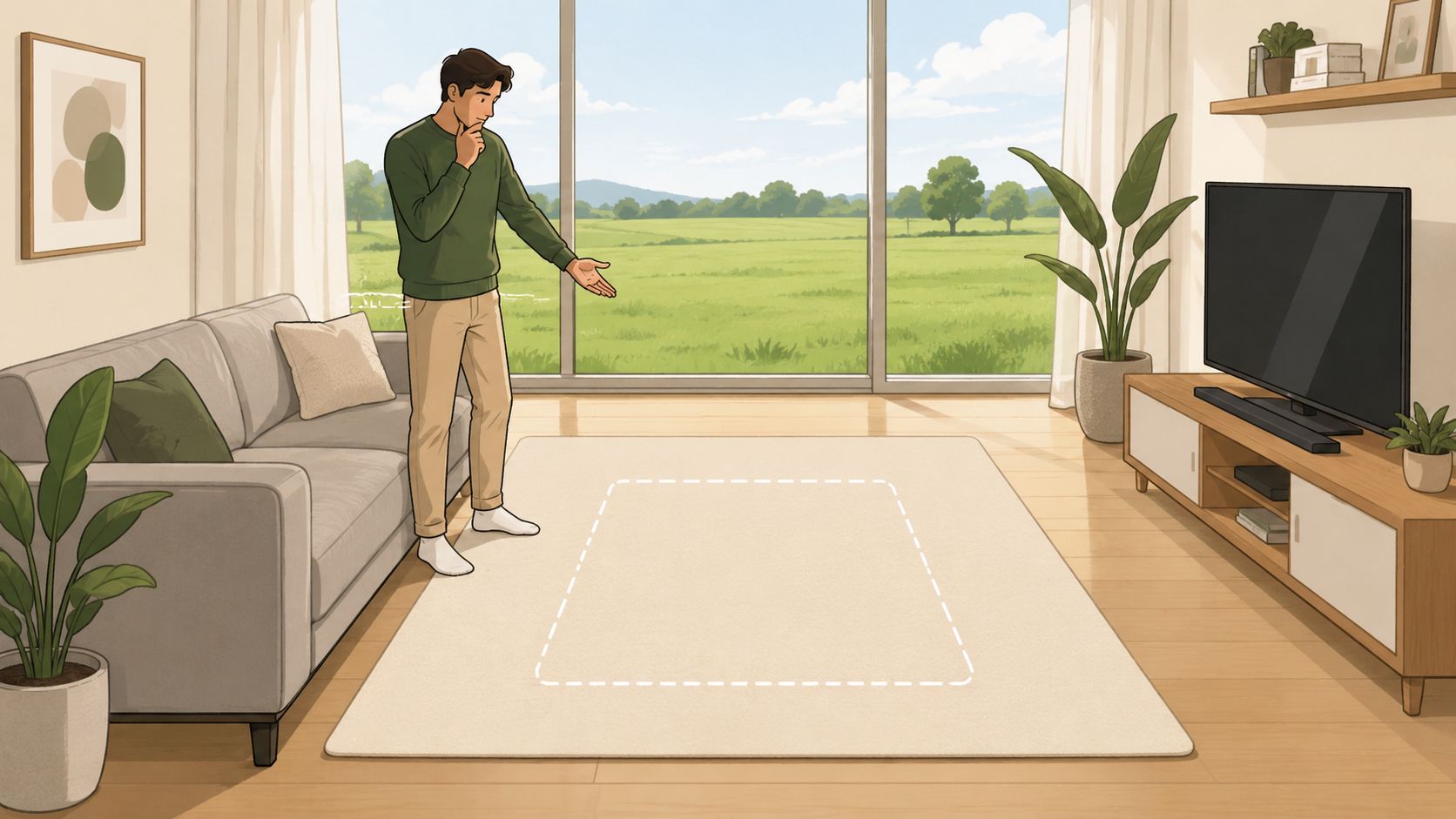
The homeowner measures the carpet, looks at the sofa, and realizes the empty space has several jobs to perform. It needs to hold a tray during movie night, support tired feet after work, leave a clear path for children, and possibly offer a seat when family arrives. A small accent ottoman could handle feet, but it wouldn't anchor the seating group or provide a useful surface.
A leather cocktail ottoman earns its place by doing more than one thing. Its broad upholstered top can support a tray, books, snacks, or a board game, while the padded surface remains comfortable under a pair of feet. Some models add storage, and reinforced designs can provide occasional seating. The piece becomes less like an accessory and more like the living room's central work surface.
The word ottoman carries a long history. The furnishing tradition is tied to the Ottoman Empire in modern-day Turkey, where a low wooden platform was piled with cushions. Modern upholstery sources trace the name and form to that empire, whose influence dates to the late thirteenth century through its founder Osman I, around 1299. Contemporary furniture has expanded the category into footrests, seats, and occasional tables, with leather cocktail ottomans occupying a premium part of that family. Architectural Digest India explains the Ottoman's historical connection and modern evolution.
Practical rule: A leather cocktail ottoman should be chosen for the household's hardest everyday task, not its prettiest showroom moment.
Start with the room's actual routine
A family room with pets and children needs a more protected surface than a quiet formal sitting room. A senior living arrangement may prioritize stable construction, supportive height, and easy movement around the piece. An apartment owner may need a smaller footprint, a lighter visual profile, or a design that can work as both table and extra seat.
BILTRITE has served the Metro Milwaukee community since 1928 as a fourth-generation, family-owned furniture business. Its Greenfield showroom gives shoppers a chance to measure against real floor models, compare leather samples, and ask direct questions before choosing between in-stock and custom options. That conversation matters because the right ottoman isn't the one with the richest color. It's the one that fits the room, the traffic, the sofa, and the family's habits.
What Makes a Cocktail Ottoman Different
A cocktail ottoman is a low, wide upholstered piece designed to sit in front of a sofa like a coffee table. It normally has enough surface area for a tray or several everyday objects, while its padded construction keeps it useful as a footrest and occasional seat.
A regular ottoman is usually smaller and more focused. It may serve as a personal footrest, an accent stool, or a movable perch. A bench ottoman is longer and may be backless or backed, making it more useful along a wall, at the end of a bed, or as supplemental seating. The cocktail version belongs in the center of the living room, where its shape and height need to work with the whole seating arrangement.
Many cocktail ottomans are broad rectangles or squares. Retail examples include an oversized rectangle measuring 60 inches wide by 48 inches deep by 20 inches high, as well as a more compact piece measuring 49 inches wide by 24 inches deep by 16 inches high. These leather furniture dimensions and care details are illustrated in a furniture-care guide. Those proportions show why the category can anchor a seating group instead of disappearing beside a chair.
Think of the dining table analogy
A regular ottoman is like a kitchen stool. It has a focused job and can move easily wherever it's needed. A cocktail ottoman is closer to the dining table itself. It gathers the room around a shared surface, supports more activities, and needs a stronger foundation because several people may use it at once.
That distinction affects the internal build. Cocktail models often need firmer top support, stable upholstery tension, and sometimes a reinforced frame so trays don't wobble and the surface doesn't collapse under repeated pressure. Buyers who need hidden storage should also consider the lid's hinges, the reinforcement beneath the top, and how smoothly the lid operates.
Storage changes the decision again. A leather ottoman with storage can keep blankets, games, or remote controls out of sight, but the storage compartment shouldn't replace structural quality. A hollow box with attractive leather may look useful, yet a weak lid or thin substrate can limit how safely the piece functions as seating.
Leather Grades and Finishes Worth Knowing
Leather tags can make a simple purchase feel complicated. The useful approach is to separate the leather grade, which describes the hide's position and processing, from the finish, which describes how the surface is protected and colored.
Full-grain leather keeps the hide's natural surface and markings. It tends to show more character and can develop a visible patina as it ages, making it a strong choice for an adult living room where natural variation is part of the appeal. Top-grain leather is also a premium option, although the surface may receive more refining for a smoother and more consistent appearance. More detail on these distinctions appears in BILTRITE's guide to the difference between top-grain and full-grain leather.
Corrected-grain leather receives additional surface treatment to create a more uniform look. Split leather comes from a lower layer of the hide and may be finished to improve its appearance. Bonded leather uses leather fibers combined with other materials, offering a lower-cost route but a different ownership expectation. None of these choices is automatically wrong. The mistake is paying for a natural, character-rich look when the household needs consistent color and stronger surface protection.
| Leather Grade | Finish | Best For |
|---|---|---|
| Full-grain | Aniline or lightly protected | Low-traffic adult rooms where natural markings and aging are welcome |
| Top-grain | Semi-aniline or protected | Families wanting a refined appearance with added everyday protection |
| Corrected-grain | Pigmented or coated | Rentals and rooms where consistent color and easier maintenance matter |
| Split leather | Pigmented or coated | Budget-conscious rooms needing an upholstered surface |
| Bonded leather | Protective surface finish | Short-term budgets and lighter-use settings |
Match the finish to the mess
Aniline leather has a natural feel and visible hide character, but it generally offers less stain resistance. Semi-aniline leather adds light protection while retaining some natural appearance. Pigmented and coated finishes provide more consistent color and more predictable surface durability, which can be helpful where children, pets, trays, and frequent contact are part of daily life.
ISO 17076-2:2011 defines a Martindale ball-plate method for measuring abrasion resistance in upholstery leather, including semi-aniline, pigmented, and coated furniture leathers. The ISO standard outlines the upholstery-leather abrasion testing framework. A buyer doesn't need to memorize the testing method, but asking for published abrasion results is sensible. For a busy household, protected leather usually offers the more forgiving ownership experience. For a quiet room, aniline's feel and natural variation may justify the extra care.
Durability and Care That Last
A leather cocktail ottoman needs a real buyer spec sheet, not a vague durability promise. The surface, frame, cushion core, seams, and support system share the workload. Feet create concentrated pressure, trays drag across the finish, and guests may sit on edges designed mainly for foot support. That matters in a family room, a senior's home, or a rental where one piece must handle several jobs.
Abrasion testing gives you a useful starting point. You may see Martindale, Taber, or Wyzenbeek double-rub results, but the figure means little unless the test method and leather finish are identified. Check tear-load and related mechanical performance as well. The furniture guidance document provides recommended tear-load and abrasion values lists tear-load values above 20 N and abrasion recommendations that can reach at least 75,000 cycles for upholstery-related applications. Ask for the test method, the leather finish, and the intended use before treating any result as a promise.
Look underneath the leather
A durable build often includes a kiln-dried hardwood frame, corner-blocked joinery, and a stable suspension system. Properly installed sinuous springs can provide reliable support. Webbing can also work well when its tension and attachment are controlled. High-density foam wrapped in Dacron helps the top stay comfortable without allowing the upholstery to loosen quickly.
The leather needs verified tear strength too. Abrasion resistance shows how the surface handles rubbing, but it does not confirm that a seam, corner, or lifted lid will withstand concentrated force. The frame and substrate must match the intended use, especially if family members or guests may sit on the ottoman.
| Leather Grade | Conditioning Interval | Maintenance Time | Expected Lifespan |
|---|---|---|---|
| Full-grain aniline | About every 6 to 12 months, with closer attention in dry conditions | Higher, because spills and surface changes need prompt attention | Long ownership potential with careful use |
| Top-grain semi-aniline | About every 6 to 12 months | Moderate, with routine dusting and quick spill response | Long ownership potential with regular care |
| Corrected-grain protected | Follow the maker's care instructions | Lower, because the coating offers more surface consistency | Good ownership potential when the finish remains intact |
| Bonded leather | Follow the maker's care instructions | Moderate, with attention to peeling or surface wear | More limited, especially in heavily used rooms |
Dust the surface, vacuum the seams, and blot spills instead of rubbing them. Real leather generally needs conditioning about every 6 to 12 months. Heavy use or dry conditions may call for more frequent care, up to two to four times a year. Use the BILTRITE leather furniture care guide alongside the leather-care guide covering cleaning, conditioning, and protection routines to match the routine to the finish. Avoid harsh cleaners, silicone sprays, direct sunlight, and placement beside heating vents, all of which can damage the finish or accelerate drying.
Putting It to Work as Table, Storage, and Seat
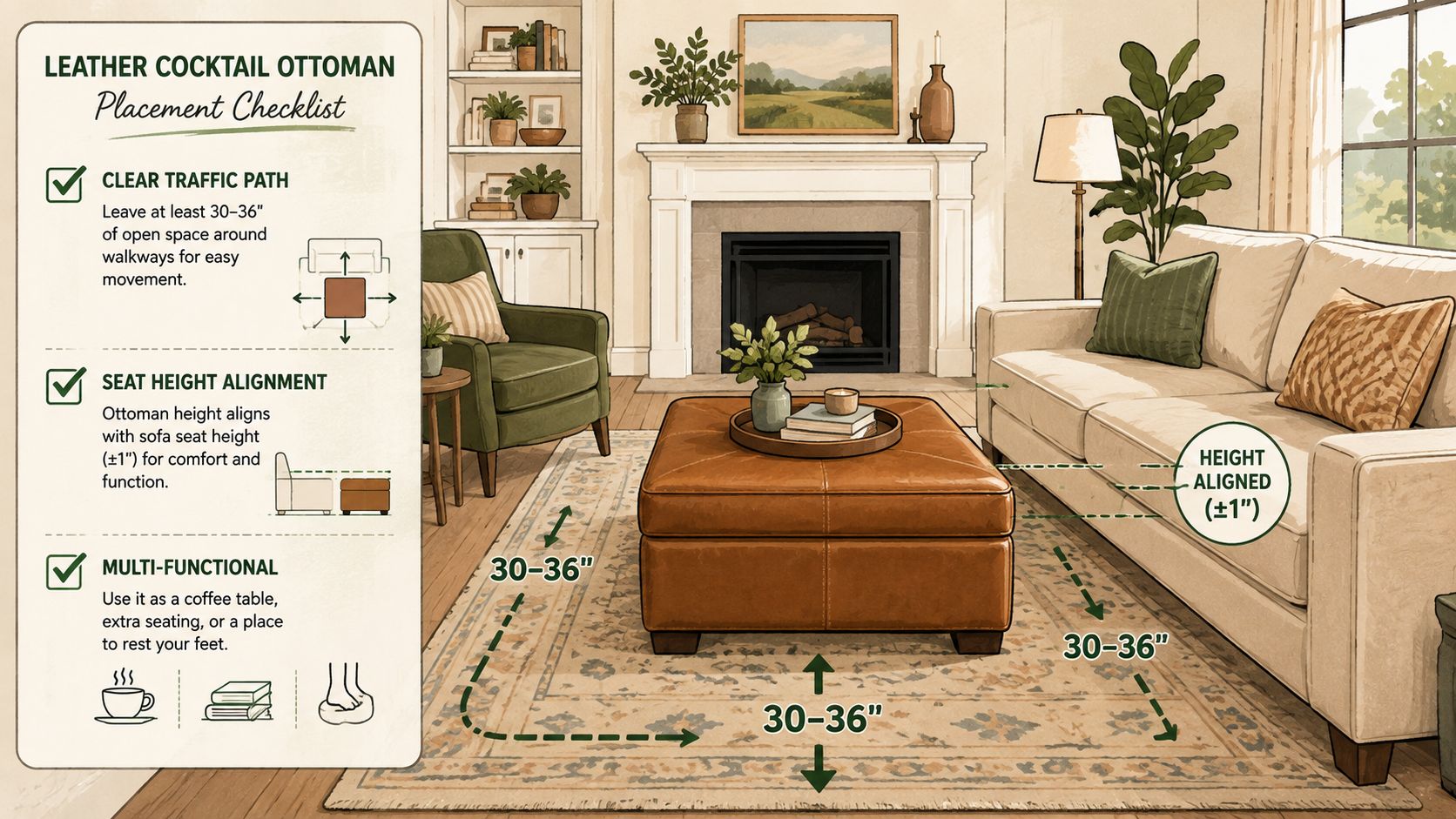
Start with the jobs this piece must handle. A broad square top gives you room for a serving tray, remotes, reading material, and a board game without crowding the sofa. A rectangular ottoman suits a sectional and leaves a clearer route through the seating area. In a compact arrangement, a 36-by-36-inch square can work well if the surrounding walkways stay open.
Leather choice should follow the household. Full-grain or aniline leather develops visible scuffs and natural change, which suits families that want a lived-in surface. Protected leather is the better choice for frequent spills, children, pets, or rough daily handling. That decision matters more than a staged room photograph.
Storage adds useful capacity without taking another piece of furniture. Lift-top lids, hinged trays, and removable cushions over hollow frames can hold blankets, toys, or game pieces. Check the lid reinforcement and hardware before buying, especially if someone may lean or sit on it. Look for construction details such as durable foam and fiber cushions paired with an engineered panel frame. Those details show that comfort and strength received attention. A leather cocktail ottoman product description demonstrates how cushion and frame details can be evaluated.
Seating needs an honest answer
A leather cocktail ottoman works for occasional seating. It should not replace a chair designed for regular support. Storage ottomans commonly carry 250 to 300 pounds, while premium hardwood-framed models can reach 350 pounds, according to the linked buying guide. The buying guide discusses typical leather ottoman load capacities and reinforced construction. Confirm the stated capacity for the exact model, particularly when seniors, caregivers, or heavier users will depend on it.
Use the room to test the choice:
- Small condo: Choose a compact square, keep the main walkway clear, and bring out a tray only when needed.
- Family room: Set a protected rectangular ottoman before the sectional, with a lift-top compartment for toys and blankets.
- Open-plan great room: Use a larger rectangle to define the seating zone while preserving circulation around the outer edges.
A tray gives leather a steadier work surface for drinks and snacks. BILTRITE's large wood tray for an ottoman helps protect the upholstery while keeping items level.
Matching a Leather Cocktail Ottoman to Your Sofa
The ottoman should look related to the sofa, not as though it arrived from a different room. Matching doesn't require identical leather. In many living rooms, a tonal relationship looks more deliberate than a forced exact match.
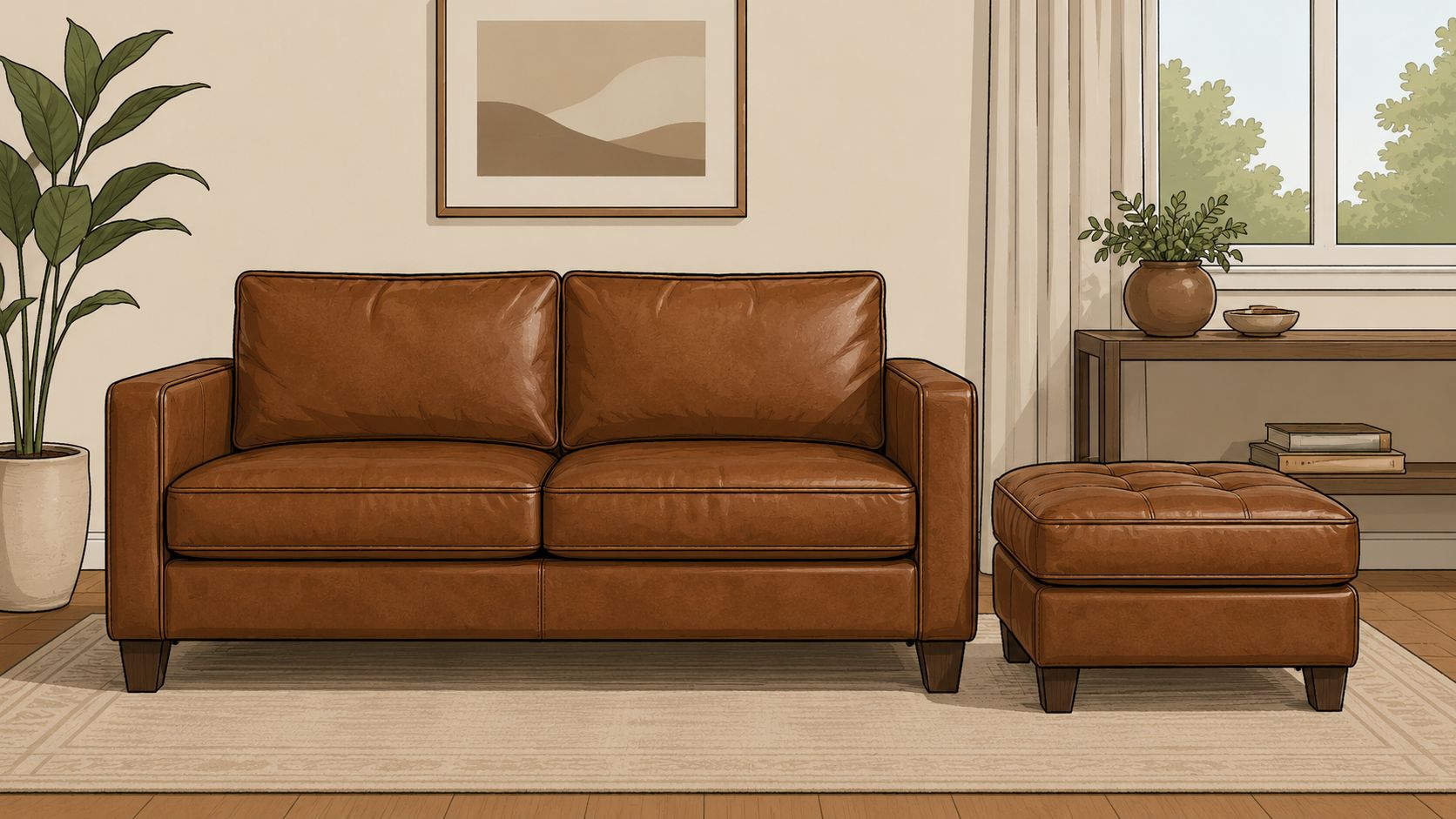
The safest combination uses the same general leather family in a slightly different shade. A medium brown sofa can work with a deeper brown ottoman, while a warm cognac piece can add contrast to a cooler gray sectional. Texture also matters. A smooth leather ottoman can calm a heavily textured sofa, while a more naturally marked hide can add warmth to a clean-lined seating group.
Proportion makes the pairing work
Length matters more than many shoppers expect. A useful proportion guideline is to keep the ottoman around two-thirds of the sofa's length, with its height within 1 to 2 inches of the sofa seat height. Because these are precise measurements, they should be checked against the actual furniture rather than treated as a substitute for measuring. A low ottoman can feel disconnected, while a tall one may interfere with leg comfort and sightlines.
Shape should echo the sofa's lines. A rectangular ottoman usually suits a long sofa or straight sectional. A round or softly shaped model can repeat the curves of a rounded sofa or pair of chairs. In a narrow room, a scaled-down rectangle may serve the same function without crowding the path.
The finishing details complete the relationship:
- Legs: Match the sofa's wood tone or choose a simple leg that doesn't compete.
- Nailhead trim: Use it when the sofa already has classic traditional details, not as decoration added without a connection.
- Stitching: Contrast stitching can repeat a sofa seam, while restrained stitching works better with contemporary upholstery.
More room-specific guidance appears in BILTRITE's article on living room design with a leather sofa. The central principle remains straightforward. The ottoman should support the sofa's scale, color temperature, and design language.
BILTRITE's In-Stock and Custom Options
BILTRITE's Greenfield showroom gives shoppers two useful paths. In-stock pieces make it possible to sit on the ottoman, compare its height with a sofa, inspect the leather in person, and evaluate the build before bringing it home. Custom options help when the room already has a specific sofa, color palette, or storage requirement.
The showroom focuses on affordable, better-quality furniture rather than chasing the lowest possible price. Shoppers can find USA-made, Amish-made, and solid-wood furniture alongside small-scale pieces for apartments and heavy-duty options for families, seniors, and caregivers. The same store also has a large mattress department with over 60 models, so a household furnishing several rooms can receive guidance in one local showroom.
A floor model tells a buyer things a photograph can't. The feel of the leather, the firmness of the cushion, the movement of the lid, the stability of the frame, and the relationship between ottoman and sofa all become obvious during a showroom visit. BILTRITE's sales associates have over 400 years of combined experience, and their role is to answer questions without pressure.
Compare the paths before choosing
| Option Type | Leather Selections | Shapes and Sizes | Custom Features | Typical Lead Time |
|---|---|---|---|---|
| In-stock ottoman | Selection varies by available floor models | Available showroom shapes and sizes | Features are model-specific | Available according to showroom inventory |
| Custom ottoman | Broader leather and color selection | Chosen to suit the room and seating group | Options may include tufting, contrast welting, casters, or storage | Confirmed with the showroom for the selected build |
Custom ordering is especially useful when an existing sofa swatch needs to be matched. It can also support a specific room challenge, such as a smaller apartment footprint, a senior living arrangement, or a great room that needs a larger visual anchor. Buyers should ask for the construction details, care instructions, warranty terms, and expected timing before placing an order.
BILTRITE is closed on Sundays and Mondays so its team can spend time with family. That schedule reflects the store's family-first, buy-local character, not a digital sales funnel. The showroom is located at 5430 West Layton Avenue in Greenfield, Wisconsin, where shoppers can sit, measure, and talk through the decision face to face.
Your Quick Decision Checklist and Next Step
A good leather cocktail ottoman decision becomes much easier when the room, household, and construction are considered together. Style starts the conversation, but daily use decides whether the piece remains satisfying.
Check the room before the leather
First, trace the traffic path from the main entry to the sofa and television. Measure the open area, then measure the doorway, hallway, elevator, and stair turns the ottoman must pass through. A large rectangle may look right in an open-plan room but become difficult if the delivery route has a tight turn.
Next, compare the ottoman height with the sofa seat. The top should feel comfortable for feet and practical for a tray. A lower piece can read as a footrest, while a taller piece may behave more like a table and provide less relaxed leg support.
Decide what the top must do
A household that mainly wants a footrest can choose a softer, simpler design. A family that serves snacks and plays games needs a firmer top and a tray. A small-space renter may value storage more than a decorative base, while a senior or caregiver may need verified load capacity and a stable frame for occasional sitting.
The leather finish should follow the room's demands:
- Quiet adult room: Full-grain aniline can deliver natural texture and visible aging.
- Family with children: Semi-aniline or protected leather offers a more forgiving surface.
- Rental or senior living setting: A durable coated finish can provide consistent appearance and simpler upkeep.
- High-use room: Ask for abrasion, tear-load, frame, and cushion information rather than relying on color or grain alone.
Verify the build in person
A showroom tag should answer practical questions about foam, frame construction, stitching, support, and warranty coverage. Buyers should also inspect the lid reinforcement if storage is included and ask whether the manufacturer provides a safe load limit. The leather surface matters, but seam strength and substrate stability determine whether the ottoman holds its shape.
Bring a sofa swatch or photograph, but trust the in-person comparison. Leather can look different under showroom lighting, and sitting on the piece reveals firmness and height immediately. BILTRITE's Greenfield team keeps floor models and swatches available for walk-in shoppers, while custom orders can begin with a household's existing leather sample.
The final recommendation is simple. Choose the size that preserves movement, the finish that matches the mess level, and the construction that supports every intended use. A more stylish ottoman isn't automatically better if its frame, lid, or seams can't handle the household. A simpler leather finish on a reinforced structure may provide better value over time.
BILTRITE Furniture-Leather-Mattresses offers leather living room furniture, in-stock and custom ottomans, USA-made and Amish-made pieces, solid-wood furnishings, and a large mattress department for households across Metro Milwaukee. Visit BILTRITE Furniture-Leather-Mattresses in Greenfield, bring a sofa swatch or room measurements, and let the showroom team help match the leather, size, and construction to everyday life.