Heavy Duty Industrial Chairs: Your 2026 Buying Guide


A lot of people start looking at heavy duty industrial chairs after one annoying moment. A seat starts creaking in the garage office. A workshop stool feels fine for ten minutes, then awful by lunch. A caregiver notices that a wipe-clean chair would make life much easier. The old chair hasn't completely failed, but it's clearly not built for the job.
That's where heavy duty seating stops being a luxury and starts being practical. A chair used in a home office, hobby space, warehouse desk, reception area, or care setting has to do more than look sturdy. It has to support the person using it, hold up to repeated movement, and stay dependable over time.
At BILTRITE, that practical approach matters. The store has served Metro Milwaukee since 1928 as a 4th generation, family-owned business, and that long view tends to change how furniture gets discussed. A chair isn't just a short-term purchase. It's part of daily comfort, safety, and value.
Getting to Know Heavy Duty Industrial Chairs
Heavy duty industrial chairs are built for people and places that ask more from seating every single day. That might mean a larger user, a longer sitting shift, a tougher environment, or a need for furniture that won't wobble after a short stretch of use.
Standard chairs often work fine for occasional sitting. Trouble starts when a chair faces constant loading, leaning, swiveling, and getting in and out. That's when weak joints, light frames, and lower-grade components show up fast.
Heavy-duty industrial chairs are specifically engineered to support weight capacities ranging from 300 pounds to 500 pounds or more, while standard office chairs typically support 200 to 250 pounds according to this heavy-duty chair guide. That difference matters because the stronger build helps maintain structural integrity for a wider range of users.
More than a tougher office chair
A good comparison is a step stool versus a work platform. Both help someone get off the ground, but one is meant for quick light use and the other is meant for repeated, demanding work. Chairs work the same way.
Heavy duty industrial chairs usually include reinforced frames, stronger seat supports, and materials selected for harder use. Some are made for factory desks or lab stations. Others fit home offices, sewing rooms, hobby benches, or senior living spaces where dependable support matters just as much as style.
A chair's job isn't just to hold weight once. It has to keep doing that job safely through everyday movement.
Why people often get confused
Many shoppers focus on one number and stop there. They see a weight rating and assume the chair is automatically suitable. That's understandable, but it misses the bigger picture.
A chair can look substantial and still feel unstable in daily use if the rest of its construction isn't up to the task. The frame, base, lift, seat material, and cleaning needs all matter. That's why a little homework upfront can prevent frustration later.
Evaluating Key Features and Specifications
A heavy duty chair works a lot like a pickup truck. The headline number gets attention first, but the real question is how it performs day after day under starts, stops, bumps, and repeated use. Chairs are the same. A high weight rating is helpful, but it does not explain how well the chair handles real sitting, shifting, swiveling, and getting up.
Start with capacity, then ask how the chair earns it
Weight capacity is still the first checkpoint. If the chair will be used by one person every day, shared by several family members, or placed in a work area where people sit down firmly and move often, the rating should leave a comfortable margin.
But capacity alone can fool people.
Some chairs are rated for a certain load in a fixed position. Daily life is harder than that. People lean to grab a file, push away from a desk, sit down quickly after a long shift, or rest more weight on one arm while turning. Those motions create dynamic load, which is different from static load. Static load is the chair holding weight while everything stays still. Dynamic load is the chair dealing with movement and repeated stress.
That often-missed difference is where buyers get tripped up.
The frame and base do the hidden work
The frame works like the foundation under a house. If the foundation is weak, fresh paint and soft carpet will not fix the problem.
A well-built heavy duty industrial chair usually depends on reinforced metal parts, a stable base, and joints that stay tight under repeated use. Those parts are not flashy, but they are what keep the chair from developing the little warning signs people notice later, such as wobble, uneven wear, or a seat that no longer feels level.
At BILTRITE, that practical side of construction matters. As a family-owned business, we have always believed furniture should be judged by how it holds up in a real home or workplace, not just by how it looks on a tag.
Static weight rating and dynamic-load durability are different tests
This is the point many shoppers never hear explained clearly.
A chair might hold a certain amount of weight when tested in a stationary position, yet still wear out early if its lift, base, or joints are not made for repeated motion. ANSI/BIFMA chair standards help show the difference because they evaluate seating for the repeated movements and stresses that happen during normal use, not only for a single still-load number.
So the number on the box does not tell the whole story; the chair must survive real movement, not a frozen moment.
That is one reason we pay close attention to how a chair is built, especially with USA-made and Amish-made options. Good craftsmanship often shows up in the places you do not notice at first glance: tighter joinery, steadier bases, stronger support under the seat, and components chosen for years of use instead of a quick sale.
Materials affect wear, cleanup, and comfort
Materials change how a chair lives in a room.
In a workshop, sewing room, clinic-adjacent space, or busy home office, an easy-clean surface may save a lot of frustration. In a desk area used for long stretches, breathability and surface feel may matter more. If several people use the same chair, fabric wear becomes part of the buying decision too. For a plain-English explanation, this guide to fabric durability ratings helps connect upholstery choices to everyday use.
A chair can be strong on paper and still be wrong for the room if the material does not match the job.
Ergonomics still count
Heavy duty should not mean stiff or awkward.
A chair still needs to fit the person using it and the work being done. Seat width, back shape, height range, and arm style all affect whether the chair feels supportive after an hour or tiring after twenty minutes. A wider seat may help one user feel properly supported, while open sides or minimal arms may suit a workbench better.
Small fit issues become big annoyances over time.
A quick comparison
| Feature | What to look for | Why it matters |
|---|---|---|
| Weight capacity | A rating that exceeds the expected user load | Gives a better safety margin and helps the chair hold up longer |
| Dynamic durability | Testing for repeated movement and daily use | Helps separate a high label number from real long-term performance |
| Frame construction | Reinforced metal frame and secure joints | Supports stability and reduces wobble or sag over time |
| Base design | A steady five-point base or other stable support design | Helps the chair stay balanced during movement |
| Surface material | Upholstery or easy-clean material suited to the room | Affects cleanup, comfort, and long-term wear |
| Fit features | Seat width, back support, height range, and arm style | Helps the chair match the user and the task |
Warranties and long-term value
Price matters, but replacement headaches matter too.
A chair that lasts and keeps its support usually costs less frustration than a cheaper one that loosens, tilts, or wears out early. That is why we encourage people to read past the headline rating and look at the whole build. For many local shoppers, especially families and business owners trying to buy once and buy well, that is the better measure of value.
Exploring Industrial and Residential Use Cases
A heavy duty chair doesn't belong to just one kind of room. The same category can solve very different problems depending on where it's used.
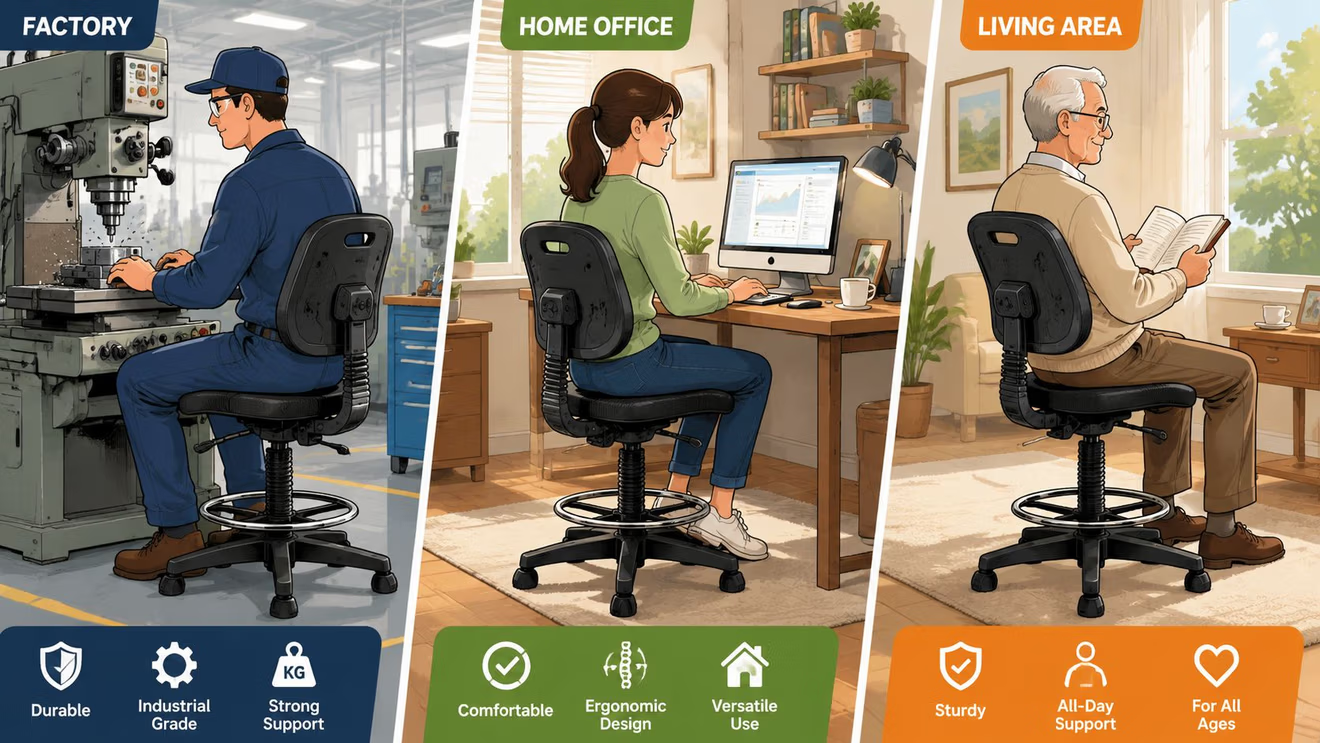
A machinist using a desk station on a factory floor needs a chair that stays stable through long shifts and repeated movement. In that world, the chair isn't decorative. It's part of the workday, just like the bench, lighting, and floor mat.
For general industrial use, heavy duty chairs are independently tested to support users weighing up to 25 stone (160 kg), and ultra heavy-duty bariatric variants can sustain loads exceeding 800 lbs (363+ kg) according to this industrial seating reference. That kind of range helps explain why one “heavy duty” label can describe very different products.
Home office and hobby spaces
A home office user may need the same strength for different reasons. Maybe the chair gets used all day for remote work. Maybe several family members share it. Maybe it rolls between a desk, printer, and worktable and gets more abuse than a typical office chair.
A woodworking hobbyist might care less about a boardroom look and more about reliable support, easy cleanup, and a seat that doesn't complain every time the user shifts position. In cases like that, guidance on furniture for a heavy person can help narrow what features matter most.
Care settings and living spaces
A caregiver's needs are different again. The chair may sit in a senior living room, bedroom corner, or multi-use family space where easy transfer, steady support, and wipe-clean surfaces matter more than trend-driven styling.
The right chair often comes from understanding the room first. A garage office, care space, and factory desk may all need “heavy duty,” but they don't need it in the same way.
That's why use cases matter so much. The best choice depends less on marketing language and more on how the chair will be used from Monday morning through Sunday night.
Maintaining and Extending Chair Durability
A heavy duty chair can stay dependable for years, but only if someone pays attention to the small stuff before it turns into big stuff. Loose hardware, worn casters, and neglected surfaces usually give warning signs.
Clean for the material, not just the mess
Some industrial-grade chairs use polyurethane (PU) seats and backs because they resist chemical degradation and are easy to sanitize in environments that need frequent disinfecting, according to this industrial furniture materials overview. That makes PU especially practical in labs, healthcare-adjacent rooms, workshops, and other spaces where wipe-down cleaning is routine.
For everyday household care, this set of upholstery cleaning tips can help readers match the cleaning method to the surface instead of over-scrubbing and causing damage.
A simple maintenance rhythm
A chair doesn't need fussy care. It does need regular checks.
- Look at the base: Watch for cracks, bent areas, or wobble where the legs meet the center.
- Test the lift: If the seat slowly sinks or sticks during adjustment, the cylinder may be wearing out.
- Check the casters: Hair, debris, and floor grit can make rolling rough and add strain.
- Tighten hardware: Bolts and connection points can loosen through repeated movement.
- Wipe spills early: Dirt and residue are easier to remove before they settle into seams and textured surfaces.
What good maintenance prevents
Routine care helps stop the most common annoyances. A caster that drags can stress the base. A loose arm can make the whole chair feel flimsy. Dirt packed into moving parts can make a sturdy chair act cheap.
A chair rarely fails “all at once” without earlier clues. Most problems start small, then get ignored.
For families, caregivers, and workspaces, that's the practical goal. Keep the chair safe, clean, and tight enough that it continues doing its job without surprise repairs.
Choosing the Right Chair for Your Needs
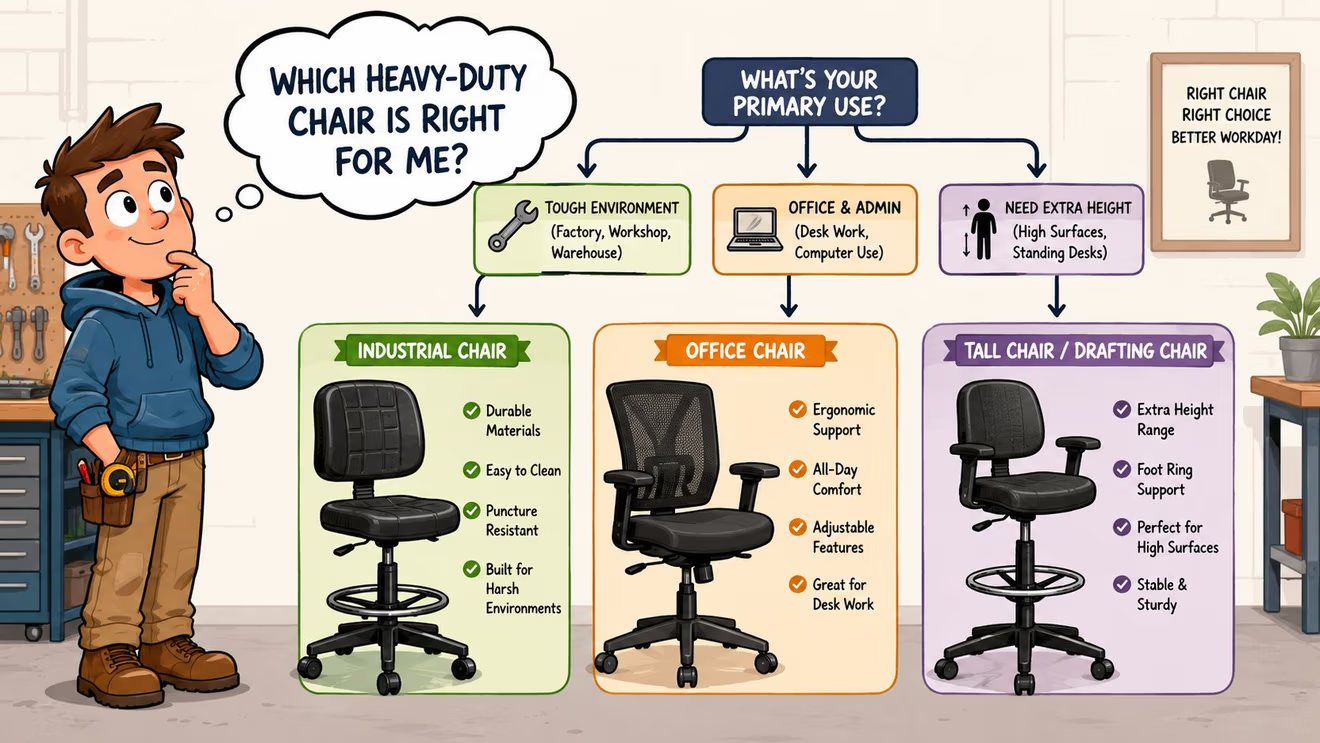
A good chair choice usually becomes clear the moment you picture the actual daily use it will face. A stool for a garage bench lives a very different life than a chair in a shared home office or a seat used by a caregiver helping someone stand up safely.
Match the chair to the job
Start with the task before you start with the product label. A chair used at an industrial workstation needs steady support, durable parts, and surfaces that can handle repeat use without feeling loose after a short time. A chair for a home office often needs to blend into the room while still giving real support. In a care-focused setting, safe sitting and easier standing may matter more than style.
A simple way to sort options is to ask, “What problem would annoy me first?”
- Wobble or tipping? Look closely at the base, frame, and overall stance.
- Cracking, peeling, or scuffing? Pay attention to the surface material and finish.
- Aching after long sitting? Focus on seat shape, back support, and fit.
- Hard cleanup? Choose materials that wipe clean without much fuss.
That question helps narrow the field fast.
Don't let one weight number decide everything
Many shoppers make a common mistake. A chair can sound impressive on paper because it lists a high weight capacity, yet still wear out early if it faces constant swiveling, scooting, leaning, and getting in and out all day.
Static capacity and dynamic durability are not the same thing. Static capacity is closer to asking how much a parked pickup can hold while sitting still. Dynamic durability is closer to asking how it holds up on potholes, turns, stops, and everyday miles. Chairs work the same way. Real life includes motion.
This distinction is important because many product pages highlight the biggest capacity number and say very little about how the chair handles repeated daily movement. In practice, a reinforced frame, dependable lift, quality casters, and well-built joints often tell you more about long-term value than a bold headline number.
A plain-language checklist
A short checklist keeps the decision grounded:
Primary setting
Is the chair going in a workshop, office, studio, care space, or a shared room at home?User fit
Does the person need more seat width, firmer support, easier entry and exit, or longer sitting comfort?Daily motion
Will the chair mostly stay in one place, or will it roll, swivel, and adjust throughout the day?Surface needs
Do you want a softer residential look, a practical wipe-clean surface, or a mix of both?Build quality
Are you buying for occasional use, or for years of repeated movement and heavier wear?
For shoppers who want domestic craftsmanship in the mix, office chairs made in the USA are a practical category to compare alongside other heavy-duty options. That fits BILTRITE's local-first approach well. As a family-owned store, BILTRITE Furniture-Leather-Mattresses puts real value on USA-made and Amish-made construction, because strong materials and careful building usually show up in the daily details you can feel, not just in the spec line.
Local Purchasing Options and BILTRITE Advantages
Trying a chair in person still solves problems faster than reading a dozen product descriptions. Seat feel, arm position, ease of standing up, and overall stability become obvious within a few minutes.

For factory or warehouse environments, heavy-duty industrial chairs must support a minimum static load of 1,000 pounds (454 kg) to meet ANSI/BIFMA X5.1 safety standards for commercial-grade seating according to this Milwaukee-area business feature. That kind of requirement shows why in-person guidance can help separate a serious work chair from a chair that just sounds tough.
Why local shopping helps
A local showroom gives shoppers the chance to compare seat heights, widths, materials, and overall feel without guessing. That matters even more with heavy-duty seating, where fit and confidence are a big part of the value.
BILTRITE's local-first approach also reflects its family values. The store has served Metro Milwaukee since 1928, focuses on affordable better-quality furniture, highlights USA-made and Amish-made craftsmanship, and stays closed on Sundays and Mondays for family time. Readers curious about that approach can learn more through BILTRITE's store advantages.
The team's combined experience stretches across generations, and that tends to make the conversation more helpful than pushy. For many shoppers, that's exactly what makes a showroom visit worth the trip to Greenfield.
Wrapping Up Your Heavy Duty Chair Search
Heavy duty industrial chairs make the most sense when the buyer looks past surface-level labels. Weight capacity matters. So do the frame, base, lift, materials, and how the chair behaves during real movement.
That's also why the static-versus-dynamic distinction is so important. A chair that looks strong on paper may not feel strong in daily life if its parts aren't built for repeated use. The right chair supports the user, suits the room, cleans up reasonably well, and keeps doing its job without drama.
For Metro Milwaukee shoppers, a hands-on visit can answer questions much faster than scrolling can. BILTRITE has been part of the community since 1928, offers affordable better-quality furniture with a strong mix of USA-made and Amish-made choices, and has a huge mattress department with over 60 models for households furnishing more than one room. The store's sales associates also bring over 400 years of combined experience, which gives shoppers a lot of practical guidance without pressure.
Ready to find a heavy-duty chair that fits the space, the user, and everyday life? BILTRITE Furniture-Leather-Mattresses welcomes visitors to the Greenfield showroom to sit, compare, ask questions, and get honest help from a family-owned local team.