Top Bed Frames with Hooks for Headboard and Footboard


A lot of folks end up in the same spot. There's a handsome headboard in the guest room, a footboard from a family set in the basement, and a basic metal frame that doesn't seem to connect to either one. The pieces all look like they belong together, but the hardware tells a different story.
That's where hook-on rails come in. For many Milwaukee-area families, bed frames with hooks for headboard and footboard are the missing link between a beautiful bed and a sturdy night's sleep. This style has been around for generations because it's simple, strong, and especially common in solid wood furniture.
At BILTRITE, that kind of question has been part of daily life for a very long time. BILTRITE Furniture has been a family-owned, fourth-generation business serving the Metro Milwaukee community since 1928, operating for nearly a century as a Wisconsin staple (Milwaukee Magazine on BILTRITE's long history). Families walk in with measurements scribbled on paper, photos on their phones, and one goal: get the bed set up the right way, without wobble, guesswork, or damage.
That hands-on problem-solving matters because bed hardware can look deceptively similar. One hook rail might slide right in. Another might be just a little too thick, too narrow, or set at the wrong height. That small mismatch can turn a sturdy setup into a frustrating one.
Welcome to the World of Hook-On Bed Frames
A common story goes like this. Someone inherits a solid wood headboard and footboard from a parent or grandparent. The wood still looks great, the bed has character, and nobody wants to part with it. Then assembly day arrives, and the question pops up fast. How does this bed go together?
The answer is often a hook-on bed frame. Instead of bolting rails flat against the posts, the side rails use metal hooks that drop into slots in the headboard and footboard. Once seated properly, the connection becomes snug and supportive. It's a classic system, and it still makes a lot of sense today.
Why this design still matters
This style has lasting appeal because it matches the kind of furniture many families want to keep for years. Solid wood beds, especially traditional styles, are often built around rail-and-post construction. Hook-on hardware fits right into that approach, and it keeps assembly fairly straightforward.
For shoppers sorting through bed styles, different types of bed frames can look similar at first glance. Underneath, though, the support system makes a big difference. A hook-on setup is often a strong choice when the headboard and footboard are substantial pieces rather than decorative add-ons.
Practical rule: If the headboard and footboard were built to carry the bed's structure, the frame connection matters just as much as the mattress on top.
Where people get tripped up
Most confusion starts when people assume every bed rail attaches the same way. It doesn't. Some beds use bolts. Some use plates. Some use hook-and-slot connections. And some older beds use hardware that looks familiar but follows slightly different sizing.
That's why this category deserves a slower look. The idea is simple, but the fit has to be right. When the hooks match the slots, a bed can feel quiet, stable, and solid. When they don't, the problems usually show up fast.
For households that appreciate USA-made and Amish-made solid wood furniture, hook-on rails are often part of the package. That old-school construction isn't flashy. It's just dependable, and that's exactly why so many families still ask for it.
Decoding the Different Hooks and Hardware
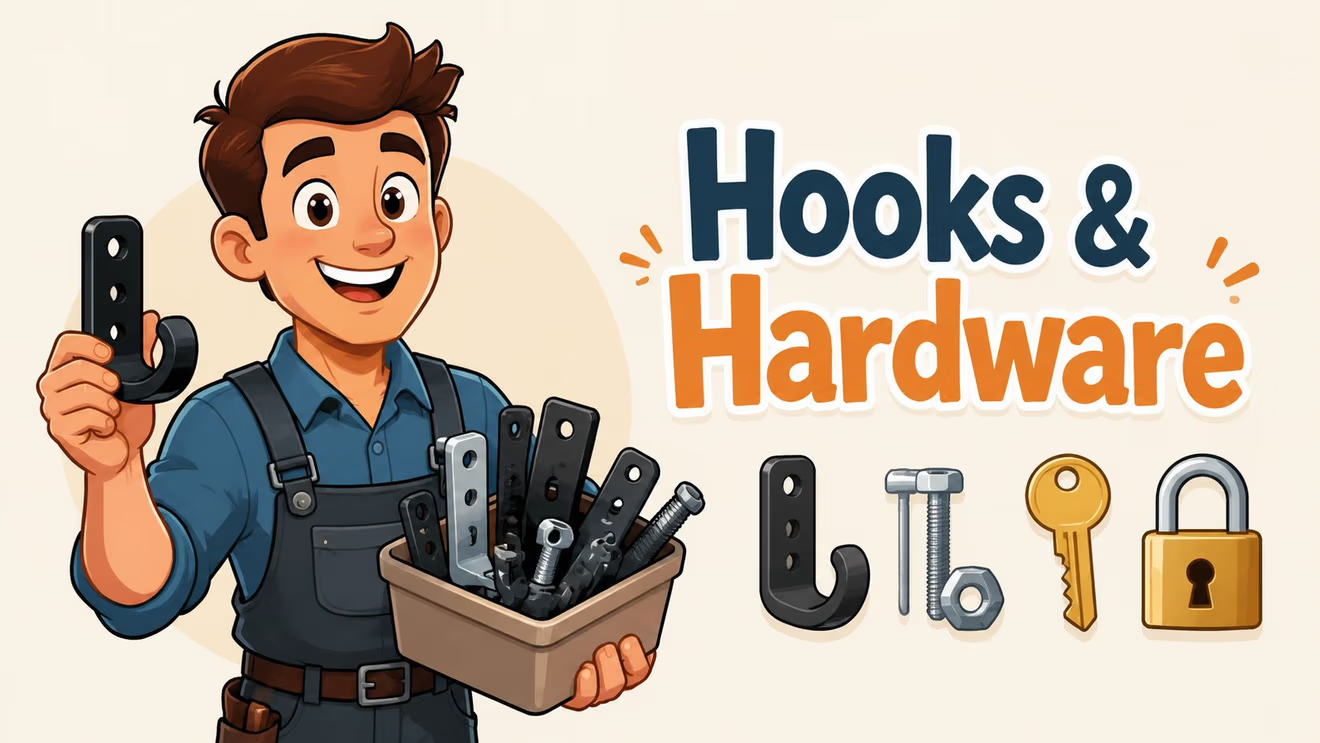
The hardware itself doesn't need to feel mysterious. The components fit together like matching puzzle pieces. The headboard and footboard have receiving slots. The rail has hooks. The shape, thickness, and spacing need to line up so the rail drops in securely.
The most common hook setups
Some rails use a single-hook pattern. Others use double hooks or a grouped set of hooks on each end. More hooks don't automatically mean a better frame. What matters is whether the rail was designed for the slot pattern in the bed posts.
A simple way to think about the main parts:
- Hooks on the rail: These slide or drop into the bed post slots.
- Slots in the headboard and footboard: These receive the hooks and carry the rail.
- Cross supports or center support: These help carry mattress weight across the span.
- Pins, bolts, or locks in some designs: These may reinforce the connection depending on the frame style.
For anyone brushing up on the terminology, the basic parts of a bed can help make the whole setup easier to picture.
Why the fit has to be snug
A loose fit usually causes the same complaints. The bed shifts a bit when someone sits down. A rail clicks under movement. The mattress feels less grounded than it should. That's not always because the frame is poor quality. Sometimes the hardware just isn't seated tightly in the right slot pattern.
A hook connection should feel engaged, not barely hanging on.
That's one reason this design has stayed popular in traditional furniture. Bed frames with hooks for headboard and footboard connection have been a foundational design in American solid wood furniture since the mid-20th century, especially in Amish and USA-made pieces, where the focus is on durable, traditional construction (BILTRITE guide to hook-on bed frames).
A few hardware details worth noticing
Not every mismatch is dramatic. Sometimes the hooks technically fit, but they sit too high or too low in the slot. That can leave the rail uneven. In other cases, the spacing between hooks doesn't match the spacing between the openings in the post.
A quick checklist helps:
- Look at the number of hooks on each rail end.
- Check hook spacing from top to bottom.
- Notice hook thickness so it isn't forced into a slot.
- Check rail height relative to the floor and side support.
Those details may seem small, but they're often the difference between a bed that feels solid and one that keeps asking for attention.
Your Measurement and Compatibility Checklist
Measurements solve most bed-frame headaches before they start. A few minutes at home can save a lot of frustration later, especially when the bed includes older wood pieces with unusual slots or handmade details.
That prep work matters most with vintage furniture. A critical compatibility gap exists between modern hook frames and antique headboards, as many antique owners report confusion over hardware compatibility, leading to a high risk of structural failure if the slot width and hook thickness don't match precisely (discussion of antique bed hardware confusion).
What to measure before leaving home
Photos help, but measurements do the heavy lifting. A tape measure, a notepad, and a few clear shots of the bed posts can make store conversations much more productive. How to measure furniture is a useful starting point for getting consistent numbers.
Here's a simple pre-shopping checklist.
| Measurement | What to Measure | Why It Matters |
|---|---|---|
| Bed width | Measure the inside width where the mattress support will sit | Confirms whether the frame matches the bed size |
| Slot height from floor | Measure from the floor up to the slot area on both headboard and footboard | Helps determine whether the rails will sit level |
| Slot spacing | Measure the distance between the slot openings used by the hooks | Tells whether the hook pattern on the rail aligns |
| Slot width | Measure the width of each receiving slot carefully | Prevents forcing too-thick hooks into older wood |
| Slot depth | Measure how deep the slot or receiving area goes | Helps confirm whether the hook seats fully |
| Post thickness and shape | Note whether the post is square, turned, thick, or narrow | Reveals whether the rail clears trim and decorative edges |
| Footboard match | Repeat the same measurements at the footboard, not just the headboard | Some beds differ slightly from one end to the other |
Antique beds need extra caution
Older beds often have charm that newer pieces can't fake. They also come with hardware quirks. Some were built for support systems that aren't common today, and the receiving slots may not behave like modern universal attachment points.
That's where many homeowners get into trouble. They see slots, assume modern hooks will fit, and try to force the connection. The wood may resist, split, or hold temporarily but shift under weight later.
Bring measurements of both ends of the bed. The headboard and footboard aren't always identical, especially on older sets.
Smart habits that prevent mistakes
A few practical habits can keep a good project from turning into a repair job:
- Measure twice: A small error in hook spacing can send a shopper home with the wrong rail.
- Photograph close-up details: Side angles and straight-on shots help identify slot style.
- Don't guess at bed size: “Looks like a full” isn't enough when rails need exact fit.
- Watch for repairs: If an antique post has been patched, reinforced, or altered, the new hardware has to work with that reality.
Some families arrive with a headboard they love and no footboard at all. Others bring in a complete set but need modern support underneath. Either way, careful measurement is what turns “maybe this fits” into a much more confident decision.
Why Heavy Duty Materials Mean Better Sleep
A bed frame does quiet work every night. It carries the mattress, supports the sleepers, and absorbs movement when someone sits down, rolls over, or gets up before sunrise. When the frame is made from weak material, the whole bed feels less steady.
That's why material quality matters more than marketing language. The furniture industry lacks specific market data for hook-based bed frames, as they are aggregated into broader categories. This means quality and durability must be assessed by material, construction, and retailer expertise, not generic statistics.
What “heavy duty” should mean
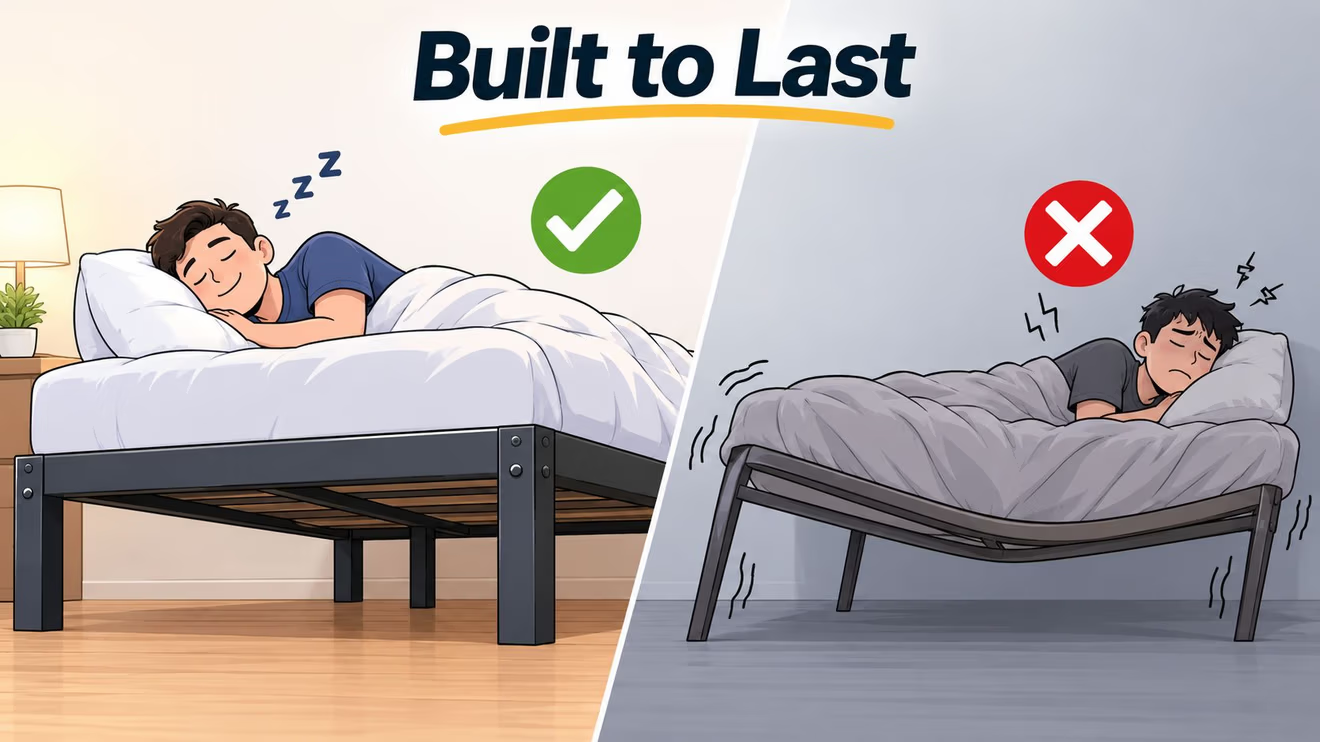
A sturdy frame usually shows its value in a few ways. The rails feel substantial in hand. The connection points aren't flimsy. The center support is taken seriously. The hardware doesn't look like an afterthought.
For shoppers comparing options, heavy-duty mattress frames give a good sense of what stronger support looks like in practice.
Good signs include:
- Thicker steel components: Less flex under normal use.
- Solid attachment points: Hooks and brackets that hold shape instead of twisting easily.
- Center support where needed: Important for larger mattress setups and everyday durability.
- Stable side rails: Rails should support the bed evenly, not just connect the ends.
Why better materials help daily life
A stronger frame isn't just about lifespan. It changes how the bed feels. Sit on the edge of a well-built bed and the support feels more settled. Lie down and movement transfers less dramatically across the frame.
That matters even more with substantial mattresses, including two-sided and flip-able styles that benefit from dependable support underneath. A weak base can undercut the comfort people paid for on top.
Worth remembering: A mattress can only perform as well as the support system under it.
Solid wood and steel both have a role
Some families hear “hook-on bed” and think only of metal rails. In reality, the broader bed often combines materials. The headboard and footboard may be solid wood. The connecting rails may use metal hook hardware. The internal support may include steel, wood slats, or a combination.
That's one reason USA-made and Amish-made bedroom furniture still gets attention from quality-focused shoppers. The construction tends to prioritize strength, repairability, and a more grounded feel over quick, disposable assembly.
One local option for shoppers who want to see those materials in person is BILTRITE Furniture-Leather-Mattresses, which carries USA-made, Amish-made, solid-wood, and heavy-duty furniture and mattresses in its Greenfield showroom.
Assembling Your Frame and Solving Common Issues
Assembly doesn't have to be complicated, but it does reward patience. Hook-on rails usually go together faster than many people expect once the bed is laid out properly and the hardware is matched correctly.
This part goes best when the floor is clear, the posts are upright and protected, and the rails are easy to reach without twisting the bed into place.
A clean way to put it together
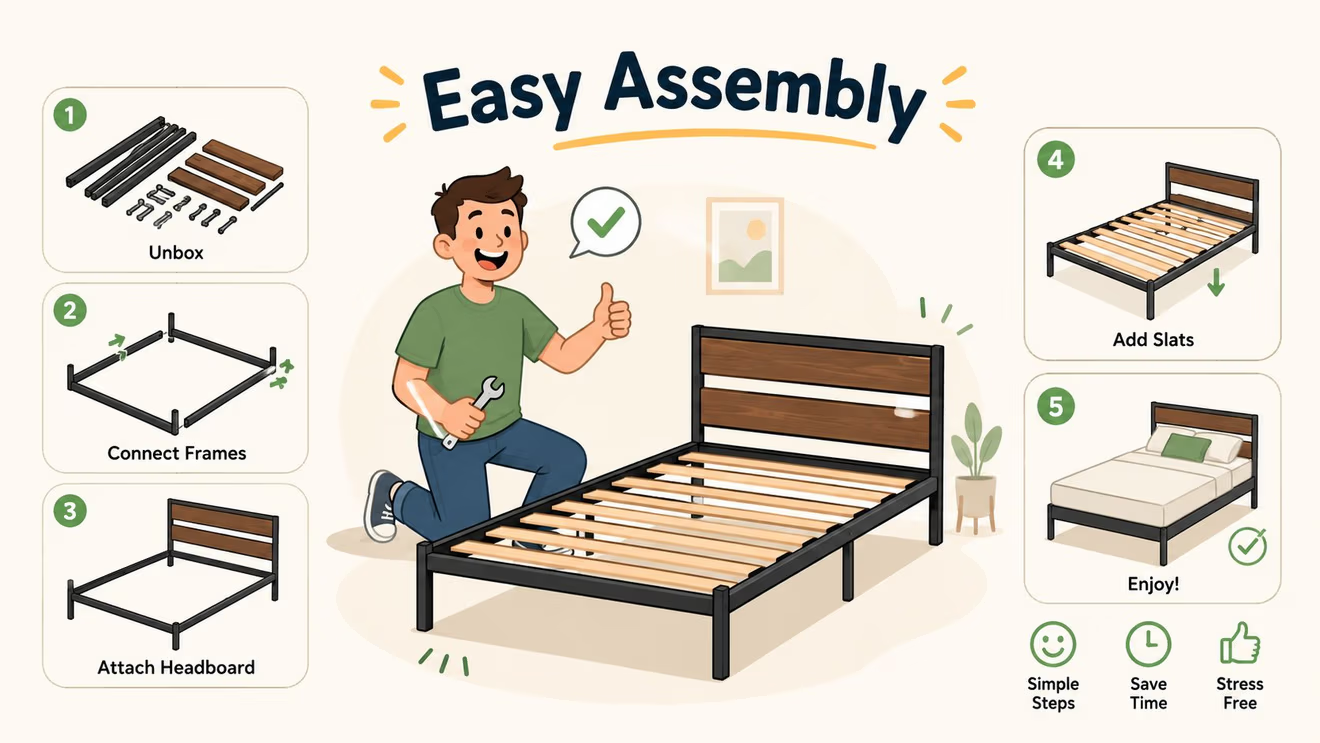
A straightforward sequence helps:
- Set the headboard and footboard upright in roughly the right position.
- Attach one side rail to the headboard first, then to the footboard.
- Repeat on the other side.
- Check that all hooks are fully seated in their slots.
- Add center supports, cross supports, slats, or other structural pieces.
- Square the frame before placing the foundation and mattress.
The “fully seated” part matters a lot. Hooks should drop into place and rest firmly. If a rail looks partially engaged, the bed may wobble even though everything appears connected.
Common problems and simple fixes
A few issues come up again and again. Most have practical solutions.
- The bed wobbles slightly: Check whether one rail is higher in the slot than the other. Uneven seating is common.
- There's a gap near the post: Make sure the hook pattern matches the slot spacing. Don't force the rail tighter if the geometry is wrong.
- The frame squeaks: Recheck every connection point. Movement often comes from a hook that isn't sitting flush.
- The mattress support feels uneven: Look at center support placement and floor contact before blaming the rails.
If a connection needs force, stop and recheck the match. Hook-on hardware should engage firmly, but it shouldn't require brute strength.
When extra help makes sense
Large solid wood beds can be awkward to handle, even when the hardware itself is simple. Some households would rather skip the lifting, aligning, and troubleshooting altogether. In that case, furniture assembly service can take the pressure off.
That's especially useful for heavy headboards, tight stairways, or older pieces that deserve a careful hand. A solid setup at the start usually means fewer noise, alignment, and support problems later.
The BILTRITE Difference Why Shopping Local Matters
A hook-on frame isn't hard to understand once the pieces are explained clearly. The challenge is that every bed has its own little story. One family has a newer solid wood set. Another has an heirloom headboard with unusual slots. Another needs a heavy-duty setup that works with a substantial mattress and daily use.
That's where local, in-person guidance helps. A showroom team can look at measurements, study photos, and talk through the details that don't show up well on a generic product listing. A shopper doesn't have to guess whether the issue is hook spacing, rail height, center support, or bed size.

Why that local experience matters
BILTRITE has been part of the Metro Milwaukee community since 1928, and that long history shapes how the store approaches furniture. The focus isn't on rushing people through a decision. It's on helping families sort out what fits their home, their furniture, and the way they live.
That matters with bedroom furniture because small details can make a big difference. A hook-on bed that fits correctly can feel dependable for years. A mismatch can create noise, shifting, or strain on valuable wood parts.
A local showroom also gives shoppers something the internet can't. They can touch the rail, inspect the hardware, compare heavy-duty options, and talk with experienced people face to face. For anyone shopping for USA-made, Amish-made, solid-wood furniture, that hands-on step is often where confidence shows up.
BILTRITE is also proud to be a family-first business. The store doesn't sell online, and it's closed on Sundays so families can spend time together. That neighborly approach has always been part of the experience in Greenfield.
For shoppers who want help matching Bed Frames with Hooks for Headboard and Footboard to a solid wood bed, an heirloom headboard, or a heavy-duty mattress setup, BILTRITE Furniture-Leather-Mattresses is a practical place to start. The Greenfield showroom offers in-person guidance, USA-made and Amish-made options, solid wood furniture, and a huge mattress department with over 60 models. Come on down to the showroom and see the hardware, the construction, and the support systems up close.