Find Your Ideal Drift Wood Floor Lamp: A 2026 Guide


A lot of Milwaukee-area homeowners land in the same spot. The sofa feels right, the rug is doing its job, and one corner of the room still looks a little unfinished. That's usually when a drift wood floor lamp starts sounding appealing. It adds height, texture, and that natural, collected look people love.
The challenge is that these lamps can be hard to judge from a photo. Some have real character. Others just imitate it. A shopper might want a sculptural wood lamp that feels warm and grounded, but also want something safe, sturdy, and worth keeping for years. That's where a little furniture know-how helps.
Table of Contents
- Bringing Coastal Charm to Your Milwaukee Home
- What Makes a True Driftwood Lamp
- Finding Quality in Construction and Finish
- Choosing the Right Size and Lighting for Your Room
- Styling Your Driftwood Lamp in Any Home
- DIY Dangers vs Buying and Caring for Your Lamp
Bringing Coastal Charm to Your Milwaukee Home
A homeowner in Greenfield or Wauwatosa might not be trying to make a room look like a beach cottage. More often, the goal is simpler. The room needs one piece that softens straight lines, brings in a natural texture, and makes the whole space feel more welcoming.
That's why driftwood-style lighting keeps showing up in conversations about living rooms, reading corners, and bedrooms. It gives a home a relaxed look without feeling overly themed. In a bungalow with oak floors, it can add contrast. In a condo with cleaner lines, it can keep the room from feeling too polished.
The broader lighting market helps explain why this style keeps gaining attention. The global floor lamp market is projected to be valued at USD 38.56 billion in 2026, with North America holding 41.8% of market share, driven by residential demand, according to floor lamp market projections from Coherent Market Insights. That points to a strong interest in home lighting that feels both useful and expressive.
Why this look fits Milwaukee homes
Milwaukee homes tend to reward pieces with texture and substance. A drift wood floor lamp often works because it doesn't feel flimsy or overly formal. It can sit next to a well-structured sofa, a cozy chair, or a farmhouse-style table and still make sense.
A few homes where this style often fits well:
- Classic bungalows: Natural wood tones play nicely with older trim and warmer finishes.
- Updated ranch homes: A sculptural lamp adds shape without taking over the room.
- Downtown condos: Organic materials can balance metal, glass, and cleaner silhouettes.
Practical rule: A lamp with visible grain, irregular lines, and a grounded base usually feels more at home than one that looks overly uniform.
For readers drawn to breezy, relaxed interiors, coastal design style ideas from BILTRITE can help show how natural finishes fit into everyday Midwestern spaces without turning a room into a seaside set.
What Makes a True Driftwood Lamp
A true driftwood lamp starts with real weathered wood. It's wood shaped over time by water, wind, and exposure. That natural process creates uneven contours, small cracks, worn edges, knots, and a look that can't be repeated exactly.
That's also where a lot of shoppers get tripped up. Plenty of lamps are sold as driftwood when they're really made to imitate the look.
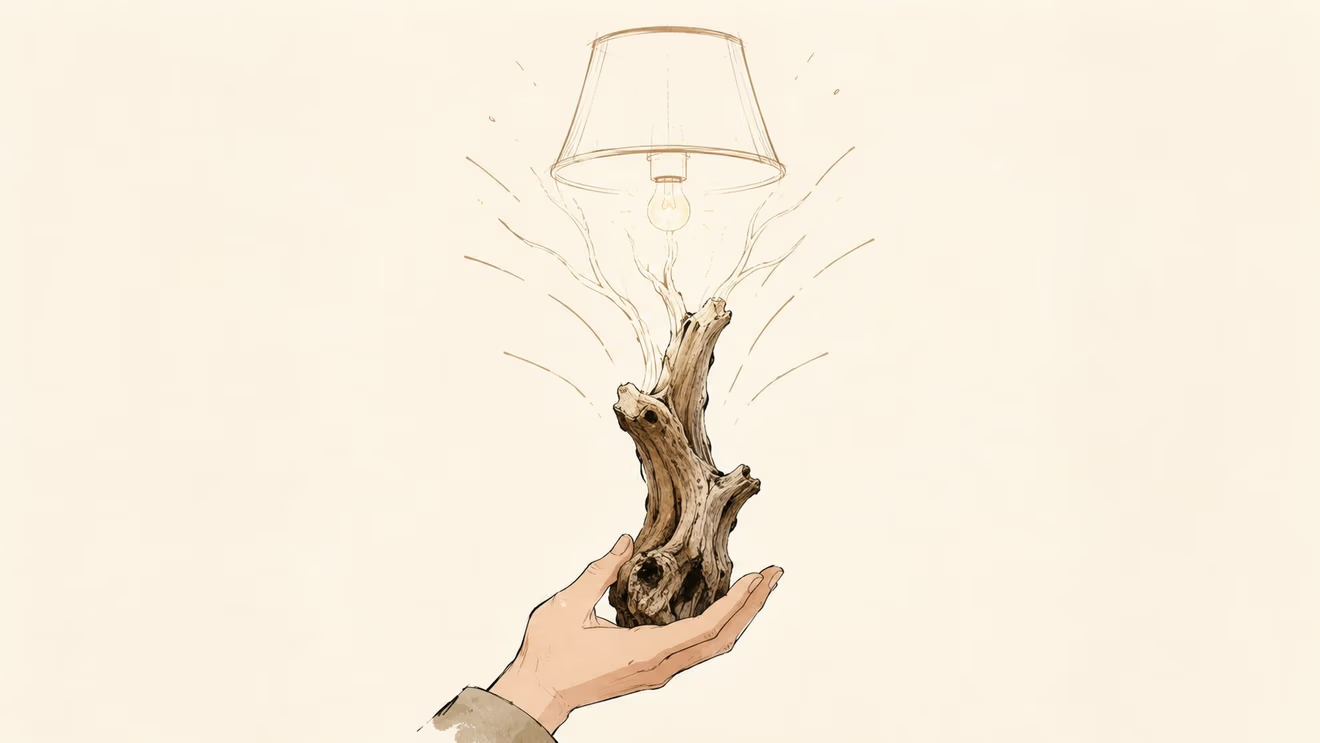
A 2024 report found that 62% of “driftwood” lamps sold online are resin composites with wood veneer, while authentic driftwood is heavy and porous, as noted in this driftwood lamp material guide. That's a big difference in feel, maintenance, and long-term satisfaction.
How to spot the real thing
Real driftwood usually gives itself away in person. It doesn't look repeated from piece to piece, and it rarely has a slick, plastic-like finish.
A shopper can check for a few clues:
- Weight: Authentic driftwood tends to feel substantial, not hollow or feather-light.
- Surface texture: Real wood has pores, grain changes, and natural inconsistencies.
- Shape variation: Genuine pieces don't repeat the same bends and branch patterns.
- Color depth: Wood usually shows tonal shifts instead of one flat surface color.
If the lamp looks too tidy, too symmetrical, or too smooth, it may be imitating driftwood rather than using it.
Why the material matters
Material affects more than appearance. It changes how the lamp ages, how it feels in the room, and whether it pairs naturally with other wood furniture. A resin body may still work for someone who wants the look with less upkeep, but it shouldn't be mistaken for the same thing.
That's why wood furniture shoppers often benefit from learning the same material habits across categories. This guide on how to tell if furniture is real wood uses many of the same visual and touch-based cues that help with lamps too.
Real driftwood usually looks less manufactured and more individual. That's the charm people are paying attention to.
Driftwood versus driftwood style
The best way to think about it is this:
| Type | What it usually offers | What to watch for |
|---|---|---|
| Authentic driftwood | Natural variation, one-of-a-kind look, deeper texture | More upkeep, more weight, wider variation |
| Driftwood style composite | More uniform finish, often lighter, easier to mass produce | Can feel less convincing in person |
| Solid wood inspired by driftwood | Natural warmth, reliable construction, easier coordination with furniture | Won't have the same weathered coastal story |
For many homeowners, the right answer isn't always “most rustic.” It's the lamp that gives a room warmth and character without disappointing once it's seen up close.
Finding Quality in Construction and Finish
Material gets attention first, but construction determines whether a lamp feels dependable after months and years of use. A drift wood floor lamp can look beautiful in a showroom or photo and still fall short if the base wobbles, the shade sits crooked, or the wiring feels like an afterthought.
That's why construction deserves a close look before style wins the day.

Commercial driftwood floor lamps often stand 5 to 6 feet tall, may use an internal metal frame for stability, and commonly support up to a 60-watt bulb, according to this commercial driftwood floor lamp product reference. That same source notes that premium models can start around $745, which helps explain why well-made versions don't sit at bargain-basement price points.
What solid construction looks like
A strong lamp should feel settled before it's even turned on. The base matters. The joinery matters. The hardware matters. Good lighting uses structure to support the design, not hide weak spots.
Shoppers can look for these signs:
- A steady base: The lamp shouldn't rock when gently touched.
- Clean wire routing: Cords should feel intentional, not loosely added at the end.
- Secure wood attachment: Branches or wood forms should feel anchored, not decorative only.
- Balanced shade placement: The top portion should sit straight and proportionate.
If a lamp feels top-heavy, that's a concern. Natural wood already creates visual irregularity, so the internal structure needs to compensate for it.
Why better craftsmanship costs more
Real craftsmanship is slow work. Natural materials need sorting, fitting, balancing, and finishing. That's especially true when each piece of wood has its own shape. A lower-priced imitation can still be useful, but it usually gets there by simplifying material, finish, or structure.
Worth remembering: A higher price on a natural-material lamp often reflects labor and stability, not just style.
For shoppers who love the organic look but want more predictable craftsmanship, solid-wood lamps and accent pieces built by American makers or Amish artisans can be a smart path. They may not all be literal driftwood, but they often deliver the same warmth, grain variation, and long-term durability people are hoping for.
Finish details that separate a keeper from a short-term buy
Construction handles strength. Finish handles the everyday experience.
A good finish should protect the wood while letting the texture stay visible. If the surface feels overly glossy, thickly coated, or oddly sticky, it can mute the natural appeal that makes these lamps interesting in the first place.
A few finish details matter more than people expect:
| Finish detail | Why it matters |
|---|---|
| Visible grain | Keeps the lamp from looking fake or overprocessed |
| Smooth touch without plastic feel | Makes the piece feel finished, not coated over |
| Even color transitions | Helps the lamp blend with other furniture |
| Neat hardware areas | Signals care in assembly |
For households that already value solid wood dining, bedroom, or occasional furniture, those same standards should carry over to lighting. A lamp might be smaller than a dresser or table, but it still needs to earn its place through quality.
Choosing the Right Size and Lighting for Your Room
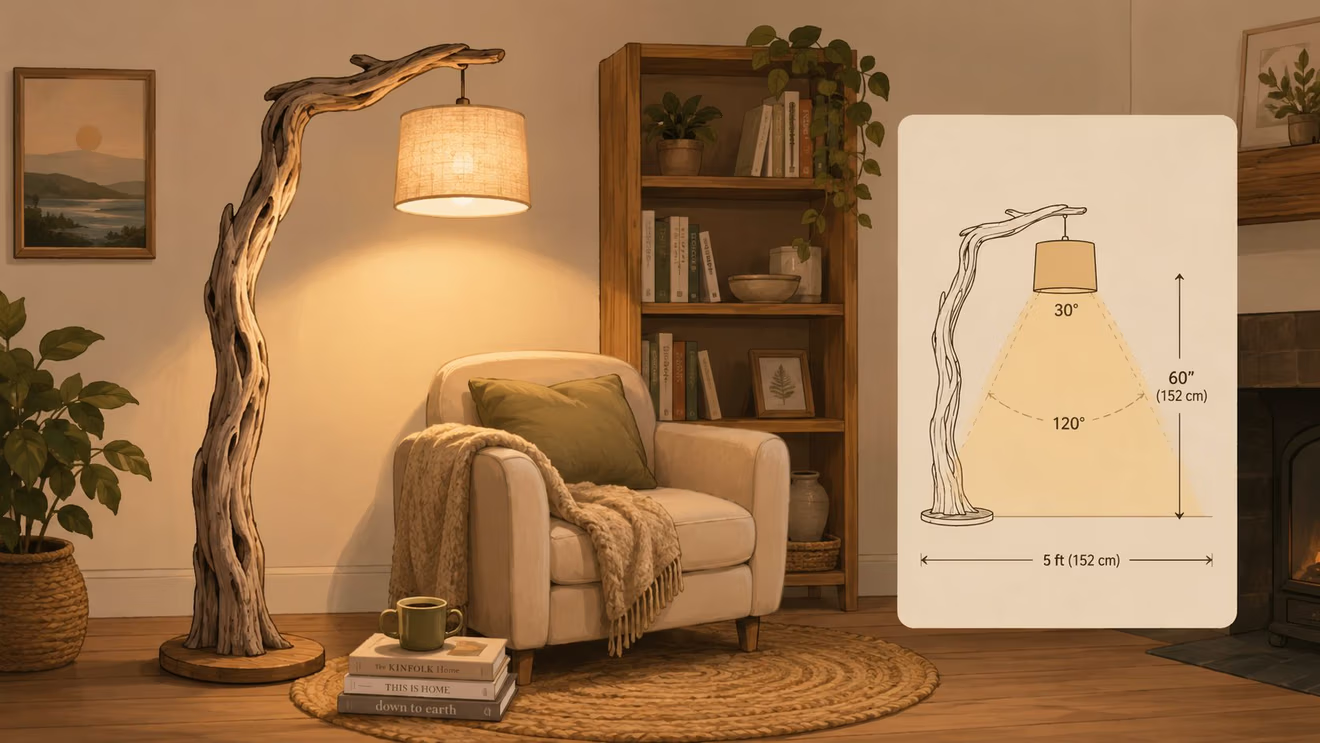
A beautiful lamp can still feel off if the scale is wrong. That happens all the time. The wood shape looks striking, but once it lands in the room, it blocks a walkway, towers over the chair beside it, or disappears into a tall corner that needed more presence.
The easiest way to choose size is to start with the room's job. Is the lamp filling an empty corner, helping with reading, or adding softer ambient light to a seating area?
Match the lamp to the space
In a larger living room, a taller and more sculptural lamp can hold its own. In a smaller apartment, condo, or bungalow nook, a slimmer footprint often works better because it adds light without stealing floor space.
From a practical perspective:
- Beside a chair: The lamp should feel connected to the seating, not stranded out on its own.
- In a corner: Height helps, but the base still needs to leave comfortable walking room.
- In small-scale living: Narrower bases and cleaner silhouettes are often easier to live with.
- Near a sofa end: The lamp should support conversation and relaxation, not dominate the area.
Readers looking for more room-by-room lighting ideas can find helpful examples in this living room lighting guide from BILTRITE.
Pick a bulb that supports the mood
The lamp itself gets the attention, but the bulb decides how the room feels at night. A drift wood floor lamp usually looks best with warm, comfortable light instead of harsh, overly cool light.
Softer light tends to flatter natural wood, woven shades, and cozy seating much better than a bright white glare.
LED bulbs are often the most practical choice because they're energy-efficient and easy to find in a range of warmth levels. A homeowner doesn't need to get overly technical here. The main goal is simple. Choose light that supports how the room is used.
A simple decision guide
| Room use | Best lamp approach | Lighting goal |
|---|---|---|
| Living room corner | Taller statement lamp | Ambient light and visual height |
| Reading chair | Directed or shaded lamp close to seating | Focused comfort |
| Bedroom corner | Medium scale with softer glow | Calm evening atmosphere |
| Smaller condo or apartment | Slim base and lighter visual profile | Save floor space |
A common mistake is buying for the photo instead of the floor plan. A lamp has to earn its footprint. If it adds warmth, solves a dark spot, and fits the room's traffic flow, it's doing its job.
Styling Your Driftwood Lamp in Any Home
A drift wood floor lamp isn't limited to a coastal room. That's one of the biggest myths around this style. In real homes, it often works because it introduces an organic shape where everything else feels straight, square, or heavily upholstered.
That means it can warm up spaces across a wide range of Milwaukee-area homes.
Three rooms where it often shines
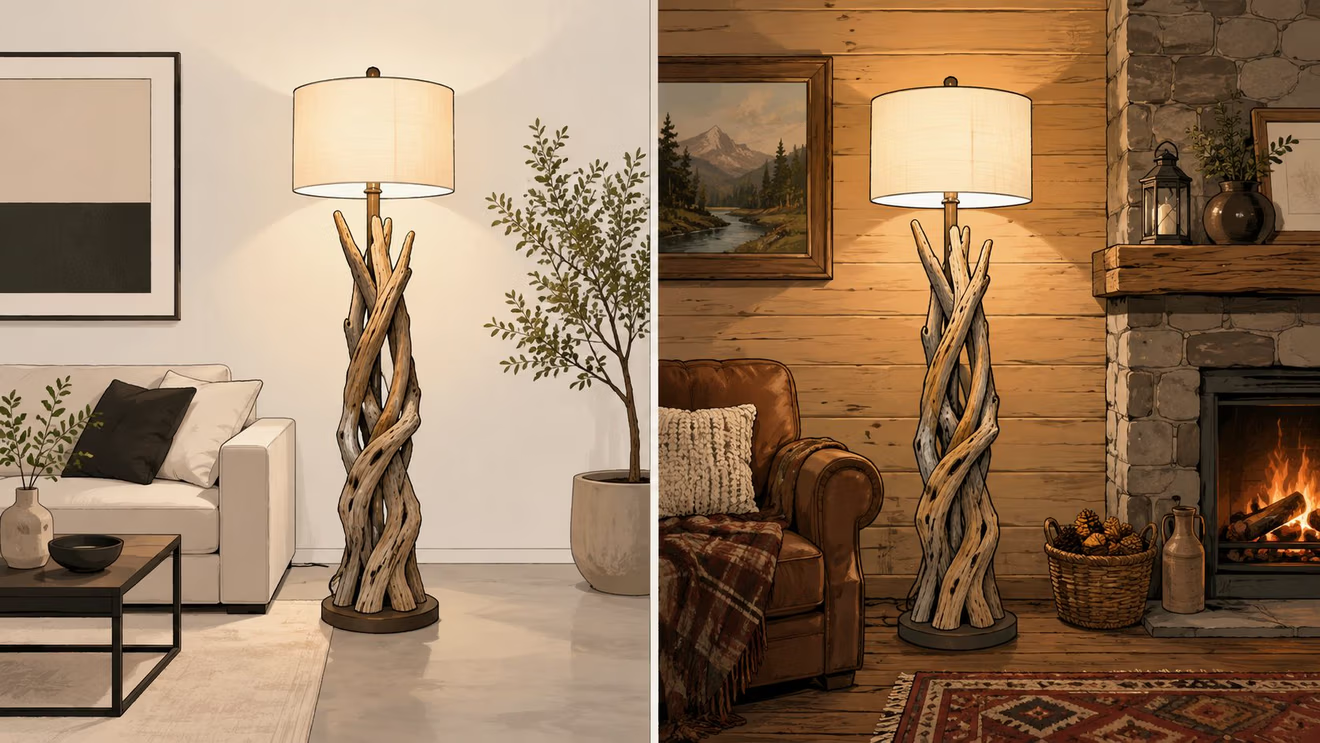
In a modern condo, the lamp can act almost like sculpture. A room with a low-profile sofa, clean-lined tables, and neutral walls often benefits from one piece that feels a little less strict. Driftwood does that naturally.
In a family room with softer textures, the lamp can tie together wood tables, woven baskets, and a comfortable chair. It doesn't have to be the star. Sometimes it gives the room a more settled feeling.
In a rustic or cottage-style room, it can echo the materials already in the space. There, the goal isn't contrast as much as layering. Natural wood, soft upholstery, and a mellow lamp shade often create a room that feels easy to spend time in.
Easy styling combinations
A driftwood lamp usually works best when it has a few supporting materials nearby. That might be linen, leather, solid wood, or a textured rug. The point is to give the lamp company so it doesn't look like it wandered in from another house.
A few combinations that usually feel natural:
- Lamp and armchair: Great for reading corners or empty living room edges.
- Lamp and console: Helpful in entryways or behind seating areas.
- Lamp and plant: Good for softening modern rooms with harder surfaces.
- Lamp and wood accent table: Helps repeat natural material without overdoing it.
For readers thinking through the whole room instead of one corner, this living room styling guide from BILTRITE offers practical ways to build a more connected look.
A sculptural lamp usually looks best when the rest of the room gives it a little breathing room.
Keep the balance
One driftwood piece can add character. Too many rustic accents clustered together can start to feel busy. If the lamp has dramatic twists or a bold silhouette, surrounding pieces should stay calmer.
That balance matters in smaller homes especially. A modest bungalow living room or condo seating area doesn't need a stack of statement pieces competing for attention. One good lamp, one grounded chair, and a couple of natural textures often do more than a whole collection of themed decor.
DIY Dangers vs Buying and Caring for Your Lamp
Homemade lighting has real appeal. A weekend project sounds satisfying, and driftwood has the kind of irregular beauty that makes people think, “That could become a lamp.” The problem is that lighting isn't just decor. It's decor plus structure plus wiring.
That's where the risks change the conversation.
A 2025 CPSC study found that 18% of home lighting accidents involved DIY fixtures made from non-commercial wood, with driftwood listed as a leading contributor because of unpredictable density, moisture retention, and natural voids that can create fire hazards when wiring is improper, according to this DIY wood lighting safety reference.
DIY vs Store-Bought Driftwood Lamp
| Factor | DIY Project | BILTRITE Store-Bought |
|---|---|---|
| Safety | Depends on material prep and wiring skill | Built to be sold as a finished lighting product |
| Stability | Can be hard to balance with irregular wood | More likely to have engineered support |
| Material quality | Wood may hold moisture, cracks, or hidden weakness | Materials are selected for indoor use |
| Time | Requires sourcing, cleaning, drilling, assembly | Ready to bring home and place |
| Look | Can be unique if done well | Can still offer character with less uncertainty |
| Peace of mind | More unknowns | Easier for many households to live with |
For shoppers who still enjoy hands-on projects, it helps to reserve DIY work for non-electrical decor. A driftwood sculpture on a shelf is one thing. A tall, wired floor lamp is something else.
Simple care for a real wood lamp
Once a lamp is in the home, the upkeep is pretty manageable. Real wood doesn't need fussy treatment, but it does benefit from a little consistency.
Helpful habits include:
- Dust gently: Use a soft cloth and get into grooves without scraping rough wood.
- Keep it dry: Don't let dampness sit on the surface or base.
- Watch sunlight: Strong, repeated direct sun can dry wood unevenly over time.
- Check hardware occasionally: If the lamp is moved often, confirm that fittings stay snug.
This wood furniture cleaning guide from BILTRITE offers useful habits that also apply to many natural-wood lamps and accent pieces.
Buying a professionally made lamp usually means less guesswork, fewer safety concerns, and a piece that's easier to trust in everyday family life.
A drift wood floor lamp should feel like an enjoyable finishing touch, not a project that creates new worries. For most households, choosing a well-made lamp and caring for it properly is the simpler path.
BILTRITE Furniture-Leather-Mattresses has helped Metro Milwaukee families furnish their homes since 1928, and that fourth-generation, family-owned approach still shows in the showroom today. For anyone trying to decide whether a drift wood floor lamp, a solid-wood alternative, or an Amish-made accent piece makes the most sense, a visit to BILTRITE Furniture-Leather-Mattresses in Greenfield is a smart next step. The store doesn't sell online, which means shoppers can see the materials up close, compare quality in person, and talk with a team that brings over 400 years of combined experience. From small-scale pieces to heavy-duty options, USA-made furniture, Amish craftsmanship, and a mattress department with over 60 models, there's a lot to explore. Come on down to the showroom and see what feels right for the home.