A Guide to Copper Table Lamps


You know that moment when a room is almost there? The sofa looks right. The solid wood end table has beautiful grain. The rug softens the space. But at night, the room still feels a little flat.
That's often where copper table lamps come in.
For Milwaukee-area homes, especially ones filled with USA-made, Amish-made, or real solid wood furniture, copper has a way of making a space feel settled. Not flashy. Not fussy. Just warm, grounded, and full of character. It's one of those details that can make a newer room feel like it has a story already.
Why Copper Lamps Bring a Special Glow to Your Home
A lot of people start with wood when they want a home to feel comfortable. That makes sense. Oak, cherry, and maple bring natural warmth all on their own. Then comes the finishing touch, and many homeowners reach for something black, chrome, or glass because it feels safe.
Copper often does the job better.

Copper has depth. In daylight, it can look rich and earthy. In lamplight, it reflects a softer warmth that feels especially at home beside wood furniture, leather seating, and cozy textiles. If you enjoy layered rooms that feel lived-in instead of showroom-stiff, copper usually fits right in.
A material with real history
Copper isn't some passing decorating fad. Copper table lamps have a rich history in American craftsmanship, particularly prominent from around 1900. Early artisans favored hand-beaten copper for its malleability and corrosion resistance, creating durable fixtures that worked with the new electric incandescent bulbs introduced in that era, as noted in this look at the history of copper lighting in the US.
That history matters because you can feel it in the look of the lamp itself. Hammered texture, deeper color variation, and a little visual weight all give copper a sense of substance. It doesn't feel temporary.
Copper tends to look best in homes that value materials with a little honesty. Real wood. Real metal. Real texture.
Why it works so well with lasting furniture
If your home leans traditional, farmhouse, craftsman, rustic, or even a softer modern style, copper can bridge those looks without trying too hard. It pairs especially well with furniture that already has character in the grain, joinery, or finish.
That's one reason metal accents remain such a useful decorating tool. If you'd like more ideas on blending metals into a room without making it feel busy, this guide on what you should know about metal accents is a helpful companion.
A good copper lamp doesn't just light a table. It adds age, texture, and a little soul.
Exploring Copper Finishes from Polished to Patina
Not every copper lamp looks the same, and that's where shoppers sometimes get stuck. One lamp looks bright and reflective. Another looks dark and weathered. Another has hammered texture that catches the light in a completely different way.
The finish changes the whole personality of the piece.
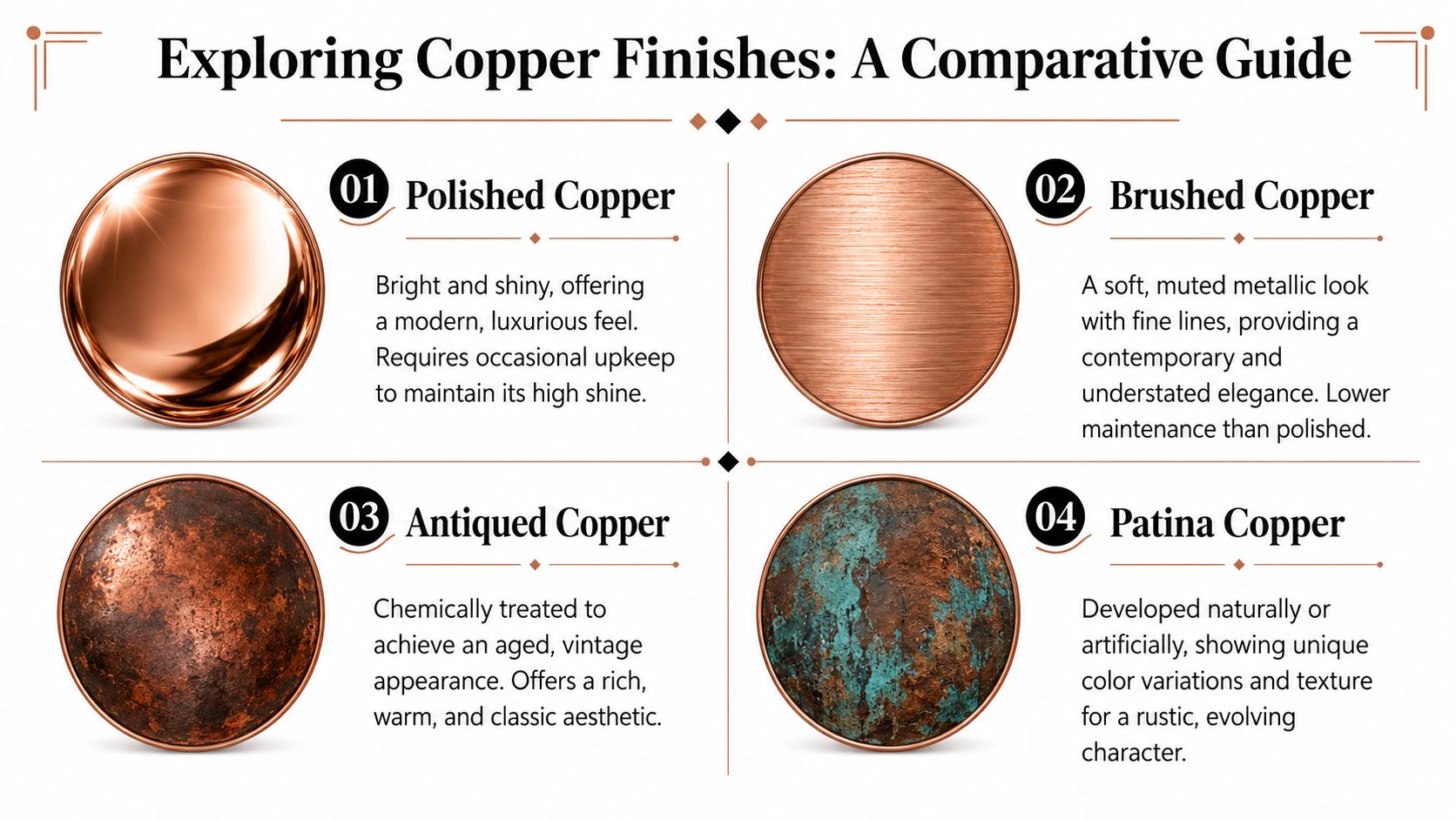
Four common looks
Polished copper feels brighter and more dressed up. It reflects more light and can lean a little more formal or glam, depending on the lamp shape.
Brushed copper tones things down. It has a softer surface and usually fits homes that mix modern lines with warm materials.
Antiqued copper already has that aged look built in. If you like furniture with a sense of history, this finish often feels easy to live with because it doesn't ask you to keep it shiny.
Hammered or patina-rich copper has the most texture and variation. It can feel artisan-made, and it often looks especially good beside solid wood with visible grain.
Choosing based on lifestyle
Some people love a gleaming lamp. Others want a finish that hides fingerprints and daily life a little better. That's not a small detail, especially if the lamp sits on a busy family room end table or in a home with kids, pets, or lots of hands touching everything.
Unlacquered copper develops a natural patina over 6 to 12 months, and that oxidation forms a protective layer that helps inhibit further corrosion, according to this product overview of a copper table lamp finish and patina behavior. That aging is part of copper's charm, but it's good to know ahead of time so the change feels intentional, not surprising.
Practical rule: If you want less fuss, lean toward antiqued, brushed, or hammered copper. If you love shine, polished copper can be beautiful, but it asks for more attention.
Choosing Your Copper Lamp Finish
| Finish Type | Best For | Maintenance Level |
|---|---|---|
| Polished | Dressier rooms, cleaner-lined spaces, a brighter metallic look | Higher |
| Brushed | Transitional and contemporary rooms with softer texture | Moderate |
| Antiqued | Traditional, farmhouse, and heritage-inspired spaces | Lower |
| Hammered or patina-rich | Rustic, craftsman, artisan, and solid-wood interiors | Lower |
Copper isn't the only warm-toned lamp option, of course. If you're comparing textures and reflective qualities, these mercury glass table lamps offer a very different feel and can help you decide whether you want glow, sparkle, or visual weight.
Styling Copper Lamps with Amish and Solid Wood Pieces
In this regard, copper really earns its place.
A copper lamp can look nice on its own, but it looks especially convincing when it sits next to furniture that has similar honesty in the materials. Real wood and real metal speak the same language. You see grain, texture, variation, and small imperfections that make the room feel human.

Pairing by wood tone
With oak, copper tends to bring out the wood's cozy side. The combination feels sturdy and familiar, especially in family rooms and bedrooms.
With cherry, copper can look richer and a bit more formal. This is a lovely pairing if you like deeper color and a classic, collected look.
With maple, the contrast is often the star. Lighter wood lets the copper stand out without looking harsh, which works nicely in condos, smaller homes, or rooms that need warmth without heaviness.
Scale matters more than most people think
People often focus on finish first and size second. In a small room, that order should flip.
Recent surveys show 68% of Midwest urban homeowners prefer lamps with a base under 12 inches for small-scale furniture, according to this report tied to compact lamp preferences in Midwest homes. That makes a lot of sense in Milwaukee condos, apartments, and older homes where end tables and nightstands may not be oversized.
A thick, wide copper base can overpower a petite table fast. A slimmer lamp with the same finish often gives you the warmth you want without crowding the surface.
If the lamp leaves no room for a book, glasses, or a coffee mug, it's not helping the room work.
Three easy pairing ideas
Bedroom nightstand pairing
Choose a copper lamp with a simpler silhouette next to solid wood bedroom furniture. If the bed has strong lines or visible joinery, a cleaner lamp shape keeps things balanced.Living room end table pairing
Use a textured copper base on a wood end table when the seating is upholstered in a calm fabric or leather. The lamp adds character without needing bold color.Smaller-space pairing
In tighter homes, choose a petite copper lamp that echoes the warmth of the wood but doesn't spread too wide. That keeps the table useful and the room easier to move through.
If you're decorating a bedroom with handcrafted wood furniture, this article on how to use solid wood Amish furniture in your bedroom offers some smart ideas for carrying that same sense of balance throughout the space.
Getting the Size and Light Just Right
A beautiful lamp can still feel off if it's too tall, too stubby, too wide, or too bright. This is the part that frustrates people because the lamp may be lovely on the shelf, then awkward once it gets home.
The good news is that you don't need complicated formulas to get it right.
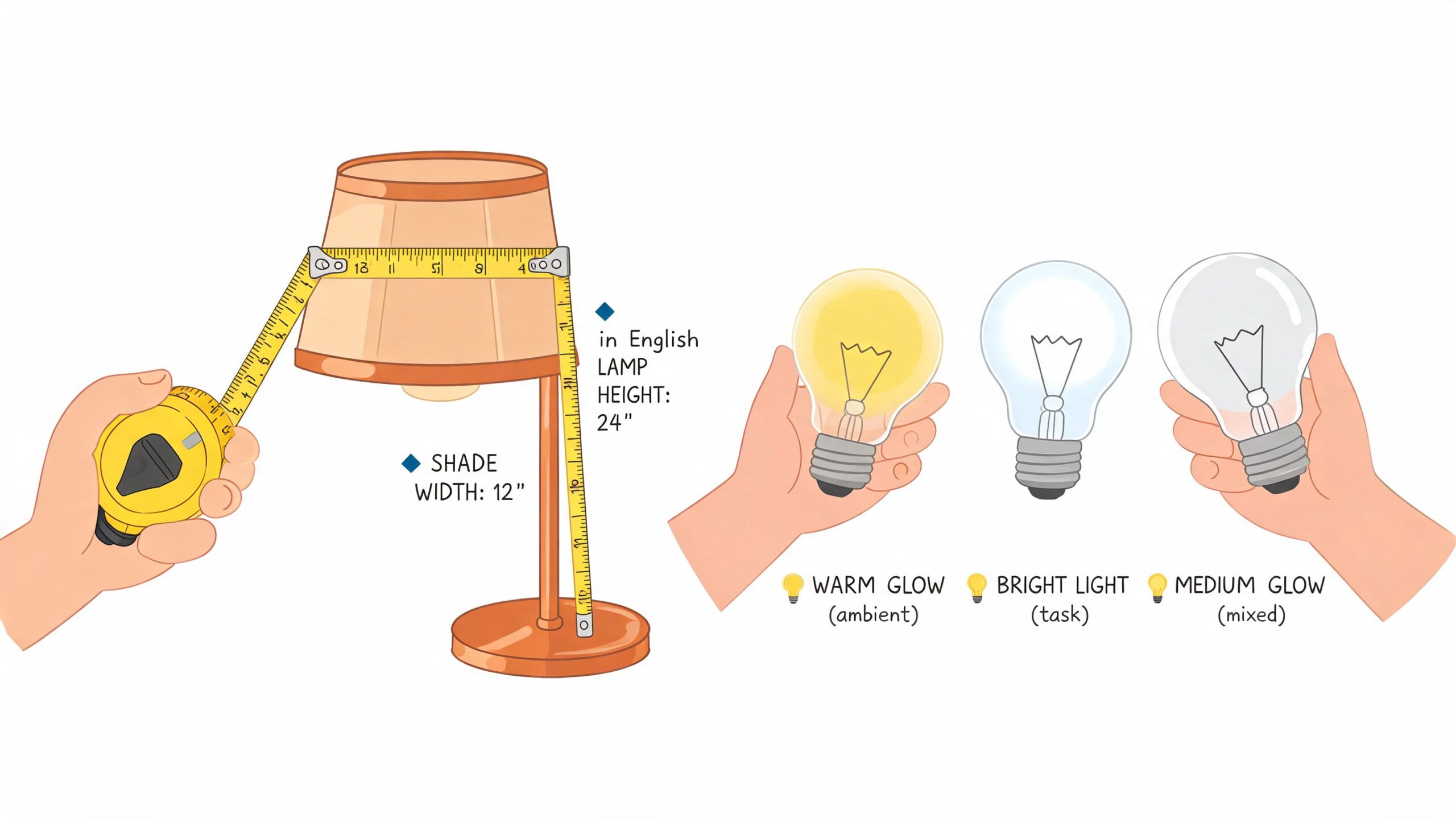
Think about the lamp as part of the furniture
A table lamp should look like it belongs to the table, not like it landed there by accident. If the base is much wider than the table's usable surface, the setup feels cramped. If the lamp is too tiny, the furniture can make it disappear.
A simple rule is to sit where you'll use the lamp. If you're on the sofa or in bed and the bulb feels glaring, the lamp is probably too tall, too short, or has the wrong shade shape.
Light color changes the mood
Copper almost always looks best with warm light. A warm-toned LED usually flatters the metal and helps the room feel relaxed. Cooler light can make the lamp feel harsher and can fight the cozy quality that makes copper appealing in the first place.
Here are a few easy checks to use at home:
For reading corners
Make sure the light lands where your book or magazine will be, not just behind your shoulder.For bedside tables
Check that the shade doesn't sit so low that you're staring into it, or so high that it shines in your eyes when you sit up.For family rooms
Choose a light level that feels comfortable at night. You want enough light to function, but not so much that the room loses its softer evening mood.
The best lamp size usually disappears into the room in a good way. You notice the glow and the balance first, not the mistake.
If you like flexible lighting for reading or task use, take a look at how a swing arm table lamp solves a different problem than a standard fixed-base lamp.
Caring for Your Copper Lamp for Years to Come
Copper worries some shoppers because they assume any color change means damage. It usually doesn't.
In fact, one of the most important things to know is that copper changes because it's real. That shift in tone is part of the material's life. Some people love that because the lamp becomes more individual over time. Others want to keep the original shine as long as possible. Both approaches are completely reasonable.
What happens in Milwaukee homes
There's a real information gap on this topic. Major retailers often show the look of copper but skip the care side. A 2024 study by the Copper Development Association notes that untreated copper develops a patina within 6 to 12 months in humid climates like Milwaukee's, as summarized in this discussion of the lack of copper care guidance from major retailers.
That matters because homeowners can mistake natural patina for a flaw when it's really a normal part of copper ownership.
Two good ways to live with copper
Some households decide to embrace the patina. This works especially well in homes with solid wood, vintage pieces, or relaxed traditional style. The lamp gains depth and looks more settled as time goes on.
Others prefer to maintain a brighter finish. In that case, gentle routine care goes a long way.
- Dust it regularly with a soft, dry cloth so buildup doesn't dull the surface.
- Keep hands off the base when possible if you're trying to preserve a more even appearance.
- Use gentle cleaning methods and always test in a small area first.
- Be cautious with moisture in kitchens, sunrooms, or more humid spaces.
A changing copper finish isn't a defect. It's one of the clearest signs that you brought home a material with real character.
If you're the kind of person who loves furniture and décor that ages gracefully, copper can be satisfying. If you prefer consistency, just go in with open eyes and a simple care routine.
Come See the Warm Glow in Person at BILTRITE
You get home after a long Milwaukee winter day, switch on a copper lamp beside a solid cherry end table, and the whole room softens. The wood looks richer. The corners feel less stark. A small condo gains depth, and a busy family room feels settled instead of crowded.
That kind of warmth is hard to judge on a phone screen.
Copper has a living finish, and its color shifts depending on the bulb, the shade, and the wood around it. In person, you can see whether a lamp feels right with quarter-sawn oak, brown maple, or walnut. You can also judge something major retailers rarely help with well. Scale. A lamp that looks balanced online can feel too skimpy beside deep Amish-made case goods, or too bulky for a Milwaukee bungalow side table.
We help people sort through that every day. Families want lighting that can hold its own next to real solid-wood furniture and still stand up to daily use. Small-space shoppers want the same lasting quality without giving up precious surface area. Those are practical questions, and they are easier to answer when you can compare pieces in the room.
Our family has served Metro Milwaukee since 1928, and as a fourth-generation family business, we believe a home should feel warm, useful, and built for real life. Our showroom is also proudly closed on Sundays as part of our #BUYLOCAL commitment at BILTRITE. That value shapes how we help you shop. Honest advice, room to look, and no pressure to rush a decision.
If you want to visit, check our Greenfield showroom location details before you head over. Seeing copper lamps beside USA-made, Amish, and other solid-wood furniture makes it much easier to choose a piece that fits your room, your table, and the way your household lives.