Loveseat Sofa Bed: The Perfect Small-Space Sleeper


A guest is arriving, the apartment is short on room, and the idea of bringing in a full-size sleeper sofa feels like trading one problem for another. The sofa has to look comfortable during the day, open without blocking every walkway, and give an overnight visitor a usable place to sleep. That's where a loveseat sofa bed can make sense.
At BILTRITE, a fourth-generation, family-owned furniture business serving Metro Milwaukee since 1928, shoppers often begin with one simple question: can a compact piece really handle both seating and sleeping? The answer depends on the mechanism, mattress, room layout, and the people who'll use it. A smaller sleeper can be a smart choice for an apartment, home office, guest room, or senior living space, but only when its open footprint works as well as its closed size.
Table of Contents
- What Makes a Loveseat Sofa Bed Different
- Types of Loveseat Sofa Bed Mechanisms
- Mattress and Frame Options That Actually Matter
- Sizing and Room Planning for Your Space
- Pros and Cons for Different Households
- Care, Maintenance, and Delivery Tips
What Makes a Loveseat Sofa Bed Different
A loveseat sofa bed pairs a compact two-seat footprint with a hidden sleep function, making it suitable for rooms that serve multiple purposes. During the day, it offers a place to read, visit, or relax. At night, its seat, back, or concealed mattress converts into a sleeping surface. The result is a flexible piece for an apartment, office, guest room, or smaller home, though its compact size brings tradeoffs that a full sofa may avoid.
Loveseats developed from oversized chairs used in the 17th century, when wide seats accommodated fashionable, voluminous dresses. By the 18th and 19th centuries, changing clothing styles made the format practical for two people, and loveseats became associated with conversation and courtship. A typical loveseat measures about 60 inches wide, which places it between a chair and a full sofa. This history and size overview of sofas and loveseats provides additional background on that distinction.
Why the compact format matters
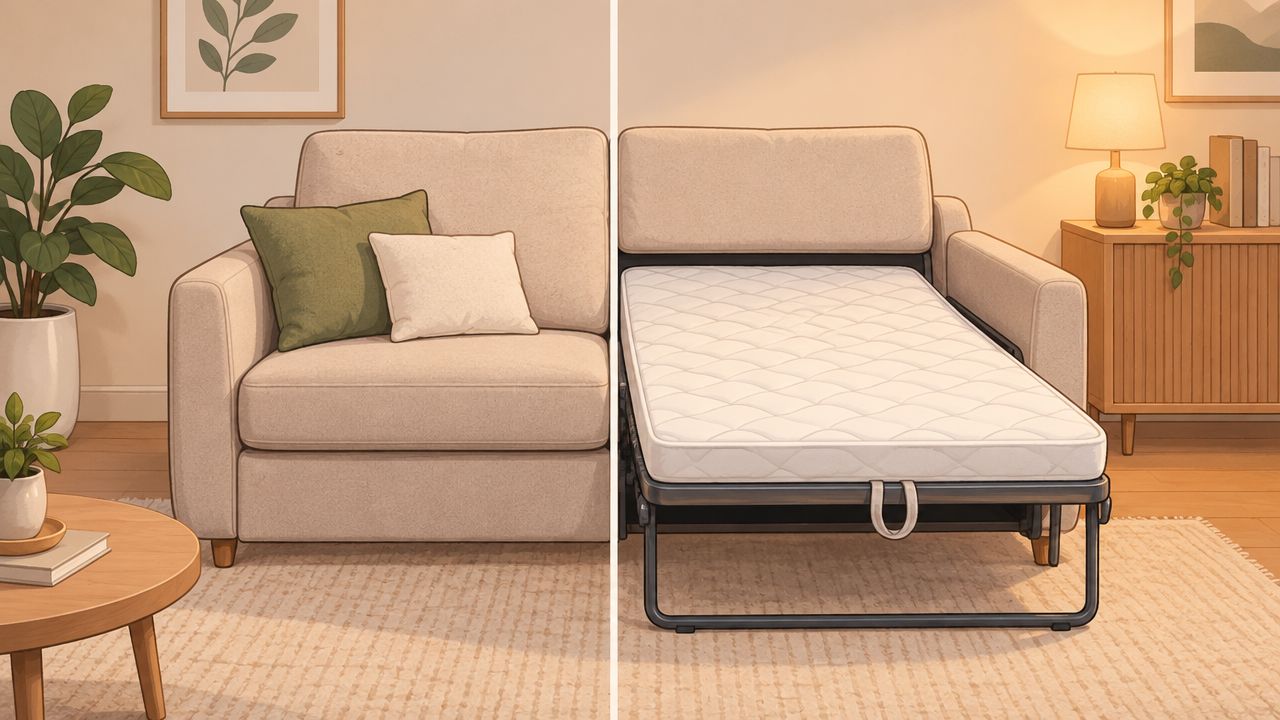
A standard loveseat is typically about 58 to 63 inches wide. Once opened, a sleeper may need room for a twin sleep surface around 38–39 by 72–75 inches or a full surface around 52–54 by 72–75 inches, as outlined in this standard furniture measurement guide. The closed piece fits like a small sofa, but the bed reaches much farther into the room.
That change in depth is easy to overlook. A loveseat may fit through the front door and sit neatly against a wall, yet its opened bed could narrow a hallway, cover a drawer, or press against another piece of furniture. Doorway width, stair turns, and the clearance around the bed all deserve attention before ordering.
A compact sleeper can suit a city apartment, home office, guest room, bedroom, or senior living space where a full-size sofa bed would dominate the floor plan. It may also be the better choice when one overnight guest needs a practical place to sleep and the room must remain usable during the day. A full-size sleeper gives more sleeping width, but it also demands more room in the doorway, delivery path, and open layout.
The question shoppers should ask
Ask, “What happens when someone needs to sleep?” rather than only, “Will it fit against the wall?” One person may find a compact mattress comfortable, while two adults may need more width. The product label cannot answer that question. Check the actual mattress dimensions, sleeping depth, and remaining walkway clearance.
BILTRITE serves Metro Milwaukee with small-scale furniture for apartments, condos, smaller homes, and senior living communities, as well as larger options for busy households. In a showroom, shoppers can sit in the closed piece, test the conversion, and measure how the open bed relates to the room before making a decision.
Types of Loveseat Sofa Bed Mechanisms
The conversion mechanism determines how the piece feels in daily life. A sleeper that opens smoothly but blocks a doorway may frustrate its owner. Another that converts quickly but leaves a pronounced center seam may work well for an occasional nap and less well for several nights of guest use.
Pull-out designs
A pull-out loveseat stores a folded mattress and support platform beneath the seat. The user removes or shifts the cushions, pulls the frame forward, unfolds the mattress, and lowers or positions the support legs.
This style often creates a more bed-like surface because the mattress is separate from the sitting cushions. The tradeoff is floor space. The open bed extends outward, so the room needs a clear zone in front of the loveseat. Bedding and removed cushions also need a home while the sleeper is open.
Click-clack backs
A click-clack design converts by moving the backrest through set positions until it lies flat. It usually has fewer parts than a pull-out mechanism and can be convenient for quick changes between sitting, lounging, and sleeping.
The sleep surface may feel firmer or less uniform because the seating and back sections become part of the bed. Seams and changes in cushion density can affect how the surface feels. This format can suit a home office or occasional guest space where speed and simplicity matter more than a traditional mattress feel.
Fold-down frames
Fold-down models use a hinged back or platform that lowers into a bed. Some feel compact and sleek, while others provide a more structured sleep surface. Their firmness depends on the padding, support deck, and how the frame distributes weight.
The best way to compare these styles is to open them fully and try each position. A shopper considering a more adaptable sleeper can also review convertible sleeper sofa options before visiting the showroom.
| Mechanism Type | How It Works | Sleep Comfort | Open Footprint | Best For |
|---|---|---|---|---|
| Pull-out | A concealed frame and folded mattress slide from beneath the seat | Often more mattress-like, depending on padding and support | Extends substantially into the room | Overnight guests and households wanting a separate mattress |
| Click-clack | The back folds flat with hinged positions | Can feel firm, with seams between sections | Usually uses the sofa's front area | Quick conversions, naps, and flexible rooms |
| Fold-down | A hinged back or platform lowers into bed mode | Structured, with comfort shaped by the support deck | Requires room in front of the frame | Compact rooms and simple setup routines |
A useful showroom test has three parts: sit in the sofa position, open the bed without rushing, and lie down on the expanded surface. If the mechanism feels awkward before purchase, it probably won't become easier after a long day.
Mattress and Frame Options That Actually Matter
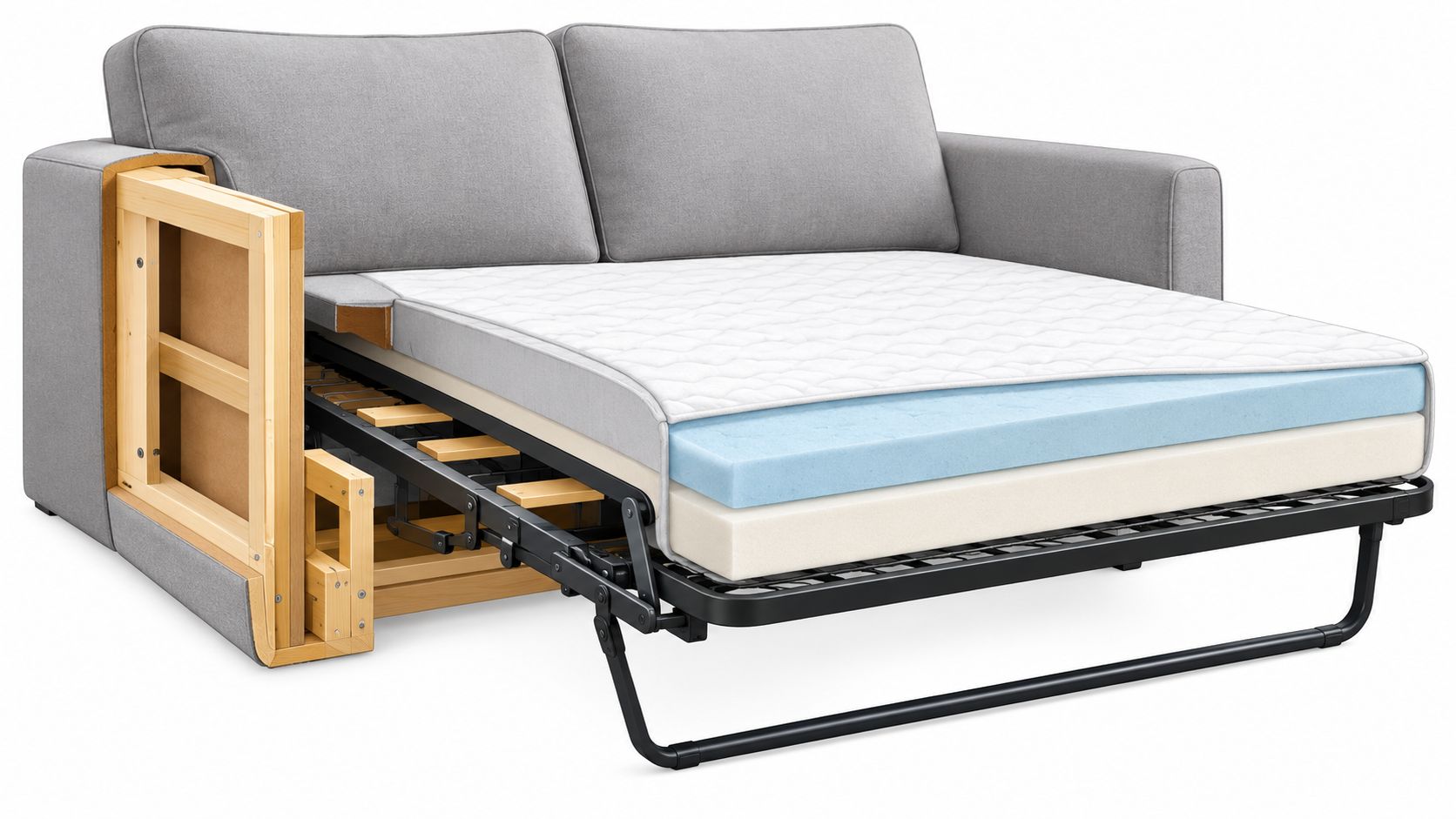
A stylish sleeper won't feel good if the mattress allows the support structure beneath it to press through. Comfort comes from the relationship between the mattress, frame, upholstery, and the person using the bed. The right choice for an occasional visitor may not be enough for a guest who stays often.
Mattress thickness and material
Most sofa-bed mattresses fall in the 4–6 inch range, according to this guide to sofa-bed comfort and mattress thickness. Thinner designs can work for occasional use, especially when the sleeper is used for a short visit or daytime rest. Thicker mattresses can offer more cushioning, but they also need to fold into the mechanism, so adding thickness isn't automatically an improvement.
Technical discussions commonly place stronger support around 10–14 centimeters, or approximately 4–5.5 inches, while very thin mattresses may allow the frame to create pressure points. A shopper should lie down, change positions, and notice whether the surface feels level across the hips, shoulders, and lower back.
Foam can feel stable and contouring. Innerspring construction can provide a more traditional, buoyant sensation. Hybrid designs combine support approaches. The useful comparison isn't a brand name. It's the actual feel, thickness, flexibility, and compatibility with the frame.
Frame construction
The frame controls stability during conversion and sleeping. A solid wood structure can provide a warm, substantial foundation, while heavy-duty steel can support a different type of durable mechanism. The important details include the joints, moving parts, support deck, leg placement, and the way the frame handles repeated opening and closing.
BILTRITE specializes in USA-made and Amish-made furniture, including real solid-wood pieces identified in the showroom with a solid wood furniture icon. That doesn't mean every loveseat sofa bed needs the same construction. It means shoppers can ask direct questions about materials, support, repairability, and expected use.
Showroom test: Open the sleeper completely, sit near the edge, and check whether the frame remains stable. A mechanism should feel controlled, not loose or difficult to guide.
Questions worth asking
A helpful visit includes questions about mattress thickness, replacement options, weight support, fabric cleaning, and whether the mattress can remain inside while the sofa closes. Shoppers who already own a sleeper and need a new sleep surface can review replacement sleeper sofa mattress information.
A loveseat sofa bed used every night deserves more attention to support and pressure relief than one reserved for occasional guests. If the sleeper will serve as a daily bed, the person using it should treat the mattress feel and frame stability as primary decisions, not afterthoughts.
Sizing and Room Planning for Your Space
A compact closed width doesn't guarantee a compact sleeping experience. A loveseat may fit neatly along a wall, then extend deep enough to interfere with a doorway, cabinet, desk, or path to the bathroom. Room planning has to account for both versions of the furniture.
Measure the room in two modes
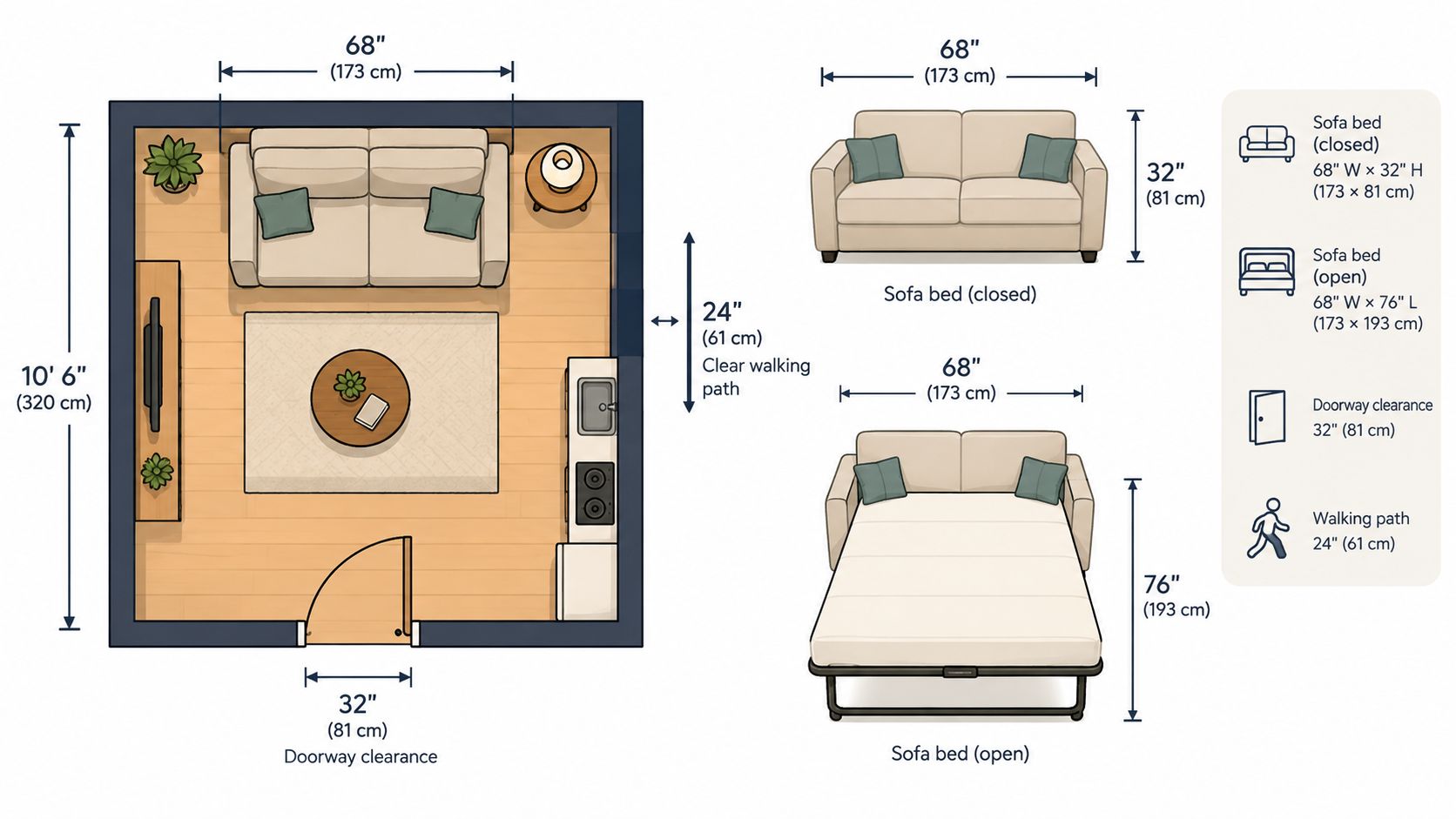
Start with the closed footprint. Record the width, depth, and height, then mark that outline on the floor with painter's tape. Next, mark the full bed footprint, including the space needed to stand up and walk around it.
Some sleeper loveseats can be as narrow as 42.9–46 inches wide while opening to a bed measuring 70 by 47 inches, according to this small-space sleeper sofa coverage. Those dimensions show why closed width alone can mislead. The piece may be small along the wall but substantial from front to back when open.
Experts commonly recommend about 30 inches of clearance around the furniture. That space supports everyday walking and helps a guest get in and out of bed. It also gives the mechanism room to move without colliding with a coffee table or nearby chair.
Don't forget the delivery route
The room may be ready while the building route isn't. Measure the entry door, hallway turns, stairwell, elevator, and interior doorway. Note low ceilings, railing corners, narrow landings, and any fixed lighting that could obstruct a tall piece.
A come-apart frame can help in a tight Milwaukee bungalow, apartment, or older home with narrow access. BILTRITE carries select sofas and loveseats designed to break into smaller packages for delivery. Shoppers can find more planning guidance in this sofa-bed dimensions guide.
A simple planning checklist
- Closed position: Record the full width and depth, not just the advertised seat width.
- Open position: Mark the bed's complete length and depth on the floor.
- Walking paths: Keep the main route to doors, bathrooms, kitchens, and storage usable.
- Furniture movement: Decide where the coffee table, ottoman, cushions, and bedding will go.
- Delivery access: Measure every tight point between the delivery truck and the final room.
- Sleep capacity: Confirm whether the expanded surface suits one sleeper or two.
A compact sleeper can function as a full-size sleep surface for one person and still be a poor choice if its depth blocks the room. That's the planning distinction. A smaller sofa isn't automatically the right sofa bed.
Pros and Cons for Different Households
A loveseat sofa bed earns its place when the household needs two functions from one modest footprint. It loses some of that advantage when the bed must stay open often, when two adults need generous sleeping width, or when the user has difficulty with a low or firm surface.
The wider sleeper-furniture category has become a significant part of multifunctional home furnishing. Independent market reports differ by methodology, placing the global sofa beds market at $8.9 billion in 2024, $12.8 billion in 2025, or $14.8 billion in 2025, with projections ranging from about $13.2 billion by 2033 to $17.1 billion by 2034 and estimated compound annual growth rates around 4.4% to 6.39%, as reported in this sofa beds market overview. One report estimates that sofa beds represented about 22.1% of the multifunctional furniture market in 2025, although the different figures reflect differing research methods.
Where the compact format helps
For an apartment or condo, a loveseat sleeper can add guest capacity without taking over the living room. In a home office, it can create a place for an overnight visitor while preserving the room's daytime purpose. In a bedroom, it can provide seating and occasional sleeping space without requiring a full sofa.
Senior living requires a closer look. The seat height, firmness, arm support, and ease of conversion may matter more than the smallest possible footprint. Some adults may need a lift chair or a supportive, easy-transfer chair instead of a sleeper. Others may value a compact loveseat for visitors but still need a separate mattress for regular sleep.
Where a larger sleeper may be wiser
A full-size sofa bed may serve two adults more comfortably when the room can handle its open depth and width. A loveseat sleeper may feel cramped for couples, especially when the usable sleep surface is closer to a twin or compact full.
The same issue applies to frequent guests. A visitor staying several nights may notice mattress pressure, seams, or limited width more than someone taking a brief nap. A balanced discussion of sleeper sofa benefits can help households compare guest frequency with available floor space.
| Household Need | Loveseat Sofa Bed Fit | Main Caution |
|---|---|---|
| Apartment living | Strong fit when the open footprint preserves a walkway | Measure depth, not just width |
| Home office | Useful for occasional guests and naps | Store bedding where it stays accessible |
| Senior living | Possible fit when the seat and mechanism are easy to use | Test transfer height and firmness |
| Dedicated guest room | Convenient when the room also needs seating | Consider whether two adults will share it |
| Frequent couple guests | May be limiting | Compare actual sleep width and edge support |
A showroom conversation should be honest about those limits. BILTRITE's team can help shoppers compare small-scale, heavy-duty, USA-made, Amish-made, and mattress options without assuming one category suits every household.
Care, Maintenance, and Delivery Tips
A sleeper sofa has more moving parts than a stationary loveseat, so simple routines matter. Conversion should stay smooth, the mattress should remain supported, and the upholstery should receive care suited to its fabric or leather.
Protect the sleep surface
Use bedding that fits the actual mattress dimensions and remove thick toppers before closing the mechanism unless the product instructions specifically allow them to remain inside. Rotate or flip the mattress only when its construction permits it. If the mattress has one finished sleeping side, flipping may not be appropriate.
Keep the frame clear of blankets, toys, and cushions before closing. A stray object can interfere with hinges, rollers, legs, or the folding path. Open the sleeper gently and avoid forcing a section that catches.
Care for the upholstery and mechanism
Follow the cleaning instructions for the specific fabric or leather. Vacuum loose debris from seams, address spills promptly with the approved method, and avoid soaking cushions or mechanical areas. Check visible hardware periodically, and ask the showroom or manufacturer about service if the frame begins to squeak, bind, or sit unevenly.
Delivery preparation deserves the same attention as room placement. Recheck the doorway route, clear rugs and small tables, and make sure the room is ready before the scheduled appointment. BILTRITE offers white-glove delivery service on qualifying purchases, along with old-mattress removal in qualifying circumstances.
The local showroom advantage is practical, not complicated. Shoppers can sit on the mattress, operate the mechanism, inspect the frame, and compare the piece with other living-room furniture before making a decision. BILTRITE also has a mattress department with over 60 models and a broad in-stock selection, so a shopper considering a sleeper can discuss support needs alongside the sofa.
The store is located at 5430 West Layton Avenue in Greenfield, Wisconsin, and it closes on Sundays and Mondays to support family time. That buy-local approach gives Metro Milwaukee households a chance to ask questions face to face, test the furniture, and plan delivery before the new piece arrives.
BILTRITE Furniture-Leather-Mattresses offers loveseat-size sleeper sofas, small-scale furniture, USA-made and Amish-made pieces, supportive mattresses, and practical delivery services for Metro Milwaukee homes. Visit BILTRITE Furniture-Leather-Mattresses in Greenfield to open a loveseat sofa bed, check its sleeping depth, measure your options, and talk with a knowledgeable associate without pressure.