Assembled TV Stand Guide: Quality and Fit for Your Home


Will an assembled TV stand support only the television, or the entire entertainment center sitting on and inside it? That question matters more than the screen size printed on the box. A soundbar, game console, speakers, media player, accessories, and cable tension all add weight and movement, so a stand that looks suitable can still be underbuilt for the full setup.
An assembled unit can remove the frustration of sorting hardware and leveling shelves, but convenience shouldn't replace careful checking. The right choice still depends on room measurements, total load, ventilation, mounting compatibility, materials, and how the furniture will be delivered into the home.
Finding the Right Assembled TV Stand for Your Home
Moving a new television into the living room should feel exciting. Instead, many households end up with a box of panels, a confusing instruction sheet, and leftover screws that create doubt about whether the stand is square. That uncertainty matters because a crooked cabinet or loose joint can affect shelf alignment, cable access, and stability.
An assembled TV stand changes the starting point. The furniture arrives with its main structure already built, so the buyer can focus on placement and compatibility rather than reconstructing the cabinet. That doesn't mean every assembled piece is automatically suitable. A ready-built stand can still be too narrow, too shallow, poorly ventilated, or rated for less weight than the complete entertainment system.
Start with the room, not the television
Measure the wall, corner, or media area before looking at finishes. Record the available width, depth, and height, then measure the actual television from edge to edge, including its feet or tabletop base. The diagonal screen size doesn't tell the whole story, especially when a slim screen has a wide base or when the stand sits in a narrow walkway.
Check these practical details:
- Wall width: Leave enough visual breathing room around the stand without allowing the television to overhang the furniture.
- Depth: Include the TV feet, soundbar, plugs, and cable bend radius. A shallow stand can force cables into sharp angles.
- Viewing position: The screen should feel comfortable from the main seating area, not just fit the wall.
- Access: Doors, stairways, elevators, and tight turns can determine whether a large assembled piece can enter the home.
Storage also deserves attention. Open shelving gives electronics room to breathe and keeps remote signals accessible, while closed cabinets hide clutter. A mixed layout often works well for families because frequently used equipment stays reachable and less attractive items remain concealed.
For additional room-planning guidance, the TV stand shopping guide can help households organize measurements and priorities before visiting a showroom. A clear list makes the conversation easier and reduces the chance of choosing a piece that looks good but doesn't function well.
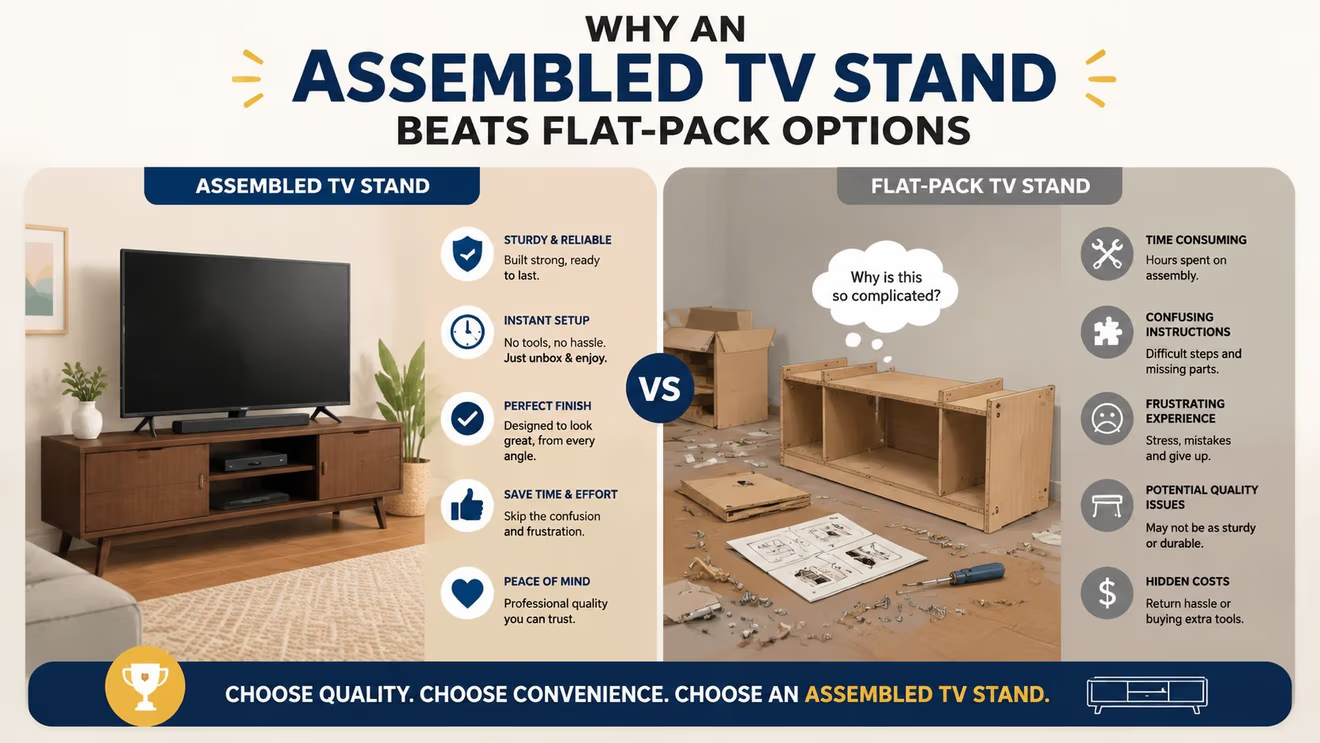
Why an Assembled TV Stand Beats Flat-Pack Options
Flat-pack furniture can offer flexibility and a lower handling burden, but the buyer becomes responsible for the final construction. Every cam, screw, bracket, back panel, and leveling adjustment affects the finished result. If one fastener is missed or one panel is installed in the wrong orientation, the stand may twist, wobble, or leave shelves out of level.
An assembled TV stand shifts much of that responsibility to the maker or retailer. Factory-set joints can arrive square, doors can be aligned before delivery, and shelves can be checked without asking the customer to interpret a diagram. The benefit isn't just saved time. A rigid cabinet distributes the system load more consistently, which helps the top remain flat and keeps drawers and doors operating properly.
Convenience and strength aren't the same thing
Customer feedback across the category frequently highlights difficult assembly, poor instructions, and time-consuming setup as recurring frustrations, while easy assembly and sturdiness appear as separate positive themes in shopping analysis from industry commentary on TV stand trends. That distinction is useful. Buyers don't necessarily want to trade durability for convenience, and a stand marketed as simple still needs sound construction.
The important comparison looks like this:
| Consideration | Assembled TV stand | Flat-pack TV stand |
|---|---|---|
| Main construction | Built before delivery | Completed by the buyer |
| Alignment | Usually checked during production or setup | Depends on installation accuracy |
| Risk of missing hardware | Lower after inspection | Buyer must identify every part |
| Transport | Requires careful handling of a larger piece | Arrives in smaller packages |
| Setup responsibility | Often shared with the delivery team | Mostly rests with the household |
An assembled piece can also reduce damage caused by repeated tightening, overtightening, or moving panels while they are only partially secured. Still, shoppers should inspect the back, corners, center supports, and hardware. “Assembled” describes the delivery condition, not a guarantee that the design suits every TV and accessory combination.
Essential Measurements and Compatibility Checklist
The safest purchase starts with the full system load. Independent build guidance recommends adding a 25% margin above the combined weight of the television, console, soundbar, and accessories, rather than sizing the stand for the screen alone. A typical 55-inch TV weighs about 30–40 lb, a 65-inch model about 45–60 lb, and a 75-inch model about 70–90 lb, according to TV stand sizing and load guidance.
A family setup can require around 150–250 lb of capacity, so the top panel deserves special attention. The same engineering guidance says shelves spanning more than 24 inches should use 3/4-inch plywood or an equivalent material to control sag and maintain alignment. Those figures aren't a substitute for the manufacturer's rating, but they show why the screen's listed weight is only the first line of the calculation.
Use this checklist before choosing
Measure the television itself. Record width, height with feet, and depth. Compare those measurements with the stand's usable top surface, not just its advertised screen-size range.
Add every component. Include the TV, soundbar, center speaker, consoles, receivers, decorative items, and anything likely to remain on the top or shelves. Apply the 25% margin to the combined load.
Separate top and shelf ratings. Consumer manuals commonly give different limits for different surfaces. Examples include 170 lb on a tabletop with 38 lb per middle shelf, 176 lb on a top shelf with 22 lb on lower shelves, and 150 lb maximum for the stand overall, as shown in current TV stand safety instructions. A shelf rating isn't interchangeable with the top rating.
Confirm the VESA pattern. VESA describes the spacing of the mounting holes on the back of the television. Product specifications may list supported widths from 100 to 600 mm, while another tabletop stand supports patterns from 100×100 mm through 400×400 mm and TVs from 32–55 inches up to 88 lb, according to TV stand specification tables. Check the television manual and the stand's exact mounting range.
Plan cable and airflow paths. Receivers, consoles, and other electronics need usable ventilation. Rear openings, open shelves, and accessible power-strip space prevent cables from pressing against the wall or blocking circulation.
Keep heavy items low and centered. A concentrated load on one side raises the overturning moment. A low, centered arrangement improves lateral stability, especially when someone bumps the stand or a child pulls on it.
Practical rule: Treat the top panel as the governing structural element, then verify every shelf separately.
Finally, match the stand to the room's scale. A deep cabinet can obstruct a walkway, while an undersized piece can make a large screen feel unstable even when its weight rating is adequate. The guide to choosing a stand for a 36-inch TV offers a useful example of why screen size, furniture width, and room proportion need to be considered together.
Choosing Quality Materials and Durable Finishes
Materials affect how a stand carries weight, handles everyday knocks, and ages in a busy living room. Solid wood, quality plywood, dense engineered panels, and metal can all serve useful roles, but low-grade particleboard brings fewer reserves when long shelves carry heavy equipment or when fasteners are repeatedly stressed.
Solid wood is especially useful in tops, legs, and structural frames because it can be repaired and refinished more readily than a thin decorative surface. Engineered panels can still perform well when they are thick, properly supported, sealed at the edges, and used in the right locations. The sensible comparison isn't “wood versus engineered wood.” It is well-built material versus under-supported material.
What to inspect in person
At a showroom, hands and eyes reveal details that photographs often hide. Run a hand along the top and edges. The surface should feel smooth, with no sharp transitions, rough patches, lifting veneer, or unfinished shelf edges.
Look for:
- A rigid base: Push gently from the side. The cabinet shouldn't rack or twist.
- Useful support: Long tops benefit from center support or a strong framed base to limit bowing.
- Sound joinery: Tight joints, solid corner reinforcement, dowels, screws, or traditional joinery provide more confidence than thin panels held together by minimal hardware.
- Leveling details: Adjustable feet can help the stand sit firmly on a floor that isn't perfectly even.
- Protected surfaces: A consistent stain, paint, lacquer, or protective coating helps defend against spills, dusting, and daily contact.
BILTRITE specializes in USA-made, Amish-made, and real solid wood furniture, with options that can include choices of wood, finish, and hardware. That makes an in-person inspection worthwhile because the buyer can compare grain, edge treatment, finish tone, and cabinet scale rather than judging a product from a staged image alone.
Choose the finish for the household
A pale, smooth finish may suit a calm modern room, while a deeper wood tone can connect an assembled TV stand with traditional tables or shelving. Families should also consider how the surface will be used. A stand under a television sees remote controls, toys, drinks, dust, and occasional bumps, so a finish needs to be attractive and practical.
The benefits of solid wood furniture provide more context for evaluating long-term material value. The strongest choice is the one that fits the room, supports the load, and can continue serving the household after the next television or furniture rearrangement.
Delivery, Setup, and White-Glove Service Options
A large assembled TV stand is easier to enjoy when the delivery plan is treated as part of the purchase. Before scheduling, the household should measure doorways, stair turns, hallways, and the final placement area. The delivery team needs a clear path, while the buyer needs to know whether the service includes positioning, leveling, packaging removal, and connection assistance.
Prepare the home before delivery
Use a simple sequence:
- Clear the route: Move lamps, toys, rugs, and small tables from the path.
- Protect the destination: Identify the exact wall or corner and remove the existing stand before arrival.
- Check the electrical plan: Know where outlets, power strips, and cable runs will sit.
- Confirm the service scope: Ask whether placement, setup, stabilization, and debris removal are included.
- Inspect before signing off: Look at corners, doors, shelves, finish, and the back panel after placement.
White-glove delivery can be particularly useful for heavy solid-wood furniture or narrow-room installations. It limits the chance that a household member drops the cabinet, scrapes a wall, or places the stand on an uneven surface without noticing. Setup quality matters because even a well-built unit can rock if the floor and feet aren't addressed.

BILTRITE's white-glove delivery service is one local option for households that want help moving furniture into position. The showroom's sales associates bring over 400 years of combined experience, giving shoppers a practical resource for questions about dimensions, finishes, room fit, and delivery details.
Understand what setup can and can't solve
Professional placement won't correct an unsuitable load rating, an incompatible VESA pattern, or a stand that is too shallow for the television. It can, however, catch obvious issues such as rocking, blocked vents, awkward cable bends, or a cabinet that isn't centered in the room.
Tip-over prevention also deserves a final check. Health Canada recommends using a stand designed for the TV's correct size and type, attaching the television to both the stand and wall when possible, and securing furniture with anti-tip devices such as angle braces or safety straps anchored to a wall stud or suitable heavy-duty drywall anchor, as detailed in television tip-over safety guidance. Those steps add protection beyond the furniture's appearance.
Supporting Local Craftsmanship and Family Values
An assembled TV stand represents more than a finished cabinet. It combines structural decisions, material choices, delivery handling, and the service that helps the piece fit the household. Buying locally gives shoppers a chance to examine those details directly and ask practical questions before the furniture enters the home.
BILTRITE Furniture-Leather-Mattresses has served the Metro Milwaukee community as a fourth-generation, family-owned business since 1928. The store focuses on affordable, better-quality furniture, with a strong selection of USA-made, Amish-made, and solid-wood pieces. That combination suits buyers who want a ready-to-place entertainment piece without giving up the ability to inspect construction, finish, storage, and scale in person.
Value comes from the whole experience
A lower price can be attractive, but the household cost includes setup frustration, damage risk, replacement, and time spent correcting a poor fit. A better-quality assembled stand can make more sense when it arrives aligned, handles the full entertainment load, and continues to work after equipment changes.
The showroom also serves different living situations. Small-scale furniture can help apartment and condo residents manage limited space, while heavy-duty options serve families who need extra durability. BILTRITE's large mattress department includes over 60 models, so a visit can support more than a living-room project when the household is furnishing several rooms.
The store's commitment to supporting local businesses reflects a practical family value: furniture should be chosen with care, delivered responsibly, and supported by people who will take the time to understand the home. BILTRITE is closed on Sundays to protect family time, a policy that fits the community-first approach behind its Metro Milwaukee showroom.
BILTRITE Furniture-Leather-Mattresses offers assembled entertainment furniture, USA-made and Amish-made pieces, solid-wood options, small-scale designs, and heavy-duty furniture for different homes and budgets. Visit BILTRITE Furniture-Leather-Mattresses in Greenfield to see TV stands in person, compare construction and finishes, and speak with the experienced team about safe fit and local delivery.