3 DAY MATTRESS SALE! TUESDAY - WEDNESDAY - THURSDAY!
LABOR DAY SALE EXTENDED ENDS SATURDAY, OCTOBER 3RD AT 5PM!
NO CREDIT CARD FEES!
1000's of Items IN-STOCK + 500 Mattresses!
Largest selection of USA Made Furniture & Mattresses + Amish Made!
FREE In-Store Design Services!
BUY LOCAL & LOVE YOUR HOME!
3 DAY MATTRESS SALE! TUESDAY - WEDNESDAY - THURSDAY!
LABOR DAY SALE EXTENDED ENDS SATURDAY, OCTOBER 3RD AT 5PM!
NO CREDIT CARD FEES!
1000's of Items IN-STOCK + 500 Mattresses!
Largest selection of USA Made Furniture & Mattresses + Amish Made!
FREE In-Store Design Services!
BUY LOCAL & LOVE YOUR HOME!
OPEN LABOR DAY | Tuesday-Thursday 10am to 6pm | Friday 10am to 7pm | Saturday 10am to 5pm | Sunday Closed To Be With Family & Friends | Monday Showroom Closed
5430 West Layton Ave, Greenfield - Metro Milwaukee
A small living room can fool people. The sofa looks handsome on the showroom floor, then it comes home, turns sideways, and suddenly the room feels like it's shrinking around it. That's the moment smart shoppers stop chasing “more seating” and start thinking about small scale furniture for living room spaces the right way, with proportion, circulation, and daily use all working together.
At BILTRITE, that's the conversation we've been having with Metro Milwaukee families since 1928. A compact room still deserves furniture that looks good, feels sturdy, and fits the way real people live, whether that means movie nights, grandkids dropping by, or a quiet corner for reading. The best small-space setup doesn't just save inches, it keeps the room open, usable, and comfortable.
A sofa that looks inviting on the sales floor can take over a living room the minute it gets home. The room stops feeling like a place to relax and starts feeling like a hallway wrapped around one oversized piece. That is why proportion matters more than the number of seats on the tag.
The market for small space furniture is large enough to track on its own, which says plenty about how common this problem is. One industry report values the category at $52.4 billion in 2025 and projects $94.8 billion by 2034, with a 6.8% CAGR from 2026 to 2034Dataintelo. Within that market, storage units lead at 28.3% share, followed by sofas at 21.7%, beds at 18.4%, tables at 14.6%, and chairs at 10.4%. Practical pieces win because homes need furniture that works every day, not furniture that only looks impressive for a weekend.
Practical rule: if a room feels crowded before the pillows even go on, the problem is scale.
Small rooms follow a simple design logic. A small living room is commonly placed around 130 to 160 square feet, while an average U.S. living room is about 216 square feetFuture Market Insights. That gap explains why smaller sofas, loveseats, nesting tables, and storage-forward pieces keep showing up in homes that need breathing room as much as seating. For Milwaukee shoppers, the smart move is to head to the Greenfield showroom, sit on the piece, judge the scale in person, and make sure the room still feels like a room.
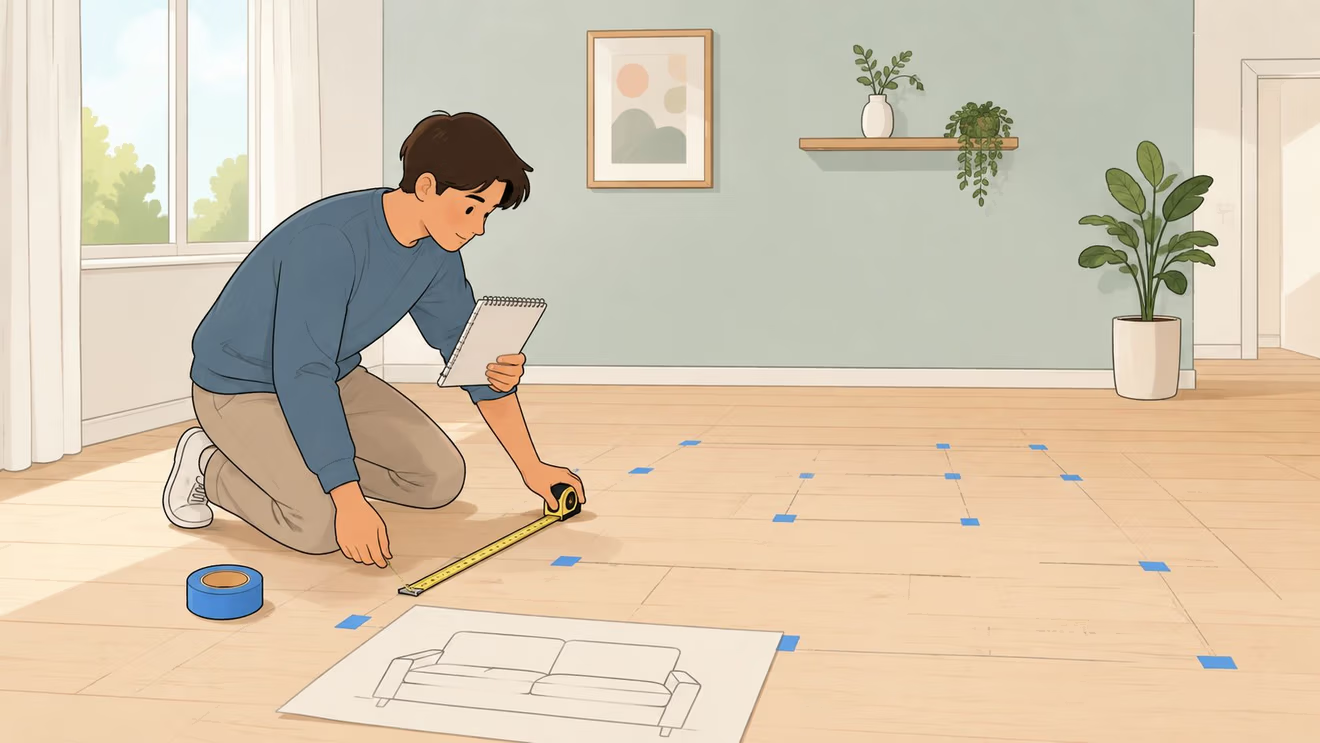
The tape measure comes out before the pretty fabric samples. That rule saves regret later. A small room only feels calm when the biggest pieces leave enough open space to move, so the first job is to map the room instead of hoping the room will cooperate.
Measure the full room, then mark doors, windows, vents, and any trim that steals space. After that, tape out the largest piece you are considering on the floor with painter's tape. This makes the footprint real instead of imaginary, and it shows whether the room can handle a deeper sofa or whether a slimmer shape is the better choice.
A useful target is to keep the furniture footprint at about 40% of the total floor area, with 90 cm for main traffic lanes and about 50 cm between pieces Miller Waldrop Studio Matrx. That does not mean the rest of the room has to stay empty. It means the furniture should not choke the paths you use every day. If the tape layout already feels tight, the finished room will feel tighter.
Check the gaps that matter most
The sofa-to-coffee-table distance should land around 35 to 45 cm, and 90 cm remains the clean minimum for walkways Studio Matrx. Other living room guidance keeps the sofa and coffee table gap in a similar range, around 14 to 18 inchesHouzz. Use that spacing as a sanity check, not a guess.
Mark the traffic lane first. If a walkway gets pinched, the room will feel annoying no matter how good the upholstery looks.
Tape the largest piece before anything else. The biggest sofa or chair sets the tone for everything that follows.
Leave room for turning corners. A layout can look fine on paper and still fail in a doorway or hallway.
A smart floor plan also respects the room's structure. Living room guidance often calls for 90 cm for a main traffic lane and about 50 cm where circulation passes between pieces Miller Waldrop. A living room also needs comfortable viewing and conversation spacing, with about 150 cm between facing seating or seating and a television Miller Waldrop. Bring those measurements to the Greenfield showroom, then sit, stand, and walk the layout in person. That is how Milwaukee shoppers avoid buying a piece that looks fine online but hogs the whole room.
Choosing Sofas, Loveseats, and Chairs That Fit the Space
The right seat size starts with the room's actual envelope, not wishful thinking. In small spaces, apartment-size sofas often land around 72 to 84 inches wide, loveseats around 52 to 64 inches wide, and compact lounge or accent chairs around 28 to 36 inches wide Coohom. Those ranges give shoppers something concrete to measure against instead of relying on a vague “small” label.
A 60 to 76 inch sofa is often the sweet spot in especially compact rooms, and interior guidance commonly recommends keeping a sofa no longer than 84 inches when the room is under 200 square feet Clever Space Solutions. That is the number that keeps a loveseat from feeling too slight and stops a full sofa from taking over the main wall. It also gives Milwaukee shoppers a practical starting point before they head to BILTRITE's Greenfield showroom to sit on a few options and see how they feel in person.
Compare the main seating choices
Furniture Type
Typical Width
Typical Depth
Best For
Apartment-size sofa
72 to 84 inches
Varies by frame, often slimmer than full-size seating
A compact family room that still needs full sofa presence
Loveseat
52 to 64 inches
Varies by frame
Two-person seating, tighter walls, or pairing with a chair
Compact lounge or accent chair
28 to 36 inches
Varies by style
Filling a corner without blocking circulation
Storage ottoman
Varies by design
Low profile
Footrest, extra seat, and hidden storage
Read the chair, not just the width
Depth matters just as much as width. Standard sofas often run 91 to 102 cm deep, which can eat up precious room envelope in apartments and condos Clever Space Solutions. That is why a visually lighter piece with cleaner arms and visible legs usually works better than a bulky silhouette, even when the seat width looks acceptable on paper.
Storage ottomans and nesting tables earn their place because they do more than one job. A nesting table set can tuck away when the room needs to open up, and a storage ottoman can step in for table duty, extra seating, or stash space for blankets and remotes. In small rooms, that kind of flexibility beats decorative excess every time.
Why Small-Scale Should Still Mean Solid Wood and Heavy Duty
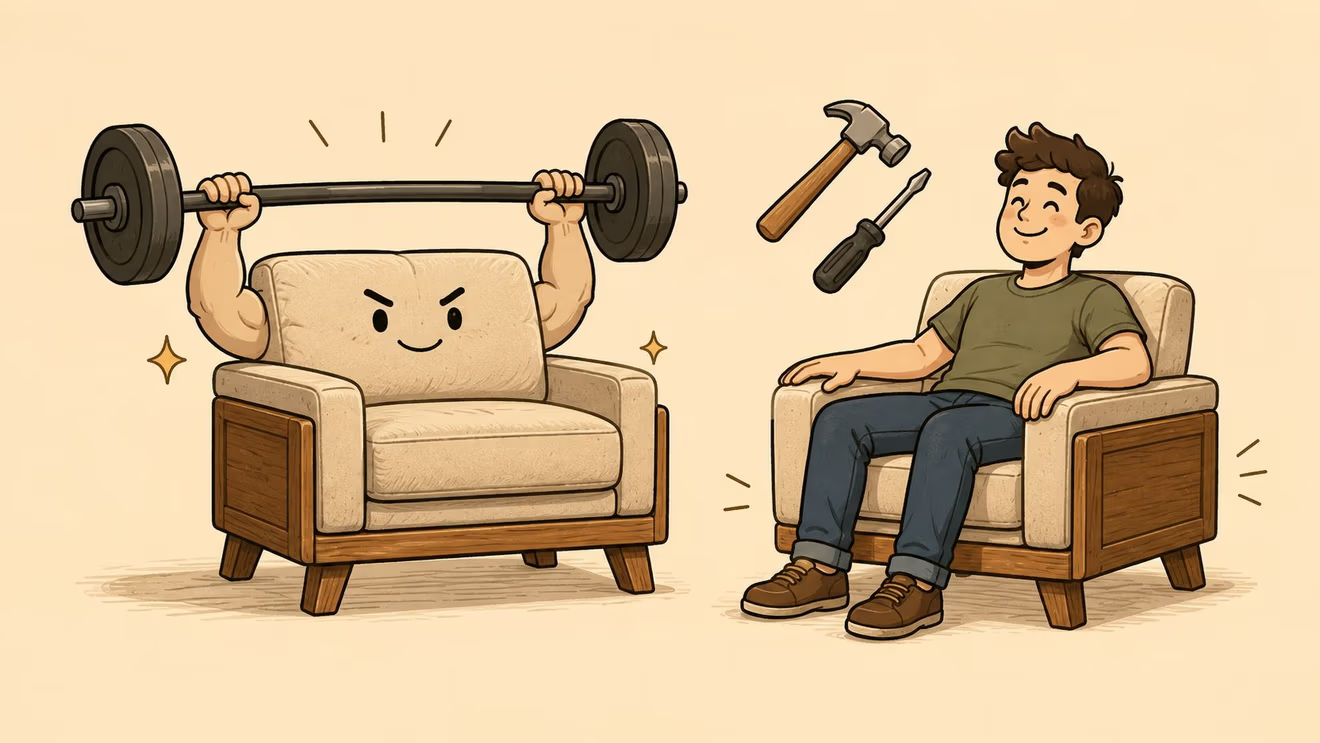
Small doesn't mean flimsy. That's the part too many shoppers miss, and it's where good advice should get tougher. A compact sofa or chair takes the same daily abuse as a larger one, sometimes more, because everyone ends up using the same favorite seat.
Small-scale furniture should still have real structure, tight joinery, and materials that can take frequent use. That's where solid wood, USA-made, Amish-made, and heavy-duty construction matter. Those labels usually signal better framing, more substantial support, and a piece that doesn't start wobbling after a year of family use.
Good compact furniture should feel sturdy the moment someone sits down. If the frame flexes too much in the showroom, it won't improve at home.
That matters in apartments, condos, and multi-generational homes where the furniture gets used hard. Seniors need seats that feel stable. Kids climb on everything. Pets add wear. A well-built smaller piece handles that routine without acting delicate.
Pay for comfort you'll still like next year
A slightly higher price can be the smarter move if the frame is sound and the seat support holds up. BILTRITE's showroom icons for USA Made, Amish Made, and Heavy Duty make those choices easier to spot in person, which is helpful when the goal is durability as much as fit. The right compact sofa should support daily life, not just look tidy for photos.
The same logic applies to materials and finish. Real solid wood tends to feel more grounded than light, hollow construction, and that matters in high-use rooms. For shoppers weighing a room that's short on square footage but long on everyday traffic, durability is not a luxury feature. It's the baseline.
Come-Apart Sofas and Delivery Without the Drama
The living room floor plan is only half the battle. A sofa can fit the room and still fail at the front door, on a landing, or around a tight turn in an older duplex. That's why delivery geometry deserves the same attention as sofa width.
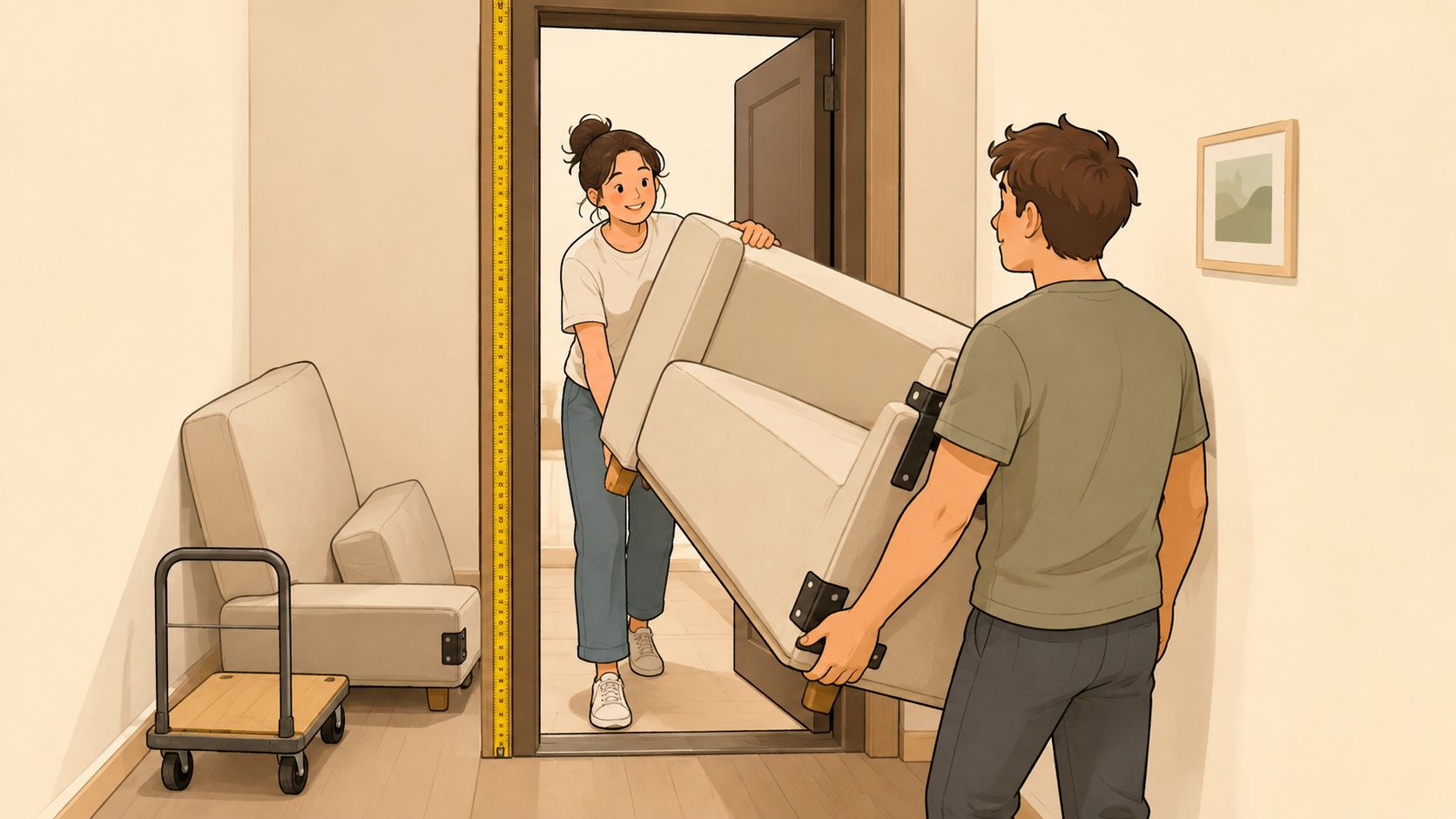
Before buying, measure every doorway, hallway, stair turn, and elevator opening the piece has to pass through. A sofa that looks right on the floor can still be a problem if it can't pivot around a tight corner or clear a narrow entry. Older Milwaukee homes and duplexes make this even more important, because the path in is often the main bottleneck.
Here's the sensible sequence:
Measure the widest point of the furniture.
Measure the narrowest point along the delivery route.
Check every turn, not just the straight runs.
Ask whether the piece comes apart or ships modular.
Choose delivery-friendly construction on purpose
Come-apart sofas, sectionals, and recliners solve a real problem. They break down for easier delivery into tight spaces and narrow doorways, which lowers stress on move-in day and reduces the chance of scuffed walls or a return that could've been avoided. Modular and movable pieces also make sense for renters who may rearrange later or move to another home.
BILTRITE keeps come-apart sofas, sectionals, and recliners in the conversation for exactly that reason, because compact living isn't only about room size. It's also about the path from the truck to the living room. If the home has a tricky entry, delivery-friendly design should be part of the buying decision, not an afterthought.
Measure the stairs before you fall in love with the fabric.
That simple habit saves a lot of frustration. It also makes the showroom visit better, because the shopper can talk through the actual route instead of guessing whether a piece will make the turn.
Senior-Friendly Picks That Work for Everybody
Small living rooms often belong to people who want less bulk, not less comfort. Downsizers, seniors, caregivers, and multi-generational households all need furniture that's easier to use day after day. That means the best small pieces aren't just compact, they're supportive in the right places.
Comfort that helps bodies, not just floor plans
A supportive seat height makes sitting down and standing up easier. Firmer cushions help the body stay aligned instead of sinking too far. Small-scale recliners and lift chairs can take strain off the knees and hips, while still fitting into a modest living room without looking oversized.
That's why senior-friendly should be read as everyday-friendly. A seat that's easy to rise from works for grandparents, busy parents carrying laundry, and anyone who doesn't want to wrestle with a deep, soft cushion. It's smart furniture, not institutional furniture.
BILTRITE's Senior Living Furniture and Mattresses selection fits that need, and the broader showroom mix gives families room to compare supportive pieces side by side. The team's combined experience, which spans more than 400 years, helps turn a vague comfort goal into something more practical, like the right seat depth, support feel, and recline style for the person who'll use it most.
Use the room for real life. If a chair looks right but feels hard to get out of, it's the wrong chair for that home.
The same goes for households that need a living room to do more than one job. A senior-friendly piece can still look clean, modern, and well-proportioned. The key is choosing support first and style second, then finding the frame and fabric that match the room.
Your Milwaukee Shopping Game Plan
The smartest way to shop small-scale seating is straightforward. Measure the room, tape the footprint, decide whether the home needs a sofa, loveseat, chair, storage ottoman, or all four, and check the delivery path before anything gets loaded. That order keeps the focus on fit, use, and logistics, which is exactly what compact rooms demand.
For Milwaukee shoppers, a few categories deserve a close look in one visit: small scale furniture, USA-made, Amish-made, solid wood, heavy duty, come-apart sofas, and senior living pieces. Those tags tell a useful story. They point to furniture that's sized for the room, built for regular use, and easier to get into homes that don't offer generous hallways or elevator banks.
BILTRITE Furniture-Leather-Mattresses at 5430 West Layton Avenue in Greenfield gives shoppers a chance to see and sit on those pieces before deciding. That matters because a loveseat that looks narrow online, or on paper, can feel very different when someone sits down, leans back, and tests the arms. The right visit includes the tape-measure notes, the doorway measurements, and a real conversation with a sales associate.
FAQ for Milwaukee-area shoppers
How should delivery be measured? Measure the room, then measure every door, hallway, stair turn, and elevator opening along the route.
Should the choice be a loveseat or apartment-size sofa? If two people need to sit there often, an apartment-size sofa usually gives more comfort. If the room is especially tight, a loveseat can keep the layout open.
Where should the visit start? Start by parking the measurements in your pocket and the room's main use in your head, then ask for seating that fits both.
Ready to make the room work better? Visit BILTRITE Furniture-Leather-Mattresses in Greenfield and sit on the compact sofas, loveseats, chairs, and delivery-friendly pieces in person. Our team helps Milwaukee families choose furniture that fits the room, fits the home, and feels right from the first sit.