Small Space Convertible Furniture for Your Milwaukee Home


A lot of Milwaukee-area shoppers are living this out right now. The sofa fits, but then there's no room for a coffee table. The guest bed sounds useful, but it swallows the office. The dining set looks nice in the showroom, yet at home it turns a cozy condo or apartment into a tight little obstacle course.
That's where small space convertible furniture starts making real sense. A room doesn't have to do only one job anymore. A living room can welcome guests and still sleep family overnight. A bedroom can hold storage without feeling crowded. A compact home office can pull double duty when needed.
For local families, downsizers, condo owners, and apartment renters, this isn't some passing design fad. The global small space furniture market was estimated at USD 6.68 billion in 2025 and is projected to reach USD 10.17 billion by 2032, according to small space furniture market forecasts. That points to a broader shift toward compact living, urbanization, and furniture that works harder in the same footprint.
Table of Contents
- Welcome to Smart Small Space Living
- Exploring Types of Convertible Furniture
- Weighing the Pros and Cons for Your Home
- How to Measure for Convertible Furniture
- Why Quality Materials Make All the Difference
- Come Find Your Solution at BILTRITE
Welcome to Smart Small Space Living
A smaller home can feel warm, efficient, and comfortable. It can also feel like a game of furniture Tetris when every inch matters. One wrong piece can block a window, crowd a walkway, or make a room feel busier than it needs to.
That's why so many people start looking for furniture that can do two jobs at once. A sofa that becomes a bed. A wall bed that gives a room back during the day. A table that expands only when company comes over. Those choices don't just save space. They help a home feel calmer and easier to live in.
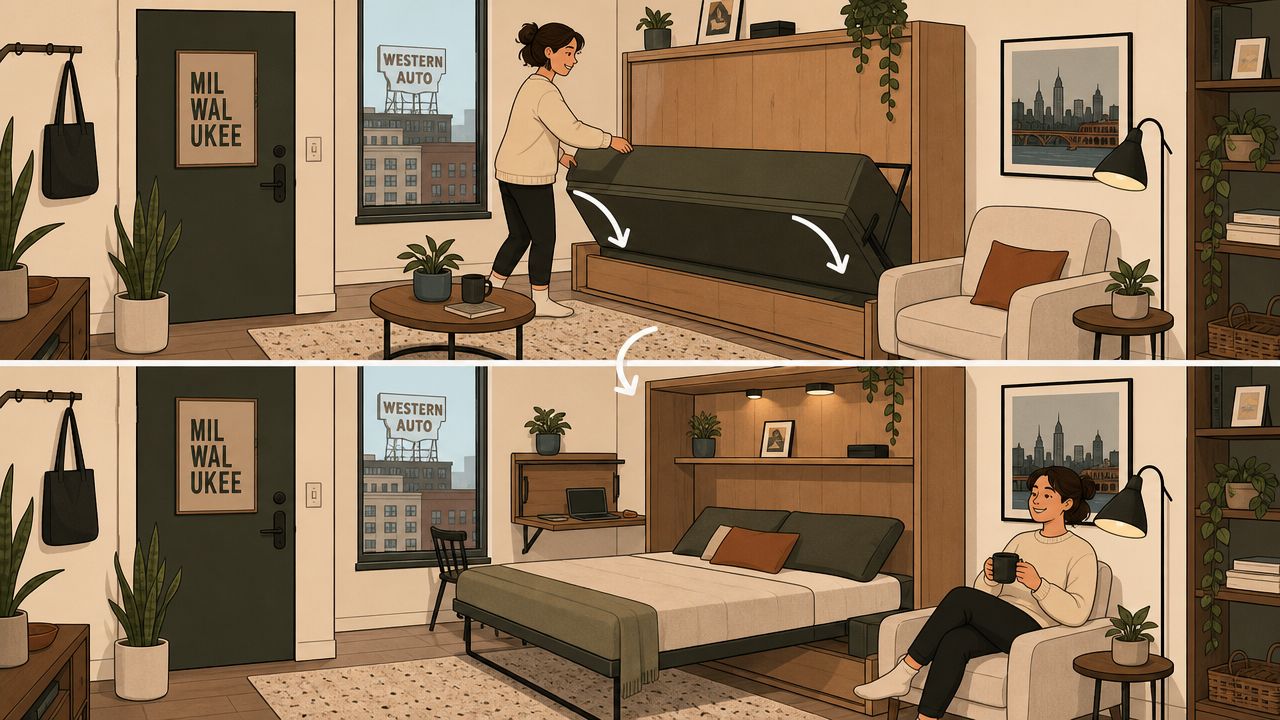
In Metro Milwaukee, that need shows up in all kinds of homes. A young couple in a Bay View apartment may need a guest sleeping option without giving up the whole living room. A condo owner in Greenfield may want a dining surface that doesn't dominate the floor plan. A senior moving into a smaller residence may need pieces that are simpler to use, easier to walk around, and less bulky than traditional furniture.
A local perspective helps
BILTRITE has been part of the Metro Milwaukee community since 1928, and that long family history shapes how small-space shopping gets approached. The focus isn't on stuffing more furniture into a room. The focus is on helping each room work better.
A small room usually doesn't need less comfort. It needs fewer compromises.
That's an important difference. Small space convertible furniture should support real daily living, not just look clever in a photo. It should open smoothly, close neatly, and leave the room usable in both positions.
Cozy homes can still feel open
A well-planned compact room usually comes down to a few simple ideas:
- Choose fewer, harder-working pieces so the room stays open.
- Protect walking paths so the space feels comfortable instead of cramped.
- Match the furniture to daily habits instead of buying for rare occasions.
- Prioritize quality construction when a piece will move, fold, lift, or convert often.
That last point matters more than many shoppers expect. In a small home, one convertible piece often handles the work of two separate pieces. That means it gets used. A lot.
Exploring Types of Convertible Furniture
Convertible furniture is a wide category. Many shoppers hear the phrase and think only of an old futon in a spare room. Today, the category is much broader, and the differences between types matter.
More than a sleeper sofa
Some pieces change function by folding. Others extend, lift, stack, or tuck away. The basic question isn't just what the item is called. It's how the piece earns its keep in the room.
A few common categories include:
- Sleeper sofas and sofa beds that turn seating into a sleep surface for guests or daily use.
- Murphy beds and wall beds that free up floor space when the bed isn't needed.
- Storage beds with lift mechanisms that add hidden space under the mattress.
- Drop-leaf and expandable tables that shrink for everyday use and open up for meals or projects.
- Nesting tables and tuck-away pieces that spread out only when extra surface area is needed.
Some systems are simple by design. Others depend on more advanced hardware. According to this transforming furniture demonstration focused on engineered lift systems, high-quality pieces often rely on hydraulic or counterbalanced lift mechanisms to make conversion smoother, reduce physical effort, and limit wear from frequent use.
That's one place shoppers often get confused. A piece can look attractive closed up, but if it's awkward, heavy, or jerky to operate, it may not work well in everyday life.
Practical rule: If a piece will convert often, the mechanism matters as much as the upholstery or finish.
For anyone comparing wall beds, this guide to what a Murphy bed is gives a helpful overview of how that category works and why it fits compact homes so well.
Which Convertible Furniture is Right for You
| Furniture Type | Primary Use | Best For |
|---|---|---|
| Sleeper sofa | Seating by day, sleeping by night | Living rooms, apartments, guest overflow |
| Murphy bed | Full bed that stores vertically | Studios, home offices, multipurpose rooms |
| Storage bed | Sleeping plus hidden storage | Bedrooms short on closet space |
| Drop-leaf table | Compact dining or work surface | Kitchens, condos, eat-in spaces |
| Nesting tables | Flexible surface area | Small living rooms, occasional entertaining |
A simple example helps. A shopper who hosts overnight guests a few times a year may do well with a sleeper sofa in the living room. A shopper who needs an office to become a bedroom regularly may lean toward a wall bed. Someone with a small bedroom and limited storage may get more value from a lift-up bed than from adding a bulky dresser.
Daily use and occasional use are not the same
That distinction matters. A piece meant for occasional guests can be very different from one that needs to convert every day. Small space convertible furniture works best when its mechanism, comfort level, and footprint all match the home's real routine.
In other words, the smartest piece isn't always the flashiest one. It's the one that fits the room and keeps working without becoming a nuisance.
Weighing the Pros and Cons for Your Home
Convertible furniture can be a wonderful solution. It can also disappoint shoppers who buy based only on looks or price. A balanced view helps.
Why people love it
The biggest benefit is flexibility. One room can support more than one activity without feeling overfurnished. That's a major win in apartments, condos, smaller homes, and senior living spaces where open floor area makes everyday life easier.
There's also a visual benefit. Fewer separate furniture pieces often means less clutter, cleaner sight lines, and a room that feels easier to manage. A storage bed can reduce the need for extra case pieces. A drop-leaf table can open only when needed. A sleeper can remove the need for a dedicated guest room.
For shoppers looking at furniture options for small spaces, that kind of flexibility can turn a frustrating room into one that feels much more usable.
Where shoppers get tripped up
The most common problem is assuming every convertible piece is suitable for daily use. It isn't. As noted in this discussion of transforming furniture for small spaces, one of the biggest overlooked issues is the trade-off between seating comfort and sleeping comfort, along with the actual space needed to operate the piece.
That's especially important with sofas that may need to serve as a primary seat and a regular bed. A model that feels fine for a weekend guest may not feel supportive enough night after night. On the flip side, a very firm sleep surface may not give the relaxed seating feel a family wants in the living room.
Some furniture solves a space problem but creates a comfort problem. That trade-off should be checked before the purchase, not after delivery.
Another issue is wear. Hinges, joints, lift systems, and fold-out frames all take stress over time. Lower-quality construction may start with a tempting price tag, but daily operation can expose weak points quickly.
A useful comparison for shoppers is this look at futon vs sofa bed differences. The two categories can seem similar at first glance, but they often feel and function quite differently in real homes.
The honest middle ground
The good news is that the drawbacks aren't automatic. They're usually tied to fit, build quality, and intended use. When a shopper matches the piece to the room and chooses better construction, small space convertible furniture can feel practical instead of gimmicky.
That's why comfort testing matters. Sit on it. Open it. Close it. Think through who will use it, how often, and what the room needs to stay functional.
How to Measure for Convertible Furniture
A lot of measuring mistakes happen because shoppers measure only the furniture in its closed position. With convertible pieces, that's only half the job.
Measure the room in two positions
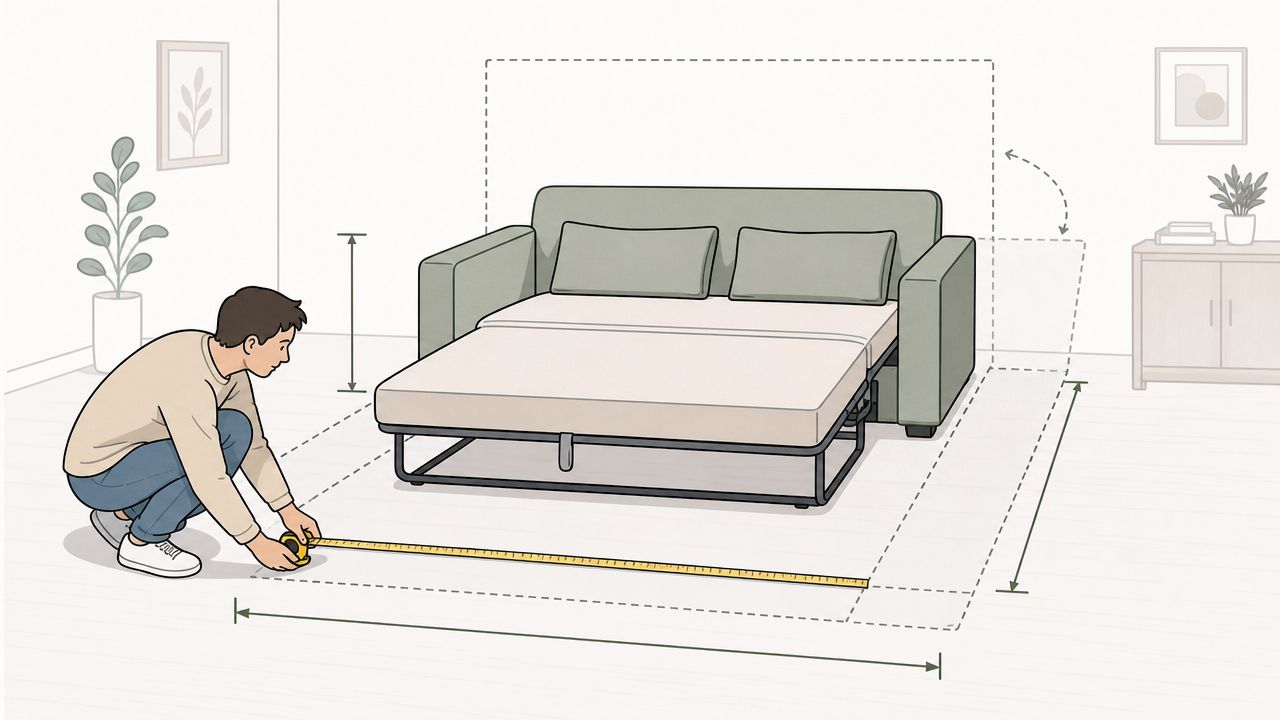
A sleeper sofa has to fit as a sofa and as a bed. A drop-leaf table has to fit folded down and opened up. A wall bed needs clearance in front, not just wall width.
One useful benchmark comes from this guide to convertible sofas for small apartments. For compact rooms, a small-space convertible sofa often works best when it stays under 80 inches for very small studios or under 85 to 90 inches for compact apartments, while still keeping at least 30 inches of circulation clearance around the piece when it's converted.
That number matters because the room still has to function. People need to walk through. Doors need to open. Access to windows, closets, and nightstands can't disappear.
A practical measuring routine looks like this:
- Measure the wall first and write down the maximum width available.
- Measure the depth of the piece closed so traffic flow stays comfortable during the day.
- Measure the fully opened footprint so the room still works at night or during use.
- Mark the outline with painter's tape on the floor. That makes the swing and footprint easier to picture.
- Check the walkway after setup instead of assuming there will be room.
A room can technically fit a piece and still function badly. Clearance is part of the measurement.
For shoppers comparing sizes, this guide to sofa bed dimensions can help translate showroom measurements into real room planning.
Don't forget the delivery path
This step gets missed all the time, especially in older Milwaukee homes with tighter stairwells, narrower doorways, and more complicated corners. The furniture may fit the room beautifully and still fail the delivery test.
That's where come-apart furniture can be especially helpful. Some sofas, sectionals, and recliners are designed to separate for easier delivery into challenging spaces, then be reassembled in the room. For many city homes, duplexes, upper flats, and older condos, that feature can save a lot of frustration.
A shopper should measure these points before visiting the showroom:
- Front door opening
- Hallway width
- Stair width and landing depth
- Any sharp turn or low ceiling
- Elevator dimensions, if applicable
Those numbers matter just as much as the room itself.
Why Quality Materials Make All the Difference
A convertible piece lives a harder life than a standard one. It gets sat on, opened, closed, shifted, and asked to do two jobs in one footprint. In a smaller Milwaukee home or condo, that daily wear shows up fast if the build is weak.
The moving parts matter
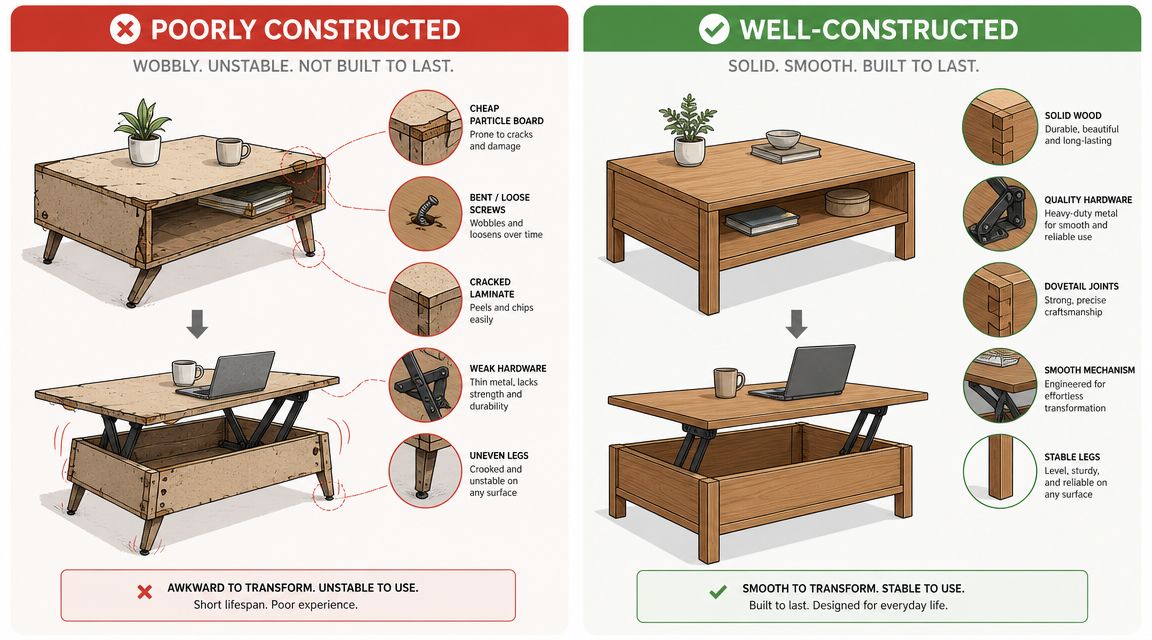
A regular bookcase mostly stands still and carries weight. A sleeper sofa, lift-top table, or wall bed works more like a front door. If the hinges, joints, and frame are built well, it opens the same way year after year. If they are not, you start to feel drag, hear squeaks, and notice things slipping out of line.
That is why experienced shoppers look past the headline feature and ask a better question. How well is this piece built at the stress points? Hinges, pivots, slats, support bars, drawer glides, and lift hardware do the heavy lifting. Those parts should feel steady and smooth, not loose or strained.
A few quality markers are worth checking in person:
- Solid wood or heavier-duty frame construction where the piece carries the most stress
- Hardware that feels tight and well aligned during opening and closing
- Durable upholstery or finish options that can handle daily contact
- A design that can be serviced or maintained if a part ever needs attention
For families who want furniture that keeps working well over time, the benefits of solid wood furniture are worth a close look.
What long-term value really means
Price matters. Every household has a budget. But with convertible furniture, the ticket price is only part of the story.
A lower-priced piece can look fine on day one and become frustrating in a hurry if the frame loosens, the mechanism gets stubborn, or the surface wears out early. In a small home, that frustration lands harder because the piece gets used constantly and there usually is not a backup room to hide it in.
That is one reason many Metro Milwaukee shoppers come into a local store wanting to compare construction, not just colors and dimensions. My family has helped people furnish compact bungalows, upper flats, condos, and lake-area cottages for generations, and the pattern is pretty consistent. Better materials usually feel better to use, hold up better under repetition, and age more gracefully.
The publisher, BILTRITE Furniture-Leather-Mattresses, focuses on affordable, better-quality furniture with a strong emphasis on USA-made, Amish-made, and solid-wood options. That matters with a multi-use piece because the materials affect both durability and day-to-day comfort.
A good value piece keeps doing its job after years of opening, closing, sitting, and sleeping.
Material choice also changes how the furniture feels in everyday life. A family room sleeper in an easier-care fabric may serve a home better than a delicate textile that shows wear quickly. A storage bed with sturdy lift hardware feels controlled and dependable each time it opens. Those details sound small in the showroom. At home, they are the difference between a piece you enjoy using and one you work around.
Quality matters even more in a small home
In a compact space, every piece has to earn its footprint. If one item sags, sticks, wobbles, or wears out early, it affects comfort, storage, guest use, and how the whole room functions.
That is why quality materials matter so much here. They protect your space, your budget, and your peace of mind. For Milwaukee-area shoppers trying to make a smaller home feel bigger and more comfortable, durable American-made and Amish-made construction is often the smarter path.
Come Find Your Solution at BILTRITE
Small homes ask for thoughtful choices. The right convertible piece can open up a room, reduce clutter, and make daily life easier. The wrong one can become a bulky compromise that nobody enjoys using.
What makes local shopping different
That's where a local showroom still matters. Shoppers can sit on the sofa, test the mechanism, check the height, and see whether the piece feels sturdy in person. That's hard to judge from a product photo alone, especially with convertible furniture where operation is part of the experience.
BILTRITE is a fourth-generation, family-owned furniture store serving Metro Milwaukee since 1928. The store is proud of its local roots, proud of its American-made and Amish-made focus, and proud to be closed on Sundays for family time. That family-first approach shapes the shopping experience in a very practical way. The goal is to help, not pressure.
Another strength is the team itself. BILTRITE's sales associates bring over 400 years of combined experience, which gives shoppers access to a lot of real-world furniture knowledge when deciding what will fit, last, and function well in a compact home.
A better way to shop for a small home
Small-space shoppers often need more guidance, not less. They're balancing room size, comfort, storage, delivery access, durability, and budget all at once. That's why seeing the furniture in person matters so much.

In Greenfield, shoppers can explore small-scale furniture, sleeper options, wall-bed solutions, solid-wood pieces, and other flexible designs with help from a team that understands the quirks of Milwaukee-area homes. Older bungalows, condos, apartments, senior living spaces, and tight stairways all bring different needs.
A well-chosen convertible piece should make a home feel easier to live in. It should support comfort, preserve movement, and hold up to real use. That's the kind of solution worth taking home.
Readers who are ready to explore small space convertible furniture in person can visit BILTRITE Furniture-Leather-Mattresses in Greenfield, chat with the experienced team, and test pieces firsthand to find a comfortable, durable fit for a Milwaukee-area home.