Your Guide to Heavy Duty Industrial Chairs from BILTRITE


A lot of people start looking for a heavy-duty chair after the same moment. A seat wobbles. A base starts to lean. A cushion sinks so badly that getting through a workday feels harder than it should. That happens in workshops, home offices, craft rooms, and plenty of dining or living spaces where someone needs more support than a standard chair gives.
Around Metro Milwaukee, families often walk into BILTRITE with that exact frustration. They aren't looking for flashy features. They want something safer, sturdier, and more comfortable for everyday life. As a fourth-generation family business serving this community since 1928, BILTRITE has spent decades helping neighbors sort through what lasts, what fails, and what fits real homes and real people.
Tired of Chairs That Just Don't Last
One of the most common stories sounds familiar right away. A family buys a chair that looks fine on the showroom tag or in a product photo. For a while, it works. Then the creaking starts. The arms feel loose. The seat loses shape. Before long, the chair becomes the one nobody wants to use.
That problem usually isn't bad luck. It's a build issue.
Standard seating is often made for lighter, shorter-term use. But many households need something tougher. Maybe a chair gets used every day for remote work. Maybe it needs to support a larger body comfortably. Maybe an older parent needs a seat that feels secure when sitting down and standing up. In those situations, a basic chair just doesn't hold up.
BILTRITE has seen that pattern for generations in Metro Milwaukee homes. The family has always believed that better-quality furniture saves money and frustration over time. That's one reason the store focuses so heavily on pieces made to handle real-life wear, not just look good for a season. The same thinking shows up in this helpful guide on how to buy quality furniture.
Why this matters at home
A heavy-duty chair isn't only for a factory floor. It can make daily life easier in places like:
- Home offices where someone sits for long stretches each day
- Senior living spaces where stability matters more than style trends
- Family homes where one sturdy chair gets used by several people
- Hobby rooms and workshops where furniture takes more abuse than a living room recliner
A chair that feels solid on day one but doesn't feel solid a year later wasn't built for the job.
That's why heavy duty industrial chairs deserve a closer look. The word "industrial" can make them sound cold or overly specialized. In reality, many of the features that help in a shop or work setting also make sense in a home that needs reliable support.
What Makes a Chair Truly Heavy Duty
A heavy-duty chair works like a family pickup. Two vehicles can look similar in the driveway, but the one built to haul real weight has a stronger frame, tougher hardware, and parts chosen for years of hard use. Chairs follow that same rule.
Start with the frame
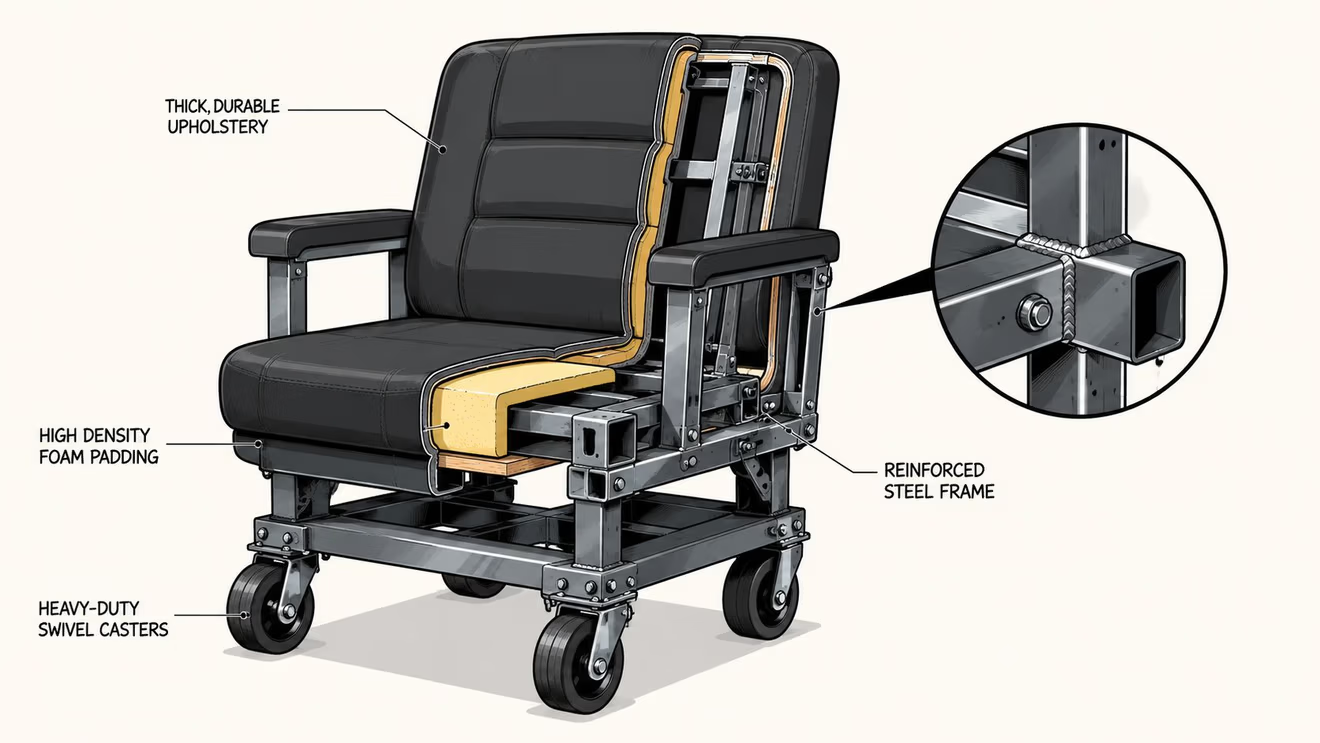
The frame does the same job your house framing does. It carries the load, keeps everything square, and prevents wobble.
Heavy-duty chairs usually rely on reinforced steel or other high-strength structural components because the hidden support system determines how well the chair handles repeated sitting, shifting, and standing. Safety guidance from OSHA on office seating and workstation design supports the broader point that chair structure and stability affect long-term performance and safe use. In a home, that matters just as much as it does in a workplace, especially if the chair gets used daily by an older adult, a larger user, or several family members sharing the same space.
Good construction also depends on how parts are joined. Wood furniture buyers often learn this lesson through mortise and tenon joint construction. A chair frame works the same way. Strong materials help, but the connections have to stay tight under stress.
The lift has to match the job
Many shoppers focus on the seat and back because those parts are easy to see. The lift underneath deserves just as much attention.
A heavy-duty chair needs an industrial-grade cylinder built for higher loads and frequent adjustment. If that part is undersized, the seat may start to sink, stick, or feel unreliable over time. For a senior who needs steady support while sitting down, or for someone using the chair through a full workday, that is more than an annoyance. It changes how safe the chair feels every single day.
Base and casters finish the system
The base and casters carry the chair every time it rolls, turns, or takes weight off-center.
That is why a chair cannot be called heavy duty based on a thick cushion alone. The frame, lift, base, and casters need to be selected as one load-bearing system. If one part is weaker than the others, that weak point usually shows up first through wobble, rough movement, or early wear.
Simple rule: A heavy-duty chair is only as strong as its weakest part.
Comfort still belongs in the conversation
Strength alone does not make a chair a good fit for home use. It also needs to support the body in a steady, comfortable way.
Better heavy-duty chairs often include adjustable tilt tension and back angles so different users can sit with proper support instead of feeling locked into one position. That matters in real homes around Milwaukee, where one chair may need to serve a remote worker in the morning, a parent in the afternoon, and a grandparent in the evening. A well-built heavy-duty chair should feel secure, supportive, and easy to trust, not stiff or punishing.
Key Features to Look For When Shopping
A chair can look impressive on the sales floor and still disappoint six months later. Families see it all the time. The seat is wide, the cushion feels plush, and the chair seems solid at first touch. Then the foam packs down, the movement gets rough, or the whole chair starts to feel less steady than it did on day one.
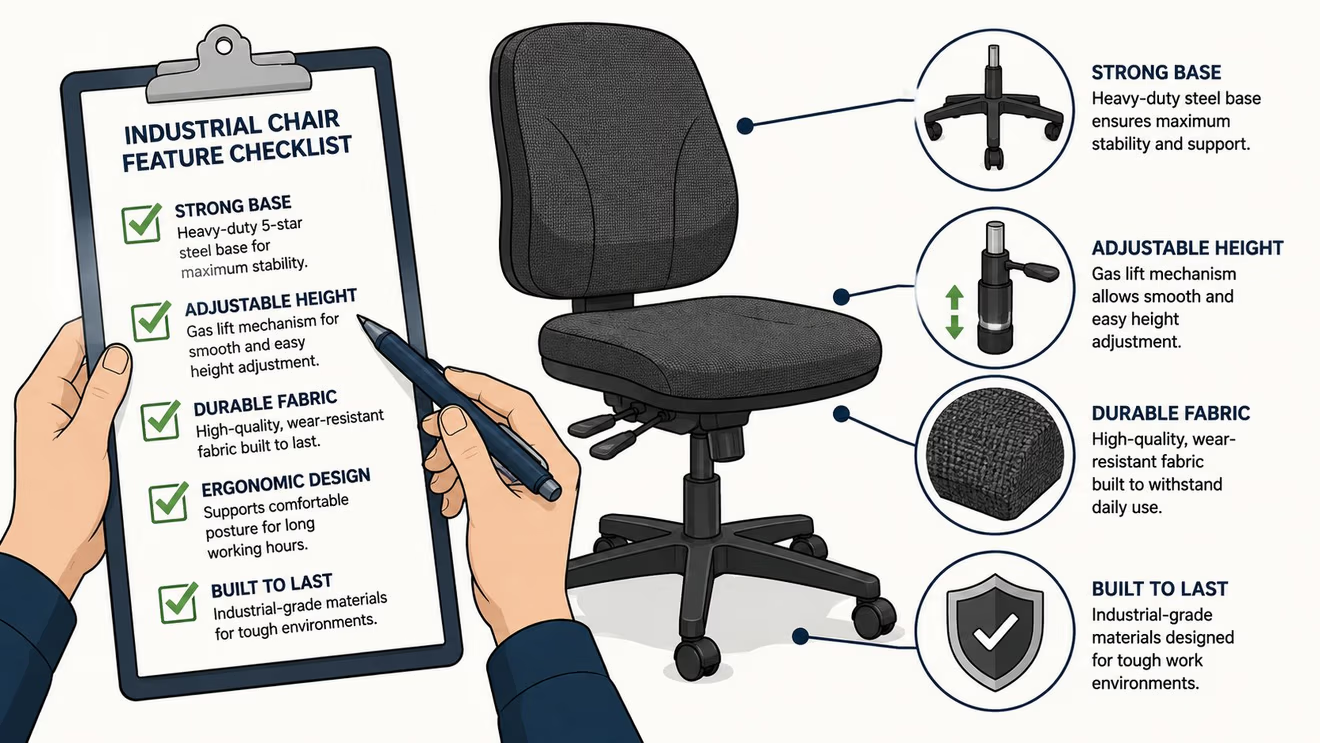
Shopping gets easier once you know which signs matter and which ones are mostly cosmetic. A heavy-duty chair should feel dependable in the same way a well-built porch swing or kitchen table feels dependable. The strength needs to be in the structure, not just in the appearance.
Start with the weight rating
The listed capacity is one of the clearest clues that a chair was built for heavier daily use. Many standard office chairs are made for lighter-duty demands, while heavy-duty models are often designed with higher capacities for larger users, shared seating, and longer hours of use, as explained by Mayo Clinic Press in its guidance on choosing office chairs.
For a family shopping for senior living, bariatric support, or a home office that gets used all day, that number helps narrow the field quickly. It does not tell the whole story, but it tells you the manufacturer expected the chair to carry more stress over time.
One practical tip. Leave a margin. If a chair will be used near its maximum rating every day, choosing a model with extra capacity usually leads to a steadier, longer-lasting feel.
Look closely at the cushion
Seat foam works like the tires on a car. Two chairs can look similar from across the room, but the material underneath changes how they perform year after year.
High-resiliency foam tends to spring back better after repeated use than cheaper foam that flattens and stays flat. This chair durability guide from Eureka Ergonomic explains why denser, better-quality cushioning holds its shape longer. In plain language, that means fewer sagging seats and fewer complaints about "bottoming out" after the chair has been in the house for a while.
Back support matters just as much. If you want a clearer picture of what proper lower-back support should feel like, this guide to adjustable lumbar support gives a helpful reference point.
Check how the chair behaves, not just how it looks
This is the part many shoppers skip.
Sit down normally. Then shift your weight, lean back, place both feet firmly on the floor, and stand up again. A good heavy-duty chair should stay composed through all of that. It should not feel tippy, noisy, hesitant, or loose in the joints.
That matters at home more than people expect. A grandparent lowering into the chair, a remote worker spending long afternoons at a desk, and a caregiver pulling the chair across the room all put different kinds of stress on the same seat.
A practical checklist for in-store shopping
Use this short list when you are comparing options:
- Confirm the rating: Check the chair's listed weight capacity and ask whether it is intended for full-time daily use.
- Press the seat and back: The cushion should feel supportive and bounce back, not collapse under your hand.
- Test every adjustment: Height, tilt, and recline should move smoothly and hold position without slipping.
- Look underneath the chair: Heavier hardware, thicker connection points, and a solid base usually point to better long-term durability.
- Notice side-to-side stability: The chair should feel planted when you shift, turn, or sit slightly off-center.
Size alone does not equal support
A roomy seat can be helpful, especially for comfort and easier transfers. Still, width by itself does not make a chair safe or durable.
What matters is whether the chair keeps its shape and balance under repeated use. That is the difference between a chair that merely looks substantial and one that serves a Milwaukee-area family well for years. At BILTRITE, that is often the moment shoppers notice the difference with their own hands and backs.
More Than Just Workshops Use Cases for Sturdy Seating
The word "industrial" can send people straight to warehouses and machine shops. Those are valid uses, of course. But sturdy seating has a much bigger role than many families expect.
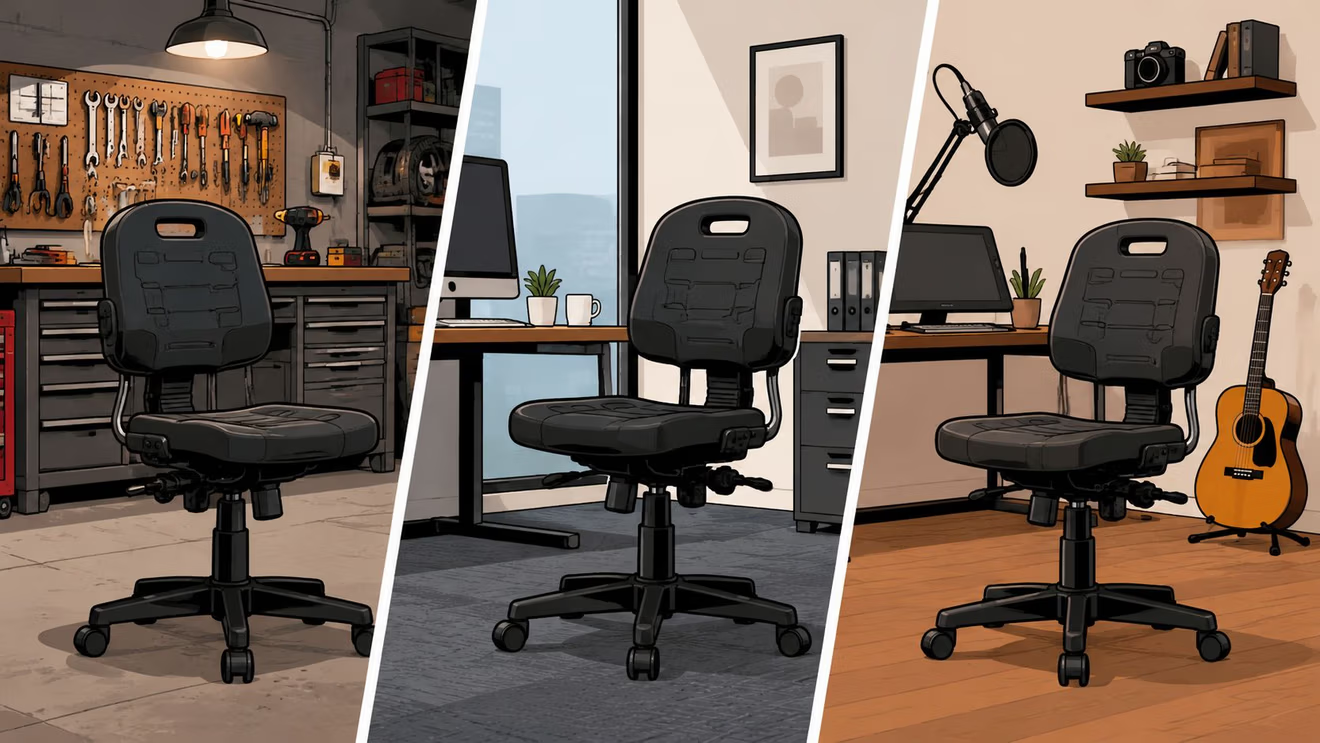
A workshop chair needs to take abuse. It may roll across concrete, hold up through long tasks, and stay dependable even when several people use it. In those settings, stronger structure makes obvious sense.
What surprises many shoppers is how often the same needs show up at home.
Residential uses that make sense
A caregiver may need a chair for a parent who doesn't feel secure in flimsy seating. A remote worker may spend most of the week at a desk and need something more dependable than a bargain office chair. A hobbyist may want a seat in a sewing room, craft area, or basement workspace that won't wobble after months of regular use.
That's where heavy duty industrial chairs start to feel less like a niche product and more like a practical household solution.
A key build detail helps explain why. Industrial-grade seating designed for heavy-duty use typically features a reinforced steel frame with a gauge thickness of at least 1.5mm, which significantly increases structural integrity compared to standard 1.0mm frames found in residential chairs, as noted in this feature discussing BILTRITE and family tradition.
Senior living and extra-support seating
This is one of the most important home uses. Stability can make a real difference for seniors and for adults who need bariatric support.
A sturdy chair can help with:
- Safer transfers: Sitting down and standing up feels more controlled
- Daily confidence: The chair feels dependable instead of shaky
- Shared spaces: One stronger chair can serve visitors and family members with different needs
- Longer wear: Support stays more consistent over time
Families exploring these needs often benefit from looking at furniture for assisted living facilities, because many of the same comfort and access priorities apply at home.
A dependable chair can change how a room functions. It can also change how safe that room feels.
Not every strong chair has to look industrial
Another point that helps shoppers relax is this. A chair can have industrial-grade durability without looking like it belongs on a loading dock. Good design can blend stronger construction with home-friendly style, softer upholstery, and a warmer feel.
That matters in living spaces where support is essential but appearance still counts.
Why USA and Amish Made Matter for Durability
Durability isn't only about specs on a tag. It's also about how a piece is made, who made it, and whether the builder treated construction like a craft or like a shortcut.
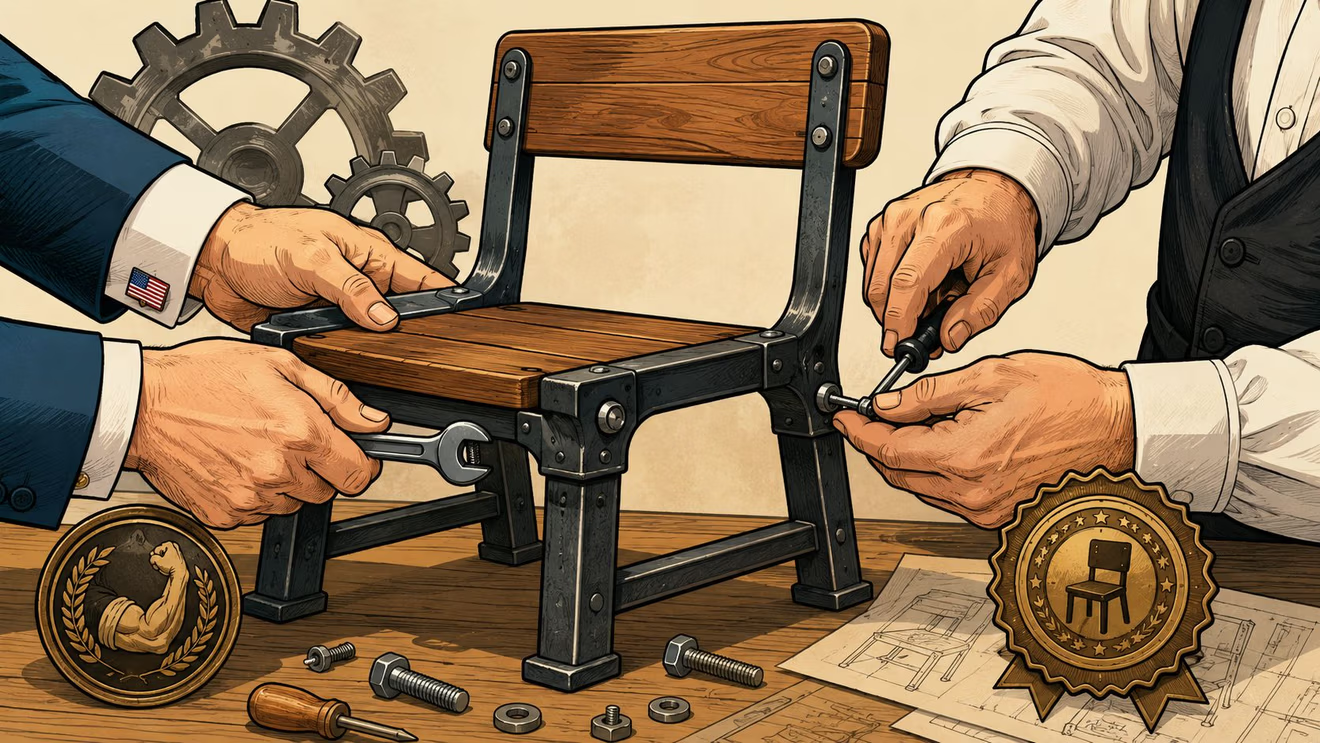
That belief has been part of BILTRITE's identity for generations. The store has long focused on affordable, better-quality furniture, with a strong commitment to USA-made and Amish-made pieces. In a family business that has served Metro Milwaukee since 1928, that focus didn't happen by accident. It grew from seeing which products come back with problems and which ones stay in homes for years.
Craftsmanship shows up in the parts you feel every day
One of the clearest examples is cushion support. Seat cushions in high-quality heavy-duty chairs should use high-density foam with an indentation load deflection (ILD) of 60–80 pounds to maintain comfort and support over 10+ years of daily use, preventing premature sagging, according to this article featuring BILTRITE and heavy-duty furniture quality.
Most shoppers don't walk in asking about ILD. They ask why one seat still feels supportive years later while another turns flat and tired. ILD helps answer that question. It points to how the cushion resists compression and keeps supporting the body over time.
Why origin can matter
USA-made and Amish-made furniture often appeals to families because the build tends to be easier to inspect and understand. Materials, joinery, upholstery work, and finish quality are more visible in person. A shopper can sit, touch, compare, and ask questions face to face.
That matters for heavy-duty seating because the value isn't in one flashy feature. It's in many small decisions made correctly. Stronger frames. Better foam. More dependable upholstery. Careful assembly.
For readers who want a closer look at that philosophy, BILTRITE shares more on the advantages of buying furniture made in the USA.
The long-view approach
Families often save money by choosing better construction once instead of replacing weak furniture again and again. That doesn't mean buying the most expensive option in the room. It means paying attention to workmanship and materials.
A practical example sits right in BILTRITE's mix of heavy-duty seating. The store offers the Dc#300hd-caf Cafe Fabric Heavy Duty Desk Chair with a 400 lb weight capacity. That kind of product is useful because it gives shoppers a factual reference point when they need extra support and want to compare how a chair is built.
Better durability usually isn't hidden in advertising language. It's built into the frame, foam, and craftsmanship.
Come See and Feel the Difference at BILTRITE
A chair can look sturdy on a screen and still feel wrong the moment you sit down. Families find that out when an older parent needs firmer support, when a larger family member needs more room and confidence getting in and out, or when a home office chair starts to wobble long before it should. Heavy-duty seating has earned more attention because daily life asks a lot from one chair.
Analysts covering the office chair market reported that it had a value of USD 18.25 billion in 2025 and projected growth to USD 28.49 billion by 2034, according to Fortune Business Insights on the office chairs market. That lines up with what families see in their own homes. They want seating that feels dependable, not temporary.
Online research can narrow the field. Sitting in the chair answers the key questions.
Why the showroom matters
At BILTRITE's Greenfield showroom, shoppers can test a chair the way it will be used at home. They can feel whether the seat is too firm or just supportive enough. They can check whether the arms help with standing up, whether the seat height fits the person using it, and whether the chair feels steady from the first sit to the fifth.
That matters because industrial-grade durability often solves everyday residential problems. A heavy-duty chair can be a smart fit for a senior living room, a bariatric seating need, a kitchen desk area, or a family space where one dependable chair gets used all day. It works a bit like buying a work boot for yard chores and neighborhood walks. You may not be heading to a jobsite, but the extra support and longer wear still make life easier.
Help from people who ask the right questions
BILTRITE's team brings over 400 years of combined experience, and that shows in how they guide shoppers. The conversation usually starts with the person, not the price tag. Who will use the chair most often? How easy does it need to be to get in and out of? Will it live in a bedroom, an office corner, or the main family room where appearance matters too?
Those details change the right answer. A wider seat may help one household. A firmer cushion and solid arms may matter more in another. Families often appreciate having someone walk through those differences in plain language.
There is also more to compare in one visit. The showroom includes small-scale furniture, senior-focused options, USA-made and Amish-made pieces, and a mattress department with over 60 models. For many households, that means solving several comfort needs in one stop instead of piecing answers together from different places.
A local store you can actually visit and trust
BILTRITE has served Metro Milwaukee families since 1928, and that long history shapes how the store operates. It does not sell online, and it closes on Sundays and Mondays so families and staff can have family time. Family tradition and quality are closely connected at BILTRITE.
For shoppers, the practical benefit is simple. There is a real showroom, real guidance, and real furniture to try before bringing anything home. That lowers guesswork, especially for chairs that need to support everyday use with comfort and dignity.
Anyone ready to stop in can find directions and store details on BILTRITE's store locations page. BILTRITE Furniture-Leather-Mattresses has helped Metro Milwaukee families furnish their homes since 1928 with affordable, better-quality furniture and mattresses, many of them USA-made or Amish-made. Readers who want sturdy seating, supportive furniture for seniors, small-scale pieces, or a new mattress can visit BILTRITE Furniture-Leather-Mattresses in Greenfield, say hello to the team, and try the furniture for themselves.