3 DAY MATTRESS SALE! THURSDAY - FRIDAY - SATURDAY!
LABOR DAY SALE HELD OVER ENDS SATURDAY, SEPTEMBER 19 AT 5PM!
NO CREDIT CARD FEES!
1000's of Items IN-STOCK + 500 Mattresses!
Largest selection of USA Made Furniture & Mattresses + Amish Made!
FREE In-Store Design Services!
BUY LOCAL & LOVE YOUR HOME!
3 DAY MATTRESS SALE! THURSDAY - FRIDAY - SATURDAY!
LABOR DAY SALE HELD OVER ENDS SATURDAY, SEPTEMBER 19 AT 5PM!
NO CREDIT CARD FEES!
1000's of Items IN-STOCK + 500 Mattresses!
Largest selection of USA Made Furniture & Mattresses + Amish Made!
FREE In-Store Design Services!
BUY LOCAL & LOVE YOUR HOME!
OPEN LABOR DAY | Tuesday-Thursday 10am to 6pm | Friday 10am to 7pm | Saturday 10am to 5pm | Sunday Closed To Be With Family & Friends | Monday Showroom Closed
5430 West Layton Ave, Greenfield - Metro Milwaukee
You've had that moment in a showroom or at a friend's house. The head lifts, the feet rise, a low vibration starts under the mattress, and suddenly the whole question changes from “Do we need an adjustable bed?” to “Is the massage feature doing anything, or is this just gadget noise?”
That's the right question to ask. An adjustable bed frame with massage can be a smart buy, but only if the vibration feels strong enough through your mattress, the frame is built well, and the features match how you sleep. At BILTRITE Furniture-Leather-Mattresses, we've been helping Metro Milwaukee families sort out those details since 1928, and we'll say it plainly, some massage bases are worth the money, and some are just extra buttons.
Picture This on a Sunday Morning
A shopper climbs into a friend's adjustable bed on a lazy morning, hits the remote, and feels the mattress hum before the coffee is even brewed. The head comes up a little, the feet lift, and the bed stops feeling like a flat rectangle and starts feeling like something built for actual living. That's usually the moment the questions start.
Does the vibration travel enough to matter, or does it disappear once a thick mattress gets on top? Is the quiet motor noise comforting, or will it bother a light sleeper? And if the frame already raises the head and feet, does the massage feature earn its keep, or is it just one more thing to break later?
That's the key decision behind every search for an adjustable bed frame with massage. The category has gone mainstream because the market is already huge, with Mordor Intelligence estimating USD 4.69 billion in 2026 and USD 6.14 billion by 2031 for adjustable bed bases, while Grand View Research places the broader adjustable bed frames market at USD 4,376.4 million in 2024 and projects USD 8,614.4 million by 2033 (Mordor Intelligence). That kind of growth explains why massage is no longer treated like a novelty in many showrooms.
Practical rule: if a base feels good flat, moves smoothly, and still delivers noticeable vibration through the mattress, it's doing real work. If the massage fades once the mattress is on it, the feature is mostly marketing.
That's why a local showroom matters. A shopper in Greenfield can feel the difference in person, test the remote, and decide whether the vibration feels like a comfort upgrade or just a buzz under the sheets. We'd rather help someone buy the right base once than talk them into extras they'll ignore.
What an Adjustable Bed Frame With Massage Actually Is
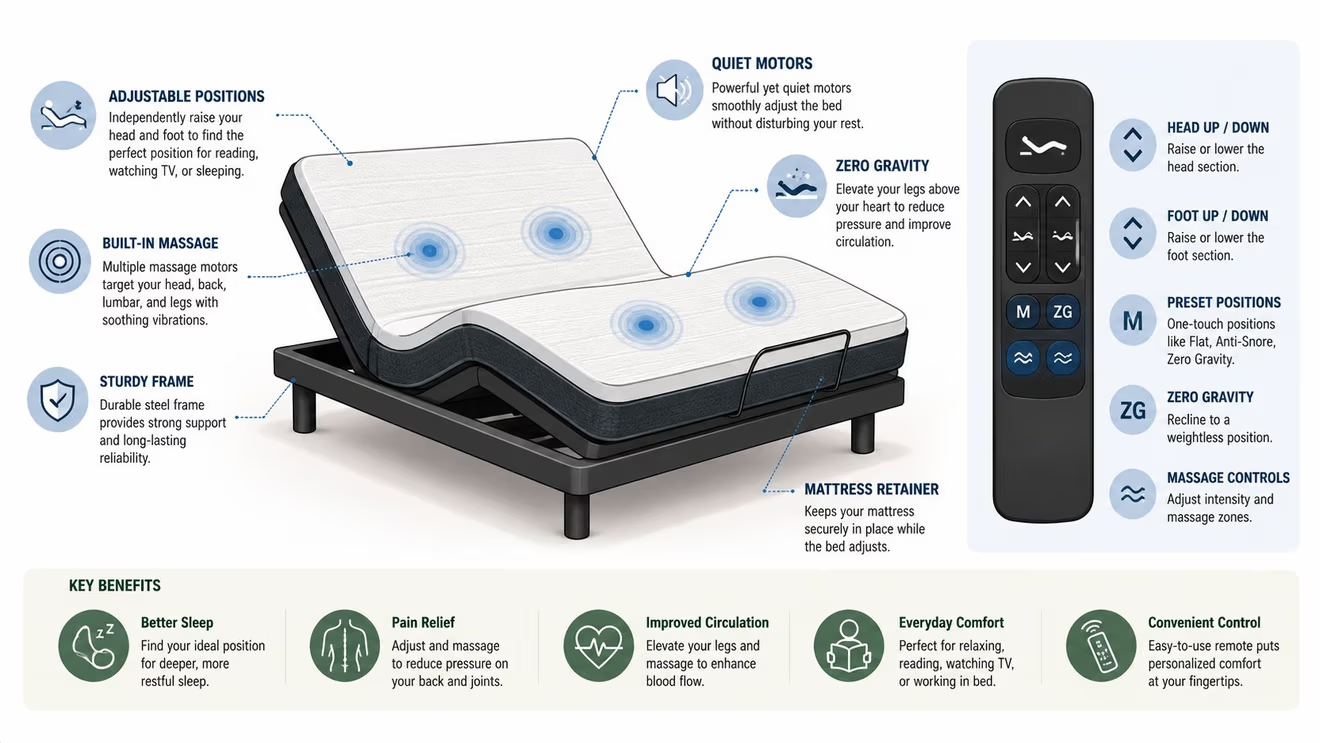
An adjustable bed frame with massage is a powered base that moves the head, the feet, or both, then adds small vibration motors inside the frame to create a buzzing massage through the mattress. It works like a recliner that decided to become a bed, with a remote control instead of a lever.
The parts that matter
The basic setup is simple. The frame holds everything together, the motors move the head and foot sections, the remote controls those movements, and the massage motors create vibration under the mattress. In product listings, that massage is usually broken into patterns like wave, pulse, or constant vibration, and some bases add timer shutoff settings such as 10, 20, or 30 minutes (Blissful Nights).
The big thing shoppers need to understand is this, the massage is vibration-based, not kneading. Consumer guidance from AARP notes that adjustable-bed massage is not traditional massage, it's vibration that travels through the base and mattress, which means it can feel soothing without feeling like a hand massage.
A good base should still feel like a normal bed when it's flat. That matters more than the flashiest feature list.
Some beds offer head-only or foot-only movement, but better units let the head and feet move independently. That's where comfort gets real, because one sleeper may want to sit up for reading while another wants the bed nearly flat. The massage feature should support that flexibility, not distract from it.
The Health and Comfort Benefits Worth Talking About
The strongest case for an adjustable base is comfort that shows up in daily life. A raised head can make reading or resting feel easier, a lifted foot section can take pressure off tired legs, and gentle vibration can help some people wind down before sleep. For people who wake up stiff, a base that changes position cleanly can feel like a very practical upgrade.
Clinical research has started to support that kind of use. In a 2025 Sleep abstract on a multi-feature adjustable base, researchers tracked 1,267 nights across 44 participants and saw 8 more minutes in bed (+2%), 2% higher SleepScore, 26% better perceived sleep quality, 45% less back pain, and 29% greater morning well-restedness versus baseline (Sleep abstract). In the back-pain subsample, the numbers were still more encouraging, with 536 nights across 20 participants, 14 more minutes in bed (+3%), 15% more sleep duration (+4%), 31% better perceived sleep quality, and 45% less back pain.
That said, the massage function itself is still vibration under the mattress, not deep-tissue work. So the benefit is usually neuromuscular relaxation and sensory distraction, not the kind of pressure you'd get from a massage table. That's an important difference, because plenty of shoppers buy a massage base expecting a spa experience and end up disappointed.
The honest take is simple. If someone wants a little relaxation, less back grumbling, and easier positioning in bed, the feature can make sense. If they want therapeutic massage, they should not expect a bed to replace that.
Bottom line: the vibration helps with comfort, not miracles. That's still useful, just not magic.
Key Features to Compare Before You Buy
Start with the motors, not the gadget count
The first question is whether the base uses dual motors for separate head and foot movement or a simpler setup that moves less independently. Separate control matters because it lets the sleeper fine-tune posture instead of settling for one shared angle. If a bed can't articulate cleanly, the massage feature becomes a distraction, not a benefit.
Massage itself deserves the same scrutiny. Some bases give you a single vibration zone, while higher-end units add two-zone or even four-zone massage systems with multiple intensity settings. Wired noted a Casper Pro model with two-zone massage and a Max model with four-zone massage plus three intensity settings, which shows the difference is mechanical, not cosmetic (Wired).
Ask what you'll actually use every night
Remote control is usually enough for the shopper. App control sounds slick, but if the shopper wants simple bedtime use, a clean handheld remote is usually the smarter move. Extras like USB ports, under-bed lighting, zero-gravity presets, and timer shutoff settings are nice, but they shouldn't push out the fundamentals.
Mattress Firm groups massaging adjustable bases around core features like three massage settings, separate head-and-foot adjustment, and zero-gravity presets. Those are the kinds of details that matter because they shape how the bed feels, not just how the listing reads.
If a feature doesn't get used without a phone app, a second menu, or a long instruction sheet, it's probably not worth paying extra for.
For shoppers comparing options in person, BILTRITE Furniture-Leather-Mattresses carries adjustable bases as part of the sleep-accessory lineup, including massage-equipped bases, so the controls and vibration can be tested before anyone commits.
A massage base is only as good as the mattress sitting on top of it. The flexible stuff usually works best, especially memory foam, latex, and many modern hybrids. A rigid mattress can fight the frame instead of moving with it, and that's where shoppers get frustrated.
What bends well and what fights back
Memory foam tends to flex smoothly and transmit vibration well enough for most buyers. Latex is also flexible, though it can feel springier and a little less muted. Many hybrids work too, as long as they aren't built too firm or too tall.
The trouble starts with traditional innerspring designs, very thick pillow tops, and anything with a rigid inner coil system. Those mattresses can resist the bend of the frame and may swallow some of the vibration, which means the massage you paid for feels weaker than expected. That issue is common enough that it's worth checking before the sale, not after delivery.
Thickness changes the feel
A thicker mattress can be great for support and pressure relief, but it can also absorb part of the massage effect. That's the tradeoff shoppers need to hear plainly, the thicker and less flexible the mattress, the softer the vibration may feel once you're lying on it. It's not a deal-breaker, but it is a reason to test the combo together.
The best test is simple, put the mattress on the base, turn the massage on, and lie in the position you'll actually use at night.
Shoppers who like flip-able or two-sided mattresses should be extra careful here, because those beds are built for durability in a different way. BILTRITE's mattress center keeps that in mind when matching sleepers with adjustable bases, and this adjustable sheets guide is useful for anyone who wants the bedding to move cleanly with the frame.
A mattress that plays nicely with the base will feel stable, quiet, and responsive. A mattress that doesn't fit the frame will make even a decent base feel underwhelming.
Questions to Ask Before You Swipe the Card
The in-store checklist that saves regret
A good adjustable base purchase starts with a few blunt questions. What does the warranty cover, the motors, the frame, or just the remote? Does the delivery team handle setup and placement in the room, or is that extra? What is the true weight capacity once a mattress and two sleepers are on it?
Families should also ask how the base behaves with daily use. A senior sleeper may want large, simple controls and smooth movement, while a caregiver may need a bed that adjusts often without becoming fussy. If there are kids or pets in the house, the question changes again, because accidental button pushes and curious paws can turn an easy feature into a nuisance.
What to test in the showroom
The smart move is to test the vibration with the exact kind of pressure the sleeper expects at home. Lie down. Turn the massage on. Change the angle. Then listen for motor noise and feel whether the vibration reaches the shoulders, lower back, or legs the way it should.
A base can look sturdy online and still feel awkward in person. Height-adjustable legs, headboard brackets, and the space under the frame matter more than people expect, especially if the bedroom layout is tight or the mattress is tall. That's why a local showroom beats guesswork every time.
Shoppers who want fewer surprises should buy with their back, not just their eyes.
The other question is reliability. More features usually mean more controls and more electrical parts, and some buyers do not want that kind of complexity. If the goal is dependable positioning and a quiet bedroom, a simpler adjustable base can be the smarter choice.
What You'll Realistically Pay and What's Worth It
The price range on an adjustable base can swing a lot, and the reason is usually obvious once the frame is on the floor. Entry-level models give you basic head and foot movement, a simple remote, and modest massage. Better-built bases add stronger motors, more massage zones, presets, lighting, charging, and sturdier construction.
What the money is buying
Lower-priced units can be fine for a guest room or for a shopper who just wants basic lift and a little vibration. Midrange bases usually make more sense for everyday use because they tend to feel smoother, sturdier, and less toy-like. Higher-end frames are for sleepers who want stronger articulation, more durable construction, and more of the comfort features that stay useful after the novelty wears off.
Some shoppers also want custom built furniture that matches the room. That's where USA- and Amish-made solid wood options enter the conversation, especially for buyers who care more about long-term value and finish quality than about loading the bed with every possible electronic feature. That's a fair trade if the room needs a more permanent, furniture-grade look.
BILTRITE Furniture-Leather-Mattresses keeps a mix of in-stock selections and custom options, so a shopper doesn't have to choose between a cheap base that feels flimsy and a made-to-order piece that drags on forever. The right spend is the one that matches how often the bed will be used and how picky the sleeper is about comfort.
Care and Maintenance Without the Headache
Keep the base clear and the hardware tight
An adjustable base should not be a maintenance nightmare. Keep clutter out from under it, vacuum around the moving parts now and then, and check bolts after the first few weeks of use. A headboard bracket should be attached securely, but it should never be overloaded with extra stress from the frame or from forcing the bed into a bad position.
Small noises deserve context. A new base can make a few unfamiliar sounds during break-in, especially when the motors are first working under a mattress and sleeping weight. That's not automatically a problem. A grinding, repeated, or worsening noise is different, and that's when service should be on the table.
When a remote acts up
A remote that stops pairing is often a battery issue or a quick reset, not a sign that the whole bed is failing. That kind of fix is annoying, but it's usually simple. The bigger mistake is letting small setup issues stack up until the sleeper stops using the features they paid for.
Massage care is just as straightforward. Keep liquids away from the controls, don't block airflow around the mechanism, and use the timer settings so the vibration doesn't run longer than needed. That keeps the experience comfortable and keeps the base from working harder than it has to.
Is the massage loud enough to bother a partner? It depends on the base, but vibration should feel soothing rather than rattly. Testing it in person tells the truth faster than any spec sheet.
Does an adjustable base void a mattress warranty? Not if the mattress is compatible and used the way the manufacturer allows. Compatibility matters more than the buzz feature itself.
How long does setup take? Most shoppers care less about the clock than about whether the delivery team places it correctly and the remote works the first time.
Can Medicare or insurance help? That depends on the medical situation and the policy, so buyers should ask those questions before they assume anything.
Should some buyers skip massage entirely? Yes. If reliability, simplicity, or partner comfort matters more than vibration, a solid non-massage adjustable base is the better buy.
Feature
What to Look For
Why It Matters
Motor system
Smooth head and foot movement
Better positioning and less strain
Massage zones
Single, dual, or multi-zone vibration
More targeted comfort, if you'll use it
Remote controls
Simple handheld control or app add-on
Easier nightly use
Frame strength
Solid build and verified weight support
Stability under real sleeping loads
Convenience extras
USB ports, lighting, presets
Useful only if they match your habits
BILTRITE Furniture-Leather-Mattresses helps Greenfield and Metro Milwaukee shoppers compare adjustable bases, mattresses, and the details that make a sleep setup feel right at home. If you want to feel the difference between a gimmick and a good vibration base, visit BILTRITE Furniture-Leather-Mattresses and try the options in person.