3 DAY MATTRESS SALE! THURSDAY - FRIDAY - SATURDAY!
LABOR DAY SALE HELD OVER ENDS SATURDAY, SEPTEMBER 19 AT 5PM!
NO CREDIT CARD FEES!
1000's of Items IN-STOCK + 500 Mattresses!
Largest selection of USA Made Furniture & Mattresses + Amish Made!
FREE In-Store Design Services!
BUY LOCAL & LOVE YOUR HOME!
3 DAY MATTRESS SALE! THURSDAY - FRIDAY - SATURDAY!
LABOR DAY SALE HELD OVER ENDS SATURDAY, SEPTEMBER 19 AT 5PM!
NO CREDIT CARD FEES!
1000's of Items IN-STOCK + 500 Mattresses!
Largest selection of USA Made Furniture & Mattresses + Amish Made!
FREE In-Store Design Services!
BUY LOCAL & LOVE YOUR HOME!
OPEN LABOR DAY | Tuesday-Thursday 10am to 6pm | Friday 10am to 7pm | Saturday 10am to 5pm | Sunday Closed To Be With Family & Friends | Monday Showroom Closed
5430 West Layton Ave, Greenfield - Metro Milwaukee
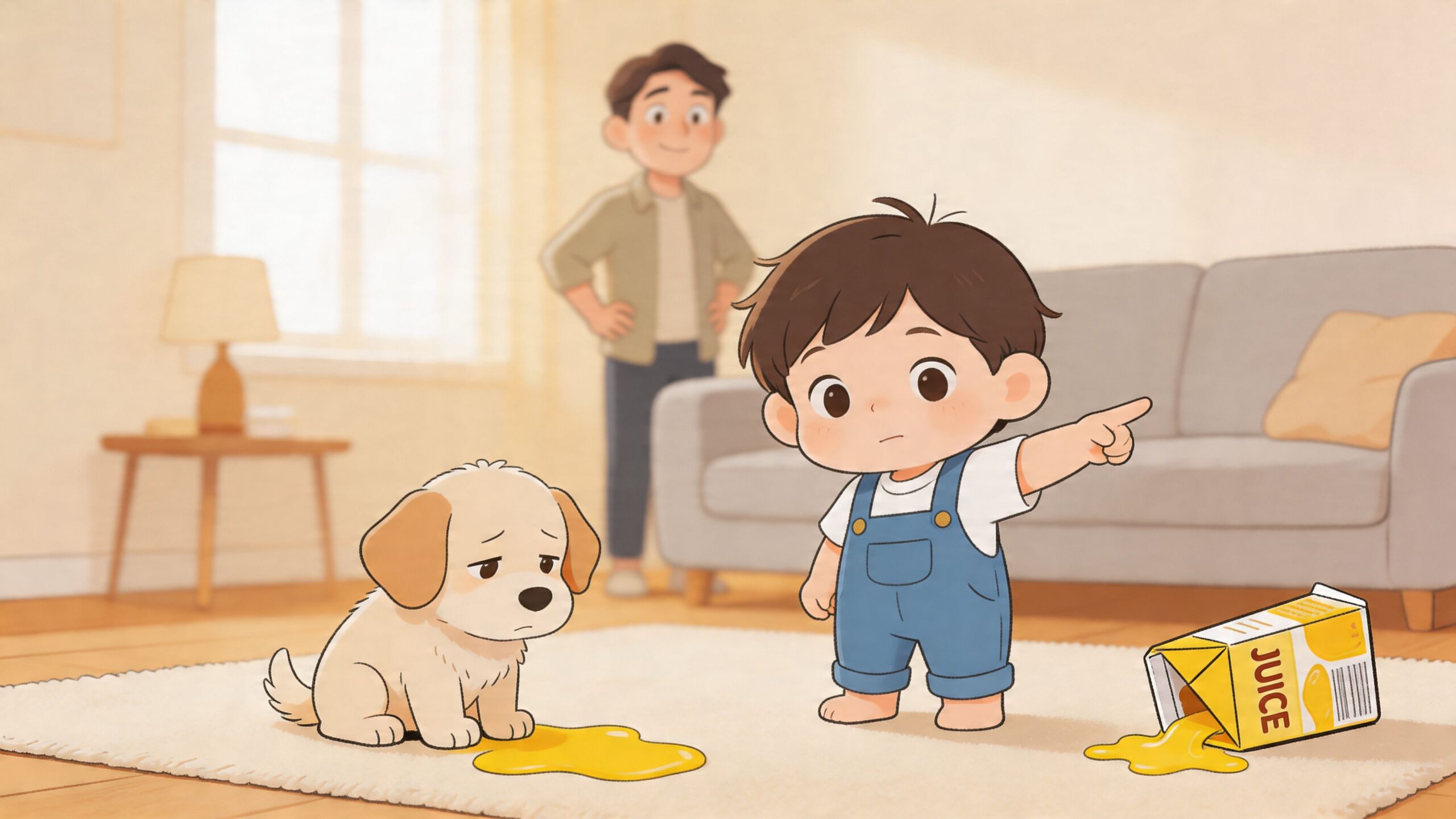
A lot of us have had the same sinking feeling. You walk into the bedroom, catch a whiff of something off, and there it is. A pet accident on the mattress. A toddler miss on the sofa cushion. Maybe an older stain you just found after moving a blanket or flipping a cushion.
Don’t panic. Urine stains are unpleasant, but they’re not always a death sentence for good furniture. We’ve been helping Milwaukee families furnish their homes since 1928, and if there’s one thing we know at BILTRITE, it’s this: real homes get used. Kids, pets, sleepovers, sick days, potty training, aging parents. Life happens. The trick is knowing how to remove urine stains the right way so you clean the problem instead of driving it deeper.
Oops! That Wasn't Supposed to Happen
One of the most common furniture-care questions we hear isn’t about style. It’s about accidents.
It usually goes like this. The family dog has been doing great for weeks, then gets nervous during a storm and pees on the sectional. Or a little one climbs into bed after a bad dream and leaves a surprise behind. Nobody’s proud of it. Everybody wants to fix it fast.
That’s normal. So is the first bad decision. People grab the nearest spray bottle, scrub like crazy, and hope for the best. That’s usually where a small mess turns into a stubborn stain and a smell that keeps coming back on humid days.
We take a different view. Furniture should be lived on. A mattress should support your family through real life. A solid wood nightstand or leather recliner should be cared for, not babied. That’s one reason we’ve always loved durable, American-made furniture and mattresses. Better materials give you a better chance when life gets messy.
Homes aren’t showrooms. They’re where the messy stuff happens, and that’s exactly why care matters.
If you act quickly and use the right method for the material, you can often save the piece and your sanity. That’s especially important when you’ve invested in something built to last, whether that’s a heavy-duty mattress, a quality sofa, or an Amish-crafted wood piece you want around for years.
Your First-Aid Response to Fresh Stains
Fresh urine is the easiest kind to deal with. You still need to move fast.
The goal in the first few minutes is simple. Pull out as much liquid as you can without pushing it deeper.
What to do right away
Strip removable layers first If this happened on a bed, pull off sheets, blankets, and the protector right away.
Blot with clean white cloths or towels Press down firmly. Lift. Move to a dry area of the towel. Repeat. White cloths matter because you don’t want dye transfer adding another problem.
Keep pressure vertical Push straight down. Don’t scrub side to side.
Switch towels often Once a towel is wet, it stops helping.
Let air move through the area Open a window or run a fan nearby. Airflow helps. Heat does not.
What not to do
A lot of damage happens because people mean well and rush.
Don’t scrub. Scrubbing can force urine deeper into upholstery fibers, cushion fill, or mattress layers.
Don’t use a hair dryer or heat gun. Heat can set the stain.
Don’t dump random cleaners on it. Mixing products before you know the material is risky.
Don’t sit on it to “squeeze it out”. That pushes moisture inward.
Why this matters
Urine doesn’t just sit on top. It travels. On a mattress or cushioned seat, the visible spot is often only part of the problem. The liquid may have moved deeper than you think.
Practical rule: Blot first, clean second. If you reverse that order, you usually make more work for yourself.
If the stain is still fresh after blotting, stop there for a moment and choose your next cleaner carefully. The right product can solve the problem. The wrong one can lock in odor, damage fabric, or leave a ring.
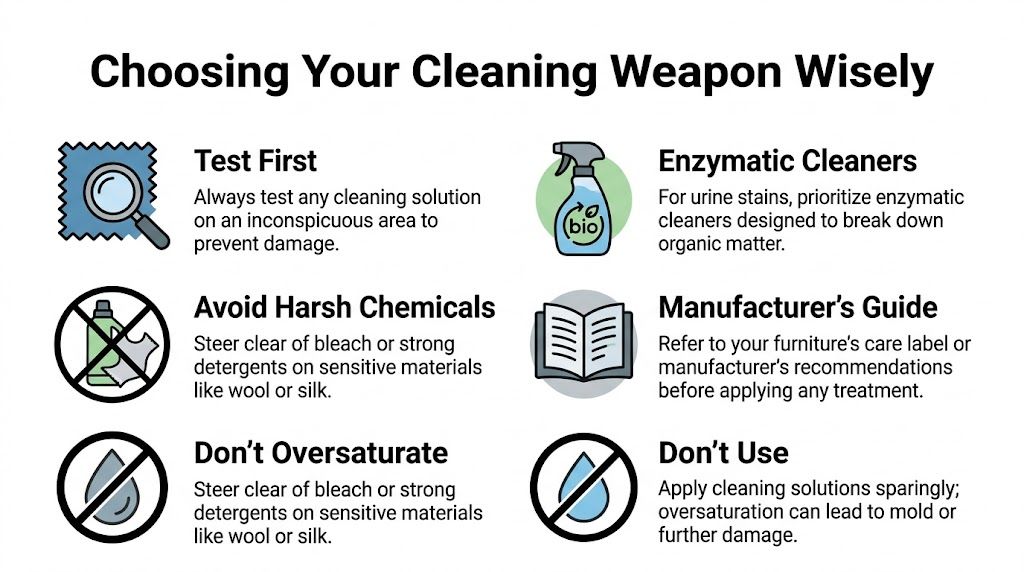
Choosing Your Cleaning Weapon Wisely
Most home remedies are overrated for urine.
That’s my opinion, and I’ll say it plainly. Vinegar has its place. Baking soda has its place. But if your goal is to remove urine stains and the smell at the source, you need to deal with what’s causing the problem.
Why urine is so stubborn
When urine dries, it leaves behind uric acid crystals. Those crystals aren’t something regular soap can rinse away. They settle into porous materials like upholstery and mattresses, and they can keep releasing odor when moisture comes back into the picture.
That’s why a piece can seem clean for a few days, then smell bad again during humid weather.
According to National Incontinence’s explanation of urine removal chemistry, enzyme-based cleaners can permanently remove urine stains and odors even from deposits as old as 20 years old, because they use a targeted two-step process to bind with and destroy uric acid crystals that ordinary household cleaners can’t break down.
What I recommend using
Here’s the short version. If urine is the problem, reach for an enzyme cleaner made for urine.
Not an all-purpose spray. Not a scented upholstery mist. Not ammonia. Definitely not bleach on delicate furniture.
A good enzyme cleaner works because it targets the organic residue instead of covering it up. That’s the difference between “smells cleaner” and “is cleaner.”
My ranking of common options
Cleaner type
Good for urine stains
My take
Enzyme cleaner
Yes
Use this first for fabric and mattresses
Mild soap solution
Sometimes
Fine for initial surface cleanup on some materials
Baking soda
Limited
Helpful for absorbing odor, not enough on its own
Vinegar mix
Limited
Can help with smell, but doesn’t solve every deep problem
Bleach or strong detergent
No
Too harsh for many fabrics and finishes
How to use an enzyme cleaner without messing it up
People buy the right product and then use it the wrong way all the time.
Match the affected area fully. If the urine soaked through, the cleaner needs to reach that same path.
Let it dwell. Don’t spray and wipe immediately.
Follow the label. Enzyme products are chemistry, not magic.
Blot after treatment if the label directs it. Rubbing still isn’t helping.
If a cleaner only perfumes the area, the stain may be quieter for a while, but it’s still there.
One more thing. Don’t over-wet furniture. More product doesn’t always mean better results. On anything cushioned, you want enough cleaner to reach the affected area, but not so much that you leave the inside soaked for days.
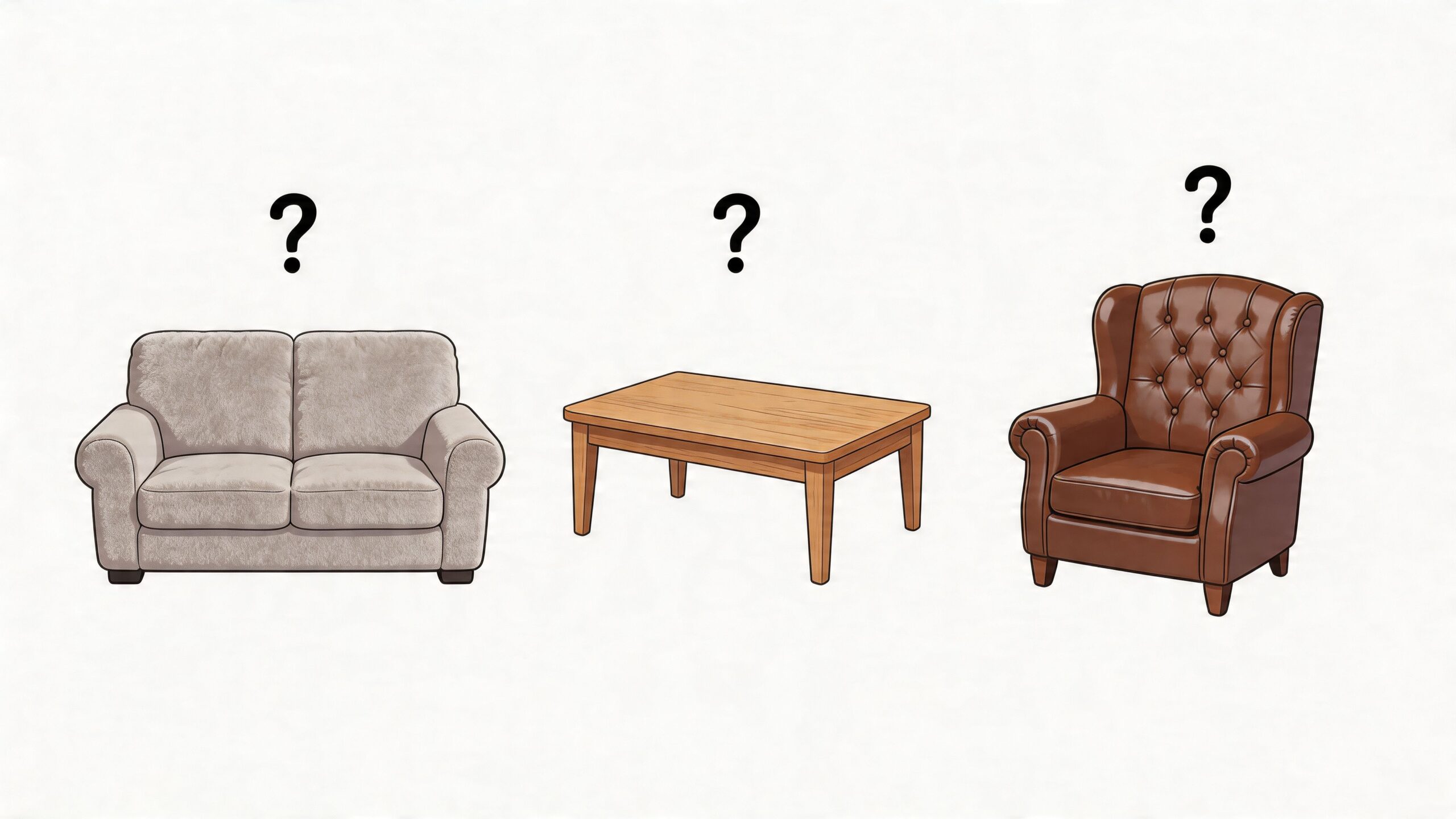
A Material-Specific Approach to Stain Removal
One cleaning method for every surface is a bad plan.
Fabric, mattresses, solid wood, and leather all react differently. Treat them the same and you can turn a fixable accident into finish damage, dye loss, warping, or cracking.
Fabric upholstery
Fabric gives you a fighting chance, but only if you work cleanly.
Start by blotting the area thoroughly. After that, test your cleaner in a hidden spot. The back edge of a cushion or a low rear panel works well.
Then apply your urine-specific cleaner to the stained zone. If the cushion has a zipper and the insert can be checked safely, look at how far the moisture traveled. Surface treatment won’t solve a soaked inner cushion.
For fabric sofas and chairs, keep these rules in mind:
Test first. Don’t assume the fabric is colorfast.
Treat the whole affected zone. Tiny spot treatment can leave a ring.
Use towels to pull moisture back out. Press, don’t grind.
Dry with airflow. Fans help the cushion recover.
If the piece has removable covers, wash only if the care instructions allow it. Don’t guess.
Mattresses
Mattresses are sneaky. The top fabric may look fine while the padding underneath holds the underlying problem.
That’s why people think they’ve cleaned it, only to notice odor later. The liquid traveled down, and the treatment didn’t.
For deep contamination, professional cleaning methods use a multi-enzyme and extraction approach that can achieve 80-90% contaminant removal, according to Aramsco’s urine removal guidance for professional cleaners. That same source explains that pros use enzyme blends, flushing, extraction, and a mild acidic rinse to neutralize alkaline odor.
At home, your job is to get as close to that logic as possible without flooding the mattress.
Mattress rules that matter
Blot aggressively at the start The more liquid you remove early, the less you have to fix later.
Apply cleaner where the urine went, not just where you see it That often means a larger area than the visible stain.
Avoid soaking the core Over-wetting a mattress can leave trapped moisture inside.
Give it time to dry fully before remaking the bed A slightly damp mattress is asking for odor trouble.
We carry a lot of heavy-duty, two-sided mattresses in our showroom, and that construction can be helpful when you’re thinking long term about durability and care. It doesn’t make accidents fun, but it does support better upkeep over time.
Solid wood furniture
This is one of the most overlooked topics out there.
Most stain guides talk about clothes, rugs, and fabric. They skip a key concern for a lot of our customers, which is what to do when urine gets on a solid wood bed, nightstand, bench, or dining chair.
The answer is not “spray enzyme cleaner all over it.”
According to Tide’s urine stain guidance, for solid wood, a baking soda-water paste poultice is safer than enzyme cleaners which can warp unsealed surfaces.
What to do on wood
Blot immediately with a dry cloth.
Clean gently with a mild dish soap solution if needed.
Use a baking soda-water paste poultice on the affected area if odor or residue remains.
Dry thoroughly. Wood hates lingering moisture.
Don’t saturate seams, joints, or unfinished undersides.
Wood furniture can last for generations, but only if you treat the finish and the structure with some respect.
If the urine reached unfinished wood, hidden joints, or drawer interiors, you may need a furniture restoration specialist. That’s especially true with heirloom-style Amish pieces.
Leather upholstery
Leather needs a calmer hand than fabric.
You want to remove the residue without drying out the hide or messing with the color. The same Tide guidance notes that for leather, pH-neutral cleaners like saddle soap are essential, and that enzyme sprays can remove odors but may risk dye bleed on certain types.
That’s a big deal. Some leathers are more forgiving than others, and some are not.
My advice for leather
Use this order:
Blot the accident right away
Wipe gently with a pH-neutral leather cleaner or saddle soap
Dry with a soft cloth
Condition afterward if the product instructions call for it
Skip water-heavy soaking. Skip harsh sprays. Skip the “I’ll just try this kitchen cleaner” experiment.
You clean up the spot, the room smells fine, and two days later, there it is again when you sit down on the cushion or walk past the bed.
That comeback smell means some of the urine is still below the surface. On quality furniture, that matters. A well-built sofa, solid wood bed, or leather chair is worth saving properly, not just covering up for a week.
Why the smell keeps coming back
Odor returns when the cleanup only handles the top layer.
Urine works its way into fill, batting, seams, and sometimes the frame. Then humidity wakes it back up. I see this all the time with better-made pieces because denser cushions and sturdier construction can hold onto residue longer if the treatment never reached deep enough.
As noted earlier, enzyme cleaners need time to sit and do their job. Rushing that step is one of the fastest ways to end up cleaning the same accident twice.
What actually helps
If the stain is gone but the smell hangs on, stay practical and do the steps that solve the problem instead of masking it.
Good odor-control moves
Let the cleaner dwell for the full label time. If you wipe it up too soon, you leave odor behind.
Dry the inside, not just the fabric. Use fans and moving air so moisture does not stay trapped in the cushion or mattress.
Use baking soda after cleaning and drying for light surface odor. It helps on the surface. It does not remove contamination buried deep in padding.
Treat the room separately from the furniture. Charcoal or coffee grounds can help with air odor in a closed room, but they will not fix a cushion, mattress, or upholstered arm.
What to skip
Fragrance sprays and perfumes. They cover the smell for a minute, then mix with it.
Fast repeat wipe-downs. That is busywork, not odor removal.
Stacking products on top of each other while the piece is still damp. You can leave behind more residue and make drying harder.
If the odor shows up again every humid afternoon, the source is still in there.
Mattresses are the biggest repeat offender because liquid sinks past the cover and hangs around in the core. If that is the trouble spot, follow this guide on how to get urine smell out of a mattress.
If you have cleaned it twice and the smell still returns, quit experimenting. On an investment piece, especially USA-made upholstery, leather seating, or heirloom-style bedroom furniture, professional extraction or cushion replacement is often the smarter call.
Prevention and Knowing When to Call a Pro
Saturday morning, the dog jumps up on the good chair, the kid had an accident overnight, and now you are staring at a piece you paid real money for. That is when prevention pays for itself.
Prevention beats cleanup every time
If you own quality furniture or a better mattress, protect it like it matters. Solid wood, leather, Amish-built case pieces, and USA-made upholstery are made to last, but they still need a little common sense.
For beds, start with a quality mattress protector. It keeps liquid from soaking deep into the mattress, buys you cleanup time, and saves you from turning a small accident into a replacement decision. If you want a closer look at why protectors matter, read about the benefits of using a mattress protector.
The same idea applies around the room. Use washable throws on favorite pet spots. Keep kids’ bedding layered so you can strip one layer fast. On wood bedroom furniture, wipe up splashes right away and do not let moisture sit along drawer fronts, panel grooves, or unfinished backs. On leather, keep the right cleaner and conditioner in the house before you need them.
My prevention checklist
Put a mattress protector on every regularly used bed
Use removable, washable covers where pets or kids spend time
Keep the right cleaner for each material on hand
Learn which surfaces in your home are solid wood, veneer, fabric, or leather
Check seams, cushion zippers, and wood joints after any accident
Treat investment pieces faster, not later
Handle it yourself when the problem is contained
DIY is a reasonable call when the accident is small, fresh, and limited to the surface. It is also fine when you know the material, have the right cleaner, and can dry the piece fully.
That last part matters more than people think.
Call a professional when the furniture itself is at risk
I would stop experimenting and bring in a pro if any of these are true:
The mattress or cushion core got soaked
The smell keeps coming back after proper cleaning
Urine reached delicate leather or got under a leather cushion
Liquid seeped into solid wood joints, cracks, trim, or unfinished areas
The piece is custom, heirloom-quality, Amish-made, or expensive enough that guessing is a bad bet
You are considering a second or third round of random products
Professional cleaners can extract contamination from below the surface. More important, they can help you avoid the damage DIY mistakes cause on high-quality materials. Wet wood can swell and discolor. Leather can stiffen or lose finish. Cushion inserts can hold contamination long after the fabric looks clean.
Good furniture earns a longer life when you treat accidents like maintenance, not panic. Protect it early, know when to stop, and give your best pieces the kind of care that keeps them in the family.
Your Home Is for Living In
A home that never gets messy usually isn’t getting much life in it.
Kids build forts. Dogs claim the sunny spot on the rug. Grandkids climb into recliners with snacks they should probably keep at the table. That’s the good stuff. You just want furniture and mattresses that can handle real use, and you want solid advice when something goes sideways.
That’s always been our mindset. We’ve been a fourth-generation family business in Metro Milwaukee since 1928, and we still believe in helping people choose better-quality furniture that earns its keep. Solid wood. Amish craftsmanship. USA-made upholstery. Heavy-duty mattresses. Pieces that are built for actual families, not just staged photos.
If you need to remove urine stains, act fast, use the right cleaner for the material, and don’t confuse masking with cleaning. That one decision saves a lot of frustration.
And if you’re at the stage where you’re thinking, “Maybe I need furniture that’s easier to live with,” we’d love to help. Visit our Greenfield showroom, talk with our experienced team, and see the materials for yourself. We don’t do pressure. We do honest guidance, family-first service, and furniture that’s made to stick around.
If you’re looking for durable furniture, leather seating, or a better-quality mattress that fits real family life, visit BILTRITE Furniture-Leather-Mattresses. We’d love to see you in Greenfield and help you find something that works for your home.