Swing Arm Table Lamp: A Complete Buying Guide


Bad lighting sneaks up on people. One day you are leaning over a crossword at the kitchen table. The next day you are angling your laptop, moving a chair, or holding a book at a strange tilt just to catch enough light to read comfortably.
That is when a swing arm table lamp starts making a lot of sense.
It is one of those home items that feels simple, but it solves a very real daily problem. You can pull the light closer, push it back, raise it up, lower it down, and direct it right where your eyes need it. If you read, work from home, sew, pay bills, or enjoy a good late-night puzzle, this kind of lamp can make a room feel a whole lot easier to live in.
Our family has been helping Metro Milwaukee homes feel more comfortable since 1928, and one thing we have learned is this: useful pieces are often the ones people end up loving most. A swing arm lamp is not just décor. It is a hardworking helper.
Tired of Living in the Shadows? Let’s Find You Some Light!
A lot of people start with the same complaint. “This room has light, but not where I need it.”
Maybe it is a student at a desk with one dim lamp behind the laptop. Maybe it is a reader in a favorite chair, turning pages in a cozy corner that gets gloomy after sunset. Maybe it is someone doing paperwork at the dining table, sliding papers around to dodge shadows.

A regular lamp can help, but it stays put. That is the problem. Life moves. Your light should too.
Why this lamp style changed everything
The big idea behind the swing arm table lamp is adjustability. Instead of accepting one fixed pool of light, you can move the arm and aim the shade where you want it. That sounds ordinary now, but it was a major leap in lighting design.
The balanced-arm lamp design came from a spring technology breakthrough patented in 1933 by George Carwardine, and his 1935 Anglepoise 1227 is still in production after more than 90 years, according to Lightology’s history of Anglepoise lighting. That staying power says a lot. Good ideas stick around.
Why people still love it
A swing arm lamp works because it solves a common annoyance without asking much from you.
- Reading gets easier because you can bring the light toward your shoulder instead of leaning toward the bulb.
- Desk work feels cleaner because you can reduce glare and shadows on papers or keyboards.
- Small spaces benefit because one flexible lamp can handle multiple tasks in the same room.
A lamp does not need to be flashy to be useful. It just needs to put light exactly where you need it.
If you enjoy thinking about how lighting shapes a room, our article on putting your living room in the best light is a helpful companion read.
What Exactly Is a Swing Arm Table Lamp Anyway?
A swing arm table lamp is a task lamp with movable joints. The arm swings out and back so you can reposition the light without moving the whole lamp.
The easiest way to picture it is as a small robot arm for your tabletop. It has “shoulders” and “elbows” that bend, then a lamp head that points the beam where you want it.
The basic parts
You do not need technical jargon to shop well, but a few terms help.
| Part | What it does | Why it matters |
|---|---|---|
| Base or clamp | Holds the lamp in place | A base sits on furniture. A clamp attaches to an edge. |
| Arm | Extends and folds | This controls reach and flexibility. |
| Joints | Let the arm pivot | More joints mean more aiming options. |
| Shade or head | Directs the light | A focused head helps with reading and desk work. |
Boom arm versus articulating arm
Some shoppers get tripped up here, so let’s keep it simple.
A boom arm is a more straightforward style. It usually has one main swinging section, so it moves, but not in as many ways.
An articulating arm has more than one pivot point. That gives you finer control. You can raise the lamp, stretch it over a desk, then tilt the head down onto a notebook or keyboard.
If you want one lamp to handle several jobs, articulating designs are more convenient.
What makes it different from a standard table lamp
A standard table lamp mostly lights the area around it. A swing arm table lamp lights the task itself.
That difference matters in everyday use:
- You do not have to scoot your chair closer to the lamp.
- You do not need a giant side table just to hold a bulky base and shade.
- You can adapt the light as your activity changes.
A quick example helps. If you are knitting, your hands are the focus. If you are reading in bed, the page is the focus. If you are paying bills, the paperwork is the focus. This lamp follows the task.
For a look at more decorative table lamp ideas, browse these mercury glass table lamps. They show how a lamp can add style, even when flexibility is not the main goal.
Your Lamp Shopping Cheat Sheet
Shopping for lighting gets easier once you know what details matter. You do not need to memorize every finish and fitting. You just need to know which features affect comfort, placement, and long-term use.
Start with size and reach
The first question is not color or style. It is reach.
If the lamp is going on a desk, ask yourself how far the light needs to travel. Does it need to clear a monitor? Reach over paperwork? Angle toward a keyboard? If it is for a nightstand, think about whether the shade can move close enough for reading without forcing you to sit awkwardly.
A lamp that looks nice but does not reach the task area can get annoying fast.
A quick way to judge scale
- For desks, look for enough arm movement to cover your main work zone.
- For end tables, make sure the lamp does not crowd the seat beside it.
- For nightstands, check that the arm folds neatly when not in use.
Pay attention to the head and shade
The lamp head controls how the light is directed.
Some shades throw a tighter beam. Those are great for focused work. Others spread light more softly, which can feel better beside a chair or bed. Neither is automatically better. The right choice depends on what you do most often.
If you switch between reading and ambient glow, look for a head that tilts easily. That gives you more control without needing a second lamp.
Switches matter more than people expect
This sounds small until you live with the lamp.
You might prefer:
- A base switch if the lamp sits within easy reach on a side table
- A cord switch if you want a simple, familiar setup
- A touch control if you like modern convenience and a cleaner look
- A switch near the shade if you use the lamp for focused work and want quick access
People often pick a lamp by appearance and forget the switch. Then they spend years reaching behind furniture. Not fun.
Material and finish affect the whole room
Material and finish affect the whole room. Lighting and furniture start talking to each other here.
A dark bronze or aged metal finish often looks right at home with warm wood tones. Brushed nickel can feel crisp beside lighter woods or contemporary pieces. Black metal can give a room some definition without looking heavy.
If your home includes solid wood furniture, the goal is balance. Let the lamp add contrast, not conflict.
Metal and wood are a strong team. The lamp brings function. The furniture brings warmth.
If you want more practical shopping tips beyond lighting, this guide on how to shop for furniture smartly has a lot of useful thinking that applies here too.
Finding the Right Spot in Your Home
Placement can turn a good lamp into a favorite lamp. The same swing arm table lamp can feel brilliant in one room and awkward in another, depending on height, reach, and what you do there.
In the living room
In the living room. Many people fall in love with the style here.
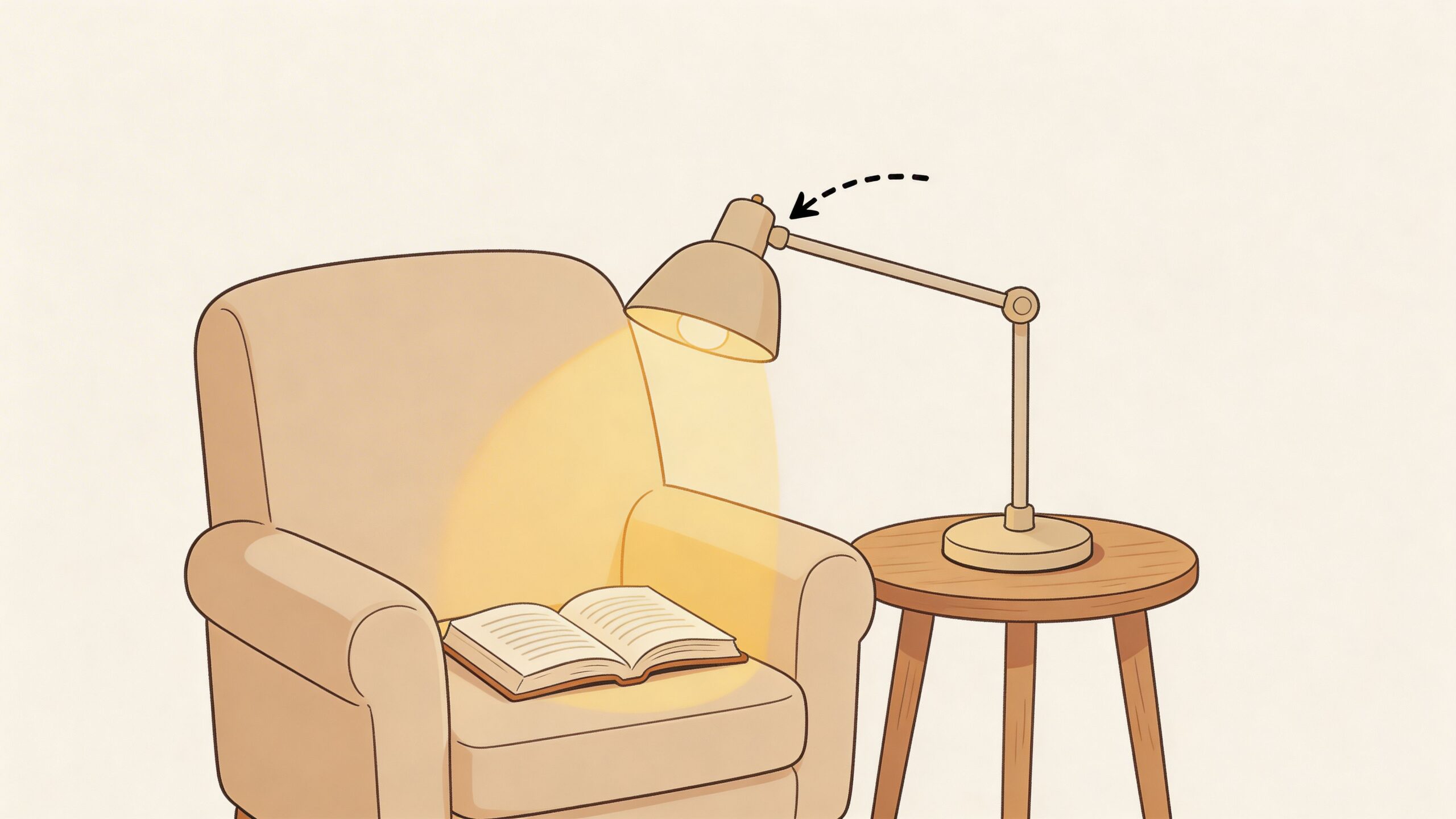
Set a swing arm lamp beside an armchair, loveseat, or sofa where someone reads regularly. The movable arm lets the light come forward when needed, then tuck back when the room shifts into conversation mode.
The sweet spot is usually a nearby end table or console where the lamp can reach the shoulder area of the seated person without sticking out into a walkway.
In the bedroom
Bedrooms benefit from flexibility more than people realize. A bulky bedside lamp can eat up valuable nightstand space.
A swing arm table lamp helps because it can hover where you need light, then fold away and leave room for glasses, a phone, medication, or a stack of books. For people in smaller bedrooms, that extra surface area matters.
In the home office
The home office is the most obvious landing place, and for good reason.
A desk lamp should light the work, not your eyes. Aim the beam at papers, a notebook, or the desktop itself. If you use screens all day, shift the lamp slightly off to one side so the light supports the workspace without reflecting harshly into the monitor.
In smaller homes and apartments
This style shines in tight footprints.
A clamp-on version can be especially useful when every inch counts. It keeps the desktop or tabletop clearer than a large lamp base would. That can be handy in apartments, condos, or senior living spaces where furniture often needs to do more than one job.
A simple measuring method
Before you bring one home, check three things:
- Surface depth. Make sure the lamp base or clamp has enough room.
- Reach path. See whether the arm can move without hitting a wall, shelf, or headboard.
- Seated eye line. The bulb should light the task area, not glare directly into your face.
If you are building a cozy corner around books and comfort, our guide to creating a reading nook has more placement ideas that pair beautifully with this lamp style.
Choosing the Best Bulb for Bright Ideas
A good lamp body gives you flexibility. The bulb decides how that flexibility feels.
Many shoppers focus on the lamp and treat the bulb like an afterthought. That is backwards. The bulb controls brightness, color tone, and comfort.
Why LED is usually the smart choice
For most homes, LED is the easiest recommendation.
Modern LED swing arm table lamps can deliver over 1700 lux and offer adjustable color temperatures from 3000K to 6500K, with coverage across an 80-inch wide area, according to the Mount-It! TS-7011 product details. In plain English, that means a good LED setup can give you strong, controllable task light across a broad workspace.
That range is useful because different tasks need different kinds of light.
Warm light versus cool light
Color temperature sounds technical, but the idea is simple.
| Color temperature | Feel | Often works well for |
|---|---|---|
| 3000K | Warm and cozy | Reading before bed, relaxed seating areas |
| Mid-range settings | Balanced and neutral | General use, hobbies, casual desk work |
| 6500K | Cool and crisp | Detailed tasks, focused office work |
Warm light feels softer and calmer. Cool light feels sharper and more alert. If your lamp lets you change settings, that is a nice bonus for multi-use rooms.
Match the light to the activity
Try thinking about the task first.
- Reading in the evening usually feels better with a warmer tone.
- Detailed paperwork can benefit from brighter, cooler light.
- Crafts and hobbies often need a strong, even beam that reduces shadows.
If a room feels “off,” the problem is not always the lamp. Sometimes the bulb is too dim, too harsh, or the wrong color for the job.
Also check the lamp’s bulb recommendation and follow it. That helps with safety and keeps the lamp performing as intended.
Styling Your Lamp with Furniture You Love
A swing arm table lamp is practical, but it also changes the look of a room. The trick is making it feel intentional with the furniture you already enjoy.
Much online advice gets thin on this topic. You will find plenty of talk about finishes and trends, but not much help with solid wood furniture, heirloom-style pieces, or Amish-made designs that deserve thoughtful pairings.
Why metal and wood work so well together
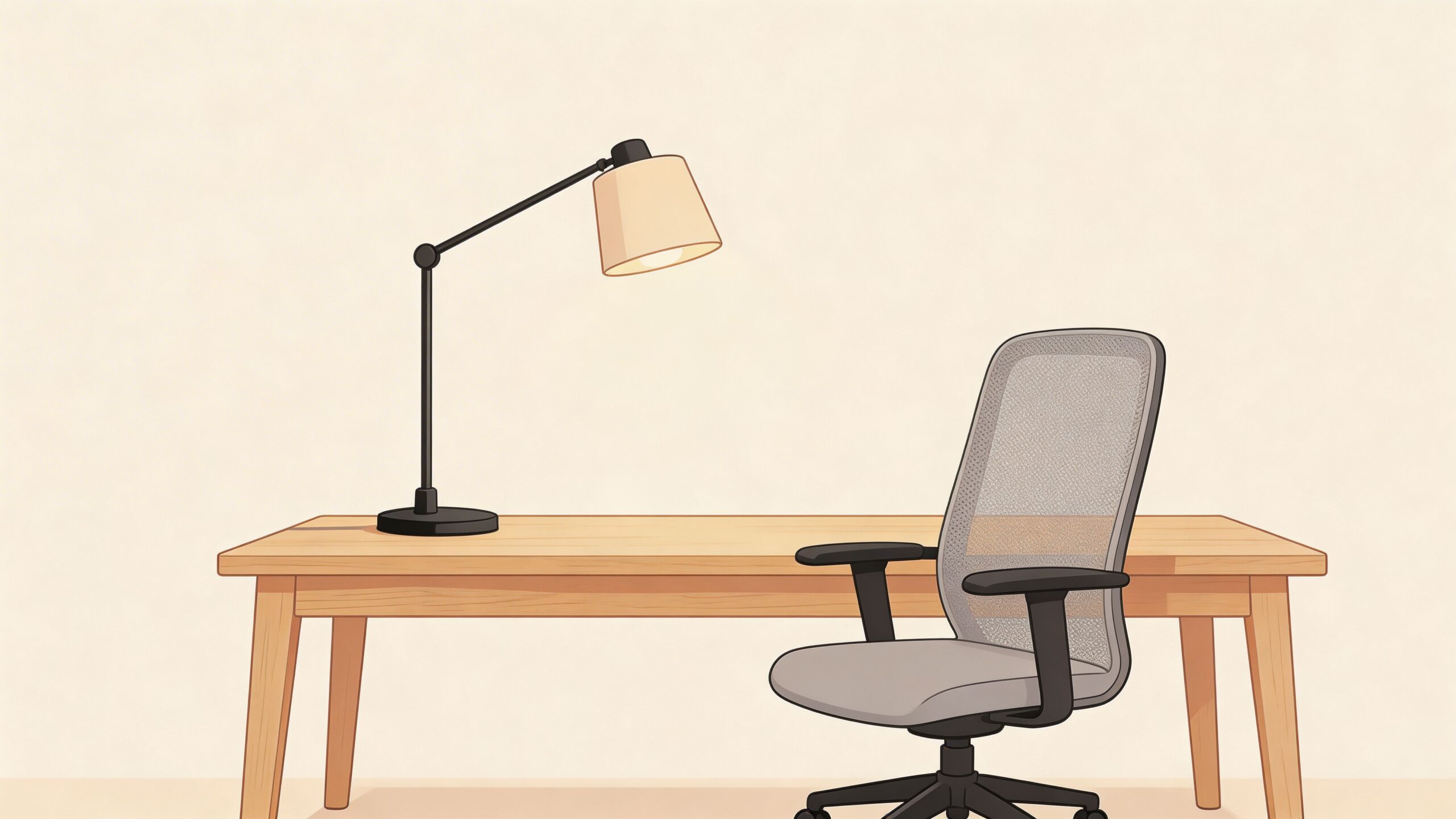
A lamp with an articulated arm often has an honest, mechanical look. Real wood furniture has warmth, grain, and visual depth. Put them together and each one helps the other stand out.
A black or bronze lamp can ground a lighter oak desk. A softer brass tone can look lovely near cherry or walnut. A brushed finish can fit right in with a cleaner, more modern wood profile.
The point is not to match every surface exactly. It is to create a conversation between materials.
Safe pairings for solid wood surfaces
One common gap in online advice is how to integrate swing arm lamps with solid wood or Amish-made furniture. Shoppers often have unanswered questions about stable mounting without damaging finishes or finding heavy-duty arms that feel worthy of heirloom furniture, which is why in-person guidance can be so helpful, as noted on Lamps Plus swing arm table lamp listings.
That concern is valid. A clamp can be useful, but you want to think carefully about pressure, padding, and finish protection.
Here are a few sensible habits:
- Use protective padding between clamp and wood surface if the lamp is clamp-mounted.
- Check stability first on thicker tops, live-edge profiles, or furniture with detailed aprons.
- Consider a weighted base if you would rather avoid any contact pressure on the furniture edge.
Style by room, not just by trend
A few easy pairings tend to work well:
- Traditional rooms welcome darker metals and classic shades.
- Mid-century inspired spaces pair nicely with cleaner lines and slimmer lamp heads.
- Work-focused rooms can handle more industrial silhouettes because function is part of the look.
If you enjoy pulling a room together thoughtfully, this article on how to style a living room can spark more ideas.
Lamp Care and Why a Swing Arm Wins
A swing arm lamp does more than sit there and glow. It moves. That means a little care goes a long way.
What to check as the years go by
Most maintenance is simple.
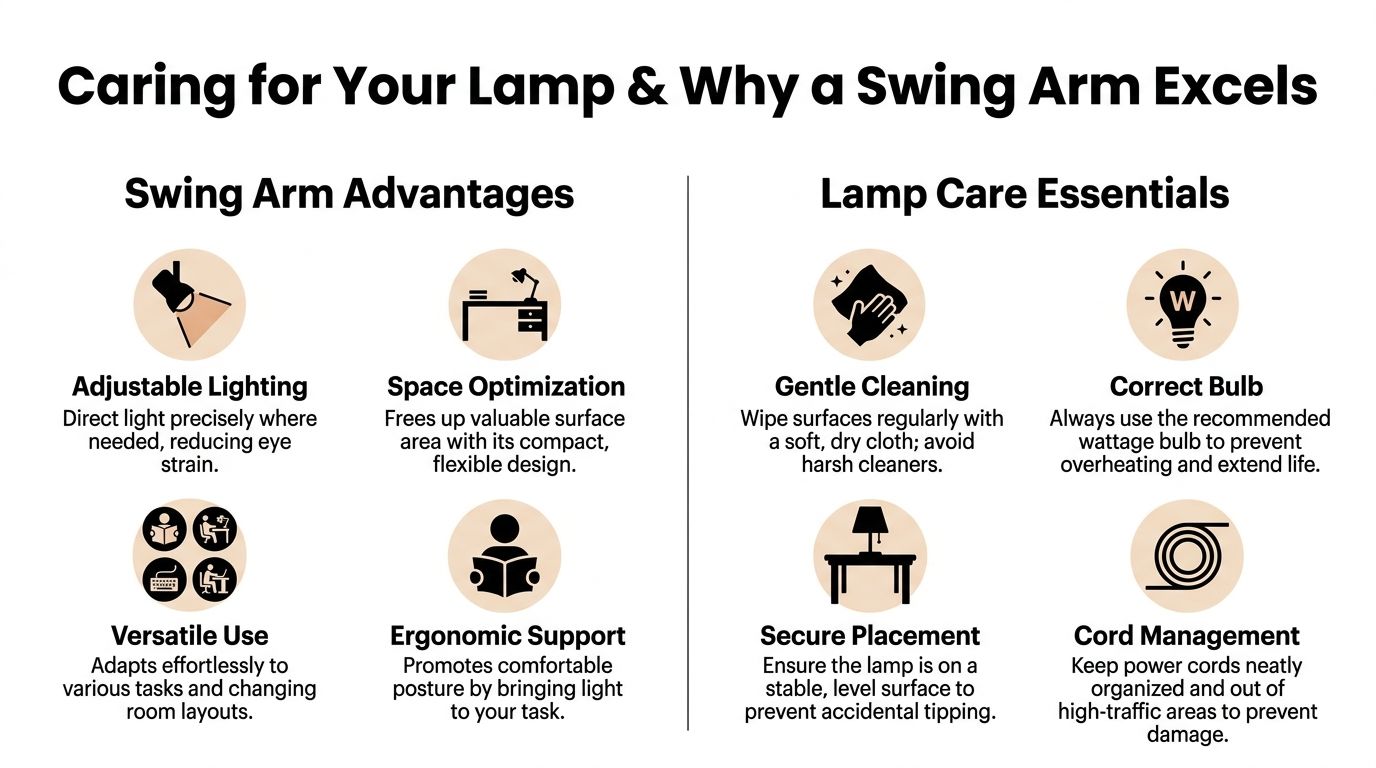
Dust the lamp regularly with a soft, dry cloth. Keep the cord tidy and away from traffic paths. Make sure the lamp stays level and secure on its surface. If the lamp uses replaceable bulbs, stick with the recommended type.
The big thing to watch is the mechanism itself. A swing arm should feel controlled, not loose and droopy.
Why build quality matters
Long-term durability often gets ignored in lamp shopping. Many consumer-grade adjustable lamps use plastic joints that can wear out, sag, or fail over time, and questions about maintaining those mechanisms are not answered by retailers, as discussed by Nessen Lighting’s swing arm lamp page.
That is why sturdy joints matter so much. If you plan to move the lamp often, metal components generally inspire more confidence than flimsier connection points.
Good signs in a lamp mechanism
| What to look for | Why it helps |
|---|---|
| Smooth movement | The arm should reposition without jerking |
| Stable hold | It should stay where you place it |
| Solid joints | Better support for repeated use |
| Neat cord routing | Less snagging and a cleaner setup |
How it compares with other lamp types
A standard table lamp is easy and familiar, but it does not adapt much. A floor lamp can cast broader light, though it often takes more room and may not target the task area well. Overhead lighting fills a room, but it can create shadows exactly where your hands are working.
A swing arm table lamp stands out because it combines direct light with flexibility.
- Versus a regular table lamp. Better for task work and reading.
- Versus a floor lamp. Better when table space exists and directional control matters.
- Versus overhead light. Better for focused comfort at eye and hand level.
If your main goal is “I want light exactly there,” the swing arm design usually wins.
Come Find Your Flexible Friend at BILTRITE
A swing arm table lamp has lasted because it solves a real problem. It brings light closer, directs it better, and adapts as your room and routine change.
It also fits how many people live today. One room may serve as office, reading corner, hobby station, and quiet evening retreat. Furniture has to work harder. Lighting does too.
That staying power shows up in the market as well. The global lamps market was valued at USD 13,530.2 million in 2022 and is projected to reach USD 19,691.1 million by 2030, with a projected 4.8% CAGR from 2023 to 2030, according to Grand View Research’s lamps market report. Swing arm styles remain part of that lasting demand because people keep finding practical uses for them.
For us, that is the fun of home furnishings. The best pieces are not always the loudest ones. They are the ones that make daily life smoother. A lamp that clears your reading shadows, frees up a nightstand, or makes a desk easier to use can earn its place quickly.
And that is especially true when you pair good lighting with durable furniture that is built to serve you for years, not just for a season.
If you would like help pairing lighting ideas with better-quality furniture, visit BILTRITE Furniture-Leather-Mattresses in Greenfield. Our fourth-generation family business has served Metro Milwaukee since 1928, and we love helping people find comfortable, functional pieces for real homes. We do not sell online, because we believe it is worth seeing craftsmanship in person, especially when you are choosing solid wood, Amish-made, small-scale, or heavy-duty furniture. Stop in, say hello, and let our experienced team help you put your home in a better light.