Corner Built In Cabinets: A Friendly Guide for Your Home

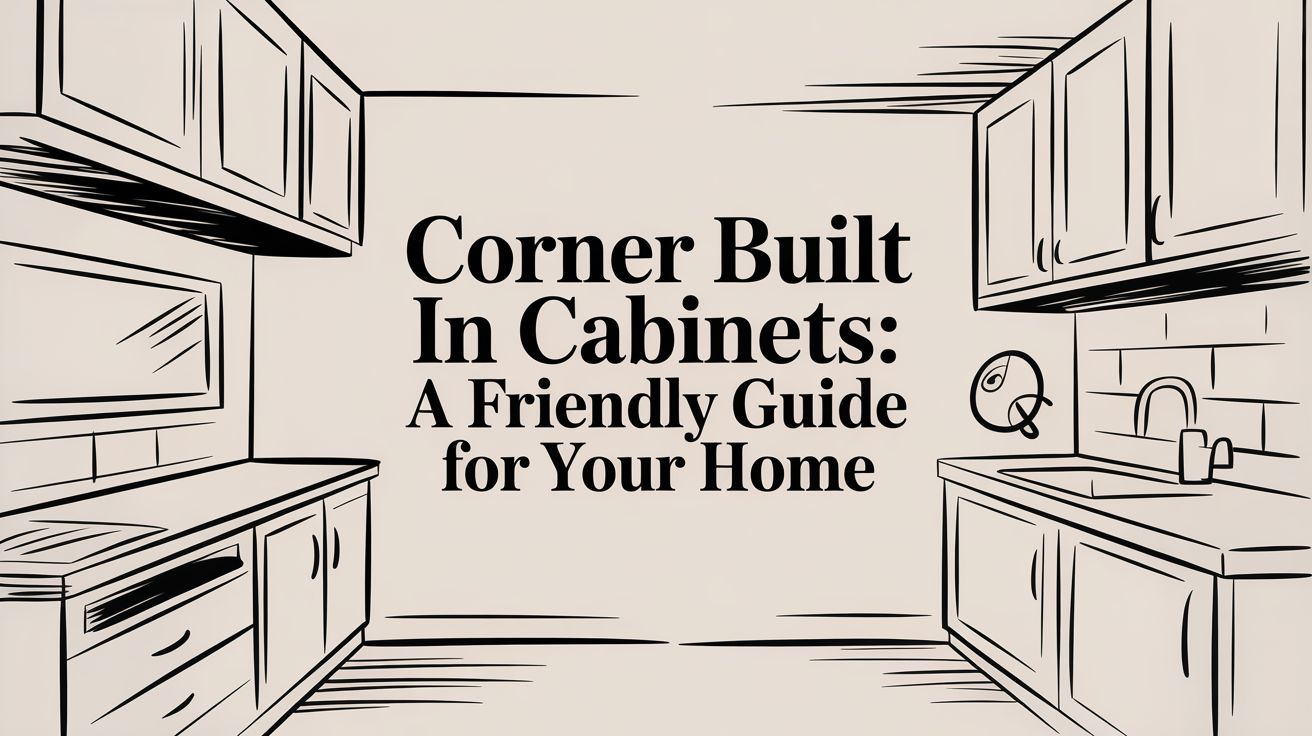
Some corners in a home seem determined to stay awkward. You try a plant. Then a chair. Then a little table that never quite fits. The corner still looks unfinished, and the room still feels like it’s wasting space.
That’s usually when people start asking about corner built in cabinets. And it’s a smart question. A good corner cabinet doesn’t just fill space. It gives that corner a job.
Families have been using this idea for a very long time. Corner built-in cabinets became a major design feature in the 18th century, and many households used them to display fine ceramics and silver. Some original examples from the 1740s were even painted in muted colors so the pieces on display would stand out, as noted in Worthpoint’s history of the corner cupboard.
What I like most about them is that they still solve the same problem today. In a Milwaukee bungalow, a condo dining area, or a busy family kitchen, they turn a trouble spot into storage, display, and style all at once.
That Awkward Corner Has Met Its Match
A lot of us have one of these corners.
It might be in the dining room where nothing feels balanced. It might be in the kitchen where the layout gets tight. Or maybe it’s in a smaller apartment where every inch needs to earn its keep.
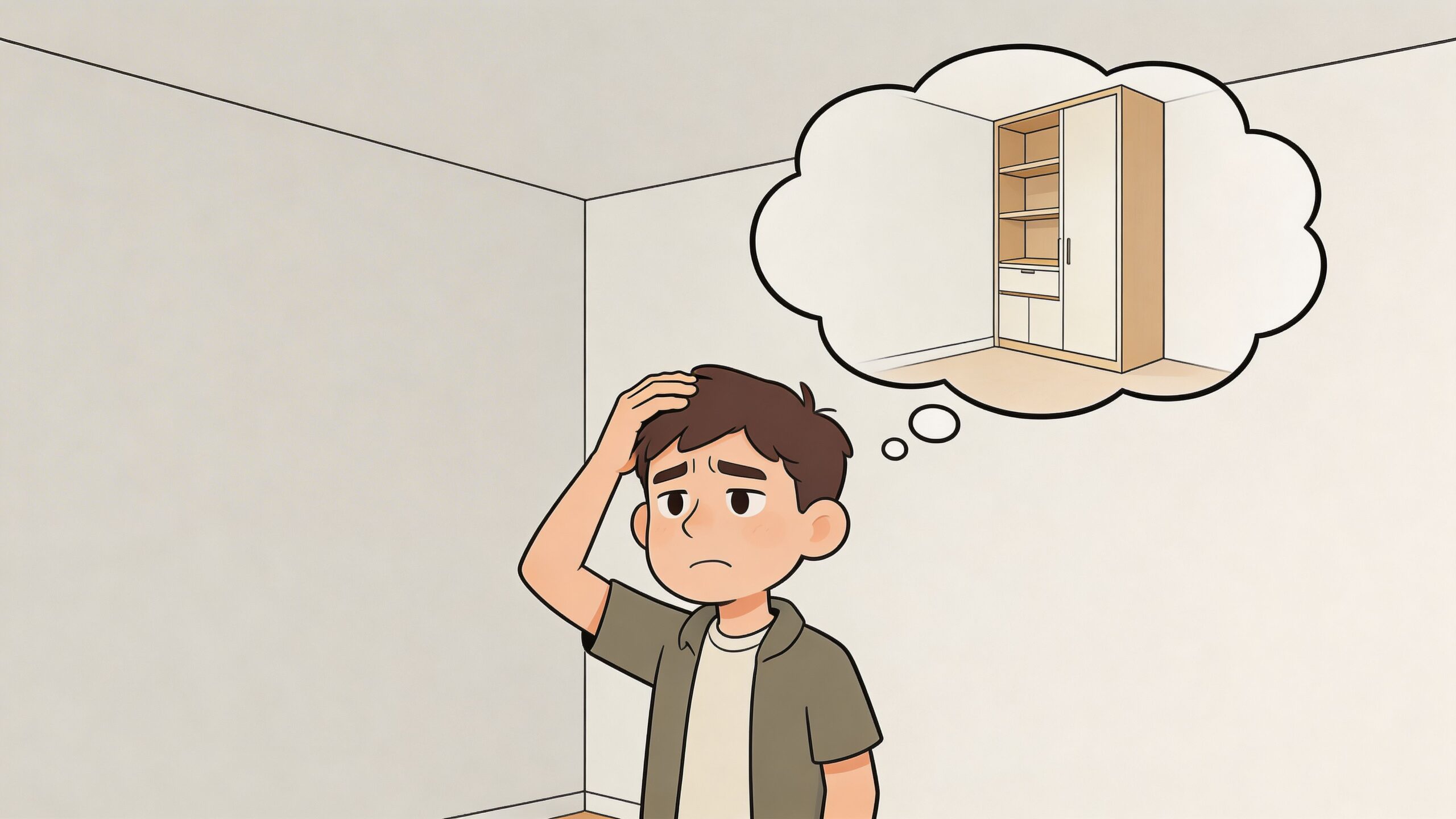
A corner built-in cabinet answers that problem in a calm, practical way. Instead of forcing a standard piece into a spot where it never belonged, you use the shape of the room itself.
Why this kind of storage feels so natural
The reason these cabinets work so well is simple. They respect the architecture of the room.
A freestanding cabinet pushed into a corner often leaves gaps, wasted floor area, or odd dead space behind it. A corner built-in cabinet uses that corner on purpose, so the room feels more settled and more finished.
A well-planned corner cabinet often looks less like “extra furniture” and more like it was always meant to be part of the house.
That matters in smaller homes especially. If you’re working with a compact footprint, small space furniture solutions can make a room feel easier to live in without crowding it.
Real homes need furniture that solves problems
That’s the part people sometimes miss. This isn’t only about looks.
A corner cabinet can hold serving pieces in a dining room, board games in a family room, dishes in a kitchen, or keepsakes in a hallway nook. It can also create visual balance where a room feels bare on one side.
If you’ve been staring at an empty corner and thinking, “Something belongs there, but I don’t know what,” you’re probably right. A corner built-in cabinet is often the piece that makes the whole room click.
Understanding Corner Built In Cabinets
A true corner cabinet isn’t just a regular cabinet turned sideways. That’s where a lot of confusion starts.
The classic form is shaped to fit the corner itself. According to Britannica’s overview of corner furniture, the traditional corner cabinet has a roughly triangular cross-section, and its front faces the room at about 45 degrees to the walls. That shape lets it reclaim unused right-angle space while keeping the floor footprint modest.
The shape is the secret
Consider custom-fitting a lid to a container. When the shape matches, there’s less waste.
With corner built in cabinets, two sides sit back toward the walls and the front turns outward to face the room. That front angle is what makes the cabinet easier to use and easier to live with.
Here’s why that matters:
- Better use of floor space because the cabinet fills a corner that often goes unused.
- Cleaner sight lines because the front angle softens a hard room corner.
- More storage than people expect because the inside extends deeper than it looks from the front.
Why they don’t feel bulky
People sometimes worry that a corner cabinet will stick out too far. In many rooms, the opposite is true.
Because the cabinet is built around the corner, it often feels more tucked in than a square case piece. That’s one reason these cabinets have lasted so long as a design idea. They work in formal rooms, casual rooms, and everyday family spaces.
Practical rule: If a room needs storage but can’t spare a full wall, the corner is often the first place worth studying.
Material also changes how the piece feels. If you’re comparing wood species and durability, this guide on what is the best wood for furniture is helpful background before you choose a cabinet style.
A good corner cabinet should feel intentional, not squeezed in. Once you understand the geometry, the whole idea makes a lot more sense.
Exploring Common Corner Cabinet Layouts
Not every corner calls for the same cabinet. That’s why one homeowner loves their setup and another one ends up frustrated.
The layout changes how the cabinet opens, how much you can reach, and what kind of things it stores best.
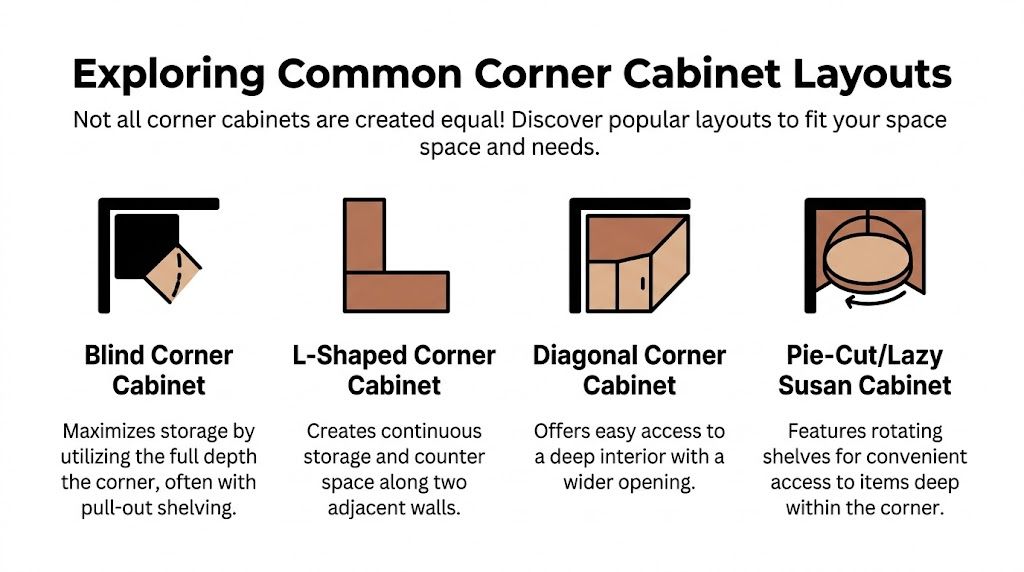
Four layouts you’ll see most often
Some are better for display. Some are built for cookware and heavier use. Some are chosen because the room gives you no other clean option.
| Layout Type | Best For | Pros | Cons |
|---|---|---|---|
| Blind Corner Cabinet | Deep storage in kitchens | Uses hard-to-reach corner depth well | Items in the back can still be harder to access |
| L-Shaped Corner Cabinet | Continuous cabinet runs | Keeps cabinetry flowing along both walls | Interior organization can get tricky |
| Diagonal Corner Cabinet | Display and easier front access | Angled front creates a strong visual focal point | Takes careful planning to size well |
| Pie-Cut or Lazy Susan Cabinet | Frequently used kitchen items | Rotating access can help organize contents | Not everyone likes the shelf shape for larger items |
Diagonal cabinets
This is the style many people picture first. The front face angles across the corner, which gives the cabinet a more furniture-like look.
In a dining room or built-in hutch setting, diagonal corner built in cabinets can feel elegant and balanced. In a kitchen, they can make the corner easier to approach because the opening faces into the room instead of hiding on one wall.
They’re often a good fit when appearance matters as much as storage.
L-shaped cabinets
These keep the cabinet run moving along two walls. They can look integrated in a kitchen where you want the whole room to read as one continuous plan.
The tradeoff is interior organization. Corners are still corners, so what looks clean outside may need thoughtful shelving or inserts inside.
Blind corner cabinets
A blind base corner cabinet uses one visible door and extends into the hidden corner area behind the adjacent run. This layout can be useful when you want to capture deep storage without breaking the flow of the kitchen too much.
That said, blind corners need planning. If you don’t think through what goes inside, they can become the home of forgotten roasting pans and mystery lids.
Base corner corner cabinets
This is one of the most practical layouts for access. For Base Corner Corner (BCC) cabinets, a bifold door on a knuckle hinge lets the door open and lie nearly flat, which improves accessibility. A standard 36-inch unit gives a wider opening than smaller versions, and placing it 1 to 3 inches away from the wall corner helps prevent binding and preserves shelf space, according to Superior Cabinets’ discussion of common corner cabinet types.
That sounds technical, but the everyday takeaway is easy. The door gets out of your way better.
If you store heavier pots, mixing bowls, or countertop appliances in a corner base, wider and easier access usually matters more than fancy hardware.
Which layout tends to fit which household
A quick way to narrow it down:
- Choose diagonal if you want the cabinet to be seen and appreciated.
- Choose L-shaped if matching the surrounding run matters most.
- Choose blind corner if you need depth and are willing to organize it carefully.
- Choose BCC if easier opening and better reach are high on your list.
The best choice usually comes down to how you live, not just what looks nice in a showroom photo.
Choosing Materials And Finishes That Last
The cabinet shape matters. The material matters just as much.
A corner cabinet gets opened, bumped, loaded, unloaded, cleaned, and leaned on for years. If the build quality is weak, you’ll feel it long before the cabinet looks old.
Why solid wood still earns respect
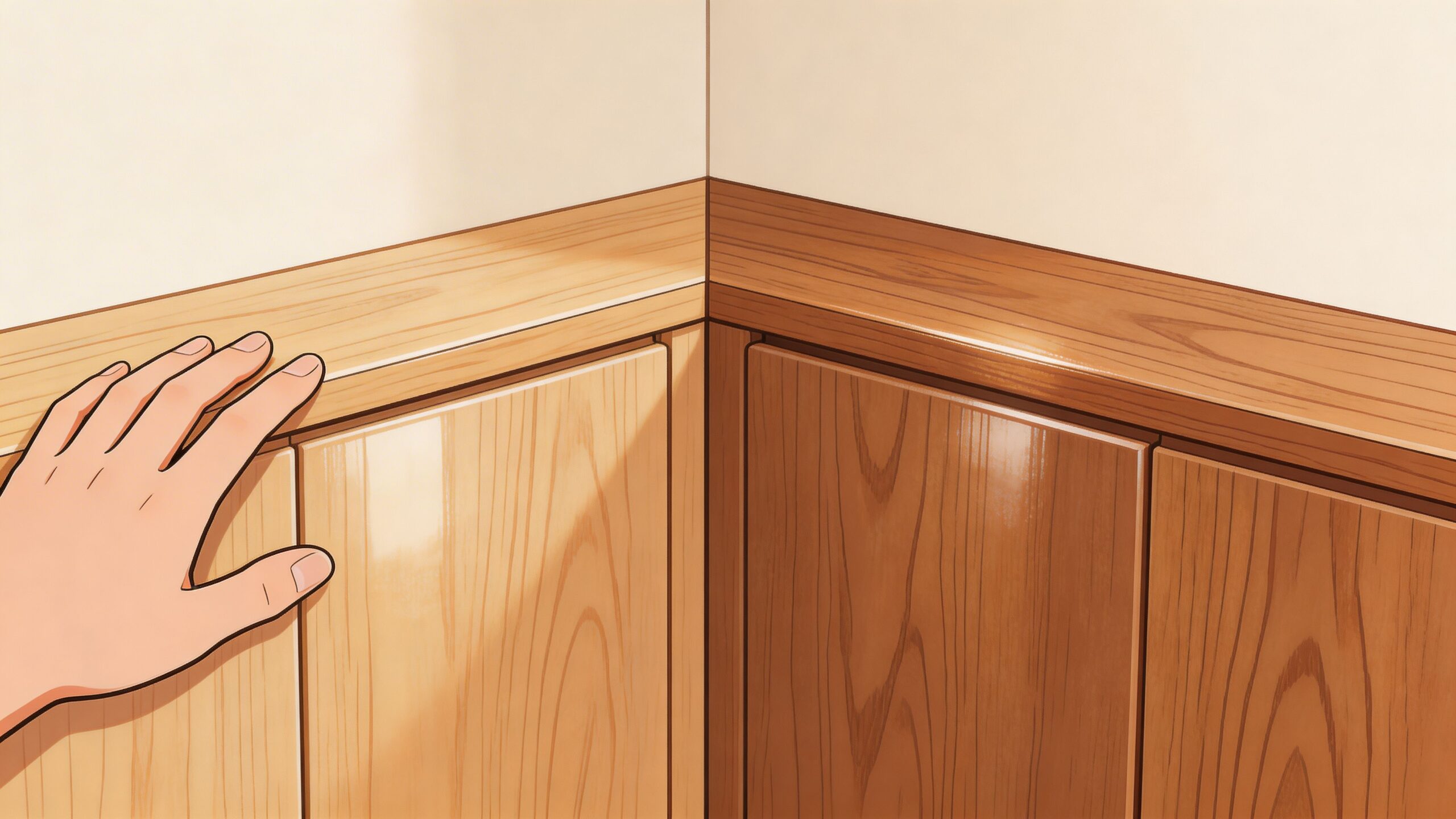
Solid wood has a warmth that’s hard to fake. It also gives you a cabinet that can age with some grace.
That’s one reason so many homeowners still lean toward USA-made and Amish-crafted pieces when they want a cabinet to stay in the family for a long time. These cabinets aren’t just about appearance. They’re about joinery, feel, and repairability.
A painted finish can give a softer, classic look. A stained finish lets the grain do more of the talking. Neither is automatically better. The right one depends on the room and the wood species underneath it.
What buyers often overlook
People usually notice the door style first. I get it. That’s the fun part.
But long-term satisfaction often comes from less flashy details:
- How the shelves are built for daily weight
- How the doors feel when they open and close
- How the finish handles wear from hands, dishes, and routine cleaning
- Whether the cabinet can be refinished later if your style changes
If you want to compare finish choices more closely, this article on the best wood finish for dining table gives useful context that also applies to cabinet surfaces.
Good wood furniture doesn’t have to shout. You can usually feel the difference in the first few seconds your hand touches it.
Painted or stained
A painted corner cabinet can brighten a room and blend nicely with trim or existing built-ins. A stained cabinet usually highlights craftsmanship more clearly, especially in oak, cherry, or maple.
For family homes, I often tell people to think less about trend and more about maintenance. Choose the finish that you’ll still enjoy after years of regular use, fingerprints, and holiday traffic.
Planning Your Cabinet For Your Home And Family
At this juncture, a lot of good ideas either come together or go sideways. Planning matters.
A corner cabinet can be beautiful and still fail if the measurements are off, the doors can’t open properly, or the shelves are too deep for the person using them.
Start with the corner itself
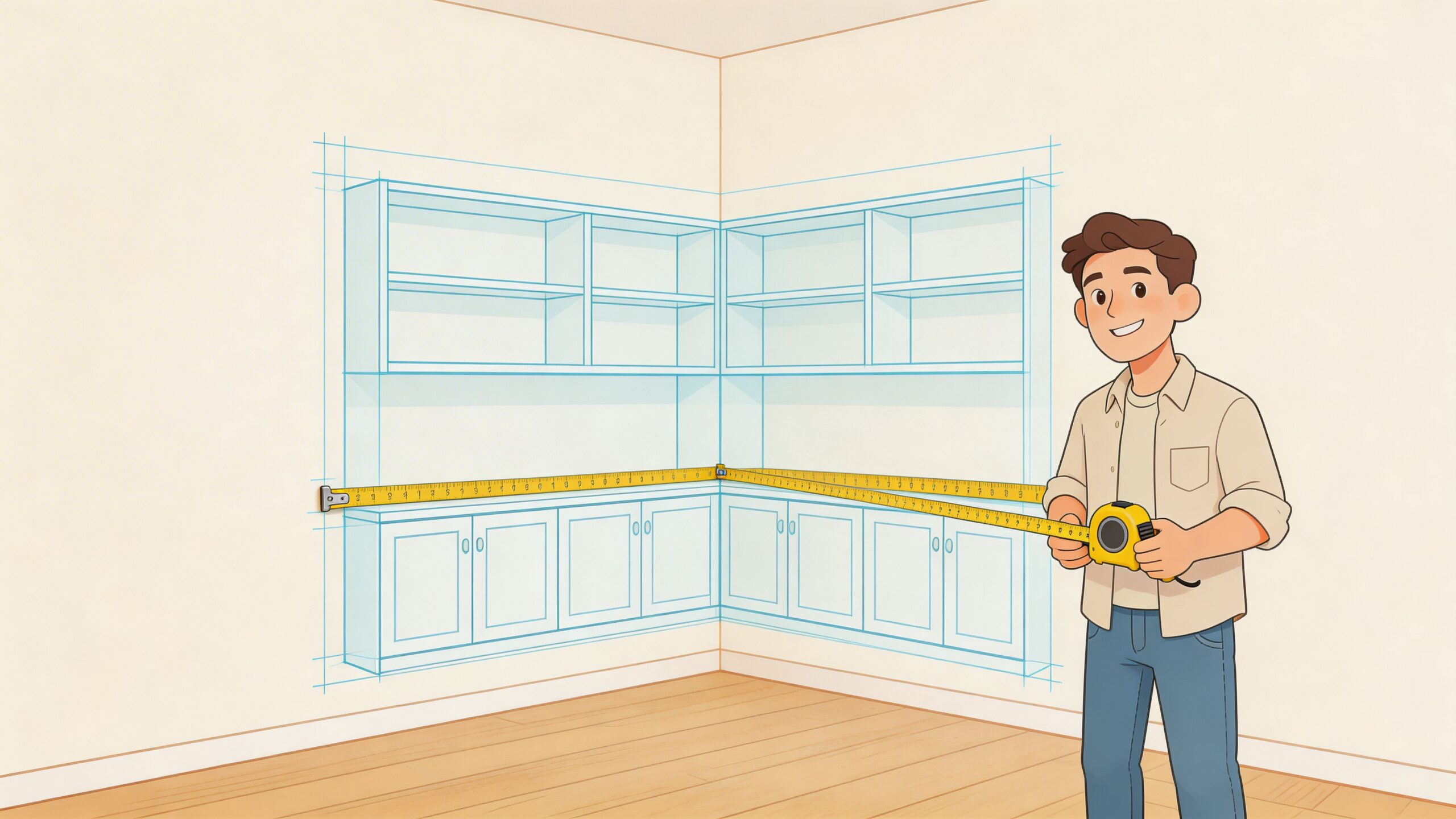
Measure both walls that meet at the corner. Then measure how far out into the room the cabinet can project without crowding walkways, appliances, or nearby furniture.
A lot of homeowners only measure one wall and assume the rest will work itself out. It usually won’t.
Use a simple checklist:
- Measure both wall runs from the corner outward.
- Check the floor space in front of the cabinet for door swing and foot traffic.
- Notice nearby obstacles like vents, trim, outlets, radiators, or appliance handles.
- Think about what will go inside before choosing shelf depth.
If you want a refresher on the basics, how to measure furniture is a helpful place to start.
Planning for smaller homes
In apartments, condos, and compact kitchens, scale is everything. A cabinet that technically fits can still feel oversized.
In those spaces, I’d focus on pieces that store vertically and keep the room open visually. Glass in the upper section, lighter finishes, or a shallower profile can help a corner feel useful instead of heavy.
Come-apart construction can also matter in practical situations. Narrow stairways and tight entries aren’t rare around Milwaukee.
Planning for seniors and caregivers
This is one area where many articles don’t go nearly far enough. There is a significant lack of guidance on adapting corner cabinets for senior living, especially when comparing accessible pull-out systems with traditional lazy susans. Some designers choose to block off corners, but that can ignore the 20 to 30 percent storage gain available from well-designed, heavy-duty solutions that improve accessibility, as noted in this discussion of senior-friendly corner cabinet planning.
That matters because access changes everything.
For senior households, I’d pay close attention to:
- Shelf reach so everyday items aren’t buried too far back
- Door style so opening the cabinet doesn’t require awkward twisting
- Pull-out options for heavier cookware or pantry items
- Stable hardware that feels easy and secure in the hand
The best senior-friendly cabinet isn’t the one with the most storage. It’s the one the homeowner can use comfortably every day.
Good planning isn’t fancy. It’s thoughtful. That’s what makes a cabinet helpful for years instead of frustrating after a month.
Customization And Finding Your Personal Style
Corner built in cabinets become more than a storage answer. They start feeling like part of your home’s personality.
One family wants a painted cabinet with simple hardware in a breakfast nook. Another wants rich stained wood and glass doors in a dining room. A third needs a scaled-down cabinet for a condo but still wants solid wood and a handcrafted look.
Custom work matters more than people think
There’s a real content gap for homeowners trying to customize solid wood, USA-made, or Amish-crafted corner cabinets for smaller homes or senior spaces. Many general guides stay broad and don’t answer practical questions about custom mechanisms, narrow doorways, or how quality materials behave in tighter layouts, which is noted in this discussion of customization gaps for small-space corner cabinets.
That’s a big reason custom options can be so helpful. They let you solve the room you have, not the imaginary room from a catalog photo.
Personal style choices that change the whole feel
A few decisions do most of the visual heavy lifting:
- Wood species affects warmth, grain, and character.
- Paint versus stain changes whether the cabinet blends in or stands out.
- Glass doors or solid doors decide how much display you want versus hidden storage.
- Hardware can push the piece traditional, farmhouse, clean-lined, or more formal.
Some homes call for a cabinet that feels quiet and built into the background. Others need a corner piece that becomes a focal point.
Match the cabinet to your daily life
Style doesn’t live apart from function. The family with kids and pets may want sturdier finishes and easier-to-grip hardware. Someone furnishing a smaller condo may want lighter wood tones and a less bulky profile. A homeowner with heirloom dishes may care most about upper display space.
That’s why I like the idea of treating customization as problem-solving with personality. You’re not only choosing a cabinet. You’re choosing how that corner will live with you.
If you’re curious how that process can feel more manageable, custom furniture made simple is a good read.
Bringing Your Corner Cabinet Home With BILTRITE
Some furniture decisions are easier when you can stand in front of the piece, open the doors, touch the wood, and talk with someone who knows what they’re looking at.
That’s especially true with corner cabinets. Photos can show style, but they don’t always show scale, finish depth, shelf feel, or how a door moves in real life.
Our family has served Metro Milwaukee since 1928, and we’re proud to be a 4th-generation, family-owned business. We believe in better-quality furniture at a fair price, with a strong focus on USA-made, Amish-made, and solid-wood pieces that are built for real homes and real families.
You won’t find pushy sales talk with us. You’ll find people who listen, ask good questions, and help you compare what makes sense for your space. We don’t sell online, and that’s intentional. We want you to see the furniture for yourself in our Greenfield showroom.
We’re also proud of being a little old-fashioned. We’re closed on Sundays and Mondays so our team can spend time with their families.
If you’re ready to solve that awkward corner with something beautiful and hardworking, visit BILTRITE Furniture-Leather-Mattresses in Greenfield. We’d love to help you explore corner cabinet ideas, solid wood options, and custom choices that fit your home and your family.