


How to Clean a Fabric Sofa Naturally With Easy DIY Tips

Before you even think about mixing up a natural cleaning solution, there's one tiny but mighty detail you can't afford to skip: your sofa's cleaning tag.
This little piece of fabric, usually hidden under a cushion or along the frame, is the manufacturer's instruction manual. It holds the key to safely cleaning your upholstery without causing water spots, discoloration, or—worst case—permanent damage.
Start With the Basics: The Cleaning Tag
At BILTRITE, we've been helping Metro Milwaukee families since 1928. As a 4th generation, family-owned business, we see a sofa as more than just furniture; it's the heart of the home. It’s where you gather for movie nights, share stories, and make memories. We believe in affordable, better-quality furniture, and caring for it should be simple and safe.
That's why we always tell our customers to start with the tag. Ignoring it is the fastest way to turn a small spill into a big problem. This simple step dictates everything that comes next.
This flowchart breaks down exactly how to approach the cleaning process, starting with that critical first step.
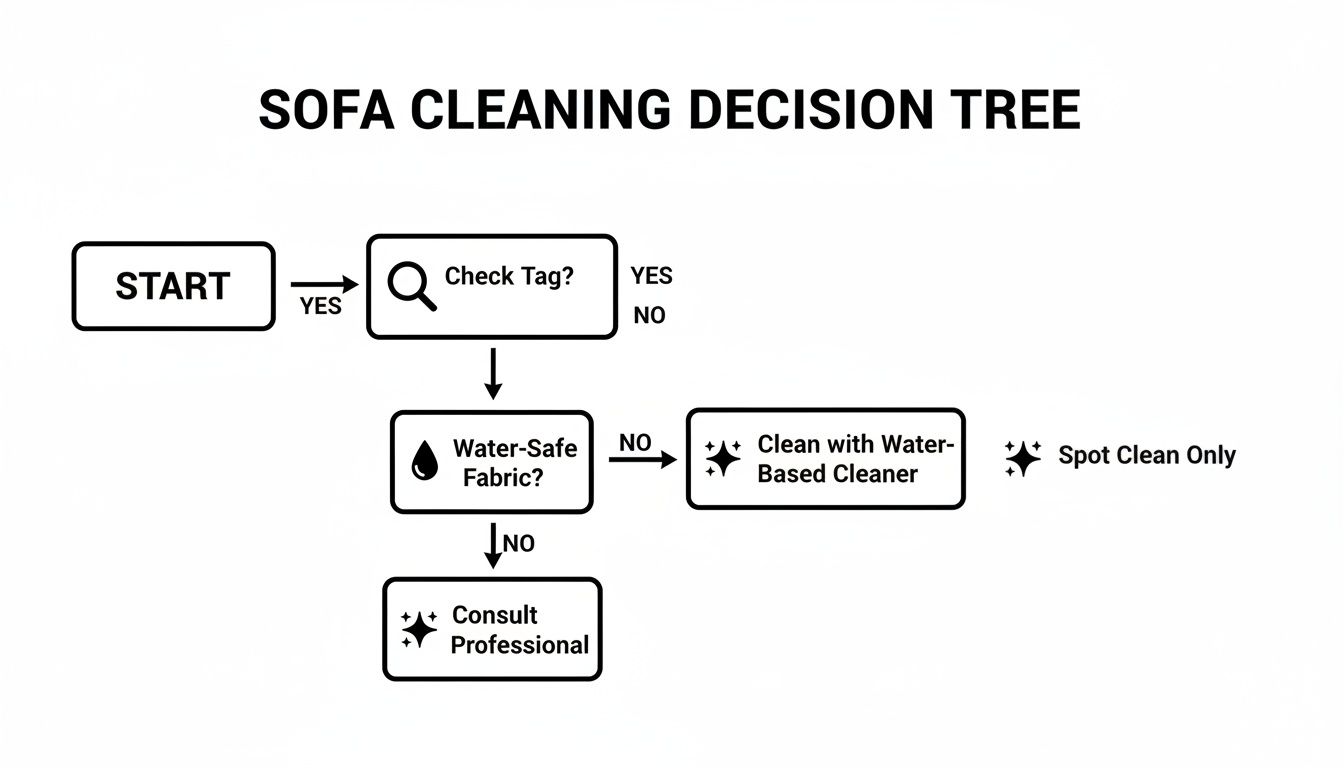
As you can see, that little letter code is your guide. So, what do those codes actually mean?
Decoding Your Sofa's Cleaning Tag
Here's a quick guide to understanding the codes on your sofa's tag. Always check this before you start!
| Code | What It Means | Safe Natural Cleaning Method |
|---|---|---|
| W | Water-Based Cleaner: You can safely use water and water-based cleaning solutions. | Ideal for most DIY vinegar, baking soda, and soap-based cleaners. |
| S | Solvent-Based Cleaner: Use only dry-cleaning solvents. Water will damage the fabric. | Water-based natural cleaners are not safe. You must use a specific dry-cleaning solvent. |
| W/S | Water or Solvent: You can use either water-based cleaners or dry-cleaning solvents. | DIY natural cleaners are generally safe, but always spot-test first. |
| X | Vacuum Only: Do not use any liquid cleaners, water, or solvents. | Your only option here is a thorough vacuuming. Liquids will stain and shrink the fabric. |
Understanding these codes is everything. Different fabrics react differently to moisture and cleaning agents. For anyone curious about what makes these upholstery materials so unique, diving deeper into fabric types can be really helpful. Knowing your fabric is half the battle won.
Gathering Your Natural Cleaning Toolkit
Okay, now that you’ve decoded your sofa’s cleaning tag, it’s time for the fun part. You can walk right past the aisle with harsh chemicals because everything you need for a fantastic, natural clean is probably already hiding in your kitchen. We’re all about keeping things simple, safe, and effective for your family—a value our family has held dear since we opened our doors back in 1928.
You really don't need a complicated arsenal to tackle everyday messes. In fact, three simple powerhouse ingredients can handle most of what life throws at your sofa.
Your Go-To Natural Cleaners
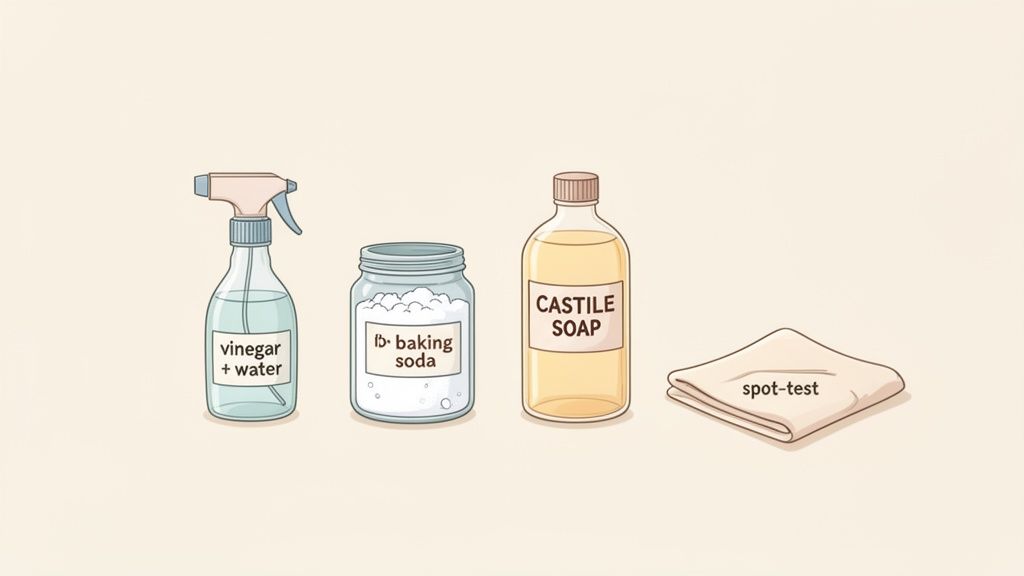
Here’s what we recommend grabbing from your pantry to mix up your own cleaning solutions:
- White Vinegar: This is your all-purpose hero. Its natural acidity is amazing at breaking down common household stains (think juice or coffee) and zapping odors without leaving any harsh residues behind. A simple 50/50 mix with water in a spray bottle works wonders.
- Baking Soda: Think of this as your fabric freshener and stain lifter. It’s a gentle abrasive that’s incredible for absorbing oily stains and pulling out stubborn smells—a must-have if you have pets or kids!
- Castile Soap or Gentle Dish Soap: For a mild, sudsy cleaner that’s safe on most "W" coded fabrics, a little bit of castile soap or a single drop of clear, gentle dish soap mixed with warm water is a reliable choice for general grime.
These ingredients aren't just safer for your home; they're also incredibly effective. Did you know that using natural methods can significantly extend the life of your sofa's fabric? Eco-friendly upholstery experts often point out that chemical cleaners can leave behind a sticky residue that actually attracts more dirt.
Natural solutions, on the other hand, clean thoroughly without this buildup. This simple switch could stretch the time between professional cleanings from 6-8 months to an impressive 12-15 months.
The Most Important BILTRITE Tip
Before you put any mixture on a visible part of your sofa, we always give this one piece of advice in our Greenfield showroom: always spot-test first! Find a hidden area on your sofa—like on the back, under a cushion, or on a concealed part of the frame—and apply a small amount of your cleaning solution.
This simple step is your best friend when learning how to clean a fabric sofa naturally. It ensures the cleaner won’t cause any discoloration or damage to your specific upholstery, giving you the confidence to tackle the rest of the sofa.
This is critical for all fabrics, but it's an absolutely non-negotiable step if you've invested in specialty materials. For those with active households, understanding the benefits of performance fabrics can also be a game-changer for future furniture choices, as they're designed for easier cleanup right from the start. Taking just a moment to test first protects the beautiful, better-quality furniture you love.
The Hands-On Process for a Fresher Sofa
Alright, you've checked your sofa's tag and mixed your natural cleaning potions. Now it's time to roll up your sleeves and get to work! This is the part where you'll see your sofa transform. At BILTRITE, we know that a little bit of effort goes a long way in caring for the furniture you love.
A Thorough Vacuum Is Non-Negotiable
Before any liquid touches your fabric, you have to vacuum. This might seem obvious, but a truly thorough vacuuming is the single most important prep step. It removes all the loose dirt, dust, pet hair, and crumbs that could otherwise turn into muddy streaks the second you add moisture.
Use an upholstery attachment and really get into every single nook and cranny. Take off the cushions and vacuum the base of the sofa, deep in the seams, and all along the arms. You'll be amazed at what comes out! This step alone can dramatically improve how your sofa looks and smells.
Applying Your Natural Cleaner
With a clean canvas, you're ready to tackle any spots or general grime. Remember that spot test you did? Now you can confidently use that same natural cleaner on the rest of the sofa.
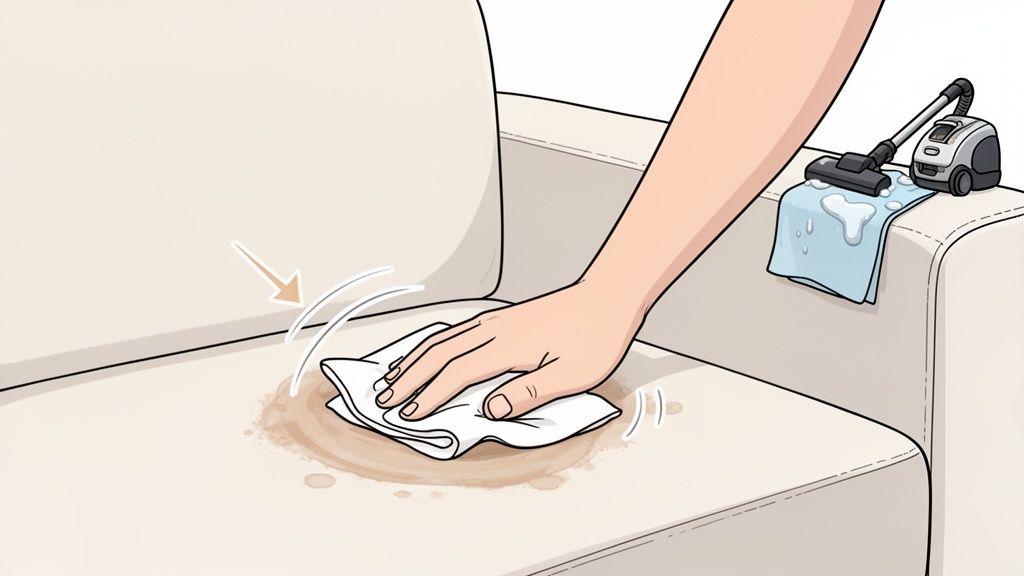
The key here is to blot, don't rub! Rubbing can damage the fabric fibers and push the stain deeper, which only makes things worse.
- For Fresh Spills: Gently blot the fresh stain with a clean, dry cloth first to soak up as much of the mess as possible.
- For Set-In Stains: Lightly spray your DIY cleaner onto a clean microfiber cloth—not directly onto the sofa, which can oversaturate it. Dab the stain gently, working from the outside edge of the stain toward the center. This little trick helps prevent the stain from spreading and creating a larger ring.
Imagine a juice spill. First, you'd blot the excess liquid. Then, you'd use your vinegar solution on a cloth to dab the spot, lifting the stain without scrubbing it deeper into the weave.
Rinsing and Drying The Right Way
Once the stain is gone, you need to "rinse" the area to remove any leftover cleaning solution. Just dampen a fresh cloth with plain distilled water and blot the area again. This picks up any residue that might otherwise feel stiff or attract more dirt later on.
Proper drying is the final, crucial step to avoid watermarks or mildew.
Pat the area with a clean, dry towel to absorb as much moisture as you can. Then, let the sofa air-dry completely. Open a window or point a fan at the spot to speed up the process and ensure good air circulation.
Don’t be tempted to use a hairdryer. The direct heat can sometimes set stains you didn't fully remove or even damage the fabric itself. Patience is key! Following these steps will leave your sofa looking and feeling refreshed. Plus, keeping your living room furniture clean helps control household odors, a topic we also cover when discussing how to remove smells from a mattress.
Tackling Common Stains the Natural Way
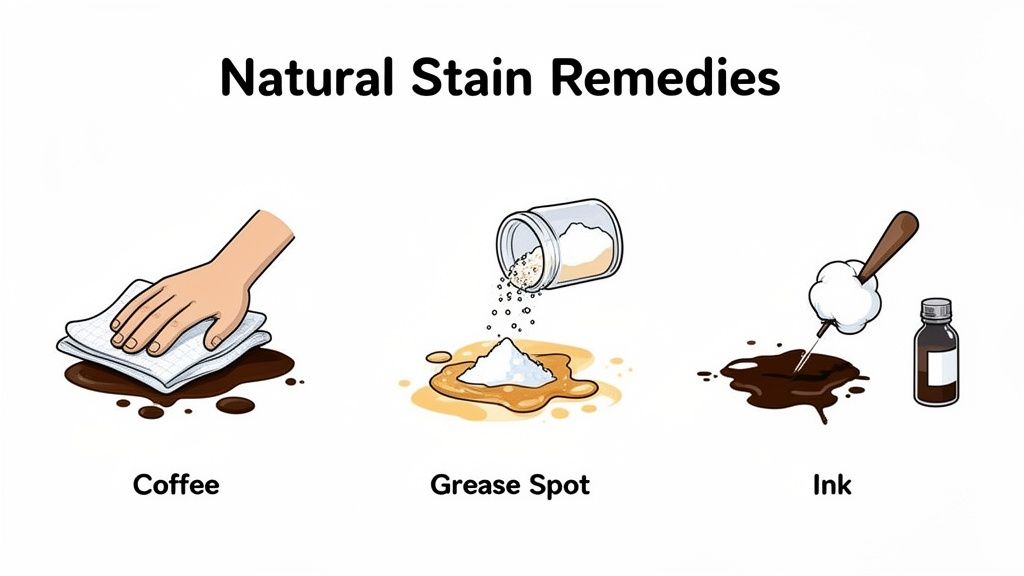
Life in a busy, happy home means spills and stains are practically a rite of passage for your sofa. From movie night popcorn grease to a tipped-over coffee mug or a little one's rogue pen mark, there's no need to panic when messes happen!
Here at BILTRITE, we’ve been helping Metro Milwaukee families furnish their homes since 1928, so we’ve heard it all and have some tried-and-true tricks up our sleeves. This is your go-to guide for facing those common culprits with confidence, using simple, natural remedies.
For Oily or Greasy Stains
Did a piece of buttery popcorn or a greasy potato chip miss your mouth? Oily stains can be intimidating, but they’re surprisingly easy to tackle if you act fast.
The secret weapon here is an absorbent powder like cornstarch or baking soda. Generously sprinkle it directly onto the fresh stain. Let it sit for at least 15-20 minutes; this gives the powder time to pull the oil right out of the fabric fibers. Afterward, simply vacuum it all up with your upholstery attachment.
For Ink Marks
An accidental pen mark can feel like a disaster, but a little rubbing alcohol can often work like magic. Always remember to spot-test in a hidden area first!
Dab a small amount of isopropyl alcohol onto a cotton ball or a clean white cloth. Gently blot the ink stain—don't rub! Rubbing will only spread the ink and make the problem worse. You should see the ink transferring from the sofa to your cloth. Keep dabbing with a fresh section of the cloth until the mark is gone.
For Pet Stains and Odors
We love our furry family members, but their messes require a special approach. For pet urine, the goal is to clean and neutralize the odor to prevent them from returning to the same spot.
A solution of equal parts white vinegar and water is fantastic for breaking down the uric acid in pet stains. Blot the area thoroughly with this mixture, then sprinkle with baking soda once it's nearly dry to absorb any lingering odors. For anyone dealing with these kinds of stubborn smells elsewhere, our guide on how to clean urine from a mattress shares similar helpful, natural tips.
Many of the USA and Amish-made sofas we carry in our Greenfield showroom feature durable natural fabrics. Interestingly, fabric sofas made from cellulosic fibers like cotton and linen can become up to 20% stronger when wet. This unique quality makes them resilient enough for thorough, natural wet-cleaning methods, which is great news for families!
We'd love to see you in our store! Come say hi and let us help you find a great piece for your home.
Long-Term Care for a Lasting Sofa
A deep clean is a great reset, but the real secret to a beautiful sofa that lasts for years comes down to consistent, everyday care. At BILTRITE, our family has been helping the Metro Milwaukee community since 1928, and if there's one thing we've learned, it's that quality furniture deserves a little upkeep. Think of this as your simple, long-term care plan.
It all starts with something incredibly simple: regular vacuuming. This isn't just for picking up crumbs after movie night; it’s about preventing tiny particles of dirt and grit from working their way deep into the fabric. Over time, that grit acts like sandpaper on the fibers, causing premature wear and making the colors look dull. A quick vacuum once a week makes a world of difference.
Simple Habits for a Healthier Sofa
Beyond the vacuum, a few other small habits can dramatically extend the life of your furniture.
- Fluff and Flip Cushions: Make it a weekly ritual to fluff and rotate your sofa cushions. This is so important for ensuring they wear evenly and preventing those dreaded permanent dents! It’s the same logic we apply to our two-sided, flippable mattresses—more useable surfaces mean a longer life.
- Mind the Sun: Direct sunlight is the number one enemy of vibrant fabric. If your sofa sits in a spot that gets intense, direct sun, you'll notice fading over time. If moving it isn't an option, think about using curtains or blinds during the brightest parts of the day.
- Use Protective Throws: For those high-traffic spots—like where the dog loves to nap or the kids pile up—a stylish throw blanket offers an extra layer of protection. It's a simple, decorative way to guard against daily wear and tear.
These small, consistent actions are what truly preserve a piece of furniture. It’s less about one major cleaning session and more about the little things you do every week to show your sofa some love.
Protecting your investment is even more important in a busy household. For families with little ones or furry friends, choosing the right material from the start can make all the difference. You can learn more about making smart choices in our guide on how to choose kid-friendly and pet-friendly furniture. Taking these steps helps ensure the heart of your home stays beautiful for years to come.
Common Sofa Care Questions We Hear in Our Showroom
After more than 90 years serving the Metro Milwaukee community, we've pretty much heard it all when it comes to furniture care! We genuinely love it when folks stop by our Greenfield showroom to chat, and a few questions about keeping fabric sofas fresh always seem to come up.
As a 4th generation, family-owned business, we’re always happy to share what we've learned over the decades. Hopefully, these answers give you a little more confidence in caring for the beautiful furniture in your home.
How Often Should I Deep Clean My Fabric Sofa?
For the average household, giving your sofa a good, thorough natural deep clean every 6 to 12 months is a wonderful rhythm. This schedule is fantastic for preventing that deep-down dirt and grime from really setting into the fibers.
Now, if your living room is command central for kids, pets, and daily life, you might find that cleaning it once a season works better for you. The single best piece of advice we can give to stretch the time between deep cleans? Vacuum regularly. It makes a world of difference.
Can I Use a Steam Cleaner with Natural Solutions?
You bet! For a lot of fabrics, a steam cleaner can be your secret weapon for a deeper, chemical-free clean. It’s a wonderful way to naturally sanitize the fabric, too. Just make sure to double-check the care tag for a "W" or "W/S" first.
A simple 50/50 mix of plain water and white vinegar in your machine does the trick beautifully. The key is not to get the fabric soaking wet. A light, even pass is all you need, followed by plenty of air-drying time to make sure you don't end up with water spots.
Our Family Tip: Always, always do a quick spot-test on a hidden area before you start steaming the whole piece. It's a simple little step we've been recommending since 1928, and it’s the best way to ensure your fabric comes out looking amazing.
What's the Best Way to Eliminate Pet Odors Naturally?
When it comes to pet smells, baking soda is an absolute lifesaver. It’s completely safe for most fabrics, incredibly effective, and you've probably already got a box in your kitchen pantry.
Just sprinkle a generous layer of it all over your dry sofa. If you're dealing with a mild odor, let it sit for at least an hour. For those more stubborn, set-in smells, you can even leave it on overnight. The baking soda is great at absorbing and neutralizing the odors right out of the upholstery.
Once it's worked its magic, just vacuum it all up with an upholstery attachment. You’ll be left with a wonderfully fresh-smelling sofa, no harsh chemicals required!
At BILTRITE Furniture-Leather-Mattresses, our team brings over 400 years of combined experience to help you find and care for great furniture for your family. Ready to find your new favorite piece of furniture? Visit us in Greenfield today! We're closed on Sundays to be with our families, but we can't wait to see you the rest of the week. https://www.biltritefurniture.com.