What is a Pouf Chair? Ultimate Guide


Your living room is almost there.
The sofa looks good. The rug is down. The lamp finally works with the space. But there’s still that one awkward spot by the chair, the end of the sectional, or the empty corner that needs something useful and not bulky.
That’s where a pouf usually sneaks into the conversation.
In our family, we’ve been helping Milwaukee-area homes come together since 1928, and we’ve seen this happen over and over. A room doesn’t always need another big chair or a giant coffee table. Sometimes it needs one flexible piece that can move around, soften the room, and help with real everyday living.
A pouf does exactly that.
It can be a footrest after work, a seat when company stops by, or a spot to set down a tray during movie night. It’s also one of those pieces that confuses people. Is it an ottoman? A stool? A floor cushion? Part of the fun of furniture is learning the little differences, and if you enjoy that kind of thing, our guide to types of furniture styles is a fun rabbit hole.
For now, let’s keep it simple. If you’ve been wondering what is a pouf chair, how it’s different from other pieces, and whether it makes sense for a Milwaukee home, you’re in the right place.
Welcome to the World of Poufs
A pouf often shows up when a room needs help without needing a makeover.
Maybe you live in a Bay View bungalow and want something softer than a hard-edged bench. Maybe you’re furnishing a condo and don’t want every piece to feel oversized. Maybe Mom needs a place to put her feet up, but you don’t want a big heavy ottoman taking over the room.
That’s the sweet spot for a pouf.
Why people fall for poufs
A pouf is one of those rare furniture pieces that can do several jobs without making a fuss.
- It fills a gap: That empty spot beside a chair suddenly feels finished.
- It moves easily: You can pull it into the center of the room, tuck it away, or shift it for guests.
- It softens a space: Rooms with lots of straight lines often feel warmer with one rounded or cushioned piece.
- It works in many homes: Apartments, condos, family rooms, senior living spaces, bedrooms, dens. It fits right in.
A lot of folks first think of a pouf as a decorating extra. Then they bring one home and use it every day.
A good pouf doesn’t just sit there looking cute. It earns its floor space.
Why it makes sense in real life
Milwaukee homes come in all shapes and sizes. Some have narrow rooms. Some have older layouts. Some need furniture that can handle kids, guests, and daily use without feeling clunky.
That’s why poufs have stuck around for so long. They’re practical. They’re easy to understand once you see one in person. And they can add comfort without asking much from the room.
So What Exactly Is a Pouf
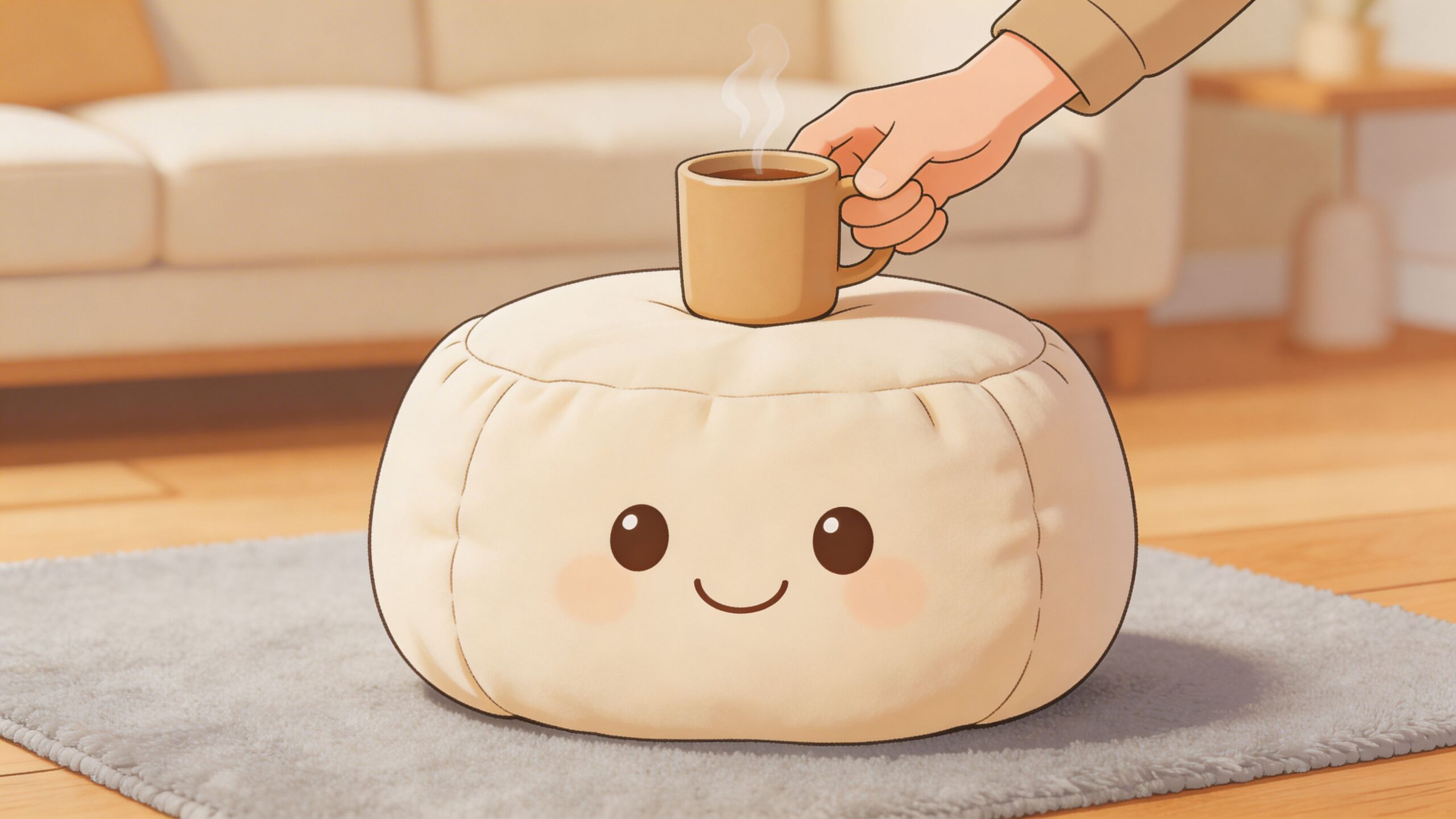
A pouf is a low, cushioned piece of furniture that can act as a footrest, an extra seat, or even a casual surface for a tray. Consider it a more relaxed, lower-profile cousin to an ottoman.
Some poufs are soft all the way around. Some are more structured. Most are compact, easy to move, and meant to be useful in more than one way.
The easiest way to picture one
If the word feels unfamiliar, consider this simple comparison:
- A bean bag is usually loose and slouchy.
- An accent chair is upright and meant for full seating.
- A pouf sits in between. It’s lower, firmer, and more versatile.
You might see round poufs, square poufs, knitted poufs, leather poufs, and upholstered pouf-ottomans. The details change, but the idea stays the same. It’s a compact, flexible piece that adds comfort without shouting for attention.
The fun history behind the name
The name has a surprisingly royal backstory. The pouf chair traces its name to 18th-century France, first popularized in 1775 by Queen Marie Antoinette’s extravagant “pouf” hairstyle. Those towering hairdos, dressed up with feathers and jewels, inspired the name for the low, cushioned seats that became fashionable in royal courts as symbols of rococo opulence, as described by Bontempi’s history of the pouf.
That history is fun, but the modern takeaway is simple. A pouf is not just decorative fluff. It’s a hardworking little piece.
Small furniture can still do big jobs.
What people usually mean by pouf chair
When someone says “pouf chair,” they usually mean a pouf that’s sturdy enough to sit on for short periods. Not a dining chair. Not a lounge chair. More like a flexible extra seat that can also work as a footrest.
That’s why the term can sound confusing. It’s called a chair, but it often behaves more like a compact helper for the whole room.
Pouf vs Ottoman vs Accent Chair
Shoppers often pause here. They know these pieces are related, but they don’t always know what separates them.
The quick answer is this. A pouf is lower and more casual. An ottoman is usually more structured. An accent chair is meant for regular seated support with a back and often arms.

The fast comparison
| Piece | How it feels | Usual job | Best for |
|---|---|---|---|
| Pouf | Soft to moderately firm, low to the ground | Footrest, casual seat, movable accent | Flexible spaces |
| Ottoman | More structured, often framed | Footrest, storage, coffee-table substitute | Matching with sofas and chairs |
| Accent chair | Full seat with back support | Primary seating | Reading corners, conversation areas |
The difference in structure
A pouf often looks more relaxed. It may not have visible legs, arms, or a rigid shape.
An ottoman usually has a more structured appearance. It may have a firmer top, cleaner edges, or even hidden storage.
An accent chair is the most defined of the three. You sit in it the way you’d sit in a standard chair. It’s built for longer sitting and visible support.
The difference in how you use them
A pouf is the piece you drag closer when you want to kick your feet up, pull over for one extra guest, or move into a bedroom for a few days.
An ottoman often stays put. It tends to belong to a specific chair, sofa, or seating group.
An accent chair is more committed. It claims its spot in the room and usually doesn’t wander around much.
If a pouf is the casual cousin, the ottoman is the polished relative, and the accent chair is the one with a clear job description.
Where people get mixed up
Stores sometimes label soft ottomans as poufs and structured poufs as ottomans. That’s normal. Furniture names overlap.
The better question is not “What did they call it?” It’s “How does it function?” If it’s low, versatile, and easy to shift around, you’re likely in pouf territory.
Finding Your Pouf Style Materials and Sizes
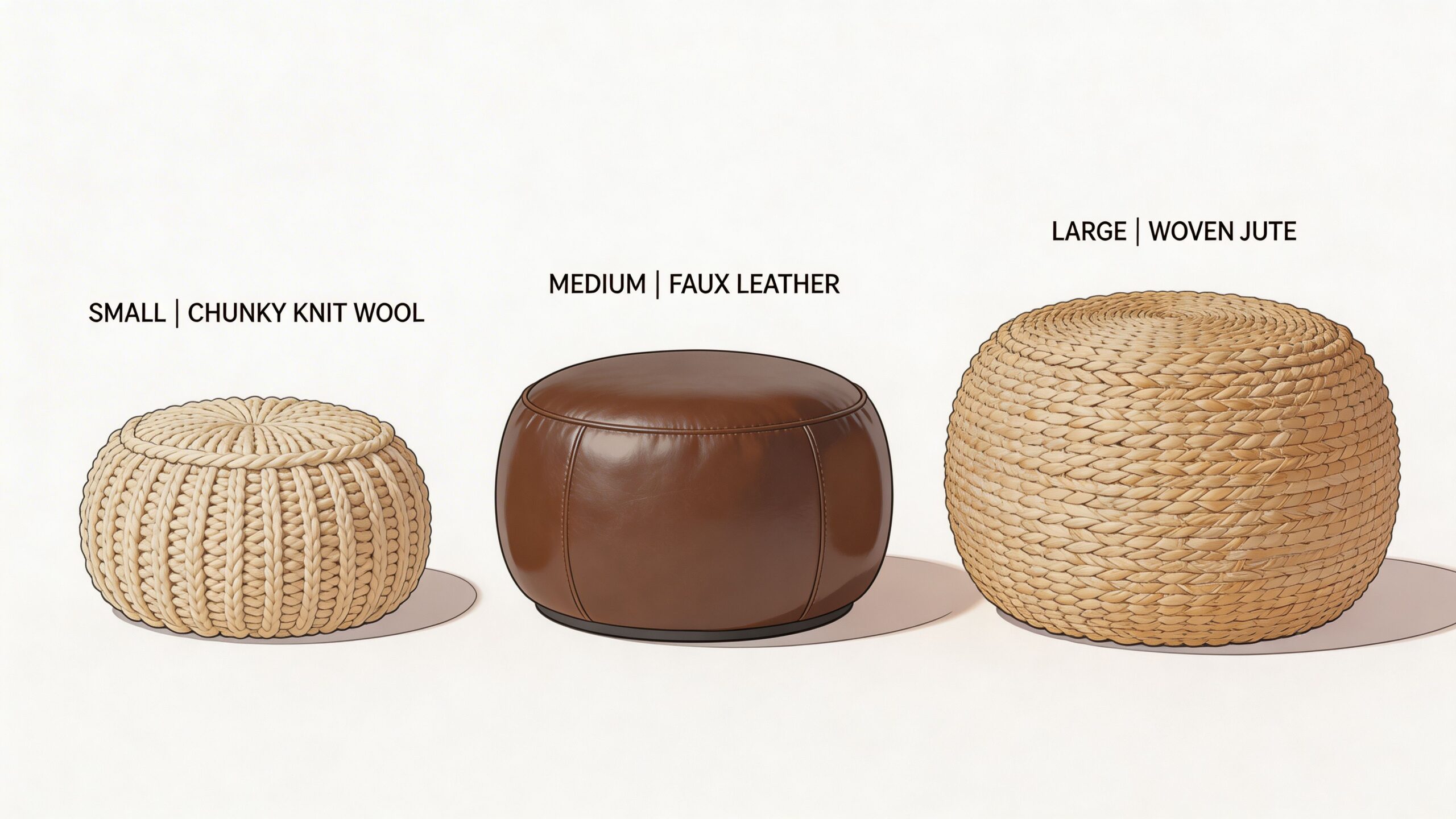
A pouf can change character fast. Put one in chunky woven fabric, and it feels relaxed enough for a family room movie night. Cover the same shape in leather, and it suddenly looks right at home in a condo office or a tidy den.
Materials change the personality
Material does a lot of the heavy lifting.
- Fabric poufs: Soft, approachable, and easy to mix into living rooms, bedrooms, and casual spaces.
- Leather poufs: Cleaner-looking and often easier to wipe down, which makes them handy for busy households, senior living spaces, and homes where furniture gets used every day.
- Textured poufs: Knits, woven covers, and nubby fabrics bring warmth and help a room feel less flat.
For Milwaukee families, durability matters just as much as looks. A pouf should handle boots by the door, kids dropping onto it during game night, or daily use next to a favorite recliner. If you want help comparing wear, cleanability, and feel, our guide to upholstery materials and how they hold up in real homes makes the choices easier to sort through.
At BILTRITE, that practical side matters. USA-made and Amish-built furniture tends to earn attention because it is built for real use, not just for a pretty showroom photo.
Shape changes the mood
Round poufs feel easygoing. They soften a room with lots of straight lines, like a sectional, square coffee table, or media console.
Square and cube poufs look a little tidier. They tuck in neatly beside a chair, line up well in smaller apartments, and often make a room feel more organized.
That shape choice is a small detail, but you notice it every day.
Size matters more than people think
Size decides whether a pouf feels helpful or awkward. Too small, and it can look lost next to a large sofa. Too big, and it starts crowding the walkway.
A good rule is to match the pouf to the scale of the seat near it. Near a roomy sectional, a pouf needs enough visual weight to hold its own. In a condo, apartment, or bedroom sitting area, a lower, lighter-looking piece usually fits better.
Height matters too. If someone plans to use it mainly as a footrest, the top should sit comfortably near the seat height of the chair or sofa beside it. For older adults, that proportion can make everyday use feel easier and more natural.
A quick matching guide
- Small room: Choose a compact shape with a lighter visual feel.
- Big sectional: Pick a pouf with enough size and texture so it does not disappear.
- Family room: Go with a material that can handle everyday wear without causing stress.
- Bedroom or reading corner: Use texture to add warmth and a softer look.
The best pouf style is the one that fits your room, your routine, and the way your household lives.
More Than Just a Footrest
A pouf might start out as a footrest, but that’s rarely where it ends.
In real homes, it becomes the piece everyone borrows.
Five everyday uses that make sense
A pouf works best when you stop thinking of it as one thing.
- Extra seat for company: Someone drops by to watch the game, and suddenly that pouf becomes the spare spot.
- Soft landing by a chair: It provides leg relief after a long day.
- Tray holder: Add a firm tray, and it can hold coffee, a candle, or your current stack of magazines.
- Bedroom helper: It’s a handy place to sit while putting on shoes.
- Kid-friendly flexible piece: It can move into a playroom or reading nook without feeling formal.
If you like versatile pieces, you might also enjoy these five ways to use an accent chair, because the same idea applies. Furniture earns its keep when it can adapt.
Why this matters for family homes
Homes don’t stay still. People come over. Grandkids visit. Someone rearranges the room. A family member needs easier access to a seat for a while.
A pouf helps because it doesn’t lock you into one layout.
One day it’s next to the recliner. The next day it’s in the bedroom. For holiday gatherings, it might end up in the den giving one more person a place to perch.
The most useful furniture pieces are often the ones that don’t insist on one role.
It can be practical and good-looking
That’s the charm. A pouf can add color, texture, or shape to a room while still helping with everyday life.
You’re not choosing between function and style. You can get both if the piece is made well and sized right.
How to Choose a Great Pouf for Your Home
A good pouf should make daily life easier, not become the soft little piece everyone avoids because it sags, slides, or feels awkward to use.
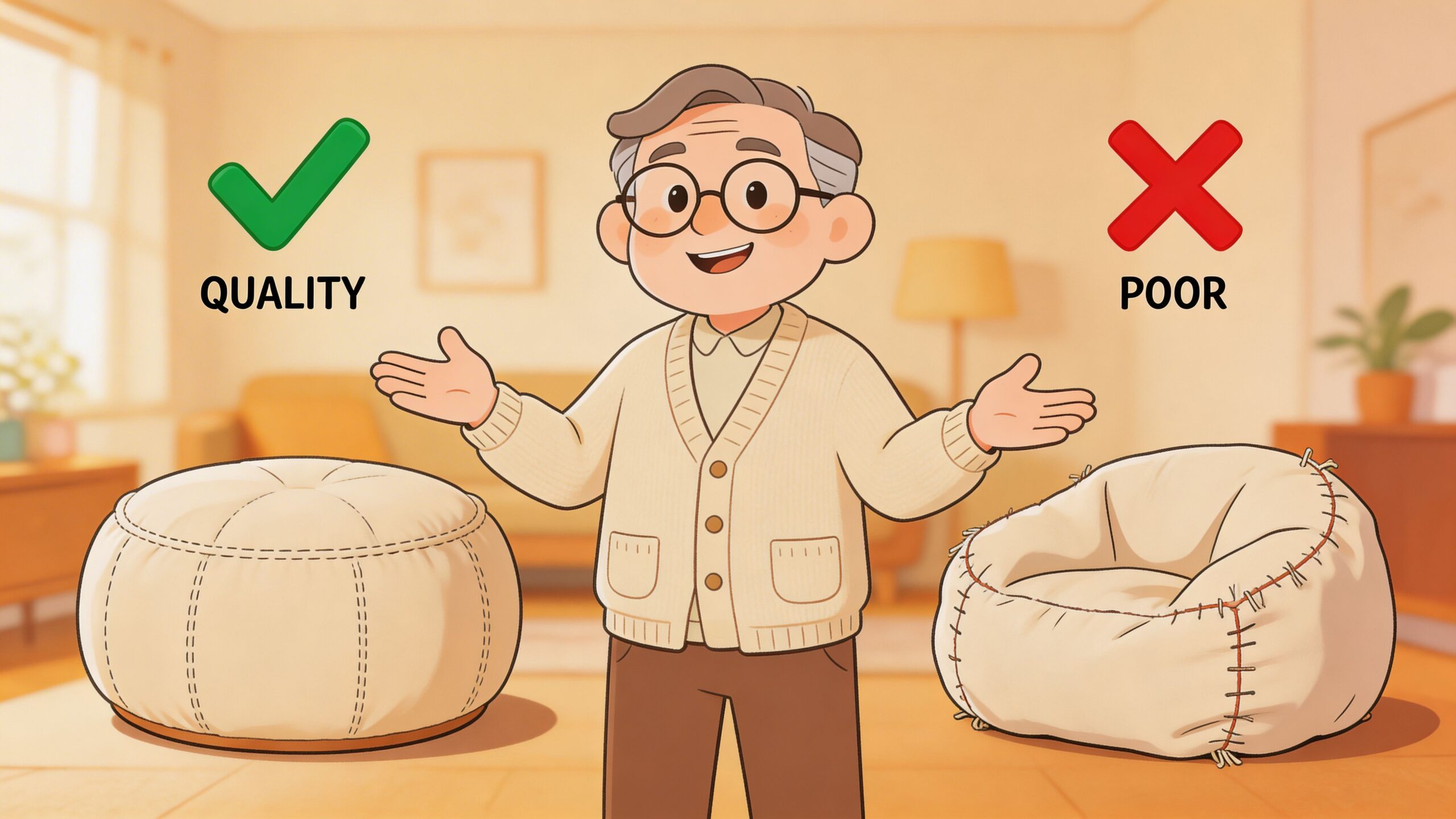
For Milwaukee families, that usually means looking past the cute shape and asking a simple question first. Will this piece hold up in real life? In a small apartment, a busy family room, or a senior living space, a pouf gets bumped, moved, sat on, and used in ways the showroom tag does not always explain.
Start with what is inside
The filling matters more than many shoppers expect.
A pouf with enough structure keeps its shape better and feels more dependable under your feet or under a guest. A very loose pouf can be fine for a low-traffic corner, but it may not be the best pick if you want everyday support. The easiest test is simple. Press down, then watch what happens. A well-made pouf should recover its shape instead of staying slumped.
That is one reason many people end up preferring pieces with sturdier construction, especially in homes where furniture has to last.
Match the build to the job
Some poufs are closer to soft floor cushions. Others act more like compact ottomans.
If adults will sit on it often, or if you want something that feels steady for easier everyday use, choose a more supportive style. That kind of construction often makes more sense for multigenerational homes and senior living settings, where a piece needs to feel secure, not floppy.
At BILTRITE, that practical difference matters. Milwaukee shoppers often want furniture that is built for real use, whether that means USA-made upholstery, Amish-built craftsmanship, or heavier-duty pieces that can handle years of family life.
Use this quick checklist
Before you buy, ask yourself:
- Who will use it most? Feet, kids, guests, or an older adult who needs a steadier perch all call for slightly different support.
- How hard will it work? A decorative pouf can be softer. A daily-use pouf should feel more substantial.
- Does the size fit the room? In tighter homes, smaller-scale pieces usually work better than oversized round poufs that eat up walking space.
- Is the cover practical? Busy households usually do better with durable, easy-care fabrics or leather.
- Can you move it easily? A pouf should be easy to shift when company comes over or the room layout changes.
One option some Milwaukee shoppers look at is the ottoman and pouf selection at BILTRITE Furniture-Leather-Mattresses, especially if they want to compare compact pieces in person and get a better feel for what fits their layout.
Keep the scale calm
Size can make or break the choice.
A pouf should help the room feel flexible, not crowded. In many homes, the right pouf is the one that solves a need without looking oversized from every angle. If you are working with a condo, apartment, or a tighter Milwaukee bungalow, a lower profile and a cleaner shape usually give you more breathing room.
That same rule helps in larger homes, too. A roomy family room can handle a bigger pouf, but it should still look balanced next to the seating around it. A pouf works best when it feels useful and easy to live with, like a helpful extra hand rather than one more thing to walk around.
Styling Poufs in Your Milwaukee Home
A pouf can fit a lot of Milwaukee homes because it doesn’t force one style.
It can lean cozy, modern, classic, casual, or a little bit playful.
Local looks that pair nicely with poufs
In a Bay View bungalow, a textured pouf can soften older woodwork and vintage finds.
In a Third Ward loft, a cleaner leather look can echo the sharper lines of metal, brick, and modern lighting.
In Brookfield or Wauwatosa family rooms, a fabric pouf can help balance larger sofas and sectionals without adding another heavy piece.
Easy placement ideas
Try one of these simple setups:
- By a reading chair: Keeps the corner relaxed and useful.
- Near a sectional end: Helps fill the space without crowding traffic flow.
- At the foot of a bed: Adds function without the visual weight of a bench.
- In a den or office: Gives the room a softer note.
For more room-by-room ideas, our guide on how to style a living room has plenty of practical inspiration.
The styling trick people miss
Match the pouf to the mood of the room, not just the color.
If the room already has lots of sharp corners, try a rounded pouf. If the room feels soft and loose, a more structured pouf can add balance. If everything else is neutral, texture can do the work without shouting.
A pouf often looks most at home when it adds contrast in shape or texture, not when it tries to match every piece exactly.
Find Your Favorite Pouf at BILTRITE
A pouf can be small, but it solves a lot of problems.
It can give you a place to rest your feet, add a casual seat, soften a room, and help smaller spaces work harder. That’s why so many people start by asking what is a pouf chair, then end up realizing it may be the missing piece in their home.
Durability matters, especially in busy households. For families and senior living settings, that’s one reason hybrid pouf-ottomans with reinforced structures or solid wood bases are getting more attention. Sales of these USA-made models are noted as rising 30% for their stability and longevity in Wayfair’s pouf guide.
We’ve been serving Metro Milwaukee since 1928, and we still believe furniture is easier to understand when you can see it, touch it, sit on it, and talk it through with someone who knows the difference between decorative and durable.
We don’t sell online. We’re closed on Sundays and Mondays so our families can be with each other. And when you visit our Greenfield showroom, you’ll meet a team with more than 400 years of combined experience helping people find furniture that fits their home and their everyday life.
Come see us at BILTRITE Furniture-Leather-Mattresses. We’d love to help you find a pouf, ottoman, or other hardworking piece that fits your space, your style, and the way your family really lives.