Full size bed dimensions: 54×75 Guide + Frame Size Reality (2026)

How We Measure Full Size Bed Dimensions
Before we dive into the numbers, it’s important to understand exactly what we are measuring and why the distinction between mattress size and bed frame footprint matters. At BILTRITE, and in this guide, we prioritize accurate, real-world dimensions over marketing fluff because getting the fit wrong is the most common source of bedroom regret.
Here is our methodology for the measurements below:
- Mattress Dimensions: We cite the industry-standard dimensions for a U.S. full-size (also called double) mattress: 54 inches wide by 75 inches long. This is the rigid baseline. As noted by mattress sizing experts, this standard has been consistent for decades, placing the full bed between the twin XL (38" x 75") and the queen (60" x 80") here.
- Frame Footprint: Measurements for bed frames are taken from the outermost edges of the frame rails or legs, not just the headboard. We account for common variations: low-profile platform beds usually add 1–2 inches to the length and width, while substantial sleigh beds or Amish-crafted frames with thick headboards and footboards can add 3–6 inches to the length and 2–4 inches to the width.
- Total Bed Height: Calculated by adding the mattress thickness (standard is 10–14 inches) to the foundation height (box spring: 9 inches; platform: 0–5 inches). This total height determines ease of entry/exit and sheet compatibility.
- Room Clearance: We recommend applying the "24-30 inch rule" for walkways. A full bed in a 10×10 room leaves about 21-24 inches of walking space on each side if centered, which is the functional minimum.
This distinction is critical because a "full size bed" is not just a mattress—it is the combined footprint of the mattress, the support system, and the frame. When ordering online or planning a room, you must know which dimension you are looking at.
Hey there! Choosing a new bed is a big deal, and getting the measurements right from the very beginning is the key to creating a bedroom you’ll absolutely love.
The direct answer: A standard full size mattress is 54 inches wide by 75 inches long (approx. 137 cm x 190.5 cm). However, the total space it occupies in your room depends entirely on the bed frame you choose. A full size bed, also called a double, offers 4,050 square inches of sleeping surface—placing it between the twin XL and the queen in terms of floor footprint according to mattress sizing standards.
Here at BILTRITE, we’ve been helping Milwaukee-area families find their ideal furniture since 1928. As a 4th generation, family-owned business, we've learned a thing or two over the decades. The most common mistake we see? Customers buying a mattress that fits, only to find the frame doesn't fit through their door or crowd their room. That is why practical dimensions matter.
Getting the Numbers Right for Your Room
While the mattress dimensions give you a baseline, the bed frame is what defines the bed's final footprint in your room. The frame you choose—whether it's a sleek, minimal platform bed or a grand, Amish-crafted sleigh bed—will always add a few inches to the overall length and width.
This is a step people often forget! It's easy to focus on the mattress, but the frame's dimensions are what you need to measure for.
Back in the 1950s, the full size bed was the standard 'Double' bed for couples. At 54 inches wide by 75 inches long (or about 137 cm x 190.5 cm), it offered more space than a twin without overwhelming the smaller bedrooms of the time.
To give you a quick reference, here’s a simple breakdown of what to expect.
Full Size Bed Dimensions At a Glance
| Measurement Type | Dimensions (Inches) | Dimensions (Centimeters) |
|---|---|---|
| Standard Full Mattress | 54" W x 75" L | 137 W x 190.5 L |
| Typical Full Bed Frame (Platform) | 56"-58" W x 77"-79" L | 142-147 W x 196-201 L |
| Typical Full Bed Frame (Sleigh/Amish) | 58"-62" W x 80"-86" L | 147-157 W x 203-218 L |
As you can see, even a simple frame adds a couple of inches. A bed with a more substantial headboard and footboard, like one of our beautiful USA-made sleigh beds, could easily add even more to the length.
The most important takeaway? Always, always measure the total dimensions of the bed frame you're considering, not just the mattress. Taking a few minutes to do this upfront will save you from the headache of a bed that won't quite fit.
Getting your measurements just right is an important first step. A straightforward guide packed with tips from our team makes this easier. Before you come to the showroom, check out our guide on how to measure furniture to ensure everything will fit just right.
| Measurement Type | Dimensions (Inches) | Dimensions (Centimeters) |
|---|---|---|
| Standard Full Mattress | 54" W x 75" L | 137 W x 190.5 L |
| Typical Full Bed Frame | 56"-58" W x 77"-80" L | 142-147 W x 195.5-203 L |
Will a Full Size Bed Fit in Your Room?
Okay, so you’ve got the numbers, but let's talk about what those full size bed dimensions actually mean for your room. It’s one thing to know a bed is 54 by 75 inches, but it’s another thing entirely to live with it every day!
At BILTRITE, we’ve helped countless Metro Milwaukee families figure this puzzle out. It’s about more than just cramming furniture in, it’s about creating a space that feels comfortable and works for you.
Think of it like parking a car in a garage. Sure, it might fit, but you still need that "breathing room" on all sides to open the doors and walk around. For a full size bed, we always recommend leaving at least 24-30 inches of clear walking space around the sides and the foot. This is the magic number that ensures you can move freely, make the bed without scraping your knuckles, and open dresser drawers without a struggle.
Minimum Room Size for a Full Bed
For a full bed to feel right at home and not cramped, the ideal minimum room size is 10 feet by 10 feet. This footprint gives you that essential walking space we just mentioned and usually leaves enough room for a nightstand and a small dresser.
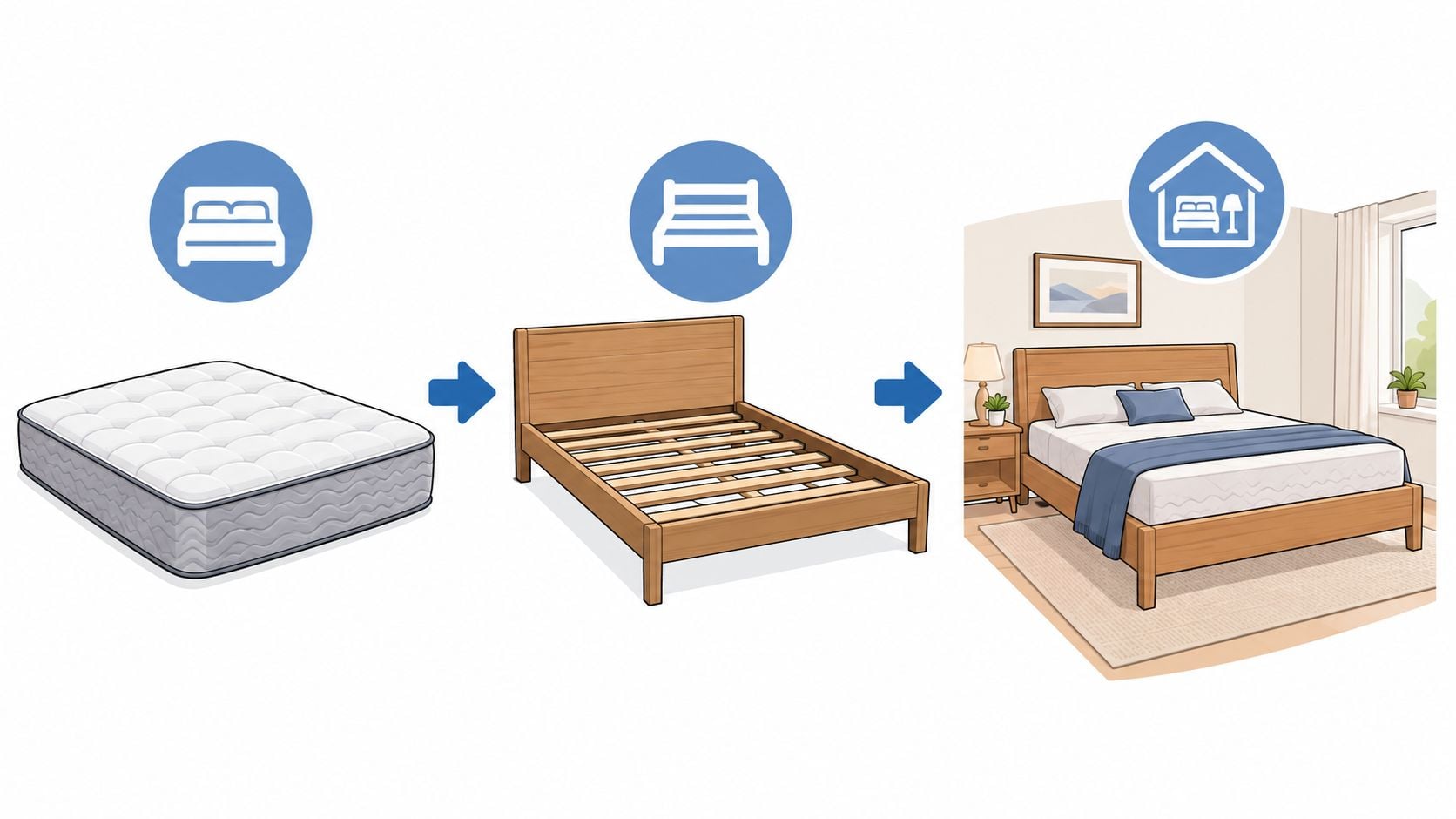
Can you fit a full bed into a slightly smaller room? Absolutely, but you'll start to feel the squeeze. For those tighter spaces, smart layout choices make all the difference. You can learn more by checking out our tips for choosing a bed for small spaces.
This visual flow shows how you move from the mattress to the frame, and finally to planning the room layout.
The key thing to remember is that each step adds to the overall footprint. You have to plan for all three elements together, not just the mattress itself.
Simple Layout Ideas
In a typical 10×10 or 10×12 foot bedroom, you have a couple of great, no-fuss options for placing your full size bed.
- Centered on the Main Wall: This is the most popular choice for a reason! Place the headboard against the longest, uninterrupted wall. It creates a natural focal point and usually leaves balanced space on either side for nightstands.
- Tucked in a Corner: This layout can really open up the floor, making the room feel larger. It’s a fantastic solution for smaller rooms or for creating a cozy, nook-like feel.
Our best advice? Before you commit, grab some painter's tape and mark the bed frame's dimensions on your floor. This simple trick, something our team with over 400 years of combined experience often suggests, lets you physically see how the bed will occupy the space and how much room you'll really have left. Come on down to our Greenfield showroom, and we’d be happy to chat more about your specific room!
Comparing Full vs Queen Bed Sizes
It’s the classic bedroom debate we hear all the time in our Greenfield showroom: "Should I get a full or a queen?" A lot of people think they’re pretty similar, but those few extra inches can make a world of difference in how your room feels and how well you sleep.
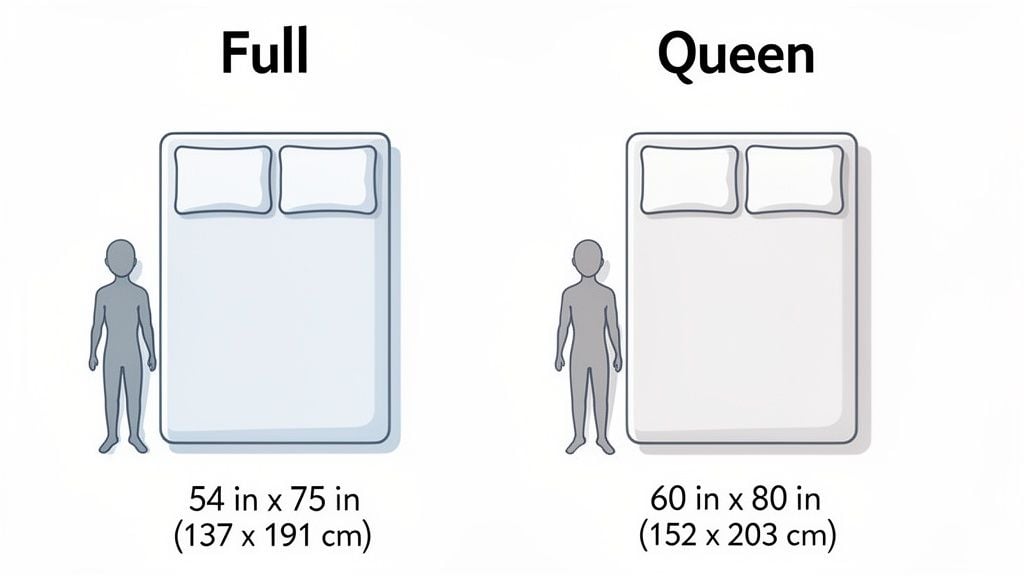
As a family business, we’ve been helping our neighbors in Metro Milwaukee make this exact choice for generations!
A standard queen mattress is 60 inches wide by 80 inches long. That makes it 6 inches wider and 5 inches longer than a full size bed. While that might not sound like a huge jump on paper, it makes a big difference for couples or anyone taller than about 5’9” who really needs that extra legroom.
When Does the Extra Space Matter?
Understanding the raw dimensions is one thing; understanding the practical impact is another. Here is when that 6×5 inch difference changes your daily life:
- For Solo Sleepers: A full bed provides 27 inches of personal width. If you are a solo sleeper who tosses and turns, the full size is usually sufficient. However, if you value having a dedicated "lap zone" or use your bed for reading/work, the queen’s 30 inches per person (vs. the full’s 27) provides a noticeably more luxurious feeling of space.
- For Couples: A full bed offers 27 inches per person—that’s the same width as a crib mattress. For many couples, this is a snug fit, especially if one partner is a restless sleeper. The queen’s 30 inches per person is widely considered the minimum comfortable width for two adults sharing a bed every night.
- For Taller Adults: If anyone in the bed is over 5’9", the full size’s 75-inch length may result in dangling feet. The queen’s 80-inch length (plus the frame often adding another 2-3 inches of length) provides better accommodation for tall sleepers.
Room Size Implications
The footprint difference also affects room planning. A full mattress is 4,050 square inches. A queen mattress is 4,800 square inches. That extra 750 square inches of mattress space means the queen frame will likely extend further into the room, reducing your walking clearance unless you start with a larger room.
Key Differences to Consider
When you’re deciding between these two popular sizes, it usually boils down to three main things: who’s sleeping in the bed, the size of your room, and your budget for the bed and bedding.
- Sleeping Space: A full bed gives each person about 27 inches of personal width—that’s the same as a crib mattress! For many couples, this is a snug fit. A queen, on the other hand, offers a more spacious 30 inches per person.
- Room Size: A queen bed naturally takes up more floor space. As we discussed, a full bed fits well in a 10×10 foot room, but for a queen, we usually recommend a room that’s at least 10×12 feet to keep that comfortable walking space around it.
- Cost: Generally, queen mattresses, frames, and bedding (like sheets and comforters) cost a bit more than their full size counterparts.
Here's our family's take: If you’re a single sleeper who wants more room than a twin, a full size bed is a fantastic and space-efficient choice. But for couples or taller individuals planning to use the bed every night, the extra space of a queen is almost always worth it for long-term comfort.
To help you see the differences side-by-side, we put together a simple table that breaks down the details. If you want to dive even deeper into the queen size, you might find our guide asking what size is a queen mattress helpful.
Full Bed vs Queen Bed Which Is Right for You
| Feature | Full Size Bed (Double) | Queen Size Bed |
|---|---|---|
| Mattress Dimensions (Inches) | 54" W x 75" L | 60" W x 80" L |
| Mattress Square Inches | 4,050 sq in | 4,800 sq in |
| Personal Width (per person) | 27" | 30" |
| Best For | Single adults, teenagers, guest rooms | Couples, taller individuals, primary bedrooms |
| Minimum Room Size | 10' x 10' | 10' x 12' |
| Pros | More affordable, fits in smaller rooms | More spacious for two, extra legroom |
| Cons | Can be cramped for couples, short for tall people | Requires a larger room, higher cost |
Ultimately, the best way to decide is to see them for yourself. Since we don't sell online, we invite you to come on down to our showroom in Greenfield. You can lie down on our mattresses, see how the frames look in person, and chat with our experienced team—no pressure, just friendly advice. We’d love to see you in our store!
| Feature | Full Size Bed (Double) | Queen Size Bed |
|---|---|---|
| Dimensions (Inches) | 54" W x 75" L | 60" W x 80" L |
| Best For | Single adults, teenagers, guest rooms | Couples, taller individuals, primary bedrooms |
| Minimum Room Size | 10' x 10' | 10' x 12' |
| Pros | More affordable, fits in smaller rooms | More spacious for two, extra legroom |
| Cons | Can be cramped for couples, short for tall people | Requires a larger room, higher cost |
How Mattress Thickness Affects Total Bed Height
When you're thinking about full size bed dimensions, it's easy to focus on just the width and length. But here at BILTRITE, we know the bed's height—and what supports it—is just as important for your comfort and functionality!
Key Distinction: Standard full size bed dimensions (54" x 75") refer only to the mattress width and length. They do not include thickness. However, mattress thickness, foundation height, and frame rails all combine to determine your total bed height, which affects how easy it is to get in and out of bed and what size sheets you need.
Standard Mattress Thickness Options
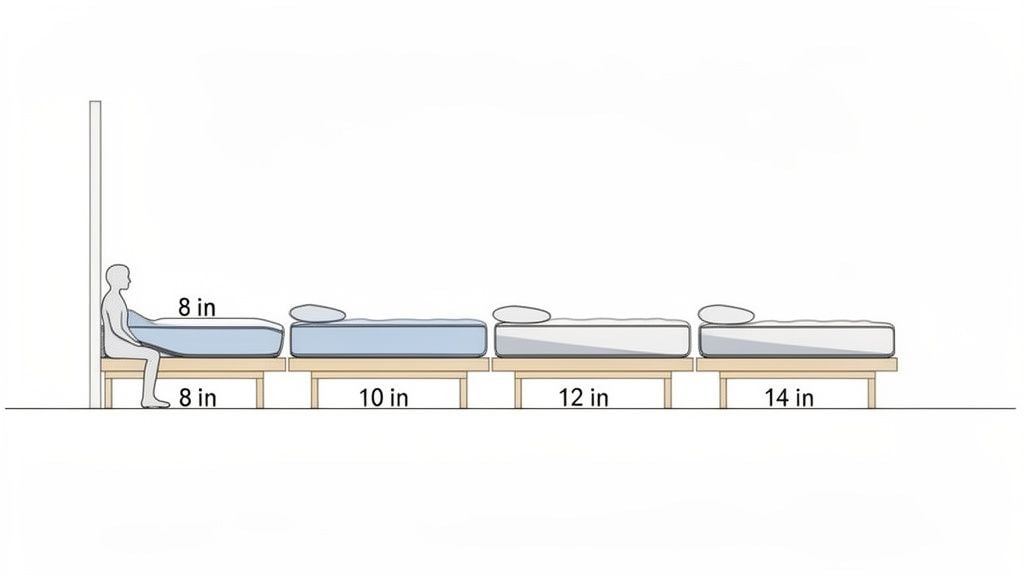
Full size mattresses typically come in thicknesses ranging from 8 inches to 14 inches:
- 8-inch (Low Profile): Common in platform beds and guest rooms. Results in a lower overall bed height (~17-20 inches with foundation), which some prefer for accessibility or modern aesthetics.
- 10-12 inch (Standard): The most common range. Provides a good balance of comfort and height (~20-24 inches total).
- 14-inch (Plush/Luxury): Often found in hotel-quality or high-end mattresses. Creates a taller, more substantial bed (~25-28 inches total).
How Support Systems Change Total Height
The foundation you choose adds significantly to the overall height:
| Setup Type | Mattress | Foundation | Approx. Total Height |
|---|---|---|---|
| Low-Profile Platform | 8" | 0" (or 2") | 8-10 inches |
| Standard Platform | 10-12" | 0" (or 4") | 10-16 inches |
| Box Spring Setup | 10-12" | 9" standard box spring | 19-21 inches |
| High-Profile Sleigh Bed | 14" | 9" box spring + frame rails | 25-28 inches |
Why Total Height Matters
- Ease of Entry/Exit: A bed that is too low can be difficult for older adults or those with mobility issues to get out of. A standard height of 20-25 inches from floor to top of mattress is generally considered ergonomic for most adults.
- Sheet Compatibility: Standard fitted sheets are designed for mattresses up to 14 inches deep. If you have a plush 14-inch mattress plus a 9-inch box spring, you need deep-pocket sheets (often 15" pocket depth) to fit properly. Using standard sheets on a deep mattress will cause them to pop off the corners.
- Visual Proportion: The bed height should complement the room size. A very tall bed in a small room with low ceilings can feel oppressive, while a low platform bed in a spacious room can look elegant and modern.
The BILTRITE Difference: Two-Sided Mattresses
Here’s a little secret we’ve believed in since 1928: two-sided, flippable mattresses are an incredible value. It’s an old-school quality feature you just don’t see much anymore, but we’re proud to specialize in them.
Being able to flip and rotate your mattress offers a huge advantage.
- Even Wear and Tear: By regularly flipping it, you distribute the wear evenly across both surfaces, preventing sagging and indentations.
- Longer Lifespan: This simple maintenance step can significantly extend the comfortable life of your mattress, giving you a better return on your investment.
- Consistent Comfort: It helps maintain that "new mattress" feel for much, much longer.
We think it's just common sense—why would you buy a mattress you can only use one side of? Our two-sided models are built to last, providing the kind of durable, affordable, better-quality value our family has stood behind for four generations.
Finding the right combination of mattress thickness, support, and features can make all the difference in your sleep quality. To explore these options further, check out our helpful guide on how to choose the right mattress. Or better yet, come on down to our Greenfield showroom and let's find the right fit for you!
Finding Quality Full Size Beds in Milwaukee: Frame Measurements & Sizing
Ready to find a full size bed that's built to last? The great news is you can find an amazing one right here in the Milwaukee area! We get to share our family’s passion for furniture that brings real comfort and joy into your home.
Since 1928, our family has been committed to providing our neighbors in Metro Milwaukee with affordable, better-quality furniture. We believe in craftsmanship you can see and feel, which is why we're so proud of our huge selection of USA and Amish-made pieces.
Understanding Full Bed Frame Measurements
As discussed in our methodology, a full mattress is 54" x 75", but the frame adds significant footprint. Here is a breakdown of common full size bed frame styles and their typical overall dimensions:
| Frame Style | Approx. Overall Width | Approx. Overall Length | Notes |
|---|---|---|---|
| Modern Platform (Low) | 56" – 58" | 77" – 79" | Minimalist design, closest to mattress size |
| Standard Wood Frame | 57" – 60" | 79" – 82" | Common in retail; adds rail thickness |
| Amish/Sleigh Bed | 58" – 62" | 80" – 86" | Thick headboards/footboards add 3-6" to length |
| Storage Bed (Trundle) | 56" – 58" | 80" – 84" | Includes lift-up or pull-out mechanism clearance |
Important: Always verify the exact frame dimensions with the manufacturer or retailer before purchasing. These are averages, and variations exist by brand and design.
Measuring for Delivery and Placement
Before you buy, ensure the bed can physically fit into your room:
- Doorway Clearance: Measure the width and height of your bedroom door, hallways, and staircases. A full size bed frame, especially a sleigh bed, may need to be disassembled for tight turns. Most full size frames come in sections or have removable legs/headboards for easier navigation.
- Room Layout: Use painter's tape to mark the frame's outer dimensions on your floor. This gives you a realistic sense of how much walking space remains around the bed.
- Clearance for Drawers: If choosing a storage bed, ensure there is enough clearance for drawers to open fully without hitting walls or other furniture.
Why We Champion American-Made Furniture
When you walk through BILTRITE, you’ll notice special icons on our furniture. Seeing our 'USA Made' or 'Amish Made' tags means you're looking at something built with heart, right here in America. These pieces represent true craftsmanship, often featuring solid wood construction that stands the test of time.
We believe that buying local and supporting American workers is more important than ever. It's a value we've held for four generations, and it’s something our customers really appreciate.
As a family-owned business, we hand-select pieces that we’d be proud to have in our own homes. We focus on solid construction and lasting value because we want you to love your furniture for years, not just for a season.
We invite you to come explore the beauty and durability of these pieces in our showroom. You can learn more about what makes our Amish furniture near me so special and why it's a fantastic investment for your home.
See and Feel the Quality for Yourself
We know that figuring out full size bed dimensions is just the first step. The next—and more fun—part is finding a bed that meets your standards for quality and style. Since we don't sell online, we firmly believe you need to see, touch, and even lie down on a bed before you buy it.
That’s why we always encourage you to visit us! Our friendly, knowledgeable team—with over 400 years of combined experience—is here to help, not pressure you. We love answering questions and helping you find just the right piece for your space.
Here’s what makes the BILTRITE experience a little different:
- Huge In-Stock Selection: We have a massive selection of furniture right here in our showroom, ready to go home with you. You often won’t have to wait weeks for your new bed to arrive.
- Something for Everyone: From small-scale options ideal for apartments to heavy-duty frames built for durability, we have a bed to fit your exact needs.
- Honest, Friendly Advice: We’re closed on Sundays to be with our families, and our focus is always on helping you, not just making a quick sale. That's just part of our family-first values.
We’d love to see you in our store! Come on down to our Greenfield showroom and let us help you find a fantastic full size bed for your home.
Your Full Size Bed Questions Answered
We get a lot of fantastic questions every day in our Greenfield showroom. It’s one of our favorite parts of the job! Helping families feel confident in their choices is what we’re all about.
Since we’ve been doing this since 1928, we’ve heard just about everything. Here are a few of the most common questions we get about full size bed dimensions, answered with our family's knowledge.
What are the dimensions of a full size bed?
A standard full size bed (also called a double bed) measures 54 inches wide by 75 inches long (137 cm x 190.5 cm). This provides 4,050 square inches of sleeping surface. Note that these are the mattress dimensions; the overall bed frame will be slightly larger, typically adding 2-6 inches to the length and 2-4 inches to the width depending on the frame style details here.
What are the dimensions of a full size bed frame vs. mattress?
This is a critical distinction. The mattress is 54" x 75". The frame is larger. A typical full size platform frame might measure 56-58" wide by 77-79" long. An Amish sleigh bed or storage bed can measure 58-62" wide by 80-86" long due to thick headboards, footboards, and rails. Always check the specific frame dimensions provided by the manufacturer to ensure it fits your room and doorways.
Is a full bed big enough for two adults?
A full bed gives each person approximately 27 inches of personal width. For comparison, a standard crib mattress is also 27 inches wide. While some couples find this cozy, especially in guest rooms or small apartments, it is generally considered snug for two adults sleeping together nightly. Most couples prefer the 30 inches per person offered by a queen size for long-term comfort. However, for a single adult or a child, a full size bed provides ample space.
Is a full bed the same as a double bed?
Yes, they are exactly the same! "Double bed" is just an older term for what we now call a full size bed. Both refer to a mattress that measures 54 inches wide by 75 inches long. The name might have changed over the years, but the dimensions have stayed the same. So, if you see a beautiful vintage frame labeled as a "double," a modern full size mattress will fit it!
Can I use queen sheets on a full size bed?
While you technically can, we generally don't recommend it. A fitted queen sheet is designed for a mattress that is 6 inches wider and 5 inches longer than a full. This means the sheet will be very loose and baggy, and you'll constantly be fighting to keep the corners tucked in.
For the best look and feel, we always suggest using sheets that are specifically made for your mattress size. A snug, properly fitting sheet not only looks neater but also contributes to a more comfortable sleeping surface. It’s one of those small details that makes a big difference!
At the end of the day, our goal is to help you create a bedroom you truly love. We believe in answering your questions honestly and sharing the knowledge our family has gathered over four generations. It’s about helping you find a solution that works for your home and your life.
Have more questions? That’s what we’re here for! Our awesome sales team has over 400 years of combined experience, and we’d be thrilled to share it with you. There’s nothing we enjoy more than helping our neighbors in the Metro Milwaukee community.
Ready to find your new favorite piece of furniture? Come on down to the BILTRITE Furniture-Leather-Mattresses showroom in Greenfield to see our huge in-stock selection for yourself. We'd love to say hi and help you find the right fit! Learn more about our family business and what makes us different at https://www.biltritefurniture.com.